Those Kids Crossing the Border From Mexico Wouldn't Be There If Obama Hadn't Supported a Coup the Media Doesn't Talk About
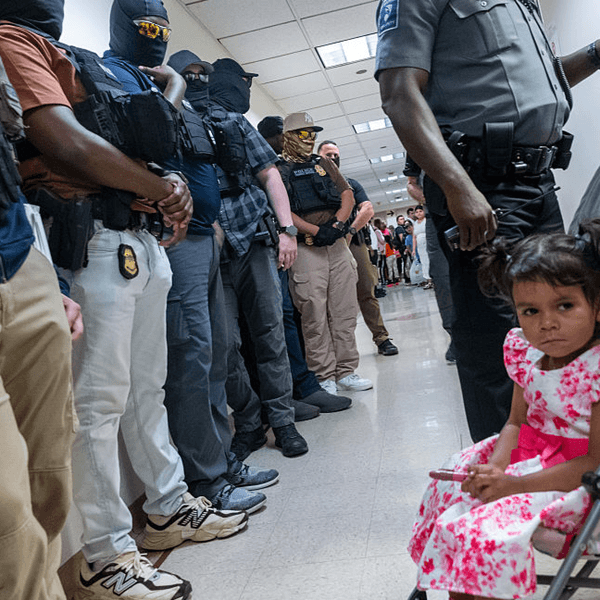
If you're reading this, you probably follow the news. So you've probably heard of the latest iteration of the "crisis at the border": tens of thousands of children, many of them unaccompanied by an adult, crossing the desert from Mexico into the United States, where they surrender to the Border Patrol in hope of being allowed to remain here permanently. Immigration and Customs Enforcement's detention and hearing system has been overwhelmed by the surge of children and, in some cases, their parents. The Obama Administration has asked Congress to approve new funding to speed up processing and deportations of these illegal immigrants.
Even if you've followed this story closely, you probably haven't heard the depressing backstory -- the reason so many Central Americans are sending their children on a dangerous thousand-mile journey up the spine of Mexico, where they ride atop freight trains, endure shakedowns by corrupt police and face rapists, bandits and other predators. (For a sense of what it's like, check out the excellent 2004 film "Maria Full of Grace.")
NPR and other mainstream news outlets are parroting the White House, which blames unscrupulous "coyotes" (human smugglers) for "lying to parents, telling them that if they put their kids in the hands of traffickers and get to the United States that they will be able to stay." True: the coyotes are saying that in order to gin up business. Also true: U.S. law has changed, and many of these kids have a strong legal case for asylum. Unfortunately, U.S. officials are ignoring the law.
The sad truth is that this "crisis at the border" is yet another example of "blowback."
Blowback is an unintended negative consequence of U.S. political, military and/or economic intervention overseas -- when something we did in the past comes back to bite us in the ass. 9/11 is the classic example; arming and funding radical Islamists in the Middle East and South Asia who were less grateful for our help than angry at the U.S.' simultaneous backing for oppressive governments (The House of Saud, Saddam, Assad, etc.) in the region.
More recent cases include U.S. support for Islamist insurgents in Libya and Syria, which destabilized both countries and led to the murders of U.S. consular officials in Benghazi, and the rise of ISIS, the guerilla army that imperils the U.S.-backed Maliki regime in Baghdad, respectively.
Confusing the issue for casual American news consumers is that the current border crisis doesn't involve the usual Mexicans traveling north in search of work. Instead, we're talking about people from Central American nations devastated by a century of American colonialism and imperialism, much of that intervention surprisingly recent. Central American refugees are merely transiting through Mexico.
"The unaccompanied children crossing the border into the United States are leaving behind mainly three Central American countries, Honduras, El Salvador and Guatemala. The first two are among the world's most violent and all three have deep poverty, according to a Pew Research report based on Department of Homeland Security (DHS) information," reports NBC News. "El Salvador ranked second in terms of homicides in Latin America in 2011, and it is still high on the list. Honduras, Guatemala and El Salvador are among the poorest nations in Latin America. Thirty percent of Hondurans, 17 percent of Salvadorans and 26 percent of Guatemalans live on less than $2 a day."
The fact that Honduras is the biggest source of the exodus jumped out at me. That's because, in 2009, the United States government -- under President Obama -- tacitly supported a military coup that overthrew the democratically elected president of Honduras. "Washington has a very close relationship with the Honduran military, which goes back decades," The Guardian noted at the time. "During the 1980s, the US used bases in Honduras to train and arm the Contras, Nicaraguan paramilitaries who became known for their atrocities in their war against the Sandinista government in neighbouring Nicaragua."
Honduras wasn't paradise under President Manuel Zelaya. Since the coup, however, the country has entered a downward death spiral of drug-related bloodshed and political revenge killings that crashed the economy, brought an end to law, order and civil society, and now has some analysts calling it a "failed state" along the lines of Somalia and Afghanistan during the 1990s.
"Zelaya's overthrow created a vacuum in security in which military and police were now focused more on political protest, and also led to a freeze in international aid that markedly worsened socio-economic conditions," Mark Ungar, professor of political science at Brooklyn College and the City University of New York, told The International Business Times. "The 2009 coup, asserts [Tulane] professor Aaron Schneider, gave the Honduran military more political and economic leverage, at the same time as the state and political elites lost their legitimacy, resources and the capacity to govern large parts of the country."
El Salvador and Guatemala, also narcostates devastated by decades of U.S. support for oppressive, corrupt right-wing dictatorships, are suffering similar conditions.
FINAL DAY! This is urgent.
Dear Common Dreams reader, It’s been nearly 30 years since I co-founded Common Dreams with my late wife, Lina Newhouser. We had the radical notion that journalism should serve the public good, not corporate profits. It was clear to us from the outset what it would take to build such a project. No paid advertisements. No corporate sponsors. No millionaire publisher telling us what to think or do. Many people said we wouldn't last a year, but we proved those doubters wrong. Together with a tremendous team of journalists and dedicated staff, we built an independent media outlet free from the constraints of profits and corporate control. Our mission from the outset was simple. To inform. To inspire. To ignite change for the common good. Building Common Dreams was not easy. Our survival was never guaranteed. When you take on the most powerful forces—Wall Street greed, fossil fuel industry destruction, Big Tech lobbyists, and uber-rich oligarchs who have spent billions upon billions rigging the economy and democracy in their favor—the only bulwark you have is supporters who believe in your work. But here’s the urgent message from me today. It’s never been this bad out there. And it’s never been this hard to keep us going. At the very moment Common Dreams is most needed and doing some of its best and most important work, the threats we face are intensifying. Right now, with just hours left in our Spring Campaign, we're still falling short of our make-or-break goal. When everyone does the little they can afford, we are strong. But if that support retreats or dries up, so do we. Can you make a gift right now to make sure Common Dreams not only survives but thrives? There is no backup plan or rainy day fund. There is only you. —Craig Brown, Co-founder |
If you're reading this, you probably follow the news. So you've probably heard of the latest iteration of the "crisis at the border": tens of thousands of children, many of them unaccompanied by an adult, crossing the desert from Mexico into the United States, where they surrender to the Border Patrol in hope of being allowed to remain here permanently. Immigration and Customs Enforcement's detention and hearing system has been overwhelmed by the surge of children and, in some cases, their parents. The Obama Administration has asked Congress to approve new funding to speed up processing and deportations of these illegal immigrants.
Even if you've followed this story closely, you probably haven't heard the depressing backstory -- the reason so many Central Americans are sending their children on a dangerous thousand-mile journey up the spine of Mexico, where they ride atop freight trains, endure shakedowns by corrupt police and face rapists, bandits and other predators. (For a sense of what it's like, check out the excellent 2004 film "Maria Full of Grace.")
NPR and other mainstream news outlets are parroting the White House, which blames unscrupulous "coyotes" (human smugglers) for "lying to parents, telling them that if they put their kids in the hands of traffickers and get to the United States that they will be able to stay." True: the coyotes are saying that in order to gin up business. Also true: U.S. law has changed, and many of these kids have a strong legal case for asylum. Unfortunately, U.S. officials are ignoring the law.
The sad truth is that this "crisis at the border" is yet another example of "blowback."
Blowback is an unintended negative consequence of U.S. political, military and/or economic intervention overseas -- when something we did in the past comes back to bite us in the ass. 9/11 is the classic example; arming and funding radical Islamists in the Middle East and South Asia who were less grateful for our help than angry at the U.S.' simultaneous backing for oppressive governments (The House of Saud, Saddam, Assad, etc.) in the region.
More recent cases include U.S. support for Islamist insurgents in Libya and Syria, which destabilized both countries and led to the murders of U.S. consular officials in Benghazi, and the rise of ISIS, the guerilla army that imperils the U.S.-backed Maliki regime in Baghdad, respectively.
Confusing the issue for casual American news consumers is that the current border crisis doesn't involve the usual Mexicans traveling north in search of work. Instead, we're talking about people from Central American nations devastated by a century of American colonialism and imperialism, much of that intervention surprisingly recent. Central American refugees are merely transiting through Mexico.
"The unaccompanied children crossing the border into the United States are leaving behind mainly three Central American countries, Honduras, El Salvador and Guatemala. The first two are among the world's most violent and all three have deep poverty, according to a Pew Research report based on Department of Homeland Security (DHS) information," reports NBC News. "El Salvador ranked second in terms of homicides in Latin America in 2011, and it is still high on the list. Honduras, Guatemala and El Salvador are among the poorest nations in Latin America. Thirty percent of Hondurans, 17 percent of Salvadorans and 26 percent of Guatemalans live on less than $2 a day."
The fact that Honduras is the biggest source of the exodus jumped out at me. That's because, in 2009, the United States government -- under President Obama -- tacitly supported a military coup that overthrew the democratically elected president of Honduras. "Washington has a very close relationship with the Honduran military, which goes back decades," The Guardian noted at the time. "During the 1980s, the US used bases in Honduras to train and arm the Contras, Nicaraguan paramilitaries who became known for their atrocities in their war against the Sandinista government in neighbouring Nicaragua."
Honduras wasn't paradise under President Manuel Zelaya. Since the coup, however, the country has entered a downward death spiral of drug-related bloodshed and political revenge killings that crashed the economy, brought an end to law, order and civil society, and now has some analysts calling it a "failed state" along the lines of Somalia and Afghanistan during the 1990s.
"Zelaya's overthrow created a vacuum in security in which military and police were now focused more on political protest, and also led to a freeze in international aid that markedly worsened socio-economic conditions," Mark Ungar, professor of political science at Brooklyn College and the City University of New York, told The International Business Times. "The 2009 coup, asserts [Tulane] professor Aaron Schneider, gave the Honduran military more political and economic leverage, at the same time as the state and political elites lost their legitimacy, resources and the capacity to govern large parts of the country."
El Salvador and Guatemala, also narcostates devastated by decades of U.S. support for oppressive, corrupt right-wing dictatorships, are suffering similar conditions.
If you're reading this, you probably follow the news. So you've probably heard of the latest iteration of the "crisis at the border": tens of thousands of children, many of them unaccompanied by an adult, crossing the desert from Mexico into the United States, where they surrender to the Border Patrol in hope of being allowed to remain here permanently. Immigration and Customs Enforcement's detention and hearing system has been overwhelmed by the surge of children and, in some cases, their parents. The Obama Administration has asked Congress to approve new funding to speed up processing and deportations of these illegal immigrants.
Even if you've followed this story closely, you probably haven't heard the depressing backstory -- the reason so many Central Americans are sending their children on a dangerous thousand-mile journey up the spine of Mexico, where they ride atop freight trains, endure shakedowns by corrupt police and face rapists, bandits and other predators. (For a sense of what it's like, check out the excellent 2004 film "Maria Full of Grace.")
NPR and other mainstream news outlets are parroting the White House, which blames unscrupulous "coyotes" (human smugglers) for "lying to parents, telling them that if they put their kids in the hands of traffickers and get to the United States that they will be able to stay." True: the coyotes are saying that in order to gin up business. Also true: U.S. law has changed, and many of these kids have a strong legal case for asylum. Unfortunately, U.S. officials are ignoring the law.
The sad truth is that this "crisis at the border" is yet another example of "blowback."
Blowback is an unintended negative consequence of U.S. political, military and/or economic intervention overseas -- when something we did in the past comes back to bite us in the ass. 9/11 is the classic example; arming and funding radical Islamists in the Middle East and South Asia who were less grateful for our help than angry at the U.S.' simultaneous backing for oppressive governments (The House of Saud, Saddam, Assad, etc.) in the region.
More recent cases include U.S. support for Islamist insurgents in Libya and Syria, which destabilized both countries and led to the murders of U.S. consular officials in Benghazi, and the rise of ISIS, the guerilla army that imperils the U.S.-backed Maliki regime in Baghdad, respectively.
Confusing the issue for casual American news consumers is that the current border crisis doesn't involve the usual Mexicans traveling north in search of work. Instead, we're talking about people from Central American nations devastated by a century of American colonialism and imperialism, much of that intervention surprisingly recent. Central American refugees are merely transiting through Mexico.
"The unaccompanied children crossing the border into the United States are leaving behind mainly three Central American countries, Honduras, El Salvador and Guatemala. The first two are among the world's most violent and all three have deep poverty, according to a Pew Research report based on Department of Homeland Security (DHS) information," reports NBC News. "El Salvador ranked second in terms of homicides in Latin America in 2011, and it is still high on the list. Honduras, Guatemala and El Salvador are among the poorest nations in Latin America. Thirty percent of Hondurans, 17 percent of Salvadorans and 26 percent of Guatemalans live on less than $2 a day."
The fact that Honduras is the biggest source of the exodus jumped out at me. That's because, in 2009, the United States government -- under President Obama -- tacitly supported a military coup that overthrew the democratically elected president of Honduras. "Washington has a very close relationship with the Honduran military, which goes back decades," The Guardian noted at the time. "During the 1980s, the US used bases in Honduras to train and arm the Contras, Nicaraguan paramilitaries who became known for their atrocities in their war against the Sandinista government in neighbouring Nicaragua."
Honduras wasn't paradise under President Manuel Zelaya. Since the coup, however, the country has entered a downward death spiral of drug-related bloodshed and political revenge killings that crashed the economy, brought an end to law, order and civil society, and now has some analysts calling it a "failed state" along the lines of Somalia and Afghanistan during the 1990s.
"Zelaya's overthrow created a vacuum in security in which military and police were now focused more on political protest, and also led to a freeze in international aid that markedly worsened socio-economic conditions," Mark Ungar, professor of political science at Brooklyn College and the City University of New York, told The International Business Times. "The 2009 coup, asserts [Tulane] professor Aaron Schneider, gave the Honduran military more political and economic leverage, at the same time as the state and political elites lost their legitimacy, resources and the capacity to govern large parts of the country."
El Salvador and Guatemala, also narcostates devastated by decades of U.S. support for oppressive, corrupt right-wing dictatorships, are suffering similar conditions.