

SUBSCRIBE TO OUR FREE NEWSLETTER
Daily news & progressive opinion—funded by the people, not the corporations—delivered straight to your inbox.
5
#000000
#FFFFFF
To donate by check, phone, or other method, see our More Ways to Give page.
Daily news & progressive opinion—funded by the people, not the corporations—delivered straight to your inbox.
President Donald Trump is expected to give a first peek at his infrastructure plan tonight. People's Action Institute released a report today that details the dire need for jobs that pay a living wage, and for public investment in communities that are most neglected. Trump's plan could help meet that need, or it could be just another series of corporate giveaways.
The report, Prosperity, Not Poverty, shows the gap between job seekers and jobs that pay a living wage. According to the report, nationally there are seven job seekers for every job opening that pays the national single adult living wage of $17.28 per hour.
In other words, six out of seven job seekers are unlikely to find work that pays enough for a single adult to make ends meet. The odds are much worse for a single parent hoping to be paid enough to support herself and a child. Prosperity, Not Poverty includes living wage figures and job gap ratios for each state and Washington, D.C., as well as the national number.
Prosperity, Not Poverty is part of the Job Gap Economic Prosperity Series that has been produced since 1999.
If done right, a national infrastructure spending plan could be a key in beginning to solve multiple problems, including a lack of good paying jobs, decaying infrastructure, communities plagued by toxic emissions and runoff, and end the national dependence on fossil fuels.
Communities of color, women, and LGBTQI communities are doubly impacted, by both the lack of wealth-building work available and by living in neglected communities most in need of the public infrastructure investment.
"A strong public infrastructure plan will address the wealth gaps in marginalized communities nationwide. On the other hand, a poorly thought out plan will exacerbate all these issues and put lives and the the well-being of families even more at risk," said Allyson Fredericksen, deputy director of research for People's Action Institute, and author of Prosperity, Not Poverty.
"Hiring for new infrastructure jobs must focus on struggling communities, and include strong wage floor requirements," said Fredericksen. "These same communities must also be the first to benefit from new projects, including clean water and air, access to technology, good roads and bridges. Any plan that would privatize public assets must be rejected."
Any plan must ensure that public infrastructure doesn't become privatized. Public services are more affordable and more accountable to the public, instead of to shareholders looking for profit or private owners with no motivation to promote public health. Public ownership can help move our nation to a green economy, protecting water and air.
"Communities across the country are hungry for good jobs, clean water and systems that work. We'll be watching closely to see if President Trump's plan delivers or if it's just another corporate giveaway." said Liz Ryan Murray, policy director for People's Action Institute.
Policy Recommendations from Prosperity, Not Poverty:
If done well, public infrastructure programs and investments will benefit all, and especially marginalized communities and the places they live.
People's Action builds the power of poor and working people, in rural, suburban, and urban areas to win change through issue campaigns and elections.

"Every senator took an oath to support and defend the Constitution, and honoring that oath means using the Senate's confirmation authority to protect the independence of federal law enforcement."
In a letter to US senators Thursday, more than two dozen legal and advocacy groups expressed their commitment to "the rule of law and the independence of federal law enforcement" as they urged the Senate to reject President Donald Trump's impending nomination of acting US Attorney General Todd Blanche to officially take the helm of the Department of Justice.
Considering that Blanche previously directly represented Trump as his defense attorney in three separate criminal cases, said the groups, which form the Not Above the Law Coalition, "Blanche as attorney general would represent a new low, and an unprecedented corruption of the institution itself."
"In 2023, Blanche left his law firm to become Trump's personal criminal defense attorney across three concurrent cases: the hush money trial, the federal classified documents case, and matters related to January 6th," wrote the coalition, which includes Democracy Defenders Fund, End Citizens United, and Public Citizen. "For two years, he had one job: Keep local, state, and federal investigators away from his client Donald Trump, and in particular, to shield Trump from the Justice Department.
"Now he controls that very federal agency," said the organizations, noting that he still operates as "Trump's lawyer."
Since joining the administration—first as deputy attorney general serving alongside former Attorney General Pam Bondi, and then taking over for her in an acting capacity after she was fired—Blanche has refused to recuse himself from all matters pertaining to Trump, considering his former work representing the president; boasted that the FBI "cleaned house" after firing career prosecutors who had been involved in investigating Trump; filed motions to vacate seditious conspiracy convictions of several people who attacked the US Capitol on January 6; and created a since-blocked $1.8 billion "slush fund" meant to disburse money to Trump's allies due to what the president views as unfair prosecutions.
"The only thing that changed when Blanche walked into the DOJ is that now the American people are paying the bill while he weaponized the department against Trump’s perceived enemies and cut deals for his boss."
Blanche has also played a major role in weaponizing the DOJ against Trump's "perceived enemies," including the Southern Poverty Law Center and former FBI Director James Comey, both of whom he obtained indictments for.
The Not Above the Law Coalition said the "Block Blanche" campaign launched by the letter would target senators who show willingness to confirm the compromised nominee.
The co-chairs of the group—including Lisa Gilbert of Public Citizen, Praveen Fernandes of the Constitutional Accountability Center, Kelsey Herbert of MoveOn, and Brett Edkins of Stand Up America—emphasized that Blanche "is not America's attorney general."
"He was Donald Trump's criminal defense lawyer and personal fixer before working for the Justice Department, and he never stopped," they said. "The only thing that changed when Blanche walked into the DOJ is that now the American people are paying the bill while he weaponized the department against Trump’s perceived enemies and cut deals for his boss."
"Every senator took an oath to support and defend the Constitution, and honoring that oath means using the Senate's confirmation authority to protect the independence of federal law enforcement," the co-chairs added. "We're here to remind them of this duty to our nation."
The groups added that Blanche's conduct and the announcement of his nomination make clear that "former Attorney General Pam Bondi wasn't removed because she crossed a line. She was removed because she didn't cross enough of them. Blanche's appointment escalates the weaponization of the DOJ beyond what even Bondi would execute."
"The Senate has a constitutional obligation to answer one question," said the groups. "Does the Justice Department serve the American people, or does it serve Donald Trump?"
"That this administration would direct USPS to adopt measures to impede voters from casting their ballots is shameful."
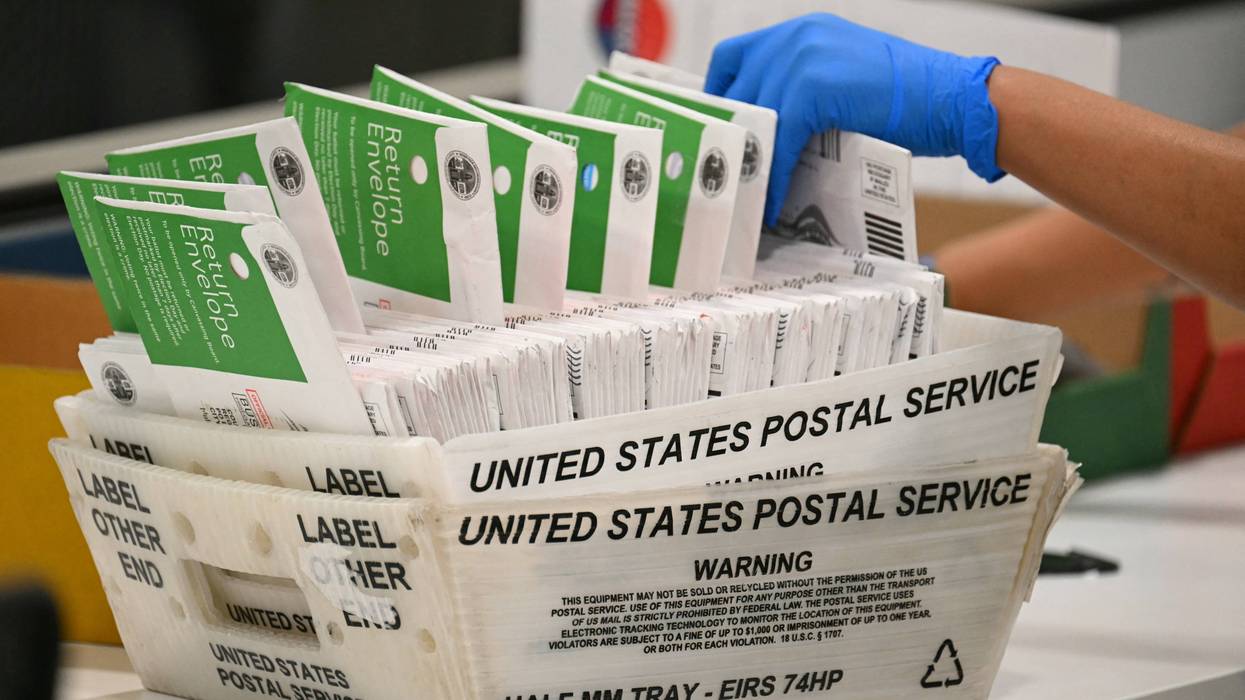
A leading civil rights organization on Wednesday accused the US Postal Service of unlawful complicity in President Donald Trump's assault on mail-in voting, which he launched in late March with an alarming executive order that is facing its own legal challenges.
With a new legal motion filed in a federal court in Washington, DC, the NAACP is challenging rules the Postal Service unveiled last week that would require states to notify USPS "of the individuals to whom they are mailing a mail-in or absentee ballot." The rules would also "identify new standards for the envelope design and review for outbound and return ballot envelopes."
The NAACP's filing—which reignites a pandemic-era legal fight—warns that under the proposed rule, "USPS would refuse to transmit mail-in ballots in states that did not use specific envelopes with specific codes, and would refuse to deliver ballots for voters not included on a state-specific Mail-In and Absentee Participation List."
That would violate a previous USPS agreement, reached in 2021, to prioritize "timely delivery of election mail" and run afoul of federal law, the motion argues, calling for a swift injunction to stop the Postal Service from implementing the rules.
“The proposed rule manifests USPS’ intent to disregard its commitment to timely deliver mail-in ballots to all voters,” said Sam Spital, associate director-counsel of the NAACP Legal Defense Fund (LDF). “This all is part of a coordinated effort by this Administration to create chaos and confusion in our elections, which creates particular dangers for Black voters who are already at the greatest risk of suffering discrimination in voting. The attempt to usurp the right of eligible voters to cast mail-in ballots is directly contrary to the legally enforceable agreement the parties reached in this case, and to USPS’ obligations under federal law. We are confident it will be rejected by the courts.”
Allison Zieve, director of Public Citizen Litigation Group—which joined LDF in filing the suit on behalf of the NAACP—said it is "shameful" that the Trump administration would "direct USPS to adopt measures to impede voters from casting their ballots."
"And that USPS would allow itself to be used for political purposes to advance the president’s irrational objection to mail-in voting is disgraceful, unlawful, and contrary to the commitments it made to settle our [2020] litigation," Zieve added.
The proposed USPS rules stem from an executive order that Trump issued on March 31, instructing the agency to obtain from states "a list of voters eligible to vote in a federal election in such state to whom the state intends to provide a mail-in or absentee ballot to be transmitted via the USPS." Trump directed his handpicked postmaster general, David Steiner, to advance "provisions specifying that the USPS shall not transmit mail-in or absentee ballots from any individual" who is not included on state mail-in ballot participation lists.
Last week, a Trump-appointed federal judge in Washington, DC declined to immediately block the president's executive order. But another federal judge in Boston "sharply questioned" Trump's order during a hearing for a similar yet separate legal challenge earlier this week.
Attorneys representing the plaintiffs in the latter case said in a statement after Tuesday's hearing that "the Trump administration is attempting to seize that power for itself with an unlawful and dangerous executive order."
"Together with our courageous clients, we’re seeking a preliminary injunction to stop further chaos in our elections, uphold the rule of law, and protect the millions of citizens who rely on mail-in voting, including people with disabilities, students, rural voters, and the elderly," the attorneys said. "We won't let the Trump administration continue to trample on the fundamental right to vote.”
"If the administration and its allies in Congress are truly walking away from the $1.8 billion criminal enrichment fund, they should have no problem joining us in banning it outright," the Maryland Democrat said.
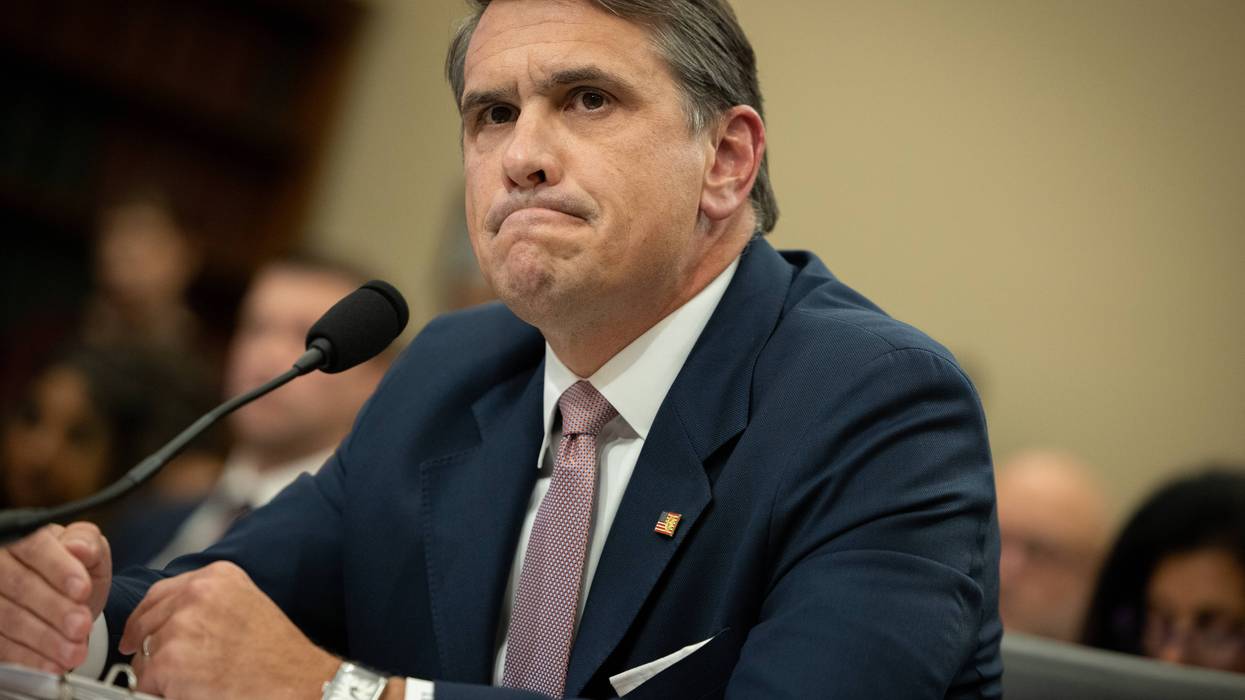
Though acting US Attorney General Todd Blanche has said President Donald Trump’s $1.8 billion “weaponization” slush fund is now “dead,” Democratic Rep. Jamie Raskin on Thursday unveiled draft legislation that would eliminate what he describes as a “super pardon” buried in the Department of Justice settlement reached last month.
While Blanche—whom Trump said he plans to nominate for a full term as attorney general—has backed off the fund that would allow the DOJ to disburse taxpayer money to Trump allies and January 6 insurrectionists amid bipartisan backlash, a news release from Raskin’s (D-Md.) office on Thursday said the acting AG has done nothing to rescind “the mother of all sweetheart deals he tucked into his unprecedented settlement with Trump.”
The settlement, created in exchange for Trump dropping a $10 billion lawsuit against the Internal Revenue Service (IRS) for improperly leaking his tax returns, gives Trump, his entire family, and all their business ventures total and permanent immunity for “any matters currently pending or that could be pending” not only before the IRS, which Trump sued in the case that led to the settlement, but also before “other agencies or departments.”
The Maryland Democrat also said that despite retreating on the "weaponization" fund, the DOJ is still using its Judgment Fund to improperly reward the president's allies.
According to the Washington Post, as of April, the DOJ had already paid $8.5 million to prominent Trump allies who claimed to have been wrongly targeted by the Biden administration, even though no court formally determined that they had been.
“If the administration and its allies in Congress are truly walking away from the $1.8 billion criminal enrichment fund, they should have no problem joining us in banning it outright,” Raskin said. “But no one should be fooled by Trump and Blanche’s tactical pause: Nothing has been dismantled, and nothing has been renounced. Trump’s scheme to raid the Judgment Fund, bankroll political allies using taxpayer cash, and score a sweeping Super Pardon is alive and well and remains a clear and present threat to our constitutional order.”
Raskin, who is the ranking member of the House Judiciary Committee, introduced a new legislative package on Thursday, aiming to destroy the remaining vestiges of the DOJ deal and ensure that future presidents can never use federal settlements to reward themselves.
The Block Lawless Agreements and Nullify Corrupt Handouts and Emoluments (BLANCHE) Act, bars sitting presidents from entering settlements for money damages with the federal government and requires independent judicial oversight of any such agreements, including ones that grant the president "super pardons" like the one granted to Trump by the DOJ.
“My legislative package would end the slush fund, outlaw collusive settlements, and make clear that no president can use taxpayer dollars to cut partisan loyalty reward checks,” Raskin said.
He also introduced the Constitutional Rights Defense Act, which would allow individuals to file suits against the federal government when their rights are violated by agents of the state.
In contrast with the January 6 Capitol riot participants who have been claiming compensation under the fund, Raskin said his bill "ensures that all people who have actually had their constitutional rights violated by the government will have access to justice."
Raskin has previously introduced legislation that would block the use of federal funds to finance the Trump IRS settlement and prohibit payouts to January 6 Capitol riot participants and other Trump allies, including family members.
"Congress must act with urgency to shut down this presidential plunder once and for all,” Raskin said.