SUBSCRIBE TO OUR FREE NEWSLETTER
Daily news & progressive opinion—funded by the people, not the corporations—delivered straight to your inbox.
5
#000000
#FFFFFF
To donate by check, phone, or other method, see our More Ways to Give page.
Daily news & progressive opinion—funded by the people, not the corporations—delivered straight to your inbox.
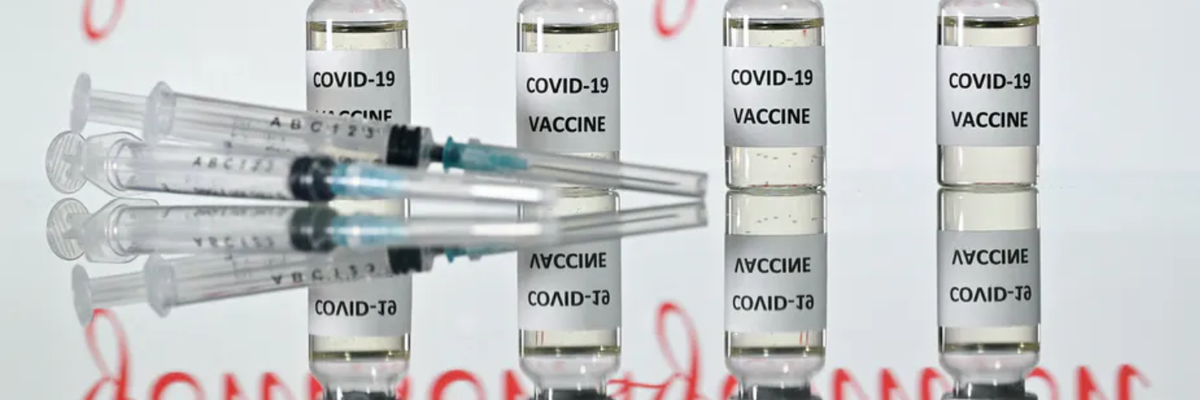
Vials of the Johnson & Johnson vaccine to prevent COVID-19. The use of this particular vaccine has been halted temporarily. (Photo: Justin Tallis/AFP via Getty Images)
The Centers for Disease Control and Prevention and the Food and Drug Administration on April 13, 2021 halted use of the one-dose Johnson & Johnson COVID-19 vaccine that has been given to 6.8 million people in the U.S. The pause is due to reports of blood clotting in six people who have received the vaccine. One woman died, and another has been hospitalized in critical condition. Dr. William Petri, an infectious disease physician and immunologist at the University of Virginia School of Medicine, answers questions to help put this development in context.
The potential side effect is a blood clot in the veins that drain blood from the brain. This is called central venous sinus thrombosis. In the vaccine-associated cases of this, platelets in blood, which are important for making clots, have been lower than normal. This same side effect has been seen in the AstraZeneca COVID-19 vaccine that also uses an adenovirus to deliver the coronavirus spike glycoprotein. In the case of the AstraZeneca vaccine, the clotting disorder has been linked to antibodies against platelet factor 4 (PF4) that are apparently induced by the adenovirus backbone of the vaccine. This antibody causes the clotting disorder by activating platelets to clot.
It is important to note that this disorder, called vaccine-induced immune thrombotic thrombocytopenia is not a problem with the mRNA-based Pfizer and Moderna COVID-19 vaccines.
About one in a million: Six cases out of the 6.8 million doses of the J&J vaccine administered in the U.S. These six cases all occurred in women ages 18-48, and from 6 to 13 days after vaccination. That's about half as likely as getting struck by lightning in a year.
The CDC and FDA are recommending that people who have received the J&J vaccine within the last 3 weeks who develop severe headache, abdominal pain, leg pain or shortness of breath should contact their health care provider.
Fortunately this type of blood clot is treatable with the use of blood thinners or anticoagulants. If a patient has low platelets, however, a doctor would not prescribe the widely used anticoagulant heparin but instead another kind of blood thinner. Untreated, these blood clots can be fatal.
Because of this rare occurrence, even though it has not been shown to be due to the vaccine, the CDC and FDA have recommended a pause in use of the J&J vaccine until these cases can be further reviewed.
The CDC will convene a meeting of the Advisory Committee on Immunization Practices on April 14, 2021. The ACIP is an independent board of 15 scientific and medical experts selected by the health and human services secretary that advises the CDC on vaccines for children and adults. People with ties to vaccine manufacturers are excluded from the ACIP membership because of potential conflict of interest.
The ACIP will review the available evidence and make recommendations to the CDC, based to a great extent on the likelihood that the complication is vaccine related.
A similar rare problem of blood clotting with low platelets in the cerebral venous sinus and also in the abdominal veins and arteries has been seen in connection with the use of theAstraZeneca COVID-19 vaccine used in Europe. There, 182 cases were reported in 190 million doses - again, roughly 1 in 1 million people vaccinated. The European Medicines Agency investigated this and concluded that central venous sinus thrombosis with low platelets should be listed as a possible "very rare side effect" of the AstraZeneca vaccine.
On April 13, 2021, Johnson & Johnson announced it is delaying the rollout of its vaccine in Europe in response to the U.S. review.
The U.S. has a total of three vaccines authorized under emergency use authorization for COVID-19, and this side effect has not been observed in the other two vaccines, developed by Moderna and Pfizer. The Moderna and Pfizer vaccines do not use the same technology used in the J&J and AstraZeneca vaccines. So vaccination against COVID-19 can continue, while efforts are made to determine if the clotting disorder is related by chance or a true, but extremely rare, side effect of the J&J vaccine.
I believe it is a testament to the emphasis by the CDC and FDA on vaccine safety that J&J vaccinations have been paused while this is studied by independent scientists and medical experts.
Dear Common Dreams reader, It’s been nearly 30 years since I co-founded Common Dreams with my late wife, Lina Newhouser. We had the radical notion that journalism should serve the public good, not corporate profits. It was clear to us from the outset what it would take to build such a project. No paid advertisements. No corporate sponsors. No millionaire publisher telling us what to think or do. Many people said we wouldn't last a year, but we proved those doubters wrong. Together with a tremendous team of journalists and dedicated staff, we built an independent media outlet free from the constraints of profits and corporate control. Our mission has always been simple: To inform. To inspire. To ignite change for the common good. Building Common Dreams was not easy. Our survival was never guaranteed. When you take on the most powerful forces—Wall Street greed, fossil fuel industry destruction, Big Tech lobbyists, and uber-rich oligarchs who have spent billions upon billions rigging the economy and democracy in their favor—the only bulwark you have is supporters who believe in your work. But here’s the urgent message from me today. It's never been this bad out there. And it's never been this hard to keep us going. At the very moment Common Dreams is most needed, the threats we face are intensifying. We need your support now more than ever. We don't accept corporate advertising and never will. We don't have a paywall because we don't think people should be blocked from critical news based on their ability to pay. Everything we do is funded by the donations of readers like you. When everyone does the little they can afford, we are strong. But if that support retreats or dries up, so do we. Will you donate now to make sure Common Dreams not only survives but thrives? —Craig Brown, Co-founder |
The Centers for Disease Control and Prevention and the Food and Drug Administration on April 13, 2021 halted use of the one-dose Johnson & Johnson COVID-19 vaccine that has been given to 6.8 million people in the U.S. The pause is due to reports of blood clotting in six people who have received the vaccine. One woman died, and another has been hospitalized in critical condition. Dr. William Petri, an infectious disease physician and immunologist at the University of Virginia School of Medicine, answers questions to help put this development in context.
The potential side effect is a blood clot in the veins that drain blood from the brain. This is called central venous sinus thrombosis. In the vaccine-associated cases of this, platelets in blood, which are important for making clots, have been lower than normal. This same side effect has been seen in the AstraZeneca COVID-19 vaccine that also uses an adenovirus to deliver the coronavirus spike glycoprotein. In the case of the AstraZeneca vaccine, the clotting disorder has been linked to antibodies against platelet factor 4 (PF4) that are apparently induced by the adenovirus backbone of the vaccine. This antibody causes the clotting disorder by activating platelets to clot.
It is important to note that this disorder, called vaccine-induced immune thrombotic thrombocytopenia is not a problem with the mRNA-based Pfizer and Moderna COVID-19 vaccines.
About one in a million: Six cases out of the 6.8 million doses of the J&J vaccine administered in the U.S. These six cases all occurred in women ages 18-48, and from 6 to 13 days after vaccination. That's about half as likely as getting struck by lightning in a year.
The CDC and FDA are recommending that people who have received the J&J vaccine within the last 3 weeks who develop severe headache, abdominal pain, leg pain or shortness of breath should contact their health care provider.
Fortunately this type of blood clot is treatable with the use of blood thinners or anticoagulants. If a patient has low platelets, however, a doctor would not prescribe the widely used anticoagulant heparin but instead another kind of blood thinner. Untreated, these blood clots can be fatal.
Because of this rare occurrence, even though it has not been shown to be due to the vaccine, the CDC and FDA have recommended a pause in use of the J&J vaccine until these cases can be further reviewed.
The CDC will convene a meeting of the Advisory Committee on Immunization Practices on April 14, 2021. The ACIP is an independent board of 15 scientific and medical experts selected by the health and human services secretary that advises the CDC on vaccines for children and adults. People with ties to vaccine manufacturers are excluded from the ACIP membership because of potential conflict of interest.
The ACIP will review the available evidence and make recommendations to the CDC, based to a great extent on the likelihood that the complication is vaccine related.
A similar rare problem of blood clotting with low platelets in the cerebral venous sinus and also in the abdominal veins and arteries has been seen in connection with the use of theAstraZeneca COVID-19 vaccine used in Europe. There, 182 cases were reported in 190 million doses - again, roughly 1 in 1 million people vaccinated. The European Medicines Agency investigated this and concluded that central venous sinus thrombosis with low platelets should be listed as a possible "very rare side effect" of the AstraZeneca vaccine.
On April 13, 2021, Johnson & Johnson announced it is delaying the rollout of its vaccine in Europe in response to the U.S. review.
The U.S. has a total of three vaccines authorized under emergency use authorization for COVID-19, and this side effect has not been observed in the other two vaccines, developed by Moderna and Pfizer. The Moderna and Pfizer vaccines do not use the same technology used in the J&J and AstraZeneca vaccines. So vaccination against COVID-19 can continue, while efforts are made to determine if the clotting disorder is related by chance or a true, but extremely rare, side effect of the J&J vaccine.
I believe it is a testament to the emphasis by the CDC and FDA on vaccine safety that J&J vaccinations have been paused while this is studied by independent scientists and medical experts.
The Centers for Disease Control and Prevention and the Food and Drug Administration on April 13, 2021 halted use of the one-dose Johnson & Johnson COVID-19 vaccine that has been given to 6.8 million people in the U.S. The pause is due to reports of blood clotting in six people who have received the vaccine. One woman died, and another has been hospitalized in critical condition. Dr. William Petri, an infectious disease physician and immunologist at the University of Virginia School of Medicine, answers questions to help put this development in context.
The potential side effect is a blood clot in the veins that drain blood from the brain. This is called central venous sinus thrombosis. In the vaccine-associated cases of this, platelets in blood, which are important for making clots, have been lower than normal. This same side effect has been seen in the AstraZeneca COVID-19 vaccine that also uses an adenovirus to deliver the coronavirus spike glycoprotein. In the case of the AstraZeneca vaccine, the clotting disorder has been linked to antibodies against platelet factor 4 (PF4) that are apparently induced by the adenovirus backbone of the vaccine. This antibody causes the clotting disorder by activating platelets to clot.
It is important to note that this disorder, called vaccine-induced immune thrombotic thrombocytopenia is not a problem with the mRNA-based Pfizer and Moderna COVID-19 vaccines.
About one in a million: Six cases out of the 6.8 million doses of the J&J vaccine administered in the U.S. These six cases all occurred in women ages 18-48, and from 6 to 13 days after vaccination. That's about half as likely as getting struck by lightning in a year.
The CDC and FDA are recommending that people who have received the J&J vaccine within the last 3 weeks who develop severe headache, abdominal pain, leg pain or shortness of breath should contact their health care provider.
Fortunately this type of blood clot is treatable with the use of blood thinners or anticoagulants. If a patient has low platelets, however, a doctor would not prescribe the widely used anticoagulant heparin but instead another kind of blood thinner. Untreated, these blood clots can be fatal.
Because of this rare occurrence, even though it has not been shown to be due to the vaccine, the CDC and FDA have recommended a pause in use of the J&J vaccine until these cases can be further reviewed.
The CDC will convene a meeting of the Advisory Committee on Immunization Practices on April 14, 2021. The ACIP is an independent board of 15 scientific and medical experts selected by the health and human services secretary that advises the CDC on vaccines for children and adults. People with ties to vaccine manufacturers are excluded from the ACIP membership because of potential conflict of interest.
The ACIP will review the available evidence and make recommendations to the CDC, based to a great extent on the likelihood that the complication is vaccine related.
A similar rare problem of blood clotting with low platelets in the cerebral venous sinus and also in the abdominal veins and arteries has been seen in connection with the use of theAstraZeneca COVID-19 vaccine used in Europe. There, 182 cases were reported in 190 million doses - again, roughly 1 in 1 million people vaccinated. The European Medicines Agency investigated this and concluded that central venous sinus thrombosis with low platelets should be listed as a possible "very rare side effect" of the AstraZeneca vaccine.
On April 13, 2021, Johnson & Johnson announced it is delaying the rollout of its vaccine in Europe in response to the U.S. review.
The U.S. has a total of three vaccines authorized under emergency use authorization for COVID-19, and this side effect has not been observed in the other two vaccines, developed by Moderna and Pfizer. The Moderna and Pfizer vaccines do not use the same technology used in the J&J and AstraZeneca vaccines. So vaccination against COVID-19 can continue, while efforts are made to determine if the clotting disorder is related by chance or a true, but extremely rare, side effect of the J&J vaccine.
I believe it is a testament to the emphasis by the CDC and FDA on vaccine safety that J&J vaccinations have been paused while this is studied by independent scientists and medical experts.