SUBSCRIBE TO OUR FREE NEWSLETTER
Daily news & progressive opinion—funded by the people, not the corporations—delivered straight to your inbox.
5
#000000
#FFFFFF
To donate by check, phone, or other method, see our More Ways to Give page.
Daily news & progressive opinion—funded by the people, not the corporations—delivered straight to your inbox.
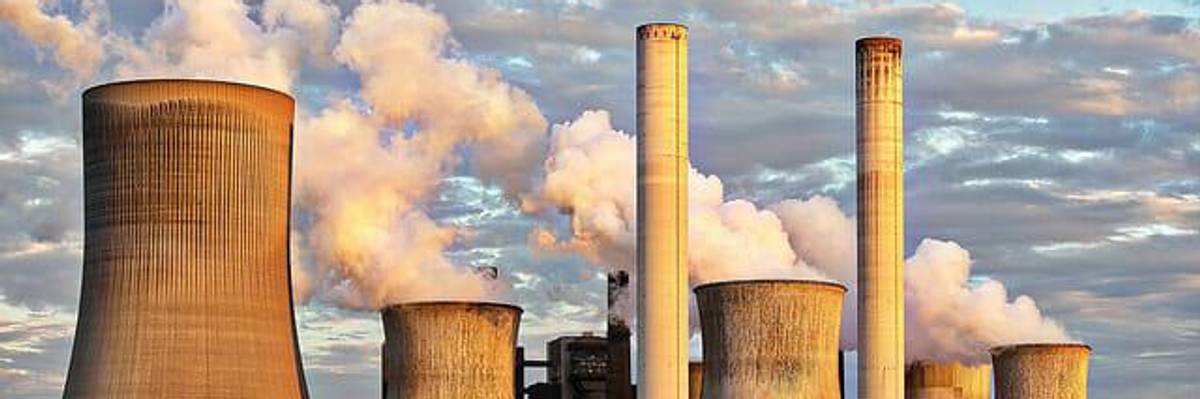
"The analysis describes the different methods states might use to regulate coal-powered plants, and the health effects of each option." (Photo: Jack Sem, Semtrio.com / Flickr Creative Commons)
The Environmental Protection Agency released new rules regulating pollution levels for coal-burning power plants this week, and buried beneath its complex policies is a troubling statistic. As The New York Times reported Tuesday, "The plan would increase carbon emissions and lead to up to 1,400 premature deaths annually."
Called the Affordable Clean Energy Rule, the new standards are a Trump administration update of President Barack Obama's Clean Power Plan. The latter, as the Times writes, was "an aggressive effort to speed up the closures of coal-burning plants, one of the main producers of greenhouse gases."
By contrast, the Trump plan makes minor adjustments on emissions and operations for individual plants, and, on a broader level, "[lets] states relax pollution rules for power plants that need upgrades, keeping them active longer."
Administration officials touted the plan's flexibility and ease for businesses, claiming that the Obama administration's plan illegally forced utility companies to use more sustainable and environmentally friendly energy sources.
Administration officials touted the plan's flexibility and ease for businesses, claiming that the Obama administration's plan illegally forced utility companies to use more sustainable and environmentally friendly energy sources.
It's an unsurprising move for President Trump, who has long denied the existence of climate change, claiming in a 2012 tweet that "[t]he concept of global warming was created by and for the Chinese in order to make U.S. manufacturing non-competitive."
What is surprising however, are the hundreds of pages of analysis accompanying the new rules, detailing the dangers they pose. The plan includes, the Times reports, "a section called 'foregone' climate and human health benefits," which describes "the effect of the Trump plan as benefits lost."
The analysis describes the different methods states might use to regulate coal-powered plants, and the health effects of each option.
The mostly likely option, the EPA analysis reveals, "will see between 470 and 1,400 premature deaths annually by 2030 because of increased rates of microscopic airborne particulates known as PM 2.5, which are dangerous because of their link to heart and lung disease as well as their ability to trigger chronic problems like asthma and bronchitis."
The analysis was done using a three-part modeling system reviewed by the National Academy of Sciences. The estimated number of premature deaths also were informed by a Harvard University study linking polluted air to premature deaths.
William Wehrum, acting administrator of the EPA's Office of Air and Radiation, called the premature deaths "collateral effects," according to the Times. He defended the new rules, saying, "We have abundant legal authority to deal with those other pollutants directly, and we have aggressive programs in place that directly target emissions of those pollutants."
The response from environmental advocates was quick and blunt. "With the Trump dirty power plan we see again that the Trump administration cares more about extending the lives of coal plants than the American people," Conrad Schneider, advocacy director of the Clean Air Task Force, an environmental nonprofit, told the Times.
Some experts, according to a Charleston Gazette-Mail report on the new plan, believe that no matter how hard the Trump administration works to protect the coal industry, it's not economically feasible for power plants to continue burning coal. The new plan, the Gazette-Mail notes, gives plants an "incentive to stay open longer," but that won't last long.
"All it does is to delay the closure or conversion of some existing coal plants," Michael Gerrard, a professor of environmental law and energy regulation at Columbia Law School, told the Gazette-Mail.
"If they had to comply with the Clean Power Plan as released by the Obama administration, many utilities would be required to go to more use of natural gas and renewables, so this will delay that impact," Gerrard said.
West Virginia University law professor James Van Nostrand concurred, telling the Gazette-Mail, "Killing the Clean Power Plan will not bring coal back, because the Clean Power Plan did not kill coal. It's still economics."
Trump is expected to announce details of the Affordable Clean Energy Rule at a political rally in Charleston, W.Va., Tuesday night.
Dear Common Dreams reader, It’s been nearly 30 years since I co-founded Common Dreams with my late wife, Lina Newhouser. We had the radical notion that journalism should serve the public good, not corporate profits. It was clear to us from the outset what it would take to build such a project. No paid advertisements. No corporate sponsors. No millionaire publisher telling us what to think or do. Many people said we wouldn't last a year, but we proved those doubters wrong. Together with a tremendous team of journalists and dedicated staff, we built an independent media outlet free from the constraints of profits and corporate control. Our mission has always been simple: To inform. To inspire. To ignite change for the common good. Building Common Dreams was not easy. Our survival was never guaranteed. When you take on the most powerful forces—Wall Street greed, fossil fuel industry destruction, Big Tech lobbyists, and uber-rich oligarchs who have spent billions upon billions rigging the economy and democracy in their favor—the only bulwark you have is supporters who believe in your work. But here’s the urgent message from me today. It's never been this bad out there. And it's never been this hard to keep us going. At the very moment Common Dreams is most needed, the threats we face are intensifying. We need your support now more than ever. We don't accept corporate advertising and never will. We don't have a paywall because we don't think people should be blocked from critical news based on their ability to pay. Everything we do is funded by the donations of readers like you. When everyone does the little they can afford, we are strong. But if that support retreats or dries up, so do we. Will you donate now to make sure Common Dreams not only survives but thrives? —Craig Brown, Co-founder |
The Environmental Protection Agency released new rules regulating pollution levels for coal-burning power plants this week, and buried beneath its complex policies is a troubling statistic. As The New York Times reported Tuesday, "The plan would increase carbon emissions and lead to up to 1,400 premature deaths annually."
Called the Affordable Clean Energy Rule, the new standards are a Trump administration update of President Barack Obama's Clean Power Plan. The latter, as the Times writes, was "an aggressive effort to speed up the closures of coal-burning plants, one of the main producers of greenhouse gases."
By contrast, the Trump plan makes minor adjustments on emissions and operations for individual plants, and, on a broader level, "[lets] states relax pollution rules for power plants that need upgrades, keeping them active longer."
Administration officials touted the plan's flexibility and ease for businesses, claiming that the Obama administration's plan illegally forced utility companies to use more sustainable and environmentally friendly energy sources.
Administration officials touted the plan's flexibility and ease for businesses, claiming that the Obama administration's plan illegally forced utility companies to use more sustainable and environmentally friendly energy sources.
It's an unsurprising move for President Trump, who has long denied the existence of climate change, claiming in a 2012 tweet that "[t]he concept of global warming was created by and for the Chinese in order to make U.S. manufacturing non-competitive."
What is surprising however, are the hundreds of pages of analysis accompanying the new rules, detailing the dangers they pose. The plan includes, the Times reports, "a section called 'foregone' climate and human health benefits," which describes "the effect of the Trump plan as benefits lost."
The analysis describes the different methods states might use to regulate coal-powered plants, and the health effects of each option.
The mostly likely option, the EPA analysis reveals, "will see between 470 and 1,400 premature deaths annually by 2030 because of increased rates of microscopic airborne particulates known as PM 2.5, which are dangerous because of their link to heart and lung disease as well as their ability to trigger chronic problems like asthma and bronchitis."
The analysis was done using a three-part modeling system reviewed by the National Academy of Sciences. The estimated number of premature deaths also were informed by a Harvard University study linking polluted air to premature deaths.
William Wehrum, acting administrator of the EPA's Office of Air and Radiation, called the premature deaths "collateral effects," according to the Times. He defended the new rules, saying, "We have abundant legal authority to deal with those other pollutants directly, and we have aggressive programs in place that directly target emissions of those pollutants."
The response from environmental advocates was quick and blunt. "With the Trump dirty power plan we see again that the Trump administration cares more about extending the lives of coal plants than the American people," Conrad Schneider, advocacy director of the Clean Air Task Force, an environmental nonprofit, told the Times.
Some experts, according to a Charleston Gazette-Mail report on the new plan, believe that no matter how hard the Trump administration works to protect the coal industry, it's not economically feasible for power plants to continue burning coal. The new plan, the Gazette-Mail notes, gives plants an "incentive to stay open longer," but that won't last long.
"All it does is to delay the closure or conversion of some existing coal plants," Michael Gerrard, a professor of environmental law and energy regulation at Columbia Law School, told the Gazette-Mail.
"If they had to comply with the Clean Power Plan as released by the Obama administration, many utilities would be required to go to more use of natural gas and renewables, so this will delay that impact," Gerrard said.
West Virginia University law professor James Van Nostrand concurred, telling the Gazette-Mail, "Killing the Clean Power Plan will not bring coal back, because the Clean Power Plan did not kill coal. It's still economics."
Trump is expected to announce details of the Affordable Clean Energy Rule at a political rally in Charleston, W.Va., Tuesday night.
The Environmental Protection Agency released new rules regulating pollution levels for coal-burning power plants this week, and buried beneath its complex policies is a troubling statistic. As The New York Times reported Tuesday, "The plan would increase carbon emissions and lead to up to 1,400 premature deaths annually."
Called the Affordable Clean Energy Rule, the new standards are a Trump administration update of President Barack Obama's Clean Power Plan. The latter, as the Times writes, was "an aggressive effort to speed up the closures of coal-burning plants, one of the main producers of greenhouse gases."
By contrast, the Trump plan makes minor adjustments on emissions and operations for individual plants, and, on a broader level, "[lets] states relax pollution rules for power plants that need upgrades, keeping them active longer."
Administration officials touted the plan's flexibility and ease for businesses, claiming that the Obama administration's plan illegally forced utility companies to use more sustainable and environmentally friendly energy sources.
Administration officials touted the plan's flexibility and ease for businesses, claiming that the Obama administration's plan illegally forced utility companies to use more sustainable and environmentally friendly energy sources.
It's an unsurprising move for President Trump, who has long denied the existence of climate change, claiming in a 2012 tweet that "[t]he concept of global warming was created by and for the Chinese in order to make U.S. manufacturing non-competitive."
What is surprising however, are the hundreds of pages of analysis accompanying the new rules, detailing the dangers they pose. The plan includes, the Times reports, "a section called 'foregone' climate and human health benefits," which describes "the effect of the Trump plan as benefits lost."
The analysis describes the different methods states might use to regulate coal-powered plants, and the health effects of each option.
The mostly likely option, the EPA analysis reveals, "will see between 470 and 1,400 premature deaths annually by 2030 because of increased rates of microscopic airborne particulates known as PM 2.5, which are dangerous because of their link to heart and lung disease as well as their ability to trigger chronic problems like asthma and bronchitis."
The analysis was done using a three-part modeling system reviewed by the National Academy of Sciences. The estimated number of premature deaths also were informed by a Harvard University study linking polluted air to premature deaths.
William Wehrum, acting administrator of the EPA's Office of Air and Radiation, called the premature deaths "collateral effects," according to the Times. He defended the new rules, saying, "We have abundant legal authority to deal with those other pollutants directly, and we have aggressive programs in place that directly target emissions of those pollutants."
The response from environmental advocates was quick and blunt. "With the Trump dirty power plan we see again that the Trump administration cares more about extending the lives of coal plants than the American people," Conrad Schneider, advocacy director of the Clean Air Task Force, an environmental nonprofit, told the Times.
Some experts, according to a Charleston Gazette-Mail report on the new plan, believe that no matter how hard the Trump administration works to protect the coal industry, it's not economically feasible for power plants to continue burning coal. The new plan, the Gazette-Mail notes, gives plants an "incentive to stay open longer," but that won't last long.
"All it does is to delay the closure or conversion of some existing coal plants," Michael Gerrard, a professor of environmental law and energy regulation at Columbia Law School, told the Gazette-Mail.
"If they had to comply with the Clean Power Plan as released by the Obama administration, many utilities would be required to go to more use of natural gas and renewables, so this will delay that impact," Gerrard said.
West Virginia University law professor James Van Nostrand concurred, telling the Gazette-Mail, "Killing the Clean Power Plan will not bring coal back, because the Clean Power Plan did not kill coal. It's still economics."
Trump is expected to announce details of the Affordable Clean Energy Rule at a political rally in Charleston, W.Va., Tuesday night.