SUBSCRIBE TO OUR FREE NEWSLETTER
Daily news & progressive opinion—funded by the people, not the corporations—delivered straight to your inbox.
5
#000000
#FFFFFF
To donate by check, phone, or other method, see our More Ways to Give page.
It was the year of living dangerously. In 2012 governments turned their backs on the living planet, demonstrating that no chronic problem, however grave, will take priority over an immediate concern, however trivial. I believe there has been no worse year for the natural world in the past half-century.
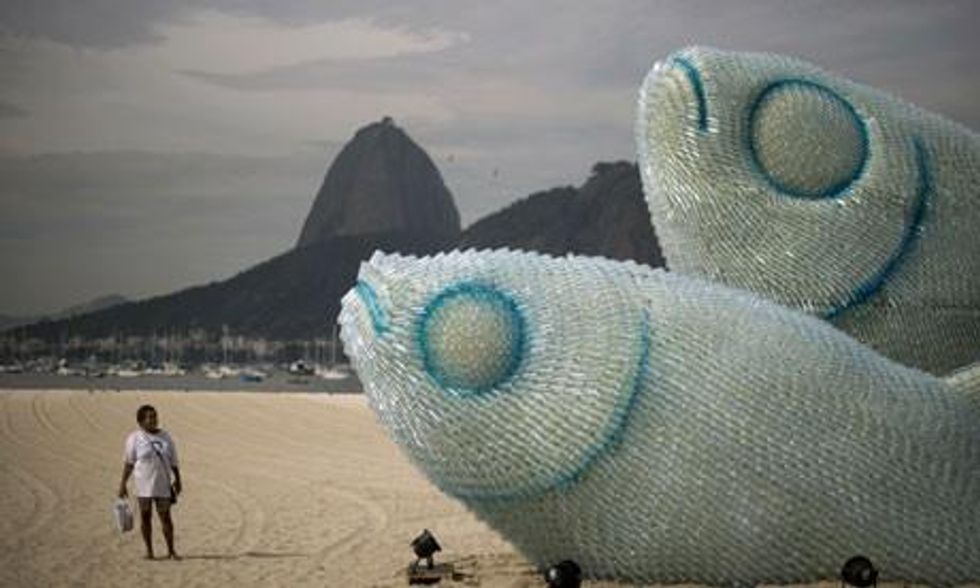
Three weeks before the minimum occurred, the melting of the Arctic's sea ice broke the previous record. Remnants of the global megafauna - such as rhinos and bluefin tuna - were shoved violently towards extinction. Novel tree diseases raged across continents. Bird and insect numbers continued to plummet, coral reefs retreated, marine life dwindled. And those charged with protecting us and the world in which we live pretended that none of it was happening.
Their indifference was distilled into a great collective shrug at the Earth Summit in June. The first summit, 20 years before, was supposed to have heralded a new age of environmental responsibility. During that time, thanks largely to the empowerment of corporations and the ultra-rich, the square root of nothing has been achieved. Far from mobilising to address this, in 2012 the leaders of some of the world's most powerful governments - the US, the UK, Germany and Russia - didn't even bother to turn up.
But they did send their representatives to sabotage it. The Obama administration even sought to reverse commitments made by George Bush Sr in 1992. The final declaration was a parody of inaction. While the 190 countries that signed it expressed "deep concern" about the world's escalating crises, they agreed no new targets, dates or commitments, with one exception. Sixteen times they committed themselves to "sustained growth", a term they used interchangeably with its polar opposite, "sustainability".
The climate meeting in Doha at the end of the year produced a similar combination of inanity and contradiction. Governments have now begun to concede, without evincing any great concern, that they will miss their target of no more than 2C of global warming this century. Instead we're on track for between four and six degrees. To prevent climate breakdown, coal burning should be in steep decline. Far from it: the International Energy Agency reports that global use of the most carbon-dense fossil fuel is climbing by about 200m tonnes a year. This helps to explain why global emissions are rising so fast.
Our leaders now treat climate change as a guilty secret. Even after the devastation of Hurricane Sandy and the record droughts and wildfires that savaged the US, the two main presidential contenders refused to mention the subject, except for one throwaway sentence each. Has an issue this big ever received as little attention in a presidential race?
The same failures surround the other forces of destruction. In 2012 European governments flunked their proposed reform of the Common Agricultural Policy, which is perfectly designed to maximise environmental damage. The farm subsidies it provides are conditional on farmers destroying the vegetation (which also means the other wildlife) on their land. We pay EUR55bn a year to trash the natural world.
This contributes to what I have come to see as a great global polishing: a rubbing away of ecosystems and natural structures by the intensification of farming, fishing, mining and other industries. Looking back on this year a few decades hence, this destruction will seem vastly more significant than any of the stories with which the media is obsessed. Like governments, media companies have abandoned the living world.
In the UK in 2012, the vandals were given the keys to the art gallery. Environmental policy is now in the hands of people - such as George Osborne, Owen Paterson, Richard Benyon and Eric Pickles - who have no more feeling for the natural world than the Puritans had for fine art. They are busy defacing the old masters and smashing the ancient sculptures.
They have lit a bonfire of environmental regulations, hobbled bodies such as Natural England and the Environment Agency and ensured that the countryside becomes even more of an exclusive playground for the ultra-rich, unhampered by effective restraints on the burning of grouse moors, the use of lead shot, the killing of birds of prey and the spraying of pesticides that are wiping out our bees and other invertebrates.
In the same spirit, the government has reduced the list of possible marine conservation zones from 127 to 31. Even these 31 will be protected in name only: the fishing industry will still be allowed to rampage through them. A fortnight ago, the UK lobbied successfully for quotas of several overexploited fish species to be raised, while pouring scorn on the scientific evidence that shows this is madness.
George Osborne has done the same thing to the UK's climate change policies. Though even the big power companies oppose him, he is seeking to scrap or delay our targets for cutting carbon emissions and to ensure that we remain hooked on natural gas as our primary source of power. The green investment bank which was supposed to have funded the transition to new technologies is the only state bank in Europe that is forbidden to borrow. It might as well not be there at all.
If there is hope, it lies with the people. Opinion polls show that voters do not support their governments' inaction. Even a majority of Conservatives believe that the UK should generate most of its electricity from renewables by 2030. In the US, 80% of people polled now say that climate change will be a serious problem for their country if nothing is done about it: a substantial rise since 2009. The problem is that most people are not prepared to act on these beliefs. Citizens, as well as governments and the media, have turned their faces away from humanity's greatest problem.
To avoid another terrible year like 2012, we must translate these passive concerns into a mass mobilisation. Groups such as 350.org show how it might be done. If this annus horribilis tells us anything, it is that action, in the absence of such mobilisation, is simply not going to happen. Governments care only as much as their citizens force them to care. Nothing changes unless we change.
It was the year of living dangerously. In 2012 governments turned their backs on the living planet, demonstrating that no chronic problem, however grave, will take priority over an immediate concern, however trivial. I believe there has been no worse year for the natural world in the past half-century.
Three weeks before the minimum occurred, the melting of the Arctic's sea ice broke the previous record. Remnants of the global megafauna - such as rhinos and bluefin tuna - were shoved violently towards extinction. Novel tree diseases raged across continents. Bird and insect numbers continued to plummet, coral reefs retreated, marine life dwindled. And those charged with protecting us and the world in which we live pretended that none of it was happening.
Their indifference was distilled into a great collective shrug at the Earth Summit in June. The first summit, 20 years before, was supposed to have heralded a new age of environmental responsibility. During that time, thanks largely to the empowerment of corporations and the ultra-rich, the square root of nothing has been achieved. Far from mobilising to address this, in 2012 the leaders of some of the world's most powerful governments - the US, the UK, Germany and Russia - didn't even bother to turn up.
But they did send their representatives to sabotage it. The Obama administration even sought to reverse commitments made by George Bush Sr in 1992. The final declaration was a parody of inaction. While the 190 countries that signed it expressed "deep concern" about the world's escalating crises, they agreed no new targets, dates or commitments, with one exception. Sixteen times they committed themselves to "sustained growth", a term they used interchangeably with its polar opposite, "sustainability".
The climate meeting in Doha at the end of the year produced a similar combination of inanity and contradiction. Governments have now begun to concede, without evincing any great concern, that they will miss their target of no more than 2C of global warming this century. Instead we're on track for between four and six degrees. To prevent climate breakdown, coal burning should be in steep decline. Far from it: the International Energy Agency reports that global use of the most carbon-dense fossil fuel is climbing by about 200m tonnes a year. This helps to explain why global emissions are rising so fast.
Our leaders now treat climate change as a guilty secret. Even after the devastation of Hurricane Sandy and the record droughts and wildfires that savaged the US, the two main presidential contenders refused to mention the subject, except for one throwaway sentence each. Has an issue this big ever received as little attention in a presidential race?
The same failures surround the other forces of destruction. In 2012 European governments flunked their proposed reform of the Common Agricultural Policy, which is perfectly designed to maximise environmental damage. The farm subsidies it provides are conditional on farmers destroying the vegetation (which also means the other wildlife) on their land. We pay EUR55bn a year to trash the natural world.
This contributes to what I have come to see as a great global polishing: a rubbing away of ecosystems and natural structures by the intensification of farming, fishing, mining and other industries. Looking back on this year a few decades hence, this destruction will seem vastly more significant than any of the stories with which the media is obsessed. Like governments, media companies have abandoned the living world.
In the UK in 2012, the vandals were given the keys to the art gallery. Environmental policy is now in the hands of people - such as George Osborne, Owen Paterson, Richard Benyon and Eric Pickles - who have no more feeling for the natural world than the Puritans had for fine art. They are busy defacing the old masters and smashing the ancient sculptures.
They have lit a bonfire of environmental regulations, hobbled bodies such as Natural England and the Environment Agency and ensured that the countryside becomes even more of an exclusive playground for the ultra-rich, unhampered by effective restraints on the burning of grouse moors, the use of lead shot, the killing of birds of prey and the spraying of pesticides that are wiping out our bees and other invertebrates.
In the same spirit, the government has reduced the list of possible marine conservation zones from 127 to 31. Even these 31 will be protected in name only: the fishing industry will still be allowed to rampage through them. A fortnight ago, the UK lobbied successfully for quotas of several overexploited fish species to be raised, while pouring scorn on the scientific evidence that shows this is madness.
George Osborne has done the same thing to the UK's climate change policies. Though even the big power companies oppose him, he is seeking to scrap or delay our targets for cutting carbon emissions and to ensure that we remain hooked on natural gas as our primary source of power. The green investment bank which was supposed to have funded the transition to new technologies is the only state bank in Europe that is forbidden to borrow. It might as well not be there at all.
If there is hope, it lies with the people. Opinion polls show that voters do not support their governments' inaction. Even a majority of Conservatives believe that the UK should generate most of its electricity from renewables by 2030. In the US, 80% of people polled now say that climate change will be a serious problem for their country if nothing is done about it: a substantial rise since 2009. The problem is that most people are not prepared to act on these beliefs. Citizens, as well as governments and the media, have turned their faces away from humanity's greatest problem.
To avoid another terrible year like 2012, we must translate these passive concerns into a mass mobilisation. Groups such as 350.org show how it might be done. If this annus horribilis tells us anything, it is that action, in the absence of such mobilisation, is simply not going to happen. Governments care only as much as their citizens force them to care. Nothing changes unless we change.
It was the year of living dangerously. In 2012 governments turned their backs on the living planet, demonstrating that no chronic problem, however grave, will take priority over an immediate concern, however trivial. I believe there has been no worse year for the natural world in the past half-century.
Three weeks before the minimum occurred, the melting of the Arctic's sea ice broke the previous record. Remnants of the global megafauna - such as rhinos and bluefin tuna - were shoved violently towards extinction. Novel tree diseases raged across continents. Bird and insect numbers continued to plummet, coral reefs retreated, marine life dwindled. And those charged with protecting us and the world in which we live pretended that none of it was happening.
Their indifference was distilled into a great collective shrug at the Earth Summit in June. The first summit, 20 years before, was supposed to have heralded a new age of environmental responsibility. During that time, thanks largely to the empowerment of corporations and the ultra-rich, the square root of nothing has been achieved. Far from mobilising to address this, in 2012 the leaders of some of the world's most powerful governments - the US, the UK, Germany and Russia - didn't even bother to turn up.
But they did send their representatives to sabotage it. The Obama administration even sought to reverse commitments made by George Bush Sr in 1992. The final declaration was a parody of inaction. While the 190 countries that signed it expressed "deep concern" about the world's escalating crises, they agreed no new targets, dates or commitments, with one exception. Sixteen times they committed themselves to "sustained growth", a term they used interchangeably with its polar opposite, "sustainability".
The climate meeting in Doha at the end of the year produced a similar combination of inanity and contradiction. Governments have now begun to concede, without evincing any great concern, that they will miss their target of no more than 2C of global warming this century. Instead we're on track for between four and six degrees. To prevent climate breakdown, coal burning should be in steep decline. Far from it: the International Energy Agency reports that global use of the most carbon-dense fossil fuel is climbing by about 200m tonnes a year. This helps to explain why global emissions are rising so fast.
Our leaders now treat climate change as a guilty secret. Even after the devastation of Hurricane Sandy and the record droughts and wildfires that savaged the US, the two main presidential contenders refused to mention the subject, except for one throwaway sentence each. Has an issue this big ever received as little attention in a presidential race?
The same failures surround the other forces of destruction. In 2012 European governments flunked their proposed reform of the Common Agricultural Policy, which is perfectly designed to maximise environmental damage. The farm subsidies it provides are conditional on farmers destroying the vegetation (which also means the other wildlife) on their land. We pay EUR55bn a year to trash the natural world.
This contributes to what I have come to see as a great global polishing: a rubbing away of ecosystems and natural structures by the intensification of farming, fishing, mining and other industries. Looking back on this year a few decades hence, this destruction will seem vastly more significant than any of the stories with which the media is obsessed. Like governments, media companies have abandoned the living world.
In the UK in 2012, the vandals were given the keys to the art gallery. Environmental policy is now in the hands of people - such as George Osborne, Owen Paterson, Richard Benyon and Eric Pickles - who have no more feeling for the natural world than the Puritans had for fine art. They are busy defacing the old masters and smashing the ancient sculptures.
They have lit a bonfire of environmental regulations, hobbled bodies such as Natural England and the Environment Agency and ensured that the countryside becomes even more of an exclusive playground for the ultra-rich, unhampered by effective restraints on the burning of grouse moors, the use of lead shot, the killing of birds of prey and the spraying of pesticides that are wiping out our bees and other invertebrates.
In the same spirit, the government has reduced the list of possible marine conservation zones from 127 to 31. Even these 31 will be protected in name only: the fishing industry will still be allowed to rampage through them. A fortnight ago, the UK lobbied successfully for quotas of several overexploited fish species to be raised, while pouring scorn on the scientific evidence that shows this is madness.
George Osborne has done the same thing to the UK's climate change policies. Though even the big power companies oppose him, he is seeking to scrap or delay our targets for cutting carbon emissions and to ensure that we remain hooked on natural gas as our primary source of power. The green investment bank which was supposed to have funded the transition to new technologies is the only state bank in Europe that is forbidden to borrow. It might as well not be there at all.
If there is hope, it lies with the people. Opinion polls show that voters do not support their governments' inaction. Even a majority of Conservatives believe that the UK should generate most of its electricity from renewables by 2030. In the US, 80% of people polled now say that climate change will be a serious problem for their country if nothing is done about it: a substantial rise since 2009. The problem is that most people are not prepared to act on these beliefs. Citizens, as well as governments and the media, have turned their faces away from humanity's greatest problem.
To avoid another terrible year like 2012, we must translate these passive concerns into a mass mobilisation. Groups such as 350.org show how it might be done. If this annus horribilis tells us anything, it is that action, in the absence of such mobilisation, is simply not going to happen. Governments care only as much as their citizens force them to care. Nothing changes unless we change.