
It's the Economists Stupid
Economists like to think they
are scientists but for the most part, aware of it or not, they are shilling
for the powers that be. We won't get out of this mess, until
we call them on their shell game, broaden our thinking about how and
for whom the economy works and take matters into our own hands.
Economists like to think they
are scientists but for the most part, aware of it or not, they are shilling
for the powers that be. We won't get out of this mess, until
we call them on their shell game, broaden our thinking about how and
for whom the economy works and take matters into our own hands.
What makes economists think
they are doing science? Well, economists collect data and test
their theories against objective real-world facts. They ask how
well their models predict outcomes. They portray themselves as
disinterested, as simply providing policy makers with facts; it is the
policy makers who make normative judgments concerning policy - who
gets the tax break; who gets fired; who gets fed. If you or I criticize
their methods we are written off as unscientific, having an agenda,
somehow weak minded.
Scratch the surface of this
facade and it quickly crumbles. Economists rely on theories riddled
with normative judgments - more is better, work is a disutility, it
is rational to be self-interested - and with ways of viewing the world
that skew their vision - we act independently, we are rational, labor
is a resource.
Because economists' theories,
with all their implicit judgments and viewpoints, inform their way of
seeing the world, the data they take to be an objective measure against
which to test their theory is not objective at all. It is, itself,
defined by the theory it is used to test. There is no objective
measure, somehow defined outside of theory for theorists, economic or
otherwise, to test their theories. Nor can economists, any more
than soothsayers, predict the future. What is most surprising
is not that economists think they are doing science, but that they have
so little curiosity about what it means to do science. These observations
on the problems associated with scientific method are more than 50 years
old.
Don't think I'm saying
that one cannot do economics at all, only that any number of approaches
to economics, be it institutional, feminist, Marxist or ecological,
is possible. Each theory defines the economy differently, describes
human behavior differently, and comes to different conclusions about
what to do. One cannot claim as mainstream economists do, that
only their approach is correct; only their approach produces a rational
view of the world. That's pure hubris. Hubris got us into
this mess and it's unlikely to get us out.
So it's curious when a well-known
economist decides to change camps. I am thinking of Richard Posner,
the well-regarded Chicago school economists who recently declared he
is now a Keynesian. Mostly when economic theory goes awry, economists
blame everything except the theory - the data was faulty, an exogenous
shock. Rarely does someone have the courage and honesty to consider
he might have been wrong, all along, to think that markets are self-correcting.
So let's applaud Posner and for the time being put aside all the harm
he and his cohorts have wreaked, at home and abroad, by insisting that
markets self-regulate - a position that Posner has now, after thirty
years of war on the working class, concluded is false. Let's
not ask, either, why the breakdown of the world economic system has
yielded only one such convert.
The question I have for Posner
is this: Which Keynes are you lining up behind - Keynes the conservative
or Keynes the radical? Keynes the conservative sees the irrationality
inherent in financial markets and protects the wealthy classes by insulating
the real economy from this irrationality. Keynes the conservative
protects capitalism from the actions of the real radicals - those
who would throw open the door to even greater market excess in order
to prove, once and for all, that economic collapse is not due to too
little intervention but too much. Keynes the conservative would
cringe at the Supreme Court's decision, to treat corporations as persons,
to flood the political system with even more corporate dollars to undo
regulation. Keynes the conservative knows that without such intervention,
and at least a veneer of legitimacy, the capitalist system is doomed.
I doubt very much that Posner
is lining up behind Keynes the radical. Keynes the radical sees
the irrationality inherent in financial markets and seeks to socializes
wealth to prevent workers from being thrown out hungry into the streets.
Keynes the radical believes that rationality results not from 'independent'
profit-making decisions of corporations but from analysis and debate
that produces policies that promote the common good. Keynes the
radical considers the economic prospects of our grandchildren.
But Keynes the radical was
no radical. Keynes the radical had no faith in the ability of
working people to take charge of their economic fate. Keynes, even Keynes
the radical, was all top down. All white bread. All patriarchy.
All stuffed shirt. We've been there and done that haven't we?
Good for Posner for renouncing the blind faith that got us all in this
mess. But even Keynes the radical can't save us now.
The scientific community, I
mean the real one, has its own problems with objectivity, but most scientists
agree that we have to act very quickly to avoid catastrophic climate
change. Throwing the door wide open to corporate dominance of
politics is irrational - the legal equivalent of the final scene from
Thelma and Louise only, this time, the straight white men are driving
and you and I are on board. Someone has to get their foot on the
brake and grab the wheel.
Howard Zinn's gone.
Gone, now, just when we need him the most. But his whole life
he has been pointing us in the right direction. Don't be impressed
by the men in suits. Don't listen to the pseudo-scientific babble
of the high priests of the economy. Take things in your own hands,
work for what's right, make a bold move in the direction of the common
good. It's you and me who have to get up front and grab the
wheel. We have to do it now - we have no time to waste.
We are at a crossroads
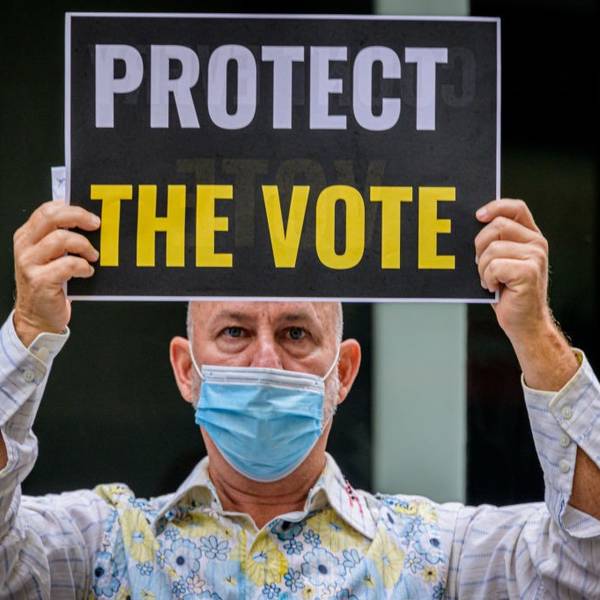
This country and this world are at a monumental crossroads. In a few short weeks, US voters will have an opportunity to beat back the forces of fascism and confront the billionaires who are rigging the economy, our media system, and our democracy, making it increasingly impossible for ordinary people to get by. We’re not just talking about the election. We’re talking about what must be done once these fascist elements are vanquished from power. We need a bolder set of solutions than what either major party has so far been willing to offer and a working-class movement ready to fight like hell for it. Trump didn't emerge from nowhere. The conditions that fueled MAGA authoritarianism were created by decades of radical neoliberal economic policies and a corrupt political system dominated by corporate interests. They slashed taxes on the super-rich, promising that the benefits would trickle down. They said giveaways to the corporate titans would make life more affordable for the rest of us. It was all bullshit. And when a bitter, betrayed populace searches for someone to blame, right-wing demagogues have little trouble finding scapegoats. People know when they're being lied to, but you won't hear any of this from the corporate media. Only independent journalism—powered and funded by people who believe in building a better world—can deliver truly trustworthy daily news. Our Fall Campaign is underway, and we need your help. To power our newsroom through the rest of the year, we need to raise $125,000 by midnight on October 31. So if you share our vision, please contribute whatever you can to sustain our work. |
Economists like to think they
are scientists but for the most part, aware of it or not, they are shilling
for the powers that be. We won't get out of this mess, until
we call them on their shell game, broaden our thinking about how and
for whom the economy works and take matters into our own hands.
What makes economists think
they are doing science? Well, economists collect data and test
their theories against objective real-world facts. They ask how
well their models predict outcomes. They portray themselves as
disinterested, as simply providing policy makers with facts; it is the
policy makers who make normative judgments concerning policy - who
gets the tax break; who gets fired; who gets fed. If you or I criticize
their methods we are written off as unscientific, having an agenda,
somehow weak minded.
Scratch the surface of this
facade and it quickly crumbles. Economists rely on theories riddled
with normative judgments - more is better, work is a disutility, it
is rational to be self-interested - and with ways of viewing the world
that skew their vision - we act independently, we are rational, labor
is a resource.
Because economists' theories,
with all their implicit judgments and viewpoints, inform their way of
seeing the world, the data they take to be an objective measure against
which to test their theory is not objective at all. It is, itself,
defined by the theory it is used to test. There is no objective
measure, somehow defined outside of theory for theorists, economic or
otherwise, to test their theories. Nor can economists, any more
than soothsayers, predict the future. What is most surprising
is not that economists think they are doing science, but that they have
so little curiosity about what it means to do science. These observations
on the problems associated with scientific method are more than 50 years
old.
Don't think I'm saying
that one cannot do economics at all, only that any number of approaches
to economics, be it institutional, feminist, Marxist or ecological,
is possible. Each theory defines the economy differently, describes
human behavior differently, and comes to different conclusions about
what to do. One cannot claim as mainstream economists do, that
only their approach is correct; only their approach produces a rational
view of the world. That's pure hubris. Hubris got us into
this mess and it's unlikely to get us out.
So it's curious when a well-known
economist decides to change camps. I am thinking of Richard Posner,
the well-regarded Chicago school economists who recently declared he
is now a Keynesian. Mostly when economic theory goes awry, economists
blame everything except the theory - the data was faulty, an exogenous
shock. Rarely does someone have the courage and honesty to consider
he might have been wrong, all along, to think that markets are self-correcting.
So let's applaud Posner and for the time being put aside all the harm
he and his cohorts have wreaked, at home and abroad, by insisting that
markets self-regulate - a position that Posner has now, after thirty
years of war on the working class, concluded is false. Let's
not ask, either, why the breakdown of the world economic system has
yielded only one such convert.
The question I have for Posner
is this: Which Keynes are you lining up behind - Keynes the conservative
or Keynes the radical? Keynes the conservative sees the irrationality
inherent in financial markets and protects the wealthy classes by insulating
the real economy from this irrationality. Keynes the conservative
protects capitalism from the actions of the real radicals - those
who would throw open the door to even greater market excess in order
to prove, once and for all, that economic collapse is not due to too
little intervention but too much. Keynes the conservative would
cringe at the Supreme Court's decision, to treat corporations as persons,
to flood the political system with even more corporate dollars to undo
regulation. Keynes the conservative knows that without such intervention,
and at least a veneer of legitimacy, the capitalist system is doomed.
I doubt very much that Posner
is lining up behind Keynes the radical. Keynes the radical sees
the irrationality inherent in financial markets and seeks to socializes
wealth to prevent workers from being thrown out hungry into the streets.
Keynes the radical believes that rationality results not from 'independent'
profit-making decisions of corporations but from analysis and debate
that produces policies that promote the common good. Keynes the
radical considers the economic prospects of our grandchildren.
But Keynes the radical was
no radical. Keynes the radical had no faith in the ability of
working people to take charge of their economic fate. Keynes, even Keynes
the radical, was all top down. All white bread. All patriarchy.
All stuffed shirt. We've been there and done that haven't we?
Good for Posner for renouncing the blind faith that got us all in this
mess. But even Keynes the radical can't save us now.
The scientific community, I
mean the real one, has its own problems with objectivity, but most scientists
agree that we have to act very quickly to avoid catastrophic climate
change. Throwing the door wide open to corporate dominance of
politics is irrational - the legal equivalent of the final scene from
Thelma and Louise only, this time, the straight white men are driving
and you and I are on board. Someone has to get their foot on the
brake and grab the wheel.
Howard Zinn's gone.
Gone, now, just when we need him the most. But his whole life
he has been pointing us in the right direction. Don't be impressed
by the men in suits. Don't listen to the pseudo-scientific babble
of the high priests of the economy. Take things in your own hands,
work for what's right, make a bold move in the direction of the common
good. It's you and me who have to get up front and grab the
wheel. We have to do it now - we have no time to waste.