SUBSCRIBE TO OUR FREE NEWSLETTER
Daily news & progressive opinion—funded by the people, not the corporations—delivered straight to your inbox.
5
#000000
#FFFFFF
To donate by check, phone, or other method, see our More Ways to Give page.


Daily news & progressive opinion—funded by the people, not the corporations—delivered straight to your inbox.
One critic said such a move—which would require an admission of guilt—risks giving a "green light" to corruption.
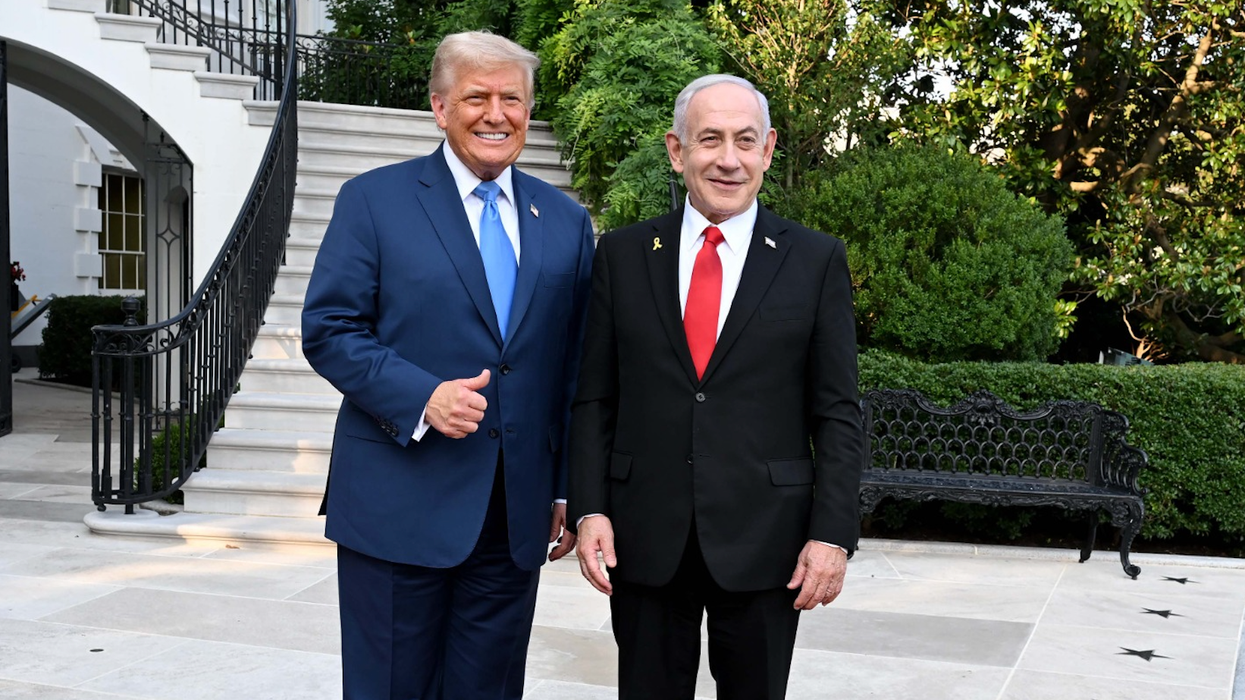
Israeli President Isaac Herzog said Wednesday that he had received a request from US President Donald Trump to pardon Prime Minister Benjamin Netanyahu, who is currently on trial in Israel for alleged bribery, fraud, and breach of trust.
“I hereby call on you to fully pardon Benjamin Netanyahu, who has been a formidable and decisive War Time Prime Minister, and is now leading Israel into a time of peace," Trump wrote in a letter to Herzog.
While Trump said that he "absolutely respect[s] the independence of the Israeli Justice System,” he denounced the case against Netanyahu as “political, unjustified prosecution.”
"It is time to let Bibi unite Israel by pardoning him, and ending that lawfare once and for all," Trump added, using Netanyahu's nickname.
U.S. President Donald Trump, also a criminal, has formally requested Israeli President Isaac Herzog to grant a pardon to Prime Minister Benjamin Netanyahu.
[image or embed]
— Josep Goded (New Main Account) (@josepgoded2.bsky.social) November 12, 2025 at 2:54 AM
Herzog's office responded to Trump's letter with the following statement:
The president holds great respect for President Trump and repeatedly expresses his appreciation for Trump’s unwavering support of Israel and his tremendous contribution to the return of the hostages, the reshaping of the Middle East and Gaza, and the safeguarding of Israel’s security. Without detracting from the above, as the president has made clear on multiple occasions, anyone seeking a pardon must submit a formal request in accordance with the established procedures.
Opposition leader Yair Lapid noted in a social media post that "Israeli law stipulates that the first condition for receiving a pardon is an admission of guilt and an expression of remorse for those actions."
Amir Fuchs, a senior researcher at the Jerusalem-based think tank Israel Democracy Institute, told the Washington Post that “pardon is a word for forgiveness, a pardon without some kind of admission of guilt is very unusual and even illegal."
Fuchs added that any pardon based on Trump's request could be viewed as giving a "green light" to corruption and "undermining the rule of law."
Many social media users responded to Trump's letter with the same four words—"birds of a feather"—noting that the Republican president was convicted of 34 felony charges related to the falsification of business records regarding hush money payments to cover up sex scandals during the 2016 presidential election.
In addition to his domestic trial, Netanyahu is also a fugitive from the International Criminal Court in The Hague, where he and former Defense Minister Yoav Gallant are wanted for alleged war crimes and crimes against humanity in connection with the Gaza genocide.
Herzog also faces criminal complaints filed in Switzerland alleging incitement to genocide over remarks including a suggestion that Palestinian civilians in Gaza were legitimate targets for Israeli strikes because "it is an entire nation out there that is responsible" for the Hamas-led October 7, 2023 attack.
Like former President Joe Biden before him, Trump has supported Israel with billions of dollars worth of US armed aid and diplomatic cover including vetoes of United Nations Security Council ceasefire resolutions.
In the first prosecution of a sitting Israeli prime minister, Netanyahu was indicted in 2019 for allegedly giving or offering lucrative official favors to media tycoons in exchange for positive news coverage or gifts valued at hundreds of thousands of dollars. The prime minister—who has also been accused of drawing out Israel's assault on Gaza to delay his case—denies any wrongdoing and, like Trump, has called his prosecution a "witch hunt."
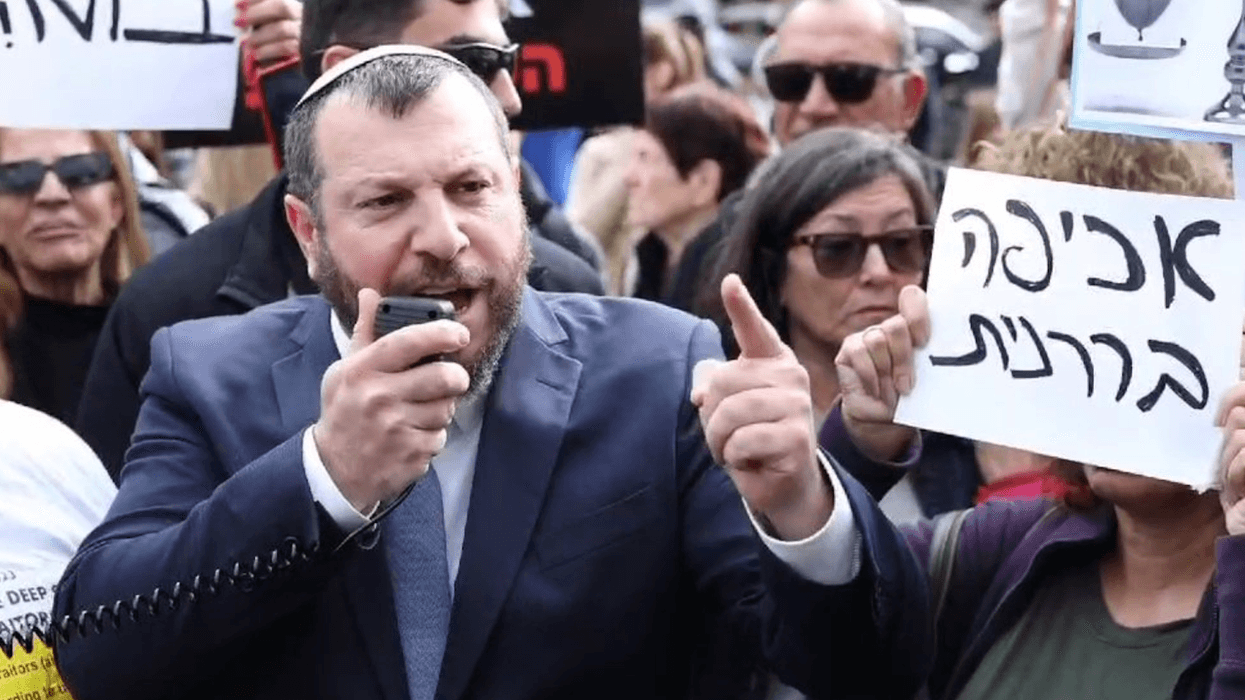
"The government is racing ahead for Gaza to be wiped out," Eliyahu said during a radio interview. "Thank God, we are wiping out this evil."
Israeli Heritage Minister Amichai Eliyahu asserted Thursday that the far-right government of Prime Minister Benjamin Netanyahu is erasing Gaza, which Eliyahu said will be ethnically cleansed of Palestinians to make way for Jewish recolonization.
"The government is racing ahead for Gaza to be wiped out," Eliyahu, a leading member of the Jewish Power party, told the Haredi radio station Kol Barama. "Thank God, we are wiping out this evil. We are pushing this population that has been educated on Mein Kampf."
"All of Gaza will be Jewish," the minister vowed, adding that Arabs who are loyal to Israel may remain in the strip, because "we aren't racists."
Eliyahu took part in last year's "Preparing to Settle Gaza" conference, which preceded U.S. President Donald Trump's proposal to "level" Gaza, forcibly expel its Palestinians, and transform the coastal enclave into "the Riviera of the Middle East."
As the death toll from Israel's forced mass starvation of Gaza continued to rise, Eliyahu denied that Palestinians are dying as a result of Israel's blockade, asserting that "there's no hunger in Gaza."
"But we don't need to be concerned with hunger in the strip," he told Kol Barama during Thursday's interview. "Let the world worry about it."
Last month, Eliyahu called for the bombing of Gaza food warehouses, asserting that Palestinians in the strip "need to starve."
In November 2023, Netanyahu took the rare step of suspending Eliyahu after he endorsed the "option" of dropping a nuclear bomb on Gaza to "kill everyone" there, because "there are no people uninvolved" with Hamas, which led the October 7, 2023 attack on Israel.
Eliyahu's remarks were subsequently entered as evidence of intent in the genocide case filed by South Africa against Israel at the International Court of Justice in The Hague. Nine pages of South Africa's 84-page initial filing in the ICJ case contain statements of "genocidal intent against the Palestinian people" made by Israeli officials.
Israeli opposition leader Yair Lapid said Thursday that Eliyahu's comments "are a moral attack and a propaganda disaster."
"Israel will never convince the world of the justice of our war against terror as long as we are led by an extremist minority government with ministers who sanctify blood and death," Lapid argued.
"IDF soldiers do not fight, are killed, and injured to wipe out a civilian population," he added. "They fight to return the kidnapped and ensure Israel's security."
Nearly 60,000 Palestinians have been killed by Israeli forces since October 2023, most of them women and children, according to the Gaza Health Ministry. Peer-reviewed studies have shown that the ministry's figures are likely a vast undercount.
More than 142,500 Gazans have also been wounded, and at least 14,000 others are missing and presumed dead and buried beneath the rubble of hundreds of thousands of bombed buildings.
In addition to the ICJ genocide case, the International Criminal Court—also located in The Hague—has issued arrest warrants for Netanyahu and former Israeli Defense Minister Yoav Gallant for alleged war crimes and crimes against humanity in Gaza, including murder and forced starvation.
Several Israeli lawmakers and one minister took part in the attempt to free the nine reservists, who were hailed as heroes by multiple Cabinet members.
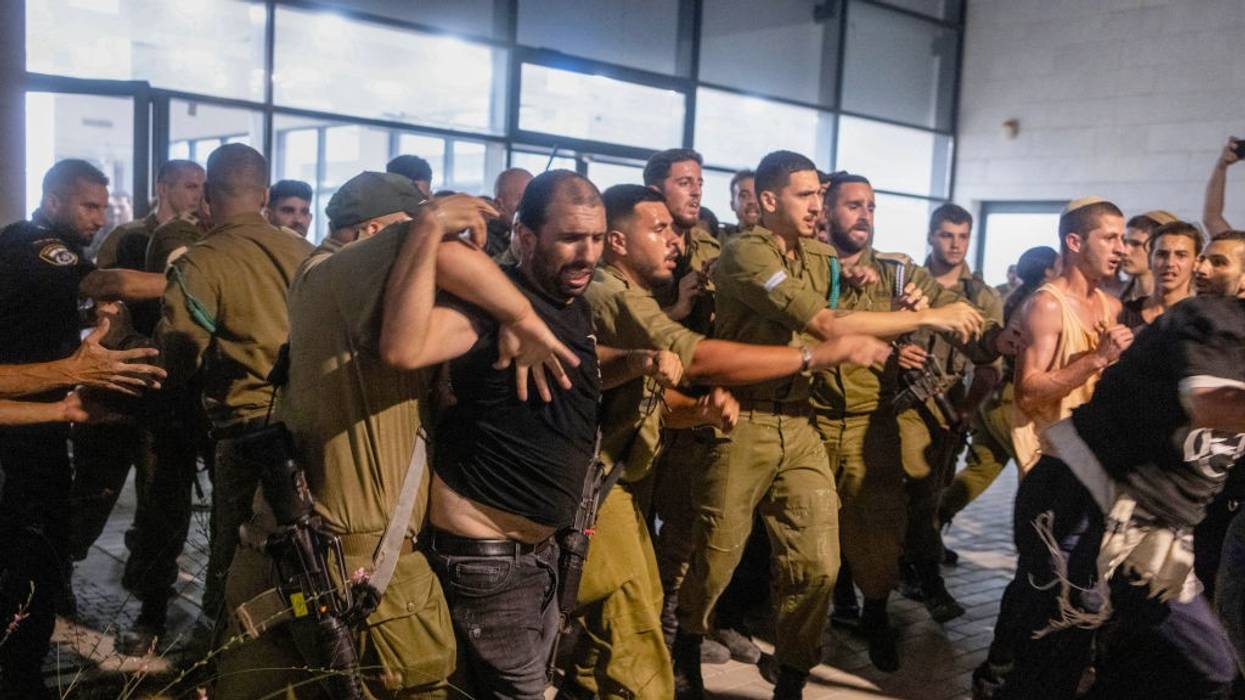
Far-right Israelis including government officials stormed two military bases late on Monday, sparking clashes with troops and police over the arrest of Israel Defense Forces reservists who allegedly gang-raped a Palestinian prisoner.
Hundreds of protesters broke into the notorious Sde Teiman base in the Negev Desert in an attempt to stop the detention of nine reserve troops accused of sodomizing a Palestinian jailed there.
According to the Israeli newspaper Haaretz, the victim is hospitalized with severe injuries and is unable to walk.
The nine suspects were then taken to the Beit Lid army base, which was also mobbed by at least dozens of demonstrators.
Base invaders included armed and masked members of Force 100, the military unit tasked with guarding prisoners at Sde Teiman. One of the nine arrested soldiers is reportedly a major in Force 100.
High-ranking Israeli government officials also took part in Monday's riots, including Heritage Minister Amichai Eliyahu of the Otzma Yehudit, or Jewish Power, party. Members of the Knesset, Israel's Parliament, including Yitzhak Kroizer and Limor Son Har-Melech (Otzma Yehudit), Zvi Sukkot (Religious Zionism), and Tally Gotliv (Likud), were also present.
"The military advocate general is a criminal. The people of Israel will fight against enemies from outside and enemies from within," Har-Melech said during the protest.
Journalists including a woman who works for the state broadcaster Kan said they were attacked while covering the riot.
Yair Lapid (Yesh Atid), the Israeli opposition leader, called for the arrest and imprisonment of Knesset members who took part in invasions.
"This is not a riot, this is an attempted coup by an armed militia against a weak prime minister who is unable to control his government," Lapid said on social media.
"We are not on the brink of the abyss, we are in the abyss. All red lines were crossed today," he added. "MKs and ministers who participate in the invasion of violent militias into military bases are a message to the state of Israel: They are done with democracy, they are done with the rule of law."
Israeli Defense Minister Yoav Gallant (Likud) urged Prime Minister Benjamin Netanyahu (Likud) to investigate allegations that National Security Minister Itamar Ben-Gvir (Otzma Yehudit) thwarted police intervention against the rioters.
"Backing and active participation of elected officials in riots at army bases, while issuing harsh statements against senior army officers, is a severe and extremely dangerous phenomenon that harms security, social cohesiveness, and Israel's international reputation," Gallant said.
Netanyahu said he "strongly condemns the break-in."
Ben-Gvir, on the other hand, condemned what he called the "shameful" detention of the nine soldiers, whom he described as "our best heroes."
He acknowledged that conditions inside Israeli prisons "have indeed worsened," adding, "I am proud of that."
Echoing Ben-Gvir, Israeli Finance Minister Bezalel Smotrich (Religious Zionism) called the nine detained reservists "heroic warriors."
In a heated Knesset exchange, Ahmad Tibi of the Arab Movement for Renewal party asked Likud MK Hanoch Milwidsky if raping Palestinian prisoners is "legitimate."
"Yes! If he is a Nukhba everything is legitimate to do him!" Milwidsky thundered, referring to an elite Hamas commando unit.
MK Ahmad Tibi (TA'AL): To insert a stick in a person's rectum, is that legitimate???
MK Hanoch Milwidsky (Likud): Yes! If he is a Nukhba everything is legitimate to do him!
Some of you have probably already heard about the events in Sde Teiman concentration camp today: MPs came… pic.twitter.com/JynQZOqnDH
— B.M. (@ireallyhateyou) July 29, 2024
Erez Tadmor, a former speechwriter for Netanyahu,
claimed that Sde Teiman prisoners may have raped themselves.
The Public Committee Against Torture in Israel denounced the alleged rape of the Palestinian prisoner in Sde Teiman.
"Since the beginning of the war, we claimed that the Sde Teiman was operating as an 'ex-territory', and the soldiers stationed there were acting outside any law—first in their treatment of detainees, and now towards military law enforcement agents," the group said.
"Instead of absolute condemnation, some Israeli far-right leaders have rallied to support the suspects of abuse, which is emblematic of the root causes that enable such abuse to happen in the first place," the group added.
Orit Sulitzeanu, executive director of the Association of Rape Crises Centers in Israel, told Haaretz she is "shocked" by the Sde Teiman rape allegation.
"There will never be any circumstances that would justify the use of this sickening practice, not even against the worst of our enemies," he said. "Sexual harm and sexual abuse are serious crimes and we must not remain silent when they happen."
Former prisoners including children and Israeli whistleblowers at Sde Teiman—often called "Israel's Guantánamo Bay"—have described rampant torture and abuse at the facility, which is used to imprison Palestinians captured in the Gaza Strip. According to their testimonies, prisoners have been raped, electrocuted, mauled by dogs, burned with cigarettes, severely beaten, starved, and subjected to 24-hour shackling sometimes leading to amputations.
The New York Times reported last month that one former Sde Teiman prisoner said he was forced to "sit on something like a hot metal stick and it felt like fire," and that another detainee "died after they put the electric stick" up his anus.
IDF officials told Haaretz last month that the IDF is investigating the in-custody deaths of dozens of detainees, including 36 who died or were killed at Sde Teiman since October.
Palestinians formerly held at Sde Teiman said groups of 10-20 Israeli civilians were allowed to record torture sessions in which the men, stripped nearly naked, were beaten with metal batons, electrocuted, and had hot water poured over their heads. The ex-prisoners said some of the Israelis laughed while filming their torture.
On Tuesday, Israel's High Court of Justice said it will hold a second hearing on August 7 regarding a petition seeking to close Sde Teiman over alleged torture and abuse committed there, The Times of Israel reported.
Also on Tuesday in a separate case from the nine arrests, an IDF reservist identified as Staff Sgt. Yisrael Zakaria Hajbi was indicted for allegedly using "severe violence against the detainees he was entrusted with guarding" at Sde Teiman and filming the abuse.
While Republican kinship to Israel remains strong, that of the Democrats is not.
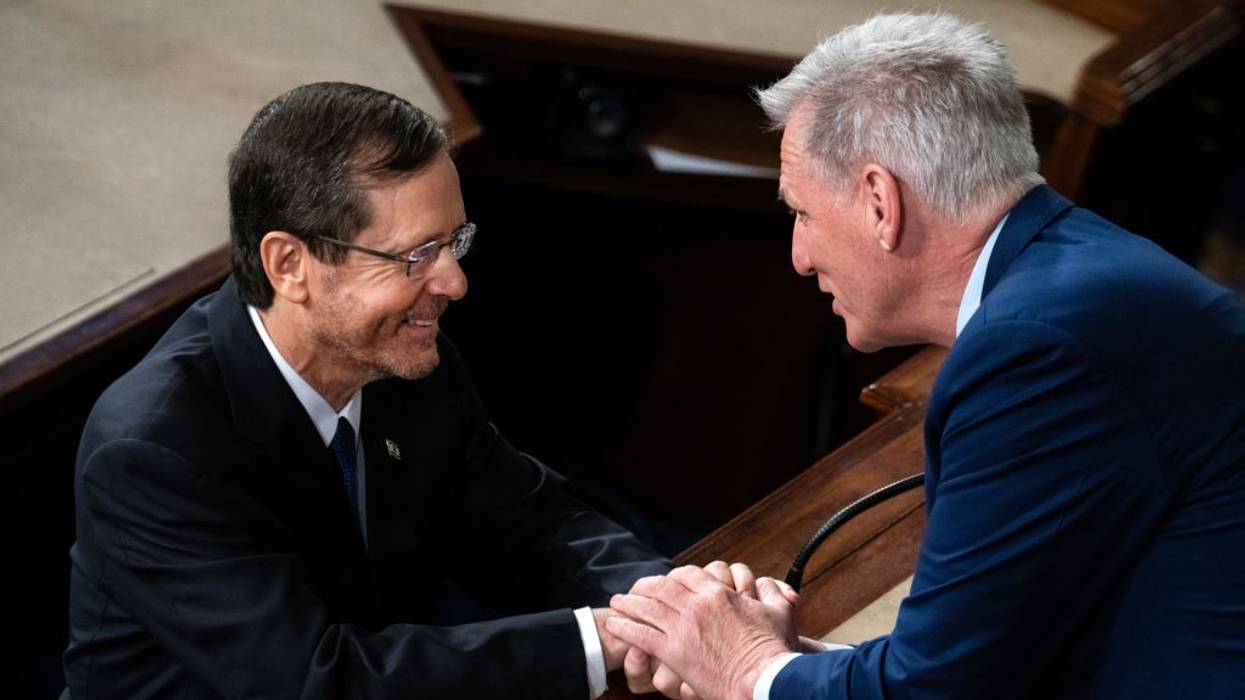
Israeli President Isaac Herzog added nothing of great value in his speech at the United States Congress on July 19.
His was the typical language. He spoke of a “sacred bond,” touted the shared experience between both nations as “unique in scope and quality,” and celebrated the great, common “values that reach across generations.”
But this theatrical language was meant to hide an uncomfortable truth: The relationship between Israel and the U.S. is changing at a fundamental level.
Two days before Herzog’s speech, Israel’s opposition leader and former prime minister, Yair Lapid, declared that “the United States is no longer (Israel’s) closest ally.”
While it is true that Netanyahu played a role in widening the distance between Tel Aviv and Washington, that distance was growing based on other dynamics—a mixture of political, geopolitical, and demographic changes and trends.
Lapid’s words were a mix of facts and political opportunism.
Lapid and others in his camp are keen on blaming Israeli Prime Minister Benjamin Netanyahu for the waning relationship between both countries; or to use more pertinent language, for weakening the “sacred,” “unbreakable bond,” which has for many years joined the two countries together.
Lapid’s assessment, however, is imprecise. While it is true that Netanyahu played a role in widening the distance between Tel Aviv and Washington, that distance was growing based on other dynamics—a mixture of political, geopolitical, and demographic changes and trends.
But whose assessment is closer to the truth? Herzog’s claim of a “sacred bond,” or Lapid’s more dramatic assertion of a faltering alliance?
To address this question, we must look beyond the exaggerated public statements made by officials from both countries and particularly from the leaders of the U.S.’ two powerful parties, the Republicans and the Democrats.
In terms of language, the leaderships of both parties insists that Washington’s devotion to Israel is beyond politics and that Israel’s security is above America’s own political polarization.
In a speech at the Israeli Knesset (parliament) on May 1, U.S. House speaker Kevin McCarthyfollowed the typical American script on Israel. He, too, spoke of an “unbreakable bond” and “bipartisan U.S. support” and, expectedly, was met with resounding applause.
President Joe Biden, too, is a resolute supporter of Israel. His oft-repeated phrase, “You don’t have to be Jewish to be a Zionist,” is now a mantra among U.S. allies of Israel.
Yet, while Republican kinship to Israel remains strong, that of the Democrats is not; so weak, in fact, that in June 2022, a Pew Research Center poll said that “more Democrats and those who lean Democratic express a favorable view of Palestinians than of Israelis.”
So, the notion that Israel is a common cause between America’s top political parties is simply untrue. No wonder that Biden has, for seven months, delayed inviting Netanyahu to the White House following the formation of Israel’s latest government coalition.
Crowded with far-right politicians, Netanyahu’s coalition is simply a liability to any democratic system anywhere in the world.
Many Israelis agree, believing wholly or partially that their government is no longer democratic—due to Netanyahu’s growing control over the country’s once-independent institutions.
Amid all of this, Biden is struggling to find the balance.
“I'm very concerned,” Biden told reporters last May. “(Israel) cannot continue down this road, and I've sort of made that clear.”
This is the same Biden who described as “bizarre” a proposal by former U.S. presidential candidate Bernie Sanders to withhold funds from Israel due to its mistreatment of Palestinians.
Washington gives Israel at least $3.8 billion annually in military aid. If the anti-Israel trend among Democrats continues, the calls of withholding funds might, in the coming year, no longer appear so “bizarre.”
The new generation of Democratic politicians is viewing Israel, at least the Israeli Right, as an extension of the Republican Party, thus the growing hostility towards Israel.
Under intense pressure from the pro-Israel lobby, on July 17, Biden finally invited Netanyahu to the White House. The visit, however, considering the intensifying anti-Netanyahu protests, is unlikely to reset the relationship between Washington and Tel Aviv.
In fact, even if the protests subside, relations between the U.S. and Israel will not be the same.
For over a decade, the U.S. has slowly, but unmistakably, walked away from the Middle East, partly because of the disastrous outcomes of the Iraq invasion, and partly due to the growing power of China in the Asia-Pacific region.
The U.S. retreat has rung alarm bells in Israel, with Israeli politicians and mainstream intellectuals urging self-reliance. This led to an unrelenting Israeli search for new allies, mostly in the Global South.
The success, from Netanyahu’s viewpoint, of this campaign has helped Israel somewhat liberate itself from any commitment to the U.S. agenda in the Middle East, including engaging in the U.S.-led “peace process” with the Palestinian leadership.
Despite Biden’s insistence, during his Middle East trip in July 2022, on the need for a “reinvigorated” peace process, Tel Aviv neither supported nor even seemed to notice Washington’s new quest.
Back then, Netanyahu was not even a prime minister, as Israel was ruled by a government coalition under the leadership of Lapid himself.
While Netanyahu is being conveniently blamed for the dwindling ties, the disengagement from Washington was, in fact, mostly a collective decision and protracted process.
When, on July 10, Israel’s far-right minister of National Security Itamar Ben-Gvir declared that “President Biden must internalize that Israel is no longer another star in the American flag,” he was merely reiterating a popular line used by others before him.
Even Netanyahu resorted to similar language when, in March, he told the U.S. administration that Israel is “a strong, proud, and independent democracy.”
Though much of Israel’s self-proclaimed “independence” was an outcome of unconditional U.S. support, Israelis hardly acknowledge this fact.
Israel’s Ministry of International Defense Cooperation Directorate (SIBAT) is constantly reporting on the growth in Tel Aviv’s military exports to the rest of the world. These exports reached $12.5 billion last year. Most of this technology was either developed by the U.S., or jointly with the U.S., and much of the research was funded by American taxpayers.
Nonetheless, this sense of “independence” has given Netanyahu the needed confidence to abandon the Democratic Party in favor of the more accommodating Republicans.
For their part, the new generation of Democratic politicians is viewing Israel, at least the Israeli Right, as an extension of the Republican Party, thus the growing hostility towards Israel.
In the final analysis, both Herzog and Lapid are partly wrong: The “sacred bond” is less sacred than ever and, whether the U.S. is Israel’s closest ally or not, it makes little difference, since Israel is unlikely to find an alternative to Washington’s blind support anytime soon.
The Palestinian resistance group Hamas warned it would not "sit idly by" in the face of what Israeli opposition leader Yair Lapid called "a deliberate provocation that will put lives in danger and cost lives."
Israel's far-right national security minister on Monday postponed a planned visit Islam's third-holiest site amid warnings from the country's opposition leader and Palestinian officials that such a trip would have deadly consequences.
The Times of Israel reports Minister of National Security Itamar Ben-Gvir temporarily put off a promised visit to the Al-Aqsa Mosque compound in Jerusalem—which sits on what Jews call the Temple Mount, Judaism's most sacred site since biblical times—after speaking with Prime Minister Benjamin Netanyahu of the right-wing Likud party.
The previous day, Ben-Gvir vowed to visit the contested site—which has been illegally occupied by Israel for over half a century—sometime this week, possibly as soon as Tuesday or Wednesday.
Yair Lapid, who stepped down as Israel's prime minister last week and now leads the opposition, said Monday that "Itamar Ben-Gvir must not go up to Temple Mount. It is a deliberate provocation that will put lives in danger and cost lives."
Lapid, of the liberal Yesh Atid party, added that Netanyahu must tell Ben-Gvir: "'You are not going to the Temple Mount. People will die.'"
However, Ben-Gvir, who is also the leader of the Otzma Yehudit (Jewish Power) party, declared that "no one will threaten us or tell us anything."
"The Temple Mount is the holiest place for the people of Israel. We will not give up on any place in the land of Israel," he continued.
"I'm against the racist policy at the Temple Mount, as well as the racism against Jews," added Ben-Gvir—who was convicted in 2007 of incitement to racism and supporting a terrorist organization after he advocated the ethnic cleansing of Palestinians.
The Palestinian resistance group Hamas, which governs Gaza, warned Monday that it "won't sit idly by" if Ben-Gvir visits Al-Aqsa.
Middle East Eye reports Hamas spokesperson Abd al-Latif al-Qanua called the planned visit "another example of the arrogance of the settler government and their future plans to damage and divide Al-Aqsa mosque."
"The Palestinian resistance will not allow the neo-fascist occupation government to cross the red lines and encroach on our people and our sanctities," he added.
Otzma Yehudit lawmaker Zvika Fogel—a former Israel Defense Forces brigadier general who in 2018 advocated killing Palestinian children—said that Ben-Gvir "will visit the Temple Mount whenever he sees fit."
"We shouldn't treat his visit as something that will lead to an escalation," he added. "Why not see it as part of realizing our sovereignty?"
Under an Israeli-enforced policy, only Muslims are permitted to pray at Al-Aqsa. Jews and others are allowed to visit during assigned times and under strict restrictions.
Last year, attacks on the compound by Israeli occupation forces and settler-colonists wounded hundreds of Palestinians.
Ben-Gvir—who believes Isreal's founders "didn't finish the job" of ethnically cleansing all Arabs from Palestine—has visited Al-Aqsa several times while serving in the Knesset, Israel's parliament. He also led an October 2022 Jewish supremacist march through the Sheikh Jarrah neighborhood of occupied East Jerusalem, where he brandished a pistol and threatened to "mow down" Palestinians protesting the ethnic cleansing of their neighborhood.
"We have to be concerned about next intifada."
King Abdullah of Jordan—whose Hashemite monarchy has had custodianship of Jerusalem's holy sites for nearly 99 years—told CNN last week that "I always like to believe that, let's look at the glass half full, but we have certain red lines. And if people want to push those red lines, then we will deal with that."
"We have to be concerned about next intifada," the king continued, referring to the mass Palestinian uprisings that occurred from 1987-93 and again from 2000-05. The second intifada erupted after then-Israeli opposition leader Ariel Sharon (Likud) visited Al-Aqsa.
"If that happens, that's a complete breakdown of law and order and one that neither the Israelis nor the Palestinians will benefit from," Abdullah added. "I think there is a lot of concern from all of us in the region, including those in Israel that are on our side on this issue, to make sure that doesn't happen."
On Monday, Israeli forces shot dead three Palestinian youths, bringing the total number of Palestinians killed since heightened violence erupted on 1 October across the occupied West Bank and Gaza Strip and inside present-day Israel to 27.
More than 1,300 Palestinians have been injured by live ammunition and rubber-coated steel bullets, according to the Palestinian Authority health ministry.
In the same period, four Israelis have been killed and 67 injured.
Palestinians have called for a general strike in the West Bank, Gaza Strip and present-day Israel to protest Israel's escalating repression.
As violence continues, Palestinian children and teenagers make up a large proportion of the dead and injured.
Prime Minister Benjamin Netanyahu has ordered the deployment of up to 2,000 paramilitary Border Police reservists in occupied East Jerusalem.
On Monday evening in central Gaza, Israel claimed that about 20 Palestinians broke through a boundary fence near al-Bureij refugee camp, reportedly managing to enter Israel before the army responded with live rounds and tear gas.
In recent days, 9 Palestinians have been killed by Israeli fire across the boundary into Gaza and a pregnant mother and her baby daughter were killed in an air strike.
Mustafa Adel al-Khatib, 18, was shot dead at the entrance to the Old City in Jerusalem.
Israeli police said al-Khatib attempted to stab a Border Police officer, before other officers in the area open-fired on him.
But Palestinian witnesses told Ma'an News Agency al-Khatib had no knife.
Fifteen-year-old Hasan Khalid Manasra was shot by police in the Israeli settlement of Pisgat Zeev in East Jerusalem.
He was with his cousin Ahmad Salih Manasra, 13, who was seriously injured. Israeli police allege that boys stabbed and injured two Israelis, an adult and a 13 year old.
Hasan died immediately, while Ahmad remains in critical condition.
A video reported to be of Ahmad gasping for breath as he bleeds on the ground was uploaded to social media by an Israeli passerby.
Onlookers can be heard shouting insults at the bleeding boy, including, "Die, son of a whore!"
Another person tells the police to "give him one in the head."
The video has generated shock even among Palestinians regularly exposed to the occupation's violence.
Wattan TV said that it demonstrated the "ISIS-like and terrorist" mentality of Israeli occupation forces and settlers toward Palestinians.
A third Palestinian was killed Monday night after he allegedly stabbed and lightly injured an Israeli soldier on a bus in Jerusalem and tried to steal his gun. The name of the person was not immediately available.
The same day, a teenage Palestinian girl was shot and wounded in Jerusalem.
A schoolmate interviewed by Shehab News Agency identified the teenage girl as Marah al-Bakri.
Police allege that she had tried to stab a police officer, who was slightly injured.
On Sunday, 13-year-old Ahmad Sharaka was killed by a live bullet in the neck at a protest outside Ramallah in the West Bank, near the Israeli settlement of Beit El.
A video filmed in Hebron shows 65-year old Ziad Abu Khalil confronting Israeli soldiers, shouting that they should be ashamed of themselves for shooting children.
Abu Khalil showed no fear even as the soldiers raised their guns. He spoke for some time before he collapsed on the ground and was rushed to hospital by Palestinian medics.
On Sunday, the Palestinian legal rights group Al-Haq published the names of all Palestinians who have been killed since 1 October:
Yair Lapid, a former Israeli minister and leader of the ostensibly centrist party Yesh Atid has encouraged the Israeli Jewish public to "shoot to kill" when confronted with an alleged attacker.
"Don't hesitate, even when an incident just starts, shooting to kill is the right thing to do," Lapid said.
"The directives should specify shooting to kill when anyone pulls out a knife or screwdriver or whatever." Israel's Haaretz reported that Lapid "clarified that authorities will give full legal backing to such actions."
Israeli media report that police arrested dozens of people in present-day Israel and the occupied West Bank, including 33 in overnight raids on Sunday.
Ten people were arrested near Ramallah for alleged involvement with Hamas, while others are being investigated for "terrorist activity, disturbance of the peace, and violence against civilians and security forces," according to Haaretz.
Police are also cracking down on the Northern Branch of the Islamic Movement in Israel.
Netanyahu has instructed the Shin Bet secret police to work with legal advisors to prepare the case to outlaw the party.
One of the party's leaders, Yousif Abu Jama, was arrested on suspicion of organizing an "illegal gathering."
Palestinians have called for a general strike on Tuesday in the occupied West Bank and Gaza and in Palestinian cities inside present-day Israel.
The Higher Follow-Up Committee for Arab Citizens of Israel, a body made up of elected officials from the Palestinian community in present-day Israel, has called the strike.
Palestinian members of Israel's parliament, the Knesset, have expressed support for it as well.
"In recent days this sense of security was harmed by assaults by Jewish racists against Arabs," Aida Touma-Sliman, a Palestinian member of the Knesset from Akka, said. "More importantly, however, the police and the prime minister [sic] are calling on citizens to carry weapons, which can pose a real danger to the lives of Arab individuals."
The Joint List, the grouping of Palestinian legislators in the Knesset, urged broad public participation in rallies protesting Israel's crackdown on Palestinians.
Adalah, a legal rights group for Palestinian citizens of Israel, has monitored an uptick in "brutal and repressive" tactics adopted by the Israeli police, including arbitrary arrests of minors, "preventive arrests" of activists intended to stifle demonstrations, arrests of activists' family members and severe physical violence against protesters, particularly in East Jerusalem.
Another law to increase the penalty for throwing stones passed its first reading in the Knesset.
Punishments for minors in present-day Israel and occupied East Jerusalem used to be that parents' benefits would be frozen or the minor would be sentenced to jail time.
Sponsored by Ayelet Shaked, the justice minister who is notorious for her violent anti-Palestinian incitement, the new law would allow both penalties to be issued at once.
On Monday, three minors were arrested in Umm al-Fahim and two more in Jerusalem for allegedly throwing stones.
In an attempt to appease demands for tougher "security," the mayor of the northern Israeli city Kiryat Bialik instructed police to inspect the ID cards of Arab workers at construction sites in the city, Ynet reported.
"We are the masters of this land," the mayor, Eli Dukorsky, wrote in a directive to city officials.