

SUBSCRIBE TO OUR FREE NEWSLETTER
Daily news & progressive opinion—funded by the people, not the corporations—delivered straight to your inbox.
5
#000000
#FFFFFF
To donate by check, phone, or other method, see our More Ways to Give page.
Daily news & progressive opinion—funded by the people, not the corporations—delivered straight to your inbox.

"These people are such incredible cowards," said Rep. Pramila Jayapal. "They know that what Pete Hegseth has done, his role in driving us into the war, is absolutely wrong."
US House Speaker Mike Johnson said Wednesday that with seven weeks to go until Election Day, it was time for lawmakers to "go home to their districts and make the case to the American people"—a day earlier than scheduled.
But with the US public overwhelmingly disapproving of President Donald Trump's war in Iran and demanding accountability for his bombing of boats in the Caribbean Sea, Republicans may be headed home hoping their constituents don't ask questions about those issues, particularly as Johnson (R-La.) faced accusations of ending the House session early in order to avoid a vote pertaining to them.
Johnson announced the early adjournment a day after Rep. Thomas Massie (R-Ky.) filed articles of impeachment against Defense Secretary Pete Hegseth, arguing in the resolution that Hegseth violated the War Powers Resolution of 1973 by initiating strikes against Iran without authorization from Congress and continuing to attack the country past the 60-day mark set by the law.
He also accused Hegseth of “ignoring laws that minimize civilian casualties," citing an attack that killed more than 150 children and teachers at a school in Minab, Iran, and of conducting an illegal campaign of extrajudicial killings by overseeing dozens of boat bombings in the Caribbean and eastern Pacific Ocean that have killed at least 230 people since last September.
Massie's resolution was privileged, meaning it had to be taken up by the House within two legislative days.
With House members now on their way back to their districts to campaign ahead of the midterm elections, lawmakers will be unable to pursue the impeachment effort until at least November. They are not set to return to Capitol Hill until after Americans vote on November 3.
"These people are such incredible cowards," said Rep. Pramila Jayapal (D-Wash.) of her Republican colleagues. "They know that what Pete Hegseth has done, his role in driving us into the war, is absolutely wrong."
Republicans just CANCELLED votes for tomorrow, the last legislative day before the midterms.
Why? Because they’re afraid we’ll impeach Pete Hegseth. What a bunch of cowards. pic.twitter.com/vTTfNNtpmP
— Rep. Pramila Jayapal (@RepJayapal) September 16, 2026
Johnson derided Massie's resolution as "ridiculous" and "a publicity stunt by someone who wants attention."
“It’s a publicity stunt by someone who wants attention," he said. "It will immediately be tabled, of course, but we probably won’t do that today. We’ll probably do it when we come back. But it’s a stunt. Secretary Hegseth has done an extraordinary job at the Department of War. We’re in the middle of international conflicts right now, and we should not be playing games with national security."
A motion to table a resolution immediately kills the measure without debate.
"We're calling off Congress," said Massie on the House floor Wednesday, "and we're in the majority... I would implore all of us to take it up with the leadership. Why are we going to be denied a debate on whether there should be an impeachment or not?"
Massie: We’re in the majority. Why are we whining about The Save Act? We won the elections. Why are we saying the elections were stolen if we won them all? pic.twitter.com/sab4GGViw3
— Acyn (@Acyn) September 16, 2026
Public polling suggests most Americans likely do not think Hegseth and other top officials are doing an "extraordinary job" regarding the war in Iran, as Johnson claimed.
A survey in late July showed that nearly two-thirds of Americans felt the war was not worth fighting, and an Associated Press poll in June found the same percentage of respondents disapproved of Trump's handling of issues concerning Iran. The war has sent oil and gas prices skyrocketing, and a majority of voters told Reuters/Ipsos in April that they blamed the Trump administration.
Massie noted that Johnson's maneuver would make it harder for supporters of a discharge petition to force a vote on the Epstein Files Transparency Act to gather the 218 signatures they need.
"I thought we’re supposed to be running a government here. Speaker Mike Johnson just sent the House home. Why? Because Rep. Thomas Massie filed articles of impeachment against Pete Hegseth," said Rep. Mike Levin (D-Calif.). "Speaker Johnson, the WEAKEST speaker of all time, was so scared that we had the votes to impeach Hegseth and hold him accountable that he’s sending us all home to make sure it doesn’t happen."

"By directing the Department of Defense in a manner that foreseeably dismantled the safeguards necessary to distinguish civilian objects from military objectives, Secretary Hegseth thereby effected the murder of civilians."
Rep. Thomas Massie on Tuesday filed articles of impeachment against US Defense Secretary Pete Hegseth for his roles in waging an illegal war against Iran and conducting a spree of boat bombings that many human rights groups and international law experts consider acts of murder.
Massie (R-Ky.), who earlier this year lost a Republican primary election to a challenger endorsed by President Donald Trump, accused Hegseth of a wide variety of misconduct across a set of eight impeachment articles.
The most prominent allegedly impeachable conduct highlighted by Massie involves the Iran War, which was launched in February without any congressional authorization.
Massie argued that, in carrying out the war, Hegseth violated the War Powers Resolution of 1973, which specified that the president cannot send the US military into combat operations absent "a declaration of war, specific statutory authorization, or a national emergency created by attack upon the United States, its territories or possessions, or its armed forces."
Congress, Massie noted, did not declare war against Iran, nor enact "any specific statutory authorization" for the use of force against the country. Additionally, Massie wrote, "no national emergency had been created by an attack by the Islamic Republic of Iran upon the United States, its territories or possessions, or its armed forces."
Massie said that Hegseth "nevertheless knowingly executed and implemented the order to commence such hostilities," which he described as an abuse of his powers.
The GOP lawmaker argued in a separate impeachment article that Hegseth further violated the law by ignoring a war powers resolution passed earlier this year by both chambers of the US Congress that compelled him to end hostilities with Iran.
In a fourth impeachment article, Hegseth is accused of "ignoring laws that minimize civilian casualties" by tearing up rules of engagement that the defense secretary has openly derided as "stupid."
It was this recklessness, Massie alleged, that led to the deadly US attack on the Shajareh Tayyebeh Elementary School in the city of Minab, Iran, which killed more than 150 schoolchildren and dozen teachers.
"By directing the Department of Defense in a manner that foreseeably dismantled the safeguards necessary to distinguish civilian objects from military objectives," Massie wrote, "Secretary Hegseth thereby effected the murder of civilians and abused the trust of the men and women under his command by requiring them to conduct military operations within a targeting and legal-review system that he had deliberately degraded."
The fifth article of impeachment accuses Hegseth of conducting an unlawful campaign of extrajudicial killings by bombing alleged drug-trafficking vessels in international waters.
Massie said that this campaign sentenced people to death merely on the suspicion of criminal conduct, "without judicial process, without congressional authorization, and without establishing a lawful basis for treating such persons or vessels as military targets."
The result of this, Massie continued, is that Hegseth has anointed himself "the roles of judge, jury, and executioner and asserted a unilateral power to determine who may live and who may die."
"Such a power is foreign to the rule of law," Massie continued, "repugnant to the legal traditions and fundamental values of the United States and the Western world, and contrary to United States law and customary international law."
At least 225 people so far have been killed because of the boat bombing spree.
Other articles of impeachment accuse Hegseth of attempting to suppress free speech by threatening to court marshal Sen. Mark Kelly (R-Ariz.) after he reminded US military personnel that they should not carry out illegal orders; of illegally kidnapping a foreign leader by having the military abduct Venezuelan President Nicolás Maduro; and of launching unauthorized combat operations in Yemen.

"We need to now fight to strip this amendment in the conference between the House and the Senate," said Rep. Ro Khanna.
The Republican-controlled US House of Representatives voted Wednesday in favor of a record $1.15 trillion military spending authorization bill containing a highly controversial provision to increase cooperation between the US and Israeli armed forces.
House lawmakers voted 216-212, almost entirely along party lines, to pass HR 8800, the National Defense Authorization Act (NDAA) for fiscal year 2027.
Republicans voted 209-7 in favor, while Democrats voted 205-6 against the measure. Democratic Reps. Henry Cuellar (Texas), Don Davis (NC), Jared Golden (Maine), Vicente Gonzalez (Texas), Adam Gray (Calif.), and Marie Gluesenkamp Perez (Wash.) voted "yes." Independent Rep. Kevin Kiley of California also voted in favor of the bill.
Massie and Rep. Ro Khanna (D-Calif.) submitted an amendment to strip Section 219—which would integrate American and Israeli research and development—from the proposed NDAA.
Rep. Alexandria Ocasio-Cortez (D-NY) on Tuesday called the NDAA "an existential threat to American sovereignty and democracy.”
Massie said that "our founders would be appalled at what Congress is doing now."
On Wednesday, Rep. Ilhan Omar (D-Minn.) described Section 219 as "an outrageous threat to our country's security and autonomy."
"Americans want no part in Netanyahu's genocidal regime," she added, referring to fugitive Israeli Prime Minister Benjamin Netanyahu. "Congress cannot continue to bankroll Israel's campaign of terror. Voting NO."
However, the House Rules Committee blocked debate on the proposal, which remains in the legislation.
"We need to now fight to strip this amendment in the conference between the House and the Senate," Khanna said.
In addition to Section 219, another provision of the proposed NDAA, Section 622, also remains in the legislation. The measure would “expand and enhance intelligence sharing” with Israel, and limit restrictions on such cooperation.
As controversial as 219 is, the primary driver of Democratic opposition to the NDAA was Republican leadership's use of a procedural rule to automatically merge the Safeguard American Voter Eligibility (SAVE) America Act into the military spending package. The legislation—which has been strongly pushed by President Donald Trump—mandates proof of citizenship to register to vote in federal elections. Democrats heavily opposed attaching a controversial voting measure to a must-pass national security bill.
An amendment that would have made Trump's executive order banning transgender people from serving in the US military permanent was narrowly defeated as Republican Reps. Brian Fitzpatrick (Pa.) and Mike Lawler (NY), along with GOP Delegates Kimberlyn Kay King-Hinds of the Northern Mariana Islands and James Moylan of Guam, broke ranks with their party and voted against it.
The proposed NDAA now goes to the Senate, where upper chamber lawmakers will consider their own version of the legislation.
"Americans are saying loudly and clearly: No more US military support for the extremist Netanyahu government," Sen. Bernie Sanders (I-Vt.) said after the House vote. "That is why Congress must vote NO on the defense spending bill, which brings the US and Israeli militaries even closer together."
This article has been updated with the correct vote breakdowns.

"Every member of Congress must vote NO," said the congresswoman.
With a US House committee refusing to include a bipartisan amendment to strike the integration of parts of the Israeli and American militaries from the National Defense Authorization Act for the coming year, the chamber on Wednesday was set to vote on a bill that progressive opponents including Rep. Alexandria Ocasio-Cortez said would threaten US "sovereignty."
Section 219 of the 2027 NDAA, said the New York Democrat, "is an existential threat to American sovereignty and democracy."
"Every member of Congress must vote NO," she added.
Section 219, which originated as a bipartisan proposal pushed by Democratic Rep. Don Davis of North Carolina and Sen. Kirsten Gillibrand of New York, directs the secretary of defense to designate an "executive agent" at the Pentagon who would oversee a new United States-Israel Defense Technology Cooperation Initiative.
The program, which Israeli Prime Minister Benjamin Netanyahu referred to as "my plan" in June, would integrate American and Israeli research and development by pushing for US military systems' use of Israeli-manufactured technology. The initiative would "shift the framework for US-Israeli defense cooperation from aid to partnership," said Netanyahu.
As Military.com reported, Section 219 would integrate US and Israeli counter-drone, missile, and air defense, artificial intelligence, and cyber and electronic warfare systems.
At Responsible Statecraft in May, Ben Freeman wrote the fusion of the American and Israeli defense sectors would "bring extraordinary Israeli influence to the US beyond what it already has" by giving the Israeli government "the opportunity to greatly expand one of the most powerful levers of influence in US politics: jobs in the US."
"By expanding or starting new co-production facilities like it already has in Mississippi and Arkansas, the Israeli government could boast of providing jobs on US soil, thereby securing allies among members of Congress who represent the districts where those jobs lie," wrote Freeman. "The result could well be a US political system even more susceptible to the whims of an Israeli government that seemingly has no qualms about drawing the US into military conflicts in the Middle East."
The NDAA is set to be voted on in the House on Wednesday, as numerous recent polls have shown public approval of US military aid to Israel plummeting as the Israel Defense Forces (IDF) continues its assault on Gaza that began in October 2023, as well as ramping up attacks in the West Bank and pushing for the US to join in attacks on Iran.
Nearly half of Democratic members of the House voted to cut off military aid to Israel last week in what was called a "seismic shift," with lawmakers apparently responding to voters' clear condemnation of US support for the IDF. Last August, three-quarters of Democratic voters said in a Quinnipiac poll that they opposed continuing to arm Israel.
Progressive political candidates such as Michigan's US Senate contender Abdul El-Sayed in recent months have framed the issue as one in which voters are demanding more government investment in US schools and healthcare, rather than in Israel's military.
"While Americans are focused on other things, like how to make ends meet in the face of a rapidly rising cost of living, the House will vote to merge our military technology and supply chains with Israel’s,” Rep. Thomas Massie (R-Ky.) said in a statement Tuesday after the amendment he put forward with Rep. Ro Khanna (D-Calif.) to strike Section 219 was denied a floor vote by the House Rules Committee. “Our founders would be appalled at what Congress is doing now.”
Other lawmakers who joined Massie and Khanna's effort to eliminate the provision include Reps. Jim McGovern (D-Mass.), Jesús “Chuy” García (D-Ill.), Rashida Tlaib (D-Mich.), Don Beyer (D-Va.), Jill Tokuda (D-Hawaii), Derek Tran (D-Calif.), and Joe Courtney (D-Conn.).
The House is allowing consideration of two amendments that Rep. Anna Paulina Luna (R-Fla.) submitted, including one that would remove the word "integration" from Section 219. Josh Paul, a former Biden administration State Department official who resigned over unconditional US military aid to Israel after the IDF began bombarding Gaza in October 2023, emphasized that Luna's amendment does not eliminate the proposed program.
The amendment "has no meaningful impact on the bill," said Paul, co-founder of the lobby group A New Policy. "The goal here is to try to make it a tough vote for people, for members of Congress who don't want to see US and Israel integration, but they should rest easy because that's not what this amendment does."
BREAKING: This Amendment is a set-up. Hear from Josh Paul why A New Policy OPPOSES Representative Anna Paulina Luna’s (R-FL-13) amendment to the House NDAA. The amendment would strike the word “integration” from several places in Section 219. Don’t be fooled, the amendment DOES… pic.twitter.com/gcYKd4Pyj2
— A New Policy (@anewpolicyorg) July 21, 2026
Massie and Khanna said they would attempt to eliminate Section 219 from the bill in the House and Senate conference after the House vote. The Senate's defense authorization package includes a similar provision called Section 1217.
"It's shocking that this even has to be explained," said Khanna on Tuesday. "It's about American sovereignty... We do not even have a chance to vote in the House to stop Israel and the United States from co-producing weapons. We need to now fight to strip this amendment in the conference between the House and the Senate."
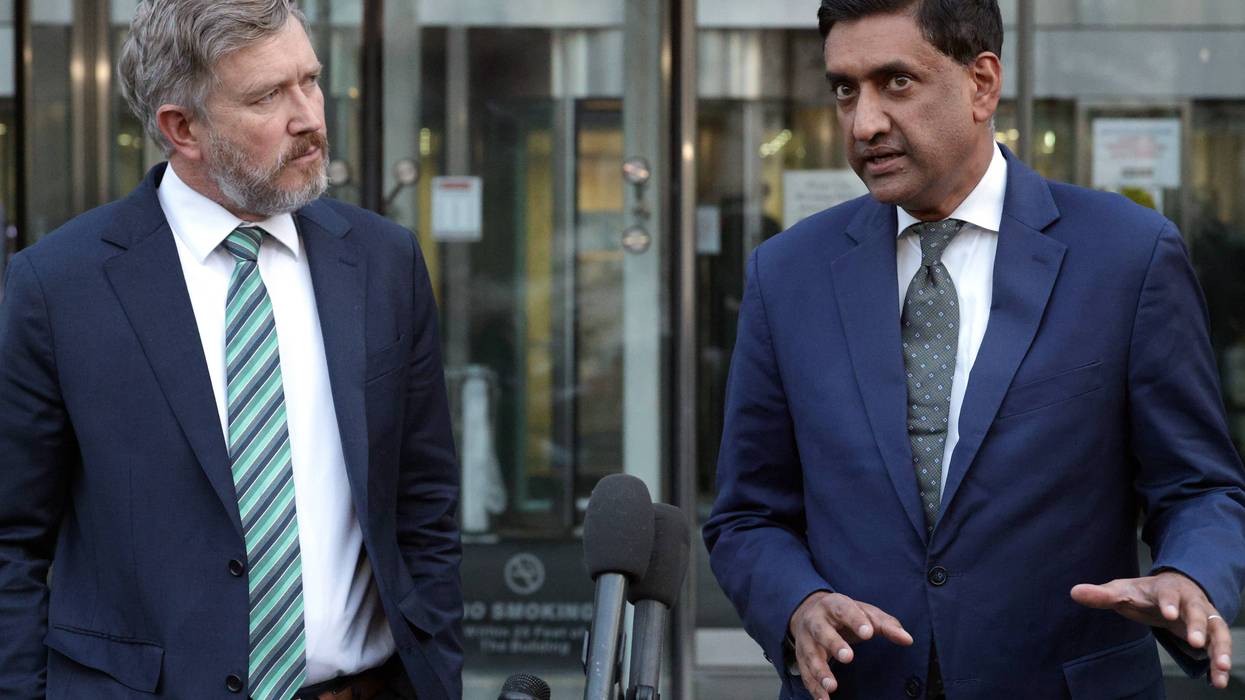
"We need the Epstein Files Transparency Act II to strengthen the original law we wrote, crack down on the DOJ's illegal noncompliance, and stand with survivors and those seeking justice."
After months of the Trump administration refusing to fully comply with the Epstein Files Transparency Act, Congressmen Thomas Massie and Ro Khanna appeared on MS NOW Thursday to promote their newly proposed second edition of the bipartisan law.
"We never anticipated that the chief law enforcement officer of the land wouldn't follow the law—and so, Ro and I took some heat because we didn't put in our original bill the ability to sue the chief law enforcement officer of the land," Massie (R-Ky.) said on "Morning Joe," a day after introducing the bill. "And so that's what the Epstein Files Transparency Act 2.0 does."
"It gives the victims standing to sue the attorney general, to get their own records, their own testimony, in these 302 forms. It also gives congressmen standing to enforce this law," he explained. "Basically, to get in front of a judge to say, 'judge, here's where they've overly redacted these files.'"
The bill also lets state attorneys general, "like the one in New Mexico, who's trying to prosecute crimes that happened at Zorro Ranch... prosecute crimes where the statute of limitations is not impeding him," added Massie—who will leave Congress at the end of this session after losing his May primary to a challenger backed by President Donald Trump, a former friend of Epstein. The convicted sex offender died in prison during his federal sex trafficking case.
The first Epstein Files Transparency Act was introduced last July, then passed by both chambers of Congress and signed by Trump in November. However, since it took effect, the US Department of Justice (DOJ), whose leaders are handpicked by the president, "has violated our law, delayed the release of millions of files, botched the redactions, and denied the survivors justice," Khanna (D-Calif.) said Wednesday.
Khanna and Massie—joined by Rep. Teresa Leger Fernández (D-NM), who chairs the Democratic Women's Caucus, along with Sens. Jeff Merkley (D-Ore.) and Ben Ray Luján (D-NM)—are outraged that the DOJ continues to withhold over 3 million Epstein files and maintain heavy redactions on the documents it has released.
As the sponsors introduced the Epstein Files Transparency Act II on Wednesday, acting US Attorney General Todd Blanche—who was previously Trump's personal lawyer—appeared before the Senate Judiciary Committee for a hearing about his nomination to take over the post permanently; he's been filling it in a temporary capacity since Pam Bondi's April exit.
Both Bondi—who was fired by Trump as she faced mounting calls for impeachment—and Blanche have earned intense criticism for their handling of the Epstein files, including from survivors. One of them, Dani Bensky, testified before the Senate panel on Thursday about her negative experience.
After the sudden death of Sen. Lindsey Graham (R-SC), all Republicans on the committee would have to vote "yes" to advance Blanche's nomination. At least one—retiring Sen. Thom Tillis of North Carolina—said Blanche would have to meet with Epstein survivors to secure his support, which the acting attorney general claimed Wednesday he cannot do if they have legal counsel.
Even if the nomination advances out of committee, Blanche will need approval from a full chamber that's also only narrowly controlled by the GOP amid frustrations that, as Merkley put it, "at Trump’s bidding, the Department of Justice's highest-ranking officials continue to break the law, denying justice to Jeffrey Epstein's victims with an unprecedented cover-up of the abuse of our most vulnerable."
"As long as those in power continue to side with the Epstein Class and shield abusers from accountability for their horrific crimes, we need the Epstein Files Transparency Act II to strengthen the original law we wrote, crack down on the DOJ's illegal noncompliance, and stand with survivors and those seeking justice," the senator argued. "The rich and powerful cannot be allowed to escape justice, and the American public deserves the transparency it is crying out for."
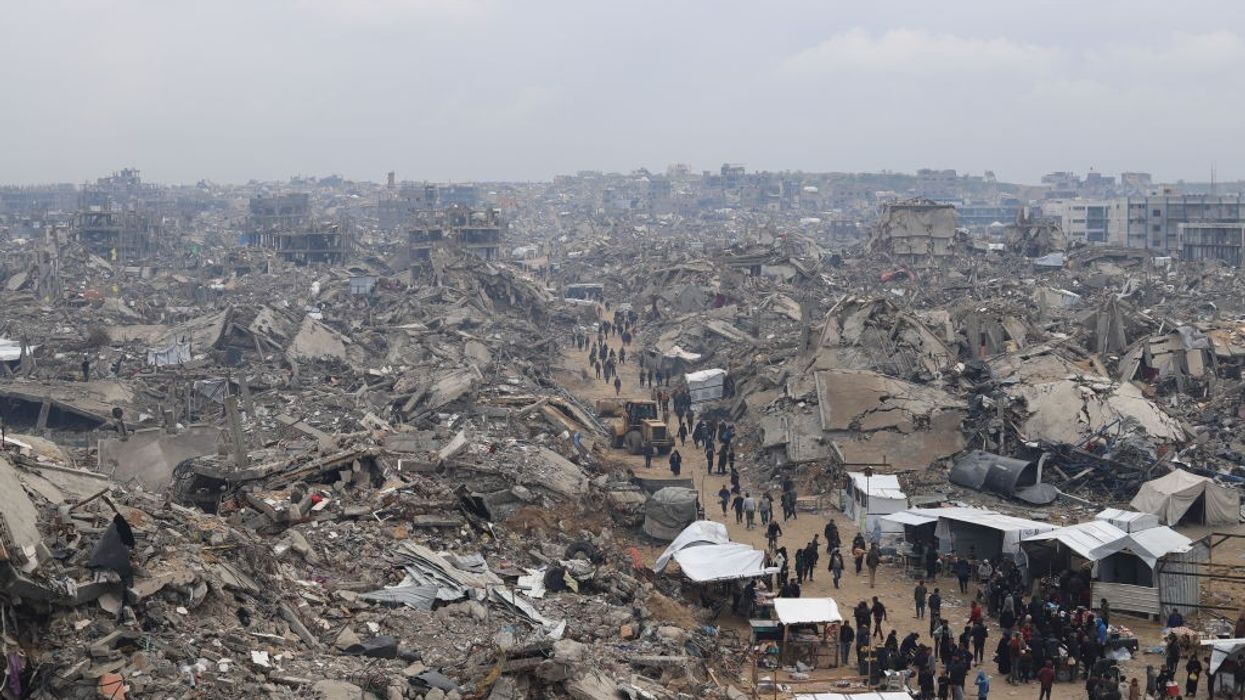
"This should be a blaring wake-up call for Democratic leaders," said one campaigner. "The political tide is clearly turning against unconditional US military support for Israel."
Nearly half of all Democrats in the House of Representatives voted Wednesday to cut off US military aid to Israel, a move that underscored a dramatic shift away from the US support the Mideast ally has enjoyed for nearly 60 years.
While House lawmakers ultimately rejected Rep. Thomas Massie's (R-Ky.) amendment to a national security spending bill that would have eliminated the $3.3 billion in annual foreign military financing provided to Israel’s military, the details of the vote were viewed as an encouraging sign by defenders of Palestine and the rule of law.
Massie and 103 Democrats voted for the measure, while 215 Republicans and 98 Democrats rejected it. The overall tally was 104 for, 314 against, and 10 "present" votes, with 9 absences.
"I cannot vote for aid to a country that committed genocide and has used tax dollars to detain Americans like me," Rep. Ro Khanna (D-Calif.) said ahead of the vote, referring to an incident in which heavily armed residents of an Israeli settler colony stopped and surrounded him last week in the illegally occupied West Bank of Palestine.
Speaking to reporters after the vote, Congressional Progressive Caucus Chair Greg Casar (D-Texas)—who had urged colleagues to support Massie's amendment—noted, "It used to be that just a small number of House Democrats would vote against sending taxpayer dollars to weapons for the Israeli military."
"Today, over 100 House Democrats voted for a measure to block billions of dollars in weapons to [Israeli Prime Minister Benjamin] Netanyahu," he continued. "That is enormous progress. That is a victory for our movement, for security, peace, and justice for all people."
The vote, Casar said, "sasends a strong message to Netanyahu that the days are over of an unaccountable blank check to his wars and his war crimes, at least from the Democratic Party."
"So this is an important moment because nothing will be the same on this issue ever again, I think, after this vote," he added.
CPC Chair @RepCasar, Deputy Chair @Ilhan Omar and @USProgressives on the historic vote by a majority of House Democrats to block $3 billion in weapons to Israel pic.twitter.com/T58q6J5LHZ
— Keane Bhatt (@KeaneBhatt) July 15, 2026
Speaking after Casar, Rep. Ilhan Omar (D-Minn.) said that she was "surprised" by many of her colleagues' votes in favor of the amendment, "and I am proud of them."
"I am proud that they have finally decided to lead with their morals, that they finally dared to stand up, and that we are all finally listening to our constituents, who have been asking us to do the right thing for many years," she added.
The high vote count in favor of Massie's amendment came after a "dear colleague" letter from House Minority Leader Hakeem Jeffries' (D-NY) expressing his opposition to the measure.
Palestine and human rights defenders hailed Wednesday's vote.
“Today’s vote reflects a seismic shift in US politics. What was once unquestioning bipartisan consensus to fund Israel’s atrocities against Palestinians is now breaking apart," Jewish Voice for Peace Action political director Beth Miller said in a statement. "While it is shameful that the House failed to pass this amendment, it is also now clear that it is impossible for Congress to ignore our voices."
"The overwhelming majority of Democratic voters are demanding that we halt US military funding to Israel, and every Democrat who ignored these calls should fear for their seat,” Miller added.
Margaret DeReus, executive director of policy projects at the Institute for Middle East Understanding (IMEU), said Wednesday's vote "reflects the popular will of Americans, and the overwhelming majority of Democratic voters who do not want to see another penny of our tax dollars fund Israel’s genocidal military."
"No more weapons to Israel is a principled demand, a legal obligation, and now a political necessity for any Democrat in office," DeReus added. "Democratic lawmakers who continue to stand with [the American Israel Public Affairs Committee's] fringe agenda of funding to Israel, and against their voters on the moral issue of our time, are inviting a primary challenge.
The United Nations' International Court of Justice is currently weighing a genocide case against Israel filed by South Africa and formally supported by nearly 20 nations. A UN panel of experts concluded last year that Israel is committing genocide in Gaza.
Meanwhile, the International Criminal Court has issued arrest warrants for Netanyahu and Yoav Gallant, his former defense minister, for alleged crimes against humanity and war crimes in Gaza, where more than 250,000 Palestinians have been killed or wounded, most of them civilians, since the Hamas-led attack of October 7, 2023, including over 9,000 people who are missing and presumed dead and buried beneath rubble.
In addition to the $3.3 billion in annual military aid the US gives Israel under a 2016 memorandum of understanding signed by then-President Barack Obama, the Biden and Trump administrations have provided billions of dollars in additional armed aid to Israel since it began waging its US-backed war on Gaza.
All told, the US has provided approximately $174 billion in direct bilateral assistance and missile defense funding—over $300 billion when adjusted for inflation—since the modern Israeli state's atrocity-laden founding in 1948. This makes Israel the largest overall beneficiary of US foreign aid since World War II.
US aid dramatically increased after the 1967 Israeli occupation of the West Bank, East Jerusalem, and Gaza, and the attack that same year by Israeli forces on the USS Liberty, which killed or wounded more than 200 Navy sailors in what numerous senior US officials believed was a deliberate attack. Last month, Massie introduced a resolution honoring the 34 Americans killed and 174 wounded in the Liberty attack.
Demand Progress senior policy adviser Cavan Kharrazian said in a statement that "congressional Democrats are finally starting to catch up to the American people, who no longer want to give Israel a blank check."
"This should be a blaring wake-up call for Democratic leaders," Kharrazian added. "The political tide is clearly turning against unconditional US military support for Israel. Leadership can no longer dismiss this position as marginal or politically untenable. Members should listen to their constituents, stop shielding Israel’s government from accountability, and support future efforts to end the flow of US weapons and military financing."
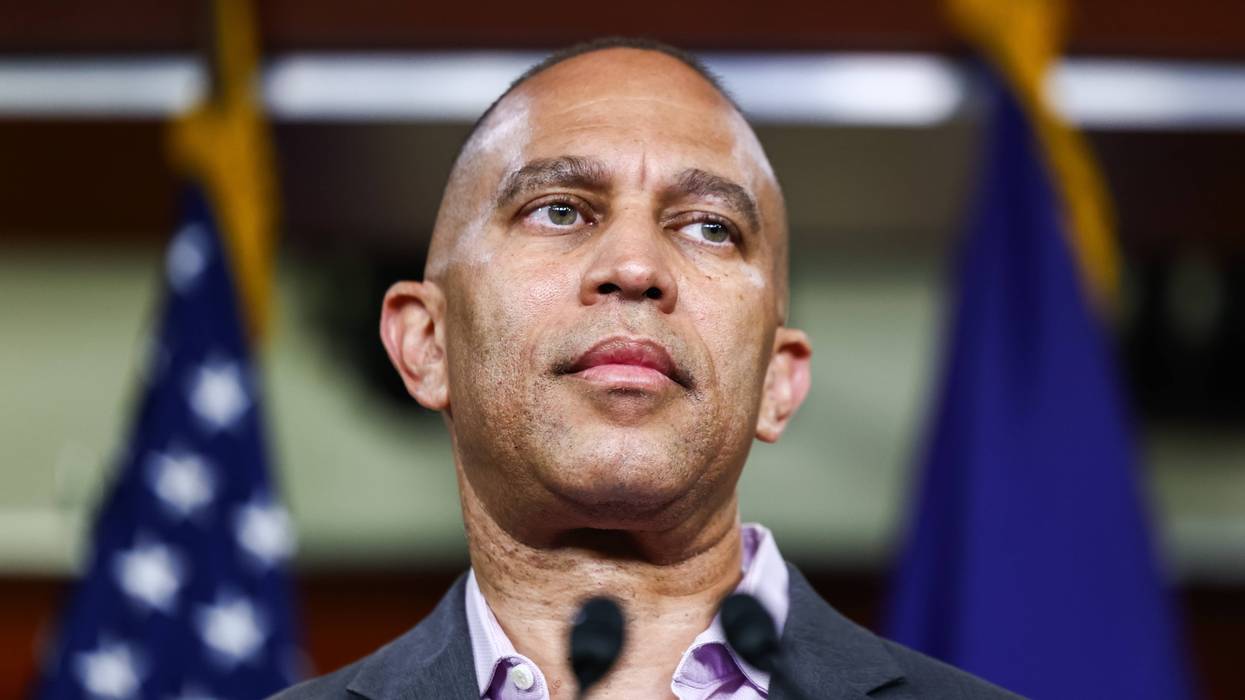
"Why does Democratic leadership continue to oppose a measure supported by 74% of Democratic voters?" asked one commentator.
With a key amendment to a 2027 spending bill expected to come up for a vote in the US House of Representatives in the coming days, Minority Leader Hakeem Jeffries had what one organizer called "a real opportunity... to show he's listening" to the Democratic Party's base and its growing disapproval of US military aid for Israel.
But on Tuesday, progressive advocates said Jeffries (D-NY) had squandered that opportunity by announcing in a Dear Colleague letter that he would oppose the amendment put forward by Rep. Thomas Massie (R-Ky.), which would eliminate the $3.3 billion the US provides to Israel's military annually.
Last month, Rep. Ro Khanna (D-Calif.)—who was detained by armed Israeli settlers in the West Bank this week—urged his colleagues to back the amendment, calling US support for Israel "the moral test of our time" as he stood in front of a memorial for 20,000 children killed by the Israeli military in Gaza.
In the letter and at a caucus meeting Tuesday morning, Jeffries claimed the amendment was "overly broad" and could limit funds for humanitarian aid, refugee resettlement, and other operations.
He also asserted that the funding cut would restrict the United States' ability to "confront Hamas."
The US government, under both the Biden and Trump administrations, has relentlessly claimed that Israel's US-backed assault on Gaza that began in 2023 has targeted Hamas, even as refugee camps, schools, hospitals, residential buildings, aid workers, and children have been targeted by the Israel Defense Forces and as Israel has concurrently ramped up violent efforts to annex the West Bank.
A ceasefire in Gaza was reached in October 2025, but more than 1,000 Palestinians have been killed by Israeli forces in Gaza since the deal was signed. In all, more than 73,000 Palestinians have been killed.
As the US has continued to give material and political support to Israel, approval of the military aid and the Israeli government has plummeted among the American public.
More than half of Democratic voters said in an Associated Press-NORC Center for Public Affairs Research poll last week that they believed the US-backed military operation amounted to a genocide.
A Quinnipiac University poll found last August that three-quarters of Democratic voters and 60% of all voters supported suspending US weapons aid to Israel.
A number of progressive Democratic challengers, including Melat Kiros in Colorado, Chris Rabb in Pennsylvania, and Adam Hamawy in New Jersey, have also decisively won primary races in recent months after campaigning on a suspension of US military aid to Israel, noted Usamah Andrabi, communications director for Justice Democrats.
In the corporate press, the issue at hand was described as one that has "sharply divided" Democrats in recent weeks—a characterization that Adam Johnson of the podcast "Citations Needed" vehemently rejected.
"This issue is very much not 'dividing' the party writ large," said Johnson. "Support for cutting aid to Israel among Dems is 74-20. Only 13% of Democrats have a positive view of Israel—less than the percentage of Democrats who support full abortion bans."
The "divide," said Johnson, is between voters and the party leadership, particularly Democrats who—like Jeffries—have taken millions of dollars from the pro-Israel lobby.
"Why does Democratic leadership continue to oppose a measure supported by 74% of Democratic voters?" asked Johnson. "Where are all the popularism pundits decrying the Democrats' out-of-touch leadership, ignoring a broadly popular position, one also supported by the majority of independents?"
Jeffries said in the Dear Colleague letter that his opposition to the amendment was "consistent" with that of "pro-peace organizations like J Street."
J Street, which describes itself as a "pro-peace" and "liberal Zionist" group, expressed opposition to the amendment, but said it would also "support those members who vote yes to signal their opposition to unconditional [foreign military financing] and support for stronger oversight of how US security assistance is used."
Erik Sperling, executive director of the progressive think tank Just Foreign Policy, said J Street's "hedging" on the amendment was "a moral stain" for the organization.
"Genuine pro-peace groups cannot allow billions in US taxpayer money to be sent to [Prime Minister Benjamin] Netanyahu's Israel now," said Sperling.

"It should be a no-brainer: Our tax dollars should not fund a genocide," said Democratic Rep. Ilhan Omar, who supports an amendment to cut off $3.3 billion in military aid to Israel.
Israeli Prime Minister Benjamin Netanyahu on Tuesday compared US aid to "welfare" and said he wants it to end, remarks that came as top Democrats in the US House of Representatives expressed opposition to an amendment that would cut off $3.3 billion in American military assistance to Israel.
"I want to stop American aid," Netanyahu said during a televised event in Israel on Tuesday, saying he wants the US aid phaseout to begin this year. "We can finance ourselves."
In recent weeks, amid growing US public backlash against continued military aid to Israel as its military commits atrocities in Gaza and throughout the Middle East, Netanyahu has signaled a desire to "shift the framework" of the US-Israeli relationship "from aid to partnership," as the prime minister put it in a June 1 letter to US Rep. Marlin Stutzman (R-Ind.).
"Israel deeply appreciates the financial component of the military aid the United States has generously provided us over the years," Netanyahu wrote in the letter. "The time has now arrived for us to move from aid recipient to partner."
Netanyahu's stated vision aligns with legislative text included in annual US defense policy legislation, which would deepen integration of the American and Israeli militaries. Earlier this week, the Republican-controlled House Rules Committee refused to allow a floor vote on an amendment by Reps. Thomas Massie (R-Ky.) and Ro Khanna (D-Calif.) that proposed stripping the integration measure from the bill, which is currently moving through Congress.
But the rules panel is allowing a full House vote on a separate Massie-led amendment that would prevent any US State Department or national security appropriations from being "obligated or expended for Israel" in the coming fiscal year. The amendment would specifically cut off the $3.3 billion in assistance Israel is slated to receive via the Foreign Military Financing Program in 2027.
Massie's proposal has spotlighted a consequential rift in the House Democratic caucus, even as an overwhelming majority of Democratic voters support ending US aid to the Israeli government.
Prominent progressives—including Reps. Greg Casar (D-Texas), Alexandria Ocasio-Cortez (D-NY), and Ilhan Omar (D-Minn.)—have said they plan to vote yes on the amendment, which could come to a vote next week.
"It should be a no-brainer: Our tax dollars should not fund a genocide," Omar, the deputy chair of the Congressional Progressive Caucus, said Tuesday. "We cannot continue to be complicit in Israel’s crimes against humanity."
But top Democrats, including the ranking members of key committees, are opposed to the Massie amendment, which is unlikely to get through the Republican-controlled House. Few Republicans are expected to support Massie's proposal.
"I don't want Israel to be without what they need," Rep. Gregory Meeks (D-NY), the top Democrat on the House Foreign Affairs Committee, told Jewish Insider earlier this week, following a closed-door House Democratic caucus meeting.
Rep. Adam Smith (D-Wash.), the top Democrat on the House Armed Services Committee, said he is "against" the Massie proposal because it would cut off "all aid for Israel."
"I don’t think there’s support for it," Smith added, "but we’ll see."
House Minority Leader Hakeem Jeffries (D-NY), who is staunchly pro-Israel and a recipient of AIPAC campaign cash, has not publicly taken a position on the Massie amendment.
The Hill reported that the House Democratic leadership told caucus members during Tuesday's private meeting to "vote according to their conscience" on the amendment, as some members expressed concerns about the proposal's broad scope and the process by which it is being brought to a vote.
Casar, the chair of the Congressional Progressive Caucus, acknowledged earlier this week that—if passed—the amendment "may cut off both military weapons (~$3.3 billion) and some diplomatic funding (~$50 million)."
“While I would prefer to vote on an amendment that stripped just military funding,” Casar wrote on social media, “I think opposing the billions in military funding is what’s most important here.”
Speaking to MS NOW earlier this week, Casar said that "it's really important for members to recognize that, while a relatively very small amount of diplomatic funding could be implicated on the amendment... virtually all of the money is military financing that the Israeli military has used to buy fighter planes and attack helicopters."
“You’re going to see a growing number of Democrats come out against sending more money for weapons for Netanyahu’s military,” Casar predicted. “In the past, it was just a very, very small number. You could count on maybe one or two hands how many members of Congress would vote against sending the Israeli military money for more weapons.”
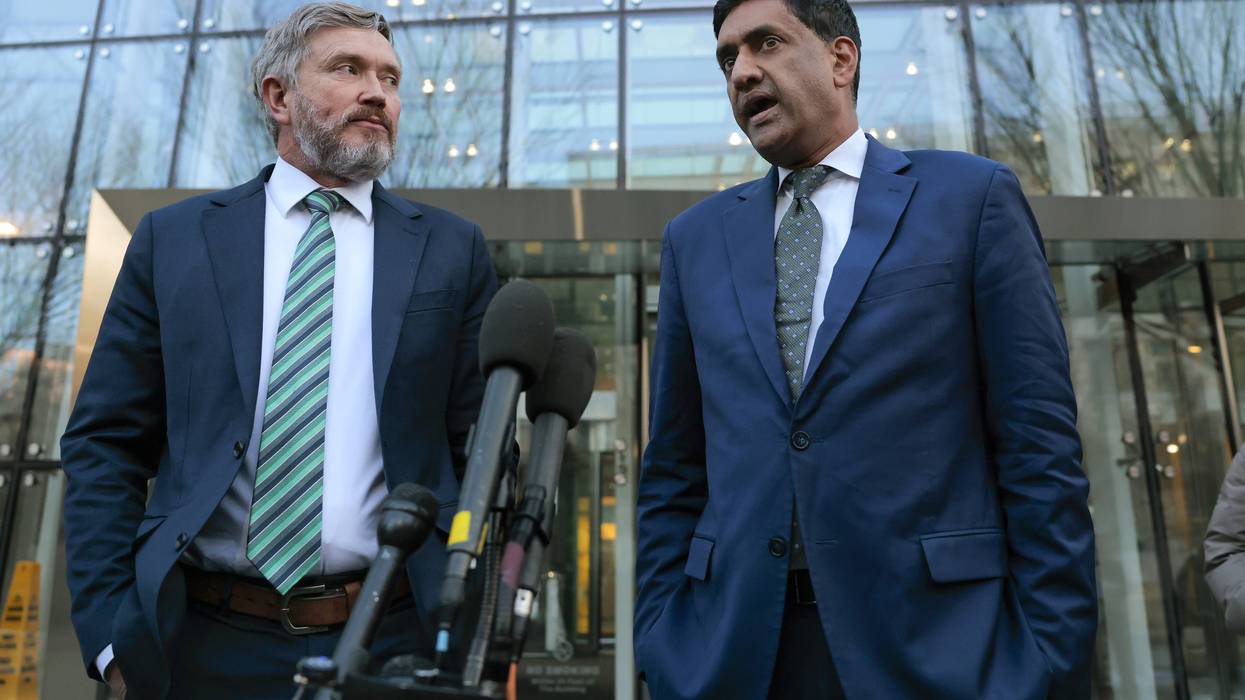
"They're not even giving us a vote on the amendment," said Rep. Ro Khanna, who vowed to "continue to fight to make sure we don't compromise American sovereignty."
A Republican-controlled House panel on Monday refused to allow a floor vote on a bipartisan amendment to prevent closer integration of the American and Israeli militaries, which human rights organizations say would deepen US complicity in Israeli war crimes.
"This is unconscionable," Rep. Ro Khanna (D-Calif.), who led the proposed amendment alongside Rep. Thomas Massie (R-Ky.), said in a video posted to social media on Tuesday. "They're not even giving us a vote on the amendment."
Khanna vowed that "Thomas and I will continue to fight to make sure we don't compromise American sovereignty."
Watch:
Congress has blocked the amendment @RepThomasMassie and I introduced to stop the integration of our military with Israel’s. It is unconscionable to not even have a vote. We will be continuing on and will not be intimidated by the pro-Israel lobby. pic.twitter.com/6ai93L0rAY
— Ro Khanna (@RoKhanna) June 30, 2026
The Khanna-Massie amendment would have removed the US-Israel Defense Technology Cooperation Initiative from annual military policy legislation currently moving through Congress. The initiative, laid out in Section 219 of the House's National Defense Authorization Act (NDAA), instructs the Pentagon to "designate an executive agent... responsible for synchronizing cooperative efforts between the United States and Israel, to expand and accelerate bilateral defense technology research, development, testing, evaluation, integration, and industrial cooperation."
On Monday, the House Rules Committee unveiled a list of NDAA amendments that it decided would get a full House vote, and the Khanna-Massie proposal was absent. Ben Freeman noted at Responsible Statecraft that the rules panel made its decision "after no debate" on the amendment.
"By rejecting the Khanna and Massie amendment, the Rules Committee on Monday ensured the American public would not even get to see how their representatives would vote on this pivotal issue," Freeman wrote. "This is despite unprecedented levels of public distrust in the Israeli government and widespread public outrage directed at these proposals."
The fight to block the US-Israel Defense Technology Cooperation Initiative—which is enthusiastically backed by the pro-Israel lobbying group AIPAC—is not necessarily over.
Sen. Bernie Sanders (I-Vt.) said earlier this month that lawmakers "must" strip the initiative from the NDAA, signaling a possible fight over the provision in the upper chamber. A summary of the Senate version of the NDAA states that the legislation would establish "the United States-Israel Defense Technology Cooperation Initiative to expand and accelerate bilateral defense technology research, development, testing, evaluation, coordination, and industrial cooperation between the US and
Israel."
Leading human rights organizations, including Amnesty International USA and Human Rights Watch (HRW), have urged lawmakers to reject the cooperation initiative, with the latter group warning that the proposal would "deepen US military cooperation with Israel while walling that cooperation off from further congressional oversight."
"Israeli forces’ widespread war crimes, crimes against humanity, and its ongoing acts of genocide in Gaza should give the United States pause about closer military association," said Akshaya Kumar, HRW's director of crisis advocacy. "Instead, Section 219 proposes to deepen entanglement, in a way that makes the risks of complicity ongoing. Legislators still have a chance to strip this damaging proposal out."
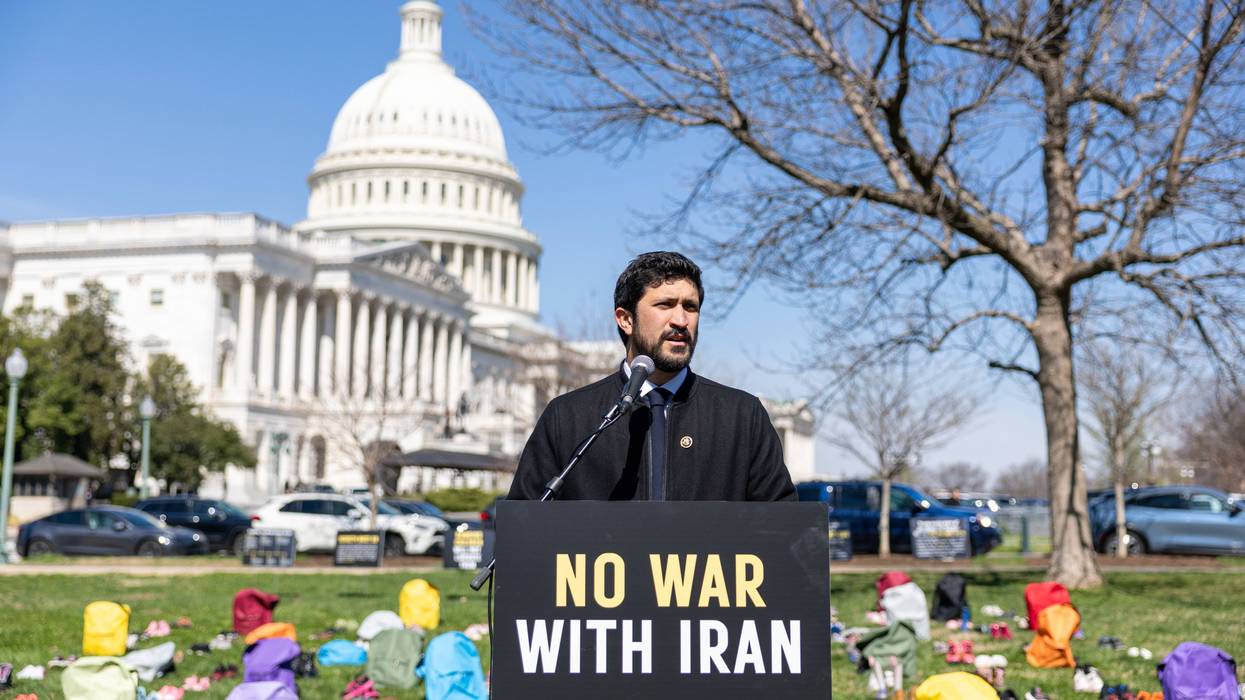
"The Israeli government committed war crimes in Gaza and helped drag America into war with Iran," said Rep. Greg Casar. "Americans should not be financing more weapons for Netanyahu."
The chair of the Congressional Progressive Caucus on Monday expressed support for an amendment that would cut off $3.3 billion in US military assistance to Israel, pointing to atrocities in Gaza and Prime Minister Benjamin Netanyahu's role in pushing the Trump administration to launch an illegal war against Iran.
"Soon, the House will vote on an amendment to block taxpayer funding to Israel’s military. I will vote yes," Rep. Greg Casar (D-Texas) wrote on social media. "The Israeli government committed war crimes in Gaza and helped drag America into war with Iran. Americans should not be financing more weapons for Netanyahu."
The amendment, led by Rep. Thomas Massie (R-Ky.), is expected to get a floor vote as soon as this week as part of debate over an annual appropriations bill for national security and the US State Department. The amendment states that "none of the funds made available under this act shall be obligated or expended for Israel."
"The amount otherwise made available by this act for 'Foreign Military Financing Program' is hereby reduced by $3,300,000,000," the amendment adds. Under current law, Israel is set to receive $3.3 billion in annual Foreign Military Financing Program funding through 2028.
The looming vote on the amendment, which will force lawmakers on the record on continued US aid to Israel, has sparked an AIPAC lobbying campaign and significant consternation within the House Democratic caucus. During a virtual caucus call over the weekend, according to Punchbowl, "leadership-aligned Democrats panned the Massie amendment as sloppily drafted."
"Members of the center-left New Democrat Coalition, as well as Jewish lawmakers, said they were opposed," the outlet reported. "Several members alleged that Republicans allowed Massie’s amendment to reach the floor because they hoped to divide Democrats on such a contentious issue."
House Minority Leader Hakeem Jeffries (D-NY) said Democratic lawmakers will meet in person on Tuesday to discuss the amendment.
"Congress continues to treat military funding for Israel as automatic, even as public support for unconditional aid collapses across the country."
Recent polling has found that Democratic voters overwhelmingly oppose continued US military support for Israel, which has used American weaponry to commit grave war crimes in the occupied Palestinian territories. A United Nations report published last week found that the Israeli military has deliberately targeted children in Gaza and "wiped out entire families across two or three or even four generations."
In his social media post on Monday, Casar acknowledged concerns voiced by some of his Democratic colleagues that the Massie amendment, as written, "may cut off both military weapons (~$3.3 billion) and some diplomatic funding (~$50 million)."
"While I would prefer to vote on an amendment that stripped just military funding," Casar wrote, "I think opposing the billions in military funding is what’s most important here."
Rep. Alexandria Ocasio-Cortez (D-NY), who sits on the Congressional Progressive Caucus' executive board, told Drop Site on Monday that she would support Massie's amendment.
"In my community, in my district, the conclusion is pretty clear," said Ocasio-Cortez, who is leading a separate amendment to the 2027 National Defense Authorization Act that would bar the transfer of any US weaponry to other nations absent "congressional authorization and written presidential assurances that the recipient country is not restricting the transport or delivery of humanitarian assistance and is complying with international law."
🔸Rep. Alexandria Ocasio-Cortez (@AOC) tells Drop Site she will vote for Rep. Thomas Massie’s amendment to the FY2027 State Department appropriations bill that would prohibit funds under the bill from being spent on Israel and eliminate the $3.3 billion Foreign Military Financing… https://t.co/kpfeYYPJ55 pic.twitter.com/WHSkJKV8DT
— Drop Site (@DropSiteNews) June 30, 2026
Urging House lawmakers to vote yes, the American-Arab Anti-Discrimination Committee said the Massie amendment provides an opportunity for "a rare recorded vote on whether members of Congress will continue sending billions of US taxpayer dollars to the Israeli military, or finally begin ending America’s role in funding Israel’s genocides in Palestine and Lebanon, and endless aggressions in Yemen, Syria, Iran, and beyond."
"For years, Americans have watched US weapons, US tax dollars, and US diplomatic cover enable Israel’s atrocities against Palestinians, its attacks on neighboring countries, and its efforts to drag the United States into Israel’s forever wars," the group said. "Yet Congress continues to treat military funding for Israel as automatic, even as public support for unconditional aid collapses across the country."