
SUBSCRIBE TO OUR FREE NEWSLETTER
Daily news & progressive opinion—funded by the people, not the corporations—delivered straight to your inbox.
5
#000000
#FFFFFF
To donate by check, phone, or other method, see our More Ways to Give page.


Daily news & progressive opinion—funded by the people, not the corporations—delivered straight to your inbox.
The American people are hungry for bold ideas that will transform fundamental institutions that have failed them for too long.
Today, more than 325 organizations including labor unions, advocates for seniors and people with disabilities, women’s rights organizations, and more, released an open letter to those seeking to reform the health care system, laying out why now is the time for Medicare for All.
The letter is led by Public Citizen, National Nurses United, People’s Action Institute, Social Security Works, Physicians for a National Health Program, Labor Campaign for Single Payer, and Healthcare-NOW. Other signatories include Indivisible, MoveOn, and several prominent labor unions, including UAW, APWU, IFPTE, AFA-CWA, UE, Actors Equity, and more.
Medicare for All is overwhelmingly popular and commands majority support nationwide, with 63 percent of all voters in favor, including 90 percent of Democratic voters. In Congress, more than half of the House Democratic Caucus now supports Medicare for All, and Senate legislation has added three co-sponsors since the last Congress.
Some D.C. insiders are urging members of Congress and health care advocates to think small and prioritize incremental health care tweaks. This letter is a clear warning that half-measures will not meet the scale of the health care crisis. As health care costs soar, affordability is top of mind for American families, and it's a particularly important kitchen table issue ahead of the 2026 midterms. The American people need, and demand, Medicare for All.
The letter reads, in part:
“We may face a once-in-a-generation opportunity to legislate on health care in 2029. We need to rally behind the boldest possible reform, Medicare for All, that brings together the broadest possible movement. Now is not the time for overly complex incremental measures that prop up the same systems we’re seeing fail under the weight of attacks by Trump and Republicans. The American people are hungry for bold ideas that will transform fundamental institutions that have failed them for too long. And they are looking for leaders who will take on powerful interests and fight for working people.
Now is the time to organize and inspire! Support for Medicare for All grows daily in our communities and in Congress. It’s our best path forward, and it’s rooted in real promise: everybody in, nobody out. A small minority of skeptical health care policy wonks may try to convince us to scale back, that structural change isn’t winnable.
The reality is that alternate proposals don’t move us towards Medicare for All, complicate our already broken system, and allow corporations to continue profiting off the sick.”
Check out the full list of organizations here.
"The massive momentum for Medicare for All should serve as a wakeup call to all who profit from our broken health care system and those who do their bidding," said Public Citizen Health Care Policy Advocate Eagan Kemp. "Everyday Americans are tired of watching the pigs at the health care trough gorge themselves day after day while hundreds of millions of people in the wealthiest country in the world suffer from inadequate access to care, delays and denials, and crushing medical debt. Medicare for All would end the ability of corporations to put greed ahead of people's needs and would finally guarantee than everyone in the U.S. can get the care they require. The movement for Medicare for All is growing by leaps and bounds because the people are demanding change. It is time those in power meet the moment and fight for the health care system we need and that the people are demanding, Medicare for All."
Asked to provide any evidence of fraud in California, the best Trump could come up with over the weekend was, "All I have to do is look, and I listen." As one journalist pointed out: "That's not evidence."
US President Donald Trump and world's richest man Elon Musk sang to the same dishonest tune once again on Monday to allege—without evidence—that the mayoral election in Los Angeles was somehow fraudulent or rigged against Republicans after their preferred candidate, former reality TV personality Spencer Pratt, dropped to third place in the open primary.
With incumbent Democratic Mayor Karen Bass already sitting in first place, it was progressive City Council Member Nithya Raman who overtook Pratt on Sunday after more votes were counted. The top two finishers in the primary, regardless of party affiliation, will face off in a runoff election, but it was Pratt's slip out of the second slot—with approximately 80% of ballots now counted—that inspired Trump and Musk to call into question the results.
"No way this could have happened. Rigged Election!" Trump declared in a social media post on Sunday night. The president infamously refused to admit he was defeated by former President Joe Biden in 2020, a denial that ultimately led to the insurrection attempt by his supporters on January 6, 2021.
The election results in Los Angeles, however, are very much in line with polling that took place ahead of last week's vote and Los Angeles is known as a Democratic-leaning city.
In a series of retweets and comments on X, the social media behemoth he owns, Musk echoed Trump by suggesting that the mayoral race was fraudulent, though he offered no substantive evidence.
"It takes a conspiracy theorist to believe California’s election is secure," stated one post Musk shared to the more than 240 million accounts that follow his.
As Raman climbed out of second place into third as Pratt's share of the vote total dropped, Musk perpetuated the idea that the counting of ballots indicated fraud of some kind and stood on that insinuation to advocate for the Republican-backed SAVE Act, which voting rights experts have warned is a key part of a coordinated GOP effort to make it harder for Americans to vote in upcoming elections.
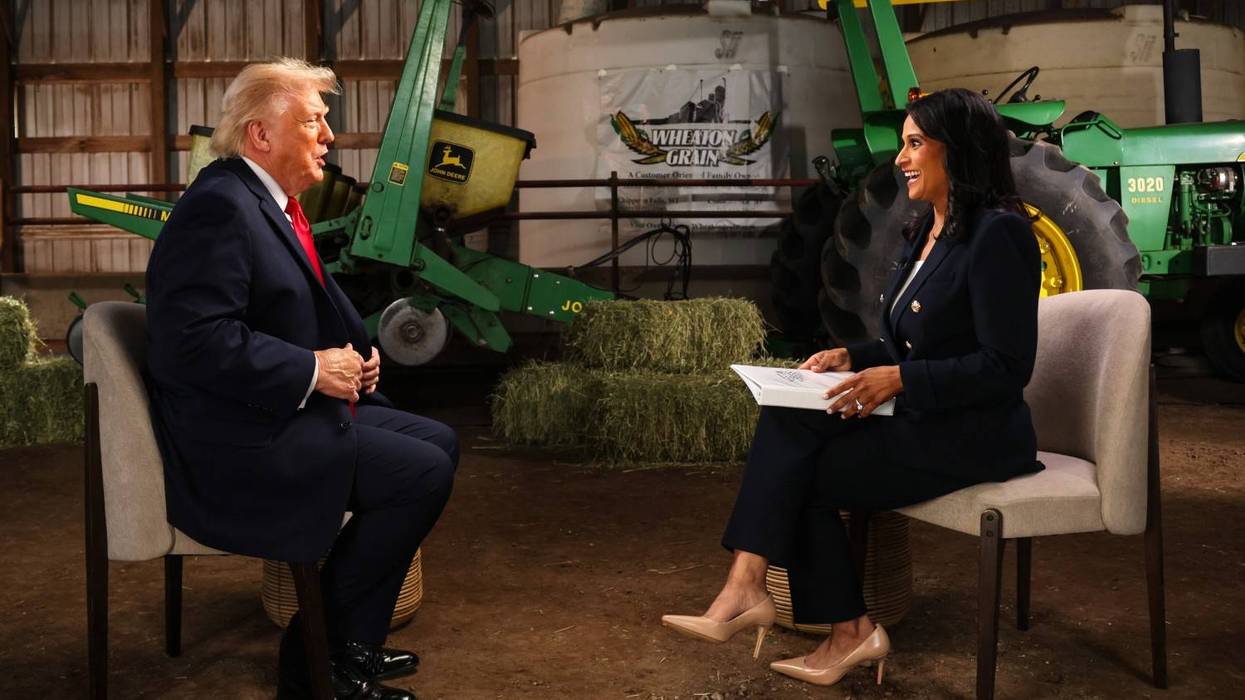
Trump stormed out of his weekend interview with NBC New's Kristen Welker on "Meet The Press" after the host challenged Trump over his repeated lies that the 2020 election was rigged, and his new unfounded claims that something similar was now happening in California.
WOW -- Trump crashes out and cuts his interview with Welker short as she presses him on his lack of evidence for claiming elections are rigged
"You're either crooked or you're stupid. Let's call it quits. Because I've had enough. Thank you darling," he tells her."
"I traveled… pic.twitter.com/qQaNIDnX4y
— Aaron Rupar (@atrupar) June 7, 2026
Trump claimed that because the results had not been officially decided after four days in California, the nation's largest state with millions who vote by mail, that "They're cheating on the election."
"Do you have evidence to support that?" Welker asked.
"All I have to do is look, and I listen," the president replied.
"But that's not evidence," Welker countered.
The progressive advocacy group Our Revolution, which backed Raman in the election, said in a social media post that a second-place showing in the race would be in keeping with the city's political profile.
"No way Los Angeles was ever going to send a MAGA reality star with zero governing experience to a general election for mayor. Not this city," the group said. "Nithya Raman advances. Now let’s have the conversation LA actually deserves—housing, affordability, and a real vision for this city’s future."
US President Donald Trump "appears unwilling to spend the political capital necessary to rein in Netanyahu—beyond angry phone calls and tough public statements," said one analyst.
The Israeli military bombed Iran on Monday shortly after US President Donald Trump urged Israeli Prime Minister Benjamin Netanyahu not to respond to an Iranian missile barrage, which came in retaliation for Israel's earlier bombing of Beirut.
"I am going to call Bibi right now and tell him not to retaliate," Trump told Axios on Sunday, noting that the Iranian strikes did not appear to cause any injuries. "Each of them had their fun. Israel had its strike, and Iran had its strike. We don't need another one."
Iran's missile attack on Israel was the first since a tenuous ceasefire agreement took effect in early April, and the exchange intensified concerns of a return to full-blown regional war. Iran's Foreign Ministry said the Sunday strikes were a defensive response to the Israeli military's bombing of southern Beirut as well as "Israel’s persistent breaches of the April ceasefire, including its collaboration with the US military in attacks on Iranian ships and targets in southern Iran over the past two weeks."
The Israel Defense Forces vowed to "continue to operate all across Lebanon" and said it would not "allow fire toward Israel."
Esmail Baghaei, a spokesperson for Iran's Foreign Ministry, said during a press conference on Monday that despite Trump's public comments, "no one in the region believes" that Israel attacked Lebanon or Iran "without prior coordination and cooperation with the United States."
"The United States bears responsibility as a party to the April 8 ceasefire understanding," said Baghaei. "Whatever happens in the region, whether the US itself violates the ceasefire by attacking Iranian commercial ships or targeting southern parts of the country, or whether violations are carried out through the Zionist regime in Lebanon with US complicity, the direct responsibility of the United States is clear, and the consequences of any escalation will also fall on Washington.”
Trump told the Financial Times following Iran's missile attack on Israel that he did not believe it would undercut the prospects of a diplomatic agreement. The US president also said Netanyahu would have no choice but to accept any agreement the Trump administration reaches with Iran, declaring: "I call the shots. I call all the shots. [Netanyahu] doesn't call the shots."
But critics of Trump's illegal and costly war of choice in Iran, which he launched in coordination with Israel in late February, said Netanyahu's swift defiance of the president's call for restraint underscored how disastrous the conflict has been for the US.
"This war has been humiliating for Trump and American power generally," US Sen. Chris Murphy (D-Conn.) wrote on social media. "And when Trump announces he is going to call Netanyahu and tell him not to retaliate, and within hours Netanyahu retaliates, the humiliation just compounds."
Trita Parsi, executive vice president of the Quincy Institute for Responsible Statecraft, wrote in a blog post following the Israeli attack on Iran that Trump "appears unwilling to spend the political capital necessary to rein in Netanyahu—beyond angry phone calls and tough public statements—unless he knows that he has a deal with Iran."
"From Trump’s perspective, it is only worth doing if an agreement with Iran is already secured. In short, Trump is willing to restrain Israel to preserve a deal, but not to obtain one. Iran, however, wants evidence that Trump can restrain Israel before agreeing to a deal," Parsi wrote. "As a result, the most likely scenario is another round of Iranian and Israeli strikes, with Trump declining to meaningfully constrain Israel."
The National Iranian American Council noted that Iran's leadership "has already threatened a broader and more destructive campaign" in response to Israel's strikes.
"The coming 24 to 72 hours will likely determine whether this becomes a contained crisis or the beginning of a new phase in the regional conflict," the group added.
"I am going to call Bibi right now and tell him not to retaliate. Each of them had their fun. Israel had its strike, and Iran had its strike. We don't need another one," President Donald Trump reportedly said.
After Israeli forces attacked a southern suburb of the Lebanese capital, Beirut, Iran delivered its promised retaliation late Sunday, firing missiles at Israel for the first time since a ceasefire agreement took effect in April and prompting US President Donald Trump to renew his push for a negotiated end to a conflict he helped inflame.
Israeli Prime Minister Benjamin Netanyahu and Defense Minister Israel Katz claimed their Sunday strikes were in response to rocket fire from the Lebanese group Hezbollah—though Israel has been widely accused of trying to sabotage peace talks. Iran retaliated with at least 20 missiles from four different bases, which the Israeli military said it intercepted.
The barrage of missiles was a response to "the widespread killing and displacement of the oppressed people of the Tyre and Nabatieh regions" in southern Lebanon, Iran's Islamic Revolutionary Guard Corps (IRGC) said in a statement. "Tonight's operation was a warning, and if the aggressions are repeated, the responses will be broader and will encompass all American-Zionist targets in the region."
Following the Iranian missile attack, Israel Defense Forces Chief of Staff Lt. Gen. Eyal Zamir declared that "the IDF will strike the enemy with force the moment the green light is given."
Whether that permission is granted remains to be seen. Trump—who tore up the Obama administration's nuclear deal with the Iranian government during his first term and then, this past February, partnered with Netanyahu to launch an illegal assault on Iran, despite his "no new wars" promise—signaled to multiple journalists on Sunday that he was still pushing for a negotiated agreement.
Fox News' Trey Yingst said on air that during a phone call, Trump told him that he was "not happy about" the IDF's strikes allegedly targeting Hezbollah, and Iran's retaliation "certainly" won't help negotiations.
According to Yingst, Trump's message to Iran is, "You've shot your missiles, that's enough, get back to the table and make a deal."
Trump also told Axios' Barak Ravid that he planned to send Israeli Prime Minister Benjamin Netanyahu a similar message: "I am going to call Bibi right now and tell him not to retaliate. Each of them had their fun. Israel had its strike, and Iran had its strike. We don't need another one."
The Times of Israel reported that after a call with Trump, Netanyahu was "holding a discussion with top security officials."
Summarizing Sunday's events on social media, Sina Toossi, a senior fellow at the Center for International Policy, noted that "last week, we got reports that Trump yelled at Netanyahu to back off plans to attack Beirut's southern suburb of Dahieh after Iran warned that such a strike could trigger Iranian attacks on northern Israel. Today, Israel struck Dahieh anyway, killing civilians. This looks like a test: probing Iran's red lines and willingness to enforce them amid fluid deterrence dynamics."
"Israel's strike on Beirut put Iran in a difficult position," Toossi explained after Iran's response. "After publicly warning that such an attack would trigger retaliation, failing to respond would have undermined the credibility of that threat and likely invited further US/Israeli escalation. Iran's missile attack on northern Israel should be viewed in that context."
"What we're witnessing is a classic deterrence contest, with each side trying to establish which actions will trigger retaliation and impose costs sufficient to deter their repetition," he wrote. "The key question now is whether a deterrence equilibrium emerges around the Beirut-northern Israel equation, or whether both sides continue probing each other's thresholds and credibility, whether through more Israeli attacks in Lebanon/Beirut, direct Israeli strikes on Iran, or both, pushing this already fragile 'ceasefire' toward total collapse."
Trita Parsi, co-founder and executive vice president of the Quincy Institute for Responsible Statecraft, highlighted in a blog post that "this is the first time Iran has struck Israel after Israel struck another country's territory (that is, not Iran). This means that the battle lines have been moved. Iran's deterrence had already been restored in the sense that Israel knew that any strike on it would be responded to. But now, Iran has proven that it will also respond to Israeli strikes on Lebanon."
"From a US perspective, supporting Israel at this point recommits the US to its decades-long policy of seeking to sustain a balance in the region that allows for near-complete Israeli dominance," he asserted. "That policy has been extremely costly to US interests, has destabilized the region, and enabled the Israelis to get increasingly aggressive and reckless (since they face no consequences for it)."
Parsi added that "however problematic it has been, it will become far more challenging and destabilizing going forward since sustaining Israel’s dominance will necessitate continued war with Iran. This clearly contradicts US interests. If US interests were at the center of US policy, getting out of the Middle East and its regional rivalries would be a no-brainer."
Arab Center Washington DC fellow Assal Rad said on social media Sunday that "Trump wants a deal, Iran wants a deal, the region wants a deal, Americans want a deal, basically everyone wants to bring an end to wars, except Israel. That's why they keep attacking. Israel will not stop, it must be stopped."