

SUBSCRIBE TO OUR FREE NEWSLETTER
Daily news & progressive opinion—funded by the people, not the corporations—delivered straight to your inbox.
5
#000000
#FFFFFF
To donate by check, phone, or other method, see our More Ways to Give page.
Daily news & progressive opinion—funded by the people, not the corporations—delivered straight to your inbox.
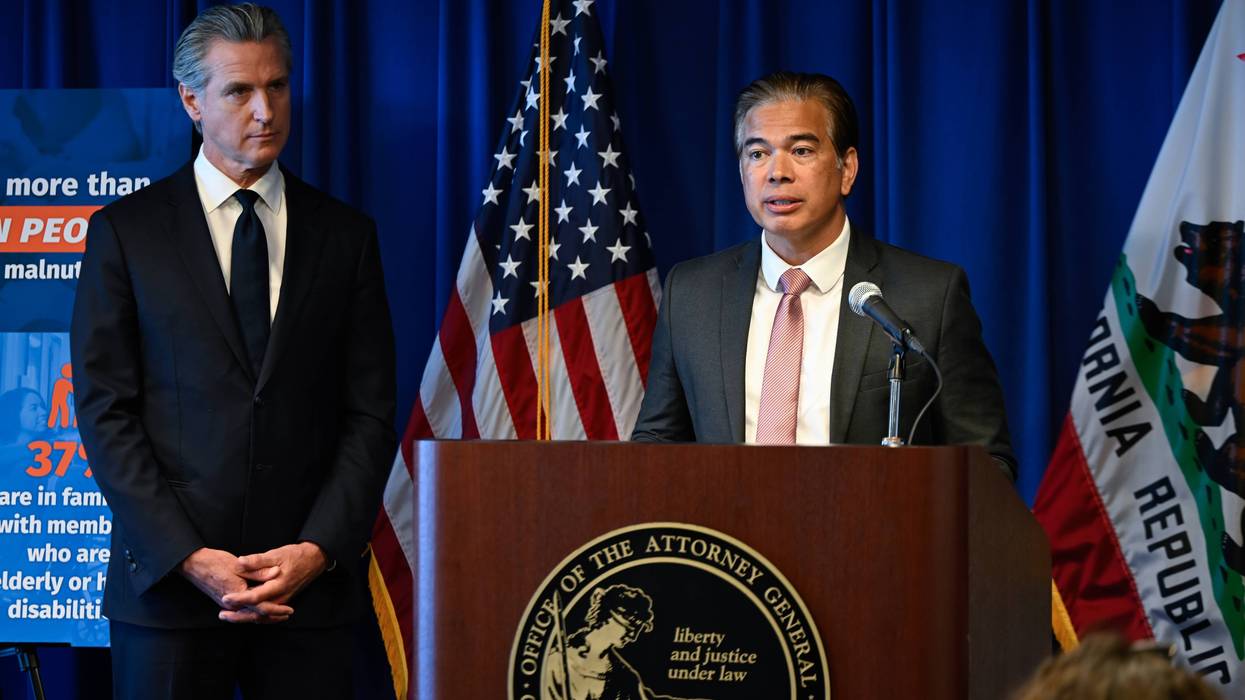
"Today, billionaires have yet again bribed, censored, and bullied their way to the top."
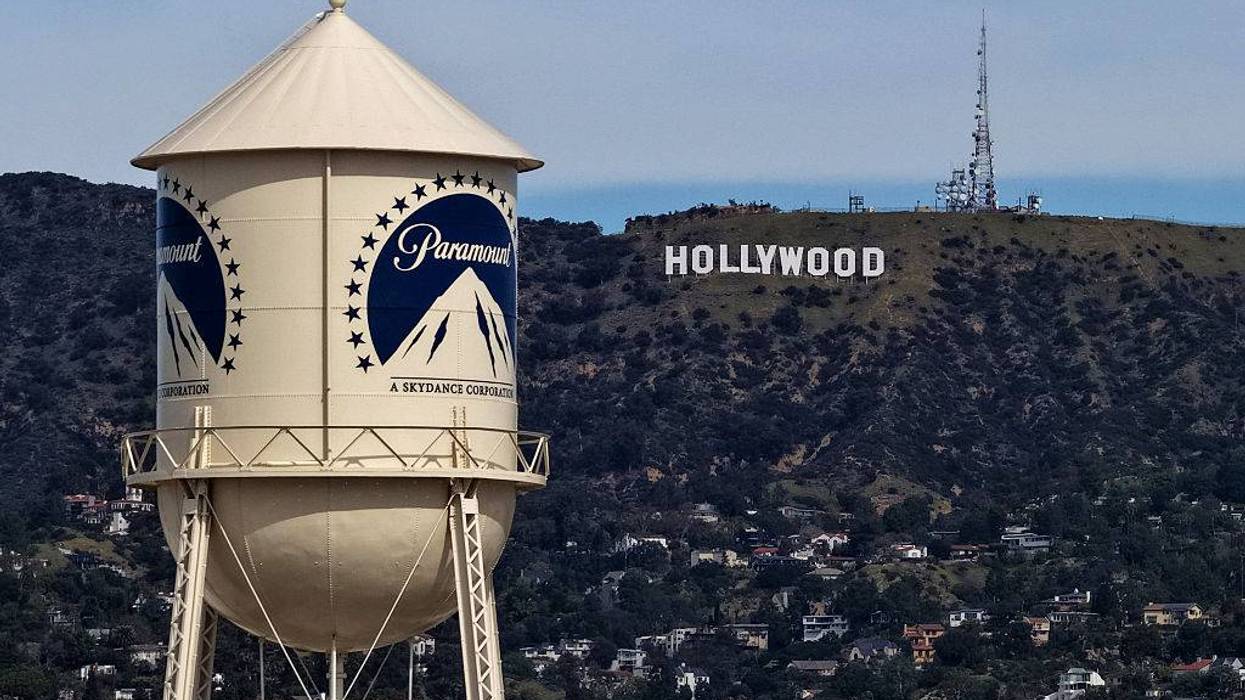
A coalition of state attorneys general led by California's Rob Bonta reportedly reached a deal on Monday to let Paramount's acquisition of Warner Bros. Discovery proceed, an outcome that press freedom advocates and antitrust campaigners condemned as a disaster for journalism, entertainment industry workers, and American democracy.
The deal, which is set to be formally announced later Monday, will pave the way for the creation of one of the largest media conglomerates in the world, helmed by the son of a billionaire megadonor to President Donald Trump and the Republican Party.
If the merger is finalized, the resulting media behemoth would control nearly 30% of both wide-release theatrical film distribution and basic cable channel licensing in the US. The combination would also put CNN under Ellison's control, heightening press freedom concerns that have intensified since Paramount's takeover of CBS.
"The AGs’ capitulation marks a new low."
“Today, billionaires have yet again bribed, censored, and bullied their way to the top,” Alvaro Bedoya, senior adviser at the American Economic Liberties Project, said in a statement. “As a result, a billionaire media conglomerate closely allied with the president will soon own one of its closest rivals, including some of the nation’s most critical news outlets. Saudi Arabia’s sovereign wealth fund will co-own those outlets, too.”
Bedoya criticized Bonta and California's Democratic governor, Gavin Newsom, who privately pushed the state attorney general's office to settle the lawsuit out of court. Xavier Becerra, the frontrunner to succeed Newsom, also called for a settlement, citing Paramount's threat to leave California if its proposed acquisition of Warner Bros. was blocked.
“People want champions who are not afraid of rich bullies. Newsom, Becerra, and Bonta did not meet that mark," said Bedoya. "The people who work in the film and TV industry and the small businesses who support it will suffer as a result. And so will everyone who values dissent in our democracy.”
Jessica González, co-CEO of the advocacy group Free Press, also denounced Bonta for reneging on "his promise to enforce the law and protect consumers and workers."
"Hundreds of thousands of people called on our state AGs to stand up to the Ellisons, who have engaged in a campaign of corruption and extortion to pave the way for this unlawful merger. We can no longer rely on the federal government to enforce the law and protect regular people. That much is clear. But the AGs’ capitulation marks a new low. It’s a sad day for all of us who have been opposing this merger because it will cut jobs and raise prices, all as it consolidates the media even more to enable authoritarians."
Actor Mark Ruffalo, an outspoken opponent of the merger who was subjected to what critics called a corporate "smear campaign" because of his stance, trained his ire on California's governor in response to news of the settlement.
"Gavin Newsom hands huge win to Trump and his billionaire cronies," Ruffalo wrote on social media.
The trial was scheduled to begin in March of next year. In its original lawsuit against the proposed merger—filed shortly after the Trump Justice Department dropped its investigation of the proposed purchase—the coalition of 12 attorneys general warned the deal would "combine two of Hollywood’s five major film distributors and two of the five major basic cable channel owners, extinguishing competition between Paramount and Warner Bros. and inflicting substantial harm on movie theaters, basic cable distributors and, ultimately, audiences nationwide."
The settlement deal reached Monday also reportedly includes the lawsuit filed by the Writers Guild of America, which represents TV screenwriters and others in the entertainment industry.
Bloomberg reported that the attorneys general of New York, Connecticut, and other states that had pushed back during settlement talks were able to secure "independent editorial boards for CBS and CNN as part of the deal"—though it's unclear how such boards would function.
"The terms are said to include a financial penalty if the company fails to make good on a promise to distribute 30 films per year in theaters," Bloomberg added.
This news is deeply disappointing and a massive betrayal of everyday workers and small businesses.
David Ellison is willing to make big promises, like 30 films a year, because he knows he doesn't actually have to stand by it.
We've seen it before with past mergers: Promises… https://t.co/yAYXusKiRM
— American Economic Liberties Project (@econliberties) September 21, 2026
The Los Angeles Times noted that Paramount's purchase of Warner Bros. "will be heavily leveraged."
"The company’s bankers have lined up nearly $80 billion in debt to finance the merger. [Paramount CEO David] Ellison’s father, billionaire Larry Ellison, late last year agreed to backstop the $47-billion in equity needed to complete the acquisition. Royal families from Saudi Arabia, Qatar and Abu Dhabi have agreed to chip in $24 billion for an equity stake by assuming some of Ellison’s financial commitments."
González of Free Press warned Monday that "consolidating the media in the hands of friendly oligarchs is right out of the authoritarian playbook."
“What’s exceedingly clear is that our laws and our political system are not strong enough to resist the pressure and manipulation of corrupt billionaires," said González. "We need to strengthen democratic systems of government, including getting money out of politics, and pass laws that break up big media conglomerates. We need to ensure that a few billionaires can’t drown out the masses to dictate bad policy.”
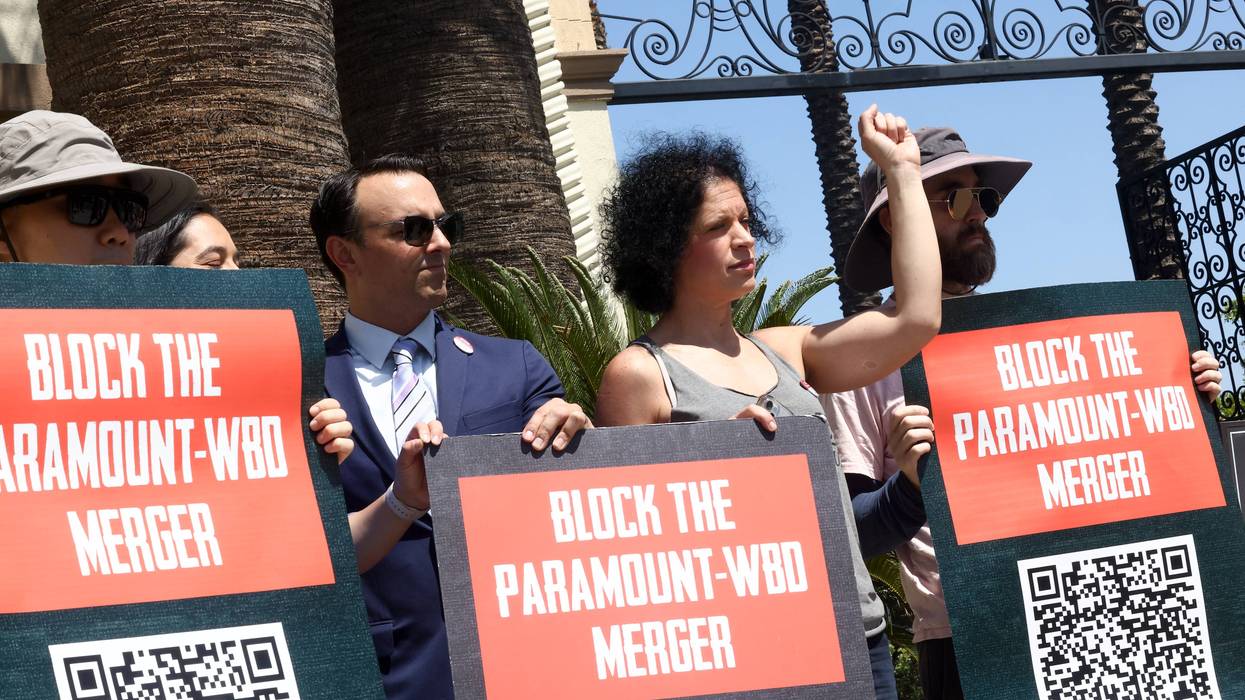
Lina Khan, former head of the Federal Trade Commission, called ongoing settlement talks "troubling."
Paramount and a coalition of state attorneys general led by California's Rob Bonta are reportedly in advanced talks to settle a high-stakes lawsuit and allow the media conglomerate's proposed merger with Warner Bros. Discovery to proceed.
The Wall Street Journal reported late Sunday that Bonta and Paramount executives have "discussed a series of potential concessions" as part of the ongoing settlement negotiations, "including a $1.5 billion investment by the company in production in California." The talks have also explored a potential promise by Paramount to stay in California and a requirement that the company sell off some cable channels and establish "a board to ensure that CNN retains editorial independence," according to the Journal. (Warner Bros. is CNN's parent company.)
Lina Khan, the former head of the Federal Trade Commission, was among those raising concerns about details trickling out of settlement talks between state attorneys general and Paramount, which is led by David Ellison—the son of billionaire Republican megadonor Larry Ellison. In a social media post, Khan wrote that the proposed megamerger "seems facially illegal, and the state AG lawsuit challenging it is very strong."
"It’s troubling to hear that the states may now settle for behavioral remedies, allowing the deal to go through subject to various promises from the firms," Khan wrote. "Behavioral remedies routinely fail, and the stakes here are particularly high given that a strong democracy requires open markets for sound journalism and creative expression."
"The states were right to step up," she added, "and I hope they keep fighting to protect this market, its workers, and the millions of Americans who value a free press and a vibrant film industry."
Matt Stoller, an antitrust researcher and author of the BIG newsletter, was more blunt, calling the settlement talks "fucking pathetic."
"Bonta's reputation will never recover," Stoller wrote.
The coalition of 12 state attorneys general sued to block the proposed merger in July after the Trump Justice Department shut down its antitrust investigation into the Paramount-Warner Bros. merger and backed the deal. The Writers Guild of America has also sued over the proposed merger, arguing it "violates federal antitrust law and would cause specific harm to writers."
The state AGs' lawsuit warned that the merger would "extinguish competition between Paramount and Warner Bros. and inflict substantial harm on movie theatres, basic cable distributors, and, ultimately, audiences nationwide," as well as "tens of thousands of workers across the production ecosystem."
Some attorneys general in the coalition are reportedly pushing back against some of the terms sought by Bonta and others. New York Attorney General Letitia James "has been resisting the deal terms and seeking additional protections for workers," according to CNN.
"Connecticut and at least two other states also have reservations about the settlement and are not currently on board," CNN added. "The holdouts are seeking additional remedies from Paramount."
Actor Mark Ruffalo, one of the most prominent opponents of the megamerger, implored the state attorneys general to reject a settlement deal and take the lawsuit to trial.
"Don't you dare," Ruffalo wrote in a message directed at Bonta. "Do not cave."
"You work for the people," he added, "the very people who will be hurt if you let this lousy deal filled with empty promises go forward."
“This is a watershed moment for the growing movement to protect children from addictive and dangerously designed social media," said the head of one child advocacy group.
A bipartisan US coalition of 51 state and territorial attorneys generals on Wednesday announced a proposed agreement with Meta in which the tech titan will pay up to $17.1 billion in penalties and implement sweeping policy changes to settle claims its social media platforms were designed to be addictive to children.
"Today, we have secured a settlement with Meta that will make social media less dangerous for our kids and make a world of difference for children and their families," Democratic California Attorney General Rob Bonta said in a statement. “Meta has agreed to make massive transformations that will reduce the risk of harm from its platforms—and will do it within months."
The proposed settlement, which still requires federal court approval, ends a closely watched trial that began last week in Oakland, California. The underlying case was brought by 29 states, while the broader agreement announced Wednesday involves a much larger bipartisan coalition of state attorneys general and jurisdictions, bringing 47 states plus the District of Columbia, Puerto Rico, American Samoa, and the Northern Mariana Islands together to take on one of Silicon Valley's most powerful companies.
Just three states are not part of the agreement. New Mexico—which already won a separate trial against Meta—Texas, and Florida, whose Republican attorney general, James Utheimer, scoffed at what he suggested is a paltry penalty.
"The payouts are peanuts compared to the profound harms Meta’s profit-driven addictive features inflicted on kids, and a slap on the wrist for a trillion-dollar [corporation] that’ll pay more to lawyers than to the states," Utheimer said on X. "We’ll see them at trial."
The litigants had accused Meta—which denies any wrongdoing—of using features including algorithmic recommendations, infinite scrolling, notifications, social-comparison tools, and other engagement mechanisms to maximize the amount of time young people spend on its platforms. They also alleged that Meta illegally collected data from children under 13 and misled parents and the public about the safety of its products.
“Children in New York and nationwide are suffering while companies like Meta reap immense profits by intentionally addicting them to their social media platforms,” Democratic New York Attorney General Letitia James said after the settlement was announced. “We cannot allow social media companies to continue fueling the growing rates of low self-esteem, isolation, and depression among our youth."
The proposed agreement imposes some of the most extensive restrictions on a major social media platform ever secured in the US. Users under age 18 would face a default two-hour daily limit on Facebook and Instagram, adjustable only by a parent. If other major social media platforms agree to comparable restrictions, the limit would fall to one hour. Meta would also institute a default overnight block from midnight to 6:00 am, again subject to parental override. Notifications would be disabled during overnight hours and during much of the school day.
Other provisions would prohibit Meta from displaying "like" and reaction counts to minors and from providing cosmetic procedure filters to users under 18. Teenagers would also receive an option to use a nonpersonalized feed rather than an algorithmic system designed to select content based on their engagement.
"With significant new resources for our communities and comprehensive restrictions on Meta’s platforms for young people, we are taking a major step towards breaking the cycle of social media addiction," James said. "This groundbreaking plan sets a standard of reforms for all social media platforms, and I will continue to work to extend these protections across the industry.”
Josh Golin, executive director of the child advocacy group Fairplay, issued a statement calling the agreement "a watershed moment for the growing movement to protect children from addictive and dangerously designed social media."
“This settlement also underscores the need for KOSA, the Kids Online Safety Act," Golin added. "As internal documents have shown over and over, Meta and other social media companies deliberately design their products to addict kids, and that is the root cause of so many mental health difficulties and serious online harms for minors."
Earlier this month, the Senate Commerce Committee advanced KOSA, which passed earlier in the House of Representatives and is supported by many child advocacy groups but opposed by the ACLU, Electronic Frontier Foundation, and other digital rights organizations that argue the bill's privacy risks outweigh its protections.
Wednesday's agreement comes after years of mounting evidence, lawsuits, whistleblower disclosures, and jury verdicts alleging that Meta knew its products could harm young users.
Earlier this year, a New Mexico jury ordered Meta to pay $375 million after finding that the company violated state law by putting children at risk. A day later, a Los Angeles jury found Meta and Google negligent in a case brought by a young woman who said she had been harmed by addictive features on Instagram and YouTube.
Following Wednesday's announcement, Meta called on "peers" TikTok and YouTube to "join us in supporting teens" by agreeing to some of the same measures required by the settlement.
Responding to the proposed Meta settlement, Illinois Attorney General Kwame Raoul said that “this is a monumental victory for online safety that will affect an entire generation of young people."
"After decades of putting profits before the health and wellness of children, this landmark settlement requires Meta to put our children’s safety and mental health at the forefront,” he continued.
“It is imperative that all social media apps protect our children, and I will continue working with my colleagues toward that end," Raoul added. "This settlement sends a message that we will not hesitate to take action to protect children online."
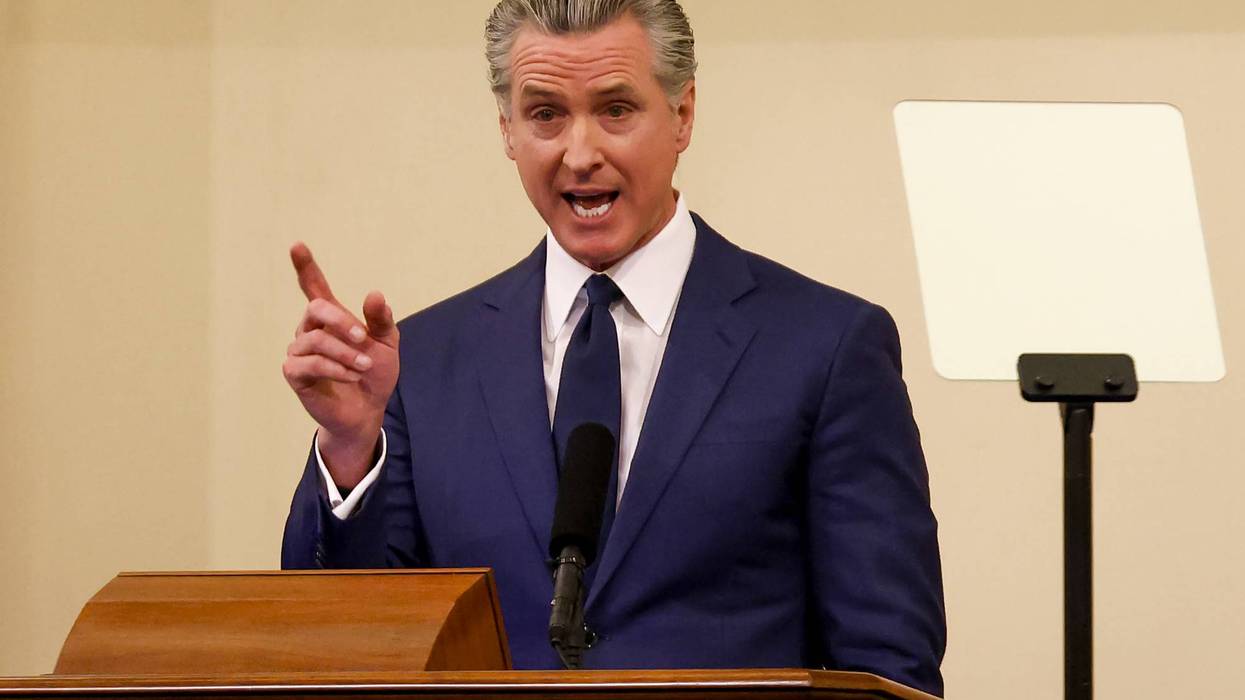
"You're not going to believe this but Gavin Newsom is taking the side of capital over workers," said one critic.
The Wall Street Journal on Friday reported that California Gov. Gavin Newsom has expressed reservations about his state's antitrust lawsuit that aims to block the $110 billion megamerger between Paramount Skydance and Warner Bros.
According to the Journal's sources, Newsom, who is widely expected to seek the Democratic Party's nomination for the presidency in 2028, has expressed concern about the impact that blocking the merger would have on jobs in Hollywood, and his office has reportedly "encouraged" California Attorney General Rob Bonta to reach a settlement with Paramount.
"It is unclear what impact, if any, Newsom’s urging will have on the California attorney general’s suit," the Journal reported. "Newsom doesn’t have a role in the litigation and doesn’t have authority over the state attorney general’s actions."
Bonta, along with several other Democratic state attorneys general who are co-plaintiffs in the antitrust suit, scored a major victory last week when a federal judge granted a temporary restraining order to pause the merger from going forward. In response, the companies have agreed not to close the deal until five days after a trial is held or next June 1, whichever is sooner.
The combination of Paramount and Warner Bros. has long been controversial because it would put control of CBS, CNN, HBO, TikTok, and other major media properties all under the control of David Ellison, the son of billionaire Larry Ellison, a major donor to President Donald Trump.
Newsom earlier this year told Semafor media reporter Maxwell Tani that he's known David Ellison for years, while emphasizing that California's probe of the proposed merger "isn't a personal attack" on the Paramount CEO.
David Dayen, executive editor of The American Prospect, expressed mock surprise at Newsom reportedly going to bat for the merger.
"You're not going to believe this but Gavin Newsom is taking the side of capital over workers," Dayen wrote. "In this case it's tricky because he's backing the very MAGA allies his cosplaying X account claims he's fighting."
Tech journalist Karl Bode described Newsom's reported efforts to push the merger through as a "nice sneak peak of the sort of media policies you can expect under his presidency."
Elections analyst Nick Field questioned Newsom's reported concern about Hollywood jobs being lost if the merger gets blocked, as corporate consolidation usually coincides with mass layoffs.
"Paramount will undoubtedly cut tons of jobs if they buy Warner Bros., as the Ellisons did when they bought Paramount in the first place," wrote Field. "To say nothing of allowing the Ellisons to own CNN and consolidate more power. Just disgusting supplication from Newsom."
Antitrust advocate Matt Stoller, however, expressed skepticism at the Journal's reporting on Newsom, if for no other reason than the California governor was unlikely to risk hurting his image among Democratic primary voters by pushing through an unpopular corporate merger.
"It would be an odd for Gavin Newsom to encourage the control of Hollywood by close allies of Donald Trump considering his 2028 ambitions," wrote Stoller. "He's not stupid."
"History tells the tale of what happens when a few people have great power over markets that are central to Americans' lives: fewer opportunities for more people, worse products and services for all people," said California Attorney General Rob Bonta.
The $110 billion megamerger between Paramount and Warner Bros., widely criticized as a "disaster" by antitrust advocates, has been temporarily put on hold.
US District Judge Araceli Martínez-Olguín on Monday granted a temporary restraining order sought by several Democratic state attorneys general to pause the merger from going forward.
In her ruling, Martínez-Olguín found that the plaintiffs provided "compelling evidence that the combined firm resulting from the transaction will possess substantial market share in the wide-release theatrical distribution market," meaning that the merger between the two studios is "likely to violate antitrust laws."
The judge—appointed by former President Joe Biden—issued a 14-day restraining order on the merger, writing that "Paramount and Warner Bros. will continue to operate as separate, viable companies competing in the marketplace while they wait for the court to adjudicate this case."
The combination of Paramount and Warner Bros. has long been controversial because it would put control of CBS, CNN, HBO, TikTok, and other major media properties all under the control of David Ellison, the son of billionaire Larry Ellison, a major donor to President Donald Trump.
California Attorney General Rob Bonta, the lead plaintiff in the lawsuit against Paramount-Warner Bros. deal, hailed Martínez-Olguín's ruling as a "critical first win in our case to ensure this megamerger never sees the light of day."
"History tells the tale of what happens when a few people have great power over markets that are central to Americans' lives: fewer opportunities for more people, worse products and services for all people," he said. "With our lawsuit, we're fighting for a free and fair market and a thriving film and television industry that serves creatives and audiences alike."
New York Attorney General Letitia James, a co-plaintiff in the lawsuit, delivered a video statement calling the ruling "an important victory for consumers, for workers, and for fair competition."
"We are taking action to protect New Yorkers from the harms of unlawful corporate consolidation," James added, "and protecting democracy while we're at it."
We just won a court order stopping the merger of @ParamountPics and @warnerbros while our lawsuit continues.
We’re going to keep fighting to keep costs down for consumers, protect jobs, and stop this illegal merger. pic.twitter.com/yfcA0sOoLb
— NY AG James (@NewYorkStateAG) July 20, 2026
Sen. Elizabeth Warren (D-Mass.), a longtime critic of the merger, called the ruling "a WIN thanks to the state attorneys general who stood up and pushed back," and added, "Let's keep up the fight."
Rep. Becca Balint (D-Vt.) said the ruling was "welcome news," while warning that "we're not out of the woods yet."
"This merger would force prices up, bring wages down, and lead to people losing jobs—all to bring TikTok, CNN, and CBS under one roof," Balint observed. "Perhaps Paramount CEO David Ellison can't wine and dine his way through this one after all."
Attorney Norm Eisen, co-founder of Democracy Defenders Action, accused the Ellisons of trying to "rush" the merger over the finish line before courts could examine antitrust claims being made against it.
"Now the case gets decided on the merits," Eisen said.
"As President Trump has made clear today, the fight to protect the right to vote isn’t over," said California Attorney General Rob Bonfa.
A federal judge on Wednesday blocked portions of an executive order signed by President Donald Trump last year that required Americans to show proof of citizenship when registering to vote.
US District Court Judge Denise Casper ruled that Trump's March 2025 executive order establishing proof-of-citizenship requirements was illegal because the US Constitution explicitly gives states the power to implement elections, with some oversight and input from the US Congress.
In contrast, wrote Casper, the Constitution "does not grant the president any specific powers over elections," making any effort to regulate voter registration via executive order unconstitutional on its face.
Casper's ruling came about after 19 states sued to block the Trump executive order from taking effect.
New York Attorney General Letitia James expressed gratitude that the court "blocked the president’s unconstitutional attempt to seize control of our elections."
"Generations of Americans fought tirelessly for the right to vote, and we honor their legacy by protecting that right against anyone who tries to undermine it," said James. "As we approach this year’s midterms, I will continue doing everything in my power to protect free and fair elections and defend the sacred right to vote for New Yorkers and all Americans."
Nevada Secretary of State Cisco Aguilar called the ruling "an important reminder to our president that he does not administer our elections." Aguilar vowed that he and other state-level officials nationwide would use every tool we have to protect the right to run our elections at the local level, and the ability of our voters to lawfully participate.”
California Attorney General Rob Bonta celebrated the court victory but warned that Trump would continue efforts to rig the 2026 midterm elections in the GOP's favor.
"As President Trump has made clear today, the fight to protect the right to vote isn’t over," Bonta said. "While President Trump continues to spread lies and feed into delusions about our elections, our coalition of AGs will continue to stand strong in protecting our democracy."
"Now that the federal government has abandoned antitrust enforcement in favor of cronyism and runaway consolidation, state attorneys general must step in to block this deal," said one critic.
The US Department of Justice on Friday approved Paramount Skydance Corporation's megamerger with Warner Bros. Discovery, prompting opponents of the $110 billion deal to place their hopes of blocking it in the hands of Democratic state attorneys general.
The DOJ's Antitrust Division approved the merger without requiring divestitures or behavioral remedies—a significant win for billionaire Paramount CEO David Ellison. Analysts and critics had suggested the DOJ might require sales of some of the corporation's numerous cable networks, streaming services, film and television studios, sports programming rights, or media outlets.
The DOJ also reportedly declined to impose conduct restrictions on bundling, distribution, licensing commitments, and other areas.
“If we had an uncorrupted Department of Justice, Paramount would not even have tried to merge with Warner Bros. Discovery, in plain violation of the law," Robert Weissman, co-president of the consumer advocacy group Public Citizen, said in response to the news of the DOJ approval. "If it had, a Department of Justice that was doing its job would have rushed to court to block the merger the moment it was announced."
“Now, however, a compromised DOJ has rubber-stamped a merger that consolidates power for the Ellisons, one of [President Donald]Trump’s preferred oligarch families," Weissman added. “This merger will jack up prices for consumers, cost workers their jobs and, most importantly, limit the range of viewpoints permitted to air on the major media or appear in movies and creative outlets. Put simply, this is an anti-free speech merger."
This is terrible news for every American who doesn't want Trump-aligned billionaires to control what they watch and how much they pay.The Paramount-Warner Bros. deal has reeked of corruption and influence-peddling.This fight isn't over. State AGs must block this merger.
[image or embed]
— Elizabeth Warren (@warren.senate.gov) June 12, 2026 at 1:48 PM
Craig Aaron, co-CEO of the advocacy group Free Press, said in a statement: “Despite all the talk about conducting a thorough investigation, the fix was in at the Trump Justice Department from the start. Paramount Skydance has fêted, flattered, and promised sweeping changes to news coverage to win the administration’s approval, despite evidence that giving one corporation this much media power—all the movie studios, cable channels, and newsrooms—will undermine competition, destroy jobs, slant the news, and endanger our democracy."
“We've already seen how far Paramount and the Ellison family are willing to go to diminish a once-proud network and news organization like CBS, and they promise to do worse if they get their hands on Warner Bros., HBO, CNN, and all the rest," he added. "The Ellisons aren’t hiding their intentions, and no weak concessions will make this deal any better."
Congressman Jamie Raskin of Maryland, the top Democrat on the House Judiciary Committee, warned earlier this week that approval of the merger would result in "the same kind of unprecedented pro-MAGA editorial control we have seen at CBS News and '60 Minutes.'"
Raskin also contended that the merger could mean that "American consumers, who already pay an average $69 a month for streaming on top of $100 a month for cable and $78 for internet," will pay "even more for sports, news, and entertainment."
As Politico's Yasmin Khorram reported Friday:
The [DOJ] decision... paves the way for Paramount to combine with the entertainment and media company behind a vast film and television studio, CNN, and the HBO Max streaming service, which would be combined with Paramount+ to create a new offering boasting about 200 million subscribers. The deal, which would upend the Hollywood ecosystem by combining two historic rival studios, is opposed by many in the entertainment industry who fear it could lead to mass layoffs, among other concerns.
The DOJ's reported approval of the merger does not necessarily mean the deal is done. Several states are weighing antitrust challenges, most notably California, where the office of Democratic Attorney General Rob Bonta is conducting what he called a "vigorous" review of the proposed merger to determine how it would impact competition in entertainment, streaming, advertising, and labor markets. Reuters reported earlier this month that California, New York, and other states are preparing a lawsuit aimed at blocking the merger.
“The good news is, this is not the last word on the matter," Weissman said. "Competition authorities in the states and other countries can still follow the law and stand up for the public interest against this media consolidation. Now that the federal government has abandoned antitrust enforcement in favor of cronyism and runaway consolidation, state attorneys general must step in to block this deal."
Aaron said that states "have strong case for blocking this merger, and many brave journalists, filmmakers, and workers in the entertainment industry have spoken out against the dangers of this deal despite threats to their livelihoods."
"They are warning us what will happen if this deal goes through, and we must listen," he added. "The attorney generals have the evidence they need to stop this deal; now the public needs them to take action.”
Last year's merger between Paramount Global, Skydance Media, and National Amusements was itself opposed by critics who sounded similar alarms over corruption, antitrust issues, labor concerns, and attacks on editorial independence.
CBS, a Paramount Global company, announced the cancellation of "The Late Show with Stephen Colbert" during the merger review period. While Paramount claimed the cancellation was a financial decision, critics said its timing suggested at least indirect political pressure, given Colbert's vocal criticism of Trump and the need for merger approval from the Federal Communications Commission. FCC Chair Brendan Carr was appointed by Trump and has been dogged by allegations that he's more loyal to the president's agenda than to his agency's stated mission.
One of the biggest recurring flashpoints involves claims of corporate pressure and censorship at CBS' venerable "60 Minutes" weekly current affairs program. Numerous former "60 Minutes" journalists and others have accused Bari Weiss—the right-wing podcaster who became CBS News editor-in-chief after the merger—of political censorship.
Earlier this month, a coalition of press freedom groups warned that recent firings of "60 Minutes" journalists were a “grotesque effort taken straight from an authoritarian handbook” that posed a much wider threat to democracy, and highlighted that an approved Paramount Skydance-Warner Bros. Discovery merger would hand control of CNN, a Warner Bros. company, to the same billionaire family that now owns CBS.
The coalition argued that the merger “would open the door to improper political meddling in journalists’ editorial decisions" and "alter CNN’s editorial direction (not to mention meddle with HBO’s documentaries) to be more friendly to the [Trump] administration, threatening press freedom."
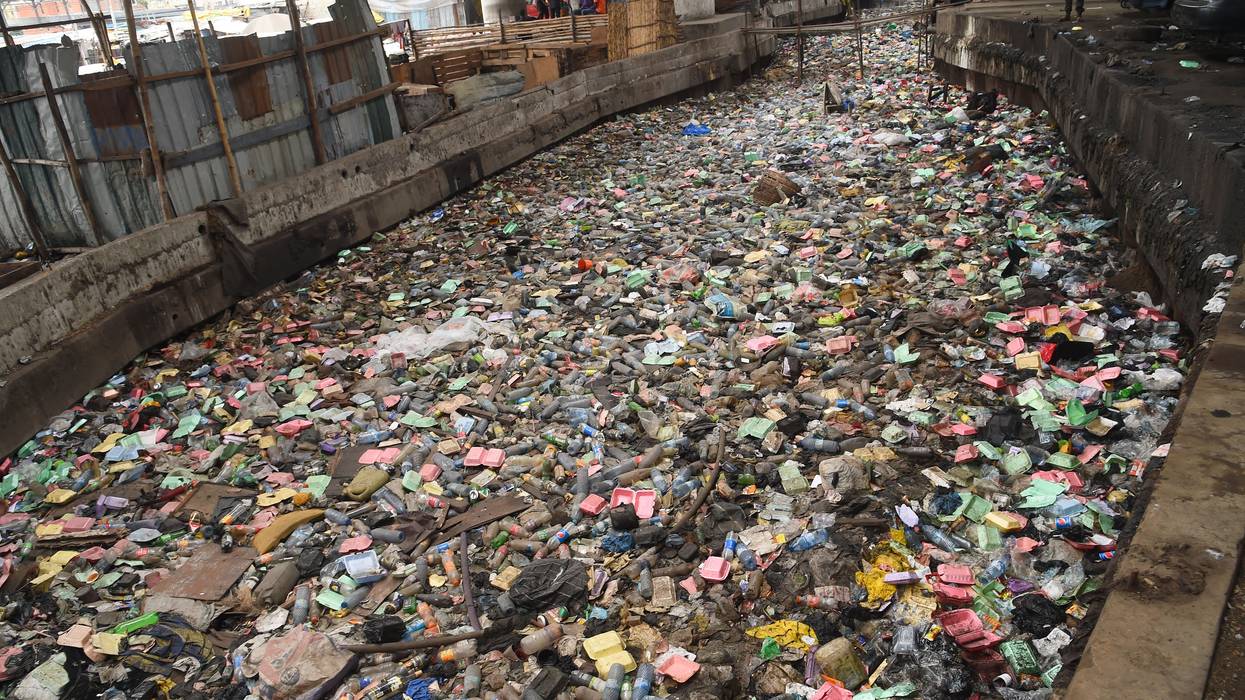
To protect their markets, the petrochemical companies began a decades-long, coordinated effort to sell the public on plastic recycling—despite their knowledge that it was neither technically nor economically viable.
We’re all living in a world—and in bodies—more polluted with plastic than the one our parents grew up in. And with global plastic production increasing by 3-3.5% annually and expected to double by 2040 or 2050, our children, and their children, will inherit even more plastic particles in everything from their food systems to their internal organs.
Two new pieces of media shine a light on the enormous harm that these invasive plastics are causing to our health across generations—and how Big Oil and the plastics industry have not only caused this crisis but also are bent on continuing it with no end in sight.
The Netflix documentary Plastics Detox details how the endocrine-disrupting chemicals from plastics contaminate three generations: the mother, the fetus, and the fetus' developing reproductive cells—“a toxic trespass," according to an expert interviewed by the film’s producers. Following environmental and reproductive epidemiologist Dr. Shanna Swan as she strives to help couples struggling with infertility, the film shows how chemicals found in plastic are identified as major endocrine disruptors, significantly contributing to hormone dysfunction, lower sperm quality, and falling fertility rates.
Just as viewers begin to wonder, how did we even get here? How is there so much plastic in… well, everything? California Attorney General Rob Bonta appears on screen, succinctly explaining that “the entire plastics industry is built on a lie”—that we can simply recycle our way out of the problem. “The only reason that plastics today are ubiquitous is because the people were told that this product can be recycled,” Bonta explains. Investigations from the Center for Climate Integrity and others have revealed that the major fossil fuel and petrochemical companies that produce and sell plastics have long known recycling was not a technically or economically viable solution to plastic waste.
Attorney General Bonta has the right idea—we need to bring an end to the fossil fuel and petrochemical industry lies.
On behalf of California, Bonta has filed a first-of-its-kind lawsuit against ExxonMobil that seeks to hold the oil giant, and the world’s biggest producer of the polymers used in single-use plastics, accountable for helping to create and push that myth.
A new book by journalist Beth Gardiner, Plastics Inc.: The Secret History and Shocking Future of Big Oil’s Biggest Bet, details the more than 100-year evolution of the plastics industry, including the industry’s deliberate efforts to reshape our society from one that, coming out of the Great Depression and World War II, reduced and reused its materials to one that simply disposed of them. Disposability equals profitability to the industry. Gardiner details how plastics’ inability to be reused or recycled was not a bug, but a feature. As one industry leader put it at the 1956 Society of Plastics Industry conference, “The future of plastics is in the trash can.” To actualize plastics’ true selling potential, the industry would have to “teach people how to waste.”
From there, the world’s leading petrochemical companies, with their ethos of single-use disposability, went on to create the plastic waste crisis. The American public, though, quickly became wary of plastic pollution and began to push back. In response, the industry first promoted landfilling and incineration to hide the plastic from view. But it quickly became clear that these disposal options would not placate a public frustrated by a flood of disposable plastics. People did not want more landfills, did not want incineration, and did not want plastic in the environment. This public outcry led to calls for bans on single-use plastics. To protect their markets, the petrochemical companies began a decades-long, coordinated effort to sell the public on plastic recycling—despite their knowledge that it was neither technically nor economically viable.
No amount of effort, investment, public education, or consumer diligence can overcome a material that resists recycling at a molecular level. Plastic’s intrinsic structure creates technical and economic barriers that make successful, safe, and scalable plastic recycling impossible—barriers that plastics producers identified in their own internal assessments as early as the 1970s. Rather than acknowledging these limitations, the industry has embarked on a nearly half-century long campaign to ensure the public never learned about them.
Now the world’s largest plastics producers make public commitments to expand the use and capacity of chemical (or “advanced”) recycling, even in the face of overwhelming evidence demonstrating that major economic and technical limitations remain unresolved. Chemical recycling operations continue to flounder as a result of predictable issues, including many of the same factors that industry insiders identified decades ago, while companies quietly retreat from their heavily publicized commitments once their public relations value has expired.
We are now awash in plastic. It is literally everywhere, quietly changing our human existence. Attorney General Bonta has the right idea—we need to bring an end to the fossil fuel and petrochemical industry lies. Consumers are legally entitled to make informed decisions. Corporations cannot be given unfettered license to continue to sell us baseless false solution after baseless false solution. They must be held accountable.
"By refusing to fund the CFPB, even when legal and appropriate funding mechanisms are available, the Trump administration has sharpened its message that it does not care about affordability."
A coalition of attorneys general from across the US sued White House budget chief Russell Vought on Monday over his effort to completely starve the Consumer Financial Protection Bureau of funding, a ploy that—if successful—would eliminate a key path of recourse for Americans harmed by corporate abuses.
The lawsuit was filed in a federal court in Portland, Oregon by the top law enforcement officials of 20 states—including New York, California, Maine, and Hawaii—and the District of Columbia. The suit notes that Vought, in his capacity as acting director of the consumer bureau, "has worked tirelessly to terminate the CFPB’s operations by any means necessary—denying plaintiffs access to CFPB resources to which they are statutorily entitled."
The attorneys general specifically challenge Vought's "unlawful" refusal to request CFPB funding from the Federal Reserve. Under the law that established the consumer bureau, the agency receives funding from the Fed rather than congressional appropriations.
Vought has advanced a tortured definition of "earnings" to argue the Fed lacks funds from which the CFPB can draw, leaving him with no choice but to allow the agency he and his far-right allies have long opposed to languish.
The new lawsuit argues that Vought's position violates the Administrative Procedure Act and the US Constitution. If allowed to stand, Vought's refusal to seek CFPB funds would "make it all but certain that the CFPB will run out of funding completely in January 2026."
California Attorney General Bonta said in a statement Monday that the Trump administration’s "latest effort to destroy the CFPB means that hundreds of thousands of consumer complaints will fall on deaf ears."
"By refusing to fund the CFPB, even when legal and appropriate funding mechanisms are available, the Trump administration has sharpened its message that it does not care about affordability, that it does not care to be on the side of families and working Americans," said Bonta.
The CFPB has been a target of big banks and other powerful corporations since its creation in the wake of the 2008 financial crisis. The agency's success—it has returned more than $21 billion to consumers since 2011—has only intensified efforts by corporate-friendly lawmakers and right-wing bureaucrats to gut it.
Since taking control of the CFPB earlier this year, Vought has effectively shut down bureau operations and signaled a lax approach to enforcement.
US Sen. Elizabeth Warren (D-Mass.), an architect of the CFPB, applauded the state attorneys general for taking legal action against Vought.
“The Trump administration’s latest illegal attempt to shut down the Consumer Financial Protection Bureau will hurt families in every state across the country—and now states are fighting back," said Warren. "Today’s new lawsuit underscores how illegally starving the agency of funding would turn off the consumer complaint database that has helped millions of Americans at the end of their rope after getting scammed."
"If courts uphold the law," she added, "they’ll reject this attempt to sideline the financial cop on the beat that has returned more than $21 billion directly to Americans cheated by big banks or giant corporations.”
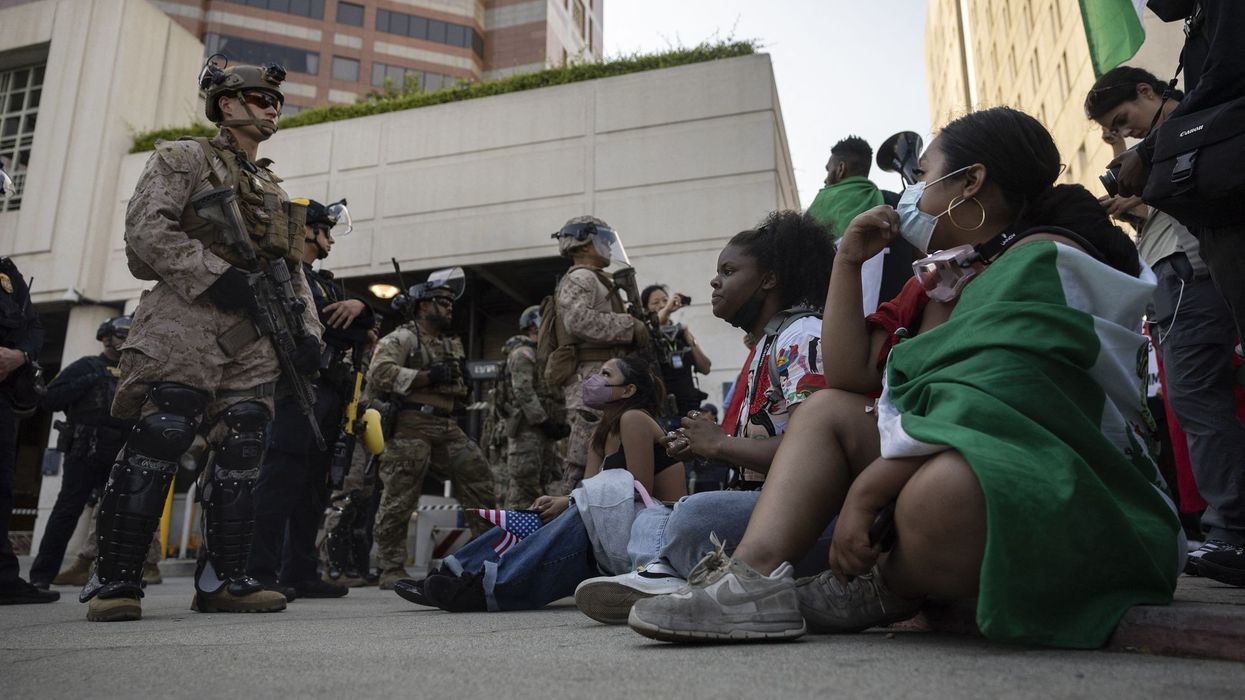
"For more than five months, the Trump administration has held California National Guard troops hostage as part of its political games," said California's attorney general. "But the president is not king."
In a win for Democratic California Gov. Gavin Newsom, state Attorney General Rob Bonta, and the residents of Los Angeles, a federal judge on Wednesday ordered President Donald Trump to stop deploying the National Guard in the nation's second-largest city.
"The founders designed our government to be a system of checks and balances," wrote US District Judge Charles Breyer, an appointee of former President Bill Clinton. "Defendants, however, make clear that the only check they want is a blank one."
Trump mobilized around 4,000 California National Guard troops in June amid protests against his violent crackdown on undocumented immigrants. Since then, the Republican leader has also pursued deployments in other Democrat-led cities, including Chicago, Illinois; Portland, Oregon; and Washington, DC, where two soldiers were recently shot.
The new ruling from San Francisco-based Breyer comes as the administration was cutting troops in LA from 300 to 100, according to the New York Times.
"Once again, a court has firmly rejected the president's attempt to make the National Guard a traveling national police force."
"Six months after they first federalized the California National Guard, defendants still retain control of approximately 300 guardsmen, despite no evidence that execution of federal law is impeded in any way—let alone significantly," the judge said. "What's more, defendants have sent California guardsmen into other states, effectively creating a national police force made up of state troops."
After ruling in September that Trump's deployment of Marines in Los Angeles violated the 1878 Posse Comitatus Act, the judge on Wednesday blocked the president's federalization of California National Guard troops—but he also halted his own decision until next Monday, allowing for appeals.
Despite the prospect that the Trump administration would continue the court fight, Bonta and Newsom—who is expected to run for president in 2028—welcomed the ruling.
"Once again, a court has firmly rejected the president's attempt to make the National Guard a traveling national police force," Bonta said in a statement. "For more than five months, the Trump administration has held California National Guard troops hostage as part of its political games."
"But the president is not king. And he cannot federalize the National Guard whenever, wherever, and for however long he wants, without justification," the attorney general declared. "This is a good day for our democracy and the strength of the rule of law."
In addition to battling Trump's invasion of LA, Bonta has backed lawsuits filed by Illinois Attorney General Kwame Raoul, Oregon Attorney General Dan Rayfield, and DC Attorney General Brian Schwalb challenging the president's deployments in their cities and filed an amicus brief with the US Supreme Court for the Chicago fight.