
SUBSCRIBE TO OUR FREE NEWSLETTER
Daily news & progressive opinion—funded by the people, not the corporations—delivered straight to your inbox.
5
#000000
#FFFFFF
To donate by check, phone, or other method, see our More Ways to Give page.


Daily news & progressive opinion—funded by the people, not the corporations—delivered straight to your inbox.
The criticism Harry has faced about his comments on Afghanistan is an opportunity to dig deeper and take on the dominant narratives in our society about war more broadly.
In the wake of Prince Harry’s new book Spare, leaked excerpts that he had killed 25 people in the war in Afghanistan shocked readers. He reflected on what it’s like to take a life in war: “You can't kill people if you think of them as people. You can't really harm people if you think of them as people. They were chess pieces removed from the board. Bads taken away before they could kill Goods. I'd been trained to ‘other-ize’ them, trained well. On some level I recognized this learned detachment as problematic. But I also saw it as an unavoidable part of soldiering.”
There was deep anger over Prince Harry’s admission. One British Army colonel told The Independent, “That’s not how you behave in the army.” But we shouldn’t be angry that he told the truth about the dehumanization inherent in warfare. We should be angry that the truth isn’t told more often.
On the Late Show with Stephen Colbert, Prince Harry said he revealed these details about his time in Afghanistan to address the very real crisis of high veteran suicides. "I made a choice to share it because having spent nearly two decades working with veterans all around the world, I think the most important thing is to be honest and be able to give space to others to be able to share their experiences without any shame," he told Colbert.
The Costs of War Project, an organization with which we consult, found that at least four times as many active-duty personnel and war veterans of post-9/11 conflicts have died of suicide (30,177) than in combat (7,057). It’s laudable that Prince Harry is seeking to support other veterans. And the criticism he’s facing about his comments on Afghanistan is an opportunity to dig deeper and take on the dominant narratives in our society about war more broadly.
As Americans, we are often warned against critiquing or opposing war in the name of our patriotic duty. We watch movies that glorify war, and are taught at a young age that the causes of U.S. wars are always just or well-intentioned, and that any damage done is simply the price of protecting our freedoms.
Here’s what we’re not told: Nearly a million people have died in the post-9/11 wars, an overwhelming number of whom were civilians. The disproportionate impacts of these wars have been born by Muslims and people of color; nearly all of the 85 countries in which U.S. counterterrorism operations have occurred are in Africa, Latin America, the Middle East, and Southeast Asia. The dehumanization that Prince Harry describes stems in part from the systemic racism that undergirds militarism.
"Working to chip away at the dominant narrative that sanitizes war could be Harry's most powerful legacy of all."
What’s more, the New York Times reported that there are more militant groups operating now than when we embarked on these wars 20 years ago. The post-9/11 wars have actually been a main driver of conflict and recruitment in places such as Burkina Faso and Somalia.
We also aren’t told that War is big business, subsidized by taxpayers.
As the U.S. military budget tops $850 billion, other countries spend a fraction of what we do on their militaries. In fact, the U.S. spends more on war than the next nine countries combined. Spending on affordable housing, education, and healthcare in the U.S. are deprioritized by congressional leaders in favor of funding war.
But who actually gets the money we allot to the Pentagon? Costs of War has noted that nearly half of the Pentagon’s spending goes to military contractors, and a large portion of these contracts have gone to just five major corporations: Lockheed Martin, Boeing, General Dynamics, Raytheon, and Northrop Grumman.
It should be no surprise then that weapons makers have spent $2.5 billion on lobbying since 9/11, employing, on average, over 700 lobbyists per year—more than one for every member of Congress.
It’s not just K Street where the industry shines. National security pundits on TV news too often have undisclosed ties to the weapons industry, ensuring that the media narrative serves the interest of militarism, not true peace and security.
As Prince Harry told Stephen Colbert, context is everything. We must acknowledge not only the full toll that our wars take, but also, the systemic motivations behind them.
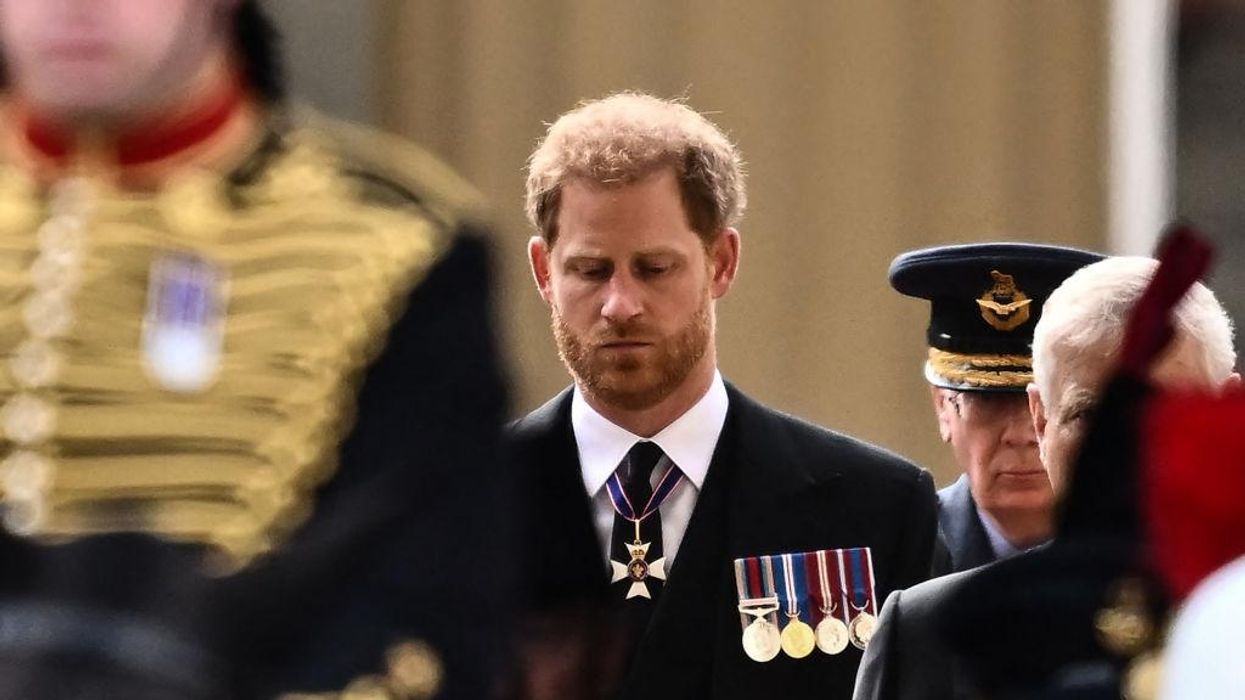
Although a prince, Harry was a young man when he served in Afghanistan as an army officer. Now, he’s older than his mother was when she died, and has built a platform to “drive systemic cultural change,” according to the website of the Archewell Foundation, which he and Megan Markle founded.
He can take this PR firestorm and create real cultural change when it comes to understanding the full impact of and systemic reasons for militarism. Working to chip away at the dominant narrative that sanitizes war could be Harry's most powerful legacy of all.
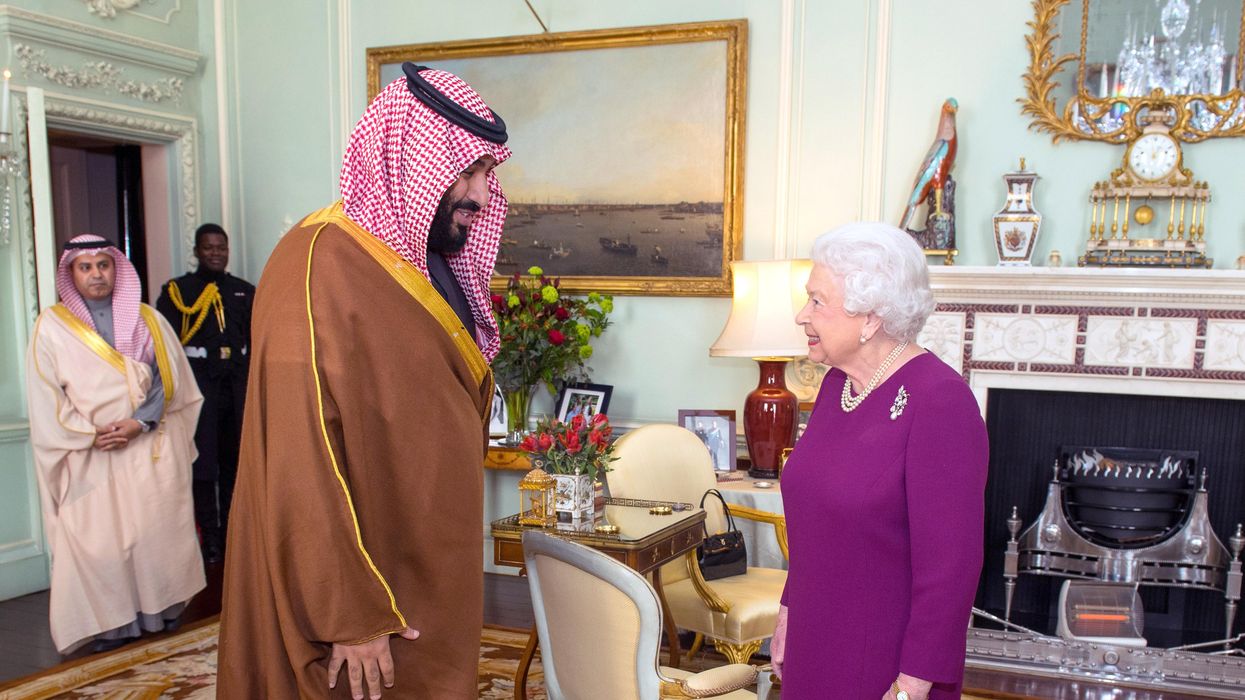
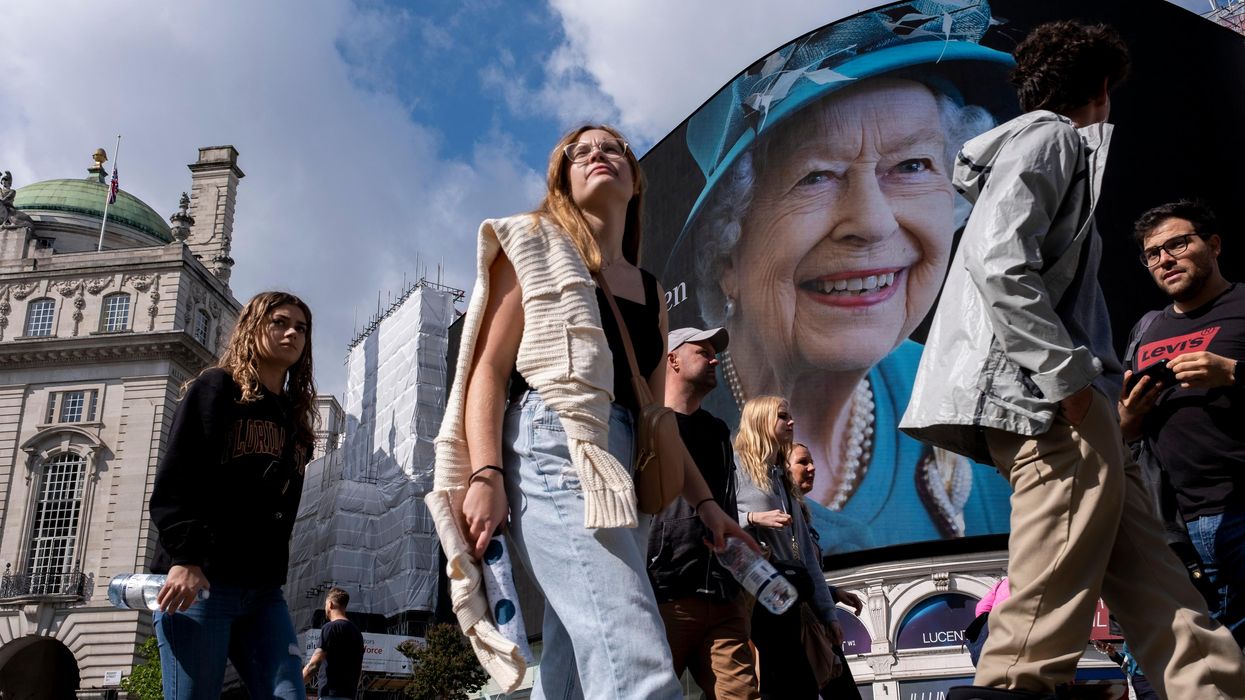
ollowing the death of Queen Elizabeth, no one in the established media is taking any chances with the public mood. Public affection for the late queen is not in doubt, and yet BBC journalists are whipping up paroxysms of grief that wouldn't be out of place in North Korea.
The BBC's Johnny Diamond and Nicholas Witchell have wrung out every possible emotive line about the queen's selfless devotion to service and the nation's unending sorrow. Yet an objective view of her reign must separate her personal qualities from the role the monarchy has played in the service of Britain's imperial interests, machinations and crimes over the last 70 years.
The examples are too numerous to list, but in every major crisis since the queen was crowned, amid a period of troubled decolonisation, the monarchy played its part.
Britain's close ties to the shah of Iran prior to and following a British and US-backed coup in 1953 is a perfect illustration of the way the monarch functioned to legitimise neocolonial policies through direct relations with pro-western dictators. Shah Pahlavi ruled with a brutal secret police and was put into power because his elected prime minister had nationalised Iran's oil industry - a highly strategic part of Britain's Middle East imperial possessions.
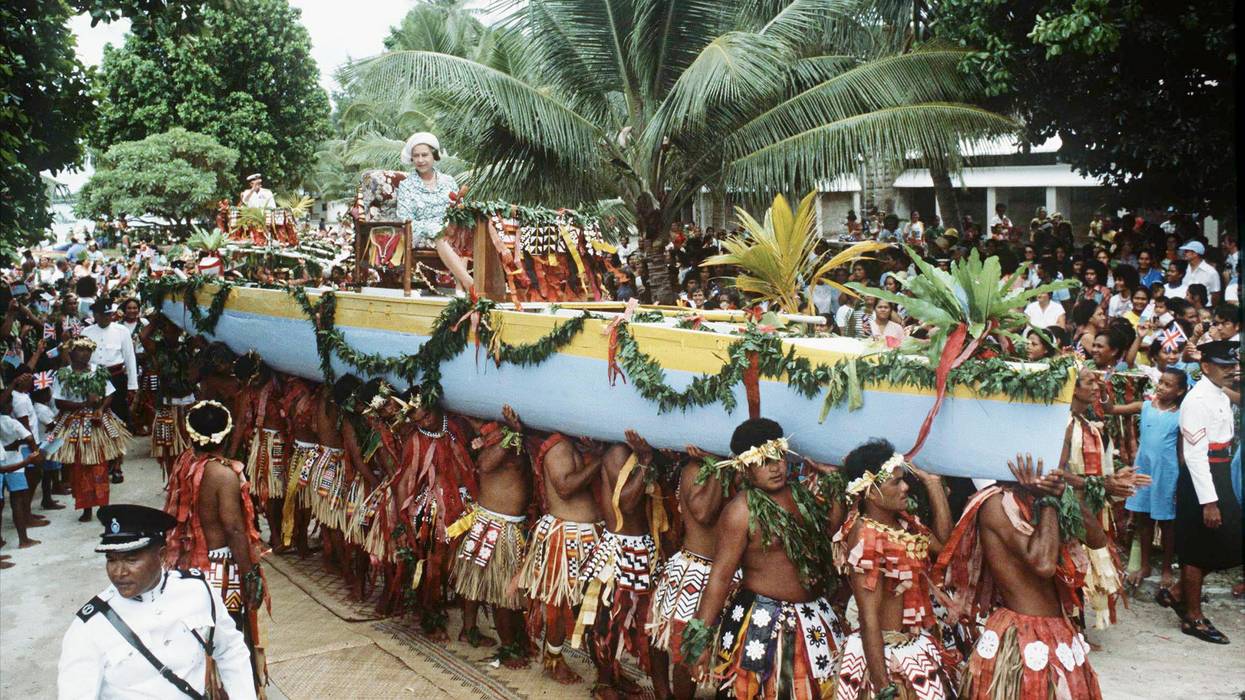
Once safely installed, the oil profits flowed once more. The queen received the shah as an official guest in 1959 and made a state visit to Iran as the shah's guest in 1961. Further mutual visits followed, and relations were extremely cordial.
Of course the queen did not author the 1953 coup - that was Prime Minister Winston Churchill and US President Eisenhower - but she helped strengthen relations with Iran over the decades by forming a personal relationship with the shah and his wife, until he was overthrown in the revolution of 1979.
Britain attempted to continue its imperial influence across the Middle East through the support for the royal regimes that it put in place and supported in Egypt, Iraq, Jordan, Libya and the Gulf emirates. In the post-war period of anti-colonial revolt, several of these monarchs were overthrown to the great chagrin of Britain.
In the case of Libya, King Idris, formerly the leader of the Sanussi tribe and emir of Cyrenaica, was awarded the Grand Cross of the British Empire for his support in the defeat of German and Italian forces in North Africa during World War II.
The queen's cousin Earl Mountbatten (who oversaw the precipitous and disastrous partition of India in 1947) was a close friend of Idris and used to visit him in Libya and stay at his royal palace. In return Idris supported the UK and France during the attack on Egypt in 1956, and provided the US with a major airbase near Tripoli, home to 4,600 Americans. All of this was lost in Muammar Gaddafi's coup of 1969.
The British policy of installing and supporting monarchies across the Middle East sits oddly with the UK's proclaimed support for democracy, when no democratic or constitutional reform has taken place in most of these UK-backed regimes. The British royal family plays an essential role in maintaining an autocratic model of diplomacy and personal relations with regimes including Saudi Arabia, the UAE and Oman.
These regimes support western economic interests across the Middle East, while also pouring billions into the British economy, pumping up invisible earnings and buying up luxury property and Premier League football clubs.
The queen's love of horses was shared with her good friend Sheikh Mohammed bin Rashid Al Maktoum, the emir of Dubai, who notoriously kidnapped two of his daughters, one in the middle of the English countryside in 2000, the other in the Indian Ocean in 2018. It was reported that the queen would no longer be seen in public with the emir following the recent court case confirming the kidnappings.
Much is made of the non-political nature of the monarch and the way the queen stayed out of politics and kept her views to herself. But no matter her discretion, her role was hardly non-political. The queen was the head of state and the commander-in-chief of the British Armed Forces. All soldiers had to swear an oath of loyalty to her before deployment to Afghanistan, Iraq and elsewhere. These wars have left devastation and hundreds of thousands dead.
As the queen said in her broadcast to the armed forces in 2009 as Britain's iniquitous role in the Iraq war came to an end: "Wherever you are deployed in the world, you should be assured that I and the whole nation are deeply thankful for the part you play in helping to maintain peace around the globe."
Her grandson Prince Harry is only the latest royal who served during a war where British forces have been accused of war crimes; the deaths of scores of civilians in night raids, executed in a macabre game of body counts that was covered up at the highest levels of the army, according to a recent BBC investigation.
The Duke of Sussex served in the British Army for 10 years and was deployed to Afghanistan twice during Nato's 20-year intervention in the country, first in 2007 on the frontline as a forward air controller, and then again as a copilot gunner with the 662 Squadron, part of the army's Attack Helicopter Force.
His father, King Charles, has visited the Gulf region many times, enabling the continued sale of British weapons to the Saudi regime in its bloody war in Yemen that has seen thousands killed in air strikes. This aspect of the royal family's function within the British state is currently being airbrushed.
Many have praised the role of the queen in transitioning the UK to a post-colonial power through her role as head of the Commonwealth. But more critical voices have raised the question of the way in which Britain withdrew from its colonies and dealt with the legacy of empire during the queen's reign.
The sense of criminals fleeing a crime scene is hard to avoid: mass burning of colonial files began in India and, from the early 1960s, the British government engaged in Operation Legacy, destroying countless records of the British colonial regimes. As a commentator wrote on Twitter: "Now is the time to discuss this kind of detail because [the queen's] death is being used to push a sanitised history of her reign."
For the duration of the period of mourning that is now being enforced nationwide, criticism of the monarchy by the 22 percent who support a republic is being treated as a form of dissidence, with protests against the royal family shut down by the police. The truth is support for the monarchy has declined significantly in recent years, and the debate about its role domestically as the pinnacle of a semi-feudal system of land ownership and class hierarchy will not go away.
The queen will be mourned by the millions who loved her, but as Charles becomes king, a reckoning must be made with the monarchy's role in preserving a corrupt authoritarian system across swathes of the Middle East.
Every human death is a loss. But Queen Elizabeth lived a long and, from most accounts, good life. The people close to her have lost a mother, a friend, a real person. They shouldn't be dismissed. Neither should the British citizens who mourn her. The grief people feel for a public figure is real, even if what they're really mourning are the passing days of their lives.
I wish we lived in a world where it wasn't necessary to put this particular death into perspective, but we don't. Shortly before her death, the Queen met with the new prime minister of Great Britain. Liz Truss was chosen for that position by the less than 200,000 dues-paying members of the Conservative Party, some 0.3 percent of the British electorate. That's right: a handful of party stalwarts, predominately white, male, and older, paid for the privilege of choosing the country's leader. They call that "democracy."
The grief people feel for a public figure is real, even if what they're really mourning are the passing days of their lives.
Truss is a hard-right extremist in the Trump mold, a pro-fossil-fuel extremist who has already begun filling sensitive environmentally-related positions with climate deniers like Jacob Rees-Mogg. As a result, more people will die. More than half of Britons think she will be a "poor" or "terrible" Prime Minister, and they're sure to be right.
It didn't have to be this way. Not so long ago, the British social welfare state was an example for the world to follow. Its dismantlement began under Margaret Thatcher and was carried on by the Bill Clinton-like "New Labour" leadership of Tony Blair in the 1990s. Once back in office, the Conservatives stepped up that effort with ferocious abandon. Post-industrial Britain is reeling from the upward transfer of wealth now, just like its breakaway American colony. Special relationship, indeed.
A New York Times article remarked in passing that the Queen's family "is known for its longevity," noting that Elizabeth's mother died in 2002 at the age of 101. That's not just good genes. The House of Windsor receives the best medical care imaginable, is fed a steady and healthy diet, and is housed in comfort. Those comforts, promised to everyone by the British social welfare state, have an enormous impact on longevity. A report from the King's Fund notes that in 2018-20, males in the poorest 10 percent of areas in England died almost a decade earlier than males in the 10 percent wealthiest areas, with an 8-year difference among females. Each of these deaths is a tragedy, too.
What's more, as in the US, conservative mismanagement of the Covid-19 pandemic took many more lives than necessary in Great Britain, made worse by the ongoing evisceration of the NHS. At least 168,000 excess deaths in Britain have been estimated since the pandemic began. (The population of Great Britain is roughly one-fifth that of the United States; Americans should multiply these numbers by five to get a visceral sense of their impact.)
Most of these unremarked deaths occurred in considerably less comfortable places than Balmoral. A recent study showed that 90,000 Britons die in a state of poverty every year. More than one in four working-age women die impoverished, a number that climbs substantially among minorities.
The war in Ukraine has resulted in energy shortages which have hit the British population especially hard. As the Associated Press reports, "A cost-of-living crisis in Britain is about to get worse, with millions of people paying about 80% more a year on their household energy bills starting in October ... people will pay 3,549 pounds ($4,188) a year for heating and electricity."
Those shortages haven't hit everybody hard. They've opened the floodgates for energy company profiteering, with Bloomberg reporting that "UK gas producers and electricity generators may make excess profits totaling as much as PS170 billion ($199 billion) over the next two years."
Liz Truss's preferred "solution" is to use government funds to cap out-of-pocket consumer costs at $2,800 US per households. That's still very expensive for many Britons. Her proposal also represents an enormous transfer of wealth from the British public sector--that is, the British people--to the same energy companies that have been scooping up public wealth since the war began. The obvious solution, a windfall profits tax on those companies, is not on the table.
This entire crisis could have been avoided Thatcher had not sold off the publicly-owned British energy sector to private interests in the 1980s. That dismantlement of public resources is directly responsible for the current immiseration of the British people.
It is this crisis that led to the bizarre spectacle of a British morning news program's "spin-the-wheel" contest for struggling listeners: we'll give you 1,000 pounds or pay your energy bill for four months, whichever the wheel decides. As the Washington Post reports:
Viewers of British TV show, "This Morning," watched as the wheel spun, eventually coming to a stop. "It's your energy bill!" host Phillip Schofield shrieked. The caller expressed relief at his prize, which would cover the costs of his bill for four months. "Oh my god, thank you," the winner said.
The Post says that people called the show "tone deaf," "distasteful" and "dystopian," while Russian television gloated. It's another flicker of flame from Britain's burning social contract.
Great Britain hasn't just lost a monarch. The British social welfare state, once a shining beacon for Western democracies, is also dying. On a human level, every death is an occasion for mourning. But who mourns the needlessly dead or the system that could have saved them? If people could learn to care half as much about every victim of poverty or inadequate healthcare as they do about one person, we might yet build a just society.
They will play "God Save the Queen" and "God Save the King" many times in the days to come. But who will save the people?
As millions of Britons and admirers the world over mourned Queen Elizabeth II's death Thursday, others--especially in nations formerly colonized by the British Empire--voiced reminders of the "horrendous cruelties" perpetrated against them during the monarch's reign.
"Her legacy is colonialism, slavery, racism, loot, and plundering."
"We do not mourn the death of Elizabeth, because to us her death is a reminder of a very tragic period in this country and Africa's history," declared Julius Malema, head of the left-wing Economic Freedom Fighters party in South Africa.
"Elizabeth ascended to the throne in 1952, reigning for 70 years as a head of an institution built up, sustained, and living off a brutal legacy of dehumanization of millions of people across the world," he continued.
"During her 70-year reign as queen, she never once acknowledged the atrocities that her family inflicted on native people that Britain invaded across the world," Malema noted. "She willingly benefited from the wealth that was attained from the exploitation and murder of millions of people across the world."
"The British royal family stands on the shoulders of millions of slaves who were shipped away from the continent to serve the interests of racist white capital accumulation, at the center of which lies the British royal family," Malema added.
Larry Madowo, a CNN International correspondent from Kenya, said during a Thursday broadcast that "the fairytale is that Queen Elizabeth went up the treetops here in Kenya a princess and came down a queen because it's when she was here in Kenya that she learned that her dad had died and she was to be the queen."
"But that also was the start of the eight years after that, that the... British colonial government cracked down brutally on the Mau Mau rebellion against the colonial administration," he continued. "They herded more than a million people into concentration camps, where they were tortured and dehumanized."
In addition to rampant torture--including the systemic castration of suspected rebels and sympathizers, often with pliers--British forces and their local allies massacred unarmed civilians, disappeared their children, sadistically raped women, and clubbed prisoners to death.
"And so," added Madowo, "across the African continent, there have been people who are saying, 'I will not mourn for Queen Elizabeth, because my ancestors suffered great atrocities under her people that she never fully acknowledged that."
Indeed, instead of apologizing for its crimes and compensating its victims, the British government launched Operation Legacy, a massive effort to erase evidence of colonial crimes during the period of rapid decolonization in the 1950s-'70s.
"If the queen had apologized for slavery, colonialism, and neocolonialism and urged the Crown to offer reparations for the millions of lives taken in her/their names, then perhaps I would do the human thing and feel bad," tweeted Cornell University professor Mukoma wa Ngugi. "As a Kenyan, I feel nothing. This theater is absurd."
Aldani Marki, an activist with the Organization of Solidarity with the Yemeni Struggle, asserted that "Queen Elizabeth is a colonizer and has blood on her hands."
"In 1963 the Yemeni people rebelled against British colonialism. In turn the Queen ordered her troops to violently suppress any and all dissent as fiercely as possible," he tweeted. "The main punitive measure of Queen Elizabeth's Aden colony was forced deportations of native Yemenis into Yemen's desert heartland."
"This is Queen Elizabeth's legacy," Marki continued. "A legacy of colonial violence and plunder. A legacy of racial segregation and institutionalized racism."
"The queen's England is today waging another war against Yemen together with the U.S., Saudi Arabia, and the UAE," he added.
Melissa Murray, a Jamaican-American professor at New York University School of Law, said that the queen's death "will accelerate debates about colonialism, reparations, and the future of the Commonwealth" as "the residue of colonialism shadows day-to-day life in Jamaica and other parts of the Caribbean."
Numerous observers noted how the British Empire plundered around $45 trillion from India over two centuries of colonialism that resulted in millions of deaths, and how the Kohinoor--one of the largest cut diamonds in the world, with an estimated value of $200 million--was stolen from India to be set in the queen mother's crown.
"Why are Indians mourning the death of Queen Elizabeth II?" asked Indian economist Manisha Kadyan on Twitter. "Her legacy is colonialism, slavery, racism, loot, and plundering. Despite having chances, she never apologized for [the] bloody history of her family. She reduced everything to a 'difficult past episode' on her visit to India. Evil."
An Indian historian tweeted, "there are only 22 countries that Britain never invaded throughout history."
"British ships transported a total of three million Africans to the New World as slaves," he wrote. "An empire that brought misery and famine to Asia and Africa. No tears for the queen. No tears for the British monarchy."
Negative reaction to the queen's passing was not limited to the Global South. Despite the historic reconciliation between Ireland and Britain this century, there were celebrations in Dublin--as a crowd singing "Lizzie's in a Box" at a Celtic FC football match attests--and among the Irish diaspora.
"I'm Irish," tweeted MSNBC contributor Katelyn Burns, "hating the queen is a family matter."
Welsh leftists got in on the action too. The Welsh Underground Network tweeted a litany of reasons why "we will not mourn."
"We will not mourn for royals who oversaw the protection of known child molesters in the family," the group said.
"We will not mourn for royals who oversaw the active destruction of the Welsh language, and the Welsh culture," the separatists added.
Summing up the sentiments of many denizens of the Global South and decolonization defenders worldwide, Assal Rad, research director at the National Iranian American Council, tweeted, "If you have more sympathy for colonizers and oppressors than the people they oppress, you may need to evaluate your priorities."
Queen Elizabeth II of England died on Thursday at the age of 96 after serving as the nation's monarch for nearly 70 years.
The Royal Family made the announcement on social media and with a public statement.
"The Queen died peacefully at Balmoral this afternoon," the statement read, referring to the Queen's residence in Scotland.
The Queen was coronated on June 2, 1953 and ruled uninterrupted ever since, the longest reign of any monarch in the nation's history. Her son--Charles, the Prince of Wales--now succeeds his mother by becoming king.
"The King and the Queen Consort," said the Royal Family's statement, referring to Charles and is wife Camilla, "will remain at Balmoral this evening and will return to London tomorrow."
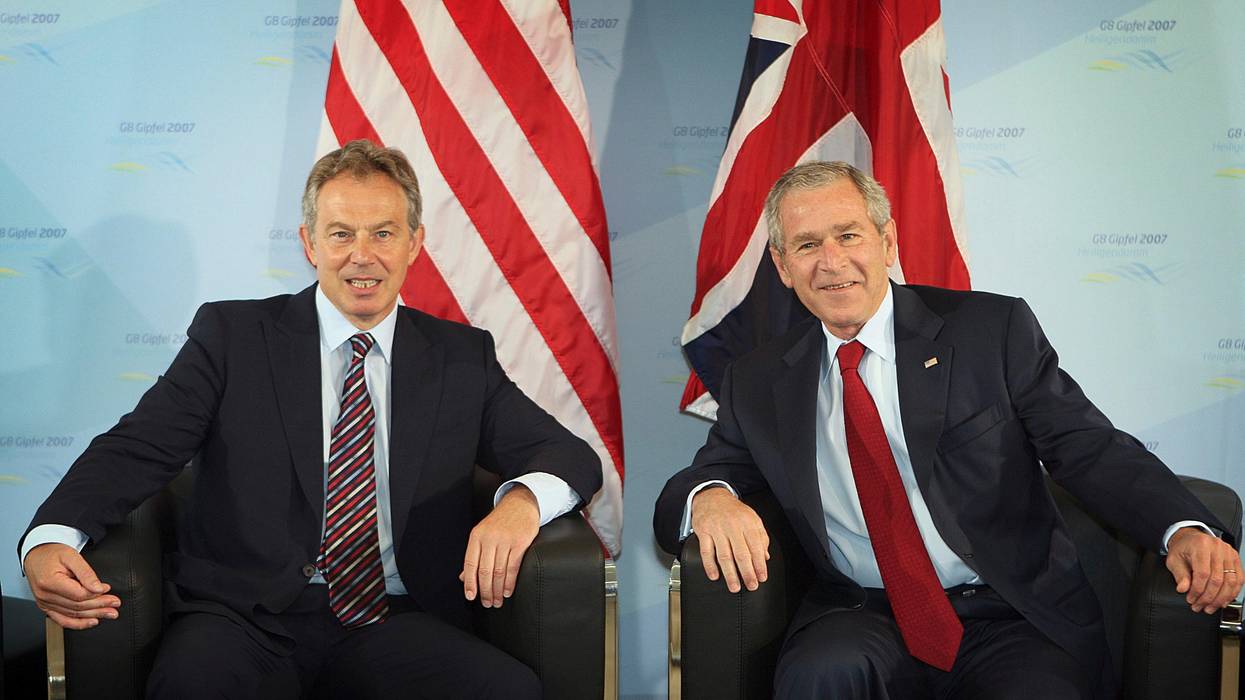
Citing his role in the Iraq War and other devastating conflicts, hundreds of thousands of people in the United Kingdom and beyond are calling for former British Prime Minister Tony Blair to be stripped of his newly bestowed knighthood.
"He was personally responsible for causing the death of countless innocent civilian lives and servicemen in various conflicts."
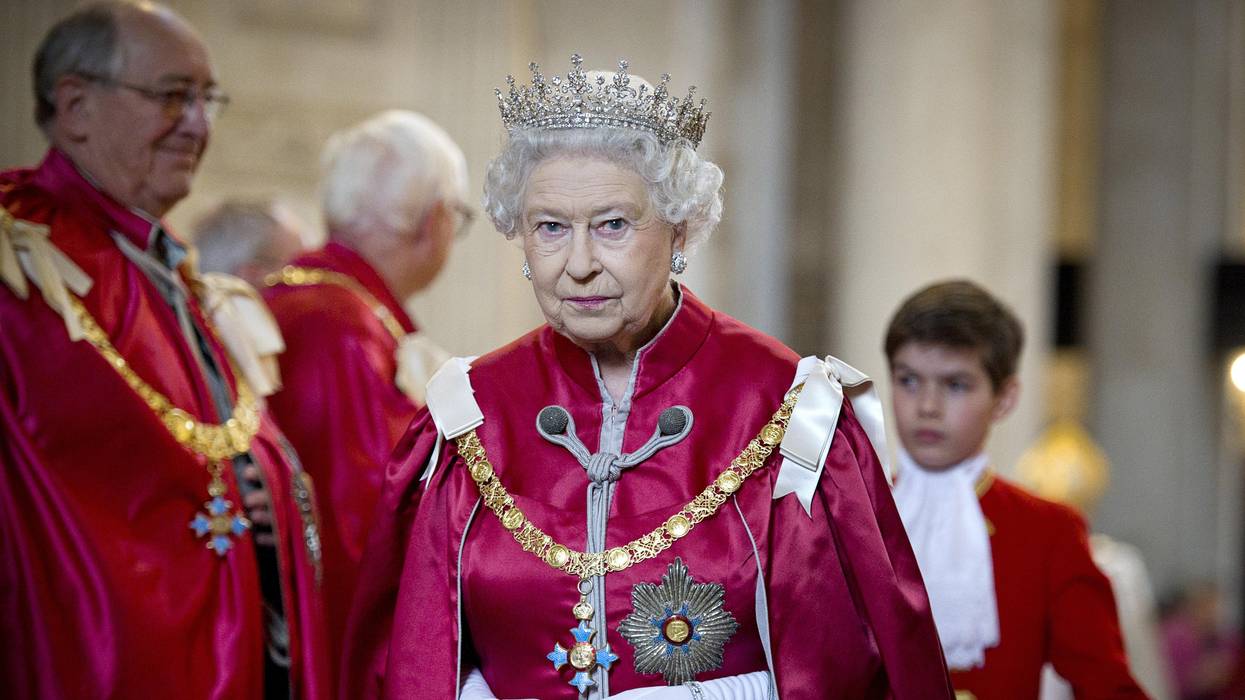
As of Thursday afternoon, over 900,000 people had signed the Change.org petition seeking to have Blair's "Knight Companion of the Most Noble Order of the Garter"--one of the highest honors a British monarch can bestow upon a subject--rescinded. Queen Elizabeth II announced Blair's knighthood on New Year's Eve.
"Tony Blair caused irreparable damage to both the Constitution of the United Kingdom and to the very fabric of the nation's society," the petition states. "He was personally responsible for causing the death of countless innocent civilian lives and servicemen in various conflicts. For this alone he should be held accountable for war crimes."
"Tony Blair is the least deserving person of any public honor, particularly anything awarded by Her Majesty the Queen," the petition asserts.
Blair was then-U.S. President George W. Bush's staunchest ally during the Iraq War, which was waged on a foundation of nearly a thousand lies, including many about erstwhile ally Saddam Hussein's nonexistent weapons of mass destruction and involvement in the September 11, 2001 terrorist attacks.
The war destroyed Iraq. The Costs of War Project at Brown University's Watson Institute for International and Public Affairs says that possibly over 200,000 Iraqi civilians died "from direct war-related violence caused by the U.S., its allies, the Iraqi military and police, and opposition forces from the time of the invasion through October 2019," with the vast majority of those deaths occurring during the invasion and eight-year occupation of the country, according to Iraq Body Count. One survey placed the number of Iraqi deaths at over one million. The Costs of War Project estimates that over 9.2 million Iraqis were displaced by the war.
The U.K. Ministry of Defense (MOD) reported that 179 British troops and MOD personnel died during Operation TELIC, which lasted from March 2003 through May 2011. That's the second-highest total of coalition service member deaths after the U.S., which lost over 4,400 troops and Department of Defense employees in what the Bush administration initially called Operation Iraqi Liberation (OIL).
One of the petition's signatories, Elsie Manning, lost her daughter, Royal Army Staff Sgt. Sharron Elliott, when the patrol boat she and three other British service members were traveling in was hit by a bomb near Basra on Remembrance Day in 2006.
Manning told The East Anglian Daily Times she was "absolutely disgusted" to learn of Blair's knighthood.
"It's just a real insult to all those kids that have died and were injured and who are struggling with life," she said. "We as families are absolutely gutted. It's just heartbreaking really to think he's being rewarded for all the deaths that have happened."
"If he had any morals at all," Manning added, "he would decline and refuse it."
Blair also sent thousands of troops to fight in the U.S.-led coalition war against the Taliban and al-Qaeda in Afghanistan, a conflict in which over 200,000 people were killed and millions more were displaced. Last August, as U.S. troops withdrew from Afghanistan after 20 years of war and occupation, Blair blasted what he called the "tragic, dangerous, unnecessary" American "abandonment" of the country.
In addition to facing intense criticism for Britain's involvement in the Iraq and Afghanistan wars and for backing brutal dictatorships around the world, Blair was also condemned for joining the devastating 1999 NATO air war against Yugoslavia. Echoing then-U.S. President Bill Clinton, Blair listed one of the main reasons for the bombing campaign--which targeted civilian infrastructure, killing hundreds of men, women, and children--as protecting NATO's "credibility."
According to a January YouGov poll, only 14% of Britons approve of Blair's knighthood, with 79% of Conservatives and 56% of supporters of the former prime minister's own Labour Party opposing the move.
"The contempt in which Britain's elite holds the public has never been more eloquently expressed than in the decision to award Tony Blair the highest order of knighthood," Australian journalist John Pilger tweeted earlier this week, sardonically adding, "Rise, Sir Tony!"
Shock, horror! There is racism among the royals. I know sarcasm is the laziest form of humor, but is there something about a hereditary white monarchy that we don't yet understand?
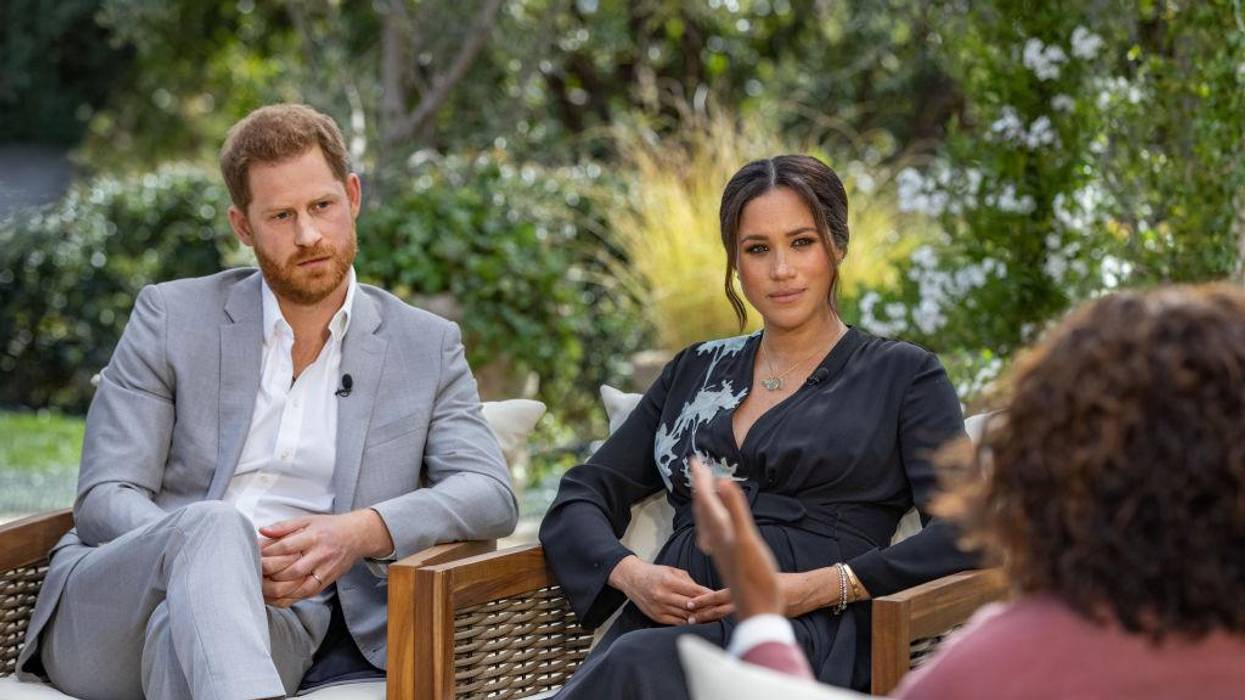
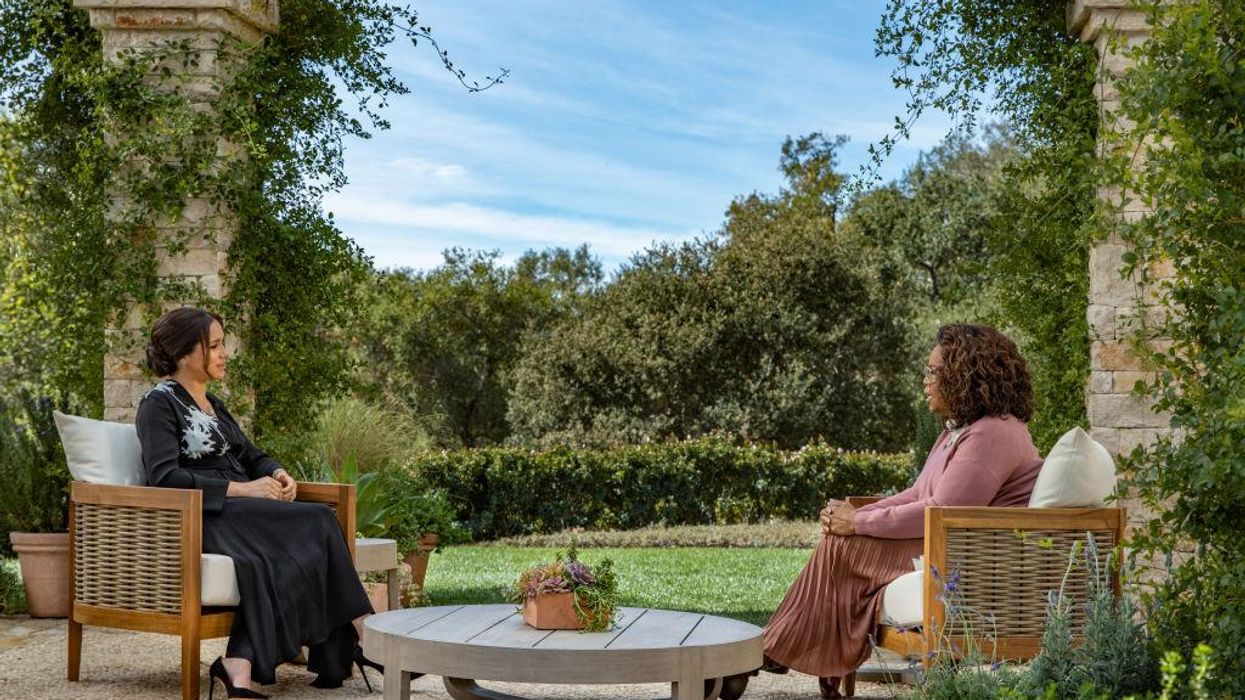
In what's being called a "hand grenade" interview with Oprah Winfrey on Sunday, the Duke and Duchess of Sussex let rip about the misery they'd endured as the royal family's first mixed-race couple and alleged that someone--not Queen Elizabeth or her husband--even questioned the likely skin tone of their yet-to-be born baby.
In the context of the Divine Right of Kings, the "who-said-what-to-Harry and Meghan" question is most certainly missing the white supremacist forest for the trees.
Now the who-said-what-to-whom racism chase has started. This was always going to be a clickbait cash cow for commercial media, and so it has been. Even as much of the world tried to mark International Women's Day, March 8th, the media closed in on one woman, Queen Elizabeth, and her entourage.
A palace under pressure and a game of high-profile "gotcha" is good for clickbait and ratings, but it doesn't help us understand racism.
In the context of the Divine Right of Kings, the "who-said-what-to-Harry and Meghan" question is most certainly missing the white supremacist forest for the trees.
In fact, the whole Meghan vs the Monarchy episode is only worth talking about because of the way it illustrates just what we as a society have been doing wrong when it comes to talking about racism.
Understood as a personal attitude problem, the utterly unscientific assertion that human beings are different on account of their skin tone is a nasty phenomenon that we uproot by upbraiding individuals. There's no excuse for racist words or acts in our multicultural society, we mostly agree.
But looking at racism as a personal problem, we miss the bigger picture, which in this case is a twelve-hundred year-old system by which a single family holds unaccountable power over the United Kingdom's parliament, its military and its church. That includes Scotland, Wales and a hunk of Ireland. The Queen is also titular head of 14 other countries, including many Caribbean and Pacific islands.
When the British Empire was at its height, the Crown ruled lucratively over 412 million people across one quarter of the globe. There's nothing democratic, secular or multi-cultural about that.
So, while Queen Elizabeth the person may be off the hook for asking about Archie's complexion, the monarchy's not off the hook for colonialism or white supremacy.
And while we're talking about systems, for International Women's Day, UNICEF reported that ten million additional child marriages of girls of color may occur before the end of the decade, threatening years of progress. Did you see that headline anywhere?
Oprah Winfrey's interview with Meghan and Harry is a perfect case study of how an important political debate about the corrupting role of the monarchy on British life gets shunted aside yet again, not just by the endless Royal soap opera but by supposedly progressive identity politics.
As so often, a focus on identity risks not only blunting our capacity for critical thinking but can be all too readily weaponised: in this case, as the media's main take-away from the Oprah interview illustrates, by providing an implicit defence of class privilege.
The racism directed at Markle--sorry, the Duchess of Sussex--and baby Archie is ugly, it goes without saying (but maybe more to the point, must be stated to avoid being accused of ignoring or trivialising racism).
The concern expressed by a senior royal during Markle's pregnancy about Archie's likely darker skin colour does indeed reveal how deeply ingrained racism is in the British establishment and how much it trickles down to the rest of British society, not least through the billionaire-owned media.
Princely 'birthright'
But more significant is how the racism demonstrated towards Markle and Archie has played out in the media coverage of the interview and the resulting "national conversation" on social media--nowadays, the only real barometer we have for judging such conversations.
The problem is that, via Oprah, the Sussexes get to frame the significance of the House of Windsor's racism: both in the threat that, when Charles ascends to the throne, grandson Archie will be deprived of his princely "birthright" because he is of mixed race; and in the fact that Harry and Meghan have been hounded from Palace life into celebrity-style exile in the US.
In the process, an important, democratic conversation has yet again been supplanted about why Britain still maintains and reveres these expensive relics of a medieval system of unaccountable rule based on a superior (if no longer divine) blood line.
Instead, the conversation initiated by Oprah is a much more politically muddled one about whether it is right that a "commoner" woman of colour and her mixed-race son are obstructed from fully participating in this medieval system of privilege.
Image makeover
A real political debate about privilege--one that demands greater equality and an end to racist presumptions about blood lines--has been obscured and trivialised once again by a row of the kind preferred by the corporate media: whether most of the Royal Family are too racist to realise that a woman of colour like Meghan could help them with a twenty-first-century image makeover.
As a result, we are presented with a false binary choice. Either we cheer on the Royal Family and implicitly condone their racism; or we cheer on Meghan and implicitly support her battle to better veil the feudal ugliness of the British monarchy.
It ought to be possible to want Archie to live a life equal to "white" babies in the UK without also wanting him to live a life of pomp and circumstance, designed to ensure that other babies--white, black and brown--grow up to be denied the privileges he enjoys by virtue of royal birth.
Divisive and enervating
What the Oprah interview does--is designed to do--is derail the intersection of class and race in politically damaging ways.
A meaningful democratic struggle prioritises class unity as the battering ram against establishment power that long ago learnt to protect itself by dividing us through our competing identities. Class struggle does not ignore race; it embraces it and all other socially constructed identities used by power to rationalise oppression. Class subsumes them into a collective struggle strengthened by numbers.
Struggle based on identity, by contrast, is inherently divisive and politically enervating, as the Meghan Markle case illuminates. Her challenge to Royal "tradition" alienates those most invested in ideas of monarchy, "Britishness" or white identity. And it does so while offering no more than a sop to those invested in breaking glass ceilings, even of the kind that aren't worth smashing in the first place.
Meghan's fight for the first mixed-race British prince is no more politically progressive than the celebration by the media two years ago of the news that for the first time women were in charge of the military-industrial complex--the one that rains down death and destruction on "Third World" men, women and children.
Value for money
Strange as it is to recall now--in an age of social media, when anyone can comment on anything, and the "mainstream" media's billionaire gatekeepers have supposedly been sidelined--ordinary Britons discussed abolishing the monarchy far more in the 1970s, when I was a child, than they do nowadays.
Getting rid of the Royal Family--like getting rid of nuclear weapons, another topic no one talks about seriously any more--was mainstream enough then that Royalists were often forced on to the defensive. As the mood soured among a vocal section of the population, the Queen's defenders were forced hurriedly to switch from arguments rooted in deference and tradition to more utilitarian claims that the Royals offered "value for money", supposedly boosting commerce and tourism.
Prince Charles' engagement in 1981 to a beautiful, demure teenage "English rose", Princess Diana, looked to many, even at the time, suspiciously like a move to reinvigorate a tired, increasingly unpopular brand.
The media spectacle of a fairytale romance and wedding, followed by years of controversy, disillusionment and betrayal, culminating in divorce and finally Diana's death / murder, very effectively distracted the British public for the next 16 years from the question of what purpose a Royal Family served. It became only too clear what role they played: they kept us engrossed in a real-life, better-than-TV drama.
Champions of identity
Diana's supposed struggle to grow from adolescence to womanhood in the glare of media intrusion and under the strictures of "The Firm" created the prototype for a new type of apolitical, Mills and Boon-style identity politics.
Following Diana's escapades--from the secular saint who cleared landmines to the raunchy princess who had illicit sex with her riding instructor, an army major no less--was far more thrilling than the campaign to end the monarchy and the regressive landed class it still represents.
Diana's life story helped pave the way to the reinvention of the left through the 1990s--under Tony Blair in the UK and Bill Clinton in the US--as champions of a new social issues-obsessed non-politics.
Both were ushered into power after reassuring the newly triumphant corporate elite that they would harness and divert popular energy away from dangerous struggles for political change towards safe struggles for superficial social change.
In the UK, that was achieved most obviously in Blair's assiduous courtship of media mogul Rupert Murdoch. Importantly, Blair persuaded Murdoch that, as prime minister, he would not only preserve the economic legacy of the Thatcher years but head further down the path of deregulation.
Murdoch--himself no fan of a British monarchy that had always looked down on him as a vulgar Australian--also understood that the inevitable soap opera quality of exceptional individuals battling the UK's rigid hierarchy of privilege, spurred on by Blair's New Labour, would prove great for sales of his newspapers. Just as Oprah knows that the only tangible consequence of the Harry and Meghan interview is that it will rake in many more millions for her own media empire.
Sticking It to the Man
In the new era of identity-saturated non-politics, demands for equality mean removing obstacles so that more women, people of colour and the LGBT community can participate in institutions that represent power and privilege.
These battles are not about overthrowing those systems of privilege, as earlier identity-based struggles such as the Black Panthers' were. Success serves simply to placate identity-focused groups by helping those of most "merit" elbow their way into the preserves of established power.
Those achievements started with the most visible, least significant areas of the economy, such as sport and celebrity, and led over time to greater access to the professions.
The current excitement among some on the left at Meghan's "Sticking It to the Man" appears to derive from the disruptive threat she poses to the House of Windsor--not to its economic, social and political power, but to its status as the last hold-out against Blair's identity-fuelled "revolution".
Narrative twist
Diana's emancipation story helped distract us for nearly two decades from confronting central questions about the nature and role of the British establishment in preserving and veiling power.
Now Meghan Markle is expanding the identity story in a new direction, one that once again embraces the story of a young, "headstrong" woman scorned by the Royal Family for snubbing tradition. But this time there is an alluring contemporary twist to the narrative: the Family's resistance to diversity and its refusal to own its racist past.
Unlike Diana who stood alone and seemingly fragile, Meghan and Harry offer a more relevant, modern picture of a confident, professional young couple standing and fighting together for what is fair, for what should be theirs by right.
This feels important, bold and empowering. But it is the precise opposite. It is more Mills and Boons, but this time with diversity thrown in to generate more appeal on one side and more hostility on the other.
Meghan's story will continue to work its magic: fascinating, infuriating and pacifying us in equal measure as we focus on what is private, unknowable and can be endlessly contested rather than what is universal, visible and impossible to refute.
Meanwhile, the Royal Family, the perpetuation of privilege and the erosion of democracy will march on as before, in the same long and glorious British tradition.
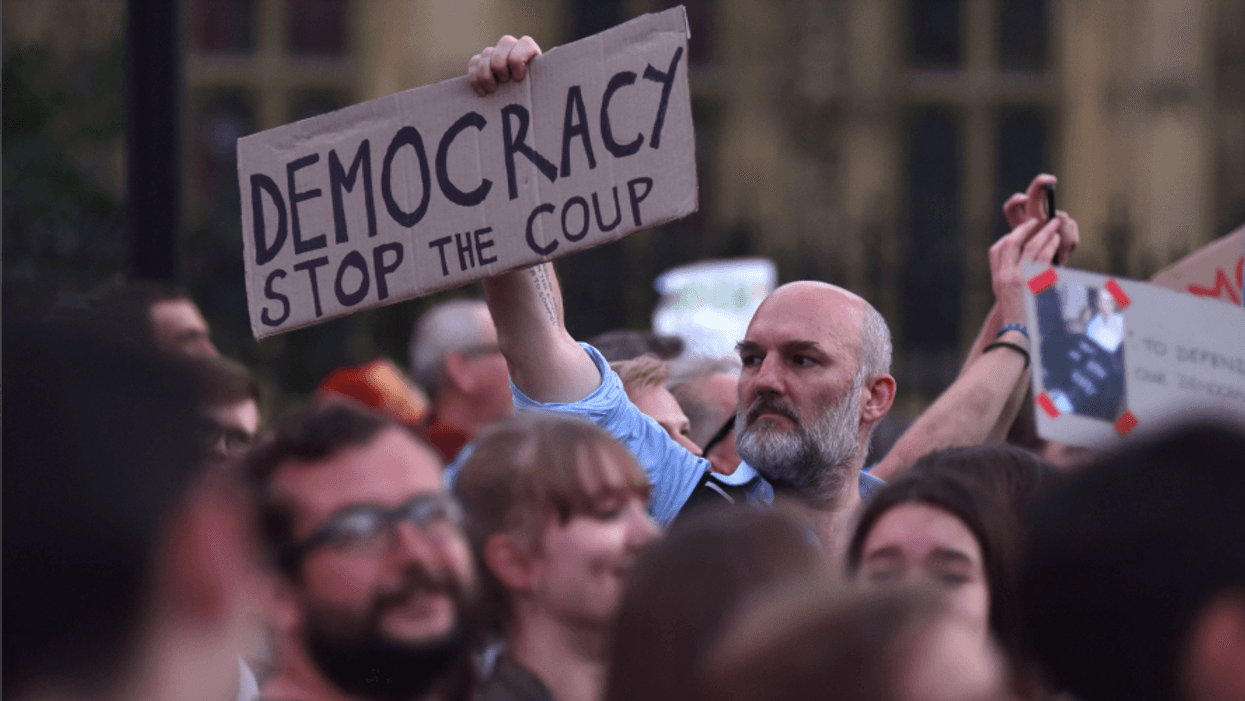
Many thousands of people took to the streets across the United Kingdom on Wednesday evening--including crowds in central London who surrounded the Palace of Westminster--demanding the end of efforts to suspend Parliament launched earlier in the day by Prime Minister Boris Johnson.
"If Boris Johnson thinks he can suspend parliament and force through no deal he has another think coming. We will build a mass movement to save democracy, and everyone who wants to stop this travesty must get ready to mobilize, demonstrate and resist." --Clive Lewis, UK Labour Party MP
As the thousands of protesters assembled in the streets in numerous cities, an online petition calling for a stop of the temporary prorogation of Parliament had gathered more than 1.1 million signatures, ten times the necessary amount to trigger an official response from MPs.
As this video dispatch from the Guardian newspaper shows, thousands of people flooded the streets outside Westminster--shouting "Stop the Coup! Stop the Coup!" and "Boris Johnson! Out, out, out!--as they denounced the move by the Tory-led government and the subservience of Queen Elizabeth II who approved the proroguing of Parliament at Johnson's request:
"We're here because our democracy wasn't given to us as an act of generosity or charity by the people on top," said Owen Jones, a progressive activist and columnist for the newspaper, speaking as a protest particpant. "It was won through the struggle and sacrifice of our ancestors and it's not for an unelected prime minister to shut down the elected parliament to ram through a no deal [Brexit] for which he has not democratic mandate."
Jones repeated and expanded on the point in subsequent social media videos--in which he accused Johnson of starting a "war with our democracy"--and in more dramatic fashion during a speech given to the large gathered crowd:
Paul Mason--another journalist, book author, and political activist--was also at the demonstrations in London and said he was now calling for people across the U.K. to join those in the streets to put their bodies on the line against the orchestrated overthrow of the British government by Johnson and other right-wing elites.
Asked about his message for U.S. President Donald Trump, who earlier in the day had weighed in on the situation by backing Johnson's effort, Mason did not hold back.
"Fuck Trump is my response. Full stop. Exclamation mark. Underlined," Mason said. "The guy doesn't understand democracy. What right has he to dictate the outcome of a British political crisis."
Members of the opposition Labour Party--including a letter sent to the Queen by Leader Jeremy Corbyn requesting a meeting to discuss her approval of the proroguing of Parliament--said they would fight back against the anti-democratic "smash and grab" moves by Johnson with all their might.
"If Boris Johnson thinks he can suspend parliament and force through no deal he has another think coming," said Labour MP Clive Lewis, who serves as the shadow government's Treasury minister. "We will build a mass movement to save democracy, and everyone who wants to stop this travesty must get ready to mobilize, demonstrate and resist. MPs, too, will have to play their part. They'll have to drag me out of the chamber."
Even after night fell in London, huge crowds refused to leave the city's streets as the demonstration turned into an impromptu sit-in:
Deputy leader of the nation's Green Party, Amelia Womack, was also in the crowd. "We're here to stand against Boris Johnson's coup," she told the Guardian. "We have a representative democracy and by suspending parliament, you are removing people's democratic right."
While many on the left in the UK had warned that Johnson might take such drastic measures to push through a no deal Brexit regardless of the consequences of his mandate, Womack said she "didn't think he would make such a brutal move that showed such a disregard for our parliamentary procedures."
As British Prime Minister David Cameron prepared for the announcement of a controversial new fracking law in the UK, Greenpeace activists gave the leader a taste of his own policy early Wednesday when they set up a mock fracking operation at his country estate.
"David Cameron wants to rob people of their right to stop fracking firms drilling under their homes - surely he won't mind if we kick off the under-house fracking revolution below his own garden." --Greenpeace
Police were called after the activists, wearing hard hats and day-glo vests, erected security fencing around Cameron's cottage in the Cotswold hamlet of Dean, Oxfordshire. Signs were posted that read: "We apologise for any inconvenience we may cause while we frack under your home," and ordered complaints to be directed to the PM's office.
"David Cameron wants to rob people of their right to stop fracking firms drilling under their homes - surely he won't mind if we kick off the under-house fracking revolution below his own garden," wrote Greenpeace UK energy campaigner Simon Clydesdale in a statement.
After police ordered the removal of the "fracking site," Greenpeace issued this tweet marking the irony of the events.
The group also released this video of the action:
David Cameron's House Gets Fracked - Greenpeacehttps://bit.ly/SsLBg9 The latest fracking site in the UK... is David Cameron's countryside home. In today's Queen's Speech, David ...
During her annual address, the Queen of England announced the new legislation--dubbed the "Fracking Law"--hours after the protesters were ordered away.
"My government will introduce a Bill," said Queen Elizabeth II, "[that] will enhance the United Kingdom's energy independence and security by opening up access to shale and geothermal sites and maximising North Sea resources."
Current laws of trespass require that land and homeowners give permission for shale oil and gas drilling under their land, but the government is expected to end this requirement to push for more widespread fracking in the UK.
Greenpeace posted information about the Queen's speech and the protest at Cameron's estate on their website while urging people to leave their personal comments on the new legislation.
"The Prime Minister is about to auction off over half of Britain to the frackers, including national parks and areas of outstanding natural beauty like the Cotswolds," Clydesdale continued. "Having failed to reassure people that fracking is safe or good for Britain, Cameron is now railroading it through with a 'bungs and bulldozers' approach."
"As ministers chase their imaginary energy Eldorado, the real solutions to boost our energy security, like slashing energy waste and backing renewables, are being sidelined," he added. "We'll all pay a price for their shale craze."