

SUBSCRIBE TO OUR FREE NEWSLETTER
Daily news & progressive opinion—funded by the people, not the corporations—delivered straight to your inbox.
5
#000000
#FFFFFF
To donate by check, phone, or other method, see our More Ways to Give page.
Daily news & progressive opinion—funded by the people, not the corporations—delivered straight to your inbox.
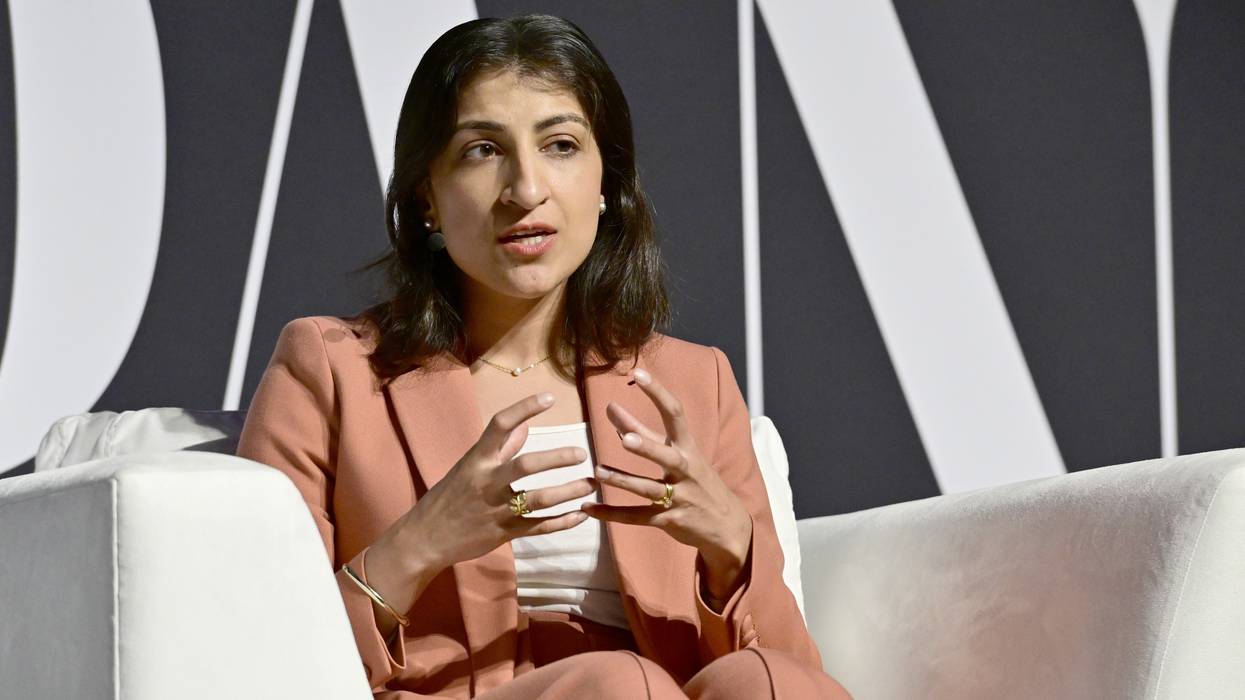
As FTC chair, Khan stopped a fossil fuel CEO from "cashing in and joining Exxon's board," said one lawmaker. "Now, with Trump bending to the whims of Big Oil, he's considering overturning that punishment."
"So much for America First," said one progressive lawmaker on Monday regarding the Federal Trade Commission's new push to reverse a ban on two fossil fuel CEOs from serving on the boards of ExxonMobil and Chevron—the oil giants that were acquiring their companies.
The FTC is accepting public comments until May 12 on a petition filed by former Pioneer National Resources CEO Scott Sheffield, which would set aside the Biden administration's consent order; finalized days before President Donald Trump took office, that barred Sheffield from serving on Exxon's board.
The order also applied to John Hess, CEO of Hess Corp., which was being acquired by Chevron.
Then-FTC Chair Lina Khan barred the CEOs from becoming board members over concerns that they would collude with representatives of the Organization of Petroleum Exporting Countries (OPEC) to ensure Americans continued paying high oil prices.
Sheffield and Hess both communicated with OPEC officials, including "the past and current secretaries general" of the organization "and an official from Saudi Arabia," according to an FTC probe under the Biden administration.
The two executives and their companies denied the allegations. Republican members of the FTC at the time voted against Khan's ban on the board positions, claiming it overstepped the agency's authority.
But on Monday, Khan urged those who oppose oil price fixing by energy giants to submit public comments on the Trump administration's "proposal to release Sheffield from accountability."
"The FTC is now trying to let this oil executive off the hook," said Khan, a law professor at Columbia University.
Exxon, the largest U.S. oil company, bought Pioneer in a $59.5 billion deal last year. Chevron's purchase of Hess for $53 billion is currently pending during arbitration proceedings.
The FTC's investigation last year found that Sheffield communicated with OPEC about cutting oil production and driving up consumer prices while publicly blaming government policies. One analysis found such price fixing schemes by corporations were to blame for 27% of the inflation spike that American families faced in 2021.
Sheffield pushed to "keep gas prices high so his shareholders could make even more money," said Rep. Mark Pocan (D-Wis.) on Monday. "Lina Khan's FTC prevented him from cashing in and joining Exxon's board. Now, with Trump bending to the whims of Big Oil, he's considering overturning that punishment."

Higher corporate taxes are both crucial for accountability and for ensuring that there’s far less incentive for executives to squeeze as much as they can from their customers.
Next year, when key provisions of President Trump’s 2017 tax breaks to the wealthy and corporations expire, we have an opportunity to get our money back.
I’m not just talking about all the foregone tax revenue we’ve lost because the rich have paid so little since 2017—though we should get that back, too. I’m talking about the money families have lost to corporate price gouging.
Let me explain.
In 2017, Republicans slashed the corporate tax rate from 35% to 21%, giving massive corporations their biggest tax windfall since Ronald Reagan was president. A few years later, as Americans emerged from a global pandemic, these same corporations drove up prices for families.
Congress raising the corporate tax rate in 2025 is an opportunity to recoup some of the truly obscene profits corporate America raked in during this period of economic upheaval for American families.
While inflation hamstrung workers and families, it didn’t make a dent in corporate profits. In fact, as many CEOs boasted themselves, it’s been a boon. Companies simply passed rising costs along to consumers—and then some, bringing in record profits as a result.
All told, corporate profit margins skyrocketed to 70 year-highs. And by the end of 2023, when Americans were beyond fed up, after-tax corporate profits hit an all-time record high of $2.8 trillion. My organization, Groundwork Collaborative, recently found that corporate profits drove over 50% of inflation in the second and third quarters of last year.
But why would a change in the corporate tax rate unleash the kind of rampant corporate profiteering we saw in the aftermath of the pandemic? Simple: It’s a lot more fun to gouge customers when you get to keep more of what you pull in.
Look at Procter & Gamble, which has raised the price of everything from toothpaste to diapers. Last year, the company pulled in more than $39 billion in profit.
If they had to pay the 35% statutory tax rate, they would have sent nearly $14 billion to Uncle Sam. Instead, they paid a 21% rate and, using loopholes, got to keep an extra $10 billion—which helped with their combined $16.4 billion worth of dividends and stock buybacks for shareholders.
Corporations did well from Trump’s corporate tax cuts, with executives getting big raises and shareholders receiving big buybacks. But the real bonus came when inflation hit. Corporations used the cover of supply chain issues and broader inflation to hike prices more than their higher input costs justified—and they didn’t have to worry about their tax bill.
Our tax code is exacerbating some of the worst corporate excesses, effectively “subsidizing corporate price gouging,” as Sen. Elizabeth Warren (D-Mass.) described it recently. But it’s not only that low tax rates incentivize companies to overcharge. Rock-bottom tax rates also make collusion more profitable, as we saw with Pioneer Oil.
Recently, the Federal Trade Commission barred former Pioneer Oil CEO Scott Sheffield from joining the board of ExxonMobil following their merger, because Sheffield allegedly colluded with OPEC to raise oil prices. As families struggled with higher energy costs, the oil and gas industry banded together to keep prices high, which according to one analyst accounted for 27% of inflation in 2021.
When the reward is higher with lower corporate taxes, executives like Sheffield are more willing to take the risk. Higher corporate taxes are both crucial for accountability and for ensuring that there’s far less incentive for executives to squeeze as much as they can from their customers.
Wall Street tycoons and CEOs didn’t take the heat of inflation—they fanned its flames and families got burned. It’s no wonder people overwhelmingly favor a tax code that’s no longer rigged for corporations, especially as they struggle with high prices.
Congress raising the corporate tax rate in 2025 is an opportunity to recoup some of the truly obscene profits corporate America raked in during this period of economic upheaval for American families. It’s time Americans got their money back.
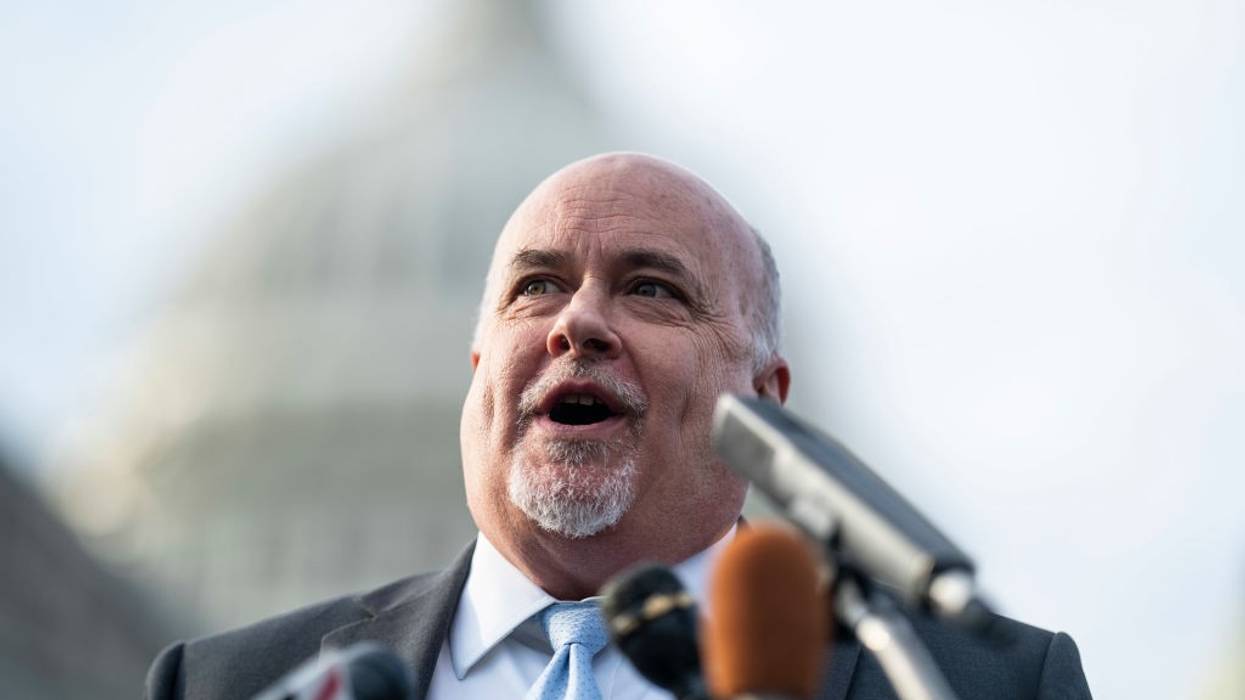
"I would recommend 'Orange Is the New Black,'" said the Wisconsin Democrat. "We're feeling it at the pumps and clearly this kind of behavior, we know, isn't isolated."
As Federal Trade Commission Chair Lina Khan appeared before a U.S. House of Representatives subcommittee on Wednesday, Congressman Mark Pocan highlighted recent FTC action against fossil fuel industry price fixing and urged criminal consequences.
"I just did a little napkin math," Pocan (D-Wis.) said. If collusion led to a $0.40-0.60 increase in the price for a gallon of gas for a vehicle, "for the average person filling their tank, that's $8 or $10 a week," he explained. "That's $500 a year of added cost."
If half of the residents in Pocan's congressional district have a car, "that's $175 million a year," he said. If that figure is applied across all 435 districts, it translates to billions of dollars "that we're being gouged because of someone like this who's trying to price collude," he continued, referring to Scott Sheffield, the founder and longtime CEO of Pioneer Natural Resources.
The FTC earlier this month barred Sheffield from serving on the board of directors of or as an adviser to ExxonMobil, which just acquired Pioneer, due to his alleged collusion with the representatives of the Organization of Petroleum Exporting Countries (OPEC) and OPEC+.
While welcoming the FTC's move, Pocan noted that "if you commit theft, the average sentence... in the United States is 23 months" and the multibillion-dollar profit that fossil fuel giants make from price gouging "is more than grand larceny theft."
🚨BIG: @RepMarkPocan applauds @FTC for revealing an oil price-fixing scheme that cost Americans billions from 2021-2023.
"I just did a little napkin math ... That's $175 million a year—just for people in my district—that we're being gouged." pic.twitter.com/maM8Uk6usY
— American Economic Liberties Project (@econliberties) May 15, 2024
"What else can we do to these oil companies that are ripping us off?" the congressman asked Khan, an appointee of President Joe Biden with "a pro-working families record."
The FTC chair responded that "price fixing and output reduction in a coordinated way can be criminal violations of the antitrust laws. As enforcers we can't specifically speak to what we're referring and what we're not, but as a general matter, it's been a priority of mine to make sure we are referring more criminal candidates to the Justice Department, because we need to make sure companies and executives aren't just treating fines as a cost of doing business and that they take seriously the rule of law."
Referencing a television show that takes place in federal prison, Pocan told her that "I would recommend 'Orange Is the New Black,' if we need to, to make a point. It would be helpful because we're feeling it at the pumps and clearly this kind of behavior, we know, isn't isolated."
Sharing a video of his remarks on social media, Pocan declared: "Unacceptable! A slap on the wrist isn't enough. I think jail time should seriously be considered."
As the American Economic Liberties Project (AELP) pointed out, Pocan wasn't the only lawmaker to reference the recent price fixing revelations during the Wednesday hearing; he was joined by Reps. Matt Cartwright (D-Pa.) and Rosa DeLauro (D-Conn.).
"Finally it's being noticed!" said AELP's Matt Stoller, who has written about the alleged collusion. "Dem House members get it!"
Stoller wasn't alone in welcoming the discussion in Congress—after days of limited attention on the issue among national figures.
"This illegal oil corporation price fixing conspiracy cost Americans as much as $2,100. Per year," said More Perfect Union, sharing a video of Pocan and citing The American Prospect.
The Ohio AFL-CIO stressed: "Greedflation is not inflation. Pass it on."
Noting that Sheffield is getting a $68 million "golden parachute on his way out," former U.S. Labor Secretary Robert Reich argued Wednesday: "That money (and more) should be refunded to the American people. Not sent to his bank account."
Groundwork Collaborative executive director Lindsay Owens similarly said last week that "the Department of Justice should criminally prosecute Scott Sheffield and Congress should tax back the industry's windfall profits and issue every American a refund."
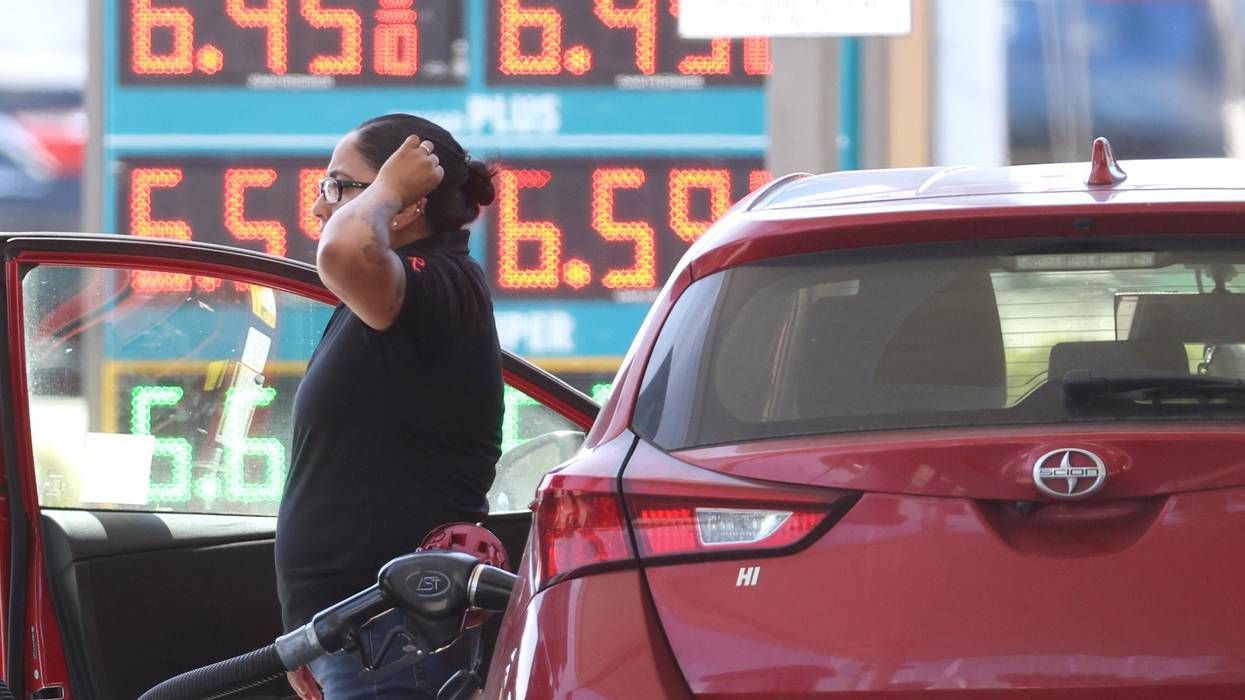
From ExxonMobil's long-running climate denial to Pioneer's recent price-fixing, it's clear this rogue industry's business model is deny, deceit, and delay.
You know how the oil industry is always saying the U.S needs to drill more to lower gas prices and protect energy independence? Well it turns out they've actually been scheming behind the scenes with the Organization of the Petroleum Exporting Countries to do the exact opposite.
A bombshell complaint filed by the Federal Trade Commission (FTC) last week reveals that Scott Sheffield, the former CEO of Pioneer Natural Resources—one of the largest oil producers in the Permian Basin—colluded with OPEC officials in an attempt to artificially limit supply and jack up prices.
The FTC's complaint alleges that Sheffield exchanged private WhatsApp messages with leaders at OPEC, assuring them that Pioneer and other Permian companies would pump the brakes on output in order to keep prices high. He even threatened to "punish" any companies that dared to ramp up production. I don't know about you, but to me it's hard to imagine anything more un-American and anti-competitive than that.
The FTC complaint is the latest proof: The fossil fuel industry will always put their greed above American consumers and fair competition.
This private coordination with OPEC glaringly contrasts with Big Oil's public rhetoric blaming the Biden administration for constraining U.S. production and raising energy costs—a bogus talking point that Republicans have been parroting for months now. The bad faith has been laid bare: Oil executives themselves are colluding with a foreign cartel to throttle supply and price-gouge American consumers to pad their own pockets.
These revelations fit into a broader pattern of the fossil fuel industry's deception and abuse. Just one day before the FTC filing, the Senate Budget Committee held an explosive hearing detailing how oil giants have waged a decades-long, industry-wide disinformation campaign to downplay the catastrophic climate damage that they knew their products would cause, all while raking in record profits. From ExxonMobil's long-running climate denial to Pioneer's recent price-fixing, it's clear this rogue industry's business model is deny, deceit, and delay.
Here's the kicker: Big Oil is about to get a whole lot more powerful. With it looking like the Exxon-Pioneer merger is going to move forward (without Scott Sheffield), and Chevron pursuing a $50 billion takeover of Hess, a few mega-corporations are rapidly consolidating to control our energy grid. Studies show that mergers like these are pretty certain to squash competition, send prices soaring, and concentrate massive political influence to block necessary climate action.
That's the grim future we face if we let them get away with it: A world where a handful of greedy oil oligarchs collude with OPEC to bleed us dry at the pump while knowingly burning our planet. Fortunately, cities and states are fighting back with lawsuits and legislation to make polluters pay for their lies and damages.
Last year, California joined the fight, suing Exxon, Shell, BP, Chevron, and their lobbying arm for deliberately deceiving the public about fossil fuels' climate impacts, aiming to force them to cough up billions for disaster recovery. And right now, states like Vermont are advancing bills to create climate "superfunds" funded by Big Oil's ill-gotten gains. In fact, New York just passed their polluter pay bill in the Senate this week, bringing New Yorkers and the nation one step closer to accountability for Big Oil.
But in order to truly rein in this reckless industry, we need help at the federal level. At a minimum, Congress should eliminate fossil fuel subsidies and strengthen antitrust laws. At the Department of Justice, leaders must investigate the industry's long history of spreading disinformation. And in the White House, President Joe Biden should declare a climate emergency and wield his powers to rapidly increase the production of clean energy resources.
For decades, Big Oil has ransacked our wallets, ravaged our environment, and rigged our democracy. The FTC complaint is the latest proof: The fossil fuel industry will always put their greed above American consumers and fair competition. It's time to make polluters pay.
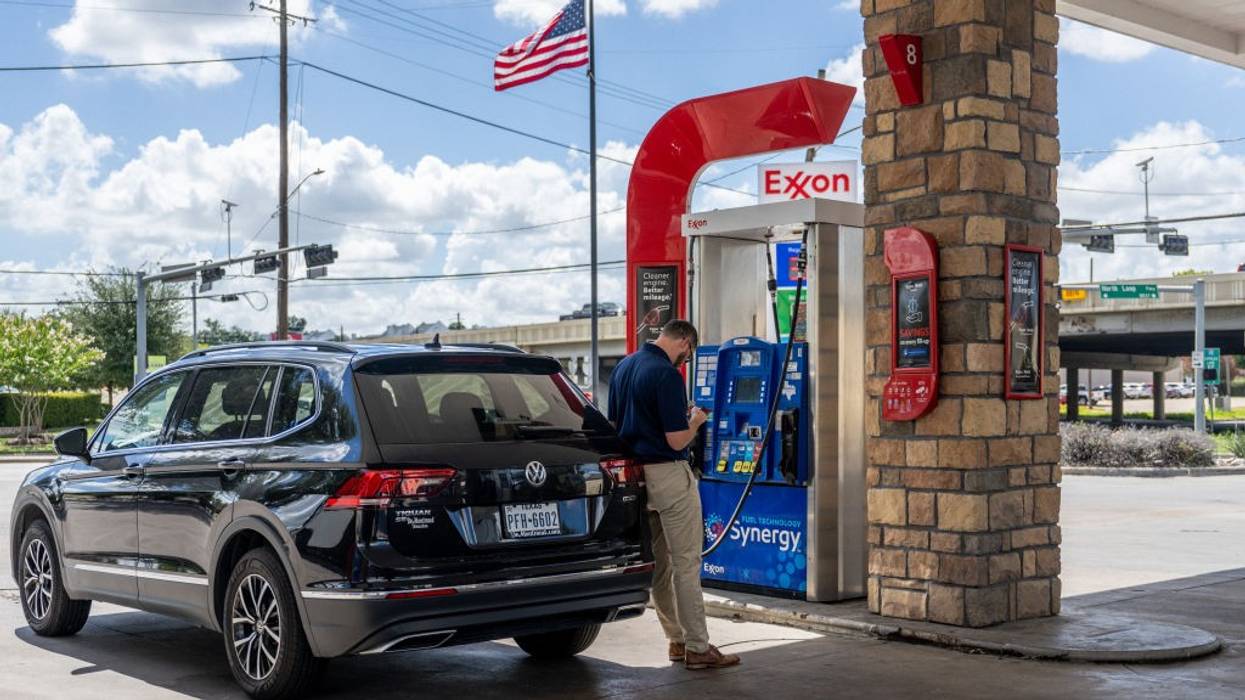
The Groundwork Collaborative's leader also said that "the Department of Justice should criminally prosecute Scott Sheffield," the former Pioneer CEO whom the FTC blocked from joining ExxonMobil's board.
Groundwork Collaborative executive director Lindsay Owens on Tuesday responded to U.S. government allegations of fossil fuel industry price fixing with calls for federal prosecution and congressional action to return money to the American public.
"Americans have been working harder and harder to cover rising energy costs, with the understanding that supply chain snags and geopolitical forces were keeping prices high," Owens said. "Now the Federal Trade Commission has uncovered the real source behind the price at the pump: collusion."
"The Department of Justice should criminally prosecute Scott Sheffield and Congress should tax back the industry's windfall profits and issue every American a refund," she added, referring to Pioneer Natural Resources' founder and longtime CEO.
Owens' statement came after members of the Federal Trade Commission (FTC) declined to contest ExxonMobil's controversial $64.5 billion acquisition of Pioneer—which was completed Friday—but approved a consent order barring Sheffield from serving on Exxon's board of directors or as an adviser to the fossil fuel giant.
"This complaint is a wake-up call about the dangerous consolidation of Big Oil's economic and political power."
The FTC voted 3-2 to accept the order and place related documents on the record for public comment. Citing communications including in-person meetings, public statements, text messages, and WhatsApp conversations, a commission complaint accuses Sheffield of trying to collude with the representatives of the Organization of Petroleum Exporting Countries (OPEC) and OPEC+.
"Mr. Sheffield's past conduct makes it crystal clear that he should be nowhere near Exxon's boardroom. American consumers shouldn't pay unfair prices at the pump simply to pad a corporate executive's pocketbook," said Kyle Mach, deputy director of the FTC's Bureau of Competition. "The FTC will remain vigilant in its enforcement efforts to protect competition in these vital markets."
Pioneer told Fortune that the company and its founder "believe that the FTC's complaint reflects a fundamental misunderstanding of the U.S. and global oil markets and misreads the nature and intent of Mr. Sheffield's actions," but neither party would take "any steps to prevent the merger from closing."
ExxonMobil "learned of the FTC's allegations regarding Sheffield from the agency and said in a statement that they are 'entirely inconsistent with how we do business,'" according to Fortune. "Exxon has agreed to the terms of the consent decree," which also "prohibits the oil giant from appointing any Pioneer employee or director to its board for five years."
Still, since the FTC's allegations were initially reported by The Wall Street Journal last week and then confirmed with the complaint's release, demands for additional action by the U.S. Department of Justice (DOJ) and Congress have mounted.
Cassidy DiPaola, Fossil Free Media's director of communications, on Monday called the complaint "explosive" and said that Democrats "must respond with bold action to hold this rogue industry accountable," including:
"But accountability is just the first step. This complaint is a wake-up call about the dangerous consolidation of Big Oil's economic and political power. We can't let them use megamergers to entrench their control and crush clean energy competition," she stressed. "Ultimately, this is about the future we choose: One where we remain at the mercy of Big Oil's greed and destruction, or one where clean, democratically controlled energy powers our communities. It's time to make the right choice."
In response to the Journal's reporting, Tyson Slocum, director of Public Citizen's Energy Program, similarly said that "Congress must immediately hold hearings on Big Oil's alleged collusion with OPEC to raise gasoline prices for Americans."
"Congress must not only investigate Pioneer's alleged role in conspiring with OPEC, but whether there existed a broader conspiracy by U.S. oil companies to collude with OPEC nations," he argued. "Big Oil must be held accountable for any conspiracy by or among American oil companies and OPEC members."
The reporting was notably published on the same day as the U.S. Senate Budget Committee's hearing about a nearly three-year investigation into fossil fuel companies and trade groups' decadeslong "campaign of deception and distraction," which has evolved from denying the planet-heating impact of their products to pretending to be part of the solution to the climate emergency.
"The joint report and documents we discovered show how, time and again, the biggest oil and gas corporations say one thing for the purposes of public consumption but do something completely different to protect their profits," Rep. Jamie Raskin (D-Md.), the ranking member on the House Oversight Committee, testified during the hearing. "Company officials will admit the terrifying reality of their business model behind closed doors but say something entirely different, false, and soothing to the public."

"The FTC is right to investigate Exxon's acquisition of Pioneer, which could raise prices at the pump and is aimed at keeping the U.S. reliant on fossil fuels," said one campaigner.
Amid outrage from climate campaigners and senators, the U.S. Federal Trade Commission is investigating fossil fuel giant ExxonMobil's proposed takeover of Pioneer Natural Resources, a regulatory filing revealed Tuesday.
Pioneer disclosed the FTC's request for more information about the pending merger, which Exxon announced in October.
U.S. Senate Majority Leader Chuck Schumer (D-N.Y.) said in a statement Tuesday: "Last month, I and 22 other senators urged the FTC to investigate Exxon's $60 billion proposed blockbuster merger with Pioneer. And today—they heeded my warning."
"Americans care a great deal about gas prices," Schumer stressed, "and if this merger were to go through it would most certainly raise gas prices for families across the country."
"This merger has all the hallmarks of harmful, anticompetitive effects. The FTC is right to investigate this merger to see if it would lead to higher gas prices or less competition," he added. "I look forward to following this investigation closely, and will encourage the FTC to block the deal if they find any antitrust laws are being violated."
Alex Witt of Climate Power, an advocacy group founded by the Center for American Progress (CAP) Action Fund, League of Conservation Voters, and Sierra Club, also welcomed the FTC's inquiry in comments to The Associated Press.
"Exxon publicly promised to reduce emissions, yet subsequently spent $60 billion acquiring another fossil fuel company—doubling down on their commitment to oil and gas and putting profits over people," Witt said. "The FTC is right to investigate Exxon's acquisition of Pioneer, which could raise prices at the pump and is aimed at keeping the U.S. reliant on fossil fuels."
A CAP report highlighted Tuesday that in hopes of continuing to profit off of the destruction of the planet, the fossil fuel industry is "undermining democratic functions to stem the tide of climate action" around the world.
That report and the heightened scrutiny of the possible merger come during the United Nations Climate Change Conference (COP28), where attendees are considering scientists' warnings that fossil fuels must be rapidly phased out to prevent more devastating global heating.
"This deal shows that Exxon is doubling down on fossil fuels and has no intention of moving towards clean energy," Jamie Henn, director of Fossil Free Media argued earlier this year. "Even after the hottest summer on record, Exxon is hellbent on driving the thermostat even higher."
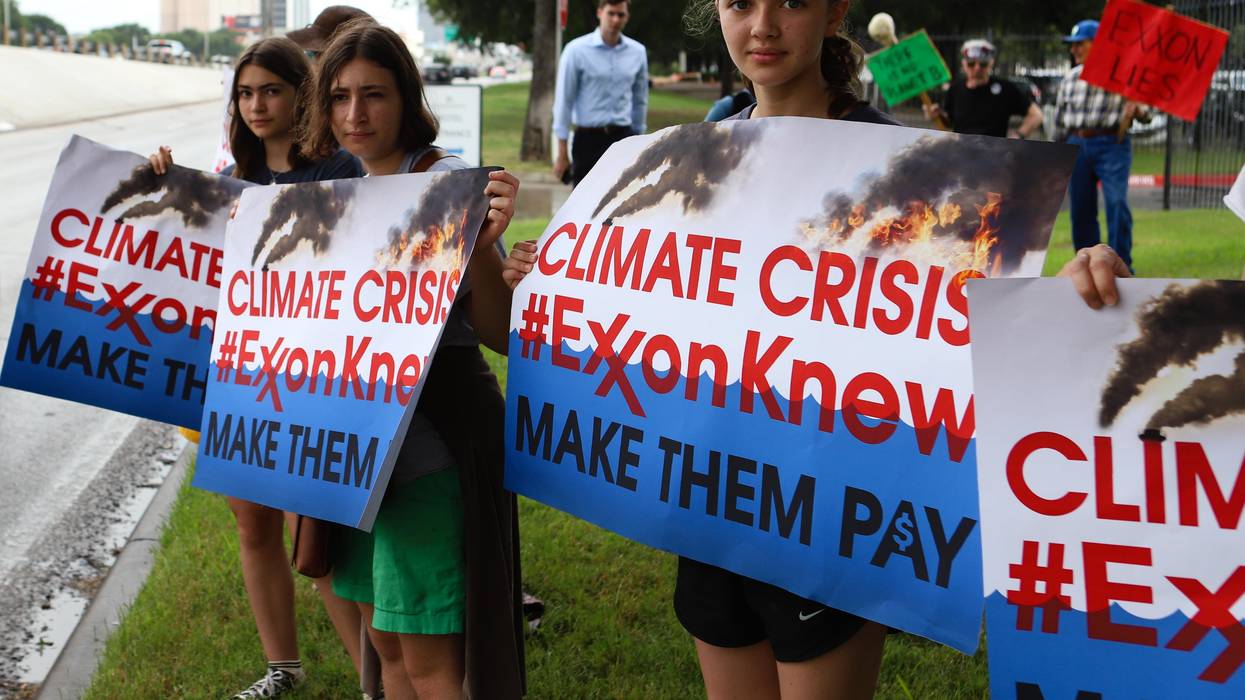
"This deal shows that Exxon is doubling down on fossil fuels and has no intention of moving towards clean energy," argued one climate campaigner.
ExxonMobil announced Wednesday that it has agreed to acquire shale competitor Pioneer Natural Resources in an all-stock deal worth nearly $60 billion, a move seen as further evidence that the largest oil giant in the U.S. has no plans to heed scientists' increasingly dire warnings and scale back fossil fuel production.
"This deal shows that Exxon is doubling down on fossil fuels and has no intention of moving towards clean energy," argued Jamie Henn, director of Fossil Free Media. "Even after the hottest summer on record, Exxon is hellbent on driving the thermostat even higher."
The merger, which is expected to face intense scrutiny from the Lina Khan-led Federal Trade Commission (FTC), would make Exxon the biggest producer in the Permian Basin, a massive oilfield in the U.S. Southwest that climate campaigners have described as a "carbon bomb."
"This is a potentially massive consolidation which should be closely investigated by the [U.S. government] for antitrust concerns, with Exxon doubling down on fossil fuels when it should be phasing them out," Antonia Juhasz, a senior researcher on fossil fuels at Human Rights Watch, argued last week amid reports of a looming agreement.
Environmental groups have estimated that if drilling in the Permian Basin is allowed to continue, it could unleash around 40 billion tons of planet-warming CO2 by 2050—roughly 10% of the world's rapidly dwindling carbon budget.
Exxon said in a statement that once the Pioneer merger is complete, the company "will have an estimated 16 billion barrels of oil equivalent resource in the Permian."
"At close, ExxonMobil's Permian production volume would more than double to 1.3 million barrels of oil equivalent per day (MOEBD), based on 2023 volumes, and is expected to increase to approximately 2 MOEBD in 2027," the company said.
As Reuters reported Wednesday, Exxon CEO Darren Woods "has rebuffed investor and political pressure to shift strategies and embrace renewable energy as European oil majors have done."
"He faced heavy criticism for sticking to a heavy oil-dependent strategy as climate concerns became more pressing," the outlet added. "Exxon's decision paid off when the company last year earned a record $56 billion profit, two years after losses ballooned to $22 billion during the Covid-19 pandemic."
News of the merger deal comes less than a month after The Wall Street Journal published documents detailing Exxon's decadeslong effort to cast doubt on climate science even after it publicly acknowledged the connection between fossil fuel emissions and climate change in 2006.
Exxon and other fossil fuel giants are currently facing lawsuits from dozens of U.S. cities and states for misleading the public about their role in the worsening climate emergency.
"ExxonMobil is planning to ramp up its climate pollution while continuing to lie to the public and policymakers about its so-called commitment to solutions," said Richard Wiles, president of the Center for Climate Integrity. "Big Oil companies are driving the world toward climate catastrophe, and as the crisis accelerates, it's more important than ever that officials call out their climate deception and hold these polluters accountable."
This story has been updated to include a statement from the Center for Climate Integrity.
Top executives from some of the largest and most profitable oil and gas companies are expected to face tough questions Wednesday as they testify before a House subcommittee about price-gouging U.S. consumers even as their companies haul in record-setting profits.
"They should be ashamed."
The Subcommittee on Oversight and Investigations of the Committee on Energy and Commerce, chaired by Rep. Diana DeGette (D-Colo.), will begin the hearing at 10:30 am EST as part of an effort to discover any dirty dealings by the energy companies that have been widely accused of exploiting the war in Ukraine and false inflation narratives to jack up energy prices, especially at the gasoline pump.
"Though crude oil prices have fallen from their highs in early March, the price Americans pay at the pump remains elevated," notes a memo put out by the office of Rep. Frank Pallone Jr. (D-N.J.), chair of the Energy and Commerce Committee, ahead of the hearing.
"Persistently high gasoline prices are a financial challenge for many Americans and disproportionately impact lower-earning Americans, who are more likely to spend a greater share of their annual income on gasoline," the memo continues. "Oil companies, on the other hand, are making significant profits, with the six companies testifying at this hearing collectively generating more than $76 billion in profit in 2021."
Watch Live:
The executives testifying at the hearing include David Lawler, chairman and president of BP America; Michael K. Wirth, chairman and CEO of Chevron; Richard E. Muncrief, president and CEO of Devon Energy; Darren W. Woods, CEO of ExxonMobil; Scott D. Sheffield, CEO of Pioneer Natural Resources; and Gretchen Watkins, president Shell USA.
Corporate watchdogs and climate advocacy groups have railed against the oil companies over recent months for attempting to mislead the American public about the reasons for soaring gas prices.
According to briefing documents put out by Greenpeace USA ahead of the testimony, the companies testifying Wednesday are projected to see windfall profits between $28 to $57 billion in 2022 alone.
Kyle Herrig, president of Accountable.US, said in a Wednesday morning statement ahead of the hearing that oil companies are inexcusably ripping off U.S. consumers at a time of booming profits.
"The oil giants testifying at today's hearing raked in an eye-popping $71.2 billion in profits last year, but rather than use that money to lower gas prices for American consumers struggling to fill their tanks, they showered wealthy executives and shareholders with billions in dividends and stock buybacks. They should be ashamed," Herrig said.
"These executives are exploiting the pandemic and war in Ukraine to pad their bottom lines," he continued. "They are gouging consumers at the pump and rigging the system to avoid paying their fair share in drilling royalties on public lands, shortchanging taxpayers, public schools, and critical infrastructure like roads and hospitals."