Trump’s actions have been and will most likely continue to be unpredictable, ill-considered, self-contradictory, and often self-destructive. The sheer incompetence and vacillation of Trump’s behavior make his future actions likely to have effects that contradict their intentions. Furthermore, his actions go out into a world order that was already deeply enmeshed in what has been called “the polycrisis,” marked by great power geopolitical struggle over control of lesser countries and global economic networks. Trump’s erratic behavior and the chaos of the polycrisis render any predictions uncertain. At most we can identify a range of possibilities that we must prepare for. Even then, the timelines for the manifestation of such possibilities remain for the most part obscure.
Growing opposition may develop the power to limit and ultimately overcome Trumpian tyranny.
A Trump presidency that successfully creates a new national and international order is one of the least likely outcomes. Also unlikely is a basic course correction that changes the overall thrust of the Trump administration so far. More likely is that Trump, in the face of declining power and support, will increasingly utilize repression and violence. Internally this would mean a fuller suspension of civil liberties and the rule of law; a more brutal war on dissent; martial law; use of the military in domestic conflict; and a mobilization of violent MAGA supporters for direct vigilante action. Internationally it would mean escalating use of violence, leading to accidental or deliberate wars—not excluding accidental or intentional nuclear escalation. This is all happening in a context of global economic chaos that is already widely expected to lead to significant recession with the looming possibility of stagflation or depression.
Trump’s actions are already having harmful effects on a wide range of people. Some of these are specific, like the firing of federal employees and the destruction of the programs they administer that are depended on by tens of millions of people. Others affect almost everyone, like the stagflation emerging from tariff gyrations and the suspension of the rule of law that is making everyone, including everyday people who are law-abiding citizens, vulnerable to arbitrary targeting and arrest. Given reasonable expectations about the future, these harms are destined to rapidly escalate.
Where will all this lead? Trump may establish a lasting fascist dictatorship that demolishes all bases of effective opposition—the very definition of totalitarianism. Certainly this is possible if potential opposition forces are sufficiently intimidated and submissive.
Conversely, growing opposition may develop the power to limit and ultimately overcome Trumpian tyranny. This could happen in any of several ways.
- Growing opposition could interfere by a variety of institutional and direct actions that would make it difficult or even impossible for the Trump regime to implement its objectives, creating a situation of deadlock or dual power.
- If democratic institutions remain sufficiently robust, Trump’s supporters could be voted out of office in 2026 or thereafter; this could be followed by legislative reversal of Trump’s actions or even impeachment of top officials.
- Unpopular dictatorial regimes have often been swept from the stage of history by mass “people power” uprisings or “social strikes” mobilizing the whole collective power of the people against the regime. We have seen this most recently in South Korea, where the president’s attempt to establish a dictatorship was rapidly defeated by mass mobilization of the people in the streets, supported by trade unions, parliament, and the courts.
Social Self-Defense
The goal of social self-defense is to make a persistent fascist dictatorship less likely and its restriction and elimination by direct counteraction, electoral repudiation, or social strike more likely. Because of pervasive uncertainties, we can’t know precisely what process will achieve that objective. Fortunately, while different tactics can at times lead to tensions, efforts to change the balance of power in various ways are for the most part synergistic. We know that a chain will break at its weakest link, even if we don’t know what link that will be. Thus the overall strategy for social self-defense is to change the balance of power by strengthening the forces opposing the regime and putting increasing pressure on the regime and its allies.
A variety of polls around the end of Trump’s first 100 days show that popular repudiation of Trump has begun. Trump’s overall approval ratings, already low on election day, have fallen sharply, especially among independents and non-MAGA Republicans. More important, two-thirds of respondents view the Trump regime so far as “chaotic” and think Trump is engaging in “overreach” of his legitimate powers in area after area. While a majority still support the deportation of “illegal immigrants,” large numbers oppose the many publicized Immigration and Customs Enforcement abuses of due process. Large majorities say Trump must obey the courts. A majority fear the impact of Trump’s tariffs on inflation. Many fear or are already feeling the impact of Trump policies on them personally.
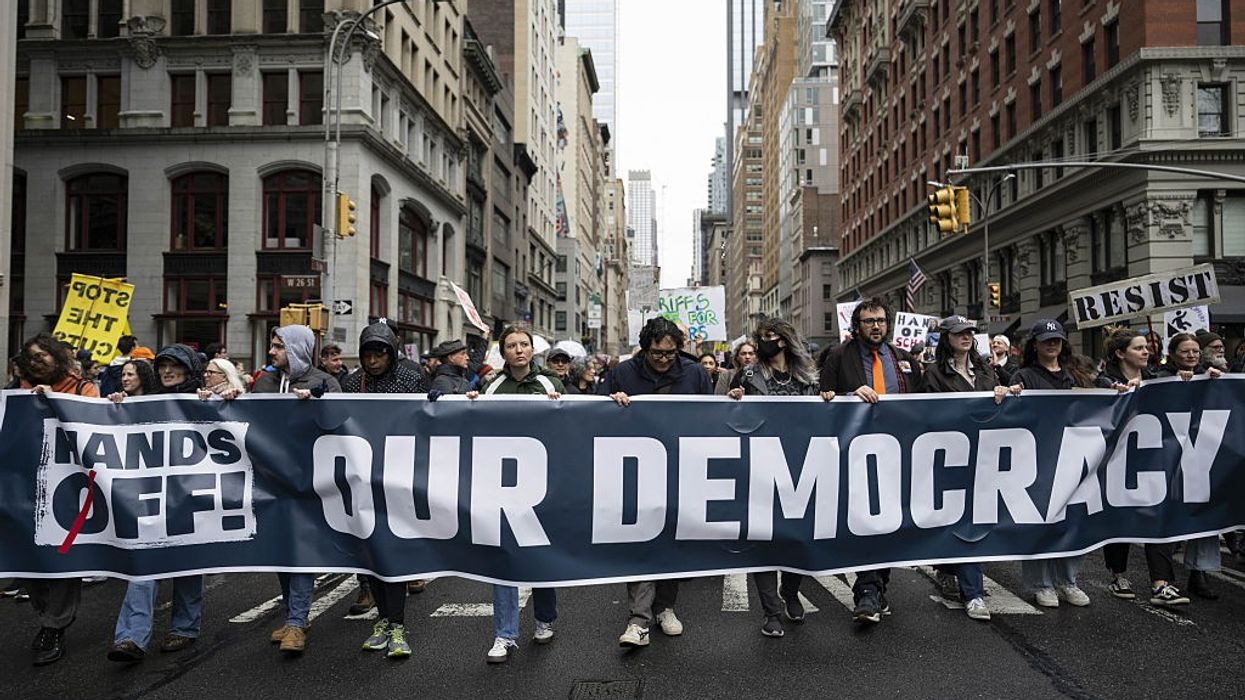
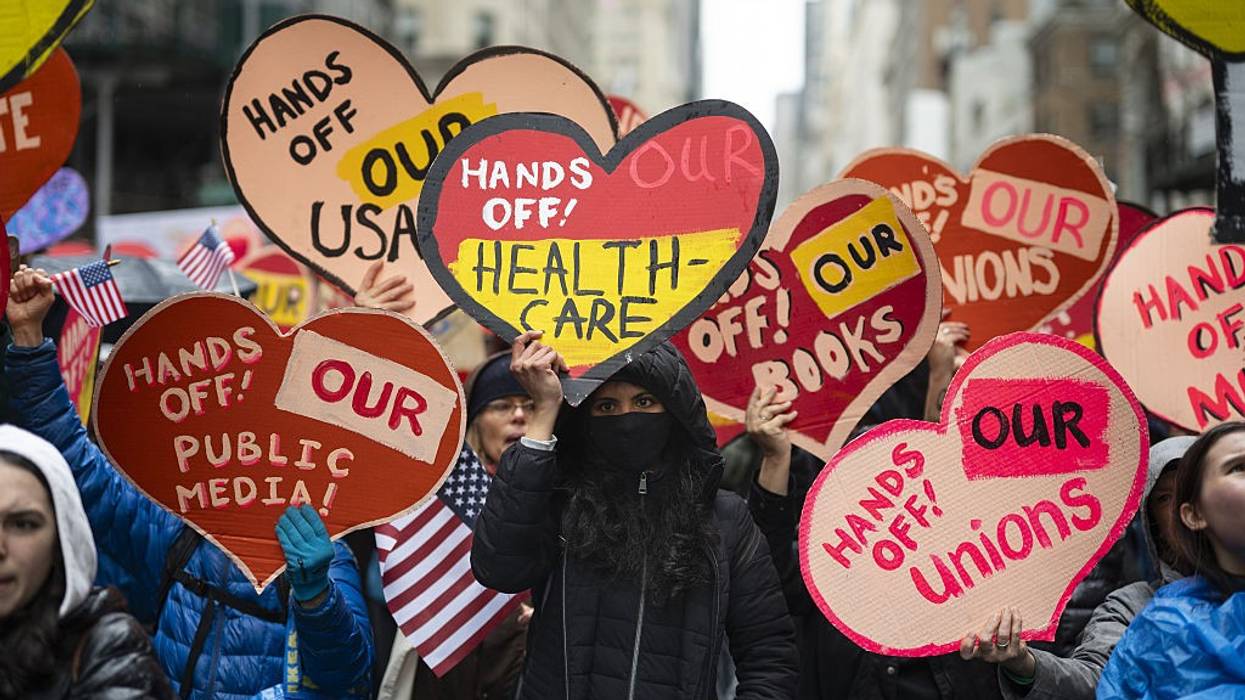
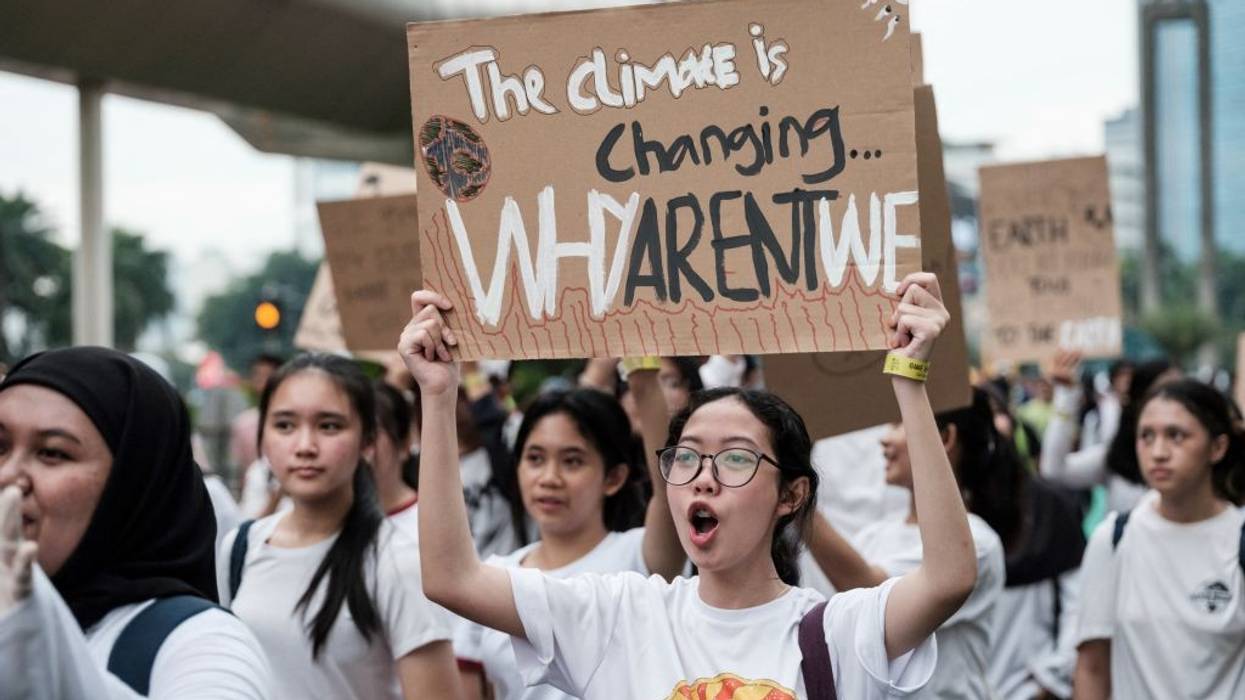
As detailed in the previous two Strike! commentaries, over the course of 100 days participation in anti-Trump demonstrations has increased from hundreds to millions. The demands echoed broad popular concerns, drawing together fear of autocracy, opposition to billionaire domination of government, and direct personal impacts through gutting of government services and economic chaos. These mobilizations combine the specific concerns of specific constituencies, concerns shared by multiple constituencies, and broad, widely shared concerns about the destruction of democratic governance.
These days of action have been coordinated in two ways. Two very similar coalitions involving about 200 organizations initiated and promoted the Hands Off! And Mayday mobilizations. The 50501 actions and the Tesla Takedowns were organized on Reddit and other social media by self-organized groups. Leadership for all of them primarily took the form of setting dates, framing raps, and communicating with local groups and activists. So far coordination has focused on specific days of action. While individual organizations have more extensive programs of action, so far the social self-defense movement as a whole is only beginning to develop means of continuous coordination and planning. Local groups, often drawing together or cutting across distinct national organizations, initiate and recruit for both nationally and locally initiated activities.
Historical experience has repeatedly shown that unified opposition from civil society institutions plays a critical role in the resistance to authoritarianism. Trump’s agenda is totalitarian in that it aims not only to devastate the constitutional order, but to destroy all bases of potential opposition in civil society. He has targeted universities and other educational institutions, medicine, law firms and the American Bar Association, media, courts, organized labor, and virtually every other institutional sphere of civic life. The response of these institutions has been vacillating and ambivalent—exemplified by Harvard’s effort to submit to Trumpian demands, followed by its statement of refusal and suit against government interference, then followed by its proposed new restrictions on freedom of expression. There are stirrings of collective resistance, however. For example, faculties at Big 10 universities have voted for a Mutual Defense Compact to jointly resist and support each other. Business has been ambiguous, divided, and largely paralyzed, initially swinging to support Trump, then backing away, especially after the tariff debacle. Future developments will depend on the balance between outrage at Trump’s attacks on civil society and fear of his vengeance against those who oppose him.
The governance system has so far provided important but limited protection of society against the MAGA assault. Many rulings by lower courts have forbidden, or at least stayed, illegal and unconstitutional Trump initiatives. Supreme Court decisions have been ambiguous, attempting to limit blatant illegality without providing a consistent defense of constitutional governance, perhaps out of fear of opening the door to outright defiance and a serious constitutional crisis. The Republican-controlled Congress has forcefully abetted Trump’s attacks on law, the Constitution, and people, with only a handful of legislators opposing even the most extreme measures and many more playing attack dogs on those who Trump targets.
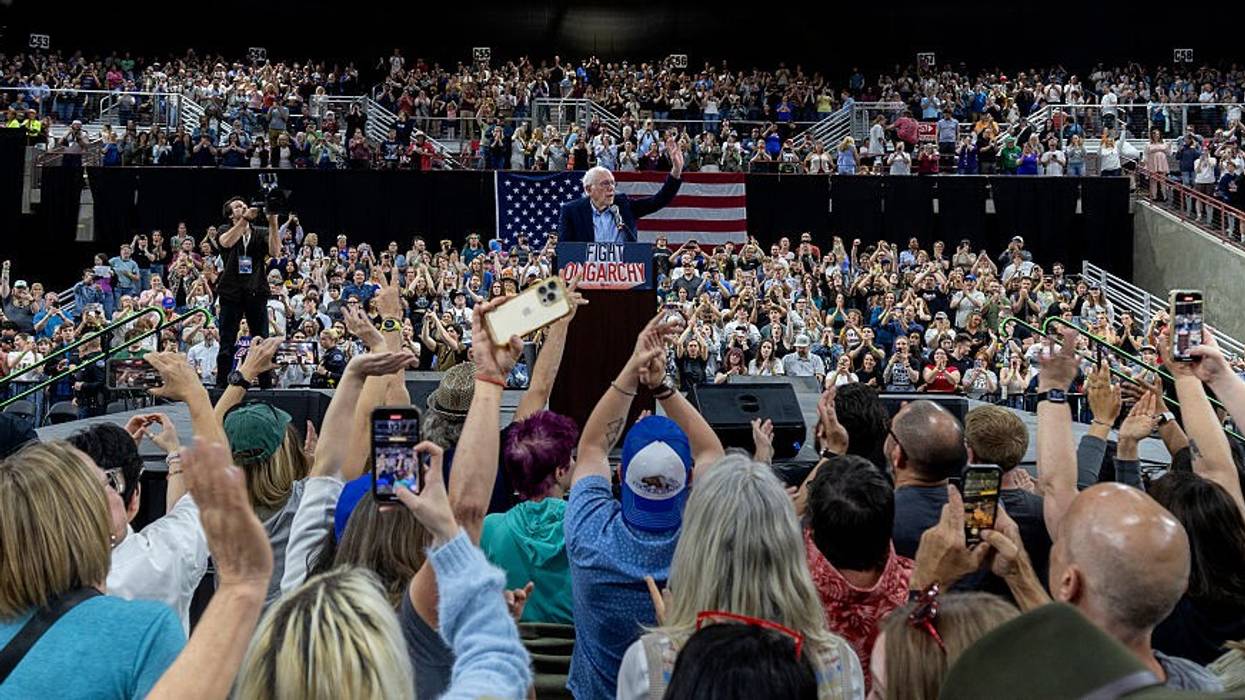
Most Democratic politicians have followed the dubious advice to try to work with Trump rather than take him on. A few members of Congress have started making serious efforts to encourage a mass opposition to Trump and MAGA, exemplified by the massive rallies held by Sen. Bernie Sanders (I-Vt.) and Rep. Alexandria Ocasio-Cortez (D-N.Y.). A slowly increasing number of Democratic politicians, under substantial pressure from enraged members of their own party, are starting to join them. Similarly, a few blue state governments have taken significant initiatives to challenge Trump’s depredations, while many of them and nearly all red states have acquiesced or furthered Trump’s agenda.
A Movement-Based Opposition
If there is one thing we can confidently assert, it is that Trump is unlikely to voluntarily remove himself from power. He is unlikely to abdicate, and his allies are unlikely to purge him. Even his growing unpopularity and self-inflicted wounds will not automatically lead to his removal from office. That will require an opposing force that can take what steps are necessary to diminish and eventually terminate his power.
Unfortunately, the Democratic Party has so far proven not to be such a force. Despite exceptions, most of its leadership has deliberately acquiesced in Trump’s juggernaut. The Democrats’ deep dependence on corporate and fossil fuel monied interests has impeded any effort beyond rhetoric to appeal to the interests of ordinary Americans, let alone to stand up to the likes of Trump and Elon Musk. The result is that, as polls demonstrate, most people regard the Democratic Party with scorn. A recent Washington Post-ABC News-Ipsos poll found that nearly 70% of Americans view the Democratic Party as out of touch “with the concerns of most people”—a higher share than said the same of either Trump or the Republican Party. Just 40% of Democrats approved of the way their leaders in Congress were handling the job, compared with 49% who disapproved, according to a Quinnipiac University poll. In a Harvard survey, only 23% of the young Americans polled who voted for former Vice President Kamala Harris approve of congressional Democrats’ performance.
The Democratic Party, unless and until it makes significant changes, will be a poor vehicle for the anti-Trump resistance. But given the structure of America’s legally enforced two-party system, a progressive third-party challenge in the electoral arena, if it drew significant support, would most likely split and thereby weaken the anti-MAGA vote.
There is a natural synergism between large national actions that draw public attention and demonstrate broad public support and frequent or continuous small actions that show the opposition to be more than occasional flashes in the pan.
A possible solution to this predicament might be a “movement-based opposition” rooted in civil society. Sometimes called a non-electoral or independent opposition, such a movement-based opposition would be a convergence of social movements that performs some of the classic functions of an opposition party without the goal of taking power in government. It would draw diverse constituencies out of their silos to combine their power but use direct action rather than electoral politics as its means to exercise that power. Like a political party, it would bring together different constituencies around common interests, expose existing leaders and institutions, and present alternatives. Such a non-electoral opposition played an important role in blocking Trump’s attempted coup in January 2021.
The movement for social self-defense is already performing in a rudimentary way the functions of such an opposition both nationally and locally. It draws together different constituencies, defines common interests and concerns, pools their power, and coordinates joint actions. So far it does so only intermittently, with reluctance to define itself as the leading protagonist of the struggle to defeat Trump’s assault on society. It is positioned, however, to acknowledge what it has become and start to act like a continuous opposition. That movement-based opposition would include all those who participated in and those who called and coordinated Hands Off!, 50501, Mayday, and similar actions locally and nationally.
The elements of the movement-based opposition already include a significant infrastructure of communications, research, publicity, training, and member mobilization. These have proven effective in the early 2025 days of action. These groups cooperated with each other and developed an effective division of labor, for example with some providing de-escalation training; some guidance to local groups for media outreach; some training on legal dimensions of protest; and others helping with the nuts and bolts of posters, picket signs, food, water, and porta-potties.
Such cooperation can be extended and made continuous. For example, different partners can produce materials and organize actions focusing in rotation on their concerns and constituencies, with the other partners featuring or joining them. This is in large part what happened with the May Day days of action, with the wider movement turning out for events that were focused on workers and immigrants, as well as on the whole MAGA threat to democracy and human well-being. Partners can form a “shadow cabinet” of spokespeople from each participating sector who could amplify the concerns of each sector while providing a common voice for the movement-based opposition as a whole. All the activities of the movement-based opposition can support its individual elements while unifying them into a coordinated bloc.
Expanding the movement-based opposition is crucial for amassing the power to effectively counter MAGA. The starting point is to focus attention on the harms that are being done to individuals, constituencies, and the people as a whole. This was central to the message of Hands Off!, 50501, and Mayday actions, which called out specific harms to Social Security, Medicare, and Medicaid recipients; veterans; federal employees; and other MAGA-targeted groups while relating them all to the MAGA attack on constitutional governance.
An important next step is to convey why supporting and joining the movement-based opposition is an effective way to fight against that harm. That involves developing the mass power needed to counter MAGA and to block particular harmful initiatives. The opposition needs to encourage and support harmed constituencies to organize themselves and participate in the wider movement. Such self-organization is already under way, for example the federal workers cross-agency, cross-union organization Federal Unionists Network; the lawyers National Law Day of Action; and military veterans’ “Unite for Veterans, Unite for America” rally planned for June 6; and the outreach to workers growing out of the May Day day of action. These constituencies are already to a considerable extent organized, such as the large proportion of veterans who are linked online through social media organized by military units and the seniors linked through senior centers and senior residence facilities.
The movement-based opposition aims to halt and undo the harm that has been done by the Trump regime, but it is not directed toward returning to the world as it existed before Trump.
There is a natural synergism between large national actions that draw public attention and demonstrate broad public support and frequent or continuous small actions that show the opposition to be more than occasional flashes in the pan. Some of these have been emerging locally, like regular small weekly demonstrations and large signs regularly displayed on highway overpasses.
The extraordinarily peaceful demonstrations for social self-defense have projected power and discipline while discouraging attempts at governmental or vigilante repression. Carefully designed civil disobedience actions, like those by union members in Philadelphia on May Day and those planned by a climate coalition for this summer, can escalate the pressure without arousing public fears of even more chaos. Such actions can be a way of influencing and recruiting harmed constituencies. For example, sit-ins by present and future Social Security recipients could help mobilize large numbers of others to write letters, make phone calls, take part in demonstrations to protect Social Security, and join the wider movement.
While intended to increase his power, many of Trump’s actions have actually undermined it. To take one example, his threats to Canada have led to majority disapproval in the U.S. electorate while provoking a wave of anti-U.S. nationalism and the unexpected election of a prime minister dedicated to freeing Canada from U.S. domination. At some points combined opposition from courts, powerful institutional actors, and the public have forced him to back down. Examples include withdrawal of the nomination of Matt Gaetz for attorney general; the retreat of Elon Musk in the face of massive unpopularity and the economic harm done to Tesla by anti-MAGA protests and boycotts; the unexpected freeing of Mohsen Mahdawi; and Trump’s repeated backdown on parts of his tariff proposals in the face of massive business and consumer opposition. With sufficient mobilization and good targeting, social self-defense can defeat further Trump initiatives by mounting opposition that undermines his “pillars of support.” It can make his supporters quail and threaten to withdraw their support if he doesn’t back down. This process does not need to wait until Trump is removed from office. What is necessary is to make his initiatives undermine instead of increasing his power.
Trump’s plunging popularity means that if there are fair elections they are likely to end Republican dominance of Congress in 2026 and defeat Trump’s successor in 2028. The current electoral system is highly unequal, however, and MAGA is working hard to further distort it, among other things adopting measures that will simply exclude millions of citizens from the vote.
The weakness of electoral opposition is further augmented by the failure of the Democratic Party to mount an effective opposition that would mobilize large numbers of people and institutions to ensure fair elections and the defeat of all candidates who continue to support Trump. Although it does not run candidates for office, the movement-based opposition can have a major impact on the electoral process. It can dramatize the harmful effect of MAGA actions on millions of people. It can encourage them to register and vote. It can pressure Democrats to court their support by forcefully opposing MAGA. And it can dramatize and resist efforts to exclude people from voting and make the electoral system more unequal. Ending Republican control of even one house of Congress in the 2026 elections would put a significant brake on the Trump juggernaut.
In many parts of the world, when institutional democracy has been unable to overcome dictatorial regimes, people have turned to what has been variously called “people power” uprisings, general strikes, or as I will call them here, “social strikes”—strikes by society as a whole against the forces that threaten it. These involve mass withdrawal of acquiescence manifested in general strikes, occupations of capital cities, shutdowns of commerce, and other disruptions of everyday life. In cases like Poland, Tunesia, Brazil, and most recently South Korea these have successfully brought down dictatorial regimes.
Popular uprisings have recently been broached by such mainstream figures as New York Times columnist David Brooks and Illinois Gov. JB Pritzker. In the event that electoral and direct action techniques are not sufficient to defend U.S. society against the MAGA assault, such social strikes may be necessary. A movement-based opposition can play a critical role in laying the groundwork for such actions. It can draw in mass participation from people in all walks of life; cultivate an understanding of the need for cooperation and solidarity; develop the ability to coordinate action; and organize escalating actions that can culminate in social strikes.
The movement-based opposition aims to halt and undo the harm that has been done by the Trump regime, but it is not directed toward returning to the world as it existed before Trump. That is clearly not what the people want, and it offers little hope of solving our real problems. The movement-based opposition includes many different groups with different visions of the future. It is based on agreement about the immediate aim, plus agreement to disagree about other things. It should encourage discussion of areas of disagreement while bracketing them when they might interfere with immediately necessary collaboration. The process of working together and defining common interests itself can help identify new areas of agreement and encourage mutual acceptance of differences. Social self-defense against the MAGA juggernaut can be the starting point for creating the world we want beyond MAGA. As Abraham Lincoln said of the Civil War, it can become the means for a new birth of freedom.
This is part of a series of Strike! Commentaries on social self-defense against the MAGA juggernaut. It originally appeared on the Labor Network for Sustainability website on January 21, 2025.