

5
#000000
#FFFFFF
To donate by check, phone, or other method, see our More Ways to Give page.
Daily news & progressive opinion—funded by the people, not the corporations—delivered straight to your inbox.

"It's time to build communities, not data centers," said one local activist.
The New Brunswick, New Jersey City Council voted Wednesday to cancel plans to construct an artificial intelligence data center and instead build a new public park where the 27,000-square foot facility would have gone.
Artificial intelligence data centers—which house the servers and other infrastructure needed to train and power AI models—have major environmental and climate impacts, as they consume massive amounts of electricity and water, as well as rare earth metals and other resources.
According to New Brunswick Patch, hundreds of people packed into Wednesday evening's city hall meeting to voice concerns that the proposed data center would send their electricity and water bills skyrocketing, and that the facility would harm the environment.
"Many people did not want this in their neighborhood," New Brunswick NAACP president Bruce Morgan said during the council meeting. "We don't want these kinds of centers that's going to take resources from the community."
The site of the nixed data center, 100 Jersey Avenue, is already slated for development including 600 new apartments—10% of which will be affordable housing units—and warehouses for startups and other small businesses. Now, thanks to Wednesday's vote, a park is on the agenda too.
"This is great news, no data center," New Brunswick resident Anne Norris told Patch.
"My kids went through the public school system; we didn't pay for lunch because we have so many families under the poverty line," Norris said before taking aim at what she said was the dearth of affordable housing approved for the site.
"Given the economic status of the people who live in New Brunswick, I don't think 10% is really sufficient," she contended.
Following the council meeting, jubilant residents celebrated the data center's cancellation, chanting slogans including, "The people united will never be defeated!"
"We say a big 'fuck you' to Big Tech!" local organizer Ben Dziobek shouted to the crowd. "We say a big 'fuck you' to private equity! And it's time to build communities, not data centers."

Loneliness is not an individual pathology. It is a failure of how we have designed our economy, our politics, and our shared spaces.
The holidays can be the loneliest time of year, when isolation, family fractures, and economic strain become especially hard to bear. The shopping frenzy and glittery lights don’t substitute for real belonging—they often make its absence more painful.
Worse, many people blame themselves for not feeling the cheer. Scroll through Instagram or watch a holiday film, and it appears as though everyone else is finding love, meaning, and connection this holiday season. If you’re not, it’s easy to believe you’ve done something wrong.
But loneliness is not an individual pathology. It is a failure of how we have designed our economy, our politics, and our shared spaces.
Self-help culture offers some useful advice about boundaries, rest, and self-care. But it rarely acknowledges the larger truth: Loneliness is not something most people can solve on their own. The answer isn’t “retail therapy” or a vacation in Maui. It’s building belonging into our collective experience.
We were expected to move for work, losing contact with extended family and friends, and compete our way to the top.
That means addressing an economic system that systematically excludes growing numbers of people from security, dignity, and meaning. It means reclaiming political system that have been captured by moneyed insiders. And it’s creating the shared spaces—especially in-person spaces—where people are welcomed to contribute, be known, and find support.
For decades, we were told that rugged individualism was the path to success. We were expected to move for work, losing contact with extended family and friends, and compete our way to the top. Relationships were treated as less important rather than necessities. Capitalism required a flexible labor force, and we reorganized our lives accordingly.
At the same time, political participation has increasingly been reduced to fundraising. Those without wealth are invited to donate or volunteer, but many sense—accurately—that real power belongs to those who can write big checks. The rest of us have little influence over the decisions shaping our lives.
The places that once supported everyday connection have also eroded. Public squares, community centers, and informal gathering places have been replaced by commercial spaces designed for efficiency and extraction, not belonging. And the economy that once supported a middle class has been hollowed out by big corporations with little use for Midwest steel mills or family farms, leaving behind empty downtowns, shuttered factories, and frayed social ties.
During the road trip across the United States that led to my book, The Revolution Where You Live, I encountered small towns and urban neighborhoods that were quiet, even desolate. That experience stayed with me during a visit to Tübingen, a town in Germany, where I asked a friend about a strange noise drifting through the streets. She laughed. “That is the sound of people talking,” she said. The town square had been closed to traffic and was filled with market stalls, laughter, and neighbors greeting each other as they shopped for holiday gifts.
Today’s loneliness epidemic creates vulnerability. When people lack meaningful connection, they are more susceptible to groups that promise belonging, identity, and purpose—whether at political rallies or in online spaces. For some, belonging is created by excluding other identities and even spewing hate. Research suggests isolation can contribute to radicalization, though it does not determine it. Belonging can be mobilized toward many ends.
Isolation also takes a toll on physical and mental health, contributing to higher rates of heart disease, strokes, diabetes, depression and even dementia, according to the Centers for Disease Control and Prevention.
At a time of impending war, political extremism, climate crisis, and Immigration and Customs Enforcement raids, this may seem like the least urgent question to ask. But moments of upheaval are also moments of reinvention. The direction we take depends in part on whether people feel they have a place, a voice, and something to offer.
Designing for belonging starts with economic participation. Workplaces and businesses can be designed to offer participation, dignity, and a shared stake through cooperatives, employee ownership, and models that reward contribution rather than extraction. We can stop giving tax breaks and head starts to corporations that drain communities, and leave behind pollution and unemployment. Instead we can support enterprises with long-term commitments to place: those that make food, housing, healthcare, and childcare affordable and rooted.
People power grows out of connection—the some force that carries us through disasters and makes collective change possible.
It also means rebuilding shared spaces—places where people can simply be, or sing, talk, trade, make art, share food, teach, and support one another. Inviting places where people come to get to know those of different races, generations, ways of life—and where fear and prejudice lose their grip simply because people are no longer strangers.
Political and social movements can use language that invites people in as collaborators, not just donors or spectators. Belonging that is at the center of our work can counter the burnout that plagues so much civic and social change work. When people experience the dignity of having something to offer, the sense of community and mutual support can make participation as joyful as a good party
Belonging may feel like a squishy topic at a time of authoritarianism, war, and corporate dominance. But people power grows out of connection—the some force that carries us through disasters and makes collective change possible. Connection and belonging are easy to overlook when they are present, but when they are missing, our health, sense of purpose, and optimism suffer. Authentic connections are sources not only of well being but of power—and together they form the foundations for a better, more inclusive world.

"We'll rise together and say: We reject political violence. We reject fear as governance. We reject the myth that only some deserve freedom," wrote the coalition behind "No Kings" rallies planned for June 14.
U.S. President Donald Trump on Saturday ordered the deployment of National Guard troops to quell anti-U.S. Immigration and Customs Enforcement protests in Los Angeles, prompting a response from the coalition behind upcoming nationwide protests planned to counter Trump's Washington, D.C. military parade on June 14.
The coalition organizing the "No Kings" national day of action accused the Trump administration of "escalating tensions" in a statement released Sunday.
Generally, the U.S. military is not supposed to take part in civilian law enforcement except in times of emergency. Trump on Saturday invoked a federal law that, according to The Guardian, empowers the president to call part of California's National Guard into federal service. California's Democratic Gov. Gavin Newsom objected to this move.
Protests began on Friday following reports that federal immigration agents were carrying out raids in Los Angeles.
In their statement, the coalition denounced Trump's decision to call National Guard members into federal service, and wrote that "people are peacefully and lawfully protesting the administration's abuses of power and the abduction of their neighbors by ICE."
"Instead of listening, the Trump administration is escalating tensions," the coalition wrote. "Against the guidance of local leaders, they are deploying military force to suppress free speech. They do not care about our safety—it's about silencing opposition. It's a blatant abuse of power designed to intimidate families, stoke fear, and crush dissent."
Law enforcement has acted with force against protestors, including using tear gas and flash bangs, according to CNN. And according to the Los Angeles Times, overnight into Monday businesses were vandalized and burglarized, capping a period of unrest that saw protestors set cars on fire, in addition to other acts of vandalism.
Los Angeles Mayor Karen Bass on Sunday denounced the lawbreaking, but also laid blame on the Trump administration, according to the LA Times.
"What we're seeing in Los Angeles is chaos that is provoked by the administration," Bass said, according to the outlet. "When you raid Home Depot and workplaces, when you tear parents and children apart, and when you run armored caravans through our streets you cause fear and you cause panic."
In concluding their statement about Trump's deployment of the National Guard, the coalition behind "No Kings" struck a defiant tone. "From major cities to small towns, we'll rise together and say: we reject political violence. We reject fear as governance. We reject the myth that only some deserve freedom," they wrote.
The groups say that more than 1,800 rallies are planned for Saturday and that the events are guided by a commitment to nonviolent protest. In the statement, the group also said that organizers with "No Kings" are trained in de-escalation tactics and plan to work closely with local partners to ensure actions are peaceful.
Leah Greenberg, co-executive director of Indivisible, one of the groups behind "No Kings," has said that the aim is to "create contrast, not conflict."
Over 150 progressive organizations, watchdogs, climate groups, and other entities are partners on the "No Kings" rallies.
See the full list of planned events and locations here.
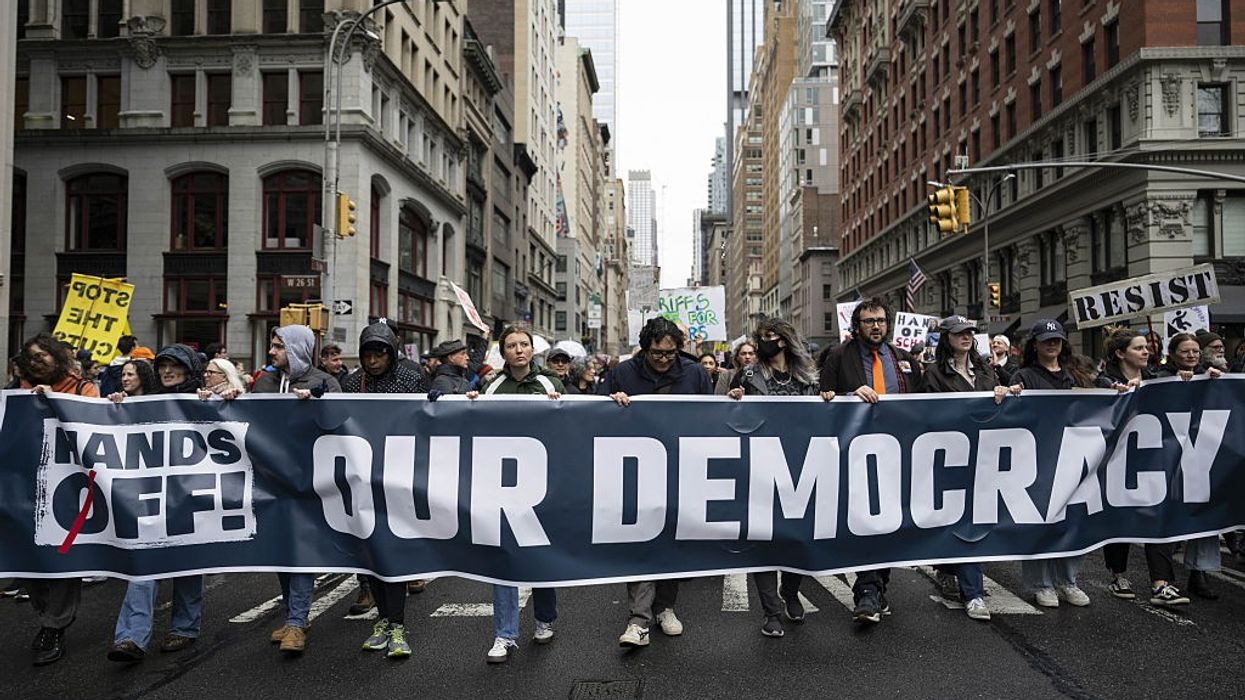
Social self-defense against the MAGA juggernaut can be the starting point for creating the world we want beyond MAGA.
On January 1, 2025 I published a report called “Defending Society Against the MAGA Assault: A Prospectus for Action.” I am happy to say that many of the proposals I made there for what I called “social self-defense” are already being initiated. Recent and upcoming Strike! Commentaries take stock of what has been accomplished so far and lay out strategic perspectives on the next phase of the struggle to protect society against MAGA devastation.
U.S. President Donald Trump and his enablers are conducting an “administrative coup” against Congress, courts, and civil society. This assault is being conducted on multiple fronts. It seeks unlimited power; the demolition of any possible base to restrict its power; unlimited accumulation of wealth for its followers; and a cultural revolution to enshrine autocracy, repression, racism, sexism, hatred, cruelty, and disinhibition as internalized values of the American people. So far it has met significant but spotty resistance.
Trump’s actions have been and will most likely continue to be unpredictable, ill-considered, self-contradictory, and often self-destructive. The sheer incompetence and vacillation of Trump’s behavior make his future actions likely to have effects that contradict their intentions. Furthermore, his actions go out into a world order that was already deeply enmeshed in what has been called “the polycrisis,” marked by great power geopolitical struggle over control of lesser countries and global economic networks. Trump’s erratic behavior and the chaos of the polycrisis render any predictions uncertain. At most we can identify a range of possibilities that we must prepare for. Even then, the timelines for the manifestation of such possibilities remain for the most part obscure.
Growing opposition may develop the power to limit and ultimately overcome Trumpian tyranny.
A Trump presidency that successfully creates a new national and international order is one of the least likely outcomes. Also unlikely is a basic course correction that changes the overall thrust of the Trump administration so far. More likely is that Trump, in the face of declining power and support, will increasingly utilize repression and violence. Internally this would mean a fuller suspension of civil liberties and the rule of law; a more brutal war on dissent; martial law; use of the military in domestic conflict; and a mobilization of violent MAGA supporters for direct vigilante action. Internationally it would mean escalating use of violence, leading to accidental or deliberate wars—not excluding accidental or intentional nuclear escalation. This is all happening in a context of global economic chaos that is already widely expected to lead to significant recession with the looming possibility of stagflation or depression.
Trump’s actions are already having harmful effects on a wide range of people. Some of these are specific, like the firing of federal employees and the destruction of the programs they administer that are depended on by tens of millions of people. Others affect almost everyone, like the stagflation emerging from tariff gyrations and the suspension of the rule of law that is making everyone, including everyday people who are law-abiding citizens, vulnerable to arbitrary targeting and arrest. Given reasonable expectations about the future, these harms are destined to rapidly escalate.
Where will all this lead? Trump may establish a lasting fascist dictatorship that demolishes all bases of effective opposition—the very definition of totalitarianism. Certainly this is possible if potential opposition forces are sufficiently intimidated and submissive.
Conversely, growing opposition may develop the power to limit and ultimately overcome Trumpian tyranny. This could happen in any of several ways.
The goal of social self-defense is to make a persistent fascist dictatorship less likely and its restriction and elimination by direct counteraction, electoral repudiation, or social strike more likely. Because of pervasive uncertainties, we can’t know precisely what process will achieve that objective. Fortunately, while different tactics can at times lead to tensions, efforts to change the balance of power in various ways are for the most part synergistic. We know that a chain will break at its weakest link, even if we don’t know what link that will be. Thus the overall strategy for social self-defense is to change the balance of power by strengthening the forces opposing the regime and putting increasing pressure on the regime and its allies.
A variety of polls around the end of Trump’s first 100 days show that popular repudiation of Trump has begun. Trump’s overall approval ratings, already low on election day, have fallen sharply, especially among independents and non-MAGA Republicans. More important, two-thirds of respondents view the Trump regime so far as “chaotic” and think Trump is engaging in “overreach” of his legitimate powers in area after area. While a majority still support the deportation of “illegal immigrants,” large numbers oppose the many publicized Immigration and Customs Enforcement abuses of due process. Large majorities say Trump must obey the courts. A majority fear the impact of Trump’s tariffs on inflation. Many fear or are already feeling the impact of Trump policies on them personally.
As detailed in the previous two Strike! commentaries, over the course of 100 days participation in anti-Trump demonstrations has increased from hundreds to millions. The demands echoed broad popular concerns, drawing together fear of autocracy, opposition to billionaire domination of government, and direct personal impacts through gutting of government services and economic chaos. These mobilizations combine the specific concerns of specific constituencies, concerns shared by multiple constituencies, and broad, widely shared concerns about the destruction of democratic governance.
These days of action have been coordinated in two ways. Two very similar coalitions involving about 200 organizations initiated and promoted the Hands Off! And Mayday mobilizations. The 50501 actions and the Tesla Takedowns were organized on Reddit and other social media by self-organized groups. Leadership for all of them primarily took the form of setting dates, framing raps, and communicating with local groups and activists. So far coordination has focused on specific days of action. While individual organizations have more extensive programs of action, so far the social self-defense movement as a whole is only beginning to develop means of continuous coordination and planning. Local groups, often drawing together or cutting across distinct national organizations, initiate and recruit for both nationally and locally initiated activities.
Historical experience has repeatedly shown that unified opposition from civil society institutions plays a critical role in the resistance to authoritarianism. Trump’s agenda is totalitarian in that it aims not only to devastate the constitutional order, but to destroy all bases of potential opposition in civil society. He has targeted universities and other educational institutions, medicine, law firms and the American Bar Association, media, courts, organized labor, and virtually every other institutional sphere of civic life. The response of these institutions has been vacillating and ambivalent—exemplified by Harvard’s effort to submit to Trumpian demands, followed by its statement of refusal and suit against government interference, then followed by its proposed new restrictions on freedom of expression. There are stirrings of collective resistance, however. For example, faculties at Big 10 universities have voted for a Mutual Defense Compact to jointly resist and support each other. Business has been ambiguous, divided, and largely paralyzed, initially swinging to support Trump, then backing away, especially after the tariff debacle. Future developments will depend on the balance between outrage at Trump’s attacks on civil society and fear of his vengeance against those who oppose him.
The governance system has so far provided important but limited protection of society against the MAGA assault. Many rulings by lower courts have forbidden, or at least stayed, illegal and unconstitutional Trump initiatives. Supreme Court decisions have been ambiguous, attempting to limit blatant illegality without providing a consistent defense of constitutional governance, perhaps out of fear of opening the door to outright defiance and a serious constitutional crisis. The Republican-controlled Congress has forcefully abetted Trump’s attacks on law, the Constitution, and people, with only a handful of legislators opposing even the most extreme measures and many more playing attack dogs on those who Trump targets.
Most Democratic politicians have followed the dubious advice to try to work with Trump rather than take him on. A few members of Congress have started making serious efforts to encourage a mass opposition to Trump and MAGA, exemplified by the massive rallies held by Sen. Bernie Sanders (I-Vt.) and Rep. Alexandria Ocasio-Cortez (D-N.Y.). A slowly increasing number of Democratic politicians, under substantial pressure from enraged members of their own party, are starting to join them. Similarly, a few blue state governments have taken significant initiatives to challenge Trump’s depredations, while many of them and nearly all red states have acquiesced or furthered Trump’s agenda.
If there is one thing we can confidently assert, it is that Trump is unlikely to voluntarily remove himself from power. He is unlikely to abdicate, and his allies are unlikely to purge him. Even his growing unpopularity and self-inflicted wounds will not automatically lead to his removal from office. That will require an opposing force that can take what steps are necessary to diminish and eventually terminate his power.
Unfortunately, the Democratic Party has so far proven not to be such a force. Despite exceptions, most of its leadership has deliberately acquiesced in Trump’s juggernaut. The Democrats’ deep dependence on corporate and fossil fuel monied interests has impeded any effort beyond rhetoric to appeal to the interests of ordinary Americans, let alone to stand up to the likes of Trump and Elon Musk. The result is that, as polls demonstrate, most people regard the Democratic Party with scorn. A recent Washington Post-ABC News-Ipsos poll found that nearly 70% of Americans view the Democratic Party as out of touch “with the concerns of most people”—a higher share than said the same of either Trump or the Republican Party. Just 40% of Democrats approved of the way their leaders in Congress were handling the job, compared with 49% who disapproved, according to a Quinnipiac University poll. In a Harvard survey, only 23% of the young Americans polled who voted for former Vice President Kamala Harris approve of congressional Democrats’ performance.
The Democratic Party, unless and until it makes significant changes, will be a poor vehicle for the anti-Trump resistance. But given the structure of America’s legally enforced two-party system, a progressive third-party challenge in the electoral arena, if it drew significant support, would most likely split and thereby weaken the anti-MAGA vote.
There is a natural synergism between large national actions that draw public attention and demonstrate broad public support and frequent or continuous small actions that show the opposition to be more than occasional flashes in the pan.
A possible solution to this predicament might be a “movement-based opposition” rooted in civil society. Sometimes called a non-electoral or independent opposition, such a movement-based opposition would be a convergence of social movements that performs some of the classic functions of an opposition party without the goal of taking power in government. It would draw diverse constituencies out of their silos to combine their power but use direct action rather than electoral politics as its means to exercise that power. Like a political party, it would bring together different constituencies around common interests, expose existing leaders and institutions, and present alternatives. Such a non-electoral opposition played an important role in blocking Trump’s attempted coup in January 2021.
The movement for social self-defense is already performing in a rudimentary way the functions of such an opposition both nationally and locally. It draws together different constituencies, defines common interests and concerns, pools their power, and coordinates joint actions. So far it does so only intermittently, with reluctance to define itself as the leading protagonist of the struggle to defeat Trump’s assault on society. It is positioned, however, to acknowledge what it has become and start to act like a continuous opposition. That movement-based opposition would include all those who participated in and those who called and coordinated Hands Off!, 50501, Mayday, and similar actions locally and nationally.
The elements of the movement-based opposition already include a significant infrastructure of communications, research, publicity, training, and member mobilization. These have proven effective in the early 2025 days of action. These groups cooperated with each other and developed an effective division of labor, for example with some providing de-escalation training; some guidance to local groups for media outreach; some training on legal dimensions of protest; and others helping with the nuts and bolts of posters, picket signs, food, water, and porta-potties.
Such cooperation can be extended and made continuous. For example, different partners can produce materials and organize actions focusing in rotation on their concerns and constituencies, with the other partners featuring or joining them. This is in large part what happened with the May Day days of action, with the wider movement turning out for events that were focused on workers and immigrants, as well as on the whole MAGA threat to democracy and human well-being. Partners can form a “shadow cabinet” of spokespeople from each participating sector who could amplify the concerns of each sector while providing a common voice for the movement-based opposition as a whole. All the activities of the movement-based opposition can support its individual elements while unifying them into a coordinated bloc.
Expanding the movement-based opposition is crucial for amassing the power to effectively counter MAGA. The starting point is to focus attention on the harms that are being done to individuals, constituencies, and the people as a whole. This was central to the message of Hands Off!, 50501, and Mayday actions, which called out specific harms to Social Security, Medicare, and Medicaid recipients; veterans; federal employees; and other MAGA-targeted groups while relating them all to the MAGA attack on constitutional governance.
An important next step is to convey why supporting and joining the movement-based opposition is an effective way to fight against that harm. That involves developing the mass power needed to counter MAGA and to block particular harmful initiatives. The opposition needs to encourage and support harmed constituencies to organize themselves and participate in the wider movement. Such self-organization is already under way, for example the federal workers cross-agency, cross-union organization Federal Unionists Network; the lawyers National Law Day of Action; and military veterans’ “Unite for Veterans, Unite for America” rally planned for June 6; and the outreach to workers growing out of the May Day day of action. These constituencies are already to a considerable extent organized, such as the large proportion of veterans who are linked online through social media organized by military units and the seniors linked through senior centers and senior residence facilities.
The movement-based opposition aims to halt and undo the harm that has been done by the Trump regime, but it is not directed toward returning to the world as it existed before Trump.
There is a natural synergism between large national actions that draw public attention and demonstrate broad public support and frequent or continuous small actions that show the opposition to be more than occasional flashes in the pan. Some of these have been emerging locally, like regular small weekly demonstrations and large signs regularly displayed on highway overpasses.
The extraordinarily peaceful demonstrations for social self-defense have projected power and discipline while discouraging attempts at governmental or vigilante repression. Carefully designed civil disobedience actions, like those by union members in Philadelphia on May Day and those planned by a climate coalition for this summer, can escalate the pressure without arousing public fears of even more chaos. Such actions can be a way of influencing and recruiting harmed constituencies. For example, sit-ins by present and future Social Security recipients could help mobilize large numbers of others to write letters, make phone calls, take part in demonstrations to protect Social Security, and join the wider movement.
While intended to increase his power, many of Trump’s actions have actually undermined it. To take one example, his threats to Canada have led to majority disapproval in the U.S. electorate while provoking a wave of anti-U.S. nationalism and the unexpected election of a prime minister dedicated to freeing Canada from U.S. domination. At some points combined opposition from courts, powerful institutional actors, and the public have forced him to back down. Examples include withdrawal of the nomination of Matt Gaetz for attorney general; the retreat of Elon Musk in the face of massive unpopularity and the economic harm done to Tesla by anti-MAGA protests and boycotts; the unexpected freeing of Mohsen Mahdawi; and Trump’s repeated backdown on parts of his tariff proposals in the face of massive business and consumer opposition. With sufficient mobilization and good targeting, social self-defense can defeat further Trump initiatives by mounting opposition that undermines his “pillars of support.” It can make his supporters quail and threaten to withdraw their support if he doesn’t back down. This process does not need to wait until Trump is removed from office. What is necessary is to make his initiatives undermine instead of increasing his power.
Trump’s plunging popularity means that if there are fair elections they are likely to end Republican dominance of Congress in 2026 and defeat Trump’s successor in 2028. The current electoral system is highly unequal, however, and MAGA is working hard to further distort it, among other things adopting measures that will simply exclude millions of citizens from the vote.
The weakness of electoral opposition is further augmented by the failure of the Democratic Party to mount an effective opposition that would mobilize large numbers of people and institutions to ensure fair elections and the defeat of all candidates who continue to support Trump. Although it does not run candidates for office, the movement-based opposition can have a major impact on the electoral process. It can dramatize the harmful effect of MAGA actions on millions of people. It can encourage them to register and vote. It can pressure Democrats to court their support by forcefully opposing MAGA. And it can dramatize and resist efforts to exclude people from voting and make the electoral system more unequal. Ending Republican control of even one house of Congress in the 2026 elections would put a significant brake on the Trump juggernaut.
In many parts of the world, when institutional democracy has been unable to overcome dictatorial regimes, people have turned to what has been variously called “people power” uprisings, general strikes, or as I will call them here, “social strikes”—strikes by society as a whole against the forces that threaten it. These involve mass withdrawal of acquiescence manifested in general strikes, occupations of capital cities, shutdowns of commerce, and other disruptions of everyday life. In cases like Poland, Tunesia, Brazil, and most recently South Korea these have successfully brought down dictatorial regimes.
Popular uprisings have recently been broached by such mainstream figures as New York Times columnist David Brooks and Illinois Gov. JB Pritzker. In the event that electoral and direct action techniques are not sufficient to defend U.S. society against the MAGA assault, such social strikes may be necessary. A movement-based opposition can play a critical role in laying the groundwork for such actions. It can draw in mass participation from people in all walks of life; cultivate an understanding of the need for cooperation and solidarity; develop the ability to coordinate action; and organize escalating actions that can culminate in social strikes.
The movement-based opposition aims to halt and undo the harm that has been done by the Trump regime, but it is not directed toward returning to the world as it existed before Trump. That is clearly not what the people want, and it offers little hope of solving our real problems. The movement-based opposition includes many different groups with different visions of the future. It is based on agreement about the immediate aim, plus agreement to disagree about other things. It should encourage discussion of areas of disagreement while bracketing them when they might interfere with immediately necessary collaboration. The process of working together and defining common interests itself can help identify new areas of agreement and encourage mutual acceptance of differences. Social self-defense against the MAGA juggernaut can be the starting point for creating the world we want beyond MAGA. As Abraham Lincoln said of the Civil War, it can become the means for a new birth of freedom.
This is part of a series of Strike! Commentaries on social self-defense against the MAGA juggernaut. It originally appeared on the Labor Network for Sustainability website on January 21, 2025.
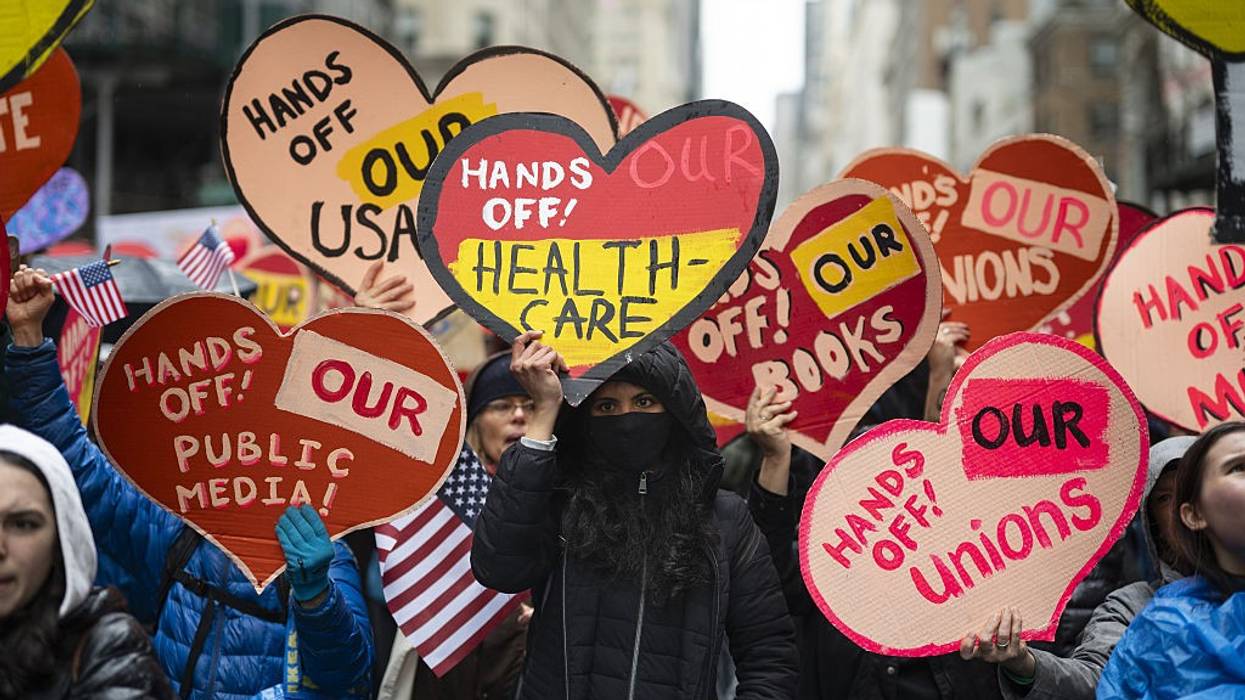
Philanthropists and funders must show we are part of movements to protect the most vulnerable.
The last six months have been devastating for these United States. The government has kidnapped students, placing them in detention in states hundreds of miles away from their loved ones and schools. The government has openly questioned long-standing and hard-fought norms: the freedom of speech, the right to legal representation, and citizenship as a right of those of us born here. The government has handed over our most sacred information and resources to billionaires who became that way because the government invested in them and subsidized their fortunes. Now these same people want to pull up the ladder behind them, guaranteeing that nobody else can benefit from a government that supports its people.
I’ve been proud of my sector, philanthropy. We’ve approached this crisis front-footed and full-throated in our commitment to protect the freedom to give. It’s been a powerful testament that hundreds of my peers preemptively coordinated and called out our freedom to give, freedom of speech, and freedom to serve communities.
As we enter this next moment, when the boundaries that were once fixed are challenged not by proclamation or executive order, but through the allocation of our tax dollars, we have an opportunity to show that when we are part of movements that protect the most vulnerable among us, we protect ourselves. It is an invitation to remember that our government is not a natural representation of our best selves. Let’s be honest: The best parts of our government are a product of people, overwhelming the poorest and least powerful people, organizing against greed, exploitation, and exclusion. Free public education, Medicaid, and protection from racism and sexism are evidence of what government looks like when movements win for our most treasured resource: our people.
Our commitment to trust, discipline, and love is the best medicine for this moment. We need to transform spaces of dread into spaces where we can join together in solidarity to dream...
As we plan and resource efforts that focus on shielding our institutions from the upcoming budget reconciliation, I hope we remember this budget reconciliation fight is not simply an attack on philanthropy or the nonprofit sector. It is not simply a way to poke a thumb in our eye because we’ve supported community-based organizations that open their doors to all of us, community services providers that make housing and healthcare more affordable, and student groups that come together to fight genocide.
The current fight about our resources cannot be fought on their terms or with their words. Above and beyond increasing the tax rate on foundations, this budget reconciliation includes:
And let’s say these two lifesaving provisions are not front of mind for you or seem ancillary to your mission. There is this:
There are a million metaphors describing the role of leaders at this moment; the most difficult for me to accept is the “oxygen mask guidance” used by airlines: protect yourself before you protect others. Philanthropy must do something different. Protect the most vulnerable among us who are being kidnapped, exploited, and starved by this administration. Come together with healthcare providers and labor unions fighting to protect Medicaid, food banks, and public schools working to protect SNAP, and legal service providers, like CUNY’s Creating Law Enforcement Accountability & Responsibility, working to limit this administration’s overreach.
Our resolve to unite in this fight is the best antidote to these attacks. Our commitment to trust, discipline, and love is the best medicine for this moment. We need to transform spaces of dread into spaces where we can join together in solidarity to dream, build, and attend to the preservation and celebration of all life.
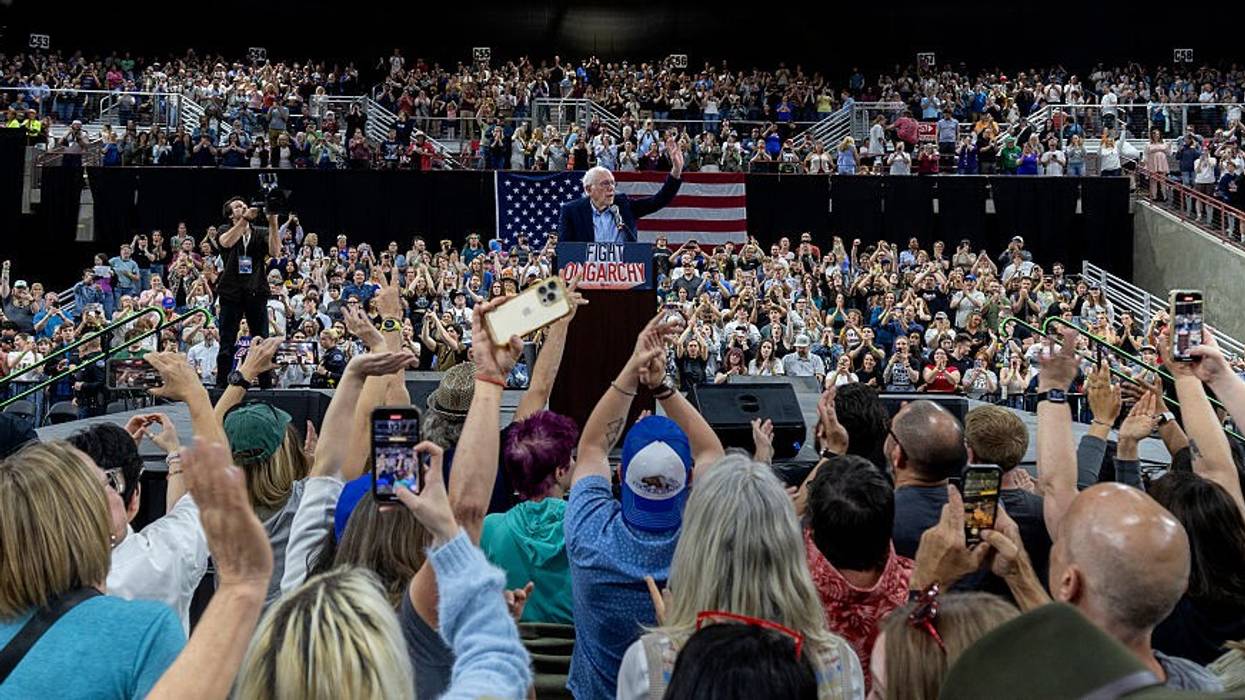
"It must be defeated," Sen. Bernie Sanders said of the Republican legislation.
U.S. Sen. Bernie Sanders is deploying organizers to key congressional districts across the country this week in an effort to mobilize opposition against the Republican Party's emerging reconciliation package, which includes massive, unpopular cuts to safety net programs and inequality-fueling tax giveaways to the richest Americans.
Late Monday, after Republicans unveiled critical sections of their budget measure, Sanders (I-Vt.) announced a week of action aimed at "pressuring vulnerable Republicans to vote against the bill."
Organizers hired by Sanders in recent months "will fan out across the country this week, targeting 15 Republican-held districts" in Iowa, Wisconsin, Michigan, Arizona, and other states, the senator said.
Each of the districts was a stop on Sanders' recent "Fighting Oligarchy" tour, which drew large, energetic crowds even in areas typically seen as Republican strongholds. According to the senator's team, roughly a third of the more than 265,000 rally attendees were not registered Democrats.
The week of action kicked off with an organizing call led by Sanders, according to an announcement, with canvassing, days of action, and rallies being organized in at least eight states.
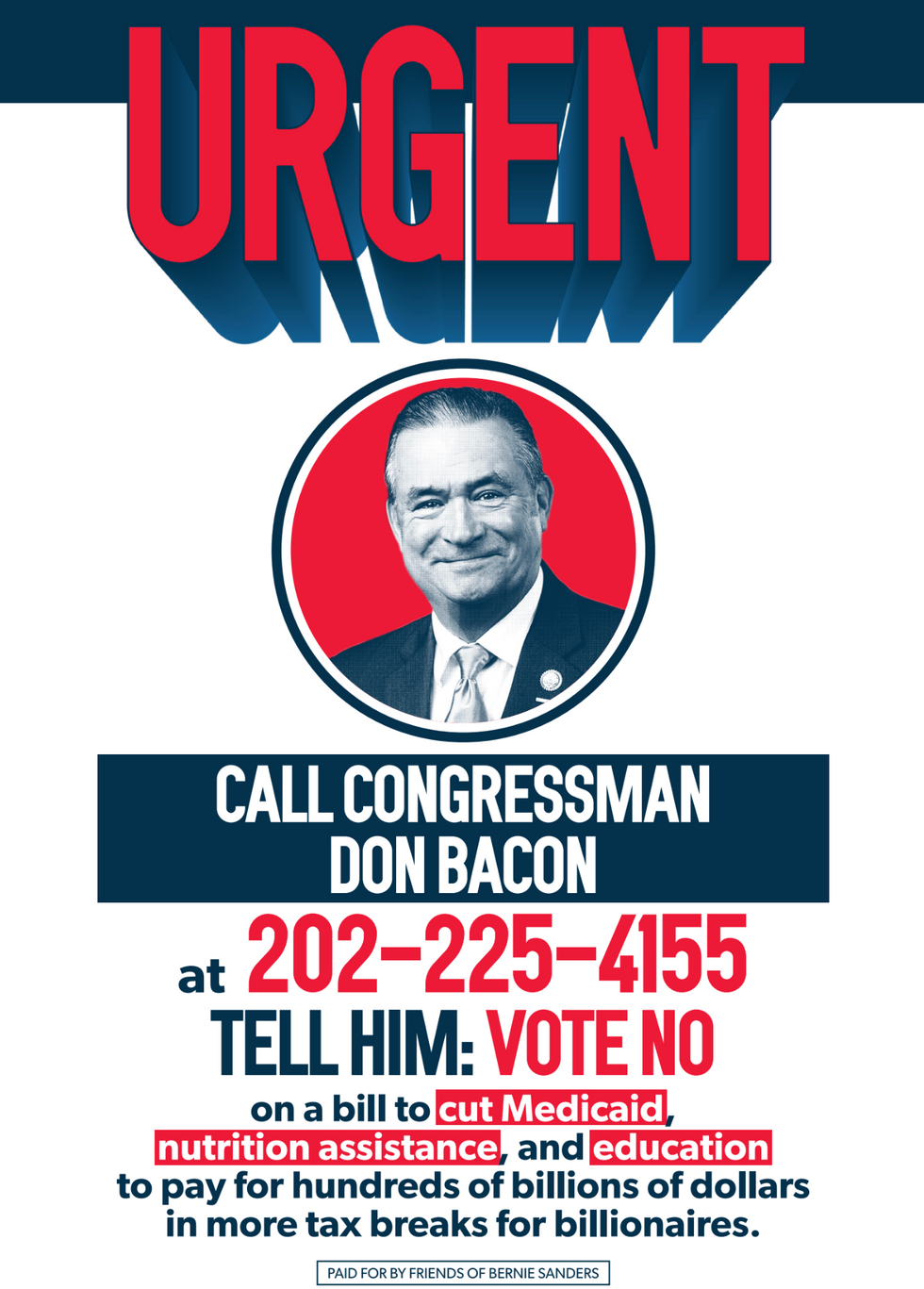
The senator's team provided a look at some of the material organizers plan to distribute during their actions. The literature urges constituents to call their representatives and urge them to vote no "on a bill to cut Medicaid, nutrition assistance, and education to pay for hundreds of billions of dollars in more tax breaks for billionaires."
One of the lawmakers targeted is Rep. Don Bacon (R-Neb.), who said last month that he would not accept more than $500 billion in Medicaid cuts over a 10-year period.
The Republican proposal includes more than $700 billion in cuts to Medicaid and would likely throw more than 8 million people off the program, according to the nonpartisan Congressional Budget Office.
Sanders said the following Republican lawmakers will also be targeted as part of the swing-district pressure campaign against the reconciliation package:
News of the actions came as Republicans on key committees prepared Tuesday for several markup hearings on their reconciliation proposals, which include around a trillion dollars in combined cuts to Medicaid and the Supplemental Nutrition Assistance Program (SNAP) as well as major tax breaks for the wealthy and large corporations.
The American Prospect's David Dayen reported last week that House Republicans deliberately scheduled the Energy and Commerce, Ways and Means, and Agriculture Committee markup hearings on the same day "to make it hard for the opposition to focus."
In a social media post on Monday, Sanders highlighted the GOP bill's proposed cuts to Medicaid and SNAP and declared, "It must be defeated."
Sanders is also working to harness the energy of his "Fighting Oligarchy" tour to recruit progressive candidates for office. Politico reported earlier this month that "the Vermont senator is teaming up with the liberal group Run for Something and other outside organizations to provide support to potential candidates."
"We want to make sure that we're not just going into these spaces and holding rallies and disappearing, and we’re not just asking people to run for office," Jeremy Slevin, a top Sanders adviser, told the outlet. "We're giving them the tools they need to actually do it."

"Donald Trump wants to spend tens of millions of taxpayer dollars to throw himself a big fancy parade with tanks in the streets," said one organizer. "This is straight out of the authoritarian playbook."
Pro-democracy campaigners late Monday announced a nationwide "No Kings" day of defiance on June 14—the same day U.S. President Donald Trump plans to hold a birthday military parade more befitting a dictator than an elected head of state.
More than 100 "No Kings" events have already been registered across the U.S., with many more expected in the weeks ahead of the day of action.
See the full list of planned events and locations here.
"Donald Trump wants to spend tens of millions of taxpayer dollars to throw himself a big fancy parade with tanks in the streets," explained Ezra Levin, co-executive director of Indivisible, on Monday's broadcast of The Rachel Maddow Show. "This is straight out of the authoritarian playbook. He wants to project strength. He wants everybody to think that he is all-powerful. That he rules the world."
"He doesn't," Levin added. "Real power is not in D.C. It's distributed all across the country. And what we're looking to do on No Kings Day is to say, look—Donald Trump does not own the flag. He does not own patriotism. In fact, we can all show up in opposition to a king in this country."
The event's website says the goal of the mass demonstrations is to show that "from city blocks to small towns, from courthouse steps to community parks, we're taking action to reject authoritarianism."
"In America, we don't do kings," the website states. "On June 14th, we're showing up everywhere he isn't—to say no thrones, no crowns, no kings."

News of the latest mass mobilization against Trump and his far-right agenda came days after the U.S. Army confirmed plans for a parade on June 14—the Army's 250th birthday and Trump's 79th.
"The Army anticipates featuring 150 vehicles, 50 aircraft, and 6,600 soldiers," The Washington Post reported, citing an Army spokesperson. "The parade will accompany a fireworks display and a day-long festival on the National Mall with military demonstrations, musical performances, and a fitness competition."
The price tag for such festivities could be massive, with two unnamed defense officials telling NBC News that it could be as high as $45 million. In an interview that aired over the weekend, Trump called the potential cost "peanuts compared to the value of doing it."
"We have the greatest missiles in the world," Trump declared. "We have the greatest submarines in the world. We have the greatest army tanks in the world. We have the greatest weapons in the world. And we're going to celebrate it."
U.S. Rep. Steve Cohen (D-Tenn.) said in a statement Monday that "this would be an unprecedented waste of money to please this self-absorbed con man, and the public should make clear it's unacceptable."
"The egotist-in-chief wants taxpayers to foot the bill for a military parade on his birthday," said Cohen, the lead sponsor of legislation that would "prohibit the use of federal funds for a military parade in the District of Columbia intended for the personal celebration of President Donald J. Trump, and for other purposes."
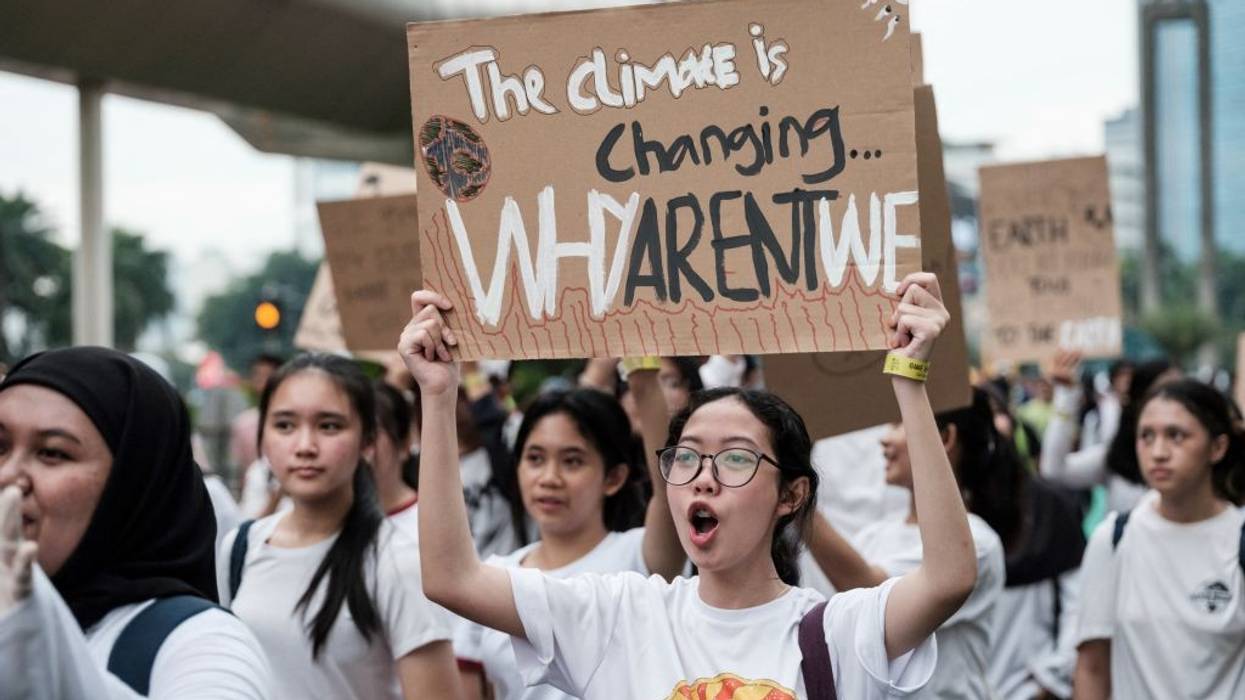
Last year was a disaster for the planet and its people. In 2025, we must all strive to do so much better.
Tomorrow — Tuesday, April 22nd — will mark the 55th anniversary of Earth Day. The power of those 20 million voices that came out on the streets on that first Earth Day decades ago led the U.S. to create the Environemental Protection Agency and the first generation of environmental laws addressing clean air, clean water, and the threat of toxics.
Fast forward to today. Under the “Our Power. Our Planet” banner, EARTHDAY.ORG, the global organizer of Earth Day, is calling on people from all walks of life to join in “Earth Action Day”—an effort to once again mobilize people power to tackle the current generation of environmental crises.
Last year was a disaster for the planet and its people. According to NASA, 2024 was the warmest year since temperatures began being recorded in 1880. In the U.S. alone, there were 27 climate and weather events resulting in at least a billion dollars of damage — second only to 2023 with 28 such events.
While a number of factors have contributed to the increase in these catastrophic events, research demonstrates that "human-caused climate change is increasing the frequency and intensity of certain types of extreme weather that lead to billion-dollar disasters—most notably the rise in vulnerability to drought, lengthening wildfire seasons in the Western states, and the potential for extremely heavy rainfall becoming more common in the eastern states.”
The news about plastic pollution is similarly dark. Earth Action reported that on last September 5 – Plastic Overshoot Day – the amount of plastic waste exceeded the capacity of waste systems to manage. An estimated 220 million tonnes of plastic waste were expected to be produced in 2024, with 66 percent of the population living in places where the amount of waste exceeds local capacity. While negotiation of a strong global treaty on plastics last year held forth the promise of handling some of these issues, negotiators failed to reach an agreement and the talks drag on while the industry continues to pollute year after year.
All of this is taking place in the face of increasing scientific news about the harmful impacts of plastics on humans and their health. World Wildlife Federation reported that humans could be ingesting up to 5 grams of plastic each week and a recent report found that high levels of plastics have been found in human brains. Additional research has shown that plastics are associated with everything from cancer to endocrine disruption, which can impair reproduction, growth, and cognitive abilities. Wildlife is also suffering, with plastic ingestion and entanglement contributing to starvation and strangulation, among other issues.
For years we have been told by the plastics industry that we can clean up and recycle our way out of this problem , but continued use of plastics however means continued use of fossil fuels and recycling has been demonstrated to be largely myth due to factors including quality degradation, contamination, and non-recyclable content.
What is the common thread of all these challenges facing our planet and the survival of its people ? The cause of all of these threats can be traced to one source: human greed and disregard.
But the encouraging and hopefully inspiring news is that the solutions to these problems also rest in the hands of the people. We have the collective power not only to protect our planet but also to improve lives and livelihoods.
The link between greenhouse gas emissions and climate change is now scientifically indisputable. According to the United Nations, fossil fuels make up 75% of greenhouse gas emissions and 90% of carbon dioxide emissions. The good news from the International Renewable Energy Agency is that 90% of global electricity can and should come from renewable sources by 2050.
Slowing the climate crisis is only one of many reasons to switch to renewables. Renewable energy prices are falling, and in most places of the world today, it is the least expensive option. Other benefits range from preventing unhealthy air associated with the burning of fossil fuels to creating up to 30 million jobs to supporting energy security.
Whether you choose to power your home or vehicle with renewable energy, support community solar, or call on government leaders for more research and investment, the options for taking action to accelerate the transition to renewables are many. Similarly, as consumers we can choose plastic-free products, demand a reduction in the use of plastics from businesses, while at the same time pressuring government leaders to reduce production globally, end the use of toxic ingredients, and improve waste management systems.
So this Earth Action Day exercise your power! We need to demonstrate to our leaders in government and business that we are still here, we are a witness to their actions, and we will hold them accountable to do right by our planet and its people.

"This week, the American people turned out in enormous numbers," said Sen. Bernie Sanders. "And their message was clear. They do not want oligarchy. They do not want authoritarianism."
Across the United States—from Nampa, Idaho to Salt Lake City, Utah to Los Angeles, California—nearly 255,000 people have turned out in recent weeks for "Fighting Oligarchy" rallies headlined by Sen. Bernie Sanders and Rep. Alexandria Ocasio-Cortez, a progressive duo that has railed against President Donald Trump and the corporate-dominated systems that spawned him while outlining a vision of a more just future.
Over the past six weeks, according to Sanders' (I-Vt.) office, 254,931 have attended 17 rallies across 11 states and millions have viewed livestreams of the events online. The most recent swing—which included seven stops across four states in less than a week—drew 146,950 people, including in competitive districts with Republican representatives.
"This week, the American people turned out in enormous numbers," Sanders said in a statement late Wednesday. "And their message was clear. They do not want oligarchy. They do not want authoritarianism. They are tired of massive income and wealth inequality and the greed of the billionaire class. They are tired of a corrupt political system that allows billionaires to buy elections. And, most importantly, they are prepared to fight back."
The massive, enthusiastic rallies signal mounting nationwide anger over the Trump administration's large-scale firings of federal workers, assault on fundamental rights, climate destruction, lawless detention and deportation of immigrants, and push to gut Medicaid and other key programs.
"This is not Trump's country. This is our country," Ocasio-Cortez (D-N.Y.) said Wednesday. "The working class is coming together to defend democracy, fight for one another, and build a better future for all of us."
AOC: On the way here, we got a very interesting piece of news: some of the Republicans whose districts we visited just warned their leadership that they’re not sure they can vote for Medicaid cuts now.
That’s you, Montana.
That’s you, Colorado.
That’s you, Arizona.
That’s you,… pic.twitter.com/qnkza5zGJU
— Acyn (@Acyn) April 16, 2025
The events also indicate a desire among Democratic voters for their leaders to respond more forcefully to the president and his billionaire cronies, including world's richest man Elon Musk. One recent survey found that 70% of Democratic voters give their party a C grade or below for their response to Trump thus far.
"We need to fight the oligarchy, like the message says. And that's real, even in a state like Montana, where we're very red," one rallygoer told the Montana Free Press at a Missoula event on Wednesday. In the 2024 election, Trump won Montana by just under 20 points and a Republican ousted three-term Democratic incumbent Jon Tester in the Senate.
Another sign of the U.S. public's readiness to organize and fight back against the Trump administration's abuses and far-right policy agenda was mass participation in a Wednesday call hosted by the Hands Off! coalition, which helped bring millions into the streets nationwide earlier this month.
According to organizers, tens of thousands of people joined the call, which comes ahead of another national day of action planned for May.
"What we have begun to build is powerful," Rahna Epting, executive director of MoveOn, said Wednesday. "As Trump continues to chaotically and carelessly implement his wildly unpopular agenda, he creates more distrust, more outrage, and more backlash against it."
During a stop in Salt Lake City on Sunday, Ocasio-Cortez told a crowd of 20,000 that "we can make a new world, a better country where we can fight for the dignity of all people."
"It looks like living wages, Utah," said the New York Democrat. "It looks like stable housing, Utah. It looks like guaranteed healthcare, Salt Lake City. And it looks like respect for all of our differences, no matter who we are or where we come from."

While big marches can raise public consciousness and help activists connect, by themselves they will not block Trump and Musk. For that, the movement will need more disruptive forms of pressure.
Donald Trump’s first term as president saw some of the largest mass protests seen in the U.S. in over 50 years, from the 2017 Women’s March to the 2020 protests after George Floyd’s murder.
Things feel different this time around. Critics seem quieter. Some point to fear of retribution. But there’s also a sense that the protests of Trump’s first term were ultimately futile. This has contributed to a widespread mood of despair.
As The New York Times noted not long ago, Trump “had not appeared to be swayed by protests, petitions, hashtag campaigns or other tools of mass dissent.” That’s a common perspective these days.
But what if it’s wrong?
As a historian, I study how our narratives about the past shape our actions in the present. In this case, it’s particularly important to get the history right.
In fact, popular resistance in Trump’s first term accomplished more than many observers realize; it’s just that most wins happened outside the spotlight. In my view, the most visible tactics – petitions, hashtags, occasional marches in Washington – had less impact than the quieter work of organizing in communities and workplaces.
Understanding when movements succeeded during Trump’s first term is important for identifying how activists can effectively oppose Trump policy in his second administration.
Mass deportation has been a cornerstone of Trump’s agenda for more than a decade. Yet despite his early pledge to create a “deportation force” that would expel millions, Trump deported only half as many people in his first term as Barack Obama did in his first term.
Progressive activists were a key reason. By combining decentralized organizing and nationwide resource-sharing, they successfully pushed scores of state and local governments to adopt sanctuary laws that limited cooperation with Immigration and Customs Enforcement, or ICE.
When the sociologist Adam Safer examined thousands of cities and dozens of states, he found that a specific type of sanctuary law that activists supported – barring local jails and prisons from active cooperation with ICE – successfully reduced ICE arrests. A study by legal scholar David K. Hausman confirmed this finding. Notably, Hausman also found that sanctuary policies had “no detectable effect on crime rates,” contrary to what many politicians allege.
Another important influence on state and local officials was employers’ resistance to mass deportation. The E-Verify system requiring employers to verify workers’ legal status went virtually unenforced, since businesses quietly objected to it. As this example suggests, popular resistance to Trump’s agenda was most effective when it exploited tensions between the administration and capitalists.
In his effort to prop up the fossil fuel industry, Trump in his first term withdrew from the Paris climate agreement, weakened or eliminated over 100 environmental protections and pushed other measures to obstruct the transition to green energy.
Researchers projected that these policies would kill tens of thousands of people in just the United States by 2028, primarily from exposure to air pollutants. Other studies estimated that the increased carbon pollution would contribute to tens of millions of deaths, and untold other suffering, by century’s end.
That’s not the whole story, though. Trump’s first-term energy agenda was partly thwarted by a combination of environmental activism and market forces.
His failure to resuscitate the U.S. coal industry was especially stark. Coal-fired plant capacity declined faster during Trump’s first term than during any four-year period in any country, ever. Some of the same coal barons who celebrated Trump’s victory in 2016 soon went bankrupt.
CBS News covered the bankruptcy of coal firm Murray Energy, founded by Trump supporter Robert E. Murray.The most obvious reasons for coal’s decline were the U.S. natural gas boom and the falling cost of renewable energy. But its decline was hastened by the hundreds of local organizations that protested coal projects, filed lawsuits against regulators and pushed financial institutions to disinvest from the sector. The presence of strong local movements may help explain the regional variation in coal’s fortunes.
Environmentalists also won some important battles against oil and gas pipelines, power plants and drilling projects. In a surprising number of cases, organizers defeated polluters through a combination of litigation, civil disobedience and other protests, and by pressuring banks, insurers and big investors.
In 2018, one pipeline CEO lamented the “rising tide of protests, litigation and vandalism” facing his industry, saying “the level of intensity has ramped up,” with “more opponents” who are “better organized.”
Green energy also expanded much faster than Trump and his allies would have liked, albeit not fast enough to avert ecological collapse. The U.S. wind energy sector grew more in Trump’s first term than under any other president, while solar capacity more than doubled. Research shows that this progress was due in part to the environmental movement’s organizing, particularly at the state and local levels.
As with immigration, Trump’s energy agenda divided both political and business elites. Some investors became reluctant to keep their money in the sector, and some even subsidized environmental activism. Judges and regulators didn’t always share Trump’s commitment to propping up fossil fuels. These tensions between the White House and business leaders created openings that climate activists could exploit.
Despite Trump self-promoting as a man of the people, his policies hurt workers in numerous ways – from his attack on workers’ rights to his regressive tax policies, which accelerated the upward redistribution of wealth.
Nonetheless, workers’ direct action on the job won meaningful victories. For example, educators across the country organized dozens of major strikes for better pay, more school funding and even against ICE. Workers in hotels, supermarkets and other private-sector industries also walked out. Ultimately, more U.S. workers went on strike in 2018 than in any year since 1986.
This happened not just in progressive strongholds but also in conservative states like West Virginia, Oklahoma and Kentucky. At least 35 of the educators’ strikes defied state laws denying workers the right to strike.
In addition to winning gains for workers, the strike wave apparently also worked against Republicans at election time by increasing political awareness and voter mobilization. The indirect impact on elections is a common side effect of labor militancy and mass protest.
Quiet acts of worker defiance also constrained Trump. The early months of the COVID-19 pandemic featured widespread resistance to policies that raised the risk of infection, particularly the lack of mask mandates.
Safety-conscious workers frequently disobeyed their employers, in ways seldom reflected in official strike data. Many customers steered clear of businesses where people were unmasked. These disruptions, and fears they might escalate, led businesses to lobby government for mask mandates.
This resistance surely saved many lives. With more coordination, it might have forced a decisive reorientation in how government and business responded to the virus.
Labor momentum could continue into Trump’s second term. Low unemployment, strong union finances and widespread support for unions offer opportunities for the labor movement.
Progressive movements have no direct influence over Republicans in Washington. However, they have more potential influence over businesses, lower courts, regulators and state and local politicians.
Of these targets, business ultimately has the most power. Business will usually be able to constrain the administration if its profits are threatened. Trump and Elon Musk may be able to dismantle much of the federal government and ignore court orders, but it’s much harder for them to ignore major economic disruption.
While big marches can raise public consciousness and help activists connect, by themselves they will not block Trump and Musk. For that, the movement will need more disruptive forms of pressure. Building the capacity for that disruption will require sustained organizing in workplaces and communities.