

SUBSCRIBE TO OUR FREE NEWSLETTER
Daily news & progressive opinion—funded by the people, not the corporations—delivered straight to your inbox.
5
#000000
#FFFFFF
To donate by check, phone, or other method, see our More Ways to Give page.
Daily news & progressive opinion—funded by the people, not the corporations—delivered straight to your inbox.
"Tax flight is nothing more than a myth, and should be given as much credence as flat-earthers.”
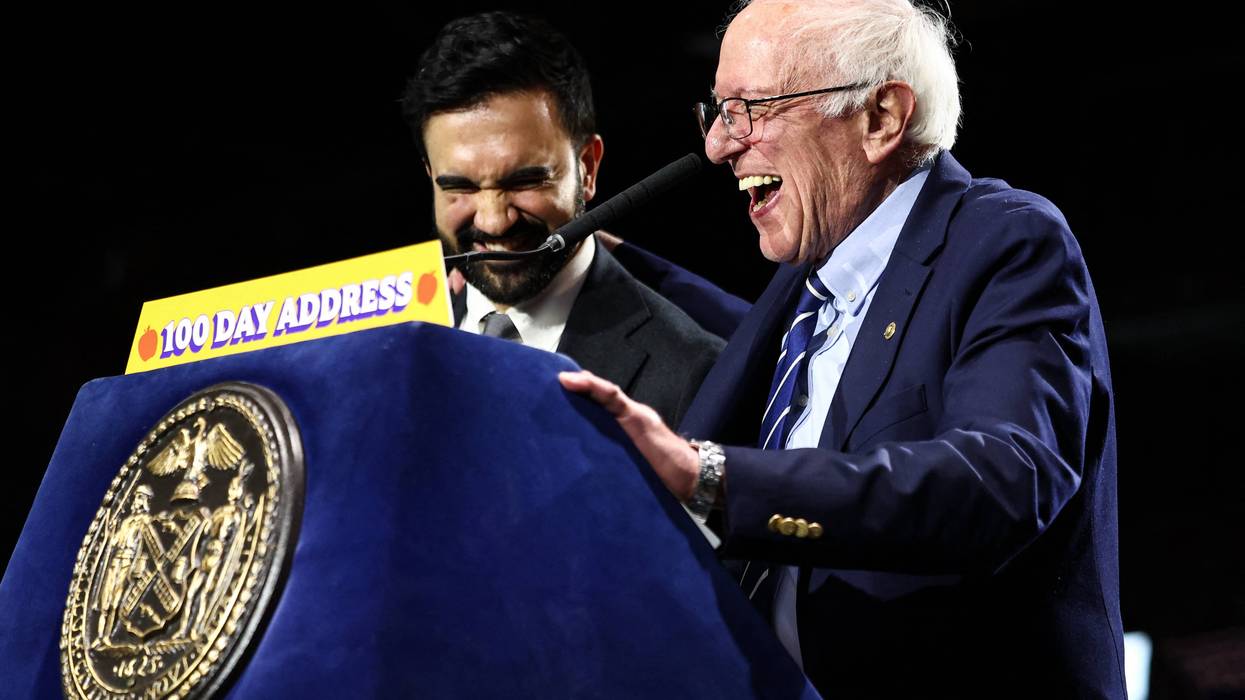
The threats came in a steady stream last year from Fox News, hedge fund manager Bill Ackman, and Gristedes grocery chain CEO John Catsimatidis, who insisted that wealthy New York City residents were "panicking" at the possibility that then-state Rep. Zohran Mamdani, a democratic socialist, could become the mayor and ensure rich locals pay more in taxes to help fund crucial services.
"It only takes a handful of successful people to leave to decimate the city’s tax base," cautioned Ackman, while Catsimatidis suggested many rich New Yorkers would likely join him in fleeing to "the promised land": Florida, which has no state income tax.
But the progressive think tank Groundwork Collaborative said Thursday that new Internal Revenue Service (IRS) data should be "the final nail in the coffin" of the evidence-free, perennial claim that higher taxes cause wealthy residents to leave their cities and states.
The agency released its 2023 Statistics of Income (SOI) data, covering the period before Mamdani became mayor and introduced a tax on second homes, ranging from 0.8% to 1.3% for properties valued at $5 million or more, which he estimated will raise $500 million annually.
The data shows how the tax base was impacted after the state imposed a separate tax policy in 2022, raising its top tax rate on the highest earners.
Poking a giant hole in the persistent theory that wealthy people won't want to live in states that require more from them in taxes, the number of New Yorkers reporting more than $1 million in income grew by about 3% after the tax rate was raised, the SOI data shows.
"If there was any merit to the myth that tax increases on New York’s wealthy drive them away, the new IRS data should show it. It doesn’t."
The number of millionaires nationwide went down in 2023, but New York counted 2,000 more than it had the previous year. The number of tax filers earning between $500,000 and $1 million also grew by over 8,500—more than 7%.
The average adjusted gross income of New Yorkers who left the state from 2022-23 fell 15%, from over $125,000 to $106,900.
"If the past is prologue, the SOI data suggest few, if any, of the city’s wealthiest residents will leave as a result of a modest tax. Instead they are likely to remain rooted in the social, business, and economic networks that make New York uniquely valuable to them," said Groundwork Collaborative. "The New Yorkers actually at risk of leaving the city are the lower-income workers who power the economy."
Lindsay Owens, president and CEO of Groundwork Collaborative, said the new data makes clear that "tax flight is nothing more than a myth, and should be given as much credence as flat-earthers.”
"If there was any merit to the myth that tax increases on New York’s wealthy drive them away, the new IRS data should show it," said Owens. "It doesn’t—New York’s millionaire population kept climbing years after the state raised taxes on top earners."
Wealthy New Yorkers, said Groundwork, are shown by the data to be "a settled population that may squawk about a tax increase, but not pack up and leave."
"We fully expect Republicans to once again sacrifice everything and everyone at the altar of tax cuts for their ultra-wealthy benefactors at the expense of working people," said one progressive campaigner.
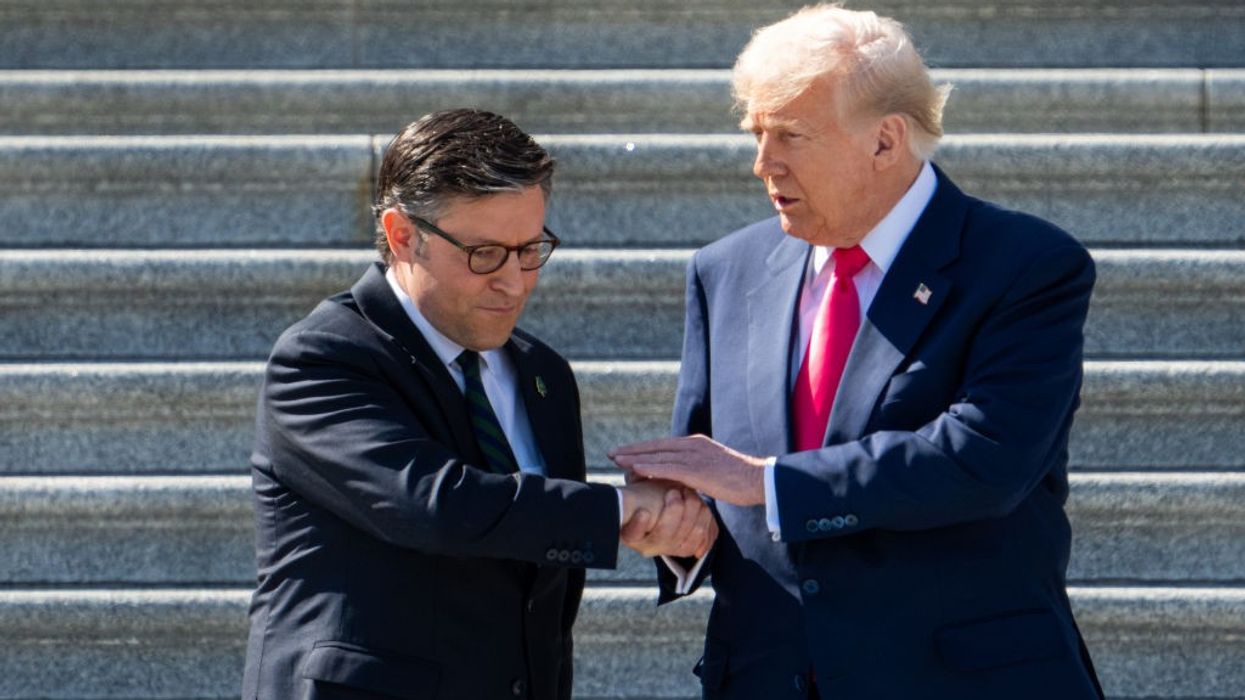
U.S. President Donald Trump indicated in an interview published Friday that he's unlikely to push congressional Republicans to include a tax hike on millionaires in their sprawling reconciliation bill, saying he doesn't "want it to be used against me politically."
Trump's comments to TIME magazine came a day after he told reporters in the Oval Office that raising the statutory income tax rate on people who earn more than $1 million a year would be "very disruptive, because a lot of the millionaires would leave the country." (The notion of millionaire tax flight, often cited by Republicans as a reason not to raise taxes on the rich, has been repeatedly debunked.)
In recent weeks, pro-Trump figures such as former White House chief strategist Steve Bannon and a small number of Republicans in Congress have floated the idea of slightly raising income taxes for millionaires, suggesting the move would help counter progressive attacks on Trump and his billionaire-stocked Cabinet as a manifestation of the United States' descent into oligarchy.
"This guts the AOC-Bernie 'oligarchy tour,'" Bannon told The Washington Post earlier this week. "Politically, it's game, set, match—it's a no-brainer. This would destroy the Democrats."
But Trump told TIME that he's concerned about political backlash stemming from any tax increase on millionaires, even as he acknowledged it "doesn't make that much of a difference" to the rich.
"I would be honored to pay more," said Trump, whose organization was convicted in 2022 of a long-running tax fraud scheme. "But I don't want to be in a position where we lose an election because I was generous."
House Speaker Mike Johnson (R-La.) told Fox News earlier this week that he "would not expect" a millionaire tax hike to wind up in the GOP reconciliation package, which is expected to extend the 2017 Trump-GOP tax breaks and enact an additional $1.5 trillion in tax cuts—paid for in part by slashing Medicaid, federal nutrition assistance, and other programs.
"We have been working against that idea," Johnson added. "I'm not in favor of raising the tax rates because our party is the group that stands against that traditionally."
"The real thing that's going on here is that Republicans are feeling the pressure of our messaging. They're cutting basic service programs like Medicaid and SNAP to give tax cuts to billionaires."
Proposals floated by Republican lawmakers and discussed in Trump's inner circle in recent days include allowing the top marginal tax rate to revert to 39.6%—the level prior to enactment of the 2017 tax cuts—next year and establishing a new top marginal rate of 40%, which would do nothing to tax mega-billionaires like Elon Musk, whose wealth is mostly stock that's only taxed when sold.
The millionaire tax hike proposals have drawn vocal opposition from big business, with the U.S. Chamber of Commerce—the nation's largest corporate lobbying group—joining a recent letter rejecting any proposed tax increase on millionaires.
David Kass, executive director of Americans for Tax Fairness, told Common Dreams in an interview Friday that "even if they did put something like this in" the final reconciliation package, "it's really important to remember that the bill would still be overwhelmingly skewed to the rich."
"The real thing that's going on here is that Republicans are feeling the pressure of our messaging," said Kass. "They're cutting basic service programs like Medicaid and SNAP to give tax cuts to billionaires."
Morris Pearl, chair of the Patriotic Millionaires, told Common Dreams in an emailed statement that "while we are supportive of efforts to raise the income tax rate on millionaires, if past behavior is the best predictor of future behavior, we'll believe Republicans are serious about protecting working people from an unfair tax burden when we see it."
"As they prepare their bill for an early summer passage," said Pearl, "we fully expect Republicans to once again sacrifice everything and everyone at the altar of tax cuts for their ultra-wealthy benefactors at the expense of working people."
"This is what happens when you fund the IRS," said one tax fairness group. "Anyone trying to cut IRS funding just wants to protect rich tax cheats."
As the U.S. Internal Revenue Service announced Thursday that it had recovered $1 billion in unpaid taxes from wealthy individuals, economic justice advocates said the news served as a reminder of a top priority for the Republican Party: ensuring that tax evasion can continue among the richest Americans.
The IRS was able to recover the tax payments "thanks to historic funding from Democrats," said Rep. Bill Pascrell (D-N.J.). "Every single Republican in Congress voted against it and Republicans are hellbent on helping millionaires [to] keep stealing from you."
The Biden administration and Democrats in Congress pushed for the inclusion of $80 billion for the IRS in the Inflation Reduction Act (IRA) in 2022, with the money earmarked to allow the agency to hire more tax evasion enforcement staff and hold wealthy people and corporations accountable for tax avoidance.
When former House Speaker Kevin McCarthy (R-Calif.) took the gavel last year, he said a proposal to repeal the funding would be the "very first bill" introduced by the party, claiming the Democrats aimed to force working Americans to pay more in taxes.
The GOP managed to repeal $20 billion of the funding as part of a deal to suspend the debt ceiling in May 2023.
"Our message for these taxpayers is that now that we are resourced, we can do the job of ensuring that they pay."
Stopping the IRS from cracking down on wealthy tax cheats, said Bobby Kogan, senior director of federal budget policy for the Center for American Progress, "is THE biggest GOP priority."
Under former Republican President Donald Trump's administration, an analysis by Americans for Tax Fairness (ATF) showed last year, the IRS audited low-income Americans at a higher rate than millionaires for the first time.
The IRS said the new funding allowed it to track down and contact 1,600 taxpayers with more than $1 million of income who owed more than $250,000 in tax debt.
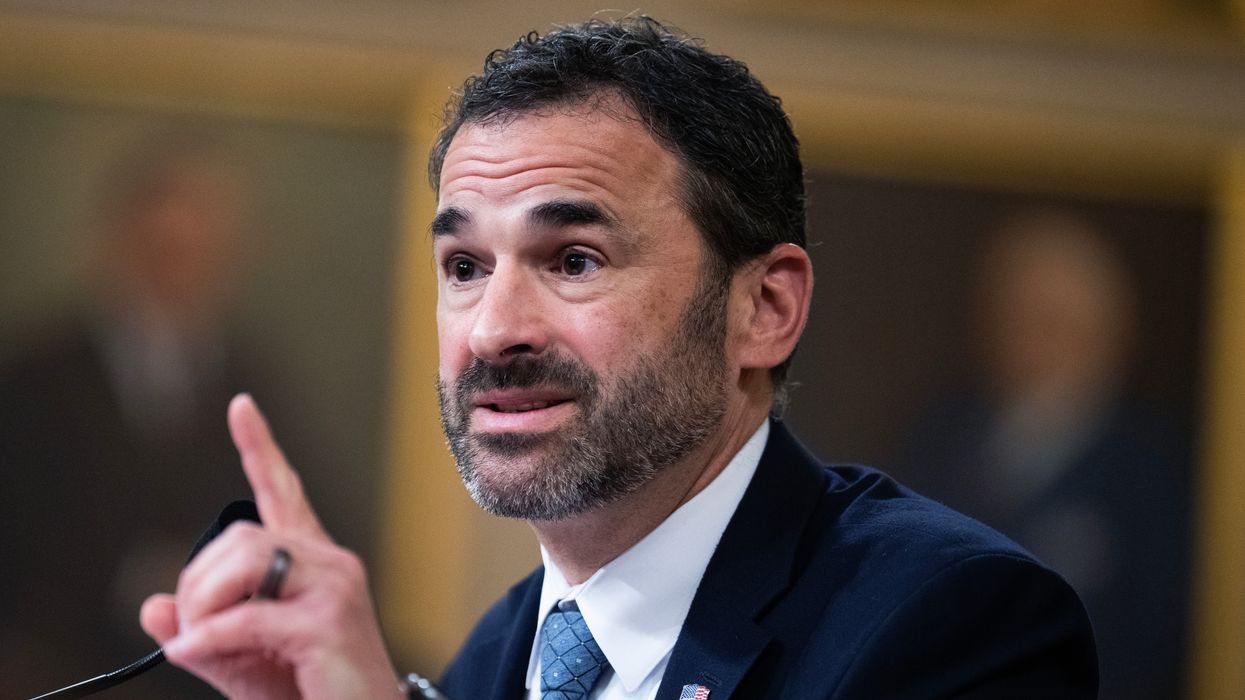
"Our message for these taxpayers is that now that we are resourced, we can do the job of ensuring that they pay," said IRS Commissioner Daniel Werfel.
Last month the IRS proposed a rule to stop "partnership basis shifting," which allows a business or individual to move assets to avoid paying taxes. The rule could recover more than $50 billion in revenue over a decade, according to the Treasury Department.
The results announced Thursday come from the agency's spending of $5.7 billion—about 10%—of its IRA funding.
"This is what happens when you fund the IRS," said ATF. "Anyone trying to cut IRS funding just wants to protect rich tax cheats."
With both millionaires and homelessness on the rise in the U.S., right-wing donors are bankrolling a nationally coordinated move to end experiments in basic income.
America, a new report details, is minting millionaires at a record pace. Some 37% of the world’s millionaires, analysts at the wealth advisory firm Henley & Partners calculate, now call the United States home.
And these analysts are talking real millionaires, not those Americans who rate as “millionaires” only because they’re living in homes that have wildly appreciated in value since their purchase decades ago. Those appreciations have left typical 50-something American homeowners, the latest Federal Reserve stats show, with personal net worths a bit over $1 million.
The researchers from Henley and their partners at New World Wealth don’t count these house-rich homeowners as millionaires. They only rate as millionaires those households with over $1 million in investible assets—and the United States, their research finds, hosts far, far more of these honest-to-goodness millionaires than any other nation on Earth.
In February, lawmakers in Arizona, home to the nation’s fourth-highest homeless rate, passed a bill that bans “any program where persons are provided with regular, periodic cash payments” they can use “for any purpose.”
The numbers: Over 5.5 million Americans now hold liquid assets worth over $1 million. That total has soared 62% over the past decade, “well above,” observes CNBC analyst Robert Frank, the overall global real-millionaire increase of a mere 38%.
Rich people-friendly observers of America’s economic scene, naturally enough, see stats like these as cause for nothing but celebration. The wealthier our wealthiest become, they postulate, the more jobs—and wealth—these rich create for everyone else. A rising tide, as they like to quip, lifts all boats.
But we are, in fact, seeing no significant rising of any sort for America’s working families. We are witnessing instead stunning increases in what America’s rich are spending on themselves. One revealing recent stat: Our U.S. well-to-do, researchers at Art Basel and the banking giant UBS report, now account for 42% of global fine art sales, well above China’s 19% second-place share.
Another reflection of America’s luxury-spending dominance: The world’s top premium luxury brands—think glamorous retailers like Cartier, Bergdorf Goodman, and Gucci—all have flagship stores in Manhattan. Just this past December, the luxury powerhouse Prada announced plans to spend $835 million buying up the building that hosts its current Fifth Avenue flagship and the building next door.
For America’s poorest, meanwhile, “luxury” has come to mean keeping a roof over your head.
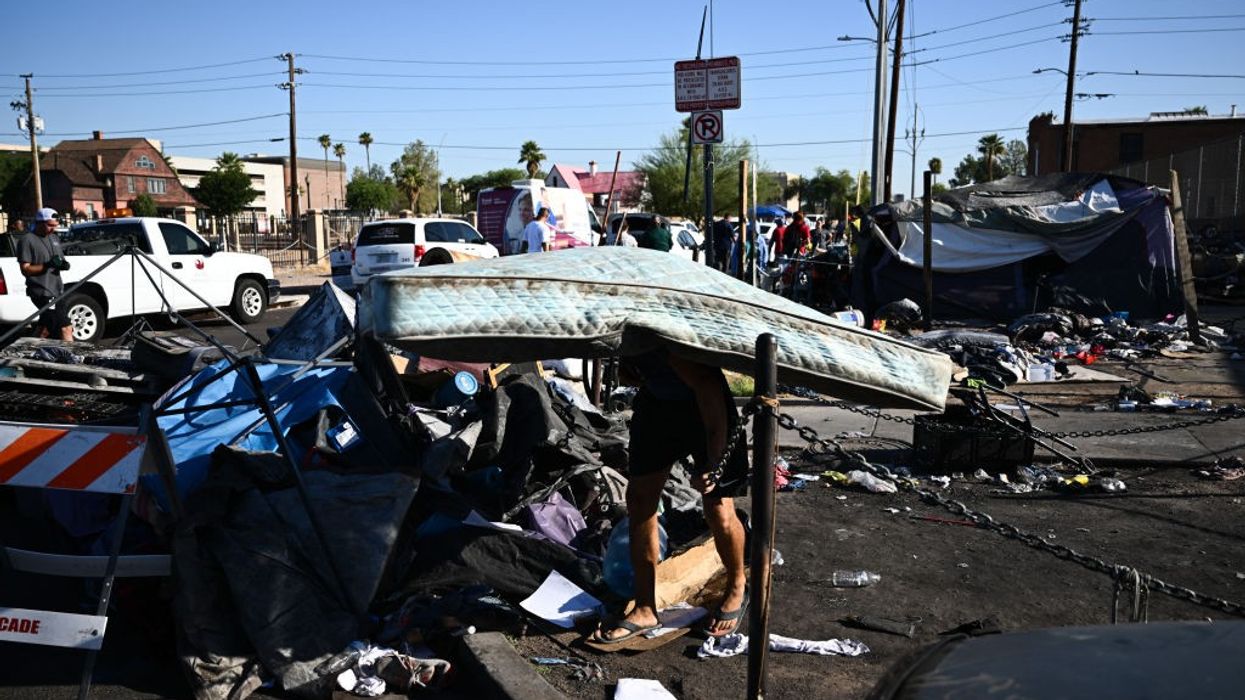
The number of Americans chronically homeless, the U.S. Department of Housing and Urban Development reported out this past December, has been climbing since 2016—in what Jeff Olivet, the director of the U.S. Interagency Council on Homelessness, likens to a “game of really vicious musical chairs.” The United States, he explains, has “an incredible deficit of affordable housing units,” with only one unit available for every three extremely low-income renters.
And “if someone has a medical condition, a mental health disability, a substance use disorder,” Olivet adds, “it makes it all that much more complex for someone to exit homelessness.”
The solution to this growing housing squeeze? America’s most conservative lawmakers have one. Let’s simply do our best, these lawmakers are proposing, to keep our nation’s homeless out of sight.
In Florida, that approach has actually become law. Governor Ron DeSantis, fresh off his go-nowhere campaign for the GOP presidential nomination, has just signed into law legislation that makes it illegal for local municipalities to let homeless people camp or sleep on public property after this October 1.
“Florida,” DeSantis declared upon the bill’s signing, “will not allow homeless encampments to intrude on its citizens or undermine their quality of life like we see in states like New York and California.”
The new Florida law requires local governments without enough bed capacity for unhoused families to set up homeless camps far from parks and other public facilities—and the act also penalizes localities that wink at rough sleeping outside these new hidden-away camps.
Diana Stanley, a top exec in Palm Beach charity circles, considers Florida’s new approach “a statement that we’ve stopped caring about our brothers and sisters.” The main message Stanley takes from the state’s new homelessness legislation: “If we can’t see them, then we don’t have to help them.”
Florida’s latest homeless legislation, Stanley stresses, “does absolutely nothing to address the root cause of homelessness, the lack of affordable housing.” The state’s focus, agrees University of Central Florida sociologist Amy Donley, ought to be on “helping people into housing, not encampments.”
Measures that would help do just that, meanwhile, have come under intense fire from right-wing lawmakers in other states. Those lawmakers are particularly aiming that fire at state and local experiments in providing low-income families with guaranteed, no-strings basic incomes.
In Iowa, one GOP state legislator is calling such basic-income efforts “socialism on steroids.” The sponsor of another move to ban basic incomes, South Dakota’s John Wiik, is charging that basic-income plans amount to “a one-way ticket to government dependency.” In February, lawmakers in Arizona, home to the nation’s fourth-highest homeless rate, passed a bill that bans “any program where persons are provided with regular, periodic cash payments” they can use “for any purpose.”
As of the end of February, lawmakers in some four other states had introduced bills with similar bans.
Who’s driving this nationally coordinated move to end experiments in basic income? Some of America’s most secretive wealthy, charges a recent analysis by Scott Santens, the founder and president of the Income To Support All Foundation.
These wealthy, Santens notes, have been bankrolling an outfit that calls itself the Foundation for Government Accountability, “a lobbying group with a billionaire-fueled junk science record every American should know about.”
Among the Foundation’s prime funders: the hard-right billionaires Richard and Liz Uihlein, the nation’s fourth-largest contributors to political campaigns. The Uihleins have pumped almost $18 million into the machinations of the Foundation for Government Accountability. Almost that much has come from the Donors Trust network, a powerhouse that has become what Mother Jones calls “the dark-money ATM of the right.”
Other major Foundation for Government Accountability funders include assorted deep-pocket entities with a history, notes Climate Investigations Center director Kert Davies, of “hating regulation and trying to stop any progress on things like climate change because they see it as almost a step toward communism.”
The billionaires underwriting all these entities, Income To Support All Foundation.’s Scott Santens believes, share a common fundamental outlook. They fear “a world where things are a bit less unequal,” a world without so many average people “having no power to say anything but yes.”
May those rich see emerge that new world they so fear. Soon.
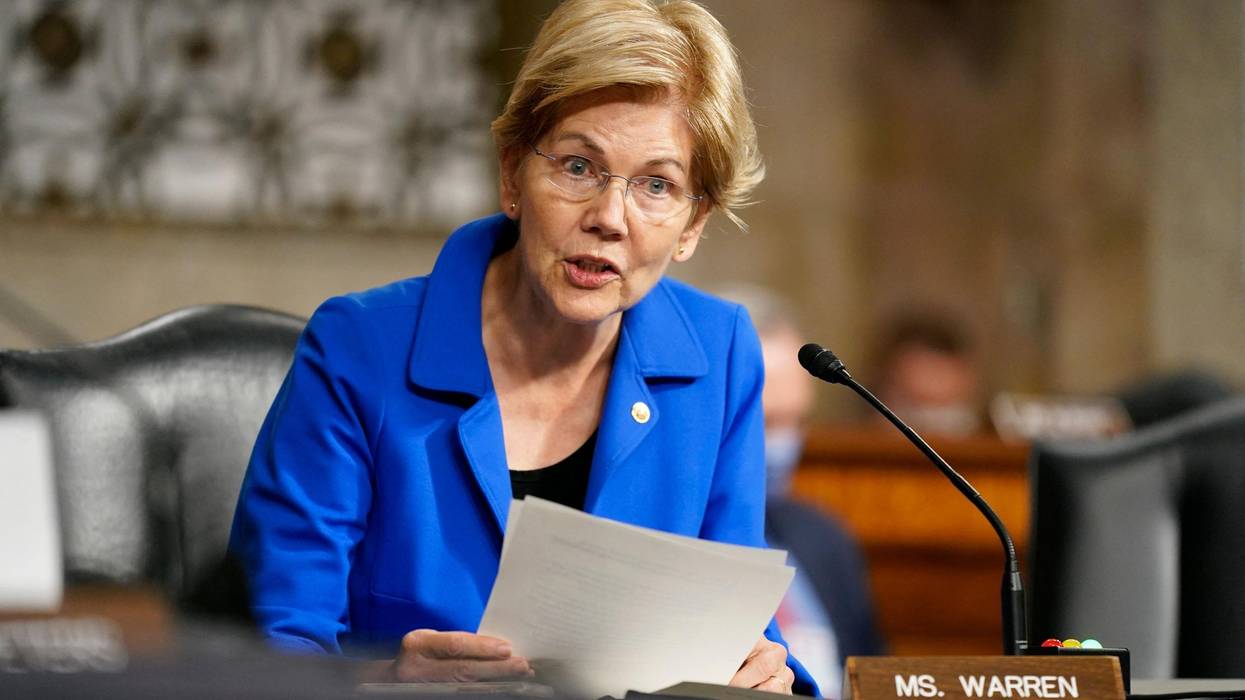
"The Ultra-Millionaire Tax is a critically needed policy that would ensure that the super-rich who have benefited from a rigged system will begin to pay their fair share in taxes," said one advocate.
Weeks after U.S. President Joe Biden won applause from progressives for using his State of the Union address to go on the offense against the Republican Party's tax breaks for the wealthiest Americans, Democrats in Congress introduced legislation aimed at raising revenue by ensuring multimillionaires and billionaires pay their fair share.
Sen. Elizabeth Warren (D-Mass.) was originally joined by Reps. Pramila Jayapal (D-Wash.) and Brendan Boyle (D-Pa.) in 2021 to introduce the Ultra-Millionaire Tax Act, and the three lawmakers on Monday announced measures to strengthen the proposal.
The new legislation includes stronger anti-tax evasion rules regarding trusts, where "ultrawealthy" families frequently stash money to avoid paying taxes—costing the federal government $5 billion to $7 billion per year.
"As President Biden says: No one thinks it's fair that Jeff Bezos gets enough tax loopholes that he pays at a lower rate than a public school teacher," said Warren. "All my bill is asking is that when you make it big, bigger than $50 million dollars, then on that next dollar, you pitch in two cents, so everyone else can have a chance."
The lawmakers said the Ultra-Millionaire Tax Act would bring in at least $3 trillion over 10 years by requiring a 2 cent tax for every dollar of wealth over $50 million—affecting just the top 0.05% of households in the United States.
The bill includes a 3% tax on the wealthiest households overall, with a 1% annual surtax on the net worth of households and trusts over $1 billion.
Susan Harley, managing director of Public Citizen's Congress Watch division, said the three Democrats have zeroed in on "the only way to truly tackle the injustice of income inequality in this country... to address wealth hoarding."
"The Ultra-Millionaire Tax is a critically needed policy that would ensure that the super-rich who have benefited from a rigged system will begin to pay their fair share in taxes," said Harley.
Emmanuel Saez and Gabriel Zucman, economists at the University of California, Berkeley, have found that the richest 0.1% of Americans saw their share of the country's wealth triple from 7% to 20% from the late 1970s and 2019, while the bottom 90% saw their share "plummet from about 35% to 25%."
"For too long, the ultrawealthy in America have been able to dodge taxes on a large scale," said Saez and Zucman in response to the updated proposal. "As a result they often pay much less, relative to their ability to pay, than the rest of the population. The ultra-millionaire tax would address this fundamental unfairness, and raise critical revenues for much needed investments that would make the country—and us all—richer."
Boyle noted that he witnessed firsthand the loss of economic power among working Americans as the rich got richer in recent decades.
"As the son of a union household, I witnessed every day how incredibly hard my parents worked to build a middle-class life for our family. It is simply wrong that millions of hardworking families pay a higher tax rate than billionaires," said Boyle. "This legislation will fight back against Republicans' decadeslong scheme to rig our tax code against middle-class families and in favor of multimillionaires and billionaires."
The lawmakers introduced the proposal as economic justice advocates have recently cataloged price gouging and "shrinkflation" that's aimed at boosting shareholders' and CEOs' pay while working people struggle to afford necessities like diapers and groceries.
"The system is not working when the richest 1% of Americans own more than 30% of our nation's wealth but pay just 3.2% of their wealth in taxes while others pay twice as much," said Jayapal. "Our country's tax system needs urgent reform, and the Ultra-Millionaire Tax Act is a major step toward making sure the wealthy finally pay their fair share. With this legislation, we can narrow the racial wealth gap and invest trillions of dollars in schools, clean energy, housing, healthcare, and more to improve lives in communities across America."

"Ninety-four percent of Americans contribute to Social Security all year long, but the wealthy stop paying after their first $168,600 in wage income."
Most Americans contribute to Social Security year-round, but U.S. millionaires will stop paying into the critical program on March 2—just over two months into 2024.
That's because Social Security's payroll tax doesn't apply to earned income above a certain level. For 2024, the cut-off is $168,600, and capital gains—such as stock appreciation—are not subject to the payroll levy at all. Elon Musk, the CEO of Tesla and the world's richest man, pays nothing into Social Security because he doesn't take a salary.
Emma Curchin, domestic outreach and research assistant at the Center for Economic and Policy Research (CEPR), noted Thursday that with the $168,600 payroll tax cap in place, a millionaire's effective Social Security tax rate "is less than 1%."
"This is compared to the 6.2% that any worker making less than $168,600 pays," Curchin wrote. "The burden of paying for Social Security rests on working class people in this country."
CEPR on Thursday released a calculator that allows users to see when people with certain annual incomes stop contributing to Social Security, which keeps more people out of poverty in the U.S. than any other program.
The calculator shows that a CEO with a $20 million annual salary stopped paying into Social Security just three days into 2024—and contributed just as much to the program for the year as someone who makes $168,600.
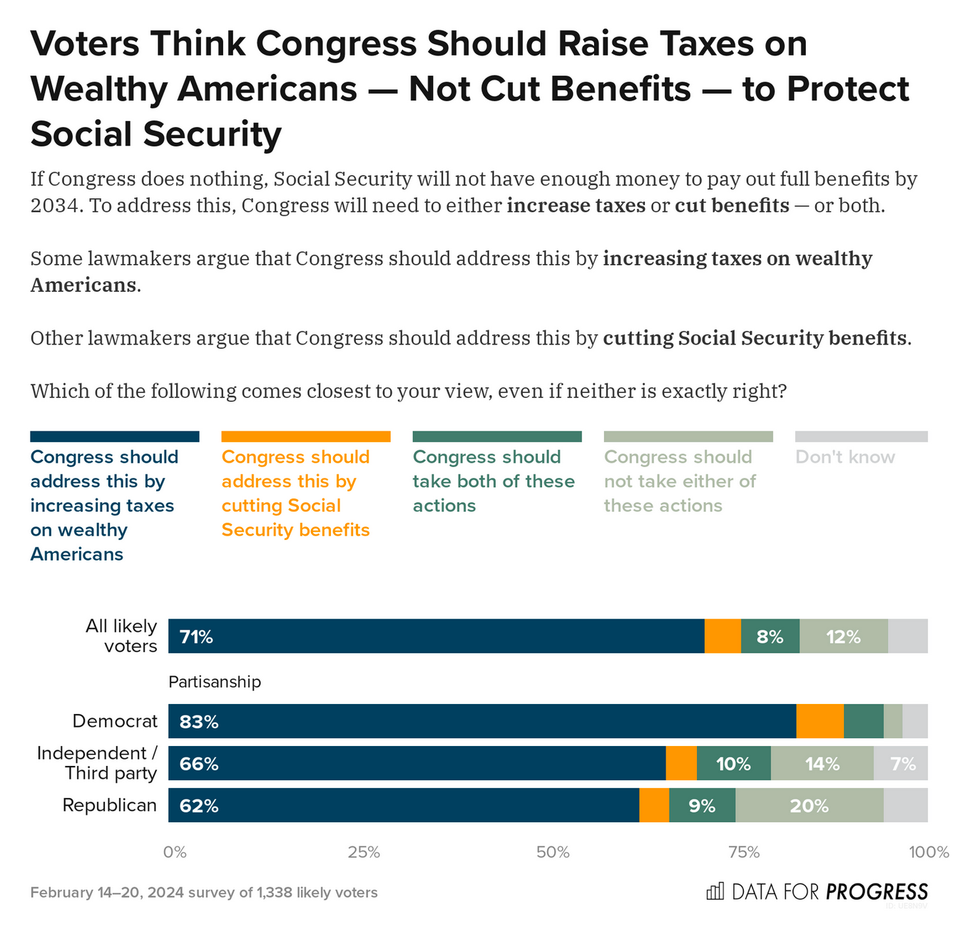
The tool was released as a new survey by Data for Progress showed that 71% of likely U.S. voters want Congress to guarantee Social Security's solvency "by increasing taxes on wealthy Americans" rather than by cutting benefits.
Progressive lawmakers have long supported lifting the Social Security payroll tax cap to force rich Americans to contribute more to the program.
Rep. John Larson's (D-Conn.) Social Security 2100 Act, for example, would expand the program's benefits by applying the payroll tax to annual earnings above $400,000.
"Ninety-four percent of Americans contribute to Social Security all year long, but the wealthy stop paying after their first $168,600 in wage income, and they don't pay in at all on their unearned investment income," Larson and Social Security Works president Nancy Altman wrote in an op-ed for Data for Progress on Thursday.
"The best part about the Social Security 2100 Act? There's no need for a closed-door commission to pass it into law, because it's what the American people want to do," they added.

"Even millionaires and billionaires like me are saying it's time," said Abigail Disney. "The elites gathering in Davos must take this crisis seriously."
Survey results released Tuesday as corporate CEOs, top government officials, and other global elites gathered in Davos, Switzerland show that nearly three-quarters of millionaires in G20 countries support higher taxes on extreme wealth, which they view as an increasingly dire threat to democracy.
The poll was conducted by the London-based firm Survation on behalf of the Patriotic Millionaires, an advocacy group that campaigns for a more progressive tax system. The survey, which polled over 2,300 millionaires in G20 nations, found that 74% "support higher taxes on wealth to help address the cost-of-living crisis and improve public services."
More than 70% of the respondents said they believe wealth "helps buy political influence" and a majority see extreme concentrations of wealth at the very top as corrosive to democracy. According to an Oxfam analysis released earlier this week, the world's billionaires have gotten $3.3 trillion richer since 2020 as 5 billion people across the globe have lost ground, struggling to get by as wages fail to keep up with inflation.
"We, the very richest, are sick and tired of inaction, so it's hardly surprising that working people, at the sharp end of our rigged economies, have lost all patience," said Guy Singh-Watson, a British entrepreneur and member of Patriotic Millionaires U.K.
The poll was released as 260 millionaires and billionaires signed a letter imploring the dozens of world leaders at the World Economic Forum in Davos to raise taxes on rich people like them, warning that a continued failure to "address the dramatic rise of income inequality" would be "catastrophic for society."
"Every moment of delay entrenches the dangerous economic status quo, threatens our democratic norms, and passes the buck to our children and grandchildren. Not only do we want to be taxed more but we believe we must be taxed more," the letter reads. "The true measure of a society can be found, not just in how it treats its most vulnerable, but in what it asks of its wealthiest members. Our future is one of tax pride, or economic shame. That's the choice."
"There is a clear social, economic, ecological, intergenerational, and democratic need to address extreme economic inequality."
Abigail Disney, an American documentary filmmaker and letter signatory, said in a statement that "throughout history, pitchforks were the inevitable consequence of extreme discontent, but today, the masses are turning to populism, which is on the rise throughout the world."
"We already know the solution to protect our institutions and stabilize our country: it's taxing extreme wealth," said Disney. "What we lack is the political fortitude to do it. Even millionaires and billionaires like me are saying it's time. The elites gathering in Davos must take this crisis seriously."
A report published Tuesday by the Patriotic Millionaires and allied organizations argues that "the extreme economic conditions of our age are at the heart of the world's overlapping and compounding crises," pointing to the outsized carbon footprints of the ultrawealthy and the ongoing acceleration of inequality.
The report notes that top income tax rates have fallen globally in recent decades, dropping from 58% in 1980 to 42% in recent years across Organization for Economic Cooperation and Development (OECD) countries.
"There is a clear social, economic, ecological, intergenerational, and democratic need to address extreme economic inequality," the report says. "And yet political leaders have failed to take action on the simplest of solutions: raising taxes on the ultra-rich. This is a political choice."
"Taxing the rich, it's good," said one progressive advocate in the state.
A new "millionaire's tax" in Massachusetts was expected to generate $1 billion in revenue last year to help pay for public education, infrastructure, and early childcare programs, but projections were a bit off, according to a fresh state analysis.
The state Department of Revenue estimated late last week that the Fair Share Amendment, which requires people with incomes over $1 million, to pay a 4% annual surtax, will add $1.5 billion to state coffers this fiscal year, which ends in June—surpassing expectations.
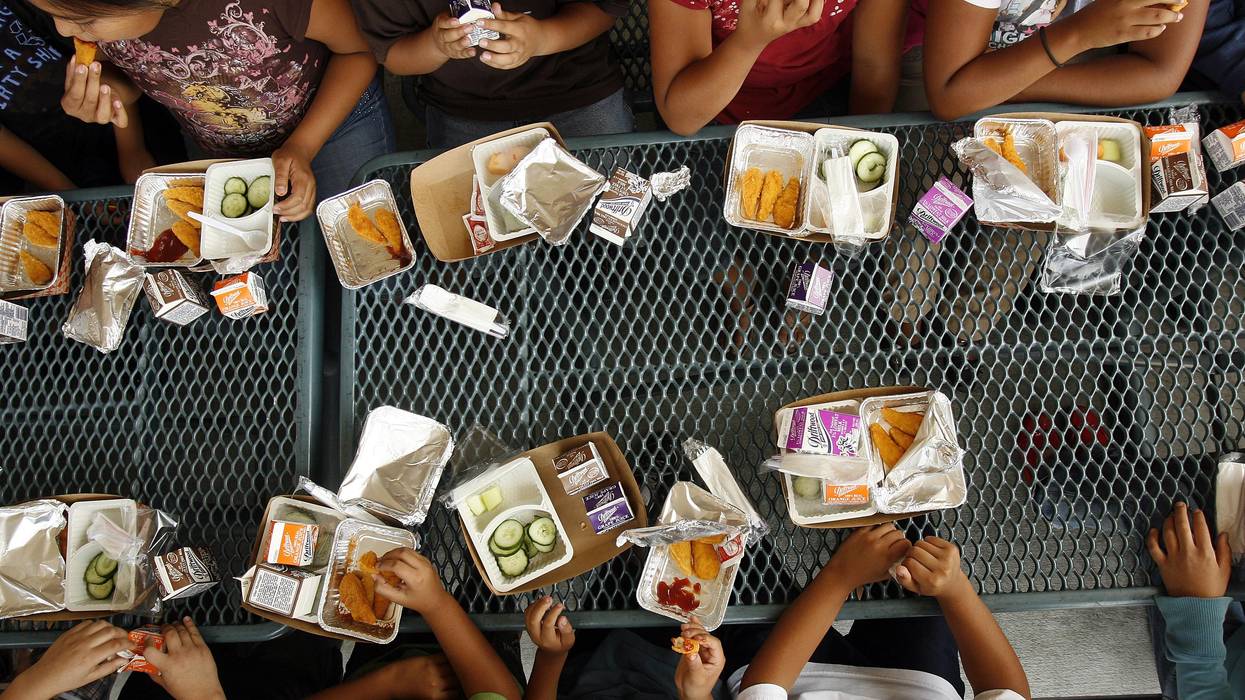
Universal free school meals, much-needed improvements to an aging public transportation system, and tuition-free education for community college students are just some of the programs Massachusetts' wealthiest residents have helped pay for after voters approved the law in 2022 amid growing calls across the United States to tax the richest households and corporations.
The amendment was narrowly passed via a statewide ballot initiative in 2022 despite claims by opponents that it would force wealthy residents and businesses to leave the state.
The state analysis of the law shows that requiring wealthy households to pay more in taxes to contribute to the greater good has overall benefits for the state, said observers including Jonathan Cohn, political director for Progressive Massachusetts.
"The Fair Share Amendment has had a great first year. Looking forward to many more!" said the organization.
According to Fair Share, which advocated for the passage of the referendum in 2022, $150 million of the new revenue has been allocated to expanding green infrastructure and other construction projects in schools, while it cost the state's richest taxpayers just $69 million to fund free school meals for every child in Massachusetts, "saving families hundreds of dollars."
More than $205 million is being spent to upgrade, repair, and maintain the Massachusetts Bay Transportation Authority system, and $150 million is going toward bridge and road repairs. Expanded access to high-quality childcare and pre-kindergarten is being paid for with just $70.5 million, and $50 million is going toward tuition-free community college.
The investments are "only possible because the voters passed this constitutional amendment and we created this new tax," Andrew Farnitano, spokesperson for the Raise Up MA Coalition, told WBUR.
"The money is going where it was promised," he added. "Those are fundamental investments in our economy that are needed to make sure it works for everyone."
Farnitano told MassLive that revenues from the Fair Share Amendment are expected to increase as much as $2 billion by the time the 2025 budget goes into effect.
“Over the past few months, we've seen the impact, and that will only grow," he said.
An overall decline in other state revenue shows that the public spending would be impossible without the Fair Share Amendment, Farnitano told WBUR.
A Politico/Morning Consult poll found in September 2021 that 74% of Americans agreed with the statement, "The wealthiest Americans should pay higher taxes," and a Gallup survey found in August 2022, three months before the Massachusetts law was passed, that 52% of respondents believed the U.S. government should "redistribute wealth by heavy taxes on the rich," while 47% disagreed.
As Fox News hosted the first full debate between the "top-tier" candidates of the Republican presidential candidates on Thursday night, Sen. Bernie Sanders took in the show with an active social media hashtag to offer his reflections on the GOP discussion--remarking on their responses, making note of what issues they avoided or refused to discuss, and letting his 2016 rivals know what it might look like to #DebateWithBernie.
Ironically, according to the Boston Globe's Nik DeCosta-Klipa, Sanders won the GOP debate—at least on Twitter.
Ahead of the evening's debate, which took place at the rather aptly named Quicken Loans Arena in Cleveland, Ohio, Sanders said that for poverty-stricken families, low-income workers, and the middle class to enjoy the Republican message, they would need to have a creative imagination.
"Listen closely, and this is what they will tell you," Sanders advised. "They want to give more tax breaks to millionaires and billionaires at a time when the rich are getting much richer. ... Essentially, when you watch that debate, just imagine if you are one of the wealthiest people in this country and extremely greedy and selfish, and you're going to have 10 candidates more or less talking about your needs and not the needs of the working people."
And he was essentially correct. When the talking was finally over, and the debate concluded, Sanders tweeted:
Read the complete catalog of Sanders' responses to Thursday's debate on Twitter:
Tweets about #DebatewithBernie from:BernieSanders
And the reactions under the hashtag created a chorus of people saying that Sanders took the night:
According to Twitter, the hashtag #DebateWithBernie was used 56,748 times and @BernieSanders was mentioned 59,935 times during the debate.