

SUBSCRIBE TO OUR FREE NEWSLETTER
Daily news & progressive opinion—funded by the people, not the corporations—delivered straight to your inbox.
5
#000000
#FFFFFF
To donate by check, phone, or other method, see our More Ways to Give page.
Daily news & progressive opinion—funded by the people, not the corporations—delivered straight to your inbox.
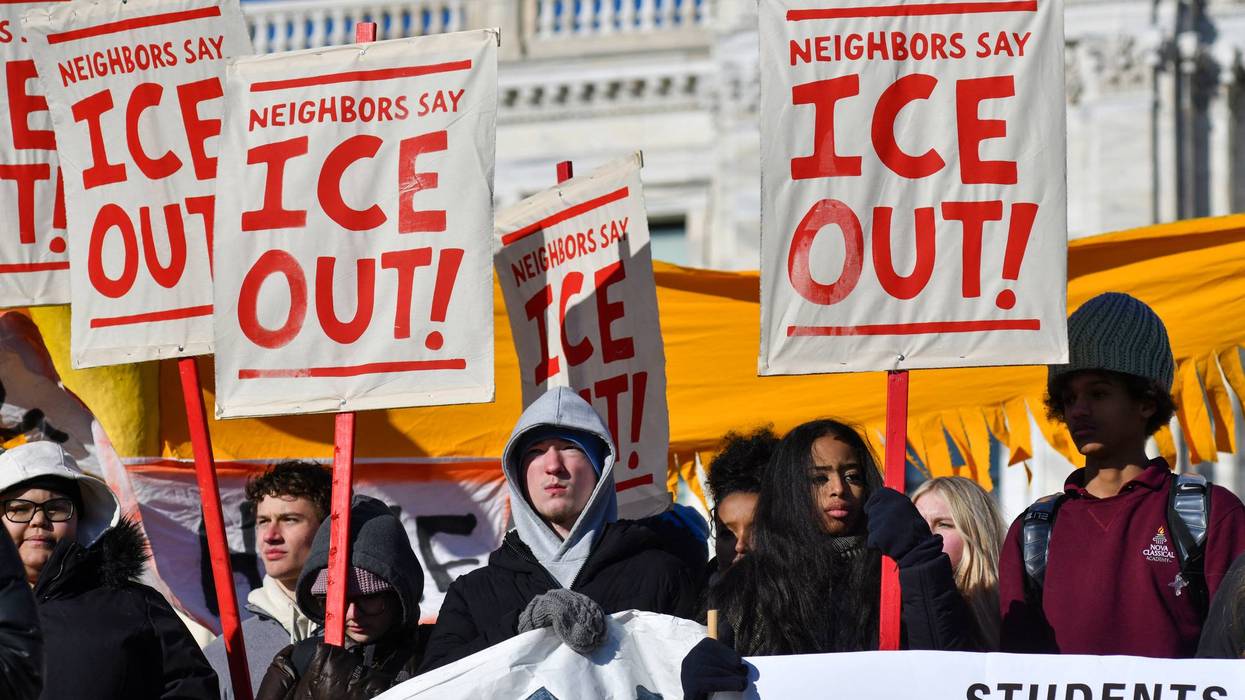
“Congressional Republicans gifting ICE with billions of extra dollars of funding while Americans are struggling to make ends meet is an outrage," said one critic of the Trump-backed move.
The Republican-controlled House of Representatives on Tuesday narrowly approved nearly $70 billion in new funding for US Department of Homeland Security agencies responsible for the Trump administration's anti-immigrant crackdown, a move denounced by Democrats and advocacy groups.
The Secure America Act—a budget reconciliation bill approved last week by the Senate, where it was introduced by Sen. Lindsey Graham (R-SC)—passed the House by a vote of 214-212. Every Republican present voted for the bill, while every Democrat in the chamber and Independent Rep. Kevin Kiley of California voted against it.
The legislation provides funding for the Department of Homeland Security (DHS), Immigration and Customs Enforcement (ICE), and Customs and Border Protection (CBP) through the end of President Donald Trump's term. The bill now heads to Trump's desk for his signature.
"In the final months of their House majority, House Republicans are doubling down on their failed approach: blank checks for ICE and not one cent to make things cheaper for working families," Congressional Progressive Caucus Chair Greg Casar (D-Texas) said following Tuesday's vote.
"The day after threatening to cut Social Security and Medicare, they are sending billions to Trump’s mass deportation machine—which still has $100 billion sitting in the bank," he added. "The Republican Congress is a disaster for working Americans. When Democrats take back power, we must repeal this funding.”
Rep. Maxwell Frost (D-Fla.) said on X: "The House GOP just voted to give ICE and CBP $70 BILLION. Instead of investing in you and ensuring you can afford your healthcare, groceries, or rent—they chose to hand $70 BILLION to agencies operating without any guardrails while terrorizing and brutalizing our communities."
Civil society groups also blasted House Republicans after the vote.
“Congressional Republicans gifting ICE with billions of extra dollars of funding while Americans are struggling to make ends meet is an outrage," said Lisa Gilbert, co-president of the consumer advocacy group Public Citizen, which decried what it called "a vote for cruelty and corruption."
“Trump’s ICE has proven that it is dangerous and out of control," Gilbert added. "Today’s vote is... a vote against the Constitution and the safety of our communities and neighbors. Shame on congressional Republicans for ramrodding through this egregious funding.”
FWD.us President Todd Schulte said, "At a time when voters remain rightly outraged at ICE, providing hundreds of billions of dollars to ICE and CBP to terrorize communities and tear families apart while the cost of living rises and healthcare funding is slashed is both a stunning policy failure, and incredibly unpopular with voters."
ACLU senior policy counsel Kate Voigt said in a statement that "it is unconscionable that the House would vote to write yet another blank check for ICE and Border Patrol’s campaign of chaos without any reforms. Over the past several months we’ve seen these abusive agencies kill our neighbors, harass and racially profile people, and tear thousands of families apart."
More than 50 people have died in DHS custody since Trump returned to office, with experts asserting that many of the deaths were preventable. Detained immigrants have reported beatings and sexual abuse, medical neglect, hunger and inedible food, and denial of access to attorneys, and other mistreatment.
DHS officers have killed Americans Renee Good and Alex Pretti and Mexican national Silverio Villegas González, and have wounded numerous other people during Trump's second term.
ICE detainees across the nation are resisting abuse in detention centers across the nation through hunger strikes and other civil disobedience, as well as via lawsuits.
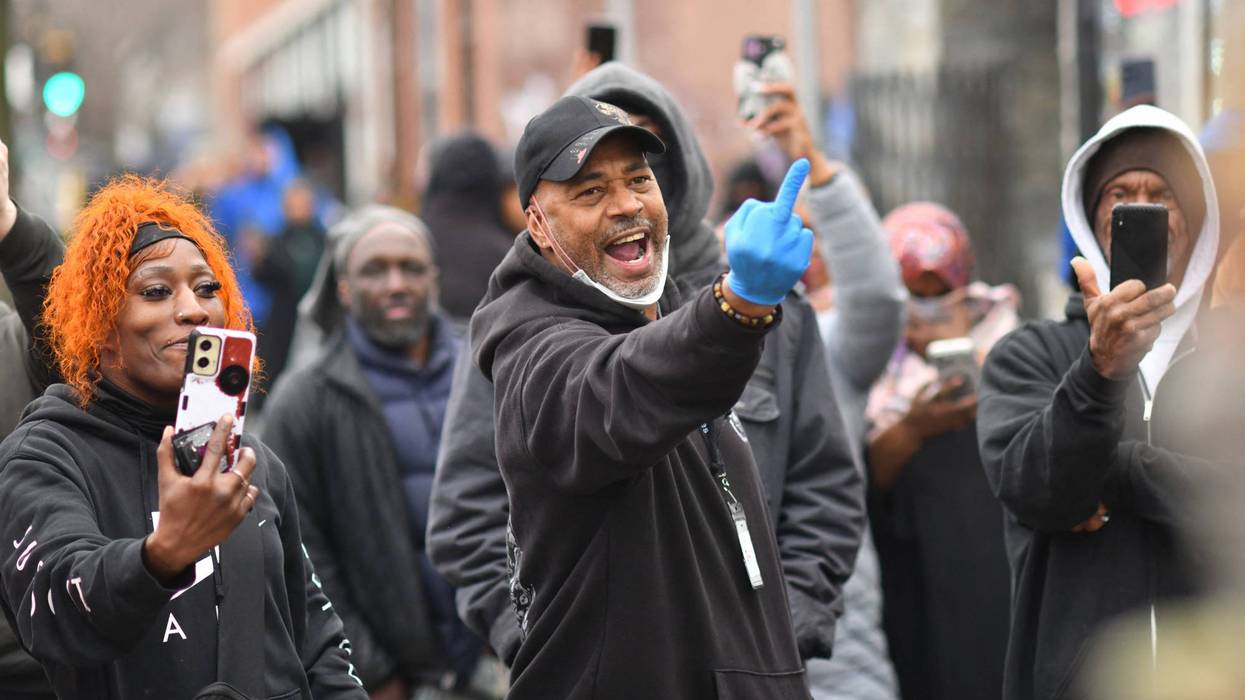
“Without recordings, we wouldn’t know the truth of what happened to Renee Nicole Good, Alex Pretti, Marimar Martinez, George Retes, and so, so many others,” said one of the bill's sponsors.
A pair of congressional Democrats on Monday introduced legislation that would protect the constitutional right to legally record federal agents and open the door to civil compensation for people whose rights have been violated.
Congressman Maxwell Frost of Florida and Sen. Richard Blumenthal of Connecticut introduced the Right to Record Act, which according to Frost's office, "establishes the right to sue individual law enforcement agents if they violate First Amendment rights, including the right to record, observe, or peacefully protest."
“The First Amendment defends the right to assemble, protest, and record government officials in public," Frost said in a statement.
No federal agent is above the Constitution. My bill, the Right to Record Act, with @blumenthal.senate.gov strengthens your First Amendment right to record, observe, and peacefully protest — and gives you the power to sue federal agents who violate those rights.
[image or embed]
— Rep. Maxwell Alejandro Frost (@frost.house.gov) June 8, 2026 at 2:24 PM
"That right has never been more important. In cases like the murders of Alex Pretti and Renee Good, officials and their allies tried to paint the victims as threats despite evidence showing otherwise,” the congressman said, referring to two people shot and killed during the Department of Homeland Security's (DHS) Operation Metro Surge anti-immigrant blitz in Minneapolis.
"Without firsthand recordings, those false narratives might have become the official story, which is why the Right to Record Act is so important," Frost added. "It would protect the public’s ability to expose the truth without fear, giving individuals a legal path forward if an officer does violate their constitutional rights.”
In the same statement, Blumenthal said that “over the last year, I’ve investigated dozens of cases of Americans brutalized by agents of their own government, and across the board, video footage corroborated their testimony—showing the world what they experienced and making sure that justice was served."
"Without recordings, we wouldn’t know the truth of what happened to Renee Nicole Good, Alex Pretti, Marimar Martinez, George Retes, and so, so many others," the senator continued.
Martinez, a US citizen, was shot five times by a US Customs and Border Protection agent last October in Chicago while going to donate clothing to her church. Officer body camera footage showed that DHS officials—who labeled Martinez a "domestic terrorist"—lied about events leading up to the shooting.
Retes, who is also a US citizen, is an Iraq War veteran who was violently arrested last July during an immigration raid on his job site and subsequently jailed for three days.
"The right to bear witness has never been more important," Blumenthal said in his statement Monday. "I’m proud to work with Congressman Frost on bicameral legislation that will strengthen the right to record, observe, and peacefully protest—creating real enforcement tools for the protections of the First Amendment that lay the foundation for our democracy.”
Recording federal law enforcement agents in public is protected First Amendment activity, as long as the recorder is not interfering with the officers' duties. Federal courts have repeatedly upheld this right.
"The right to observe and record law enforcement is fundamental to our democracy," Jenna Leventoff, senior policy counsel with the ACLU—which has endorsed the Right to Record Act—asserted Monday.
"We can't hold our government accountable if we can't see for ourselves what they're doing in our communities," she argued. "Observing and filming allows people to create an independent record, share information with their communities, and demand better from our government."
"Protesting for what we believe in is a core American value, and observing and filming government activity can drive the protest movements that spark change," Leventoff added. "All of these rights are squarely protected by the First Amendment, and we're hopeful that Congress will codify them into law by enacting the Right to Record Act."

"Republicans could end this Trump Shutdown today by passing a deal that averts the massive spike in healthcare costs," said a co-director of Indivisible. "They need to feel heat from their constituents."
Progressive activist groups and legislators have launched a new effort to pressure Congress to reach a deal to end the government shutdown that protects healthcare programs from brutal budget cuts.
The government officially shut down on Wednesday after Republicans refused Democrats' demands to reverse cuts to Medicaid and Affordable Care Act (ACA) spending from July's GOP megabill that, if allowed to go into effect, are expected to result in around 15 million Americans losing their health insurance coverage over the next decade.
On the first evening of the shutdown, over 18,000 people joined a conference call organized by a coalition of advocacy groups, including Public Citizen, MoveOn, Working Families Power, and Indivisible. Also in attendance were Rep. Greg Casar (D-Texas), the chair of the Congressional Progressive Caucus, and vice chair Rep. Maxwell Frost (D-Fla.).
"We know that we are already in a broken healthcare system in this nation," Frost told the thousands of attendees. "Not only do they not want to do anything to fix the problems we have, they are making it worse."
Video: MoveOn
"We want to reopen this shutdown government and restore healthcare back to the American people," Casar said. "But House Republicans are nowhere to be found. I'm here in Washington, DC, and those House Republicans fled on vacation."
The hosts urged attendees to call their Republican senators and make them aware of their responsibility for the shutdown and the loss of healthcare that millions of their constituents may soon face.
They also singled out certain Senate Democrats, such as Sen. John Fetterman (Pa.) and Catherine Cortez-Masto (Nev.), who voted to advance the GOP's continuing resolution despite the lack of benefits on healthcare, for "siding with [President] Donald Trump."
"We can do this," said movement organizer Ash-Lee Woodard Henderson. "We can put the pressure on that forces the Democratic Party to have a backbone and the Republicans to prioritize people over profit."
The groups have dozens of events planned over the coming days as part of what they have called the "Shutdown Showdown" campaign, including rallies and demonstrations outside the offices of Republican lawmakers.
“Trump and congressional Republicans control a federal government trifecta; they are responsible for ending the shutdown," said Ezra Levin, co-executive director of Indivisible. "We don’t know how long this shutdown is going to last."
He said Republicans "need to feel heat from their constituents to actually sit down and negotiate with the Democrats. That’s where we come in.”
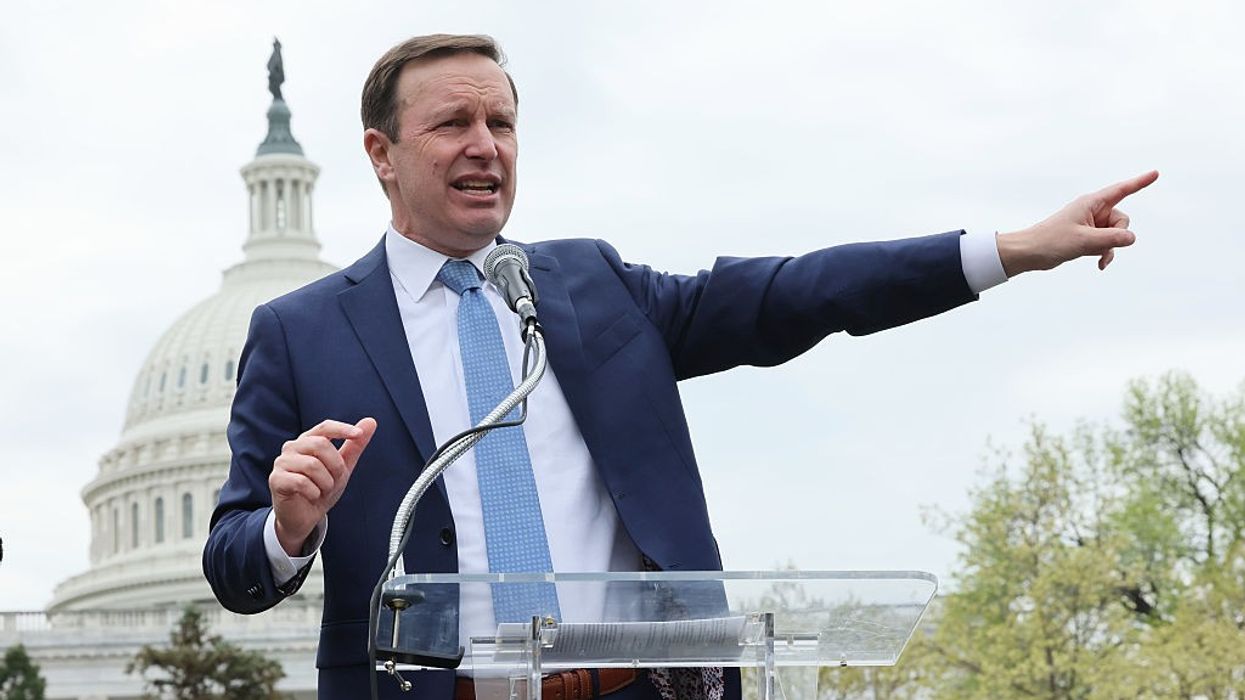
"All of this ties back to money and people enriching themselves, and bending the knee to Donald Trump to make it happen," said Rep. Maxwell Frost.
Democratic lawmakers on Thursday vowed to fight back against US President Donald Trump's efforts to attack and dismantle liberal and progressive organizations.
Led by Sen. Chris Murphy (D-Conn.), the Democrats introduced the No Political Enemies Act aimed at protecting organizations' free speech rights from retaliation from the federal government.
During his speech touting the new legislation, Murphy recounted recent actions by Trump and his administration, including the president's threats to "arrest members of the Soros family simply for funding groups that oppose his agenda," as well as Federal Communications Commission (FCC) Chairman Brendan Carr's pressure campaign to get ABC to fire late-night comedian Jimmy Kimmel.
Murphy then said that the No Political Enemies Act was necessary because "Donald Trump is right now instructing his Department of Justice to go on the hunt for his political enemies" for challenging him.
"Trump is making it 100% clear that he is going to ramp up his efforts to use the power of the federal government to punish his critics," he said. "This is legislation that makes sure that the law is on the side of free speech and the right to dissent."
The proposed law would give political organizations and individuals new tools to combat political harassment from the federal government, and would allow them to both recover attorney fees and more easily file lawsuits against federal officials who abuse their authority for political purposes.
Rep. Greg Casar (D-Texas), who also expressed support for the legislation, put the stakes facing Americans in stark terms.
"We are in the biggest free speech crisis this country has faced since the McCarthy era," he said. "The murder of Charlie Kirk was a horrific crime, and it's clear that Trump wants to hijack that horrific crime to silence anyone who disagrees with the president about any issue."
Casar, the chair of the Congressional Progressive Caucus, also took a shot at major corporations who have been caving to the president's demands in recent months.
"As we saw last night, far too many billionaires and corporate-owned media companies are bending the knee: Disney and ABC, Paramount and CBS, the Washington Post editorial board, Facebook," he said. "Let's be clear, the ultrawealthy men who own these companies are making a choice. David Ellison, Mark Zuckerberg, Jeff Bezos, Bob Iger—these men are enriching themselves, auctioning off the United State's First Amendment to a wannabe dictator and tyrant."
Rep. Maxwell Frost (D-Fla.) pointed out that the FCC's pressure campaign on ABC to fire Kimmel is particularly nefarious given that Sinclair Broadcasting Group, which is the network's largest affiliate, is currently involved in merger talks that will need FCC approval.
"All of this ties back to money and people enriching themselves, and bending the knee to Donald Trump to make it happen," he said.
The Democrats' proposed legislation comes after Trump announced late Wednesday night that he planned to designate “antifa,” a movement of autonomous individuals and loosely affiliated groups who oppose fascism, as a “major terrorist organization."
It also comes comes days after Trump adviser Stephen Miller began pushing a plan to "dismantle" the organized left using the power of the federal government.
During a recent appearance on Fox News, Miller described the entire left as a "domestic terrorism movement in this country," and vowed "to dismantle and take on the radical left organizations in this country that are fomenting violence."
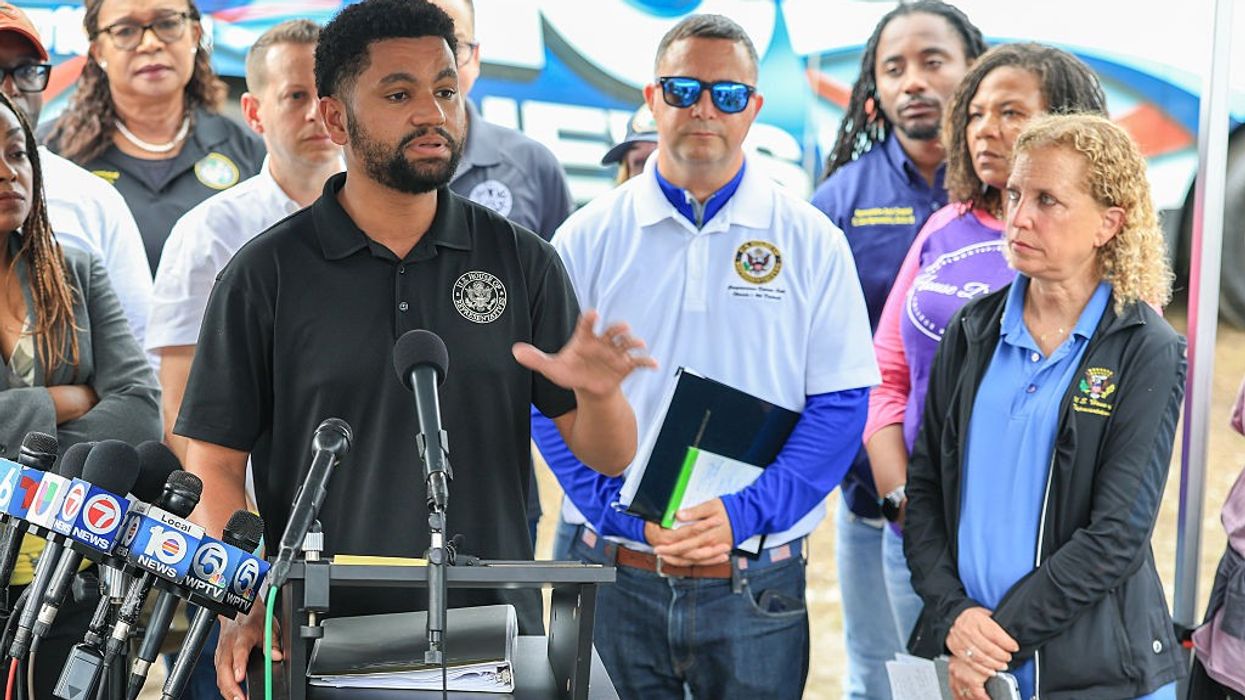
"I saw 32 people per cage—about 6 cages in one tent. People were yelling, 'Help me, help me'," said Florida Rep. Maxwell Frost.
For the first time, Democratic lawmakers were allowed to tour U.S. President Donald Trump's sprawling Everglades immigrant detention center on Saturday. They said what they witnessed was "disturbing" and "disgusting."
After Democrats were previously denied entry to the facility known as "Alligator Alcatraz," three Democratic congresspeople from Florida—Reps. Debbie Wasserman-Schultz, Jared Moskowitz, and Maxwell Frost—journeyed to the remote compound along with another group of Republicans as part of a state-arranged tour.
"Alligator Alcatraz" was erected within a matter of weeks and now contains approximately 900 people who have been rounded up as part of Trump's "mass deportation" crusade, which a court determined was rife with illegal racial profiling.
The administration said they hope to fill the camp with as many as 5,000 people at a time.
Detainees have previously described heinous conditions to their attorneys, including worm and maggot-infested food, sweltering heat, and the denial of medication and showers for days at a time.
Though the Democrats who visited the facility were not allowed to speak with detainees or see their conditions up close, their descriptions of the facilities at a press conference following the visit paint an appalling picture.
- YouTube
Wasserman-Schultz described it as an "internment camp" where detainees are "essentially packed into cages."
"Wall-to-wall humans. 32 detainees per cage," she said. This, she noted, is unusual for immigration facilities, like the nearby Krome detention center in Miami-Dade County, where detainees are allowed to roam freely between buildings.
"The only thing inside those cages are their bunk beds," she said. She later noted that in the unused dorm they toured there were already "bugs all over the mattresses that had not yet been used."
"There are three tiny toilet units that have a sink attached to it," she said. "They get their drinking water, and they brush their teeth where they poop, in the same unit," she continued.
Frost said the lawmakers asked to view the toilets currently in use by detainees, but were denied and instead showed ones in a currently unused part of the facility.
He brought up prior complaints made by prisoners of the camp about the sanitation.
"Some of the biggest complaints we've heard is, yes, there's three toilets, but a lot of the time, only one is working," he said. "They get backed up: Feces being spread everywhere."
Wasserman-Schultz said they also viewed a meal-prep area. While employees of the facility were given large, hearty portions, she says prisoners were fed a "small...gray turkey and cheese sandwich, an apple, and chips" that she said was far too small to sustain a fully-grown man.
Wasserman-Schultz also said she brought a thermostat to measure the temperature within the facility, which the Department of Homeland Security has claimed was "air conditioned." She said that the area just outside the tents that housed the detainees was 83°F and said it was likely much hotter inside due to the body heat.
Moskowitz said there was "evidence of flooding" and "floors that are only about eight inches above the ground," while other lawmakers noted that a hurricane or even a lighter tropical storm could prove catastrophic.
Last week, videos circulated on social media of the facility already beginning to flood due to a minor storm:
Moskowitz also noted the extraordinary cost to assemble and run the makeshift facility, which is estimated to cost $450 million per year according to one U.S. official who spoke to The Associated Press.
"Why are they spending all this money for this?" he asked. "One can't help but understand and conclude that this is a total cruel political stunt meant to have a spectacle of political theater."
The Trump administration has described the facility as a holding tank for "the worst of the worst" criminals as they await deportation. But according to reporting by the Miami Herald and Tampa Bay Times on Sunday, only a third of the people in the facility have criminal convictions, which range from crimes like attempted murder to traffic violations. More than 250 of the people in the facility have not been convicted of or even charged with a crime.
No outside journalists have been allowed to tour the facility, and there are no photos or videos available publicly beyond what has been released by the Trump government. The congresspeople on the tour were told they were not allowed to take any photos or videos inside or meet with any of the detainees.
Instead of being shown the conditions in which detainees were currently being housed, they were shown facilities that had not yet been filled. They were still denied access to some, including medical facilities.
Last week a group of Democrats in Florida's state legislature were turned away when they attempted to tour the camp, with Gov. Ron DeSantis (R) saying they could not show up unannounced to perform oversight over a federal facility.
Frost said that there has been "ambiguity" about who has authority over the prison, but it was made abundantly clear during the visit that every decision being made was directed by the federal government.
"What we heard very clear is that ICE is giving them the directions from A to Z," he said. "Which means members of Congress are able to come here unannounced. And we will come here unannounced."
"Even with this invitation, so much was kept from us," Frost said.
In a video filmed while riding back from the camp, Frost spoke even more candidly about what he saw and how much it disturbed him.
Though the congresspeople were not given access to the detainees and "pushed back" by security guards, Frost said, "We could see in, and we could hear everybody."
"When those doors opened, what I saw made my heart sink," he said. "I saw a lot of people, young men, who looked like me."
"People were yelling, 'Help me, help me!' I heard in the back someone say, 'I'm a U.S. citizen,'" he continued. "And as we were walking away, they started chanting 'Libertad! Libertad! Libertad!'... 'Freedom.'"
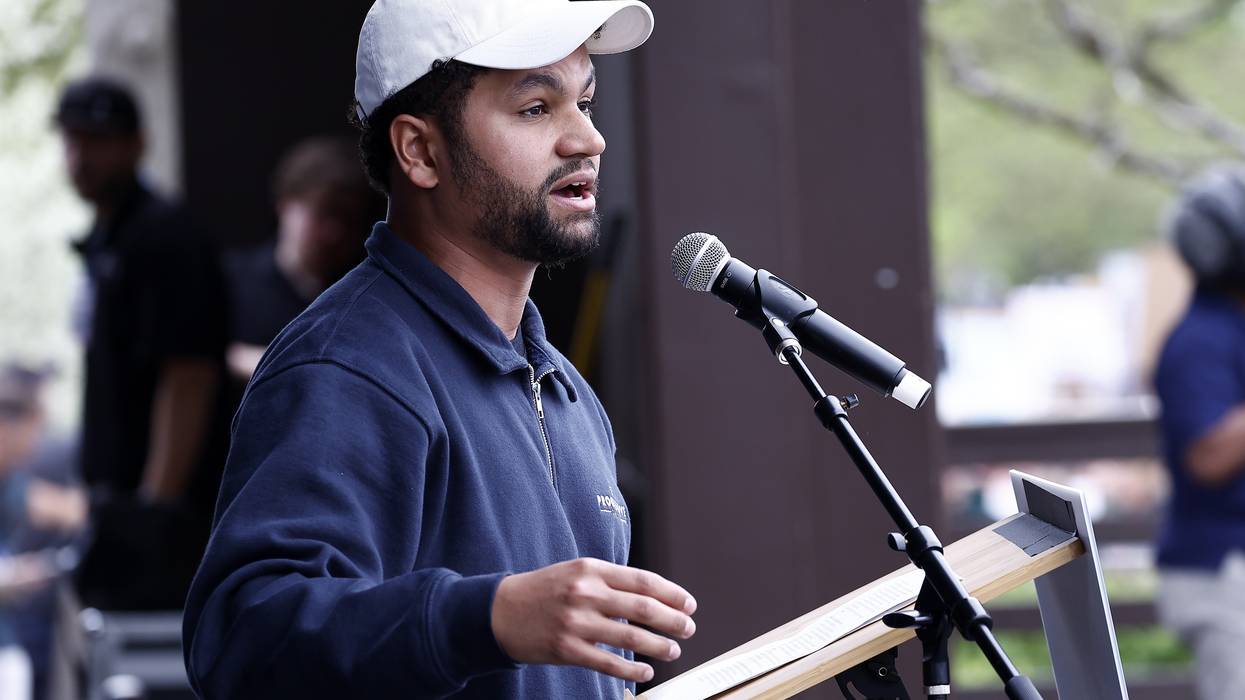
"Trump and ICE are not above the law. Today it's Kilmar, but tomorrow it could be anyone," said Democratic Rep. Maxwell Frost of Florida.
Four Democratic lawmakers in the U.S. House of Representatives landed in the capital of El Salvador on Monday morning, kicking off a trip aimed at pressuring the Trump administration to comply with a recent Supreme Court ruling and facilitate the retrieval of a man who federal officials have admitted was wrongly sent to a Salvadoran megaprison in mid-March.
"Kilmar Abrego Garcia is being held illegally in El Salvador after being wrongfully deported," said Rep. Robert Garcia of California, one of the lawmakers in El Salvador, in a Monday statement. He added that the group is there to "to remind the American people that kidnapping immigrants and deporting them without due process is not how we do things in America."
Garcia, Maxwell Frost of Florida, Yassamin Ansari of Arizona, and Maxine Dexter of Oregon are traveling to El Salvador days after Democratic Sen. Chris Van Hollen of Maryland traveled there and successfully met with Abrego Garcia, a Maryland man who in 2019 received a ruling from an immigration judge that he could not be deported to his native El Salvador because he was at risk of gang persecution there.
Last week, Garcia and Frost said the purpose of the trip was to visit the megaprison, known as CECOT, and check on Abrego Garcia and others who were deported. Abrego Garcia is now being held at a different prison in Santa Ana, El Salvador, according to court filings from the U.S. Justice Department.
The Trump administration has attempted to paint Abrego Garcia, who has no criminal record in the United States, as dangerous, alleging that he is a member of the MS-13 gang. Abrego Garcia's family and lawyers maintain he is not a gang member.
U.S. President Donald Trump and "his administration are running a government-funded kidnapping program," Frost said of the administration's deportation of Abrego Garcia and others who were deported.
"Trump and ICE are not above the law," he added, referring to U.S. Immigration and Customs Enforcement. "Today it's Kilmar, but tomorrow it could be anyone."
Frost and Garcia had requested that the head of the U.S. House Committee on Oversight, Rep. James Comer (R-Ky.), grant them authorization to conduct an official congressional delegation, but Comer refused, meaning the trip will not be funded by the committee's budget.
Frost called the denial of the request "shameful" on X on Sunday evening. "Good thing I don't need Comer's permission to get on a plane," he wrote.
On March 15, the Trump administration of deported over 200 Venezuelans to El Salvador after invoking the Alien Enemies Act, a rarely used authority that gives the president broad powers to deport noncitizens. Several Salvadoran nationals were also deported under Title 8 removal orders.
The deportations by the Trump administration kicked off a fierce legal battle.
On Saturday, the Supreme Court intervened to prevent the deportation of more Venezuelan migrants to El Salvador under the Alien Enemies Act. Last month, the Supreme Court ruled that the White House can deport people under the law, but that migrants must be given an opportunity to contest their removals in court districts where they are being detained in the United States.

Congressional Progressive Caucus leaders are pressing the Democratic Party to offer "a clear alternative and inclusive vision for how we will make life better for the 90% who are struggling in this economy."
In the wake of U.S. federal elections resulting in Republican control of the White House and both chambers of Congress—in no small part due to Democrats' failure to win working-class votes—leading congressional progressives are pushing a plan to rebuild the Democratic Party by rejecting corporate cash and uplifting low- and middle-income Americans.
In a memo first shared with Punchbowl News, outgoing Congressional Progressive Caucus Chair Pramila Jayapal (D-Wash.), incoming Chair Greg Casar (D-Texas), and CPC members Rep. Maxwell Frost (D-Fla.) and Rep. Chris Deluzio (D-Pa.) urge the Democratic National Committee (DNC) to "rebuild our party from the ground up."
The lawmakers call on DNC leadership to "create an authentic Democratic brand that offers a clear alternative and inclusive vision for how we will make life better for the 90% who are struggling in this economy, take on the biggest corporations and wealthiest individuals who have rigged the system," and expose GOP President-elect Donald Trump's "corporate favoritism" to "create a clear contrast with Republicans."
Jayapal outlined what she called "four core principles" for the next DNC chair, who hasn't yet been elected:
The progressives' memo urges the DNC to "invest in showing our commitment to real populism versus Trump's faux populism
through lifting up working-class voices and issue-based campaigns that take on corporate concentration and monopoly power at the expense of working people."
The principles enumerated in the memo resonated beyond the CPC. Responding to the proposed agenda in a social media post, U.S. Sen. Chris Murphy (D-Conn.) concurred: "The next DNC chair should absolutely refuse to take corporate PAC money. If we are the party of the working class—and we are—then let's raise $ like we mean it."
Casar, who before running for elected office worked as policy director for the Workers Defense Project—whose victories included rest and water breaks for outdoor laborers, anti-wage theft legislation, and living wage requirements—has repeatedly stressed the imperative "to re-emphasize core economic issues" that matter most to American workers.
"The core of the Republican Party is about helping Wall Street and billionaires. And I think we have to call out the game," Casar said last week during an interview with NBC News.
"The Democratic Party, at its best, can hold people or can have inside of its tent people across geography, across race, and across ideology," he added. "Because we're all in the same boat when it comes to making sure that you can retire with dignity, that your kids can go to school, that you can buy a house."
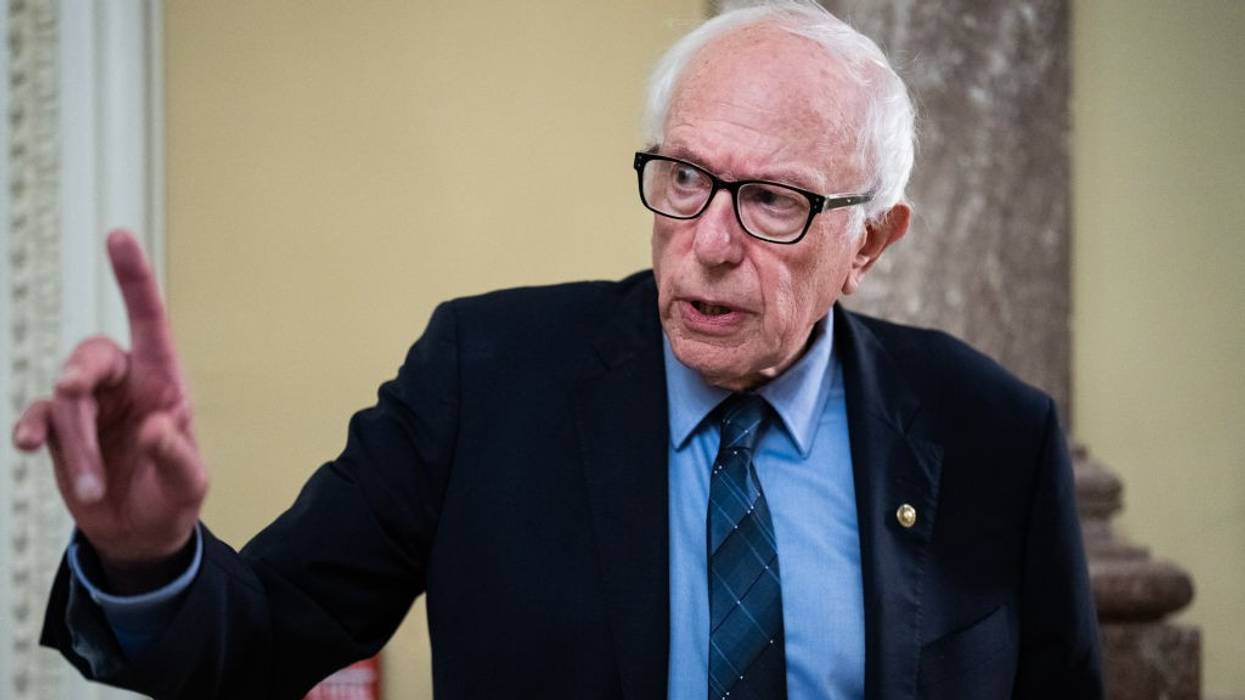
The two-day event in Chicago ahead of the DNC, said one organizer, "will highlight a very practical, realistic agenda that promotes a program that directly addresses the most pressing concerns of average American households."
Organizers behind the "Progressive Central 2024" event scheduled to take place just ahead of the Democratic National Convention in Chicago later this month announced Friday that Sen. Bernie Sanders will be the keynote speaker alongside a roster of lawmakers and movement leaders determined to keep the left's working-class agenda moving forward ahead of November's election—and beyond.
Nearby in downtown Chicago and just before the DNC kicks off, the two-day sideline event is being orchestrated by Progressive Democrats of America (PDA), The Nation magazine, The Arab American Institute, and the Rainbow/PUSH Coalition.
Alan Minsky, executive director of PDA, explained to Common Dreams that it's being "organized around a simple concept: what if the progressive wing of the Democratic Party was putting on a national convention—like the DNC or RNC. What programs and ideas would be foregrounded?"
"We all know very well that not only political offices are at stake this November, but also the very future of American democratic life." —Harvey J. Kaye
The answer to that question, he said, will be "nothing like the mass media's familiar mischaracterization of progressives as a group of outliers, (angrily) voicing a litany of complaints" toward those with more power.
"Rather, very much in contrast," said Minsky, the event—which will take place August 18 and 19 at the Chicago Teachers Union building—"will highlight a very practical, realistic agenda that promotes a program that directly addresses the most pressing concerns of average American households—and is very in line with the wishes and aspirations of a majority of the American voting public."
In addition to Sanders, prominent members of the Congressional Progressive Caucus will attend, including CPC Chair Pramila Jayapal and Reps. Ro Khanna, Jamie Raskin, Barbara Lee, Raul Grijalva, Maxwell Frost, Danny Davis, Jonathan Jackson, and Jesus 'Chuy' Garcia.
According to organizers, other scheduled speakers include former Ohio State Senator and activist Nina Turner; The Nation's longtime political correspondent John Nichols and the magazine's president Bhaskar Sunkara; Minnesota Attorney General Keith Ellison; NOW president Christian Nunes; attorney and Free Speech For People founder John Bonifaz; University of Wisconsin-Green Bay professor of history Harvey J. Kaye; and many others.
"The event will bring together a diverse group of voices in favor of sharing our respective progressive hopes and aspirations," Kaye told Common Dreams on Friday.
Kaye, who earlier this week published an essay and comic strip at Common Dreams with cartoonist Matt "The Letterhack" Strackbein on the need for a New Economic Bill of Rights for the 21st Century, said his hope is that attendees can galvanize around a shared vision and set of organizing principles for the future.
"We all know very well that not only political offices are at stake this November, but also the very future of American democratic life," said Kaye. "And if all goes well, we will develop a more strongly shared understanding of what needs truly doing."
"No more neoliberalism," he said, referring to the toxic strain of economic thinking that has infected both the Democratic and Republican parties for far too long and suggesting that the days of privatization, austerity for public programs, and hostility toward universal public goods must come to an end. "As FDR said: to win, the Democratic Party must be the party of 'militant liberalism' that is, social democracy."
While Sanders remains an independent lawmaker representing Vermont in the U.S. Senate, he caucuses with the Democrats and has been one of the Biden administration's key supporters on a number of issues. Sanders stood by Biden's 2024 campaign even as it struggled and even as Sanders repeatedly pressured the Democratic president to change course when on his support for Israel's relentless assault on Gaza.
"My hope is that the progressives leave more emboldened and with more knowledge than when they arrived." —Nina Turner
In public appearances in recent weeks and months, including since embracing the emergence of the Harris-Walz ticket since Biden stepped aside last month, Sanders has made it known that his prescription for beating Trump and the Republican in November is by galvanizing working class voters.
"Good policy for working-class voters is also good politics," Sanders said earlier this week in response to findings of a survey, he commissioned that broad support for progressive policies by swing state voters in Arizona, Georgia, Nevada, Michigan, Pennsylvania, and Wisconsin.
"It should come as no surprise that expanding Social Security, raising the minimum wage, and capping rent increases are very popular," he said Monday. "The political class would do well to listen to the clear directive of American voters, and deliver. The simple fact is: Whether you're running for the White House or a city council seat, if you stand with working people, they will stand with you."
Nina Turner, a longtime Sanders ally, told Common Dreams that she looks forward to being at the Chicago event to remind progressives just ahead of the DNC "that the policies that we are pushing are not only popular among most Americans—no matter how they identify politically—but that we on the right side of history."
"I am excited by PDA's vision to create a space for progressive to gather, talk to one another, and be lifted up, because that is important," Turner explained by phone. "It's very easy to get wary in the type of work that progressives are doing in terms of standing up for what is just and for what is right. Ultimately, the goal of the progressive agenda is to create a human rights economy—an economy that sees and cares for every individual in society."
Turner, who remains a member of the Democratic National Committee and will be attending convention, said progressives are right to stand against the neoliberalism that has dominated the Democratic Party for too long and the neo-fascism represented by Donald Trump and his Republican Party. "They are out of touch," she said. "They are the extremists. We have to remember that and we have to start saying that in our rhetoric every single day."
Marking the start of the contemporary progressive era as one that emerged out of Sanders' 2016 and 2020 presidential campaigns, Turner—who served as national co-chair of his 2020 run—acknowledged that the movement is still maturing, and needs to mature, as it moves forward.
"We have to have an inside game and an outside game," she said. "We have to make demands and we have to have consequences for our demands not being made. We have to play chess and not checkers."
It has "been hard at times to keep our movement together," Turner said, "we have to recognize we are absolutely stronger together. There's a saying, 'If you want to go fast, go alone. But if you want to go far, go together.' So we have to be reminded of that collective agenda that we can call get behind and push for that agenda."
Turner said progressives, whether they consider themselves part of the Democratic Party apparatus or not, have to—in the words of activist and rapper Michael "Killer Mike" Render—"plot, plan, strategize, organize, and mobilize" if they want to have a chance of gaining ground.
"My hope is that the progressives leave more emboldened and with more knowledge than when they arrived," said Turner. "We must constantly remind ourselves that justice is not a destination, but a journey that every generation must take as they pass the baton to the next and the next and the next."
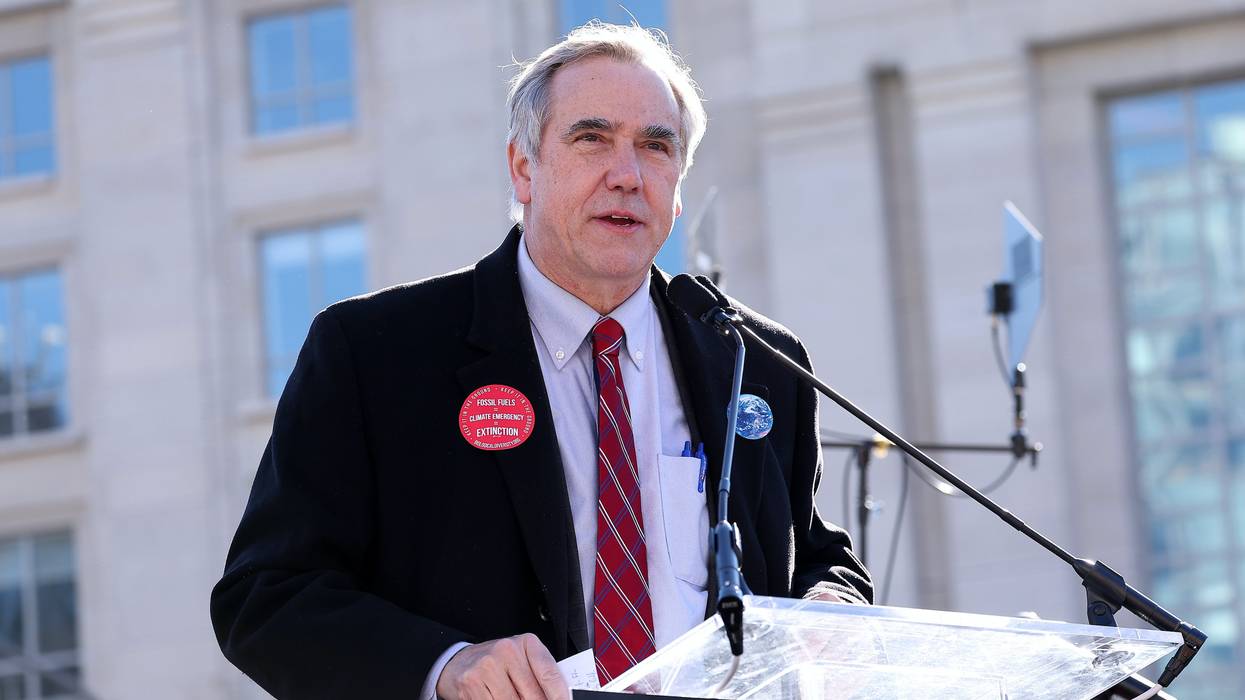
"We are in a climate emergency," said Oregon Democrat Jeff Merkley. "We can't take a piecemeal approach to the massive crisis we face."
Citing the extreme temperatures baking much of the United States during July—which is set to be the hottest month ever recorded on Earth—Democratic U.S. Sen. Jeff Merkley of Oregon on Thursday called on President Joe Biden to stop approving new fossil fuel projects and declare a climate emergency.
During his Thursday speech on the heat, Biden asked the Labor Department to increase efforts to protect workers from extreme temperatures and to announce new Interior Department water storage investments in Western states. However, the president did not unveil any new measures to combat the planetary emergency. He didn't even mention fossil fuels, the main driver of global heating.
"Americans are roasting and suffering under extreme heat and smoke in nearly every corner of our country. In Arizona, people are getting third-degree burns just from falling on the ground, while even East Coast states are experiencing air clogged with smoke from forest fires," Merkley said in a statement.
"In July, average temperatures for the entire globe have been the highest on record," he continued. "Add that on top of the last nine years being the nine warmest years on record. We are in a climate emergency. We can't take a piecemeal approach to the massive crisis we face."
"July should be a wake-up call for everyone," Merkley asserted, calling on Biden to first direct the Federal Emergency Management Agency (FEMA) "to unlock its authority to allow governors to address extreme heat and smoke events, and ask Congress to fund it robustly in an emergency disaster supplemental."
"Second, President Biden should develop a plan to end the reliance on fossil fuels that is causing this crisis," the senator added. "Any plan should start by ending approval of new fossil projects."
"Finally, the president should use his broad and crucial powers by declaring a climate emergency under the National Emergencies Act," Merkley stressed. "Under a climate emergency, the president can move decisively and swiftly to address the climate chaos happening all around us."
"Declaring a climate emergency is the best way for us to holistically protect the environment, public health, the planet, American workers, American consumers, and our national security from the worst effects of climate chaos," he argued.
Merkley's call echoes that of other progressive lawmakers and activists, including 21-year-old Elise Joshi, executive director of the advocacy group Gen Z for Change and a major social media influencer focusing on climate.
On Thursday, Joshi interrupted White House Press Secretary Karine Jean-Pierre during a speech to declare that "a million young people wrote to the administration pleading not to approve a disastrous oil drilling project in Alaska, and we were ignored." The climate campaigner called on Biden—who has approved fossil fuel projects "at a faster rate than the Trump administration"—to "stop approving new oil and gas projects and align with youth, science, and frontline communities."
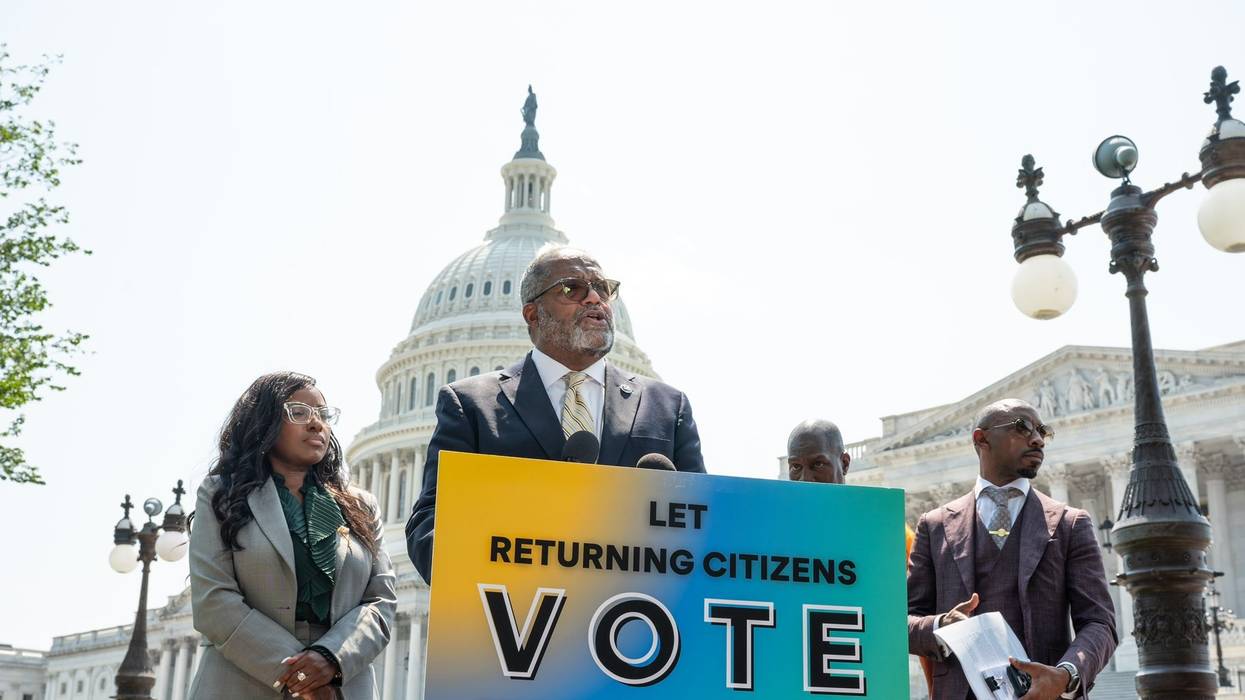
"After 50 years of mass incarceration in America—and 50 years of stripping voting rights from justice-impacted individuals—it's time for a better path forward," said one advocate.
Voting rights and criminal justice reform advocates on Thursday applauded U.S. House Democrats for reintroducing legislation to end the disenfranchisement of 3.5 million people who are barred from voting in federal elections due to their past prison sentences—part of what Rep. Valerie Foushee, a co-sponsor of the bill, called the country's "long history of weaponizing incarceration status."
Foushee (D-N.C.) was one of six Democrats to introduce the Democracy Restoration Act, led by Rep. Jasmine Crockett (D-Texas.).
The bill would end the denial of federal voting rights to people who have been incarcerated for felony convictions and would provide outreach to people with past convictions about their newly restored right to participate in elections, eliminating what the Sentencing Project called "the complicated patchwork of state laws that creates a lack of uniform standards for voting in federal elections, exacerbates racial disparities in access to the ballot box, and contributes to confusion and misinformation regarding voting rights."
Twenty-four states plus the District of Columbia and Puerto Rico currently allow formerly incarcerated people to vote in state and local elections, but they cannot participate in federal elections. People on felony probation or parole cannot vote in 25 states, and in 11 states a conviction can lead to lifetime disenfranchisement.
"There's no justification for denying people who have paid their dues a voice in our democracy," said co-sponsor Rep. Troy Carter (D-La.), who spoke at a press conference on the bill on Thursday.
Reps. Jamie Raskin (D-Md.), Maxwell Frost (D-Fla.), and Greg Casar (D-Texas) are also co-sponsors of the House bill, while Sen. Ben Cardin (D-Md.) introduced the legislation in the Senate in May.
"It's in our values to say that a second chance is part of America," said Cardin at the press conference.
Recent polling from Stand Up America, the Sentencing Project, and other groups has shown that a majority of Americans believe the right to vote should be extended to all Americans regardless of past incarceration—a move that Nicole D. Porter of the Sentencing Project noted would end the United States' status as "an international outlier."
"After 50 years of mass incarceration in America—and 50 years of stripping voting rights from justice-impacted individuals—it's time for a better path forward," said Porter, senior director of advocacy for the group. "By empowering justice-impacted people with the right to vote, we strengthen the principles of fairness and equality in our democracy. That's why The Sentencing Project will continue to support legislative efforts that protect and expand the right to vote for all people impacted by the criminal legal system, including those currently in prison."
A policy brief by the Sentencing Project earlier this year explained how enfranchising formerly incarcerated people is a public safety measure, helping to reduce recidivism, as well as a way to advance criminal justice reform.
"Voting is among a range of prosocial behaviors in which justice-impacted persons can partake, like getting a college education, that is associated with reduced criminal conduct," the April report read. "Among Americans with a history of criminal legal system involvement, having the right to vote or the act of voting is related to reduced recidivism. The re-entry process after incarceration improves because restoring voting rights gives citizens the sense that their voice can be heard in the political process, and contributes to building an individual's positive identity as a community member."
Stand Up America founder and president Sean Eldridge said the bill is a step away from "a racist relic of the Jim Crow era."
"By introducing legislation to restore voting rights, Democrats in Congress are taking an important step toward acknowledging the injustice of these laws and building momentum to rectify them," said Eldridge. "Americans returning to their communities should have a say in who represents them in government and the policies that affect their lives—from the quality of their kids' education to access to parks and clean water—just like everyone else."