SUBSCRIBE TO OUR FREE NEWSLETTER
Daily news & progressive opinion—funded by the people, not the corporations—delivered straight to your inbox.
5
#000000
#FFFFFF
To donate by check, phone, or other method, see our More Ways to Give page.
Daily news & progressive opinion—funded by the people, not the corporations—delivered straight to your inbox.
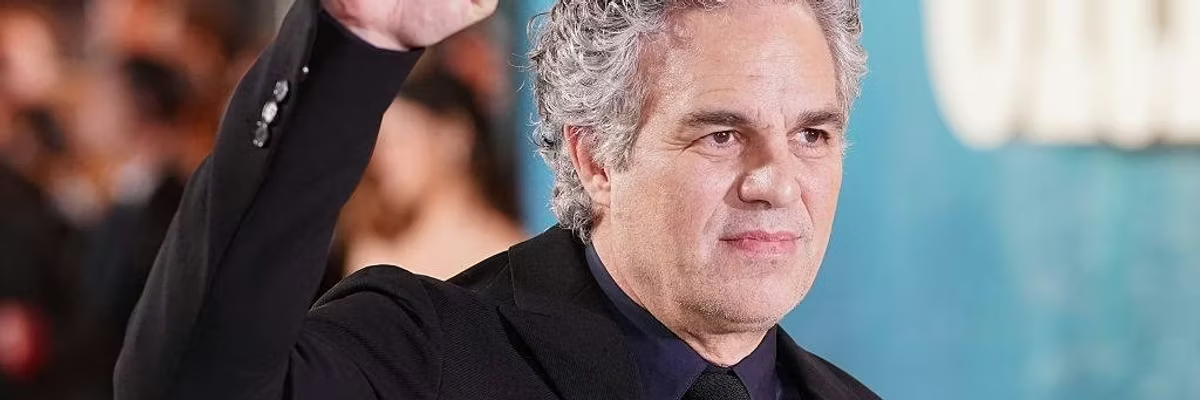
Mark Ruffalo attending the Crime 101 UK gala screening at the Odeon Luxe in Leicester Square, London. Picture date: Wednesday January 28, 2026.
"The result will be fewer opportunities for creators, fewer jobs across the production ecosystem, higher costs, and less choice for audiences."
A group of Hollywood actors, directors, and producers on Monday published an open letter demanding the proposed merger between Paramount and Warner Bros. Discovery be blocked.
In their letter, the Hollywood heavyweights outlined the harms that would come from allowing Paramount—which is owned by David Ellison, son of billionaire Trump donor Larry Ellison—to acquire Warner Bros. Discovery.
"This transaction would further consolidate an already concentrated media landscape, reducing competition at a moment when our industries—and the audiences we serve—can least afford it," the letter states. "The result will be fewer opportunities for creators, fewer jobs across the production ecosystem, higher costs, and less choice for audiences in the United States and around the world. Alarmingly, this merger would reduce the number of major US film studios to just four."
The letter goes on to describe how consolidation in the entertainment industry has already "accelerated the disappearance of the mid-budget film, the erosion of independent distribution, the collapse of the international sales market, the elimination of meaningful profit participation, and the weakening of screen credit integrity."
Looking at the bigger picture, the letter notes that "competition is essential for a healthy economy and a healthy democracy," then goes on to praise California Attorney General Rob Bonta and other state AGs for filing legal actions aimed at blocking the merger amid fears that the Trump administration could rubber-stamp it.
"We are grateful for their leadership," the letter concludes, "and stand ready to support all efforts to preserve competition, protect jobs, and ensure a vibrant future for our industry, for American culture, and for our single most significant export."
Actor Mark Ruffalo, a signatory of the letter, published an article on his Substack page outlining his own reasons for opposing the merger, which he described as "the epitome of crony capitalism and the oligarchs consolidating more corporations and media power to shape the outcome of their business interests."
Ruffalo also said he's spoken with others in Hollywood who were reluctant to sign the letter over concerns about retaliation from Trump or Ellison should the attempt to block the merger fail.
"The people pushing monopolies such as this one use fear to keep the workers in line," Ruffalo said. "I have heard it time and time again from my fellows, they are afraid of retribution. Some didn’t want to sign because they are afraid. How sad is that? In America the artists are afraid to speak out against power."
Actress Jane Fonda, founder of the modern Committee for the First Amendment, said that the proposed Paramount-Warner Bros. merger "would be one of the most destructive threats to free speech and creative expression in our history," because it would put "unprecedented power in the hands of a single corporation that already appears to have proven itself willing to sacrifice integrity for political favor."
The letter earned praise from democracy and antitrust advocates, who argued that blocking the merger was necessary to stopping President Donald Trump's ambitions for a right-wing takeover of US media.
“The future of free media and a strong entertainment industry in America is at stake here,” said Norm Eisen, co-founder and executive chair of Democracy Defenders Fund. “This proposed merger would not only harm competition and creativity, it would erode the very bedrock of our democracy."
Matt Stoller, director of research at the American Economic Liberties Project, noted that "consolidation in Hollywood has been a disaster, and has led to the weak state of the industry," and said the Paramount-Warner Bros. merger needed to be blocked to prevent further damage.
"Not only does this kind of concentration hollow out creative markets," said Stoller, "it concentrates control over culture and information in the hands of a few unaccountable executives, and in this case totalitarian Gulf countries, undermining a free and pluralistic media ecosystem that democracy depends on."
Dear Common Dreams reader, It’s been nearly 30 years since I co-founded Common Dreams with my late wife, Lina Newhouser. We had the radical notion that journalism should serve the public good, not corporate profits. It was clear to us from the outset what it would take to build such a project. No paid advertisements. No corporate sponsors. No millionaire publisher telling us what to think or do. Many people said we wouldn't last a year, but we proved those doubters wrong. Together with a tremendous team of journalists and dedicated staff, we built an independent media outlet free from the constraints of profits and corporate control. Our mission has always been simple: To inform. To inspire. To ignite change for the common good. Building Common Dreams was not easy. Our survival was never guaranteed. When you take on the most powerful forces—Wall Street greed, fossil fuel industry destruction, Big Tech lobbyists, and uber-rich oligarchs who have spent billions upon billions rigging the economy and democracy in their favor—the only bulwark you have is supporters who believe in your work. But here’s the urgent message from me today. It's never been this bad out there. And it's never been this hard to keep us going. At the very moment Common Dreams is most needed, the threats we face are intensifying. We need your support now more than ever. We don't accept corporate advertising and never will. We don't have a paywall because we don't think people should be blocked from critical news based on their ability to pay. Everything we do is funded by the donations of readers like you. When everyone does the little they can afford, we are strong. But if that support retreats or dries up, so do we. Will you donate now to make sure Common Dreams not only survives but thrives? —Craig Brown, Co-founder |
A group of Hollywood actors, directors, and producers on Monday published an open letter demanding the proposed merger between Paramount and Warner Bros. Discovery be blocked.
In their letter, the Hollywood heavyweights outlined the harms that would come from allowing Paramount—which is owned by David Ellison, son of billionaire Trump donor Larry Ellison—to acquire Warner Bros. Discovery.
"This transaction would further consolidate an already concentrated media landscape, reducing competition at a moment when our industries—and the audiences we serve—can least afford it," the letter states. "The result will be fewer opportunities for creators, fewer jobs across the production ecosystem, higher costs, and less choice for audiences in the United States and around the world. Alarmingly, this merger would reduce the number of major US film studios to just four."
The letter goes on to describe how consolidation in the entertainment industry has already "accelerated the disappearance of the mid-budget film, the erosion of independent distribution, the collapse of the international sales market, the elimination of meaningful profit participation, and the weakening of screen credit integrity."
Looking at the bigger picture, the letter notes that "competition is essential for a healthy economy and a healthy democracy," then goes on to praise California Attorney General Rob Bonta and other state AGs for filing legal actions aimed at blocking the merger amid fears that the Trump administration could rubber-stamp it.
"We are grateful for their leadership," the letter concludes, "and stand ready to support all efforts to preserve competition, protect jobs, and ensure a vibrant future for our industry, for American culture, and for our single most significant export."
Actor Mark Ruffalo, a signatory of the letter, published an article on his Substack page outlining his own reasons for opposing the merger, which he described as "the epitome of crony capitalism and the oligarchs consolidating more corporations and media power to shape the outcome of their business interests."
Ruffalo also said he's spoken with others in Hollywood who were reluctant to sign the letter over concerns about retaliation from Trump or Ellison should the attempt to block the merger fail.
"The people pushing monopolies such as this one use fear to keep the workers in line," Ruffalo said. "I have heard it time and time again from my fellows, they are afraid of retribution. Some didn’t want to sign because they are afraid. How sad is that? In America the artists are afraid to speak out against power."
Actress Jane Fonda, founder of the modern Committee for the First Amendment, said that the proposed Paramount-Warner Bros. merger "would be one of the most destructive threats to free speech and creative expression in our history," because it would put "unprecedented power in the hands of a single corporation that already appears to have proven itself willing to sacrifice integrity for political favor."
The letter earned praise from democracy and antitrust advocates, who argued that blocking the merger was necessary to stopping President Donald Trump's ambitions for a right-wing takeover of US media.
“The future of free media and a strong entertainment industry in America is at stake here,” said Norm Eisen, co-founder and executive chair of Democracy Defenders Fund. “This proposed merger would not only harm competition and creativity, it would erode the very bedrock of our democracy."
Matt Stoller, director of research at the American Economic Liberties Project, noted that "consolidation in Hollywood has been a disaster, and has led to the weak state of the industry," and said the Paramount-Warner Bros. merger needed to be blocked to prevent further damage.
"Not only does this kind of concentration hollow out creative markets," said Stoller, "it concentrates control over culture and information in the hands of a few unaccountable executives, and in this case totalitarian Gulf countries, undermining a free and pluralistic media ecosystem that democracy depends on."
A group of Hollywood actors, directors, and producers on Monday published an open letter demanding the proposed merger between Paramount and Warner Bros. Discovery be blocked.
In their letter, the Hollywood heavyweights outlined the harms that would come from allowing Paramount—which is owned by David Ellison, son of billionaire Trump donor Larry Ellison—to acquire Warner Bros. Discovery.
"This transaction would further consolidate an already concentrated media landscape, reducing competition at a moment when our industries—and the audiences we serve—can least afford it," the letter states. "The result will be fewer opportunities for creators, fewer jobs across the production ecosystem, higher costs, and less choice for audiences in the United States and around the world. Alarmingly, this merger would reduce the number of major US film studios to just four."
The letter goes on to describe how consolidation in the entertainment industry has already "accelerated the disappearance of the mid-budget film, the erosion of independent distribution, the collapse of the international sales market, the elimination of meaningful profit participation, and the weakening of screen credit integrity."
Looking at the bigger picture, the letter notes that "competition is essential for a healthy economy and a healthy democracy," then goes on to praise California Attorney General Rob Bonta and other state AGs for filing legal actions aimed at blocking the merger amid fears that the Trump administration could rubber-stamp it.
"We are grateful for their leadership," the letter concludes, "and stand ready to support all efforts to preserve competition, protect jobs, and ensure a vibrant future for our industry, for American culture, and for our single most significant export."
Actor Mark Ruffalo, a signatory of the letter, published an article on his Substack page outlining his own reasons for opposing the merger, which he described as "the epitome of crony capitalism and the oligarchs consolidating more corporations and media power to shape the outcome of their business interests."
Ruffalo also said he's spoken with others in Hollywood who were reluctant to sign the letter over concerns about retaliation from Trump or Ellison should the attempt to block the merger fail.
"The people pushing monopolies such as this one use fear to keep the workers in line," Ruffalo said. "I have heard it time and time again from my fellows, they are afraid of retribution. Some didn’t want to sign because they are afraid. How sad is that? In America the artists are afraid to speak out against power."
Actress Jane Fonda, founder of the modern Committee for the First Amendment, said that the proposed Paramount-Warner Bros. merger "would be one of the most destructive threats to free speech and creative expression in our history," because it would put "unprecedented power in the hands of a single corporation that already appears to have proven itself willing to sacrifice integrity for political favor."
The letter earned praise from democracy and antitrust advocates, who argued that blocking the merger was necessary to stopping President Donald Trump's ambitions for a right-wing takeover of US media.
“The future of free media and a strong entertainment industry in America is at stake here,” said Norm Eisen, co-founder and executive chair of Democracy Defenders Fund. “This proposed merger would not only harm competition and creativity, it would erode the very bedrock of our democracy."
Matt Stoller, director of research at the American Economic Liberties Project, noted that "consolidation in Hollywood has been a disaster, and has led to the weak state of the industry," and said the Paramount-Warner Bros. merger needed to be blocked to prevent further damage.
"Not only does this kind of concentration hollow out creative markets," said Stoller, "it concentrates control over culture and information in the hands of a few unaccountable executives, and in this case totalitarian Gulf countries, undermining a free and pluralistic media ecosystem that democracy depends on."