

SUBSCRIBE TO OUR FREE NEWSLETTER
Daily news & progressive opinion—funded by the people, not the corporations—delivered straight to your inbox.
5
#000000
#FFFFFF
To donate by check, phone, or other method, see our More Ways to Give page.
Daily news & progressive opinion—funded by the people, not the corporations—delivered straight to your inbox.
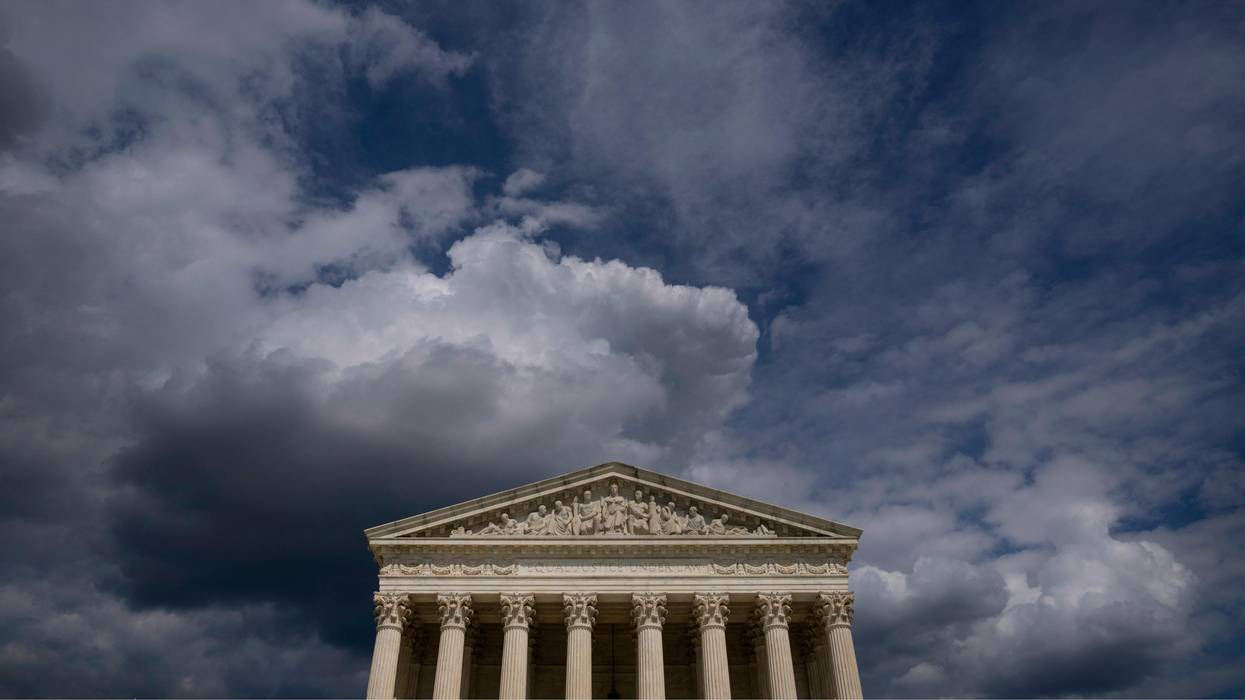
By limiting the power of federal agencies and extending the statute of limitations for challenging agency actions, these rulings introduce uncertainty and could provide an avenue for winding back regulations.
The U.S. Supreme Court recently issued decisions in four cases that could profoundly weaken the administrative state, foreshadowing widespread dysfunction for federal agencies and the vast regulatory regimes they oversee, including federal protections safeguarding public health and the environment.
The U.S. federal government has more than 439 agencies and subagencies, each with its own sphere of responsibility and expertise. These agencies are responsible for implementing, applying, and enforcing a wide array of regulations across areas such as air quality, clean drinking water, education, energy, financial markets, food safety, and healthcare—regulations that greatly impact American lives.
These Supreme Court decisions will undoubtedly be used to restrict the ability of federal agencies to interpret, apply, and enforce the laws and regulations crucial to the real-life, day-to-day implementation of our federal government’s most important functions.
The Supreme Court issued four decisions this past term (2023-2024) that challenge the authority of federal agencies:
The advent of the doctrine of Chevron deference, established in 1984 through Chevron. v. NRDC, and its demise in Loper Bright Enterprises v. Raimondo both concern environmental regulation.
Chevron v. NRDC addressed the EPA’s interpretation and application of a regulation promulgated under the Clean Air Act. The Supreme Court upheld the EPA’s interpretation of an ambiguous provision of the law and, in doing so, held that courts must defer to an agency’s reasonable interpretation of ambiguous statutory terms—enter “Chevron deference.” For the past 40 years, Chevron deference has been the cornerstone of administrative law, and Chevron v. NRDC has been cited no less than 18,000 times in other court decisions.
Without Chevron deference, the Supreme Court will have the final say over policy questions and, in the words of Justice Kagan, becomes the country’s self-appointed “administrative czar.”
The Supreme Court’s decision in Loper Bright Enterprises v. Raimondo abruptly ended Chevron deference, significantly shifting power from federal agencies to the judiciary. The case concerned the regulation of the commercial fishing of overfished Atlantic herring pursuant to the Magnuson-Stevens Fishery Conservation and Management Act. The Supreme Court considered the narrow question of whether commercial fishers of Atlantic herring can be made to shoulder the cost of hosting government fisheries monitors on board their vessels.
In its decision, the Supreme Court ruled that courts—not agencies—are to determine all questions of law, including the single best interpretation of ambiguous terms, even if those terms are scientific and technical. Justice Elena Kagan’s dissent warned that the majority decision would leave courts to determine questions far outside their expertise, including issues of environmental protection, such as how to define a “distinct population segment” of endangered “vertebrate fish or wildlife” pursuant to the Endangered Species Act.
The removal of Chevron deference fundamentally shifts power from Congress and the executive to the judicial branch. By upsetting the long-held equilibrium stewarded by the Chevron doctrine, Loper Bright Enterprises v. Raimondo will restrict the federal government’s operations and hinder environmental regulation.
Presidents depend on the administrative state to apply their policy preferences, and Congress enacts statutes with the understanding that agencies will utilize their experience and expertise to reasonably interpret ambiguities. Without Chevron deference, the Supreme Court will have the final say over policy questions and, in the words of Justice Kagan, becomes the country’s self-appointed “administrative czar.”
Loper Bright Enterprises v. Raimondo is already having a profound impact: As of August 5, 2024, 59 courts have cited the decision, and litigants in 120 other cases have cited it in court filings. The decision is being used to stymie ESG investment regulation, reopen federal waters after an emergency closure to protect North Atlantic right whales, contest solar power facility certifications as a qualifying source of alternative energy, challenge requirements for water heaters to meet efficiency standards, and defend against the use of a tire manufacturing chemical whose runoff caused a “taking” of protected fish species.
Not only does Loper Bright Enterprises v. Raimondo present a serious obstacle to the application and interpretation of federal environmental protection rules, but, together with SEC v. Jarkesy, it will also limit the ability of agencies to enforce those rules.
Loper Bright Enterprises v. Raimondo and SEC v. Jarkesy will influence the ongoing challenge to the SEC’s Climate Disclosure Rules, currently pending before the Eighth Circuit Court of Appeals. The SEC’s Climate Disclosure Rules—albeit insipid—require larger companies to disclose material Scope 1 (direct) and Scope 2 (indirect) emissions information. These rules have been challenged by 25 states, two Big Oil trade groups, and the U.S. Chamber of Commerce.
The primary basis for the challenge to the rules is that it represents an unauthorized expansion of the SEC’s statutory rulemaking authority, making it ultra vires (beyond its legal powers). In overturning Chevron deference, the Supreme Court held that rulemaking agencies, such as the SEC, must demonstrate unambiguous congressional authority to create a rule, increasing the burden on these administrative agencies to prove they have the authority to implement such regulations. This poses a problem for the SEC, which adopted the Climate Disclosure Rules under the investor protection legislation of the Securities Act and the Securities Exchange Act. The SEC must demonstrate that it has unambiguous statutory authority to make climate-related regulations under these laws.
The EPA is one such agency that, until SEC v. Jarkesy, could impose civil penalties in administrative proceedings when environmental protection regulations have been violated, but it now faces limitations due to the decision.
Even if the Eighth Circuit upholds the Climate Disclosure Rules, their enforcement faces additional obstacles due to SEC v. Jarkesy. Failure to disclose material Scope 1 or 2 emissions could violate the Climate Disclosure Rules and potentially constitute securities fraud under SEC Rule 10b-5. The SEC can seek civil penalties for securities fraud, and since the Dodd-Frank Act, it could do so in the agency’s administrative courts.
In the SEC v. Jarkesy case, the SEC brought an enforcement action against investment adviser George Jarkesy, Jr. for securities fraud, resulting in a civil penalty of $300,000 and a disgorgement of $685,000 imposed by an administrative law judge. However, the Supreme Court ruled that the U.S. Constitution’s Seventh Amendment entitles defendants to jury trials for any statutory claim that is legal in nature—even those brought by the government—and impacts the defendants’ private rights. The SEC v. Jarkesy decision significantly limits the SEC’s ability to combat securities fraud involving misleading and deceptive climate disclosures by removing the option of administrative proceedings and requiring enforcement actions be litigated through the lengthy and expensive jury trial process.
The decision seriously undermines the ability of not just the SEC to bring enforcement actions, but, as noted by Justice Sonia Sotomayor in her dissent, SEC v. Jarkesy will also restrict the enforcement capabilities of over two dozen other federal agencies that can impose civil penalties in administrative proceedings. The EPA is one such agency that, until SEC v. Jarkesy, could impose civil penalties in administrative proceedings when environmental protection regulations have been violated, but it now faces limitations due to the decision.
The Administrative Procedure Act provides that a party has six years to challenge an agency regulation, and it was typically presumed that the six-year limitation began to run when the agency issued the regulation. However, in Corner Post v. Federal Reserve, the Supreme Court held that the limitation period starts when the party challenging the rule is actually injured by it. Accordingly, instead of the clock starting at publication, it starts at a different time for each potential litigant.
This decision means that longstanding agency regulations may now be subject to challenges by parties who have only recently been impacted by the rule. The Corner Post v. Federal Reserve decision dramatically expands the universe of existing regulations vulnerable to legal challenges by eliminating existing time restrictions on when court challenges to regulations can be brought.
Corner Post v. Federal Reserve will precipitate legal uncertainty and undermine the predictability of the law and agency regulations.
While the focus has been on the above mentioned cases, another decision has received less attention but is just as significant for federal environmental regulation. Ohio v. EPA inhibits the EPA’s ability to regulate air pollution on a national basis.
Under the Clean Air Act’s “good neighbor” rule, the EPA required 23 states—under a single implementation plan—to reduce air pollution traveling to downwind states, thereby requiring big polluters in upwind states to reduce emissions.
In Ohio v. EPA, the Court provided a preview of the post-Chevron difficulties courts will confront in grappling with technical questions best left to agency experts.
The court’s majority recognized the harm that increased ozone levels can cause, including triggering and exacerbating health problems and damaging vegetation, but held that the plan was likely “arbitrary or capricious” because the EPA had not “offered a ‘satisfactory explanation for its action[,] including a rational connection between the facts found and the choice made.’” According to the majority, the EPA failed to explain how the plan’s cost thresholds and emission limits were impacted by the number of states included in the plan.
The court split five-four. Justice Amy Coney Barrett—a reliable member of the court’s conservative clique—dissented and observed:
Given the number of companies included and the timelines for review, the court’s injunction leaves large swaths of upwind states free to keep contributing significantly to their downwind neighbors’ ozone problems for the next several years…
An application for a stay was granted, pending the final determination of the merits of the case. Significantly, Justice Barrett noted that Ohio v. EPA is “fact-intensive and highly technical” and—somewhat at odds with the majority opinion she joined in Loper Bright Enterprises v. Raimondo—that the court “should proceed all the more cautiously in cases like this one with voluminous, technical records and thorny legal questions.”
Indeed, in Ohio v. EPA, the court provided a preview of the post-Chevron difficulties courts will confront in grappling with technical questions best left to agency experts. Justice Neil Gorsuch, the author of the majority opinion, demonstrated that judges are not best placed to determine highly technical non-legal questions: He was clearly confused about the pollutant in question. The original opinion referred to “nitrous oxide” (laughing gas) five times instead of “nitrogen oxide,” an air pollutant that the EPA’s policy aimed to reduce. After the error gained traction on social media, the court issued a corrected opinion.
The Loper Bright Enterprises v. Raimondo and SEC v. Jarkesy decisions mean that federal agencies will not receive deference in interpreting their enabling legislation and no longer have the ability to enforce those regulations before administrative law judges. After Corner Post v. Federal Reserve, it is unclear when—or if—agency regulations will be free from potential legal challenges. And, in Ohio v. EPA, the Supreme Court inhibited the EPA’s ability to regulate air pollution on a national basis.
These recent Supreme Court decisions represent a seismic shift in the regulatory landscape and pose a particular threat to the federal government’s environmental protection regime. By limiting the power of federal agencies and extending the statute of limitations for challenging agency actions, these rulings introduce significant uncertainty and could provide an avenue for winding back environmental regulations that are already on the books. The full impact of these decisions will unfold over time, but their immediate effect is a substantial weakening of federal regulatory power and a suite of new tools for those seeking to challenge federal regulation.
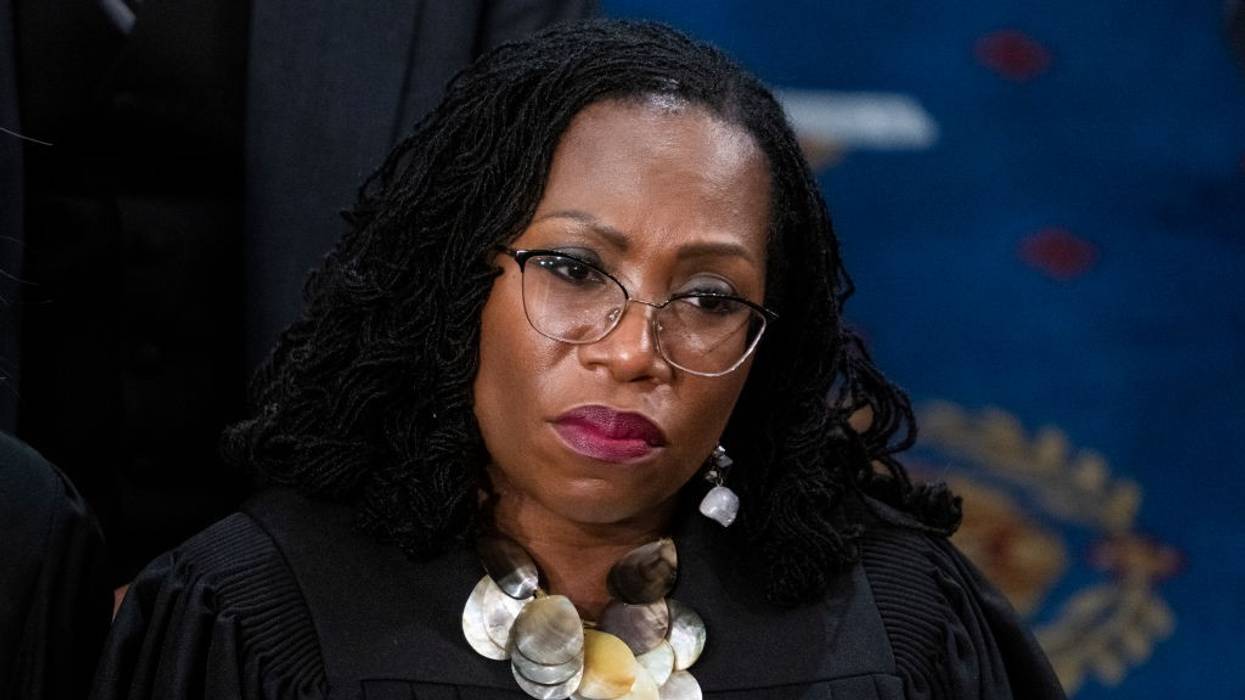
The liberal justice said Congress can remedy the "profoundly destabilizing" decision by passing legislation to strengthen the federal regulatory regime.
As the U.S. Supreme Court dealt yet another blow to the federal government's regulatory authority, Justice Ketanji Brown Jackson on Monday stressed that "the ball is in Congress' court" to enact legislation to "forestall the coming chaos" wrought by the right-wing supermajority's decision.
The justices ruled 6-3 in Corner Post Inc. v. Board of Governors of the Federal Reserve System that the Administrative Procedures Act's (APA) statute of limitations period does not begin until a plaintiff is adversely affected by a regulation. The ruling reverses a lower court's dismissal of a lawsuit filed by Corner Post—a North Dakota truck stop that challenged a U.S. Federal Reserve rule capping debit card swipe fees—because the six-year statute of limitations on such challenges had passed.
Monday's ruling makes it much easier to sue government agencies. As Sydney Bryant and Devon Ombres at the Center for American Progress explained, the decision "is intended to allow a swarm of legal challenges to rules that have protected the American people from bad actors and corporate malfeasance for decades."
"Corner Post is not the story of David versus Goliath but rather the Trojan Horse, where moneyed interests attempt to sneak in their anti-regulation politics under the guise of altruism."
In a dissent joined by fellow liberal Justices Sonia Sotomayor and Elena Kagan, Jackson wrote that "today, the majority throws... caution to the wind and engages in the same kind of misguided reasoning about statutory limitations periods that we have previously admonished."
"The court's baseless conclusion means that there is effectively no longer any limitations period for lawsuits that challenge agency regulations on their face," she continued. "Allowing every new commercial entity to bring fresh facial challenges to long-existing regulations is profoundly destabilizing for both government and businesses. It also allows well-heeled litigants to game the system by creating new entities or finding new plaintiffs whenever they blow past the statutory deadline."
"At the end of a momentous term, this much is clear: The tsunami of lawsuits against agencies that the court's holdings in this case and Loper Bright have authorized has the potential to devastate the functioning of the federal government," Jackson added, referring to last week's 6-3 overturning of the so-called Chevron doctrine, the legal principle under which courts deferred to federal agencies' interpretations of ambiguous laws passed by Congress.
While numerous business advocates welcomed Monday's ruling, a broad range of consumer, labor, and other groups echoed the alarm in Jackson's dissent.
"Americans expect that safeguards will protect us and our families from unsafe food, products, polluted air and water, and dangerous and unfair working conditions. This decision provides special interests, opposed to the safeguards that people rely upon, with more opportunities to challenge and seek to overturn these important protections," said Rachel Weintraub, executive director of the Coalition for Sensible Safeguards.
Weintraub added that the ruling "undermines federal agencies' ability to use administrative courts to impose civil penalties for violating regulatory protections" and "starkly impedes agencies' ability to protect the public."
Bryant and Ombres wrote that "Corner Post is not the story of David versus Goliath but rather the Trojan Horse, where moneyed interests attempt to sneak in their anti-regulation politics under the guise of altruism."
Jackson's dissent states that "Congress still has a chance to address this absurdity and forestall the coming chaos" by "clarifying that the statutes it enacts are designed to facilitate the functioning of agencies, not to hobble them."
"In particular, Congress can amend §2401(a)," Jackson offered, referring to the default six-year statute of limitations, "or enact a specific review provision for APA claims, to state explicitly what any such rule must mean if it is to operate as a limitations period in this context: Regulated entities have six years from the date of the agency action to bring a lawsuit seeking to have it changed or invalidated; after that, facial challenges must end."
"By doing this," she added, "Congress can make clear that lawsuits bringing facial claims against agencies are not personal attack vehicles for new entities created just for that purpose."
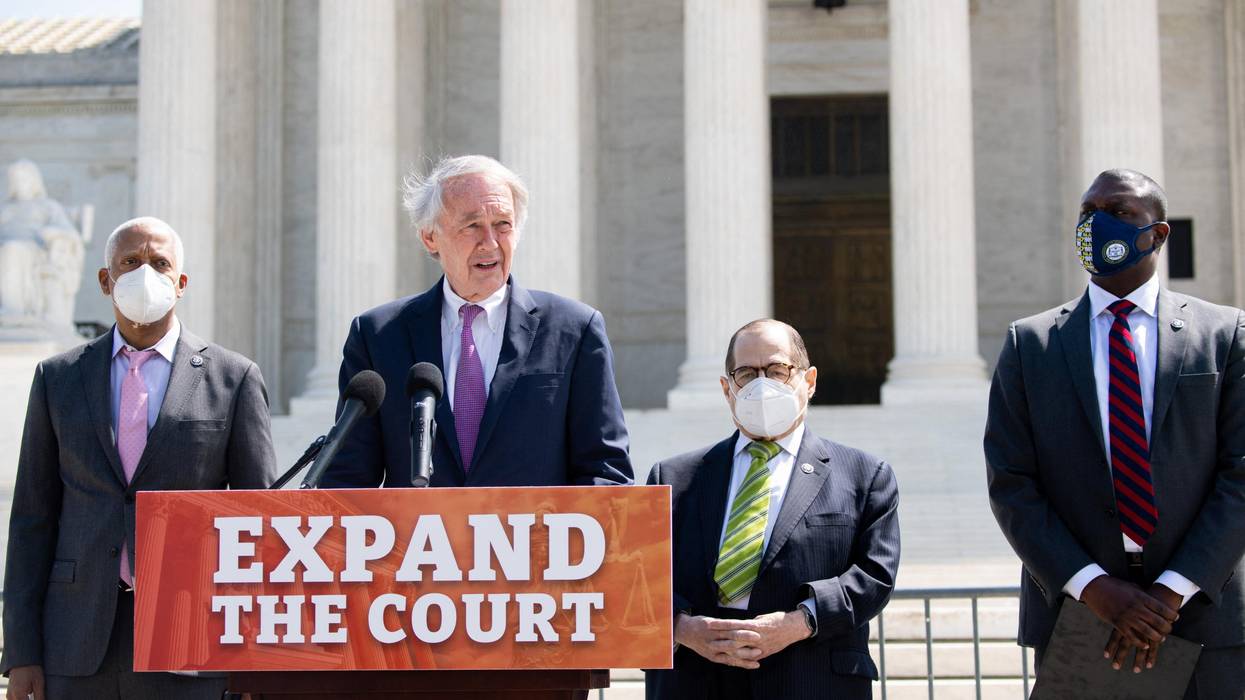
"I plan to introduce legislation to protect the government's policymaking ability that existed under Chevron that has worked for the last 40 years," Sen. Ed Markey said.
Following the Supreme Court's ruling on Friday overturning the so-called Chevron doctrine—which instructed courts to defer to federal agencies' reasonable interpretations of laws passed by Congress as they regulate everything from food safety to labor rights to climate pollution—progressive lawmakers vowed to take action to protect the power of these agencies to shield the public from toxic chemicals and unscrupulous employers.
Legislators expressed concerns about the impacts of the court's 6-3 ruling in Loper Bright Enterprises v. Raimondo and Relentless, Inc. v. Department of Commerce, which ended a 40-year precedent established by Chevron v. Natural Resources Defense Council in 1984.
"Now, with this ill-advised decision, judges must no longer defer to the decisions about Americans' health, safety, and welfare made by agencies with technical and scientific expertise in their fields," Sen. Ed Markey (D-Mass.) said in a statement. "MAGA extremist Republicans and their big business cronies are rejoicing as they look forward to creating a regulatory black hole that destroys fundamental protections for every American in this country."
"This unhinged Supreme Court needs to stop legislating from the bench, and we must pass sweeping reform to hold them accountable."
"I plan to introduce legislation to protect the government's policymaking ability that existed under Chevron that has worked for the last 40 years," Markey said.
Progressive Caucus Chair Pramila Jayapal (D-Wash.) called the ruling "dangerous" and urged Congress to "immediately pass" the Stop Corporate Capture Act, which she introduced in March 2023.
In a statement Friday, Jayapal said the act was "the only bill that codifies Chevron deference, strengthens the federal-agency rulemaking process, and ensures that rulemaking is guided by the public interest—not what's good for wealthy corporations."
The act would codify Chevron by providing "statutory authority for the judicial principle that requires courts to defer to an agency's reasonable or permissible interpretation of a federal law when the law is silent or ambiguous."
In addition, it would:
The Coalition for Sensible Safeguards, a group of more than 160 organizations mobilizing for stronger public protections, also called on Congress to pass the Stop Corporate Capture Act.
"The bill is a comprehensive blueprint for modernizing, improving, and strengthening the regulatory system to better protect the public," the coalition wrote in response to Friday's ruling. "It would ensure greater public input into regulatory decisions, promote scientific integrity, and restore our government's ability to deliver results for workers, consumers, public health, and our environment."
Jayapal also called on Congress to "enact sweeping oversight measures to rein in corruption and billionaire influence at the Supreme Court, whose far-right extremist majority routinely flouts basic ethics, throws out precedent, and legislates from the bench to benefit the wealthiest and most powerful."
Rep. Rashida Tlaib (D-Mich.) similarly recommended congressional action to address court corruption. In a statement, she called the decision "a power grab for the corrupt Supreme Court who continues to do the bidding of greedy corporations."
"The MAGA Court just overruled 40 years of precedent that empowered federal agencies to hold powerful corporations accountable, protect our workplaces and public health, and ensure that we have clean water and air," Tlaib continued. "This unhinged Supreme Court needs to stop legislating from the bench, and we must pass sweeping reform to hold them accountable."
In the meantime, the Coalition for Sensible Safeguards said that the ruling did not strip regulatory bodies of their authority to pass new rules to protect the public and the environment.
"This decision is a gift to big corporations, making it easier for them to challenge rules to ensure clean air and water, safe workplace and products, and fair commercial and financial practices," said Public Citizen president and coalition co-chair Robert Weissman. "But the decision is no excuse for regulators to stop doing their jobs. They must continue to follow the law and uphold their missions to protect consumers, workers, and our environment."
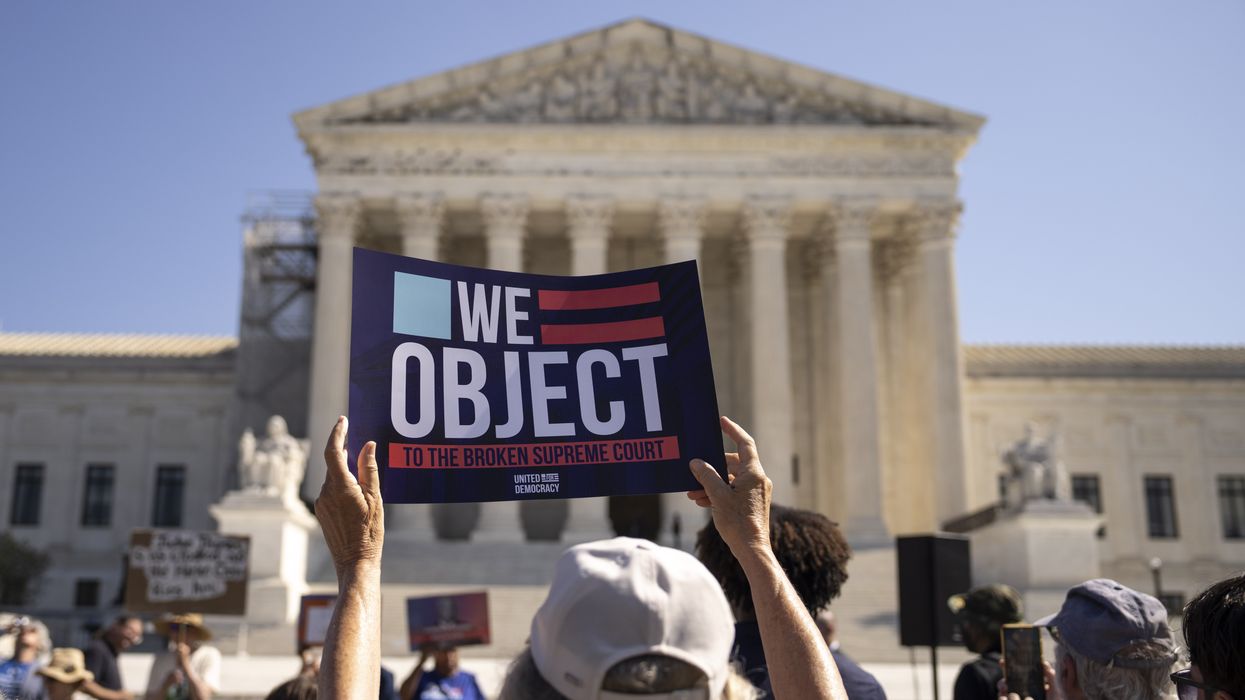
"Supreme corruption demands supreme transparency," said one campaigner behind the new effort.
A trio of progressive watchdog groups on Thursday unveiled a new database detailing the "troubling connections" between the U.S. Supreme Court's right-wing justices, the conservative organizations that have intervened in cases before the court, and the wealthy donors funding them.
Take Back the Court, Revolving Door Project, and True North Research published the database at SupremeTransparency.org, which "shines a spotlight on the complex web connecting justices to powerbrokers and the organizations that those powerbrokers fund, lead, and are otherwise linked to."
The watchdogs found that nearly 1 in 7 amicus briefs filed during the 2023-24 Supreme Court term were lodged by at least one powerbroker-affiliated organization. This affects 32 different cases before the court.
"The current U.S. Supreme Court has gone rogue."
For example, in Moore v. United States—in which the Supreme Court could preemptively ban or limit wealth taxes—half of all amicus briefs were filed by groups affiliated with right-wing powerbrokers.
In Loper Bright Enterprises v. Raimondo, groups funded by billionaire industrialist Charles Koch want to scupper the Chevron deference, a 40-year precedent under which judges defer to the legal interpretations of federal agencies if Congress has not passed any laws on an issue. Powerbroker-affiliated organizations have filed more than one-third of the amicus briefs seeking to overturn the Chevron doctrine.
"Far too often people with insidiously close ties to justices like Clarence Thomas and Samuel Alito, such as Harlan Crow and Paul Singer, signal their interest in the outcome of cases by funding, leading, or influencing organizations that file amicus briefs," Revolving Door Project executive director Jeff Hauser said in a statement.
"There is just as much of a conflict of interest when a justice hears a case involving a benefactor as a named party and one in which the person who illicitly enabled their luxurious lifestyle is 'merely' similarly situated to one of the parties," Hauser added.
According to SupremeTransparency.org:
The current U.S. Supreme Court has gone rogue. The right-wing justices that make up the court's supermajority frequently toy with precedent and the rule of law to issue opinions that not only defy the will of a majority of Americans, but also rewrite constitutional principles, overturn widely respected legal precedents, and gut longstanding rules that protect the public interest.
In just the 2021 and 2022 Supreme Court terms alone, the court overturned Roe v. Wade after 49 years; gutted both the decades-old Clean Air Act and Clean Water Act; overturned a 100+ year old gun safety law; eroded the National Labor Relations Act (adopted as part of New Deal reforms to protect workers); broke with their own procedures regarding standing to sue in order to block student debt relief; and reversed decades of precedent to end the decadeslong practice of race-conscious college admissions policies that promoted diversity and redressed discrimination. But this radically reactionary court and its radically reactionary justices aren't acting alone.
"Supreme corruption demands supreme transparency," said Take Back the Court president Sarah Lipton-Lubet. "It's no secret that the many of the rich benefactors cozying up to the conservative justices are the same people who fund right-wing organizations with business before the court."
"But too often, stories about the Supreme Court don't connect these dots—and as a result, they leave us with an incomplete picture," she continued. "The truth is right-wing powerbrokers are seemingly paying to play; they're funding groups that are weighing in on court cases even as they buy access to the justices who will rule on those cases."
"It's just one of the ways our Supreme Court is deeply, fundamentally broken," Lipton-Lubet added. "And it's a reminder of how urgent and necessary it is that we reform this corrupt court."
Last year, the Supreme Court adopted a Code of Conduct that contained few new rules, no enforcement mechanism, and was widely panned as a toothless public relations stunt. Bolder proposals for reforming the high court include term limits and increasing the number of justices.

"Everything from the climate to consumer safety could be worse off thanks to this potential decision and the corporate lobbyists who brought us to this point."
The conservative-dominated U.S. Supreme Court on Wednesday heard oral arguments in a pair of cases taking direct aim at a critical precedent that, if overturned, would gut federal agencies' ability to set and enforce regulations—a potentially massive blow to the climate, civil rights, public health, and more.
Central to Loper Bright Enterprises v. Raimondo and Relentless, Inc. v. Department of Commerce is the so-called Chevron doctrine, which stems from a 1984 Supreme Court opinion that said judges should defer to federal agencies' reasonable interpretation of a law if Congress has not specifically addressed the issue.
The precedent has long been a target of the fossil fuel industry and right-wing groups that are backing the plaintiffs in Loper and Relentless, both of which involve herring fishermen who challenged federal rules requiring them to pay for onboard compliance monitors.
Organizations that have received millions of dollars from the oil-soaked Koch network are supporting the effort to overturn the Chevron doctrine. In Loper, the plaintiffs' lawyers are "working pro bono and belong to a public-interest law firm, Cause of Action, that discloses no donors and reports having no employees," The New York Times reported Tuesday.
"However," the Times added, "court records show that the lawyers work for Americans for Prosperity, a group funded by [Charles] Koch, the chairman of Koch Industries and a champion of anti-regulatory causes."
Relentless plaintiffs are represented by the New Civil Liberties Alliance, a right-wing group that has received millions from the Charles G. Koch Charitable Foundation.
Caroline Ciccone, president of the watchdog group Accountable.US, said in a statement Wednesday that "the special interests who spent big to stack the court may get their way if the Supreme Court weakens the government's ability to hold industry accountable when they pollute for profit."
"Everything from the climate to consumer safety could be worse off thanks to this potential decision and the corporate lobbyists who brought us to this point," Ciccone added.
Earlier this week, Accountable.US urged right-wing Justice Neil Gorsuch—who has criticized the Chevron doctrine—to recuse from Loper, citing his ties to a billionaire oil tycoon who is positioned to benefit from a ruling that scraps the decades-old precedent. Justice Clarence Thomas also faced calls to recuse over his ties to the Koch network.
Neither agreed to step away from the case.
At the start of the Supreme Court's hearing Wednesday, liberal Justice Elena Kagan expressed concern that gutting Chevron would give judges who lack subject-matter expertise power over policy decisions previously made by agencies staffed with scientists and other experts.
"You think that the court should determine whether a new product is a dietary supplement or a drug, without giving deference to the agency where it is not clear from the text of the statute or from using any traditional methods of statutory interpretation whether in fact the new product is a dietary supplement or a drug?" Kagan asked Roman Martinez, an attorney for the plaintiffs in Relentless. "You want the courts to decide that?"
The U.S. Supreme Court, which includes three justices appointed by former President Donald Trump, has recently shown a willingness to curb federal agencies' power to enforce key laws. In its 2022 ruling in West Virginia v. Environmental Protection Agency, the court's conservative supermajority limited the EPA's authority to regulate power plants under the 1970 Clean Air Act.
But environmentalists and others warned that a ruling in favor of the plaintiffs in Loper and Relentless would strike a far more sweeping and devastating blow.
“The consequences of this case will be serious for fishery management, yes," said Meredith Moore, director of Ocean Conservancy's fish conservation program. "But it also puts at risk all of the environmental and social programs that keep our air and water clean, our homes and workplaces safe, and ourselves and our children healthy."
"If the Supreme Court eradicates Chevron deference, it will overturn 40 years of foundational administrative and environmental law that has provided stable public resource management," Moore added. "It will allow science-based management and agency expertise to be replaced with the inexpert policy and ideological preferences of unelected judges, potentially resulting in dramatically different interpretations of law across the country."
Tishan Weerasooriya, senior associate of policy and political affairs at Stand Up America, echoed those concerns, saying in a statement that "if the MAGA justices of the court overturn another decades-old precedent, it will greatly reduce the ability of scientists and experts at government agencies to defend every Americans' right to clean water and air, worker protections, healthcare, and more."
"Billionaires and elite corporations have been gunning to overturn this precedent for years, hoping to increase their profits even further if experts and scientists are no longer setting safety standards," said Weerasooriya. "If the Roberts court overturns Chevron, it will continue to erode our fundamental freedoms and safety in deference to the wealthy and corporations."

"For years, regulated interests have funded a full-scale campaign to delegitimize and dismantle federal regulations."
Hours before ProPublica revealed new details about U.S. Supreme Court Justice Clarence Thomas' relationship with the Koch network, a group of Democratic senators filed a brief on Thursday warning that Koch-backed entities are closely involved in an upcoming case that could further gut the federal government's regulatory power—and enhance the strength of the conservative-dominated high court.
The case in question is Loper Bright Enterprises v. Raimondo, which stems from a New Jersey-based fishing company's challenge to a law requiring certain fishing boats to carry federal compliance monitors to enforce regulations.
Loper Bright Enterprises specifically objected to an interpretation of federal law by the National Marine Fisheries Service, which said the Magnuson-Stevens Act allows the agency to require industry to pay the costs of the monitors.
The dispute over an obscure federal statute has since exploded into a matter of great interest to industry groups and environmentalists, with the latter warning that if the Supreme Court sides with the plaintiffs, it will be much more difficult for federal agencies to implement climate regulations.
Sens. Sheldon Whitehouse (D-R.I.), Mazie Hirono (D-Hawaii), Dianne Feinstein (D-Calif.), and Elizabeth Warren (D-Mass.) echoed that concern and spotlighted the attention the case has attracted from right-wing and corporate-funded groups.
"This case is the product of a decades-long effort by pro-corporate interests to eviscerate the federal government's regulatory apparatus, to the detriment of the American people," the lawmakers wrote, noting that a number of groups connected to the Koch network and other powerful right-wing organizations have submitted briefs in support of the plaintiffs in Loper v. Raimondo.
"For example, amici The Buckeye Institute, Cato Institute, Competitive Enterprise Institute, Landmark Legal Foundation, Mountain States Legal Foundation, National Right to Work Legal Defense Foundation, New Civil Liberties Alliance, and Pacific Legal Foundation have all received hundreds of thousands, and sometimes millions, of dollars from Donors Trust and Donors Capital Fund—two donor-advised funds that allow ultra-wealthy interests to direct funding anonymously."
"The Buckeye Institute, Cato Institute, Competitive Enterprise Institute, New Civil Liberties Alliance, and Pacific Legal Foundation
have also received substantial funding from the Koch family foundations—another top-ten funder for the climate change counter-movement," the senators added.
"The court should proceed cautiously before contributing to their sought-for degradation of our American regulatory system."
At the center of Loper v. Raimondo is the so-called Chevron doctrine, a decades-old administrative law principle that says courts should defer to a federal agency's "reasonable" interpretation of a statute when the law's language is ambiguous.
The plaintiffs in the case and their corporate-backed supporters have called on the Supreme Court to either weaken the Chevron doctrine or overrule it entirely.
In its amicus brief in the case, the Cato Institute—which was co-founded by billionaire oil tycoon Charles Koch—declares that the Chevron doctrine is "unconstitutional and ahistorical" and has "wreaked havoc in the lower courts upon people and businesses."
The Democratic senators counter in their brief that the Chevron doctrine has been critical in "allowing Congress to rely on agency capacity and subject-matter expertise to help carry out Congress' broad policy objectives."
"Administrative regulations reined in dangerous industry activities," the senators added, "and our society became safer and more prosperous."
A ruling that effectively casts the principle aside, the lawmakers argued, "would not just conflict with Congress' well-established policymaking desires; it would erode the separation of powers by shifting policymaking power from Congress and the executive to the unaccountable judiciary."
The brief was submitted a day before ProPublica reported that Thomas, one of the justices poised to rule on Loper v. Raimondo, has attended at least two donor events for the Koch network during his time on the Supreme Court.
ProPublica noted that Thomas used to support the Chevron doctrine but has changed his position in recent years amid a growing corporate onslaught against the regulatory principle.
The Democratic senators stressed in their brief that "the assault in this case on the regulatory system is not an isolated effort."
"For years, regulated interests have funded a full-scale campaign to delegitimize and dismantle federal regulations,” the lawmakers wrote. "The court should proceed cautiously before contributing to their sought-for degradation of our American regulatory system."