

SUBSCRIBE TO OUR FREE NEWSLETTER
Daily news & progressive opinion—funded by the people, not the corporations—delivered straight to your inbox.
5
#000000
#FFFFFF
To donate by check, phone, or other method, see our More Ways to Give page.
Daily news & progressive opinion—funded by the people, not the corporations—delivered straight to your inbox.
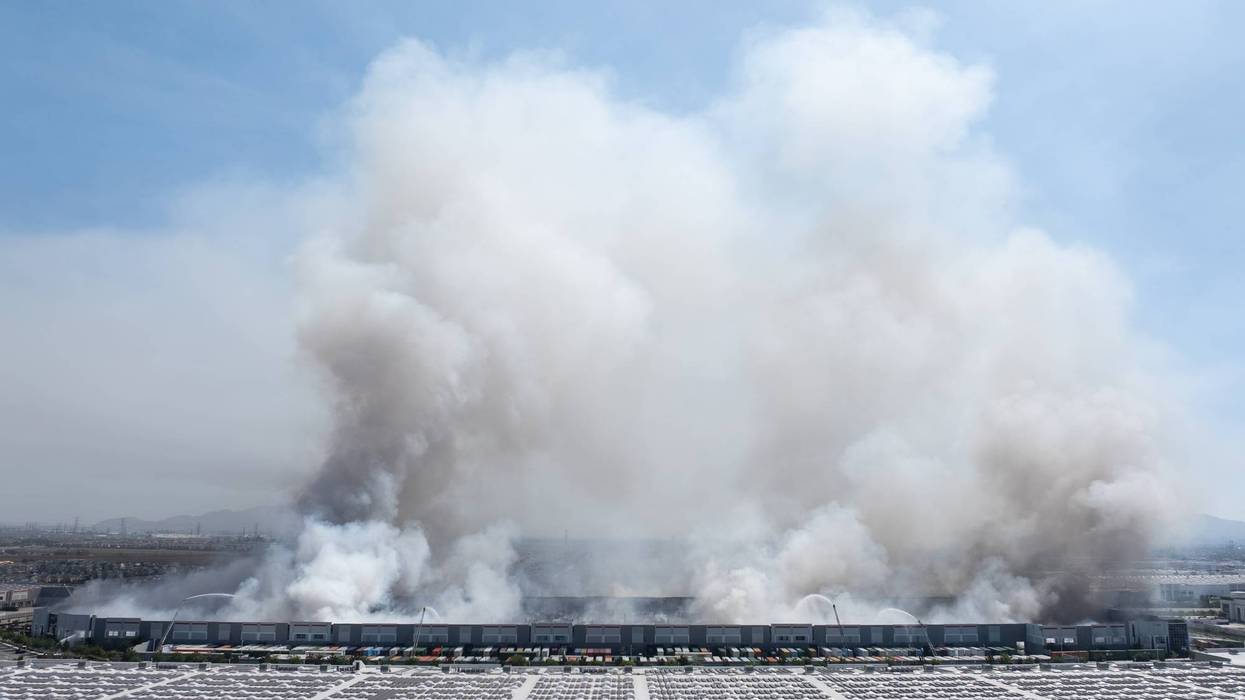
"Expect to see more of this as people struggle to survive under our decaying capitalist system," warned one observer.
The 29-year-old employee accused of burning down a paper products warehouse in southern California was allegedly furious over pay and working conditions at the facility and compared himself Luigi Mangione, the anti-capitalist folk hero to many Americans who allegedly assassinated a health insurance CEO.
Chamel Abdulkarim is facing federal and state felony charges in connection with a blaze that tore through the 1.2 million square-foot Kimberly-Clark warehouse in Ontario, San Bernardino County, shortly after 12:30 am on Tuesday. The Los Angeles Times reported that 20 other people were working in the facility, which is roughly the size of 11 city blocks, at the time. There are no reports of any injuries.
According to the US Department of Justice (DOJ), Abdulkarim uploaded videos to Facebook showing him setting fires in the warehouse and saying, “If you’re not going to pay us enough to fucking live or afford to live, at least pay us enough not to do this shit."
Abdulkarim allegedly said in texts and phone calls that he cost Kimberly-Clark "billions," adding, "All you had to do was pay us enough to live."
"All you had to do was pay us enough to live".On April 7, 2026, a 29-year-old worker named Chamel Abdulkarim was arrested on arson-related charges after a massive, six-alarm fire destroyed a 1.2-million-square-foot Kimberly-Clark warehouse in Ontario, California.
[image or embed]
— Raider (@iwillnotbesilenced.bsky.social) April 8, 2026 at 6:33 PM
The DOJ said the blaze caused "approximately $500 million in damage."
Prosecutors said that after starting the fires, Abdulkarim called a friend and said that “a lot of people are going to understand” what he did, just like when “Luigi popped that mutherfucker,” a reference to Mangione's alleged murder of UnitedHealthcare CEO Brian Thompson in New York in 2024.
Shareholders of Kimberly-Clark—which makes products including Kleenex tissues, Scott and Cottonelle toilet paper, Huggies diapers, and Kotex feminine care products—enjoyed profits topping $2.0 billion last year. Company chairman and CEO Michael Hsu made about $15.3 in compensation. That's more than 300 times as much as the average Kimberly-Clark employee earned, according to the AFL-CIO.
Critics of capitalism have long argued that the yawning chasm between rich and poor in the United States is a recipe for disaster that could far exceed individual acts of resistance, if the crisis is not soon addressed. However, under President Donald Trump and the Republican-controlled Congress, wealth inequality continues to increase at what many experts argue is an unsustainable rate.
Many leftists took to social media to praise the blaze, with some, like the Rev. Oliver Dean Snow of Mothman Ministries, comparing the arson attack to historical acts of radical resistance like the 1884 New Straitsville Mine Fire, in which striking union miners in Ohio pushed burning coal cars deep into a mine, causing an underground inferno that not only permanently shut down operations, but is believed to still be burning to this day, 141 years later.
Idk why Chamel Abdulkarim isn’t being hailed the same way Luigi Mangione was. Especially by Appalachians. Bro did something based and literally hurt NO ONE. Only thing that got hurt was same toilet paper. Some of yalls ancestors would be ashamed of you.ohiomemory.ohiohistory.org/archives/216
[image or embed]
— Preacher from the Black Lagoon (@revpoppop.bsky.social) April 10, 2026 at 12:46 PM
"Expect to see more of this as people struggle to survive under our decaying capitalist system," said one popular socialist account on X.
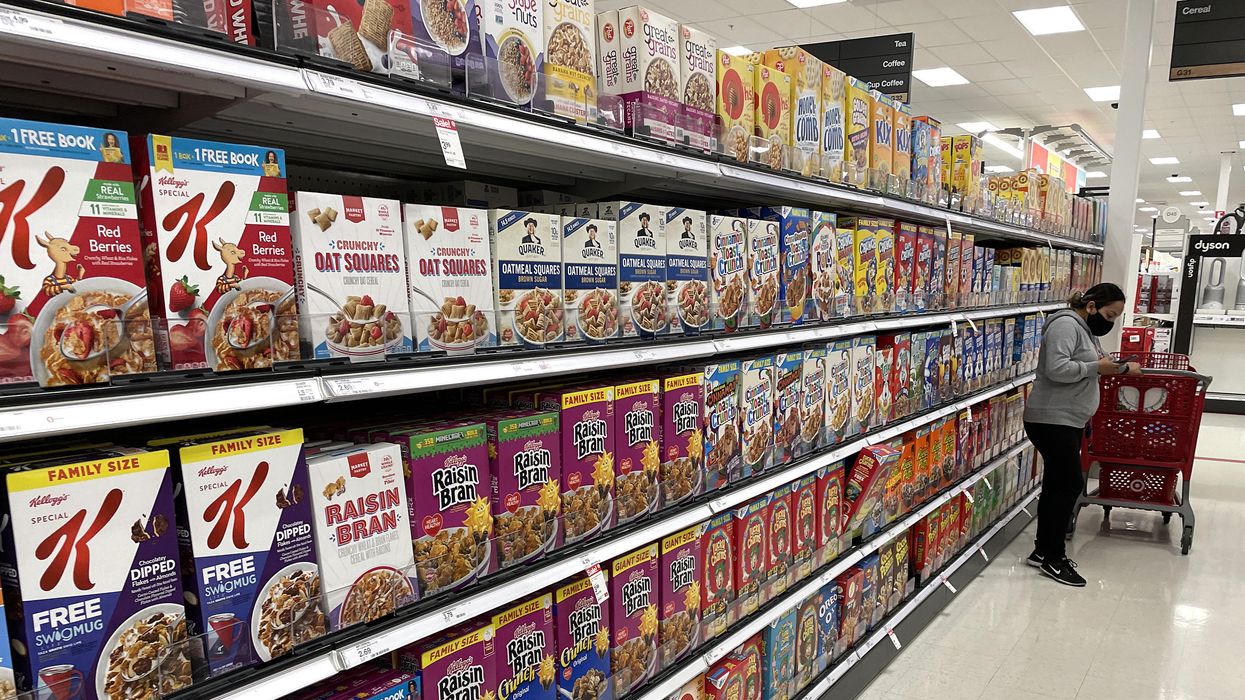
"While shrinkflation is not new, it is arguably the most deceptive pricing practice companies use," reads the report.
Executives in corporate earnings meetings call it "price pack architecture," but economic justice advocates, Democrats in Congress, and in recent days, Cookie Monster of "Sesame Street" have a different term for companies' practice of reducing the weight or size of a product while charging the same amount for it: shrinkflation.
Major corporations like PepsiCo and Utz have not only kept prices high even as pandemic era supply chain and labor issues have eased—a practice recognized as "greedflation"—but have also increasingly been reducing the size of products like snacks, drinks, and even essentials like toilet paper rolls, a new analysis from Groundwork Collaborative shows.
"While shrinkflation is not new, it is arguably the most deceptive pricing practice companies use and has come under renewed scrutiny as Americans face grocery prices 25% higher than prior to the pandemic," reads the report, titled Big Profits in Small Packages. "We find that as much as 10% of inflation in key product categories can be attributed to shrinkflation."
Companies have claimed to customers that shrinking goods is for the public good, with General Mills telling NPR that reducing its "family size" cereal boxes from 19.3 ounces to 18.1 ounces without reducing the cost would allow for "more efficient truck loading leading to fewer trucks on the road and fewer gallons of fuel use, which is important in... reducing global emissions."
To investors, though, executives made no mention of wanting to reduce fuel use or emissions from transportation in a 2021 earnings call, saying the strategy was simply aimed at managing the company's "list pricing" and "promotional optimization," according to Groundwork's report.
"In quarterly earnings calls with investors and analysts, corporate executives are candid about their future plans to downsize product quantities by playing with 'price pack architecture', as well as the profits they plan to derive from doing so," reads the report.
One French grocery chain pulled PepsiCo's snack and drink products from its shelves in January due to its pricing practices after having issued a warning to companies about shrinkflation. In the U.S., however, the company told reporters in 2022, "We took just a little bit out of the bag so we can give you the same price, and you can keep enjoying your chips."
"During this period of high inflation, where rising prices are putting a squeeze on household budgets, shrinkflation just adds insult to injury," said Lindsay Owens, executive director of Groundwork Collaborative and author of the report.
Former Labor Secretary Robert Reich recently pointed to a number of examples of shrinkflation in popular products, including the shrinking of PepsiCo's 32-ounce Gatorade bottle to just 28 ounces for the same price and Nabisco's decision to provide 12% less product in its family size box of Wheat Thins.
The report identified Kimberly-Clark, the maker of diapers, sanitary products, toilet paper, and other personal care products that are essential to millions of families, as a "repeat shrinkflation offender."
CEO Mike Hsu reasoned on a 2023 earnings call that the company can easily get away with shrinking their products since customers have no choice but to use them.
"If the price goes up on bath tissue, generally doesn't mean you're going to use the bathroom less, right?" Hsu said regarding its decision to provide smaller rolls in its Cottonelle toilet paper packages and to make its Scott toilet paper, as Groundwork found, "thinner and rougher with 20% less paper fiber."
Shrinkflation, along with greedflation and the use of algorithms to determine pricing, have made it "increasingly clear that prices are untethered from market fundamentals and instead largely reflect a company's market and pricing power," Owens said late last month.
The group called on Congress to pass the Shrinkflation Prevention Act, which was introduced last month by Sen. Bob Casey (D-Penn.) and would require the Federal Trade Commission (FTC) to classify shrinkflation as an unfair or deceptive practice and regulate it as such. The FTC and state attorneys general would be authorized to confront companies' use of shrinkflation in civil actions.
Groundwork also urged lawmakers to reform the tax code in order to disincentivize companies from using shrinkflation and other "aggressive pricing strategies."
The Institute on Taxation and Economic Policy found in a recent report that some of the biggest companies practicing shrinkflation paid "incredibly low effective tax rates" between 2018-22, thanks to former President Donald Trump's Tax Cuts and Jobs Act.
"Companies will have less incentive to overcharge customers," said Groundwork, "if they have to ship a greater share of the spoils to the Treasury Department."
"It's one thing for corporations to pass reasonable increased costs to consumers," said one analyst. "It's another for them to line their coffers by exploiting Americans who are just trying to get by."
Inflation has eased over the last two years, and with supply chains no longer struggling to keep up with demand and companies' business costs stabilizing, an analysis out Thursday asks: Why haven't American households seen the benefits of a more secure economy, with the prices of consumer goods and services falling?
The answer, said economic justice think tank Groundwork Collaborative, is that high prices linked to the coronavirus pandemic were never just the result of higher labor and production costs—but were partially caused by corporations' deliberate price gouging.
When the pandemic upended the U.S. economy, said the group, "businesses jumped on the opportunity to pass these costs on to consumers—and added a little extra to pad their profits."
"The worst part?" said the group. "They're still doing it."
Groundwork analyzed corporate earnings reports starting in 2021, focusing on numerous industries in which consumers were facing sky-high prices.
"This research revealed CEOs openly bragging to their shareholders about their ability to raise prices beyond their rising costs to increase profits," said Groundwork. "To justify these moves, CEOs hid behind the cover of supply chain issues and the economic turmoil caused by the pandemic."
"The fundamental question we need to ask ourselves is whether we want an economy where corporations can exploit pandemics, supply chain crises, and wars at the expense of American workers and families, or an economy where corporations are put in check, allowing everyone to thrive?"
More than two years later, executives from companies including Kimberly-Clark, General Mills, and PepsiCo have continued to "be explicit about how they have [raised prices] and will continue to do so even as inflation comes down and supply chains normalize," Groundwork warned, with the companies benefiting from rising profits as working families struggle to afford necessities.
Groundwork found that corporate profits—not labor and other business costs—drove 53% of price increases in the second and third quarters of 2023. In the four decades preceding the pandemic, profits drove just 11% of price growth.
Business costs have risen by about 1% since early 2023—and in some sectors, input costs have gone down due to drops in prices for transportation, warehousing, and fuel. Yet prices for consumers have gone up by 3.4% in the same time period.
Groundwork Collaborative used the example of the U.S. diaper industry, in which just two companies—Procter & Gamble (P&G) and Kimberly-Clark—control 70% of the domestic market.
Families are paying an average of 30% more for diapers than they were in 2019—and from 2021-23, high prices were partially linked to the soaring cost of wholesale wood pulp, a component of diapers.
Wood pulp prices went up by 87% over those two years, but over the past year, prices have dropped by 25%.
Still, reported Groundwork, "using their pricing power, P&G and Kimberly-Clark have kept diaper prices high for American families, allowing their profit margins to expand considerably."
In earnings calls with shareholders, executives at the two companies said their skyrocketing profits—an $800 million windfall in P&G's case—were attributed to declining input costs and high prices.
Mike Hsu, CEO of Kimberly-Clark, told investors the company has "a lot of opportunity to [expand margins over time] between what we're doing on the revenue side and also on the cost side."
Other companies have also been clear in recent months about their plans to keep prices high to pad their profits, with PepsiCo chief financial officer Hugh Johnson telling shareholders the company may "increase margins during the course of the year" as its costs decrease, after the company raised consumer prices by about 15%.
"It's one thing for corporations to pass reasonable increased costs to consumers. It's another for them to line their coffers by exploiting Americans who are just trying to get by," said Liz Pancotti, strategic adviser for Groundwork and a co-author of the report. "It's time to rein in corporate price gouging—or families will continue to pay the price."
The group noted that Congress will consider expiring provisions from the 2017 corporate tax cuts pushed by former President Donald Trump over the next year.
Congress "must take a hard look at the corporate tax," said Groundwork. "Our tax code should support a robust and equitable economy, not incentivize profiteering."
"The fundamental question we need to ask ourselves," reads the report, "is whether we want an economy where corporations can exploit pandemics, supply chain crises, and wars at the expense of American workers and families, or an economy where corporations are put in check, allowing everyone to thrive?"
"After an unprecedented 10 interest rate hikes in a row, it's clear the corporate profiteering epidemic will persist no matter how many times the Fed doubles down," said Liz Zelnick of Accountable.US.
An analysis released Tuesday shows that executives at some of the top publicly traded companies in the United States aren't exactly being coy about using their pricing power to hike costs for consumers and boost revenues and profits—which are then dished out to wealthy shareholders.
The progressive watchdog group Accountable.US noted in its new report that "some of the largest general consumer S&P 500 companies have admitted to benefiting from increased prices as their net profits increased year-over-year and they rewarded shareholders with billions in handouts."
The report quotes directly from the executives of Kimberly-Clark, PepsiCo, General Mills, Tyson Foods, and other major U.S. companies.
Nelson Urdaneta, Kimberly-Clark's chief financial officer, said during the company's earnings call in April that "pricing has continued to be the big driver behind our top-line growth over the last three quarters."
The company, which sells consumer products such as toilet paper and diapers, "saw its [fiscal year] 2022 net income increase 6.3% year-over-year to nearly $2 billion and rewarded shareholders with $1.7 billion in stock buybacks and dividends," Accountable.US found.
On Tyson's earnings call in February, chief financial officer John Tyson hailed the "significant pricing power of our portfolio, with a year-over-year increase of 7.6%." Tyson stressed that the company will "continue to support and grow the dividend for our shareholders."
According to Accountable.US, Tyson "saw its net income increase from $3 billion in FY 2021 to over $3.2 billion in FY 2022 and rewarded shareholders with $1.35 billion in handouts—$652 million more than the previous year, including a 948.5% increase in stock buybacks."
"Corporate greed is a stubborn thing and requires serious action from Congress."
The new analysis came shortly after the Bureau of Labor Statistics released data showing that the consumer price index rose 4% in May compared to the previous year, the smallest increase since 2021.
Further evidence of cooling inflation sparked a fresh round of calls for the Federal Reserve to stop hiking interest rates before it pushes the economy into recession. The Fed is widely expected to announce Wednesday that it is pausing rate increases for the month of June, but it could resume the hikes as soon as the following month.
"The Fed should not only pause tomorrow but pause going forward and see how these 10 rate hikes play out," Rakeen Mabud, chief economist at the Groundwork Collaborative, said in an appearance on Yahoo Finance Tuesday morning.
Liz Zelnick, director of economic security and corporate power at Accountable.US, said in a statement that "after an unprecedented 10 interest rate hikes in a row, it's clear the corporate profiteering epidemic will persist no matter how many times the Fed doubles down."
The New York Times reported late last month that even as the prices of key raw materials have fallen in recent months, "many big businesses have continued raising prices at a rapid clip" and signaled that "they do not plan to change course"—which helps explain data showing that U.S. corporate profits rose to a record level in the first quarter of 2023.
"PepsiCo has become a prime example of how large corporations have countered increased costs, and then some," the Times noted. "Hugh Johnston, the company's chief financial officer, said in February that PepsiCo had raised its prices by enough to buffer further cost pressures in 2023. At the end of April, the company reported that it had raised the average price across its snacks and beverages by 16% in the first three months of the year. That added to a similar price increase in the fourth quarter of 2022 and increased its profit margin."
Zelnick said Tuesday that "higher interest rates haven't stopped S&P companies, especially in the Big Food industry, from inflating consumer prices despite reporting billions in extra net earnings and over a trillion dollars in giveaways to wealthy investors."
"Corporate greed is a stubborn thing and requires serious action from Congress," she added. "The Fed has not seen an adequate return on its investment in a policy that has already created fissures in the economy that could lead to recession. It's just not worth it."
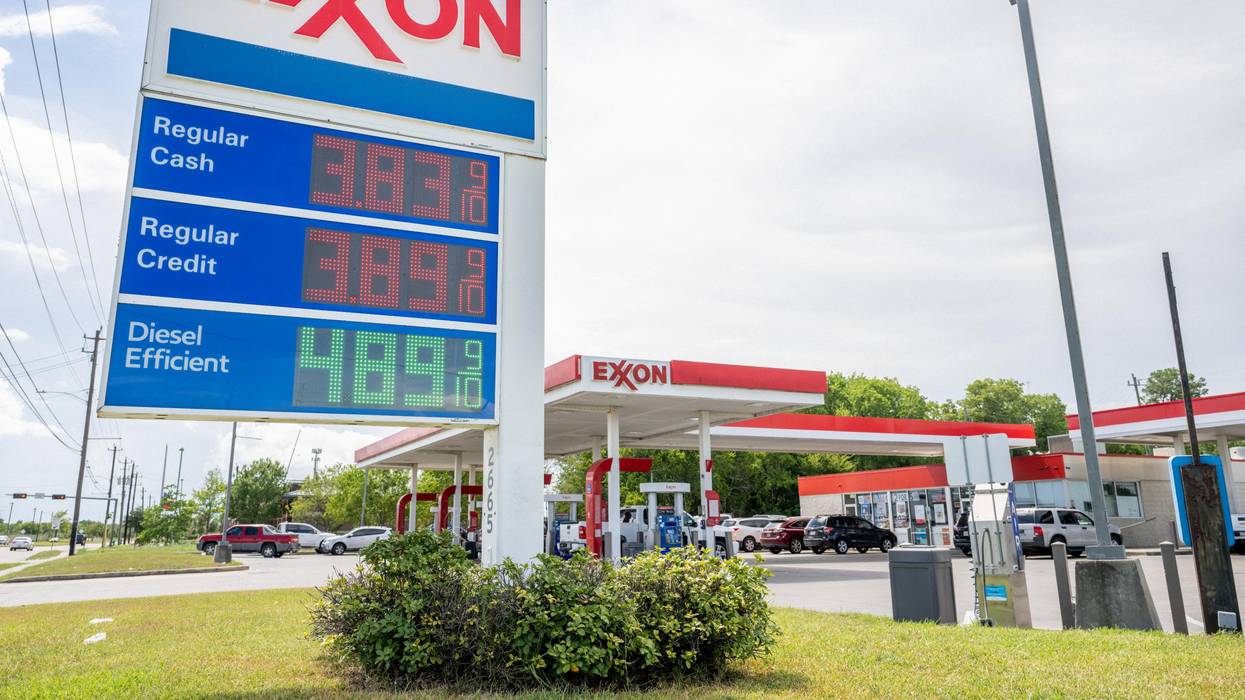
Despite a hopeful dip from a near four-decade high in July, new Labor Department inflation data released Wednesday prompted progressive economists and experts to double down on their calls for congressional action against corporate price gouging.
The Consumer Price Index (CPI) was up 8.5% in July compared to a year earlier, down from 9.1% in June--a potential sign that roaring inflation has peaked. CPI was completely flat in July on a monthly basis, with falling gas prices playing a decisive role in the better-than-expected figures.
"Costs are coming down for companies, but they have no plans to pass those savings back to consumers."
But while the new report, which President Joe Biden readily touted, offered some encouraging signs of moderating prices, persistently high and still-rising food costs and other worrying metrics sparked fresh calls for Congress to pass legislation to prevent corporations from continuing to unfairly jack up prices.
"To truly see recovery on prices for consumers, policymakers need to hold companies accountable for price gouging and rein in the corporate profiteering that is driving painful prices and record profits," said Lindsay Owens, executive director of the Groundwork Collaborative.
The latest inflation numbers come as the Federal Reserve appears poised to continue hiking interest rates aggressively in its bid to bring inflation down to the central bank's 2% target, despite the growing risks of hurling the U.S. economy into a damaging recession.
But economists and progressive lawmakers have stressed that interest rate hikes will likely have little to no impact on key drivers of inflation, which has been fueled by companies pushing up prices in pursuit of greater profits.
In her statement Wednesday, Owens pointed to recent earnings calls in which the executives of major companies have made clear that they intend to continue pushing higher prices onto consumers even as gas prices and other operational costs fall.
"Today's inflation report contains a lot of good news--energy prices are coming down and inflation in goods and services is cooling off," said Owens. "But a key question remains: When will consumers begin to see relief? One answer to this question can be found in corporate earnings calls, where CEO after CEO is essentially telling consumers, 'Don't hold your breath.'"
"Costs are coming down for companies, but they have no plans to pass those savings back to consumers," said Owens. "Instead, many plan to move forward with further price increases--using this opportunity to push profits even higher."
In a second-quarter earnings call last month, the chief financial officer of manufacturing giant Kimberly-Clark said that "based on what we know today, we will continue to expand margins."
A top Kraft Heinz executive, meanwhile, said that "as we continue to price inflation," easing price pressures across the overall economy "might put us in a better position for us to continue to recover the margin"--a suggestion that the company's prices will remain elevated even as inflation eases.
In recent months, Democratic lawmakers have proposed several bills aimed at curbing corporate price gouging, including one that would impose a windfall tax on oil companies that have seen booming profits this year.
"Targeted price stabilization is an essential ingredient to weather the storms ahead."
On Sunday, the Senate passed the Inflation Reduction Act, legislation that includes modest provisions requiring Medicare to negotiate the prices of a small number of expensive prescription drugs.
"Inflation is slowing down and gas prices are falling," Sen. Elizabeth Warren (D-Mass.) tweeted Wednesday. "We're moving in the right direction. And the Inflation Reduction Act will keep bringing down costs for working families."
But in a column for the Washington Post on Tuesday, historian Meg Jacobs and economist Isabella Weber urged Congress to get much more aggressive by imposing "selective price caps combined with investments to increase the resilience of our economy."
"Many economists warn that price controls never work. But history says that's not true," Jacobs and Weber argued. "Targeted controls combined with large-scale investments present a real alternative to the potent sort of stagflation--high inflation and a stagnant economy--that wreaked havoc in the 1970s and threatens us now."
"Our age of emergencies requires an economics of disaster preparedness," they continued. "Targeted price stabilization is an essential ingredient to weather the storms ahead and to realize the investments so urgently needed."