

SUBSCRIBE TO OUR FREE NEWSLETTER
Daily news & progressive opinion—funded by the people, not the corporations—delivered straight to your inbox.
5
#000000
#FFFFFF
To donate by check, phone, or other method, see our More Ways to Give page.
Daily news & progressive opinion—funded by the people, not the corporations—delivered straight to your inbox.

This retreat shows that these projects and their false climate solutions are not just unpopular, they’re also a major financial risk to companies, investors, and communities.
Plans for one of the world’s largest blue hydrogen and ammonia projects have collapsed, wasting billions of dollars in a risky bet that frontline communities resisted for years. Despite "clean" marketing, the project would have relied on dirty fracked gas.
The gas and chemicals company Air Products canceled its proposed $4.5 billion Louisiana Clean Energy Complex, wasting $2.9 billion—more than half of the overall cost—after concluding the project no longer met its financial expectations. Once promoted as the company’s largest US investment—and the world’s largest carbon sequestration project—the cancellation is more than a corporate setback. It is a signal of the end of the so-called "low carbon" hydrogen hype despite years of industry promotion, generous public subsidies, and claims that these technologies can be used to tackle climate change.
This retreat shows that these projects and their false climate solutions are not just unpopular, they’re also a major financial risk to companies, investors, and communities. For Louisiana communities that opposed the project from the beginning, however, the announcement means something else: proof that projects portrayed as inevitable can be stopped.
When Air Products first announced the project in 2021, the company described it as a transformational investment. Their plans included the production of 1,700 metric tons of hydrogen per day from fracked gas with up to 95% of emissions mitigated through carbon capture and storage (CCS). They planned to pump the hydrogen—called "blue" hydrogen due to the addition of CCS—through a pipeline along the Gulf Coast for refineries and petrochemical plants, or turn it into ammonia, which is a toxic, fossil fuel-derived chemical—used primarily as a fertilizer.
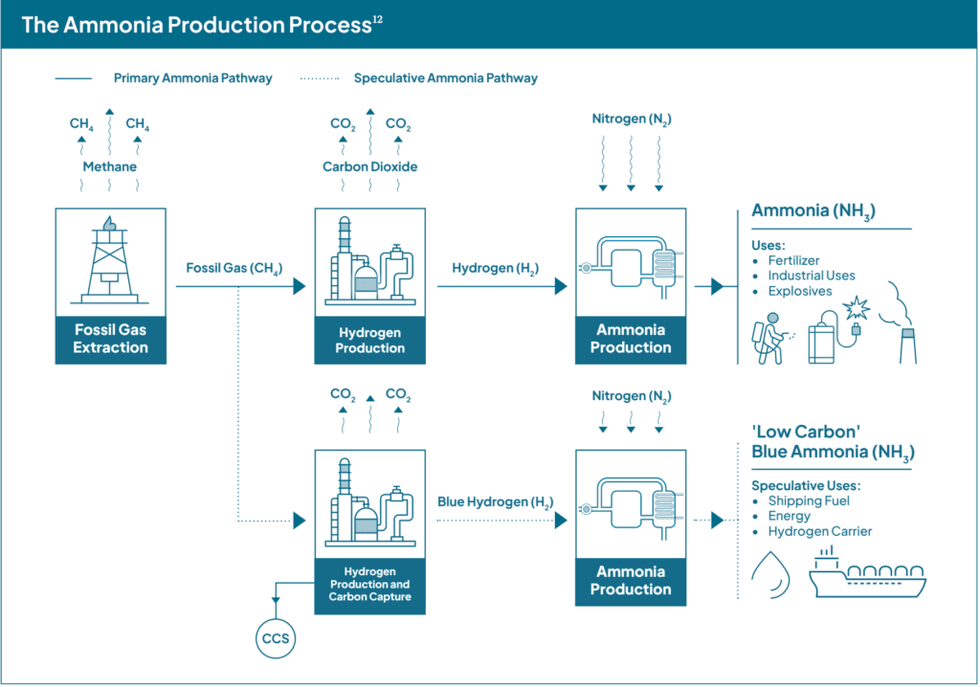 (Graphic via CIEL Ammonia Factsheet)
That vision quickly began to unravel. By 2024, Air Products was already seeking partners to offload parts of the project, including the ammonia and carbon capture components. In 2025, it entered advanced negotiations with Norwegian fertilizer giant Yara. By mid-2026, both companies announced the project had been abandoned, citing financial concerns and an inability to find customers for a speculative market.
The cancellation reflects a broader reality: Despite billions in public funds and years of political backing, many blue hydrogen projects continue to struggle with rising costs, uncertain markets, and technical challenges.
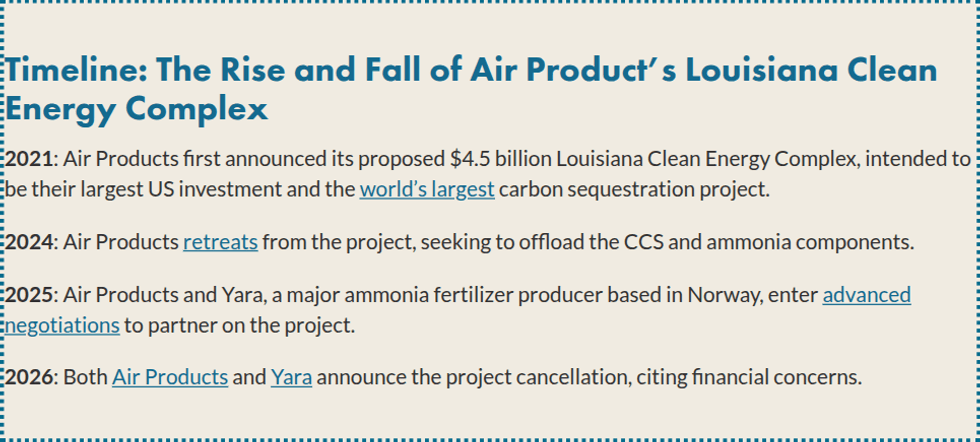
Air Products is not alone. At least 45 hydrogen and ammonia production facilities have been proposed in recent years across the US—mostly clustered in Texas and Louisiana—with only one making it to the construction phase, and many more on hold. Although more than 80% of ammonia produced in the US is used to manufacture fertilizer, much of the proposed buildout depends on speculative markets—including using ammonia as a shipping fuel, hydrogen carrier, and energy source—none of which are possible at scale today.
To make these projects appear climate friendly, companies increasingly market them as "clean," "blue," or "low-carbon" by pairing fossil fuel-based hydrogen and ammonia production with CCS. Yet, CCS has repeatedly failed to deliver emissions reductions while putting communities at elevated risk for pollution and related disasters. Despite that record, federal carbon capture subsidies were expanded in 2022 and again in 2025, potentially leading to the transfer of $1 trillion in public funds to private corporations over the coming decades.
The collapse of one of the industry’s flagship projects should prompt investors and policymakers alike to ask whether this business model is built on wishful thinking rather than sound evidence and economics.
Air Products’ proposed Louisiana Complex would have consisted of a hydrogen and ammonia plant in Ascension, Louisiana, with 38 miles of pipeline sprawling across five parishes, connecting to one of at least 10 separate injection wells underneath Lake Maurepas. The project would have formed part of a larger effort to transform Louisiana into a national hub for CCS.
More than just a proposed storage site, Lake Maurepas is an important estuarine ecosystem beloved by locals for recreational activities like boating, fishing, and wildlife observation. One of the nation’s largest forested wetlands borders the lake, supporting wildlife, commercial fishing, and local businesses. For generations, communities have depended on these waters—not simply for income, but as part of their identity. From the moment residents learned about the Air Products project, they organized against it.
Today, more than 30 CCS projects are under review across the state by the Louisiana Department of Conservation and Energy. Many would be built alongside communities already burdened by decades of petrochemical pollution in the 85-mile stretch along the Mississippi River between New Orleans and Baton Rouge, known locally as Cancer Alley.
These communities have long borne the health costs of fossil fuel development. Siting this experimental and knowingly dangerous CCS technology alongside frontline communities already overburdened by industrial pollution would force them to shoulder another layer of industrial risk, while companies stand to gain hundreds of billions of dollars in public money over the next 20 years through a federal tax credit.
The failure of Air Products’ vision is not a surprise to anyone watching the proposed CCS buildout; the ballooning costs and failure to deliver on ambitious promises follow a familiar pattern.
The Kemper “clean coal” project in Mississippi was once celebrated as the future of carbon capture, claiming it would capture 65% of emissions from the power plant. Originally budgeted at $3 billion, the costs of the project more than doubled to $7.5 billion over the seven years of its construction (2010-2017), before the carbon capture system was abandoned altogether. Despite the massive investment, the Kemper facility never operated as promised and was partially demolished in 2021. Local residents are still paying for the corporate loss from this experiment through their electricity bills.
The failure of the Kemper project should have been a warning for future investments and should have prompted the more fundamental question: Who bears the cost of these projects?
While Louisiana leads the nation in oil refining, natural gas production, and chemical production, the state consistently ranks among the poorest and least educated states in the US. CCS projects will no doubt add to the unequal environmental burden that the state population is forced to bear for the benefit of corporations. While many of the hardships can be quantified, the joy and love for the land by its residents is immeasurable. There’s no metric that captures the experience of paddling a canoe across Lake Maurepas, seeing alligators bask in the sun, listening to birdsongs echo across the wetlands, or watching the flotant—marsh grasses that float on top of the water—bob with the waves.
 An alligator basks in Lake Maurepas, Louisiana, US. (Photo by Jessi Parfait, CIEL.)
For the communities that have called this place home for generations, protecting the lake has never been about stopping a single project—it has been about safeguarding a way of life. The cancellation of the project is a victory not only for the hundreds of community members who organized against it—showing what is possible when people stand together to fight against false solutions—but also for the future generations who will continue to enjoy this remarkable ecosystem.
The cancellation is also a major win for communities that spent years warning about the project’s risks. Concerned residents across the complex’s planned footprint partnered with environmental groups to speak out at public hearings, organize neighbors, and challenge permits, refusing to accept that the project was inevitable.
Their persistence mattered. For years, the fossil fuel industry insisted that carbon capture represented the future—that projects like this were necessary and unavoidable. But as James Hiatt, founder of For a Better Bayou based in Lake Charles, Louisiana, put it:
Air Products pulling out proves that nothing here is inevitable. Industry wants us to believe these projects are a done deal, that our voices don’t matter. They do. Elected and regulators didn’t hand us this win; community pressure did. Consistent, persistent organizing works.
Air Products’ withdrawal is not simply a failed investment by one company. It is a warning to policymakers considering whether public money should continue subsidizing projects that repeatedly fail to deliver.
Communities increasingly reject being asked to bear new risks in exchange for promises that never materialize. And this failure is likely not the last ammonia and CCS project to be canceled. Even now, many projects are on hold or delayed, further signaling to companies, investors, and communities that they are a bad bet.
The cancellation also sends a broader message: Expensive, speculative technologies designed to prolong fossil fuel production aren’t fooling anyone and companies pushing these risky projects will be footing the bill.
"The fossil fuel industry delays climate action, distracts from real solutions that would end the fossil fuel era, and does everything in its power to squeeze the last drops of profit from a dying industry, at the expense of all of us."
Among the world's wealthiest countries, the U.S. leads the way in spending public money on so-called climate "solutions" that have been proven to "consistently fail, overspend, or underperform," according to an analysis released Thursday by the research and advocacy group Oil Change International.
The group's report, titled Funding Failure, focuses on international spending on carbon capture and fossil-based hydrogen subsidies, which continues despite ample data showing that the technological fixes have "failed to make a dent in carbon emissions" after 50 years of research and development.
The report details how five countries account for 95% of all carbon capture spending, with the U.S. investing the most taxpayer money in the technology, at $12 billion in subsidies over the last 40 years.
Norway comes in second with $6 billion going to carbon capture and storage, while Canada has spent $3.8 billion, the European Union has spent $3.6 billion, and the Netherlands has poured $2.6 billion into the technology, with which carbon dioxide emissions are compressed and utilized or stored underground.
"It is nothing short of a travesty that funds meant to combat climate change are instead bolstering the very industries driving it."
Harjeet Singh, global engagement director for the Fossil Fuel Non-Proliferation Treaty Initiative, told The Guardian that the subsidies amount to a "colossal waste of money."
"It is nothing short of a travesty that funds meant to combat climate change are instead bolstering the very industries driving it," said Singh.
While proponents claim carbon capture and storage reduces planet-heating carbon emissions, OCI notes, it was originally developed in the 1970s "to enhance oil production, and this remains its primary use," with the technology "barely" reducing emissions.
High-profile carbon capture failures in the U.S. include the Petra Nova project in Houston, Texas, which cost nearly $200 million in taxpayer funds and whose captured emissions were later used for crude oil production, and the FutureGen project, "which swallowed $200 million and never materialized."
"Investing in carbon capture delays the transition to renewable energy," reads OCI's report. "Instead of wasting time and money on technologies that do not work, governments must commit to justly and urgently phasing out fossil fuels before it's too late."
Despite the lack of data supporting the use of carbon capture, the group said, countries including the U.S. are "preparing to waste hundreds of billions of taxpayer dollars on these ineffective technologies, further benefiting the fossil fuel industry."
OCI highlighted how the U.S. and Canada, while ostensibly fighting the climate crisis, have spent a combined $4 billion in public money to explicitly "pay oil companies to produce more oil," with the subsidies going to carbon capture for "enhanced oil recovery."
The report also found that in addition to the $12 billion in taxpayer funds the U.S. has spent on carbon capture and fossil hydrogen—a leak-prone gas produced through energy-intensive processes that cause their own emissions—the government has spent an estimated $1.3 billion on the 45Q tax credit, which allows companies to write off tax for every ton of carbon dioxide they store underground.
The Inflation Reduction Act (IRA) increased the amount given to companies in 45Q tax credits from $35 to $60 per ton, meaning that the subsidy could grow to over $100 billion in the next 10 years.
OCI's Policy Tracker shows that overall public spending on carbon capture and hydrogen could grow by between $115 billion and $240 billion in the coming decades.
"We need real climate action, not fossil fuel bailouts!" said OCI in a post on social media.
The group's report also highlights that fossil fuel giants such as ExxonMobil have shifted from carbon capture skeptics to outspoken proponents of the technology—with the company bragging to investors that carbon capture and hydrogen would help its Low Carbon Business Unit make "hundreds of billions of dollars" and grow to be "larger than ExxonMobil's base business."
Exxon didn't launch its carbon capture efforts until 2018, having spent several years and hundreds of millions of dollars on another "climate solution" that ultimately failed: the use of algae to make biofuels.
Since then, Exxon has "pushed for direct government funding for carbon capture, particularly at the U.S. Department of Energy (DOE)," successfully lobbying for $12 billion allocated in the Bipartisan Infrastructure Bill in 2021 for "carbon management research, development, and demonstration."
Exxon also lobbied for the increased rate of the 45Q tax credit in the IRA and "played a 'central role' in drafting a 2019 DOE-sponsored report on carbon capture that determined Congress would need to create an incentive of around $90 to $110 per ton to support carbon capture deployment," according to OCI.
The Guardian on Thursday reported that Exxon still "chases billions in U.S. subsidies for a 'climate solution' that helps drill more oil," describing how the oil giant hosted an event at the Democratic National Convention earlier this month where senior climate strategy and technology director Vijay Swarup praised the IRA for helping Exxon pursue carbon capture and said: "We need new technology and we need policy to support that technology. We need governments working with private industry."
Exxon's enthusiasm for carbon capture, said OCI, is an example of how "the fossil fuel industry delays climate action, distracts from real solutions that would end the fossil fuel era, and does everything in its power to squeeze the last drops of profit from a dying industry, at the expense of all of us."
We must cut greenhouse gas emissions quickly to avert a catastrophic future; the federal government must use modeling that reflects this scientific reality, not fossil fuel industry deception.
In January 2024, the Biden-Harris administration advanced a huge win for the climate movement. After pressure from scientists and advocates including Food & Water Watch, Biden paused permits for liquefied natural gas export terminals. He also started a process to reevaluate how the United States determines whether exporting fracked gas is in the public interest. However, some lawmakers are rushing to the LNG industry’s aid and attacking science to do so.
This August, the Chair of the House Committee on Science, Space, and Technology, with various subcommittee members, penned a letter to the Department of Energy (DOE) Secretary Jennifer Granholm. In it, they attack critical research from Food & Water Watch board member Dr. Robert Howarth of Cornell, who authored a groundbreaking study documenting that LNG’s climate impact is worse for the climate than coal.
These choices for modeling assumptions will determine if the federal government joins fossil fuel industry greenwashing or takes real climate action to restrict further development of fossil fuels for exports and hydrogen production.
The issue at hand is the assumptions underlying how the U.S. government models climate impact. This wonky and obscure math will have a huge influence on policies at this critical juncture in the climate crisis. If dirty energy companies have their way, DOE climate models will churn out bogus results showing that LNG is a benefit for the climate.
All this comes at a time when the climate science is clear and well-established: Time is of the essence. We must cut greenhouse gas emissions quickly to avert a catastrophic future. The federal government must use modeling that reflects this scientific reality, not fossil fuel industry deception.
Right now, the DOE is developing models to predict LNG’s climate impact in order to judge whether it’s in the “public interest” to allow more LNG exports. Science and common sense tell us we can’t expand fossil fuels and address the climate crisis. Nevertheless, fossil fuel industry has long argued, falsely, that gas is a clean fuel and an essential “bridge” in our transition to renewables. This fight over LNG exports is no different.
At the same time, the Treasury Department is developing models to determine the climate impacts of various types of hydrogen production. This will ultimately determine what—if any—tax credits hydrogen producers receive. Dirty energy companies are advocating for modeling assumptions that would allow hydrogen made with fracked gas, coal mine methane (gas extracted from coal beds), carbon capture, and even factory farm gas to qualify for lucrative subsidies that were meant for hydrogen produced exclusively with renewables.
These choices for modeling assumptions will determine if the federal government joins fossil fuel industry greenwashing or takes real climate action to restrict further development of fossil fuels for exports and hydrogen production. The major crux of the industry’s plan is to skew how we measure methane’s climate impact and analyze alternatives to methane. The federal government siding with industry would have disastrous impacts on our climate while showing climate benefits on paper.
Methane, the main ingredient in so-called “natural” gas, is a potent climate pollutant that has 86 times the impact of carbon dioxide over 20 years. Its emissions are an immediate threat to our climate. They risk pushing us past thresholds that our climate can’t recover from. But a report from the Breakthrough Institute—cited by lawmakers in their letter to Secretary Granholm—ignores this reality.
Breakthrough’s criticism of Dr. Howarth’s LNG study emphasizes the time frame used to measure methane’s impact. While Dr. Howarth uses a 20-year timeframe, Breakthrough advocates for 100 years.
Incorporating a long view of methane into climate models shows a smaller impact since methane stays in the atmosphere for a shorter amount of time. (Its impact over a 100-year time frame is less than half of that over 20 years.) However, this treats methane and climate change as distant problems for a future generation—not incredibly urgent ones that must be addressed now.
Human-generated methane emissions cause over 500,000 deaths around the world every year.
Dirty industries support a long view because it gives the impression that methane is not as harmful. This would allow them to justify continuing to destroy our climate.
What’s also at play is how the U.S. government considers methane leakages. The industry is notoriously leaky throughout the supply chain, and the U.S. government routinely underestimates this leakage. Direct observations show these leaks are around three times as high as estimates from the Environmental Protection Agency.
The industry is also responsible for many super-emitters that bleed methane into the atmosphere at astonishing rates. Many of these have only recently been uncovered through new satellite imagery techniques. Federal climate models must incorporate this leakage at rates that truly account for their impact on the planet.
But dirty industries have tilted the debate by funding and consulting on research purporting to investigate methane leakage. For example, Breakthrough cites a paper on LNG’s climate footprint with an author who has extensive links to the fossil fuel industry and previously produced research funded by Cheniere (an LNG exporter).
Breakthrough also proposes that the answer to the leakage problem is just to plug the leaks—never mind that the industry has been promising to do so for years with little progress. And when it comes to climate benefits, merely plugging leaks pales in comparison to transitioning to renewables. Which brings us to the second issue:
Gas-based hydrogen and LNG companies are vying for favorable climate models based on the idea that they are better than alternatives. But they don’t dare compare themselves to the clear winner: renewables. While LNG and hydrogen argue they create less emissions or offset emissions, renewables create zero emissions when generating energy.
We don’t need an abundance of experimental technology or dirty infrastructure to transition to renewables, either. We know how to make them, and we know they are the best option for our climate.
Nevertheless, LNG and hydrogen companies are pushing for federal support based on bogus comparisons. For example, organizations like Breakthrough are still going to the mat for gas because they say “It’s better than coal!” (Reminder: This framing was and is still used by the oil and gas industry. The result has been continued gas production, which has caused more emissions and stalled our renewable energy transition.) The same rationale could be used to justify replacing old coal plants with new coal plants.
The true test for whether an industry is “climate-friendly” or “in the public interest” should be its strength compared to all the options, not just the ones Big Oil and Gas wants us to consider.
Moreover, any comparison must consider the lifetimes of new infrastructure, and new fracked gas infrastructure will last for decades. It could lock in at most minor emissions reductions well into the 2060s and further slow down our energy transition.
At the same time, some companies argue that by creating hydrogen by blending fracked gas with factory farm gas and methane leaked from the coal and gas industries, they are mitigating fracking’s harms to our climate. They say this makes their hydrogen a greener alternative to plain old gas, and so should qualify for “clean” hydrogen tax credits
But models should not be based on comparing energy sources to the worst and dirtiest option. That fails to account for the benefits of better alternatives like renewables. The true test for whether an industry is “climate-friendly” or “in the public interest” should be its strength compared to all the options, not just the ones Big Oil and Gas wants us to consider.
Additionally, these modeling assumptions falsely assume methane leakage is a foregone conclusion. They ignore that there are better ways of plugging leaks than letting polluters pretend they somehow offset fossil-based hydrogen’s harms to our climate.
In reality, subsidizing these gasses through faulty climate assumptions will increase the profitability of (and thus incentivize) fracking, coal mining, and factory farming. This will create new sources of methane that will invariably leak into the atmosphere.
Beyond climate, there are many reasons why supporting LNG and fossil fuel-based hydrogen are terrible ideas. The U.S. should consider all of these in its policy decisions. For one, methane emissions are hazardous to the climate and our health. Methane is a key ingredient in ground-level ozone, which poses potentially fatal risks to our lungs and hearts. Human-generated methane emissions cause over 500,000 deaths around the world every year.
LNG in particular would spur a dirty infrastructure boom in communities already suffering at the hands of the oil and gas industry. In the Gulf Coast, for example, majority-Black communities are facing sinking land due to climate change and devastating pollution. A buildout of more LNG terminals would compound these harms with more pollution and the risk of catastrophic explosions.
Dirty industries, their allies in Congress, and their mouthpieces are rejecting science to sell the lie of “clean” gas and hydrogen.
A growing LNG industry would also require more fracking and all its attendant harms to nearby communities. Those include mysterious illnesses, increased cancer rates, and poisoned water. The entire natural gas life cycle poses serious risks to the U.S.’s water resources. Extraction, pipelines, and related carbon capture and storage can impact water scarcity by growing demand for water in other sectors and in areas where supply is projected to decline.
Gas-based hydrogen would similarly prop up the fracking industry, and projects that use gas made from factory farm waste would prop up the harmful factory farm model. Hydrogen is also an incredibly thirsty power source, and many of the projects planned in the U.S. are proposed for areas that can’t afford to waste a drop. (Compared to hydrogen, renewables—especially wind—are also the clear winner when it comes to minimizing water use.)
It is a scientific fact that climate change’s dangers become more urgent every day; that averting climate catastrophe requires ending fossil fuels; that renewables present the most effective strategy for reducing emissions. But dirty industries, their allies in Congress, and their mouthpieces are rejecting science to sell the lie of “clean” gas and hydrogen. They are pushing for the U.S. government to use models that lead to the best outcomes for them—not the planet.
By attacking this science and going after scientists like Dr. Howarth, the industry is doing what it’s always done. It’s casting doubt on established science to further its own ends; muddying the waters to sow confusion on what we already know. In order to pass policy that will actually prevent climate catastrophe, we need leaders who will see through their smoke and mirrors.

We should learn from the chemical industry’s track record on evading transparency and accountability to be suspicious of how responsibly this industry will develop clean hydrogen.
The very same chemical companies spending millions on lobbying against federal legislation and regulations that would force the chemical industry to clean up widespread “forever chemical” pollution are now going all-in on hydrogen as a “clean” form of energy.
We should learn from the chemical industry’s track record on evading transparency and accountability for the “forever chemicals” now found in the blood of up to 97% of Americans to be suspicious of how responsibly this industry will develop clean hydrogen.
For those unfamiliar with “forever chemicals,” also known as PFAS (short for per- and poly- fluoroalkyl substances), they are “a group of chemicals used to make fluoropolymer coatings and products that resist heat, oil, stains, grease, and water.” PFAS trigger scientific concern because, as the “forever chemicals” moniker suggests, they don’t break down in the environment, but instead stick around, building up in everything from soil to drinking water to the bodies of people and animals. PFAS have repeatedly made the news already in 2024, as new studies have come out indicating the widespread presence of PFAS in everything from nearly half of the U.S. drinking water supply to packaged tea and processed meats to turf sports fields.
The Biden administration must remain vigilant to the publicity campaigns and streams of lobbying money that extractive corporations deploy in their pursuit of maximal profits without regard to the impact on people, communities, and the planet.
PFAS are associated with a host of health risks. The EPA and CDC have acknowledged peer-reviewed scientific studies that show that exposure to PFAS may lead to reproductive and developmental effects in children, immune system damage, and increase the risk of developing cancer. Research is ongoing to confirm links between the various substances in the PFAS category and these and other worrying health outcomes.
Considering how blithely these companies shirk responsibility for polluting our environment to the extent that human fetuses and the rain now show traces of forever chemicals, it’s hard to trust them when they say that hydrogen’s a climate winner.
Proponents of hydrogen laud it as a clean-burning alternative to natural gas and an energy carrier comparable to batteries. In reality, as we’ve written about at length, the vast majority of hydrogen production in the United States comes from a highly polluting process involving natural gas and steam. Hydrogen can be produced without natural gas, via electricity, but the vast majority of electricity is produced by fossil fueled power plants as well. So, while burning hydrogen is technically emissions-free, if the electrolysis used to create that hydrogen relies on fossil fuels or polluting forms of energy, the climate impact of “green” hydrogen can be worse than just burning fossil fuels. And due to how hydrogen interacts with other gasses in the atmosphere, hydrogen has over 32 times the indirect global warming potential of carbon dioxide.
These are some of the companies invested in the hydrogen economy that also lobbied aggressively against being on the hook for PFAS clean up:
These companies have clearly demonstrated that they aren’t committed to preventing their products from poisoning communities. Not only did they fail to prevent widespread pollution in the first place; they then actively spent their money lobbying to argue that they shouldn’t have to clean up their own messes. Rather than, say, spending that money to clean up the messes.
These corporations’ and coalitions’ track records raise immediate red flags regarding the legitimacy of these corporation’s future claims about how clean their hydrogen production is—not that we needed more indicators, given the hydrogen risks and drawbacks that scientists and environmental advocates have been pointing out for years.
The Biden administration also has tools to crack down on many of these polluters. Recently, the FDA announced an initiative to stop the use of certain PFAS in food packaging, based on a “voluntary commitment” by companies to stop selling the products, which the FDA plans to continue to monitor. This kind of agreement should be rigorously reinforced by the use of investigations and penalties by the agencies entrusted with public health, to hold corporations accountable when they flout safety guidelines and laws.
In February, we commented on recent reporting by E&E News that the Energy Department was pushing the Treasury Department to align its clean hydrogen tax credit guidance with industrial polluters’ demands. We argued that it’s crucial that Treasury resist this industry pressure—even when it’s coming from their colleagues at the Energy Department—and address the potential loopholes in its tax credit guidance that could promote the growth of a so-called “clean” hydrogen industry that simply continues many forms of pollution.
The Biden administration must remain vigilant to the publicity campaigns and streams of lobbying money that extractive corporations deploy in their pursuit of maximal profits without regard to the impact on people, communities, and the planet. Otherwise, the same playbook we’ve seen with environmental and health disasters will continue to repeat itself—with continually escalating consequences.

"Rather than betting on unproven and inefficient hydrogen technologies, we need rich countries to put their money towards a just energy transition," said a Friends of the Earth campaigner.
Amid preparations for COP28, the United Nations climate summit kicking off next week, a leading green group warned Tuesday that "hydrogen is big polluters' latest trick, and we can't afford to fall for it."
"Hydrogen is being promoted as a 'clean' alternative to the fossil fuels used for domestic heating, transport, and heavy industry," explains the new Friend of the Earth International (FOEI) paper, Don't Fall for the Hydrogen Hype, put out ahead of the global clilmate talks. "But it's expensive to produce, inefficient, and far from a low-carbon solution. In fact, the majority of the global hydrogen supply is made from fossil fuels."
An "energy carrier," hydrogen stores and transports energy produced from resources such as biomass, fossil fuels, and water—but FOEI says industry promises of hydrogen's potential should not be trusted.
"Hydrogen, just like the fossil fuels and other false climate solutions pushed by that same industry, further reinforces neocolonial patterns of extractivism and exploitation."
The group's paper begins by debunking the hydrogen "rainbow." Citing the International Energy Agency, it states:
Globally, more than 62% of hydrogen production is derived from fossil gas (known as grey hydrogen, blue hydrogen when coupled with carbon capture and storage, or turquoise hydrogen when produced from methane pyrolysis). About 21% comes from coal and lignite (black/brown hydrogen), 16% is produced as a byproduct at refineries, 0.5% derived from oil, whilst only 0.1% is produced via water electrolysis (green from renewable electricity, purple/pink from nuclear).
While some groups support green hydrogen, critics including FOEI emphasize that along with being incredibly uncommon, it "demands huge amounts of cheap renewable electricity to function, rendering the process highly inefficient," and "requires vast amounts of water, an increasingly rare and precious resource that shouldn't be wasted."
"Pushed by the same fossil industry that has caused—and continues to fuel—the climate crisis, hydrogen is yet another false solution, sold by the industry as a magical fix which allows business as usual to continue," the paper asserts. "Like other false solutions, it represents a dangerous distraction from the urgent, deep, real emission cuts that are needed to address the climate crisis."
Climate scientists and energy experts have long said that humanity must rapidly phase out fossil fuels to avoid the most catastrophic effects of heating the planet and meet the Paris agreement goal of limiting global temperature rise this century to 1.5°C. A U.N. analysis revealed Monday that currently implemented policies put the world on track for 3°C of warming by 2100.
The FOEI paper points out that in addition to propping up polluters by "justifying more fossil gas, hydrogen conveniently allows the fossil industry to push another one of its lifelines: carbon capture and storage," an "unproven techno-fix" that global climate groups are also warning about in the lead-up to COP28 in the United Arab Emirates.
"It is unsurprising that hydrogen, just like the fossil fuels and other false climate solutions pushed by that same industry, further reinforces neocolonial patterns of extractivism and exploitation," the publication continues, highlighting how the oil and gas sector "has shown time and again its disregard for communities and the environment, especially in the Global South."
Yegeshni Moodley from Friends of the Earth South Africa/groundWork said in a statement that "in the Global South, 'green hydrogen' receives public money yet serves only private interests. As governments collude with corporations over mega-infrastructure projects, communities struggle to keep their ancestral lands and scant water resources intact."
The paper notes that like other "false solutions" to the climate emergency—including geoengineering, offsets, and so-called nature-based solutions—on top of "disproportionate social and environmental costs, hydrogen also comes with a high financial cost."
FOEI advocacy officer Lise Masson argued that "rather than betting on unproven and inefficient hydrogen technologies, we need rich countries to put their money towards a just energy transition, one that puts power in the hands of people, not corporations."
Already, some governments are pouring money into hydrogen. U.S. President Joe Biden last month announced a "historic investment" of up to $7 billion for seven hubs across the United States, the nation that has historically contributed the most to human-caused global heating.
Meanwhile, in the European Union, "the gas lobby has succeeded in securing several pieces of legislation promoting hydrogen—including legislation that allows public funds to go to fossil gas infrastructure as long as it promises to be 'hydrogen ready' despite the fact that Europe already has more gas infrastructure than necessary," FOEI detailed.
In Belgium, the European Commission, Hydrogen Europe, and the Clean Hydrogen Partnership are co-hosting European Hydrogen Week 2023—which activists with We Smell Gas disrupted with a protest involving fake green vomit on Tuesday.
"From Chile, to Namibia to South Africa, the story is the same. Communities are not being consulted on [hydrogen projects] destined for European consumption [with] the costs of false solutions violently outsourced," We Smell Gas said on social media Tuesday. "Hydrogen imports are imperial greed painted green."
"Our current energy system relies on appropriating space, resources, and cheap labor from racialized and working-class people inside and outside European borders," the group continued. "For the profit of E.U. multinational and the economic dominance of Western states. [Hydrogen] at scale reproduces this system."
The FOEI position paper stresses that "addressing the climate crisis can only come through deep systemic change, dismantling the neocolonial, patriarchal, neoliberal capitalist system that created the crisis, to build a more just and equitable world for all."

The power of false renewable energy promises to bring down a government.
Many were caught by surprise in the blitz of raids, arrests, and resignations that stormed Portugal on November 7th. In a few hours, one of the longest-lasting leaderships in Europe fell under the weight of its political contradictions, its tight connections to big oil, gas, and energy companies and the subservient politicians.
Just a few weeks ago, the establishment and media in Portugal decried Fridays for Future Lisbon activists for targeting the minister of climate action with green paint in an “energy transition” event sponsored by oil, gas, and coal giants Galp and EDP. The activists accused the minister of being in collusion with big companies that are extending their fossil business while taking over investment in renewables. Less than a month after that, the minister would become one of the suspects (together with the previous minister of the environment, the current minister of infrastructures, the chief of staff and the main advisor of the Prime Minister, the head of the environmental protection agency, the mayor of the Sines municipality, a former director from Galp, heads of private companies, among others) of a corruption case involving lithium mines, hydrogen projects, and data centers. The consequences are not just legal. António Costa, Portuguese prime minister since 2015, resigned this week after he was announced as a suspect in the same investigation.
The case for official corruption will now have to be proven in the courts, the corruption of a new energy model that is actually off the hands of those who created the climate crisis seems to be untouched.
The Portuguese government had been selling itself as a “climate action” champion for years now. Yet, like all other European countries, it has no plan for actually fulfilling its commitment of the necessary cuts of emissions under the Paris Agreement, that is, it plans an increase of temperature well above 1.5ºC. That doesn’t mean that the Portuguese capitalist establishment hasn’t been reaping the profits of the European and international focus on new extractivism, energy forms and technologies—the bulk of green capitalism. The promise of European funds, in particular for energy connections, for critical materials’ extraction, and hydrogen as a way to counterbalance Chinese battery development, has been massively profitable for the companies that most contributed to the climate crisis in the country. In 2022, Galp, EDP, and REN have all had the biggest profits in their history, and 2023 promises to go the same way. REN was also one of the places visited by the police during investigative searches.
Climate activists have long decried the Portuguese energy transition policy as both unjust and no transition at all. EDP shut down its coal power plants without any plans for its workers, who simply became unemployed. Galp shut down its Matosinhos refinery and simply transferred its production to another refinery in Sines, with no impact on emissions and the destruction of over 100 jobs in the northern city. Some of these actions were actually funded by the “Fund for Just Transition” that never reached the workers who were supposed to be the object of said transition. The only groups of people benefiting from these funds were the shareholders of big companies. EDP and Galp have kept on investing in fossil energy in Portugal and abroad. They have further positioned themselves as frontrunners in renewable auctions, whether in wind, solar, hydrogen, or lithium projects around the country.
The government’s choice to reproduce the fossil model with renewable energy, with massive areas of production and massive distribution circuits and losses, has been a gift that derives from the direct contact of the companies with the decision-makers. The hydrogen strategy came out only after dozens of meetings between the government and the companies that would benefit from them. Spinoffs from the main energy companies, such as EDP Renováveis, Galp New Energy, or TrustWind are the frequent bidders of new energy auctions. The centralized, monopolized, and gigantic nature of these projects is leading to growing objection by local populations due to their negative environmental impacts, namely the need to remove tens of thousands of protected trees. The idea of decentralized small-scale production of electricity is directly opposed by the big companies as it would render them close to useless.
A huge amount of public money being overtly offered to big companies could hardly have been a better scenario for mass-scale corruption. In the wake of the austerity years, when large patches of the country were offered for oil and gas exploration, other areas were offered for mining concessions, and the lithium projects in protected areas have been scandalous since the beginning (Galp, the oil and gas company, was also involved in the lithium projects). On the other hand, the “green hydrogen” frenzy, largely pushed by German interests to replace Russian gas reduced since the invasion of the Ukraine, has proven to be little more than a cover for gas expansion, through European and other public funding.
The leadership of the Socialist Party in Portugal (a regular liberal party, despite the name) has long been on the corrupting renewables’ bandwagon. For years now, they have made an uncontroversial alliance of interests with the big oil, gas, and coal companies, even if they're also investing in other areas. This alliance began well before any talks of renewables and also expanded to other political parties in the country, with permanent revolving doors between industry and governments since the 1980’s. Although the case for official corruption will now have to be proven in the courts, the corruption of a new energy model that is actually off the hands of those who created the climate crisis seems to be untouched.
With the exit of the Socialist Party, it is now quite conceivable that the right and the far-right will campaign on dismantling renewables. They will certainly not promote a democratic and decentralized energy model, but either insist on this corrupt model or push for a return to full fossil energy, as the climate crisis is turned into a cultural issue that will reap discontentment votes. The green capitalist model of energy is nothing but a fraud on just transition, and only a public and democratic energy system can deliver both the emission cuts and the just transitions we all need.
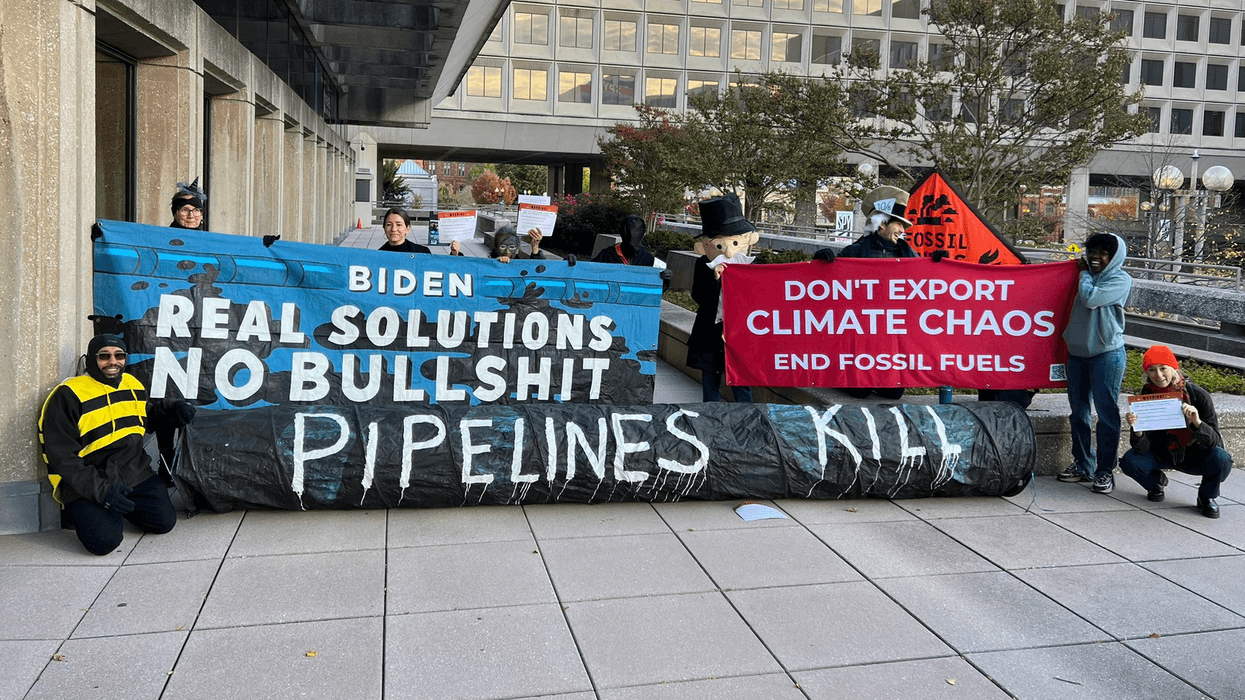
"Now more than ever, we need real leadership from the Department of Energy to end fossil fuels," said one organizer.
Climate advocates on Tuesday donned Halloween costumes to greet attendees of the U.S. Department of Energy's "Justice Week," but the organizers assembled outside the agency will be urging guests to demand far more from Energy Secretary Jennifer Granholm and the Biden administration, who they say are "greenwashing" efforts to further equity and environmental justice.
The department's Office of Economic Impact and Diversity is holding the five-day event, where officials plan to highlight efforts to move "toward a more equitable, clean, and just energy future."
The week will include discussions of the Low-Income Communities Bonus Credit Program, which pushes for more access to renewable energy facilities in underserved communities, and executive actions President Joe Biden has taken to promote environmental justice.
All those actions, however, have happened alongside the administration's push in favor of so-called climate "solutions" that scientists say are unproven and serve only to perpetuate fossil fuel extraction under the false assumption that it can do so while still addressing greenhouse gas emissions and planetary heating.
The DOE, noted Basav Sen, a climate justice project director at the Institute for Policy Studies (IPS) who took part in the action, is "the biggest funder of false solutions such as carbon capture and storage, hydrogen, and direct air capture."
"These are scams. We know that the real solution to the climate crisis is to keep fossil fuels in the ground and make a rapid, just transition to real renewable energy controlled by communities," said Sen, wearing zombie face paint at the direct action. "Instead what were seeing from the Department of Energy is a continuation of the fossil fuel economy."
As Common Dreams reported in May, analysts say that just running the machinery to operate a carbon capture and storage project—like the ones the Biden DOE announced a $1.2 billion investment in earlier this year—would increase energy consumption by 20%, adding to carbon dioxide emissions.
Smog, benzene, and formaldehyde emissions also increase with carbon capture technology, biologist Sandra Steingraber said—three types of pollution that disproportionately affect people in low-income neighborhoods, the very communities the DOE says it's targeting with environmental justice programs and events like "Justice Week."
Additionally, noted Sen, the DOE is continuing to license exports of fossil gas.
"We are here today to tell attendees of the Department of Energy's Justice Week that the version of environmental and energy justice that they're going to hear from the Department of Energy in the event is greenwashing, pure and simple," said Sen. "The Department of Energy cannot pretend to be on the side of environmental justice while they are actively licensing more fossil gas exports, which means more fracking, more air and water pollution, more pipelines, more export terminals, more sacrifice zones in frontline communities."
Some of the campaigners displayed the organizers' message succinctly on a banner reading, "Real Solutions. No Bullshit."
"Now more than ever, we need real leadership from the Department of Energy to end fossil fuels, quit peddling climate scams and advance energy justice," said Climate Justice Alliance (CJA), one of the groups behind the action.
Addressing Granholm, the group added that the secretary "can't cover up [her] record with greenwashing events like Justice Week 2023 while undermining real climate and environmental justice with [her] actions."
"We demand an end to fracked gas exports, carbon capture, and hydrogen energy," CJA said.
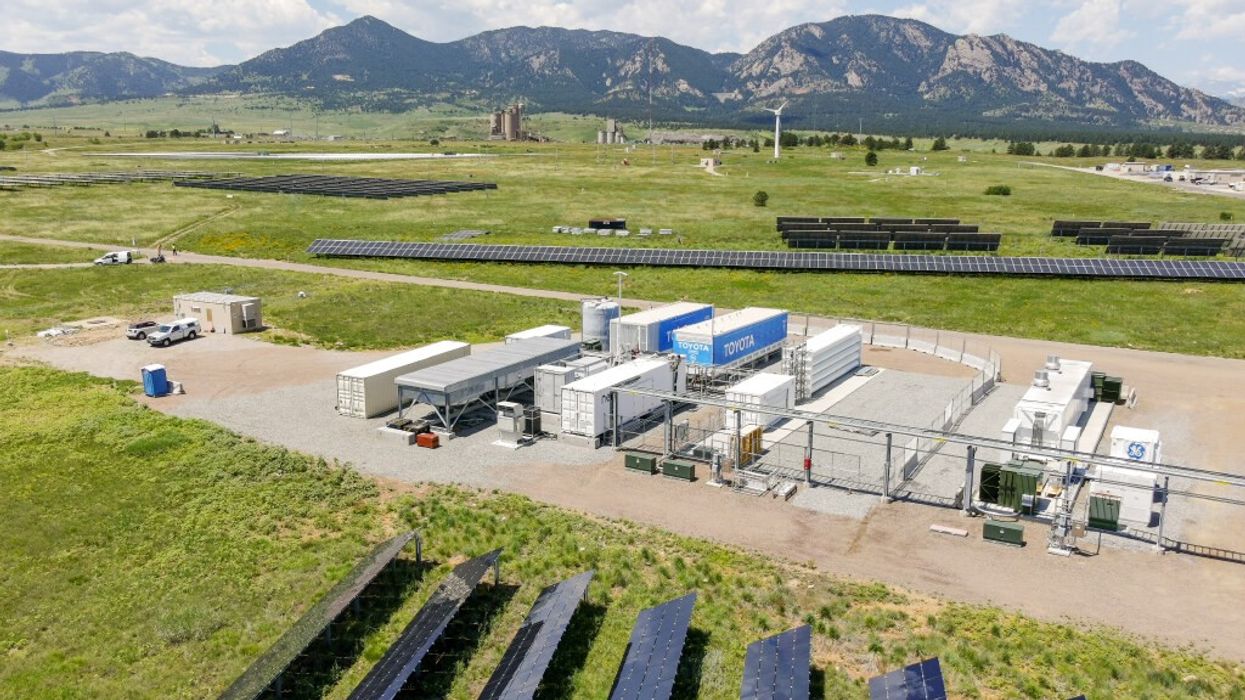
Despite promises of economic opportunity and jobs, communities slated for hydrogen projects see them for what they are: A handout for the fossil fuel industry.
As our planet's temperature rises, so does the hype around hydrogen. But hydrogen isn't the climate savior it's made out to be. Hydrogen is a dangerous distraction, and we should not fall for it.
Technological fixes to climate change are tempting, and the Biden administration has not resisted the lure of hydrogen: The Department of Energy recently announced a massive $7 billion buildout of seven hydrogen hubs nationwide, the first of several such investments.
Hydrogen is dangerous, partly because it distracts from the real climate solutions we so desperately need. The world's best climate scientists have been clear that to maintain a livable planet, we must phase out fossil fuels and transition to truly renewable energy now. Hydrogen hubs take us in the opposite direction by further embedding us in the fossil fuel economy.
Communities like mine understand all too well that these projects take a toll on our drinkable water, breathable air, bodies, and livelihoods.
A staggering 99% of hydrogen production relies on fossil fuels, primarily methane, or "natural," gas. Notably, oil, gas, and petrochemical companies produce the lion's share of the U.S. hydrogen supply: approximately 10 million metric tons. Once produced, more than two-thirds of hydrogen is used for petroleum refining.
A cursory examination of the partners across all seven proposed hydrogen hubs reveals who actually stands to benefit from them. Key recipients of this first $7 billion of public money are oil, gas, and chemical corporations, including Exxon, Chevron, Dupont, and Air Products. Air Liquide, a French gas company, is a named partner in at least six of the seven hubs chosen for the next phase of public funding. Fossil fuel and petrochemical companies are pushing for this hydrogen buildout because it is their ticket to greenwash their products as 'climate solutions' on the public's dime.
Making hydrogen is highly energy intensive, whether using large quantities of renewable power to make 'green hydrogen' through electrolysis or pulling in large quantities of methane gas coupled with energy-intensive and unreliable carbon capture systems to produce "blue hydrogen." At least two of the seven hydrogen hubs are associated with blue hydrogen production, which scientists say "may be worse than gas or coal."
Hydrogen production is not only very energy intensive, it also requires considerable amounts of water, a resource that is becoming increasingly more precarious due to the climate crisis. Louisiana this year faced never-before-seen wildfire threats, predicted to continue, largely due to drought. California has had some of the worst wildfire seasons on record. Both states are targeted for the proposed hydrogen buildout.
Calls for "hydrogen-ready" infrastructure are code for doubling down on building new gas production and pipelines, with the vague hope that this infrastructure might one day carry hydrogen. This is the opposite of what we should do, which is to take urgent action to phase out fossil fuels and transition to renewable energy to avoid climate catastrophe.
Hydrogen projects, especially blue hydrogen, put communities in harm's way. To produce blue hydrogen, CO2 must be scrubbed and captured, a process whose effectiveness is questionable at best. This process requires the buildout of additional infrastructure, thousands of miles of new pipelines, and injection wells to store the CO2 underground. This means more hazardous air and water pollution in our communities. People living near this new infrastructure for hydrogen and CO2 stand to face additional risks like pipeline leaks and injection well failures, which can be catastrophic.
Confusingly, funding for these hydrogen hubs is partially allocated under the "Justice40" initiative, which aims to address decades of underinvestment in disadvantaged communities. Yet many communities targeted for the hydrogen buildout—the same low-income and/or Black, Brown, and Indigenous communities supposed to benefit from the administration's environmental justice promises—are organizing against proposed hydrogen projects, because of the dangers they present.
I have had to become an expert on climate solutions out of sheer necessity. I am the fifth generation of my family to call South Louisiana home, and the climate crisis is coming for us in Louisiana faster than anywhere else in the country. At the same time, we're a target for the nationwide buildout of hydrogen, carbon capture, and other technological false solutions to the climate crisis.
Communities like mine understand all too well that these projects take a toll on our drinkable water, breathable air, bodies, and livelihoods. The projects come with often elusive promises of jobs, but those poised to truly benefit from these projects are fossil fuel and chemical companies.
Impacted communities deserve better. They deserve to be at the table when it comes to finding solutions that work for people and the climate. Just as importantly, they deserve justice for the harms wrought upon them by the fossil fuel industry. We all deserve a livable, breathable, drinkable future. And that future is not found in a hydrogen hub.
Beyond the fossil fuel industry's expensive hydrogen distraction, there are community-centered solutions that provide jobs and improve lives without jeopardizing communities. There are safe, scalable, proven, and affordable solutions like solar and wind energy, energy efficiency, local and regenerative agriculture, and zero waste programs that empower communities and make the most of limited and dwindling resources.
We need to stop subsidizing the fossil fuel industry, stop harming communities with false hype for hydrogen, and direct funding to real solutions to the climate crisis.
We have no time to waste.
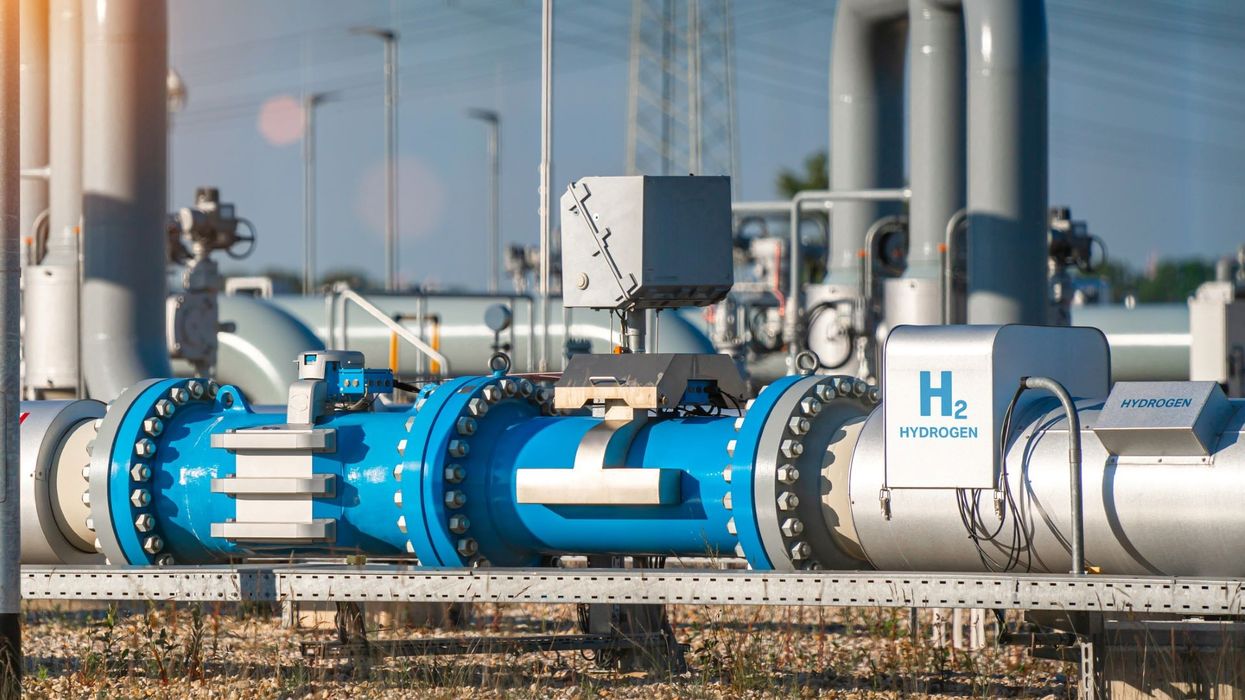
We hear "green hydrogen," but it's mostly industry-backed propaganda when 99% of all hydrogen produced in the world comes from fossil fuels.
There is a huge propaganda effort to frame "green" hydrogen as an energy technology with a relevant role in decarbonization. The effort does not pass basic tests—emissions, cost, efficiency and origin of the hydrogen. The European green hydrogen strategy (which is nothing more than the German hydrogen strategy), by creating major transport routes, would serve only to consolidate the relations of dependence of the peripheries on Germany, act as another lifeline for the fossil gas industry and hinder decarbonization.
The content produced by the major promoters of hydrogen—oil companies, Eurogas, which brings together European gas companies, and ENTSOG, the European Network of Gas Operating Systems—conceals crucial information and should be seen as what it is, propaganda.
Local production and consumption of green hydrogen could be viable in a process of decarbonizing heavy industry, with solar panels and wind turbines producing green hydrogen that can be consumed on-site. As soon as there is a process for transporting hydrogen, the process becomes an obstacle to decarbonization. Why?
The level of losses in long-distance maritime liquid hydrogen transportation is between 30 and 40%, with a further 5% lost in the regasification process at ports. To put hydrogen into a pipeline and transport it to another location and burn it at the final destination, the level of losses is monumental. Each energy conversion—hydrogen; compression; fuel cells; introduction into the network; and final consumer—leads to more energy losses. The technology for converting energy into hydrogen and back into energy is, at best, 46%, but can be as low as 18%. This means a level of losses of between 54% and 82%. Hydrogen transported in pipelines is an energy technology with 18% to 46% efficiency, a massive waste of produced energy.
Then there's the harsh reality: we hear "green hydrogen," but 99% of all hydrogen produced in the world comes from fossil fuels. Last year, global hydrogen production was responsible for more than 900 million tons of CO2 emissions, which is more than the emissions of all global aviation. Hydrogen, whether burned on site, put into a pipeline or put on a boat, is fossil-based, mostly from fossil gas.
Expanding green hydrogen from basically zero today to 5.5 GW by 2030 would mean diverting funding and resources away from decarbonization and electrification and into exporting our renewable capacity.
The plans to expand "green hydrogen" infrastructure are complete nonsense. To illustrate this, I will talk about the specific case of Portugal, a small country with a high level of renewable energy production, and how the hydrogen fever is serving as a tool to blockade energy transition, consolidate the fossil gas sector and serve German industrial interests.
In Portugal, there is a pipeline project called CelZa (Celorico da Beira—Zamora) by the companies REN and Enagás that is the main spearhead of hydrogen technology in the country. The project's clearest objectives—to transport natural gas and create hydrogen projects (grey, green or otherwise)—set the country's decarbonization back decades, intrench fuel dependence on fossil gas and threaten to divert the potential of renewable projects.
CelZa, that was once a simple pipeline for "natural" gas, recently gained star status by being renamed the "Green Energy Corridor" by some communication company working for the government. This project would link two fossil gas pipelines between Portugal and Spain and guarantee the continuity of the flow of gas between the Portuguese port of Sines and Barcelona. The French government vetoed a gas pipeline across the Pyrenees, so a new project was created to take it across the sea to Marseille, where it would connect to the gas pipelines that go to the center of Europe, making up for the lack of Russian gas felt by German industry.
What would the plan for hydrogen be? To start with the Celorico da Beira—Zamora section and move on to transform the entire natural gas pipeline network, which would continue to be able to transport gas, but would also be able to transport hydrogen. The transformation of the following sections of pipeline would cost billions of euros. Only when all the pipelines had been converted into hydrogen pipelines would it be possible to transport 100% hydrogen, the official communication by the government. This would only be possible after years and thousands of kilometers of the Spanish and French pipelines still to go before it reaches the center of Europe.
Green hydrogen has a tiny if any role to play in decarbonization.
Until then, the CelZa pipeline would transport natural gas and maybe a small share of hydrogen. The idea that this hydrogen would be 100% green would involve much more than the government's expansion of plans for 2030 from 2.5 GW to 5.5 GW. The hydrogen would largely be gray hydrogen, produced in gas plants, coinciding with the plans of the government and the gas companies—REN, EDP and Galp—to perpetuate LNG in the Port of Sines, either to transport and use as gas, to make hydrogen, and to import gas or hydrogen from countries in the Global South, namely from the African continent and Brazil.
Expanding green hydrogen from basically zero today to 5.5 GW by 2030 would mean diverting funding and resources away from decarbonization and electrification and into exporting our renewable capacity. With the level of losses we know, it means installing renewables to throw away.
A study by Recommon indicates that to produce 5 GW of green hydrogen—less than the government's plan—it would be necessary to install solar panels on an area of 43,000 hectares (more than the area of Porto), or wind turbines on an area of 550,000 hectares (more than the combined area of Portugal's 10 largest cities). This is the way to guarantee permanent monopolies on renewable energy, rejecting small-scale highly efficient models, and the guarantee of massive popular rejection of renewables due to their high impact on the environment when organized this way.
CelZa, like the four other new continental gas pipelines—Baltic, North Sea, North Africa and Eastern Europe—the "Hydrogen Backbone" is a project to send energy from the periphery of Europe and the Global South to German industry, to the serious detriment of all projects in other countries and continents.
Green hydrogen has a tiny if any role to play in decarbonization. The current hydrogen trade and transport plans are a huge obstacle to decarbonization.

"The Biden administration has clearly fallen for this scam hook, line, and sinker," said one campaigner. "This multibillion-dollar bet on greenwashed dirty energy will undermine efforts to address the climate crisis."
As U.S. Energy Secretary Jennifer Granholm on Friday celebrated the "historic investment" of up to $7 billion for seven regional hydrogen hubs as a key to achieving President Joe Biden's "goal of American industry powered by American clean energy," some climate campaigners warned that the administration is falling for—or participating in—a fossil fuel industry scam.
Roughly two-thirds of the H2Hubs investment will go toward green hydrogen, which is made using renewable energy, according to the White House. However, the bipartisan infrastructure legislation Biden signed in 2021 requires broader support, including for pink (nuclear) and blue (gas) hydrogen projects, the latter of which includes carbon capture, utilization, and storage.
"At face value—and according to the Biden playbook—the hydrogen hub grants aim to help transition the United States to clean energy. In reality, they amount to another corporate scam, one that preserves and extends the life of the extractive economy and prevents the frontline communities most impacted by climate disaster from having input," said Marion Gee, co-executive director at the Climate Justice Alliance, representing 89 rural and urban environmental justice groups.
"Hydrogen development is energy intensive to produce, could present a public safety risk in transit, can produce health-damaging air pollution when combusted, and is a play by the fossil fuel industry to extend its viability and profits," Gee stressed. "We must work to move capital and power into the hands of local communities who will center traditional ecological and cultural knowledge and create a pathway toward a regenerative future."
"The fossil fuel industry is working to continue our nation's reliance on fossil fuels by any means necessary—and hydrogen offers yet another possible inroad for Big Oil and Gas."
Earthworks policy director Lauren Pagel also asserted that "prioritizing hydrogen hubs across the United States is more about extending the life of oil and gas companies than addressing the climate crisis. These hubs are a dangerous distraction from the obvious consensus solution that the world must stop expanding fossil fuels that are warming the atmosphere."
Food & Water Watch policy director Jim Walsh was similarly critical, declaring that "the massive build-out of hydrogen infrastructure is little more than an industry ploy to rebrand fracked gas. The Biden administration has clearly fallen for this scam hook, line, and sinker. This multibillion-dollar bet on greenwashed dirty energy will undermine efforts to address the climate crisis, while increasing pollution of our air and water, and milking taxpayers for billions in new fossil fuel subsidies."
"Even the cleanest forms of hydrogen present serious problems—most notably the massive amount of water that would be waste," Walsh added. "As groundwater sources are drying up across the country, there is no reason to waste precious drinking water resources on hydrogen when there are cheaper, cleaner energy sources that can facilitate a real transition off fossil fuels."
The seven selected projects are the Appalachian (West Virginia, Ohio, and Pennsylvania), California, Gulf Coast (Texas), Heartland (Minnesota, North Dakota, and South Dakota), Mid-Atlantic (Pennsylvania, Delaware, and New Jersey), Midwest (Illinois, Indiana, and Michigan), and Pacific Northwest (Washington, Oregon, and Montana) hydrogen hubs.
As The New York Times detailed:
Not all of the $7 billion in funding will be spent at once. As a first step, the Energy Department will give awardees initial grants to create more detailed proposals for their hydrogen hubs. If the agency deems the projects viable, it will disburse more money over time—but that money is not guaranteed if any of the hubs prove unworkable.
"We're still a long, long ways away from creating a large-scale hydrogen economy," said Alex Kizer, a senior vice president at the Energy Futures Initiative, a Washington nonprofit organization. "Think of these hubs as laboratories of sorts to experiment with potential business models for hydrogen and to try to figure out some of the technological and infrastructure hurdles."
Even groups that support green hydrogen raised concerns over funding longtime polluters. Sierra Club executive director Ben Jealous warned that "the fossil fuel industry is working to continue our nation's reliance on fossil fuels by any means necessary—and hydrogen offers yet another possible inroad for Big Oil and Gas to lock in polluting and noneconomic uses of gas for decades to come."
"Decision-makers in the administration and at the local level must be wary of these attempts and ensure as much hydrogen-specific funding as possible goes to green hydrogen and its most efficient end uses to ensure this investment actually addresses climate change," he said.
Jill Tauber, vice president of litigation for climate and energy at Earthjustice, suggested that "hydrogen can be a clean energy solution, or it can drive us deeper into the climate crisis and hurt communities," and that green projects powered by renewables "can play an important role cleaning up what we cannot electrify, like steel manufacturing."
Julie McNamara, deputy policy director of the Climate and Energy Program at the Union of Concerned Scientists, joined the chorus of alarmed critics on Friday, saying that "billions of taxpayer dollars are at risk of perpetuating fossil fuel industry injustices and harms while subsidizing fossil fuel greenwashing."
"Today's announcement also sets in stark relief the significance of upcoming administration decisions around implementation of the Inflation Reduction Act's hydrogen production tax credit, which could be a bulwark against heavily polluting hydrogen—or a backdoor subsidizing it," she noted. "The Department of Energy and the Biden administration now must set rigorous implementation, evaluation, and engagement criteria to ensure the development of a hydrogen industry that is unequivocally aligned with our climate objectives and that serves our collective goal to secure a safe, clean, just, and healthy future for all."