

5
#000000
#FFFFFF
To donate by check, phone, or other method, see our More Ways to Give page.
Daily news & progressive opinion—funded by the people, not the corporations—delivered straight to your inbox.

"Not exactly the cancer cure we were promised," quipped one critic.
Artificial intelligence proponents claim AI will make healthcare more efficient, but an analysis published Wednesday suggests that the burgeoning technology is instead helping hospitals identify more lucrative diagnoses—and is driving nearly $1 billion in additional costs for patients and insurers.
The Blue Cross Blue Shield Association (BCBSA) analysis found that the share of inpatient cases billed as "medically complex" rose from 37% at the beginning of 2023 to 40% by the end of 2025. While that may seem like a small increase, it translated into an estimated $942 million in additional costs for Blue Cross plans over two years, including $653 million attributable to secondary diagnoses that pushed hospital claims into higher-paying categories.
“Critically, what we found is underneath all of that data [was] no change in corresponding care for a more complex patient,” Luke Chalker, BCBSA’s senior vice president of product and data science and a co-author of the analysis, told reporters. “We find no evidence of a corresponding change in care.”
The analysis' findings underscore an intensifying battle between hospitals seeking maximum reimbursement and insurers trying to contain payouts—a conflict increasingly mediated by AI. AI-powered coding systems can scan medical records, doctors' notes, and laboratory results for additional diagnoses that can increase the amount hospitals are paid. Ambient AI systems can also listen to clinician-patient conversations and automatically document them.
While AI can have legitimate benefits—like reducing paperwork and administrative burdens—BCBSA contends that the financial incentives built into the nation's fee-for-service healthcare system can turn those capabilities toward maximizing profits.
"Not exactly the cancer cure we were promised," More Perfect Union quipped on social media.
In one example, the analysis examined secondary diagnoses like anemia following major bowel surgery.
“If patients are truly sicker, we'd expect to see more treatment,” Chalker said. “For example, we're seeing significantly more anemia diagnoses at these hospitals without a corresponding increase in transfusions. The disconnect between diagnoses and treatment suggests that AI is identifying more billable conditions, not sicker patients.”
The analysis' findings echo an earlier BCBSA study of maternity care, which found that some hospitals dramatically increased diagnoses of acute posthemorrhagic anemia, while transfusion rates barely changed. BCBSA estimated that the increase in that single diagnosis alone added $22 million to maternity admission costs in one year.
Progressive healthcare advocates argue that the problem cannot be solved by tweaking the current system. Advocates for a Medicare for All-type system, including US Sen. Bernie Sanders (I-Vt.) and Rep. Pramila Jayapal (D-Wash.), propose replacing the for-profit insurance system with a universal public program.
In August, Sanders cited a Yale study estimating that his Medicare for All legislation could save 114,000 lives each year, while reducing national healthcare spending by more than $1 trillion annually.
“We do not suffer from scarcity in this country; we suffer from greed,” Jayapal said at a July Medicare for All shadow hearing.
"Medicare for All is the path to fix the broken healthcare system that has let corporate interests determine who lives and dies," Jayapal added. "The reality is that Medicare for All is the only solution that guarantees care for everyone in the US, brings down costs for working families, and generates savings for the country.

“With everyday costs getting higher and higher, it is clear that we need a system like Medicare for All," said the director of the group behind a new survey.
Nearly half of Michiganders surveyed for a poll published this week said they're struggling to pay for groceries and gas because of the high and rising cost of health insurance, underscoring an affordability crisis that Democratic US Senate candidate Abdul El-Sayed has cited as one of the reasons why the United States needs Medicare for All.
Forty-nine percent of Michigan voters queried by Progress Michigan and Public Policy Polling said the cost of health insurance affects their ability to afford basic necessities at least some of the time. Twenty-four percent said it happens “all the time,” while another 25% said it happens “sometimes.” Among Black Michiganders, the figures were substantially higher, with 34% reporting the problem occurs all the time and 31% saying it happens sometimes.
“Half of Michigan is already struggling with the cost of health insurance,” Progress Michigan executive director Justin Mendoza said Thursday in a statement. “With everyday costs getting higher and higher, it is clear that we need a system like Medicare for All to help Michiganders improve their health and afford their lives.”
El-Sayed, a physician and former Detroit health official, has made universal healthcare one of the three policy pillars of his campaign, alongside getting money "out of politics” and putting it "in your pocket.”
At a Monday "Students vs. Billionaires" town hall at Western Michigan University in Kalamazoo, El-Sayed argued that healthcare should be treated as a basic public investment rather than a commodity.
"You need good healthcare. You need a good education. We need childcare. We need good roads and bridges," he said. "We don’t need to send our money to big corporations to subsidize them, we need to be invested in people so they have the human capital to be able to do all the things as they graduate and come out. That's how the system should work."
El-Sayed has also repeatedly highlighted the plight of families who are insured but still cannot afford care because their deductibles are prohibitively expensive, and others who worry what will happen to their families' healthcare if they lose their jobs—an increasingly likely prospect as artificial intelligence usurps human workers.
“Medicare for All would allow us to actually provide every single person cradle-to-grave insurance,” El-Sayed said in a recent CBS interview, “without having to worry about losing it” after changing jobs, losing employment, getting married, or reaching retirement age.
The health insurance affordability crisis is likely to worsen in 2027. Healthinsurance.org reports that insurers are proposing a median increase of roughly 15% for individual market premiums nationwide, with Michigan insurers seeking an average 14.2% increase. The final rates could change before approval.
“Imagine not having to pay that," El-Sayed told CBS.
A new New York Times/Siena poll of Michigan voters found that 57% of respondents believe El-Sayed would do a better job on healthcare than Republican opponent Mike Rogers. Only 33% said Rogers would do a better job. Among all surveyed women, 67% said El-Sayed would be better for healthcare.
The overwhelming majority of voters ages 18-29 (86%) and Black voters (82%) agreed. Just 4% of Black respondents said Rogers would be better on healthcare. Among young voters, none—0%—said Rogers is the better choice for healthcare.
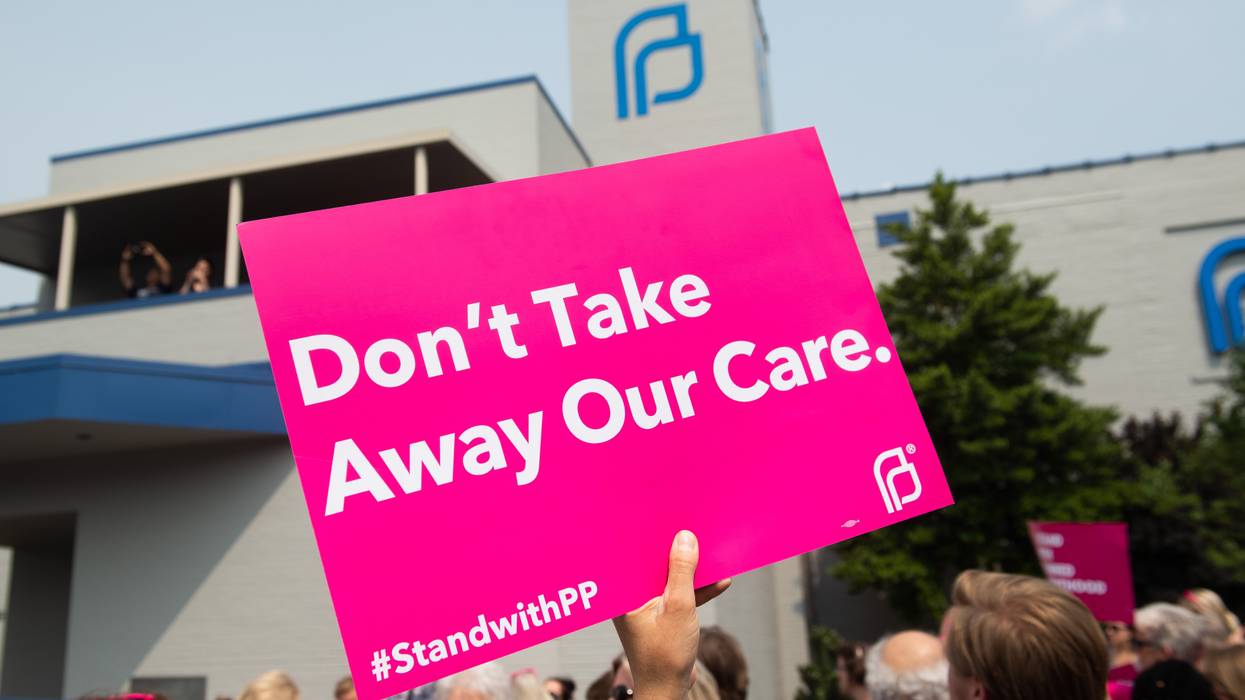
"There is no replacement for Planned Parenthood health centers or the essential, lifesaving care they provide. Women, their families, and entire communities will suffer.”
Data released Wednesday by the Guttmacher Institute and Power to Decide shows "the stark and brutal reality that awaits patients across the country" if Republican lawmakers in Congress fulfill their goal of "defunding" Planned Parenthood, which provides contraceptive counseling and services to millions of patients per year, as well as other essential healthcare services.
As part of the publicly funded contraceptive care network that's been in place for over half a century, the Guttmacher Institute said, Planned Parenthood's healthcare centers served 1.6 million—roughly a third—of the 4.7 million patients who needed access to affordable family planning centers in 2020.
But with the Trump administration and Republicans in Congress aiming to remove Planned Parenthood facilities from the network, as many as 12.4 million women who need low-cost or free birth control could have their access sharply reduced, as they live in counties that would be affected by the GOP cuts.
Millions in the US rely on @ppfa.org for affordable birth control. If Planned Parenthood was removed from the publicly funded contraceptive care system, 12.4 million women in need of low- or no-cost #BirthControl would be affected.More in our research with @powertodecide.bsky.social: gu.tt/4y5ai5M
[image or embed]
— Guttmacher (@guttmacher.org) September 23, 2026 at 4:17 PM
The One Big Beautiful Bill Act brought the GOP "closer than ever" to stripping Planned Parenthood of funding—which comes not from a "blank check from the federal or state government," as Republicans have often suggested, but largely from reimbursements for care clinics provide to patients who have Medicaid or who are eligible for free or reduced-fee services through Title X.
The law included an effective ban on Medicare reimbursements to Planned Parenthood clinics for one year, and just over a year since its passage, nearly 30 of the organization's health centers have closed.
If Republicans succeed in further cutting off funds to Planned Parenthood, 58% of women who need access to affordable or free birth control would be affected, said Guttmacher.
The West would be the hardest-hit region in the country, with 4.1 million women losing access to contraceptives in 94 counties.
Nearly 30 counties across the US would be left with no publicly funded contraceptive provider at all.
“When President [Donald] Trump and his backers in Congress say they want to shut down Planned Parenthood, they mean it," said Alexis McGill Johnson, president and CEO of Planned Parenthood Action Fund. "And when we say the consequences of stopping people from being able to get the healthcare they need are catastrophic, we mean it too."
"This is not a hypothetical, and we’re not playing make-believe," she added. "There is no replacement for Planned Parenthood health centers or the essential, lifesaving care they provide. Women, their families, and entire communities will suffer.”
Amy Friedrich-Karnik, director of federal policy for Guttmacher, said the data released by the group "demonstrates why policymakers and advocates must stand together in strong defense of Planned Parenthood and all providers of quality and affordable sexual and reproductive healthcare.”
“As politically motivated attacks against Planned Parenthood have resulted in shuttered clinics and real harms to patients," she said, "it is increasingly important to study the critical role that Planned Parenthood plays in the publicly funded healthcare system and why attacks on these health centers are so devastating."
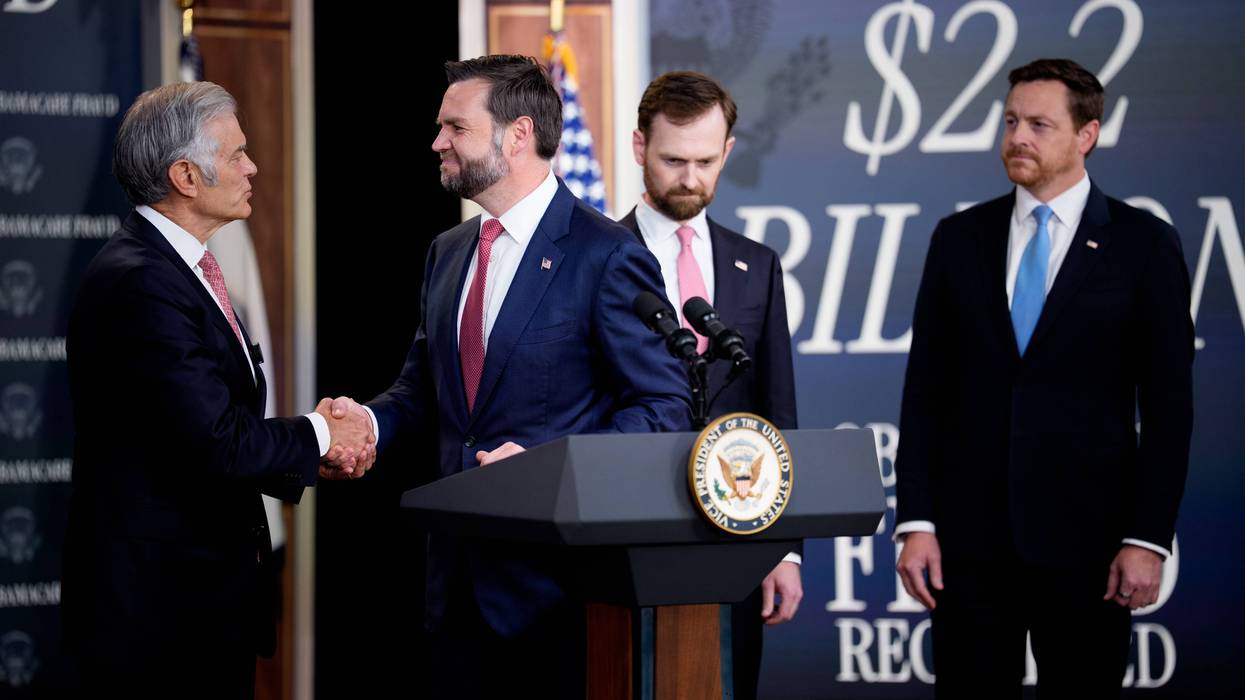
"Just six weeks out from the election, the Trump administration continues to kick working Americans while they’re down."
Anger and alarm are growing over the Trump administration's Tuesday announcement that it is removing at least 750,000 people from their Affordable Care Act coverage because they were "fraudulently" enrolled, a claim that drew deep skepticism from health policy experts and advocates.
Cynthia Cox, senior vice president at KFF, said fraud undoubtedly exists in the ACA marketplaces, noting that "some brokers have enrolled people without their knowledge or switched their plans so the broker could get a commission on the sale." But she warned that at least some of the hundreds of thousands of people targeted by the Trump administration "were likely legitimately enrolled."
Leading Trump administration officials, including Vice President JD Vance and Centers for Medicare and Medicaid Services Administrator Mehmet Oz, announced the large-scale disenrollment during a celebratory press conference on Tuesday, proclaiming that the ACA purge would save American taxpayers $2.2 billion.
“Rather than addressing rising healthcare costs, the administration is forcing more Americans to become uninsured, live sicker, die younger, and risk being one emergency away from financial ruin," said Anthony Wright, executive director of the advocacy group Families USA. "People are uninsured because of this administration’s own aggressive policies to push and price people out of their health plans, making it harder to get on and stay on coverage."
Among the criteria the administration used to determine whether someone was fraudulently enrolled in the ACA, according to Oz, was if they had "never filed a claim." But health policy experts say it is hardly uncommon for healthy people to not use their insurance in a given year.
The Trump administration did not provide specific breakdowns of why the roughly 750,000 people were stripped of ACA coverage. Vance said during Tuesday's press conference that the federal government uncovered a "fraud ring" involving 40 brokerage agents who funneled around 50,000 people into market place coverage—but the vice president admitted that "some of those people were probably legitimate."
Oz and Vance insisted that the administration went to great lengths to contact those they suspected were enrolled without their knowledge or consent. The officials also said the administration was scrutinizing more than 400,000 additional ACA enrollees for purported fraud, potentially pushing the number of people removed from the program above 1 million.
Ailen Arreaza, executive director of ParentsTogether, said in a statement Tuesday that "while millions of families across the country struggle to afford groceries, housing, childcare, and healthcare, this administration is celebrating taking health coverage away from three-quarters of a million people."
"That tells us everything we need to know," Arreaza added.
Analysts estimate that around 10 million people have lost health insurance coverage since the start of President Donald Trump's term, due in large part a Republican budget package that slashed Medicaid by around $800 billion and did nothing to extend enhanced ACA subsidies, sending premiums soaring for millions of marketplace enrollees—and pricing many people out of coverage.
American voters have consistently ranked healthcare costs as a top concern heading into the 2026 midterm elections. Joel Payne, chief communications officer at MoveOn Political Action, said Tuesday that "just six weeks out from the election, the Trump administration continues to kick working Americans while they’re down."
"It is sickening and unacceptable for this administration to boot 750,000 Americans off their healthcare instead of focusing on lowering costs and ending the war in Iran," said Payne. "The American people and MoveOn members won't forget this betrayal when polls open in November."
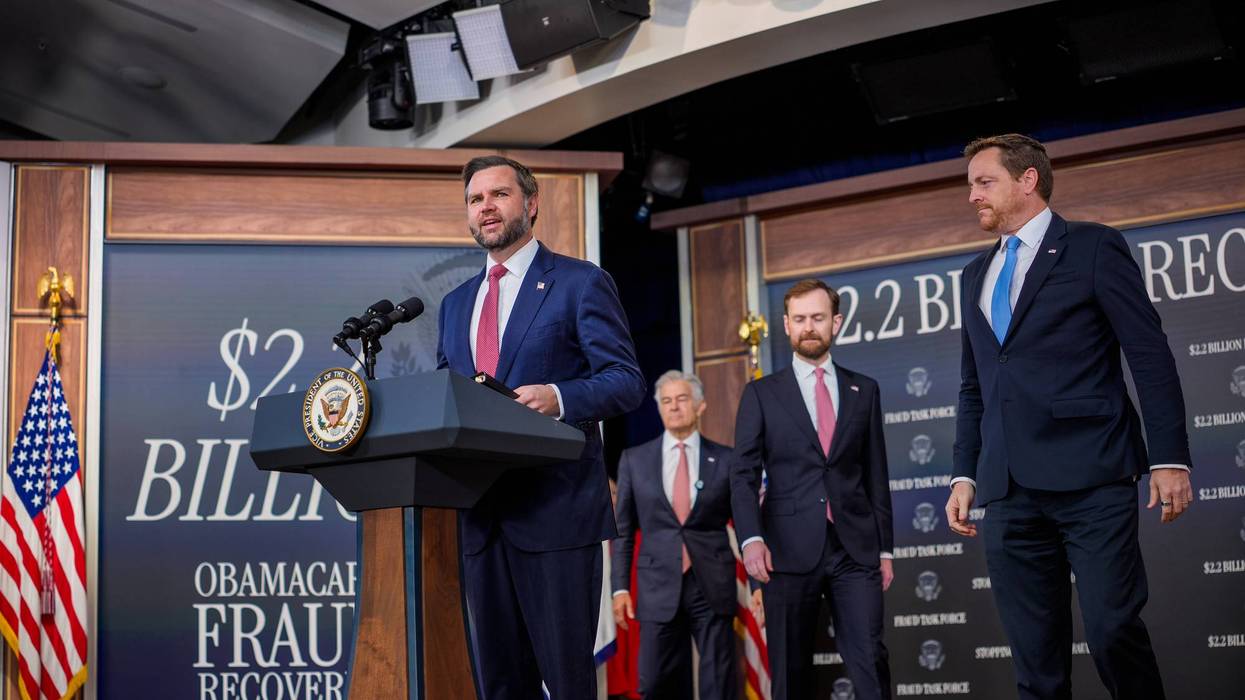
"This so-called task force is nothing more than a bullshit distraction."
The Trump administration is planning to boot more than 700,000 people from their Affordable Care Act coverage as part of a purported initiative to root out fraud in the program—an effort that campaigners said is nothing more than a pretext to kick more people off healthcare.
Vice President JD Vance, who is leading the White House's "Task Force to Eliminate Fraud," announced the planned ACA purge during a press conference on Tuesday alongside Centers for Medicare and Medicaid Services Administrator Mehmet Oz, whose agency has touted a right-wing think tank's dubious claim that millions of ACA enrollees are on the program improperly.
Vance insisted during Tuesday's press conference that the administration is putting itself "under an extraordinary burden of proof" to ensure its mass removal doesn't impact people who are eligible for ACA coverage, but advocates were not convinced.
"Vance's task force is a smokescreen for kicking people off coverage," declared the advocacy group Protect Our Care. The organization's president, Brad Woodhouse, said in a statement that Vance's task force "is nothing more than a bullshit distraction—a political stunt designed to throw even more people off their coverage while pretending to save taxpayers’ money."
"At a time when millions of Americans are already losing coverage and facing skyrocketing costs, Vance and this administration are making the crisis exponentially worse," said Woodhouse. "They are piling on more red tape, more confusion, and more opportunities for people to lose the coverage they rely on. Families need coverage they can afford and count on when they get sick. Vance’s task force won’t accomplish that. It’s a smokescreen for an administration whose sole mission is to make it harder to get and stay covered but to shower billionaires with tax breaks instead."
Millions of people have lost ACA and Medicaid coverage since the start of President Donald Trump's second White House term, due in large part to a Republican budget law that cut Medicaid by more than $800 billion and did nothing to extend enhanced ACA subsidies, sending premiums soaring.
Trump administration officials have baselessly claimed that their anti-fraud efforts were the key driver of ACA enrollment declines this year.
The word ‘fraud’ here obscures a lot.
Many of them may have been accidentally committing ‘fraud’ bc they live in a state that didn’t expand Medicaid and earn too little to qualify for ACA subsidies. There have been cases of brokers signing those folks up for the commission. pic.twitter.com/ek8gaVzJ7g
— Jordan Weissmann (@JHWeissmann) September 22, 2026
The mass disenrollment push comes less than two weeks after the Trump administration said it would send $500 rebate checks to some Americans who were allegedly "overcharged" under the ACA. Critics noted that the checks would only go to a small sliver of ACA enrollees and would do virtually nothing to offset premium hikes that are hitting millions of Americans.
Vance indicated Tuesday that the roughly 750,000 individuals who will soon be removed from the ACA due to alleged fraud are just the start of a broader purge. Around 19 million people are currently enrolled in ACA marketplace coverage.
"We're gonna do some additional verification," said Vance, who suggested the administration is using artificial intelligence tools to identify purported fraud. "We expect that most of these people are fraudulently enrolled, but we're gonna do some additional verification on about 419,000 people."
Democrats on the House Energy and Commerce Committee, which has jurisdiction over the ACA, wrote Tuesday that "people losing healthcare isn't a bug, it's [Trump and the GOP's] plan."
"First Republicans stripped Medicaid from millions," the Democrats wrote on social media. "Then they let premiums spike for millions more. Now JD Vance is using claims of 'fraud' to take coverage from hundreds of thousands more."
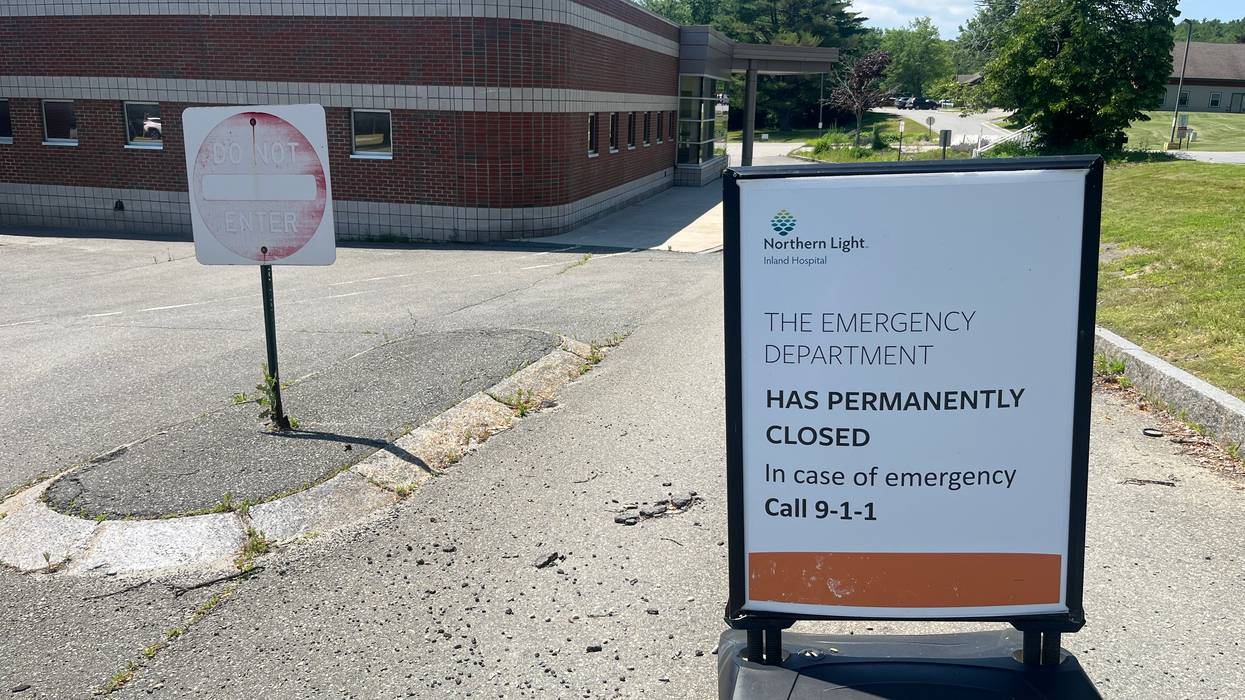
At long last, the nation’s healthcare plan will guarantee that not only is everyone covered for care, free at the point of service, but that there is a place within reasonable distance to find that care.
After a century of providing healthcare to this rural, southeast Michigan community, Sturgis Hospital closed in June with only 70 hours warning.
The hospital was not on the at-risk-of-closing list that had been published by Sen. Ed Markey (D-Mass.) a year earlier.
Over 300 Sturgis Hospital employees are scrambling to find work. Registered nurse Beth Kelley, who had worked at Sturgis for 32 years, described the meeting room as filled with “shock” and “devastation” when management announced that the hospital was closing.
Nationwide more than 700 rural hospitals are at risk of closing, over half at immediate risk within the next two to three years. The 700 hospitals represent about one-third of all rural hospitals.
The termination of care at Sturgis Hospital overloads the city’s emergency medical services. Director of public safety Ryan Banaszak said, “What was once approximately a 2-mile transport for patients has now become closer to 25 miles, which takes ambulance personnel and equipment out of service for a much longer period of time.”
The impact is great on Michigan Medicaid patients, who cannot use the closest hospital because it is across the state line in Indiana.
“Rural hospital closures lead to significant increases in mortality, and birthing outcomes and obstetric care suffer following closures,” said Michael Shepherd, University of Michigan health policy researcher. The risk increases with every additional mile for emergencies like strokes and heart attacks.
A few weeks later the rural River District Hospital in St. Clair County northeast of Detroit announced the closing of its inpatient and emergency services. Four more rural Michigan hospitals—in Mt. Pleasant, Carson City, Ontonagon, and Dowagiac—are in danger of closing with the upcoming Medicaid cuts.
Rural Americans live sicker and die younger than those in urban areas. Life expectancy is about three years shorter in rural communities. When a rural hospital closes, the mortality rate rises by 5.9%. Rural hospital closures increase mortality for emergencies such as heart attacks and strokes by about 10%.
“There are two kinds of Americans: those who live 12 minutes from an emergency department and those who live 72,” writes Ayla Ellison who grew up in Carmi in southern Illinois. “Whether you survive a heart attack, deliver a healthy baby, or die from something entirely treatable increasingly depends not on the severity of your illness, but on the distance to the nearest hospital,” she continues. She explores the consequences of rural hospitals folding in a country where no one is responsible for assuring help is close enough for a chance at life. The hospital in Carmi closed 20 years ago. Nine more Illinois hospitals are at risk of closure, most of them in southern Illinois.
Other states are worse off. In Mississippi, 51% of the rural hospitals are at risk of closing; in Alabama, 52%; in Arkansas, 68%.
Dr. Kenneth Williams battled for decades to sustain the hospital (Alliance Healthcare System) in Holly Springs, Mississippi. Rapid expansion of Medicare Advantage plans reduced reimbursement and increased denials of payment to the hospital. In 2023, facing financial desperation, the hospital converted to Rural Emergency Hospital status, a federal program designed to stabilize struggling rural hospitals. The Center for Medicare and Medicaid Services (CMS) later removed that designation, leaving the hospital again fighting to stay open.
Nationwide more than 700 rural hospitals are at risk of closing, over half at immediate risk within the next two to three years. The 700 hospitals represent about one-third of all rural hospitals. That report was prior to the passage of HR 1, the “One Big Beautiful Bill” that slashes $1 trillion from Medicaid. The crisis escalates from grim to disastrous with the looming Medicaid cuts.
Federal efforts to save our rural hospitals have been pitifully inadequate in the face of the towering problem.
Critical Access Hospitals, created by Congress in 1997, allow small rural hospitals to receive cost-based Medicare reimbursement. The plan was designed to stem the tide of closures.
Between 2010 and 2025, 152 rural hospitals closed. Of these, 52 were Critical Access Hospitals.
In 2021 Congress created Rural Emergency Hospitals. This designation provides for enhanced Medicare payments allowing rural hospitals to continue with outpatient and emergency services only, instead of closing.
In 2023, Sturgis hospital was “saved” by conversion to a Rural Emergency Hospital, delaying its shutdown by three years.
Neither these nor any other federal plans are big enough or thorough enough to work.
CMS Director Mehmet Oz recently visited Kentucky, home of 35 rural at-risk hospitals. He touted the $50 billion in Rural Health Transformation Funds as the solution. The assertion is absurd.
At best, Kentucky will get $1 billion from the rural transformation funds as it loses $21 billion in Medicaid funds. Not even a wizard can turn that into a winner.
As Boston University professor Alan Sager notes, no US entity is responsible for sustaining or building or financing hospitals based on community need.
“The whole Appalachian area has been abandoned, but its hospitals should be funded and improved, as a necessity of life—like the post office,” says Dare Cima, who is from southeastern Kentucky.
With passage of H R 3069, Improved Medicare for All, finally, the nation will take responsibility for assuring that rural areas have adequate facilities. Hospitals will be paid quarterly, in advance, with a global budget that provides operating expenses.
The allocation to hospitals ensures proper staffing with safe nurse-to-patient ratios and optimal staffing for physicians and other healthcare workers. Physician salaries can be included in the global budget. Adjustments to the operating budget will be made “to decrease healthcare disparities in rural or medically underserved areas.”
Special projects funds will be used to end discrimination based on race or other underserved categories including geography. Funds will be allocated for construction of new facilities where needed. At long last, the nation’s healthcare plan will guarantee that not only is everyone covered for care, free at the point of service, but that there is a place within reasonable distance to find that care.
The late Dr. Ewell Scott, Medical Staff president of St. Clair Regional Medical Center in Morehead in the mountains of eastern Kentucky, predicted that if current policy continued, it was just a matter of time until all of Kentucky’s hospitals east of I-75 would be closed.
Sadly, that prediction is breathtakingly close as 16 of east Kentucky’s hospitals in the 5th Congressional District, including Dr. Scott’s beloved St. Clair hospital, are on the list of those endangered with closing by the passage of HR 1.
But Dr. Scott was fighting for a different future. He persuaded the City of Morehead to pass a resolution supporting Improved Medicare for All, a national single-payer plan that would cover us all and fund the hospitals.
Dr. Scott urged all who would listen to tell their congresspersons: “We know the solution. You’ve got to have the guts to stand up and do it.”

The state needs money to provide essential services. Why not take it from the people who have money coming out of their ears?
This fall, California residents will be voting on a measure that would impose a tax of 5% on people with wealth in excess of $1 billion. This is a serious tax on a small group of very wealthy people.
While some focus on the amount of tax that these super-rich people will pay, it’s worth keeping in mind how much they will still have after paying their tax bill. A billionaire with $5 billion in assets will pay $250 million in taxes, but they will still be left with $4,750,000,000. We probably still don’t have to worry about these folks collecting food stamps.
The proponents of the tax calculate that it will raise $100 billion. While it is a one-time tax, it can be paid over five years. This sum will roughly match the cuts in Medicaid funding over this period that the Trump administration has put in place.
It is important to recognize that capitalism is an infinitely malleable system. We have allowed the rich to structure it to give themselves all the money. That is a huge problem.
To me, this sounds like a great plan. The state needs money to provide essential services. Why not take it from the people who have money coming out of their ears?
Okay, but we know the real world is never this simple. The rich love their money and aren’t happy about turning over any portion of it to the state of California, no matter how little it affects their living standards. We have to ask how much money the tax will actually collect after the rich use all the tools available, both legal and illegal, to avoid paying.
The podcast Today Explained had an interesting discussion of this issue last week. It included comments from two economists who have done research on this issue: Joshua Rauh, a senior fellow at the Hoover Institution and Cristobal Young, a sociology professor at Cornell University. Rauh is a conservative, while Young is a liberal. Both have done serious work on taxing the rich.
Not surprisingly, Rauh opposed the wealth tax. He argued that the tax would end up as a net revenue loser. The tax would apply to billionaires who were in the state as of January 1 of this year, which means if they haven’t left the state already, they will still be liable for the tax even if they choose to leave later. But Rauh argues that the combination of lost future income tax revenue from the billionaires who have already left, combined with reduced collections from the billionaires who stay or don’t come to the state, will more than offset whatever revenue the state collects from the tax.
I take seriously the issues Rauh raises. Some billionaires have left the state. They also are very clever in finding ways to avoid taxes. Rauh did a paper a couple of years back that found that the rich managed to escape paying 60% of the anticipated tax revenue from a 3-percentage-point increase in the top tax rate paid by high-income people.
There clearly is some point where higher tax rates can actually result in less revenue, mostly due to increased evasion and avoidance, but there also is some negative incentive effect (definitely the smaller part of the story). Rauh’s work suggested California might not be far from that point. (Its top marginal tax rate is 13%.)
While Rauh’s view of the wealth tax was predictable, I was surprised to hear that Young also opposed it. Young has done considerable work that finds that rich people do not often move to escape higher state tax rates. It might have been expected that Young would think that the state does not have much to fear from billionaires leaving to escape the wealth tax.
However, Young opposed the tax on different grounds. He argued that the one-time infusion of revenue from the tax, collected over five years, would still leave a funding gap five years out, after the revenue stopped coming in.
This is hard for me to understand. Five years in Trump’s America in an eternity. It is reasonable to think that in five years we may again have a more normal government at the national level that is prepared to actually provide people with healthcare. In that case, the shortfall will not be an issue. Alternatively, if Trump and his followers still hold power, we are likely looking at a disaster story for which there is no real way to prepare.
There are a number of billionaires who very publicly left California before the start of the year and may thereby avoid the tax. This will reduce the revenue collected from the tax and will mean a loss of income tax revenue for the state in future years, but that is water under the bridge at this point.
We can all envision better ways to tax the rich in an ideal world. California’s Gov. Gavin Newsom opposed the state wealth tax because he says we should have a federal wealth tax. Perhaps we should, but a state wealth tax is what’s on the table, and proponents of taxing the rich would be foolish not to wholeheartedly support it.
If the wealth tax goes down, California is not about to institute Young or anyone else’s ideal tax on the rich. If it goes down, it’s a pretty sure bet that it will be some time before another tax on the super rich in California comes this close to becoming law.
I will add that I have long argued that we need to structure the economy differently so that we don’t give the rich all the money. Having shorter and weaker government-granted patent and copyright monopolies would be a good start. Also, changing bankruptcy laws so that private equity partners can’t walk away from companies they bankrupted with their pockets full. And applying a modest sales tax on financial transactions would downsize the sector and eliminate many of the great fortunes on Wall Street.
This is the topic of my book, Rigged (it’s free). It is important to recognize that capitalism is an infinitely malleable system. We have allowed the rich to structure it to give themselves all the money. That is a huge problem. Taxing some of it back is a great thing to do, but it would be even better not to give them the money in the first place. That’s not a reason to oppose the tax, but it would be good if progressives paid some attention to fundamental issues of how we structure the market.
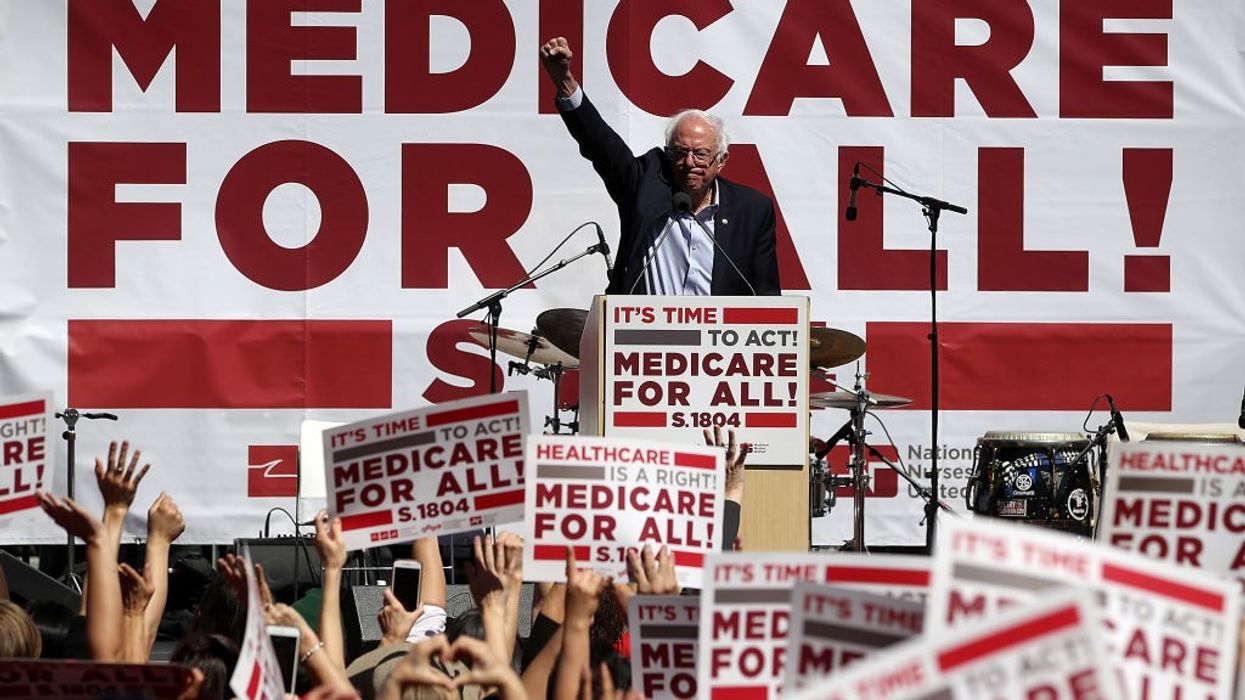
Everyone who wants Improved Medicare for All to become law should reach out to friends, family, and neighbors and urge them to get involved and we should create Improved Medicare for All clubs nationwide to galvanize this movement.
Reaching our destination won’t be easy. Americans have been fighting for universal, government-sponsored national health insurance for over 100 years. Progress was made in 1965 and 1972, when Medicare was enacted and expanded. Since, then, though, not only was Medicare not expanded; frustratingly, its opposition has succeeded in partially privatizing it.
The moment in which the nation finds itself does not appear particularly hopeful even for the country to remain the United States. Not since the Civil War has the nation been so divided.
Almost 100 years ago, the Great Depression brought economic collapse and with it, a serious threat to democracy. Like today, there was hostility to those perceived to be elites. The economic turmoil opened the door to widespread radical movements and demagogues.
Like today, “others” were scapegoated, along with the “elites.” Jews were a particular target. One extremely powerful, influential anti-Semite was radio preacher Father Charles E. Coughlin. At the height of his popularity, his Sunday radio show, Golden Hour of the Little Flower, which was broadcast over dozens of radio stations around the country, was heard by nearly one in four Americans and had a larger share of the listening audience than the more recent broadcasters Howard Stern, Rush Limbaugh, Paul Harvey, and Larry King put together. Before the 1936 Presidential election, he asserted. “This is our last election. It is fascism or communism. We are at the crossroads. I take the road to fascism.”
Another leader of the time seeking radical change was Louisiana Governor and then Senator Huey Long, who targeted the extreme income and wealth inequality which exploded during the so-called Roaring Twenties. His Share Our Wealth plan proposed confiscatory income, wealth, and inheritance taxes on the wealthiest and generous federal benefits for working and middle-income families. Just one year after announcing the plan, there were 27,000 Share Our Wealth local clubs, mainly in the South, with over 7.5 million members.
Long planned to run for president as a third-party candidate, even setting out his plans and strategy in his 1935 novel, My First Days in the White House. His plans came to an abrupt end, though, in September, 1935, when he was assassinated by the son-in-law of a political opponent whom Long had targeted and slandered.
Another radical leader of the time was socialist author and journalist, Upton Sinclair, who sought to expose corruption in business and government, while shining a spotlight on the horrendous working conditions at the time. In 1934, he ran for Governor of California on his “End Poverty in California” (EPIC) plan, which, like Long, he set out in a novel, the 1933 I, Governor of California, and How I Ended Poverty: A True Story of the Future. His plan called for the state to seize idle factories, farms, movie studios, and other businesses and convert them to worker-run co-ops, financed with progressive revenue. Two dozen candidates who ran on the EPIC plan won seats in the state legislature, including lawyer and journalist Culbert Colson, who successfully ran for Governor four years later, becoming the first Democrat in 40 years to win the office.
At base, people were suffering and open to radical solutions to address their misery. Franklin Roosevelt was undoubtedly the right person to meet that moment. He was extremely politically savvy, pragmatic, and smart. His speeches were inspiring and visionary. His famed fireside chats, named to convey a sense of cozy familiarity, established a strong personal connection between the president and the American people. He radiated optimism. Perhaps most importantly, he exuded compassion and empathy.
Though he enjoyed extraordinary wealth and privilege, his paralysis, resulting from contracting polio at age 39, was apparently transformative. His close colleague Frances Perkins, who became the first woman to serve as a Cabinet secretary to a president, described his transformation in her book, The Roosevelt I Knew. She witnessed Roosevelt undergo, she wrote:
“a spiritual transformation during the years of his illness….The man emerged completely warmhearted, with humility of spirit and with a deeper philosophy. Having been in the depths of trouble, he understood the problems of people in trouble.”
The brilliant achievements of the charismatic Roosevelt can continue to be felt today. His Social Security program was carefully crafted to embody basic American values, containing both progressive and conservative elements that continue to appeal to Americans across the ideological divide. Roosevelt’s legacy provides good news in today’s troubling time. As polarized and hostile as Americans are in general, we are overwhelmingly united in our support for Social Security and Medicare, which grows out of Roosevelt’s legacy. A 2025 Bipartisan Policy Center poll, for example, found that 91 percent of Americans believe that Medicare is valuable. That same poll found that 93 percent believe Social Security is valuable. Numerous other polls, taken over many years by groups across the ideological spectrum, have found similar results of unanimity of support.
Despite how divided and combative the American people are generally, these numbers provide a ray of hope. Supporters of Improved Medicare for All must build on this support systematically. The cause and its success may have the byproduct of helping to bring the country back to more normal, less fractured, and hostile times.
Notwithstanding Joe Biden’s 2020 victory, none of the Democratic presidential nominees in the last few election cycles nor the mainstream leaders of today’s Democratic Party appear to match Roosevelt’s political insights or capabilities. Senator Bernie Sanders (I-Vt.) showed that he can garner enthusiastic support, as has New York Mayor Zohran Mamdani, but the Democratic leadership has not embraced them or similar charismatic progressive leaders. Consequently, the Democratic Party has not spoken with one single clear voice and capitalized effectively on the broad support for Medicare and Social Security.
Unfortunately, unlike Roosevelt, the current politicians who appear most likely to win the 2028 Democratic presidential nomination do not appear to have the vision or charisma to capitalize on the popularity of Medicare and Social Security. There is no candidate with Franklin Roosevelt’s many gifts who is in a position to fully embrace Improved Medicare for All and ride it to victory, together with an expanded Social Security program. At this moment, the Democratic Party does not seem united in a path forward, certainly not one that would embrace as bold a vision as Improved Medicare for All.
Nevertheless, the political movements of the 1930s provide evidence that those policy goals can be achieved without a political leader. While the Share the Wealth and End Poverty in California grassroots movements had high-profile personalities leading the efforts, another astoundingly successful grassroots movement did not.
While policymakers in Washington were primarily focused on unemployment in the early years of the Great Depression, they apparently did not fully appreciate that hidden in the shadows of the unemployment numbers were impoverished, aged parents reluctantly dependent on their adult children for support. When Social Security became law in 1935, every state but New Mexico had poorhouses (sometimes called almshouses or poor farms). The vast majority of the residents were elderly. Most of the “inmates,” as they were often labeled, entered the poorhouse late in life, having been independent wage earners until they were no longer able to work.
Although official Washington was not focused on the plight of the elderly, ordinary people were. In September 1933, a Long Beach, California doctor, Francis E. Townsend, found himself at age 66 unemployed with no savings. He was gazing out his window when he spotted two elderly women, dressed in rags, rummaging through his garbage, searching for anything edible. It so upset Dr. Townsend that he sent a letter to the Long Beach Press-Telegram, his local newspaper.
His letter, published on September 30, proposed a plan. He proposed that the federal government provide every person aged 60 or older a pension of $200 per month, a princely sum in the 1930s. The only requirement, in addition to being retired and not a criminal, was that the recipient had to spend every penny within 30 days of receipt. He claimed that his plan would not only eradicate old-age poverty; it would so stimulate the economy that it would create jobs and end the Depression.
The idea spread around the country at a rate astonishing to believe in that pre-Internet, pre-social media world. A year after Townsend wrote his letter to the newspaper, Time magazine reported in its October 15, 1934, issue:
By last week the flow of money…was enough to pay the wages of 50 people….There were Townsend Clubs in every State except Delaware…. Between 2,000,000 and 5,000,000 people had put their names to petitions begging their Congressmen to vote the Plan into effect at once.
Even in the short time between the publication of Townsend’s letter and the establishment of Roosevelt’s Committee on Economic Security (CES), his interagency task force to develop the Social Security Act, supporters of the Townsend proposal were exerting considerable pressure on the Administration and Congress. At the height of CES’s work, mail from Townsendites averaged about 1,500 letters a day. In some congressional districts, a candidate’s position on the Townsend plan determined the outcome of the election.
By mid-October 1934, Townsend had acquired two million signatures on petitions urging congressional action on his plan. Just three months later, he was claiming to have 25 million signatures. The number of Townsend clubs had climbed to 25,000 across the country. The plan’s popularity was not hard to fathom. As political columnist, Mark Sullivan with The New York Herald Tribune explained: “The zeal of those promoting the plan is evangelical, almost fanatic.”
A Time magazine piece explained the political climate surrounding the plan:
The good doctor’s Old Age Revolving Pensions scheme, better known as the Townsend Plan, had by last week become one of the biggest political facts in the US. The early California groundswell of sentiment in its favor had grown to a tidal wave, battering at nearly every door in House and Senate Office Buildings.
In the end, the Townsend plan, which policy experts understood to be unworkable—benefits would have cost half the income of the United States, for example—was instrumental in enacting Social Security, because it provided the widespread pressure to address old age insecurity. That is the kind of pressure that today could get Improved Medicare for All enacted, as well.
To build such a movement is both easier and harder than it was almost 100 years ago. While American news consumption is much more siloed, social media, email chains, and the internet generally allow people to connect much more easily and effectively. Of course, people are drawn to a variety of important issues, including climate change, gun violence, and immigration. Nevertheless, similar to the 1930s with respect to old age insecurity, Americans appear to be reaching the end of their rope with respect to the nation’s health insurance companies, as was demonstrated by the strong, instantaneous outpouring of frustration with commercial health insurance in response to the murder of the UnitedHealthcare executive.
The movement for Improved Medicare for All already has powerful, effective, knowledgeable and resourceful leaders. They are members of a far-reaching, forceful coalition, the National Coalition for Medicare for All. The coalition meets regularly to strategize and advance the issue. They are doing a spectacular job in championing and pushing forward Improved Medicare for All. To help them succeed in its enactment, the rest of us should provide them with an overwhelming army of passionate, dedicated grassroots supporters.
The goal, as impossible as it might seem, is to build a broad-based, energized, and determined Townsend-like grassroots movement. Everyone who wants Improved Medicare for All to become law should reach out to friends, family, and neighbors and urge them to get involved. In addition to joining already-existing groups, such as MoveOn, Public Citizen, and Indivisible, supporters should create Improved Medicare for All clubs.
Those clubs should play a number of roles. First, the clubs could educate members and others about why Improved Medicare for All is so important. They could discuss at club meetings how health care is a right, not a privilege and how Improved Medicare for All is the only realistic way to get us there. Just as the Townsend clubs hounded their elected representatives, supporters should flood offices with phone calls, keep track of when their Senators and representatives are home from Washington, DD, and attend their town halls if they host them. If they don’t, the clubs can seek meetings with their members and staff. If their members won’t commit to cosponsoring Improved Medicare for All legislation, they should put pressure on them, including picketing their offices.
With or without membership in an Improved Medicare for All club, those wanting to help the effort have many other steps they can take. On this and many other issues, there are a multitude of effective civic and social organizations active on political issues, such as Indivisible, MoveOn, Public Citizen, and many more. If you have access to a union, they remain extremely important and effective actors with which to engage. With or without engagement with these organizations, it is perhaps most important to educate family, friends, and neighbors. Writing letters to the editor and posting on social media are helpful actions. If possible, there may be an opportunity to hold an event at a school, perhaps through the PTA, as well as at assisted care facilities, libraries, and other spaces. If you want to organize an event but want experts to be the speakers and/or panelists, that is relatively easy these days, particularly, if the speakers can appear virtually.
Moreover, because healthcare costs affect everyone, the issue of Improved Medicare for All can be tailored to a variety of organizations and groups. School groups may be concerned about the impact of healthcare costs on their budget. Women’s groups may be concerned about reproductive rights. Again, the point is to make the movement for Improved Medicare for All as large a mass movement as possible.
This moment in history may make enactment of Improved Medicare for All appear as far away as it possibly could be. However, the mythological phoenix should be the symbol of the effort. The phoenix, an immortal bird that continually arose from the ashes of its predecessor, symbolizes renewal after a period of hardship.
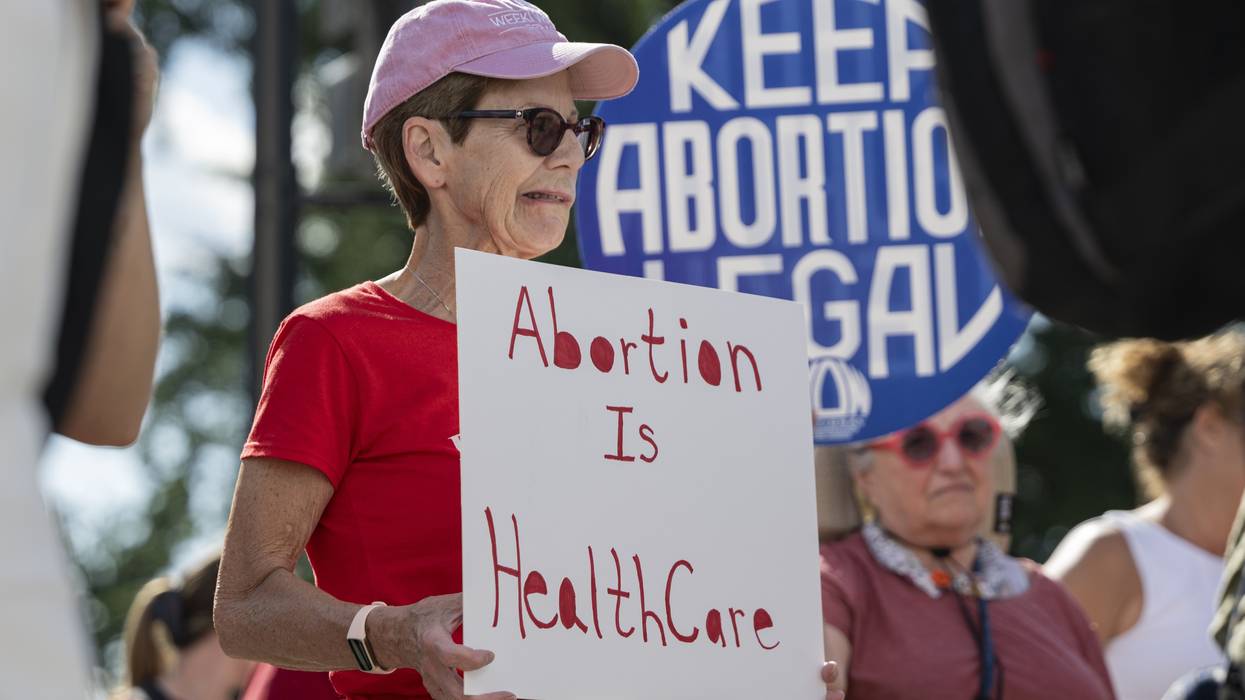
"My husband and I were crushed when we learned that we would never get to bring our daughter home. We wanted mercy for our daughter—but Oklahoma's laws denied us that."
When Sheena Hamlin found out she was pregnant with a daughter she named Ellie, she was "very excited," until her doctors discovered at around 21 weeks that the baby "might survive birth, but that her lungs were so severely underdeveloped that she would suffocate almost as soon as the umbilical cord was cut."
"The alternative would be to terminate the pregnancy," explains a lawsuit filed in state court on Wednesday, but that "was not an option in Oklahoma," where a pair of laws force patients whose "pregnancy will end in miscarriage, stillbirth, or the death of an infant shortly after birth" to leave the state if they choose abortion.
Hamlin and her husband, who have a son, "agreed that they did not want their daughter to suffer," so she flew to Illinois for care shortly before Thanksgiving in 2024, and spent nearly $4,000 out of pocket. After the "devastating" experience, the couple "underwent genetic testing and confirmed that Ellie had Meckel-Gruber syndrome."
They "pursued in vitro fertilization (IVF) and genetic counseling to ensure that they would not have another child affected by the condition," and while Hamlin is now expecting a baby, she "has found it anxiety-inducing to be pregnant in Oklahoma again, particularly in the period leading up to the anatomy scan," the suit says.
Hamlin is not alone. Magon Hoffman is also suing over the abortion bans that prevented her from receiving care. Hoffman and her husband were similarly "thrilled" to learn of her pregnancy in 2022, but a series of unfortunate revelations soon followed: a "huge blood clot," placenta previa, unusual growth measurements, and ultimately, anencephaly.
As Hoffman's doctor, a maternal-fetal medicine specialist, explained at her 19-week anatomy scan, her fetus had a "tiny bit of brain floating around," but "no skull." In other words, the complaint says, "her pregnancy was not viable. Her baby had no chance of survival. Ms. Hoffman was devastated."
Because Oklahoma only allows abortion care to save a patient's life, the doctor warned that she would have to leave the state to end the pregnancy. He then "tried to convince Ms. Hoffman to carry to term," the filing notes, even though "there was nothing they could do to help the baby survive," and if the child lived "for a few hours or a few days... she would be 'blind and 'dying.'"
Hoffman and her husband, who already had a daughter, drove eight hours and spent $3,000 to get abortion care in New Mexico. Afterward, the suit says, she "struggled with anxiety and depression from the loss of a pregnancy she desperately wanted and the stigma and fear she experienced in being forced to seek care out of state."
"In June 2024, while still using birth control, Ms. Hoffman unexpectedly became pregnant for a third time. She was terrified... At no point during the pregnancy was Ms. Hoffman able to believe she would bring home a healthy baby," the complaint continues. She was relieved to deliver another daughter—and does not want any more children, "so her husband decided to have a vasectomy, though he would have preferred to wait. Ms. Hoffman still fears another unexpected pregnancy."
The group Oklahoma Call for Reproductive Justice has joined Hoffman and Hamlin as plaintiffs, as have two of the OB-GYNs who treated them, Drs. Sarah Mashburn and Elizabeth Pinard, who were both born and raised in Oklahoma.
"I have dedicated my life to caring for women from all across our state, including those facing fatal fetal conditions. Doctors routinely provide care according to what our patients want for themselves and their families, but Oklahoma's abortion bans have left me feeling helpless," Pinard said in a statement.
"I don't want to tell my patients to leave the state when I can easily give them the care they need right here in my office," she stressed. "This is not how healthcare should work. My patients deserve access to all of their options for care, and the state needs to allow us to do our jobs."
Hamlin said that "my husband and I were crushed when we learned that we would never get to bring our daughter home. We wanted mercy for our daughter—but Oklahoma's laws denied us that."
Hoffman similarly said that "Oklahoma turned the hardest day of my life into weeks of needless suffering on top of our grief," and the state "is failing families like mine. I'm bringing this case so Oklahomans can have the power again to make the best decisions for our families."
The defendants in the case are the state attorney general and health commissioner, Oklahoma County's district attorney, and executive directors of the state's boards for medical licensing and osteopathic examiners, all of whom have yet to comment on the suit.
The plaintiffs are represented by attorneys at Herbert Smith Freehills Kramer and the Center for Reproductive Rights, a powerhouse that has fought for abortion rights in several high-profile state and federal cases. The legal group's president, Nancy Northup, said Wednesday that "it's unthinkable the pain these families went through because of Oklahoma's abortion bans."
"Forcing women to give birth knowing they won't be bringing a baby home is pure cruelty," she argued. "Every pregnant person should get to decide what is best for their family based on their own beliefs, values, and medical circumstances. The government should have no place in that. We're suing to hold the state accountable for the pain lawmakers have caused these families, and to make sure no other families suffer in this way."
Oklahoma is among the states where anti-choice policymakers have ramped up their longtime efforts to restrict reproductive freedom in the wake of the US Supreme Court's right-wing supermajority overturning Roe v. Wade. Another state on that list is Texas, whose abortion ban led to the 2022 reversal.
In Texas on Wednesday, Tierra Walker's family sued various state officials. The San Antonio woman died in December 2024, at the age of 37, after being denied an abortion. Although such denials have killed a growing number of pregnant people in Texas and beyond, this is the first case of its kind, tying a preventable death to a state abortion ban.
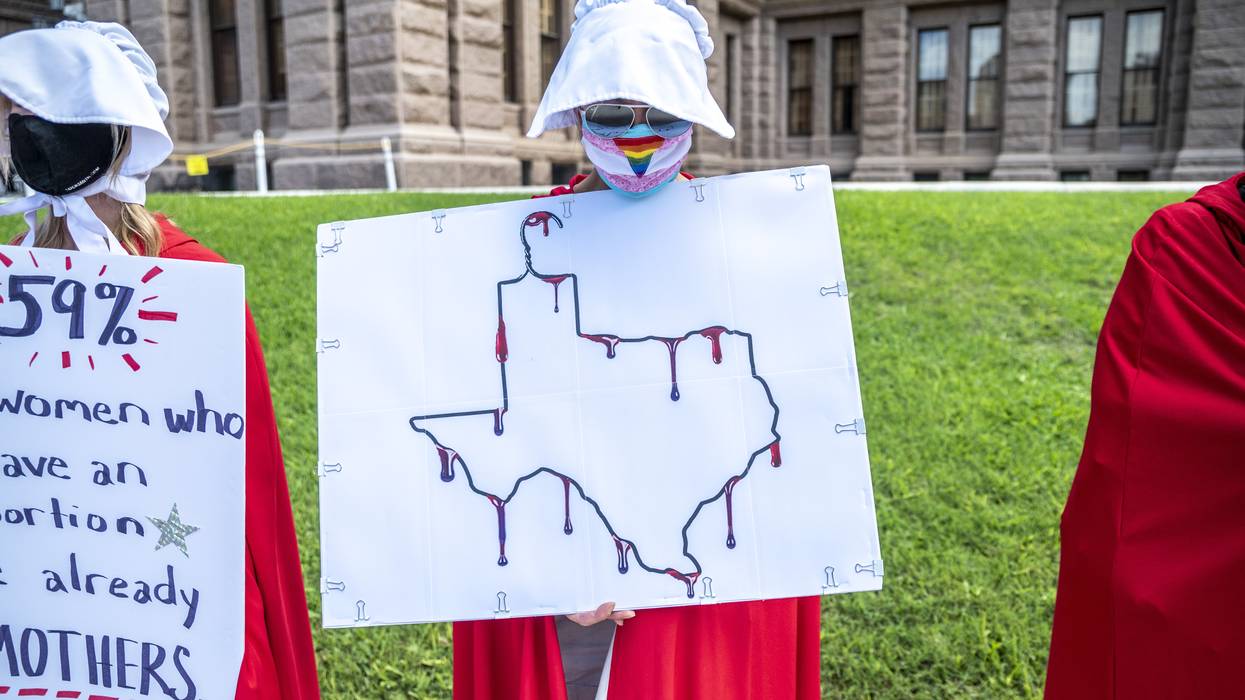
State officials "have imposed a merciless blanket prohibition on abortion that intimidates doctors into inaction," says the lawsuit. "Too many pregnant Texans have already died preventable deaths."
"Tierra Walker is dead, and those responsible must be held accountable."
That's the opening line of a lawsuit filed by Walker's family in Bexar County, Texas this week against the state's Republican attorney general, Ken Paxton, and various others over the death of the 37-year-old pregnant San Antonio woman.
On December 30, 2024, Walker's son "found her in bed, not breathing," the complaint notes. "It was his 15th birthday."
The teenager, as well as Walker's husband, mother, and aunt, who is responsible for her estate, are all involved in the wrongful death suit—the first of its kind, linking a "preventable death" to an abortion ban, according to The 19th.
In addition to Paxton, who is running for US Senate with support from President Donald Trump, the family is suing Bexar County District Attorney Joe Gonzales, Texas Medical Board Executive Director Stephen Brint Carlton, the University of Texas Health Science Center at San Antonio, and three doctors who treated Walker before she died.
"During the four months of her pregnancy, as she suffered through seizures, blood clots, and one hypertensive crisis after another, Ms. Walker repeatedly asked for an abortion to save her life," explains the filing. "Defendants associated with University Health responded only 'your baby is fine,' disregarding Ms. Walker's deteriorating health and constitutionally protected right to life."
The document argues that "their deliberate indifference, discrimination, and medical mistreatment ultimately caused her horrific and tragic death. Now, Ms. Walker's husband is a widower. Her disabled mother has lost her daughter and caregiver. And her teenaged son has no mother."
"Meanwhile, from the moment Texas' first abortion ban went into effect in 2021, through the overturning of Roe v. Wade, through the present day, defendants Ken Paxton and Stephen Brint Carlton have imposed a merciless blanket prohibition on abortion that intimidates doctors into inaction and breeds extreme fear among Texas' medical establishment," the filing notes. "As a result, too many pregnant Texans have already died preventable deaths. Yet no one has held them accountable."
The suit—filed by the principal attorney at the Marynell Maloney Law Firm and Amplify Legal, the litigation arm of the nonprofit Abortion in America—is designed to do just that.
"Tierra had a treatable medical condition, the problem was that the treatment she needed was an abortion," said attorney Michelle Maloney in a statement. "She died a preventable death. Medical and political negligence killed Tierra Walker."
Defendants in the case have declined to comment or, in some cases, even respond to media outlets, including The Texas Tribune. As the newspaper detailed Wednesday:
Months after Walker died, the Texas Legislature passed Senate Bill 31 aimed at ensuring that pregnant women receive lifesaving care under the state’s near-total abortion ban. It says that a patient doesn’t have to be in "imminent" medical crisis for doctors to intervene and that a doctor can only be charged if the state can prove "no reasonable doctor" would have made the same call. It also requires the Texas Medical Board to create training for doctors, which was finalized in early 2026.
But Molly Duane, one of the lawyers representing the Walker family, said during a news conference on Wednesday that SB 31 would not have prevented Walker's death.
"I would love if the Texas Legislature would actually take their responsibility here seriously and get rid of the laws that are causing so many deaths. I just don't have any confidence that that is something that they can do in this environment, but ultimately, that's a political question," Duane said.
ProPublica first reported that Walker "died after she couldn't get an abortion in Texas" last November. The investigative outlet has exposed similar deaths in the state—those of Nevaeh Crain and Porsha Ngumezi—as well as the first known case of a fatal abortion care denial in the wake of the Roe reversal: Amber Nicole Thurman in Georgia.
"No one else should have to experience what my family has gone through. Tierra was the glue that held our family together, and now she's gone," said Walker's aunt, LaTanya Walker. "Doctors all turned a blind eye as Tierra was dying, and refused to give her the abortion she needed to save her life. She deserves justice."