

SUBSCRIBE TO OUR FREE NEWSLETTER
Daily news & progressive opinion—funded by the people, not the corporations—delivered straight to your inbox.
5
#000000
#FFFFFF
To donate by check, phone, or other method, see our More Ways to Give page.
Daily news & progressive opinion—funded by the people, not the corporations—delivered straight to your inbox.
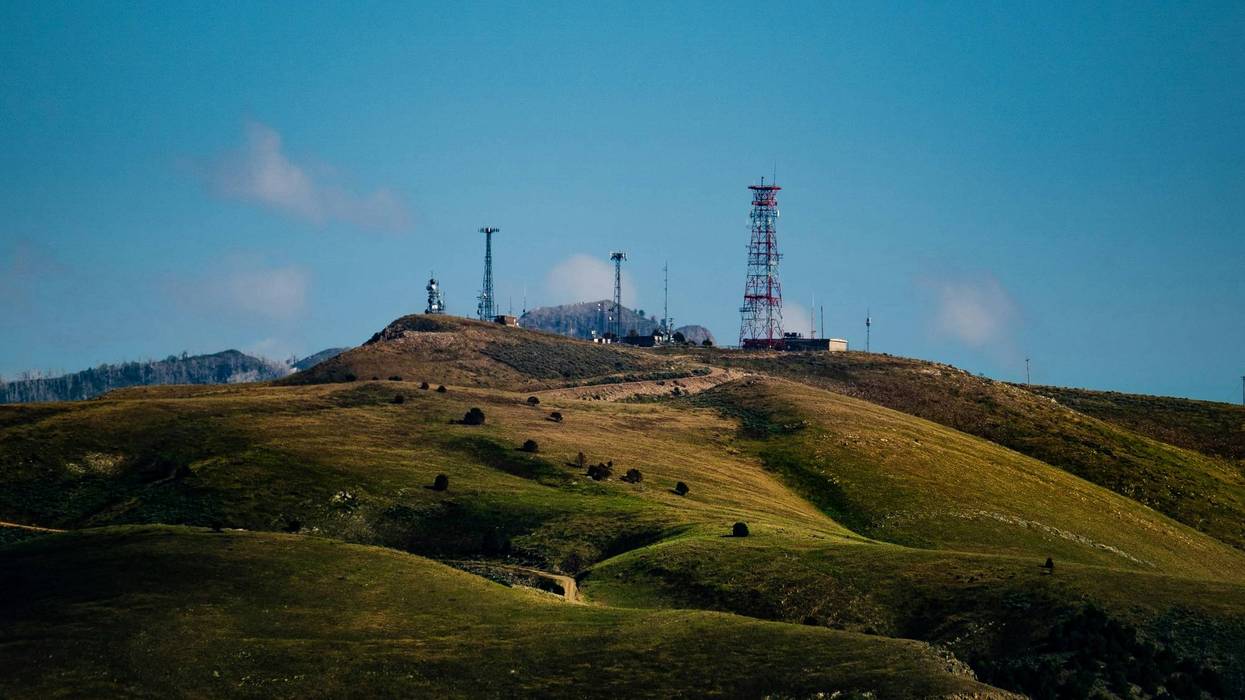
Two new FCC proposals would render an already weak NEPA process largely meaningless, strip local and state governments of nearly all of their congressionally granted authority, and leave the agency even less accountable to the public.
The Federal Communications Commission is poised to release two orders that would steamroll states and communities on behalf of the wireless industry. Long in bed with that industry, it will soon eliminate virtually any say locals have in the rollout of new infrastructure. Reflecting the industry’s wish list, these rules would override already-limited state and local control over how and where cell tower infrastructure is built, further erode environmental review safeguards, and trample on states’ rights.
Federal law already restricts states and communities from taking actions that “prohibit or effectively prohibit” the provision of wireless service. Yet Congress also recognized that local governments serve an essential role in responsible siting of telecommunications deployment through land-use planning, zoning, engineering oversight, public safety, and preservation of neighborhood character.
Historically, states and localities have retained the authority to charge industry reasonable fees and to regulate for public welfare—setting standards for structural safety, wildfire risk, flood exposure, resiliency, decommissioning, environmental protection, and aesthetics. Before siting, city councils, boards of supervisors, and other officials evaluate the impacts of large, industrial towers on homes and critical community assets, like parks, slope stability, or historic buildings.
For years, however, the Federal Communications Commission (FCC) has steadily chipped away at these core local functions through litigation and rulemakings that sharply curtail community authority to impose requirements on carriers. In November, the FCC proposed an even more aggressive series of changes that would all but obliterate what remains of local authority over wireless siting. The FCC claims these measures are necessary to “free towers and other wireless infrastructure from unlawful regulatory burdens imposed at the state and local level.”
As wireless technologies proliferate—with presumably even less scrutiny, oversight, and public input—the environmental and community impacts will only multiply.
One proposal would mandate automatic approval of tower and small-cell applications if localities miss federal deadlines. California officials warn these “unrealistic timelines” risk incomplete safety review and “threaten to silence the very people who must live with the consequences.”
The FCC would broadly preempt local aesthetic standards and cap fees that fund environmental review, rights-of-way management, and safety inspections, shifting industry costs on to taxpayers. It would treat setbacks aimed at limiting noise and visual impacts as impermissible RF radiation regulation, bar local requirements for industry-funded RF testing to verify compliance, prohibit updated safety and design standards at permit renewal, and override requirements that carriers consider less intrusive alternatives or demonstrate actual service need.
Taken together, these measures would eviscerate any local role in siting decisions that consider neighborhoods, landscapes, safety, and environmental integrity in communities across the nation, and replace it with the will of the wireless industry.
At the same time, the FCC is finalizing another rule that would eliminate community input in the agency’s already weak environmental review process. Under the National Environmental Policy Act (NEPA), federal agencies must assess and disclose environmental impacts and consider public concerns, yet the FCC has one of the least rigorous NEPA frameworks of any agency. Few of its authorized activities undergo any meaningful review. It delegates the preliminary environmental review to industry with no oversight or agency record; industry also prepares the few environmental assessments that may be required from the preliminary review. Its notice and comment procedures seem designed to exclude the public, and, unlike most agencies, the FCC has no web page devoted to NEPA documents or compliance. It has almost never enforced its environmental rules against industry violators.
The consequences of these failures are visible nationwide: protected landscapes and historic viewsheds marred, wetlands filled, endangered species habitat destroyed, sacred sites desecrated, burial mounds disturbed, and fragile underwater environments degraded. Equally important, the voices of communities and citizens have been suppressed and ignored.
Now, echoing industry demands to cut “regulatory red tape,” the FCC is proposing to further weaken its skeletal NEPA rules, exempt more of its actions from environmental review, and further exclude the public. It would redefine which actions trigger environmental review so that even fewer authorizations—covering most cell towers and satellite deployments—would be assessed for environmental effects. It would narrow the scope of the few environmental documents that remain and make them less available to the public. Most egregiously, the FCC proposes eliminating its lone public notice provision that alerts communities when a new tower is proposed, thereby allowing residents to object. Although the FCC routinely dismisses objections, the provision complies with a key NEPA requirement.
Both of the FCC’s proposals are a draconian solution to a nonexistent “problem.” At the end of 2024, industry statistics show 651,000 cell towers and wireless facilities operating nationwide, with thousands more, including satellites, approved or underway. Every major wireless carrier has nationwide coverage. Industry has prepared few environmental assessments over the years, and the FCC has never produced a more thorough environmental impact statement. Contrary to industry claims, red tape has not hindered deployment.
As wireless technologies proliferate—with presumably even less scrutiny, oversight, and public input—the environmental and community impacts will only multiply. Taken together, the FCC’s twin proposals would render an already weak NEPA process largely meaningless, strip local and state governments of nearly all of their congressionally granted authority, and leave the agency even less accountable to the public.
With almost 30 bills introduced on accelerating broadband siting this session, Congress too is doing its part to “free” industry from local control and environmental laws. Any and all of these radical new frameworks will hand industry a carte blanche to deploy infrastructure that runs roughshod over local, state, and public interests as well as the environment.
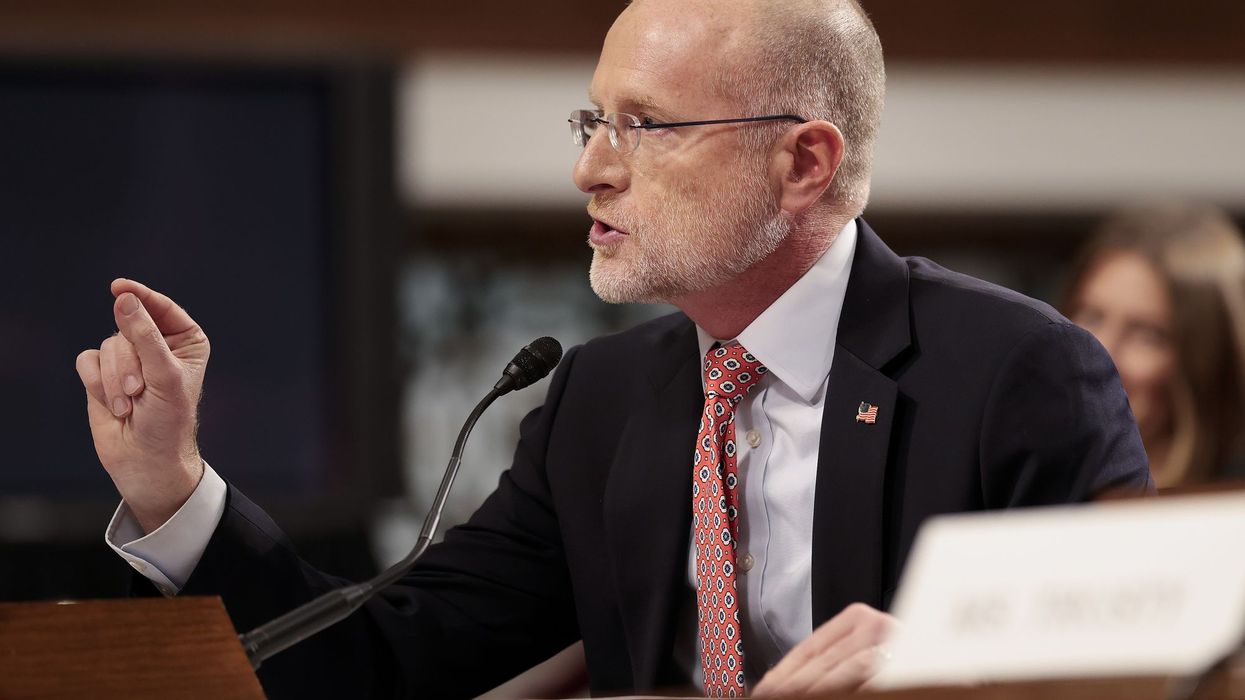
One critic called the removal—which came immediately after FCC Chair Brendan Carr ignored nearly a century of historical precedent by claiming the agency is not independent—"a chilling authoritarian touch.”
Federal Communications Commission Chair Brendan Carr stunned many observers Wednesday by suggesting that the FCC is subordinate to President Donald Trump—an assertion followed almost immediately by the removal of the word "independent" from the agency's website.
Pressed by Democratic—and some Republican—lawmakers during a contentious Senate Commerce Committee hearing that addressed the FCC's mission of independently implementing and enforcing US communications laws and regulations, Carr said that "formally speaking, the FCC is not independent."
Sen. Ben Ray Luján (D-NM) read aloud from the FCC's website, which at the time proclaimed the agency's independence.
"Is your website lying?" asked Luján.
"Possibly," replied Carr.
Within minutes of Carr's testimony, the mission statement on the FCC's website no longer described the agency as "independent."
Addressing Carr's apparent fealty to Trump, Sen. Andy Kim (D-NJ) asked, "If you don’t think that the FCC is independent, then is President Trump your boss?”
Carr replied: “President Trump has designated me as chairman of the FCC. I think it comes as no surprise that I’m aligned with President Trump on policy.”
A former telecommunications attorney, Carr has been criticized for siding with corporations and against the public interest on nearly ever major issue to come before the FCC. Many of his views are laid out in the chapter on the FCC he authored for Project 2025, the Heritage Foundation-led blueprint for a far-right overhaul of the federal government.
As chair, Carr has been accused by critics including Democratic lawmakers—some of whom have demanded his firing or resignation—of being a Trump sycophant, especially over his role in getting ABC late-night talk show host Jimmy Kimmel suspended for joking about the assassination of far-right firebrand Charlie Kirk.
Asked by Kim if it would be appropriate "for the president or senior administration officials to give you direction to pressure media companies," Carr declined to directly answer the question.
“The easy answer is, ‘No.’ It’s not a hypothetical," the senator said. "Trump is not your boss. The American people are your boss."
Matt Wood, general counsel and vice president of policy at the advocacy group Free Press Action, said that "if Brendan Carr proved anything today, it’s only that he’s willing to shout down senators and contort his supposed free speech principles to protect Trump’s ego and attack Trump’s critics."
Wood lamented that Carr "proudly trashed his own agency’s historical independence."
"Right after senators pointed out the contradiction between the FCC’s online description and Carr’s claim that Donald Trump ultimately called the shots, language noting the agency’s independence disappeared from the FCC.gov website—a chilling authoritarian touch," he added.
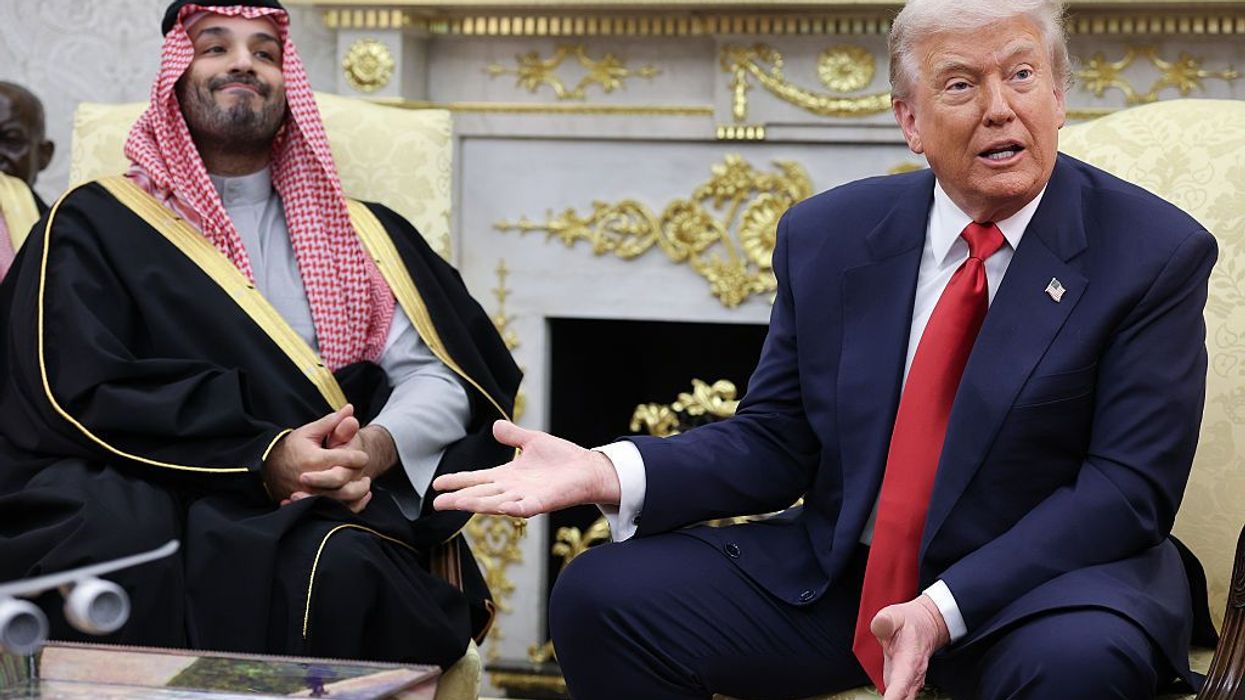
Trump also contradicted a US intelligence assessment that Saudi Crown Prince Mohammed bin Salman had ordered the murder of journalist Jamal Khashoggi.
President Donald Trump angrily snapped at ABC News reporter Mary Bruce while taking questions alongside Saudi Crown Prince Mohammed bin Salman in the White House on Tuesday.
The testy exchange began when Bruce tried to ask the crown prince about a US intelligence assessment concluding that he was responsible for the murder of journalist Jamal Khashoggi.
"Who are you with?" Trump demanded to know as Bruce attempted to ask her questions.
"I'm with ABC News, sir," she replied.
"Fake news," Trump said. "ABC, fake news, one of the worst in the business."
Shortly after this, Trump described the slain Khashoggi as "somebody that was extremely controversial."
"A lot of people didn't like that gentleman that you're talking about," Trump said, referring to Khashoggi. "Whether you like him or didn't like him, things happen. But [the crown prince] knew nothing about it. You don't have to embarrass our guest."
In fact, a US intelligence report that was declassified in 2021 concluded that the crown prince personally approved of a plan carried out by Saudi forces to murder Khashoggi after he entered a Saudi consulate in Istanbul, Turkey in 2018.
Shortly after this, Bruce tried to ask the president a question about FBI files related to the late sex offender and longtime Trump friend Jeffrey Epstein, and he again hit her with personal insults.
"It's not the question I mind, it's your attitude," he said. "You're a terrible person and a terrible reporter."
He then threatened to take ABC News completely off the air.
"I think the [broadcast] license should be taken away from ABC because your news is so fake, and it's so wrong," he said. "And we have a great commissioner... who should look at that."
Trump's mention of the "commissioner" was presumably a reference to Federal Communications Commission Chairman Brendan Carr, who earlier this year threatened to pull ABC's broadcast license unless it fired late-night host Jimmy Kimmel, a frequent critic of the president.
Kimmel's show was suspended shortly after Carr made this statement, although he was reinstated days later amid public outcry about government censorship.