

SUBSCRIBE TO OUR FREE NEWSLETTER
Daily news & progressive opinion—funded by the people, not the corporations—delivered straight to your inbox.
5
#000000
#FFFFFF
To donate by check, phone, or other method, see our More Ways to Give page.
Daily news & progressive opinion—funded by the people, not the corporations—delivered straight to your inbox.
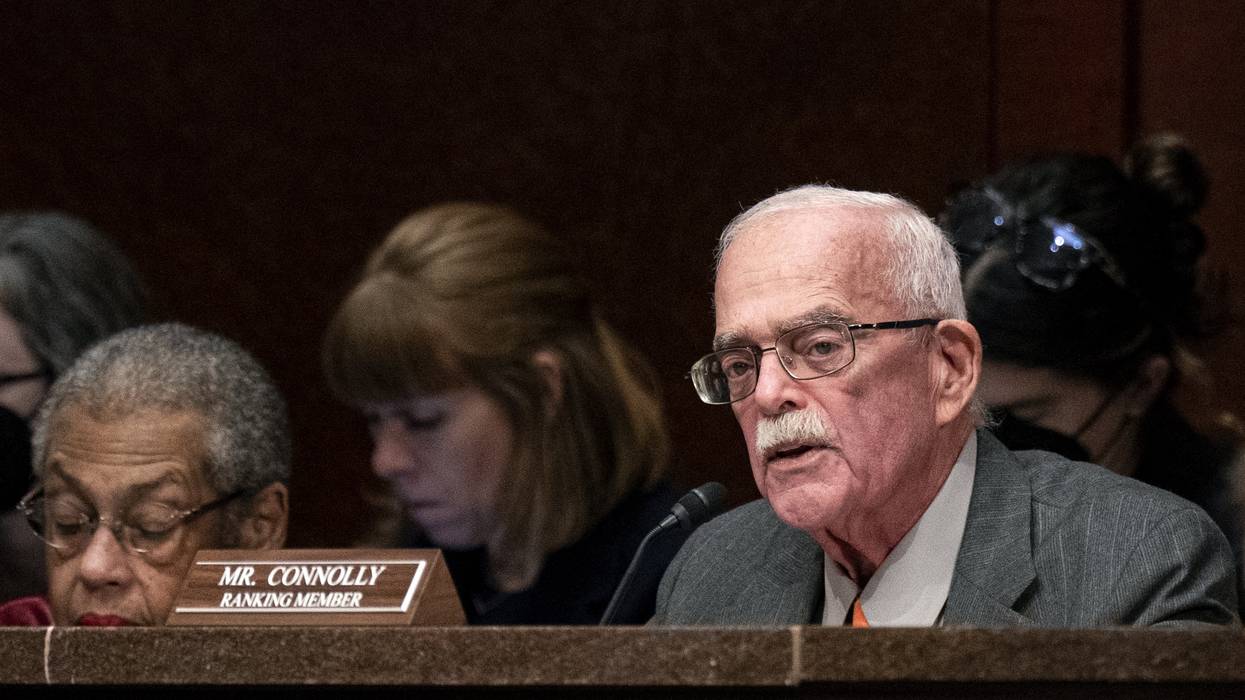
The lawmaker announced in late April that he was stepping down from his ranking member position on the powerful House Oversight Committee.
Three weeks after announcing he would not run for reelection and would step down from his leadership role on a powerful U.S. House committee, Rep. Gerald Connolly died Wednesday at the age of 75.
Connolly (D-Va.) announced in November just after winning his reelection campaign that he'd been diagnosed with esophageal cancer.
Connolly's family stated that he "passed away peacefully at his home this morning surrounded by family."
"Gerry lived his life to give back to others and make our community better," said the Connolly family. "He looked out for the disadvantaged and voiceless. He always stood up for what is right and just. He was a skilled statesman on the international stage, an accomplished legislator in Congress, a visionary executive on the Fairfax County Board of Supervisors, a fierce defender of democracy, an environmental champion, and a mentor to so many."
His death came five months after he won the role of ranking member on the House Oversight and Accountability Committee. U.S. Rep. Alexandria Ocasio-Cortez (D-N.Y.) also ran for the position, saying the role of the top Democratic lawmaker on the panel was a "profound and consequential one," with the ranking member empowered to subpoena members of the Trump administration should Democrats win the 2026 midterm elections.
A number of lawmakers and political observers expressed support for Ocasio-Cortez's bid, with former Obama administration staffer Dan Pfeiffer calling her "probably the best communicator in the Democratic Party right now."
Connolly signaled that he would take a reserved approach to the powerful position, suggesting in one interview that his colleagues who go "on cable television" to denounce the Trump administration were "performative"—comments that frustrated many progressives who believed Ocasio-Cortez would wage effective attacks on the Trump administration and would keep the crucial committee in the spotlight.
"He was a skilled statesman on the international stage, an accomplished legislator in Congress, a visionary executive on the Fairfax County Board of Supervisors, a fierce defender of democracy, an environmental champion, and a mentor to so many."
But much of progressives' ire over the Oversight battle was reserved not for Connolly but for Democratic leaders like Rep. Nancy Pelosi (D-Calif.), who reportedly made "calls" to Democratic lawmakers urging them to join her in supporting Connolly.
Political organizer Max Berger, co-founder of the Jewish-led Palestinian rights group IfNotNow and the labor-focused media organization More Perfect Union, said Wednesday that Pelosi's interference ensured the victory of a lawmaker who was in frail health "over an up-and-coming Latino woman"—as then-President-elect Donald Trump and his billionaire ally, Elon Musk, were gearing up to dismantle federal agencies, fire hundreds of thousands of federal workers, secure financial benefits for Musk's aerospace company, and gut the social safety net in order to secure tax cuts for the wealthiest Americans.
"Have the past five months been an important time for congressional oversight?" Berger asked rhetorically on Bluesky. "As Trump and Musk were ransacking the federal government, congressional Democrats put a 74-year-old cancer patient in charge of providing oversight. He died within five months of taking the job. It's a form of political negligence that borders on criminal."
Amanda Litman, president of Run for Something, said Connolly "was a good guy, a good leader, and a committed public servant."
"It's so deeply sad on many levels that his final months of life were spent fighting to hold on to power," said Litman.
In the last two-and-a-half years, eight members of the U.S. House have died while in office. All have been Democrats, and three have died since Trump took office for his second term.
Both before and after his diagnosis and the Oversight fight that garnered national headlines, Connolly was a fierce defender of federal workers, including those at the U.S. Postal Service. In March he demanded a public hearing on the Trump administration's threats to privatize the USPS. He was also a fierce critic of Trump's plan to strip federal employees of job protections, and sponsored a bill that passed in the House in 2021 to block federal job reclassifications.
He sponsored the Federal Information Technology Acquisition Reform Act in 2014, which was credited with speeding up processing times for and Social Security beneficiaries and veterans needing services, strengthening cybersecurity at hospitals, and expediting federal emergency responses—"his major legislative legacy to date," Mark Rozell, dean of the Schar School of Policy and Government at George Mason University, told The Washington Post.
"It did transform a part of the operations of the federal government in what is considered by experts to have been profoundly important," said Rozell.
Connolly also led the Democrats' successful fight during Trump's first term against the addition of a citizenship question to the U.S. Census, saying it would provoke "real and palpable" fear in many households. In a memorable CNN interview in 2019, he said he would "go to the max" to ensure the administration complied with court orders and threatened jail time for officials who resisted subpoenas.
Rep. Raja Krishnamoorthi (D-Ill.), a member of the House Oversight Committee, called Connolly "a tireless champion of effective oversight, a brilliant legislator, and a cherished presence in the House."
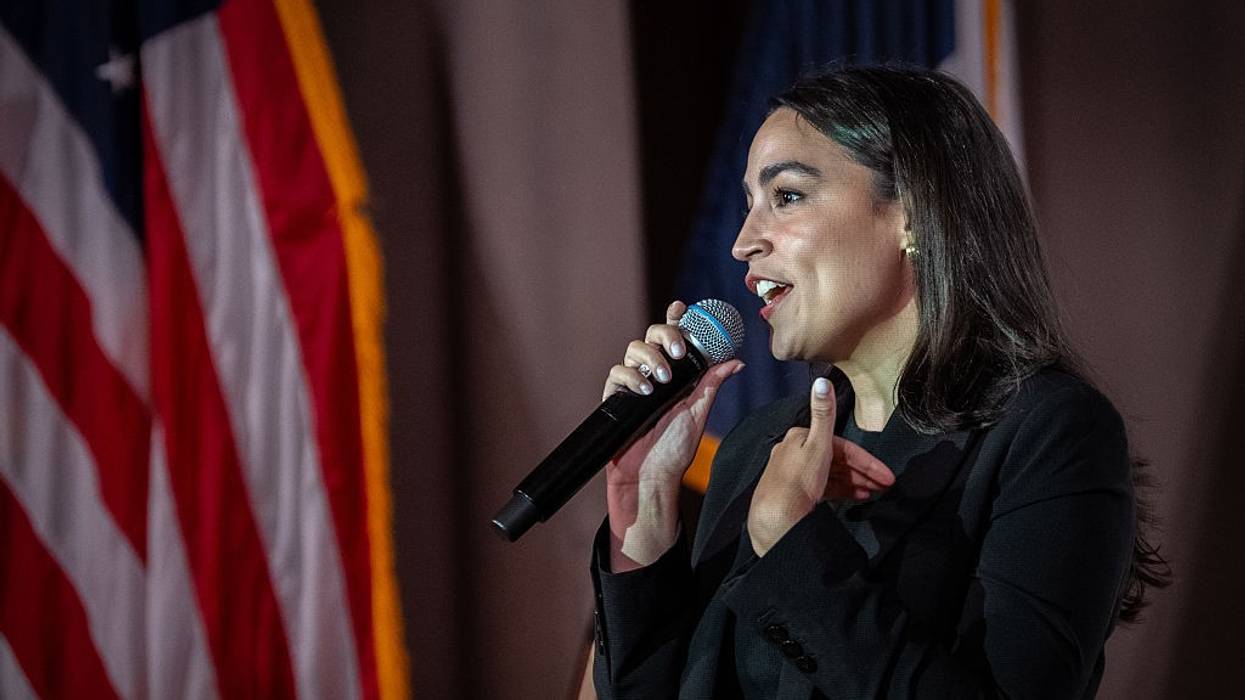
"I believe I'll be staying put at Energy and Commerce," the progressive congresswoman said.
Congresswoman Alexandria Ocasio-Cortez ended a week of speculation on Monday by announcing that she will not seek the ranking member position on the U.S. House Committee on Oversight and Government Reform.
The New York Democrat, who last year ran for ranking member and lost to Rep. Gerry Connolly (D-Va.), told reporters, "It's actually clear to me that the underlying dynamics in the caucus have not shifted with respect to seniority as much as I think would be necessary, so I believe I'll be staying put at Energy and Commerce."
Ocasio-Cortez has recently been crisscrossing the country with U.S. Sen. Bernie Sanders (I-Vt.) for his Fighting Oligarchy Tour. Nationally, the 35-year-old progressive is seen as a possible primary challenger to Senate Minority Leader Chuck Schumer (D-N.Y.) and even a potential future presidential candidate.
Politico's Nicholas Wu noted last week that if Ocasio-Cortez declined to run for the committee post, "a number of young, ambitious members could mount bids, including Reps. Jasmine Crockett of Texas, Ro Khanna of California, Maxwell Frost of Florida, and Robert Garcia of California."
Connolly, now 75, sought the House leadership role despite an esophageal cancer diagnosis he disclosed in November. Last Monday, he said in a letter to constituents that "I want to begin by thanking you for your good wishes and compassion as I continue to tackle my diagnosis. Your outpouring of love and support has given me strength in my fights—both against cancer and in our collective defense of democracy."
"When I announced my diagnosis six months ago, I promised transparency," Connolly continued. "After grueling treatments, we've learned that the cancer, while initially beaten back, has now returned. I'll do everything possible to continue to represent you and thank you for your grace."
"The sun is setting on my time in public service, and this will be my last term in Congress," he added. "I will be stepping back as ranking member of the Oversight Committee soon. With no rancor and a full heart, I move into this final chapter full of pride in what we've accomplished together over 30 years. My loving family and staff sustain me. My extended family—you all have been a joy to serve."
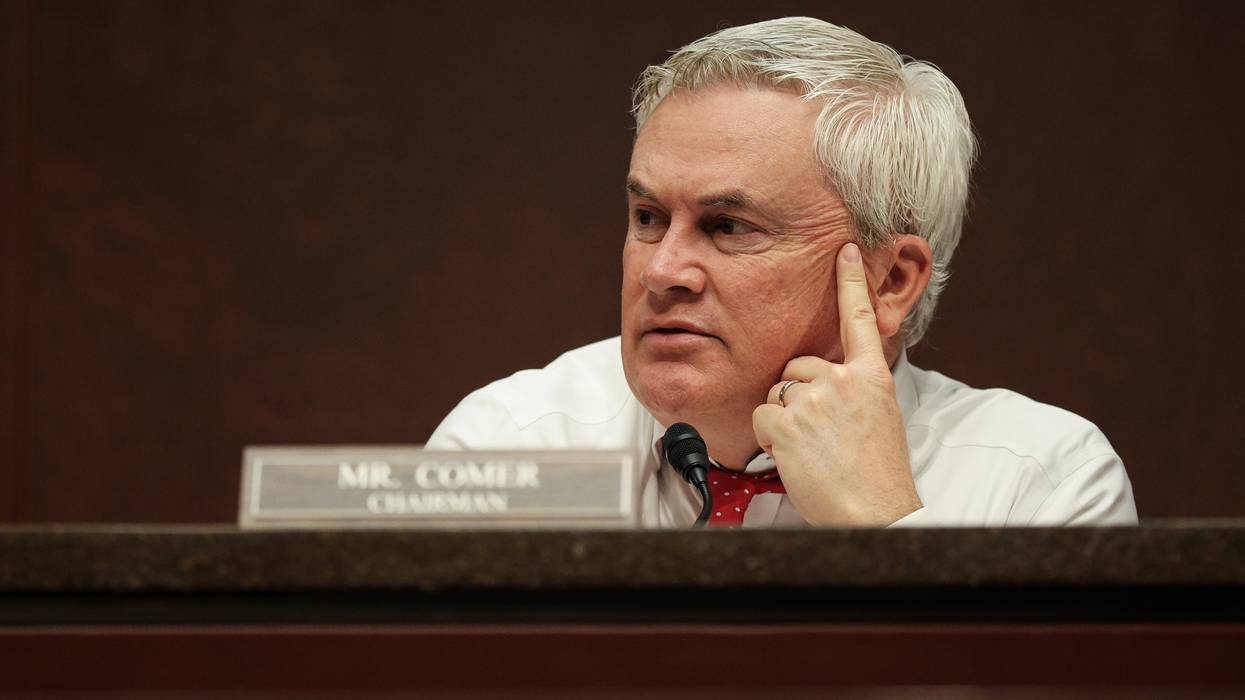
The panel's far-right chair, James Comer (R-Ky.), said in response to last week's announcement that "I'm saddened to hear that Ranking Member Connolly's cancer has returned. He is a steadfast public servant who has spent his career serving Northern Virginians with honor and integrity. It's an honor to serve the American people alongside him and I am rooting for him as he battles cancer once again. Our prayers are with Ranking Member Connolly and his family."
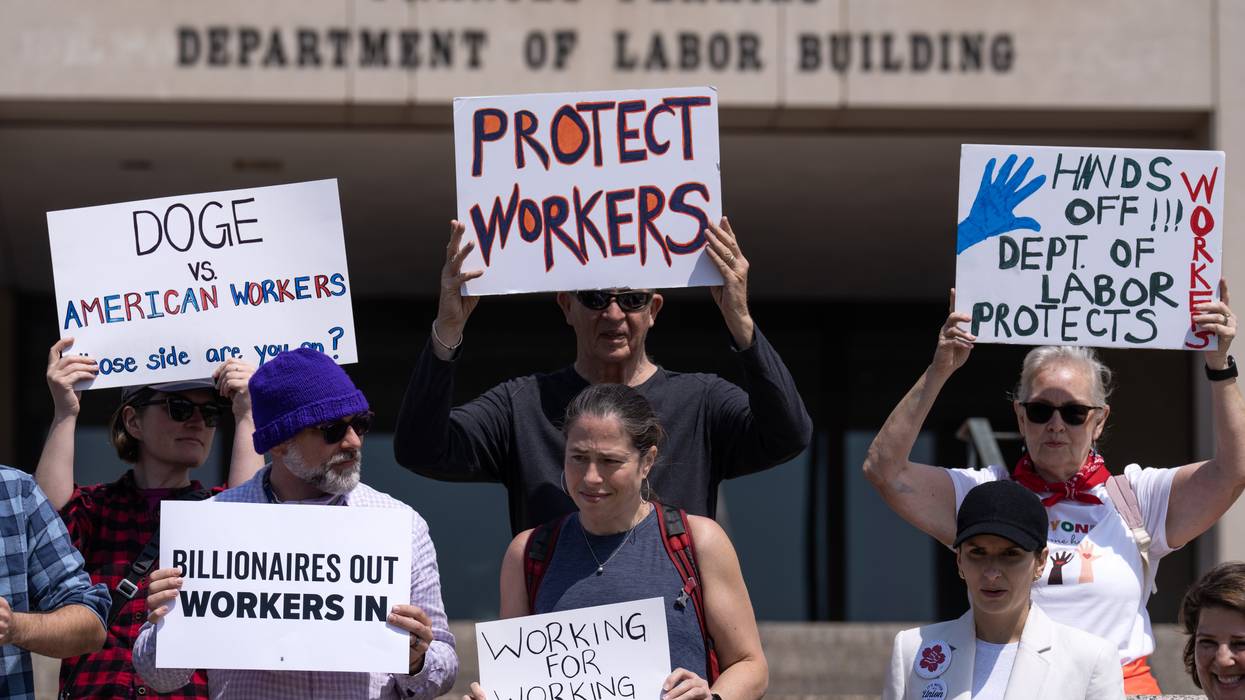
"Anyone who cares about our national security, or receives Social Security, Medicare, Medicaid... has a vested interest in protecting our merit-based federal workforce."
The largest federal labor union in the U.S. said Friday that tens of thousands of federal workers could soon "have their jobs politicized" and be swiftly fired under a new rule proposed by the Office of Personnel Management.
Under the rule, an estimated 50,000 career civil servants would be reclassified as "at-will" employees, removing civil service protections and making it easier for the federal government to dismiss them.
President Donald Trump and his billionaire ally, tech mogul Elon Musk, have long claimed the federal workforce is rife with "rogue bureaucrats" and is part of the "deep state," pledging to dismantle the civil service.
Trump said on his social media platform, Truth Social, that reclassifying workers "will allow the federal government to finally be 'run like a business.'"
"If these government workers refuse to advance the policy interests of the president, or are engaging in corrupt behavior, they should no longer have a job," he said.
"President Trump's action to politicize the work of tens of thousands of career federal employees will erode the government's merit-based hiring system and undermine the professional civil service that Americans rely on."
Everett Kelley, national president of the American Federation of Government Employees (AFGE), said Friday's announcement was the latest "in a series of deliberate moves by this administration to corrupt the federal government and replace qualified public servants with political cronies."
"President Trump's action to politicize the work of tens of thousands of career federal employees will erode the government's merit-based hiring system and undermine the professional civil service that Americans rely on," said Kelley. "Politicizing the career civil service is a threat to our democracy and to the integrity of all the programs and services Americans rely on."
The new category for civil servants was originally called Schedule F, but the White House said it was changing the classification to "Schedule Policy/Career."
U.S. Sens. Tim Kaine and Mark Warner and Rep. Gerry Connolly, all Democrats from Virginia whose constituents include many federal employees, said Saturday that Trump's proposal to "hire and fire these workers based on their politics, not their qualifications... makes us all less safe."
The lawmakers have all backed legislation to protect the federal civil service from being reclassified outside of merit system principles without the approval of Congress, and issued a warning to congressional Republicans who have heard from angry constituents in recent weeks about the administration's spending cuts through the so-called Department of Government Efficiency.
"Anyone who cares about our national security, or receives Social Security, Medicare, Medicaid, or any other critical service administered by the federal government, has a vested interest in protecting our merit-based federal workforce," said the lawmakers. "We have long fought for legislation to protect the federal workforce from this kind of attack. To our colleagues who will hear from their constituents if government services continue to decline because of this decision: You were warned."

Elon Musk's "dual position as the recipient of federal contracts and a White House adviser creates a troubling and obvious conflict of interest," wrote two Democratic members of the U.S. House Oversight Committee.
Two Democrats on the U.S. House Oversight Committee are seeking more information about the federal government's use of billionaire Elon Musk's Starlink, the satellite internet service operated by his company SpaceX, specifically at the White House complex and at the U.S. General Services Administration.
Reps. Gerry Connolly (D-Va.), the ranking member of the committee, and Shontel Brown (D-Ohio) are looking for proof that new usage of Starlink technologies is "secure and will not enrich Mr. Musk in violation of federal ethics rules," according to a letter they sent Monday to White House Chief of Staff Susie Wiles, White House Director of Office Administration Joshua Fisher, and Acting Administrator at GSA Stephen Ehikian.
The letter references March reporting from The New York Times, which stated that Starlink is now accessible across the White House campus, after Starlink "donated" the service. NBC News reported last month that GSA had adopted Starlink for its internet access at the request of Musk's staff, citing an unnamed source. Musk is also an adviser to U.S. President Donald Trump.
"Donations such as this raise considerable red flags as to whether Mr. Musk is using his position in the federal government to benefit his companies," wrote the two Democrats.
A journalist at ProPublica observed this reported donation of Starlink resembles a tactic used by another company, Microsoft, during the Biden administration: offering free trials to get government locked in to using their technology.
"It doesn't matter if it was Microsoft last year or Starlink today or another company tomorrow," Jessica Tillipman, associate dean for government procurement law studies at George Washington University Law School, told ProPublica. "Anytime you're doing this, it's a back door around the competition processes that ensure we have the best goods and services from the best vendors."
In their letter, the two Democrats also highlighted that Musk's dual role as head of Starlink and "apparent leader" of Trump's Department of Government Efficiency—which reporting indicates could soon come to a close—"raises significant ethical, security, and regulatory implications that warrant immediate attention."
What's more, his "dual position as the recipient of federal contracts and a White House adviser creates a troubling and obvious conflict of interest, raising the risk of undue influence and potential misuse of federal contracts for personal or corporate gain."
This is far from the first time that concerns around potential conflicts of interests regarding Musk's businesses and his role in the federal government have been raised.
Last month, a group of Democratic senators sent a letter to Attorney General Pam Bondi and acting Inspector General at the Transportation Department Mitch Behm demanding an investigation into whether Musk's activities at the U.S. Federal Aviation Administration (FAA) have violated the criminal conflict of interest statute, citing reporting that Musk's Starlink is involved in upgrading a crucial communication system at the FAA.
In their letter, Connolly and Brown said they are also concerned that the recent installation of Starlink at the White House raises potential cybersecurity and national security concerns.
The pair requested a list of information and documents from the White House and GSA, including all documents and communications relating to the legal or ethical implications of the White House and GSA using Starlink given Musk's role in the federal government, as well as documents and communications regarding any security assessments related to the use of Starlink.
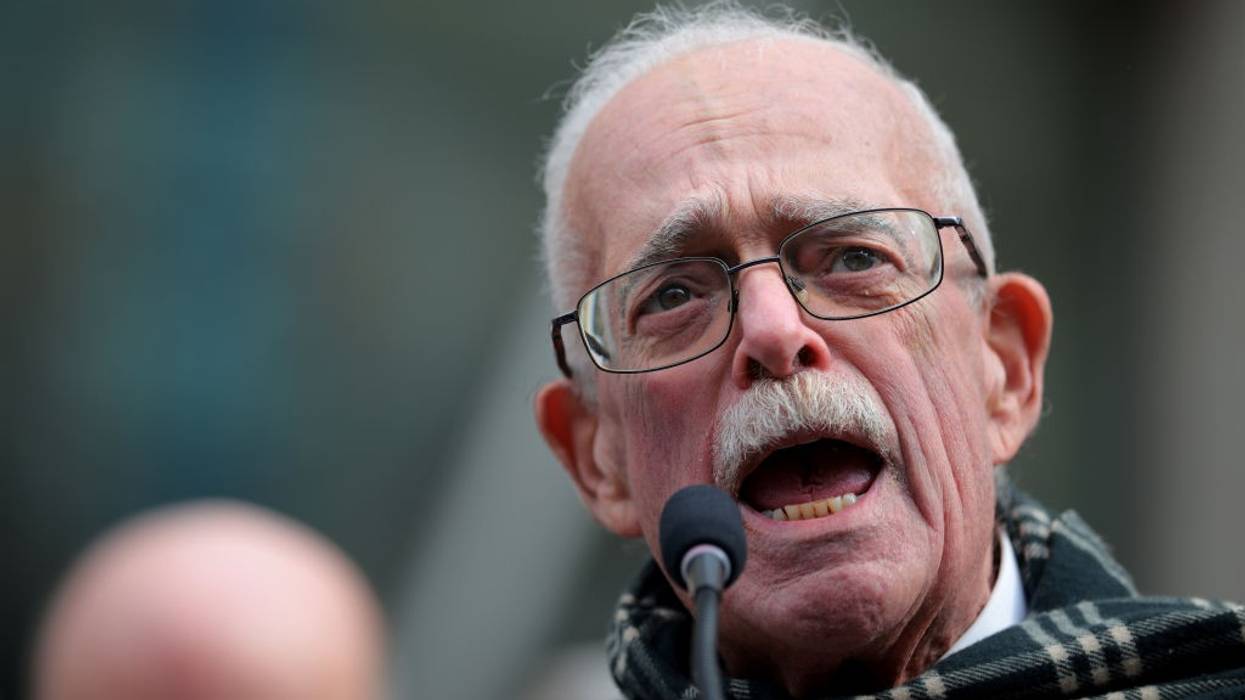
"Trump is clearly comfortable weaponizing Social Security for political purposes, and we fear that this is only the beginning," said one critic.
The top Democrat on the U.S. House Oversight Committee on Wednesday led calls for the resignation of acting Social Security Administration Commissioner Leland Dudek following the revelation of internal emails confirming that the SSA canceled contracts with the state of Maine as political payback after Democratic Gov. Janet Mills publicly defied President Donald Trump in support of transgender student athletes.
The emails—which were obtained by House Oversight Committee Ranking Member Gerry Connolly (D-Va.)—show that Dudek ordered the cancellation of enumeration at birth and electronic death registration contracts with Maine, even though SSAd subordinates warned that such action "would result in improper payments and potential for identity theft."
"These emails confirm that the Trump administration is intentionally creating waste and the opportunity for fraud."
Dudek—who is leading the SSA while the Senate considers Trump's nomination of financial services executive Frank Bisignano—replied to the staffer: "Please cancel the contracts. While our improper payments will go up, and fraudsters may compromise identities, no money will go from the public trust to a petulant child."
He was referring to Mills, who stood up to Trump in February after the president threatened to suspend federal funding for Maine unless the state banned transgender girls and women from participating on female scholastic sports teams.
The termination of the enumeration at birth contract briefly forced Maine parents to register their newborns for a Social Security number at a Social Security office, rather than checking a box on a form at the hospital as is customary, before the SSA reversed its decision.
Connolly sent Dudek a letter demanding that he "resign immediately" and submit to a transcribed interview with House Oversight Committee Democrats. Connolly wrote that Dudek "ordered these contracts terminated" as "direct retaliation" for Mills' defiance, "even though you knew that doing so would increase improper payments and create opportunities for fraudsters."
Government accountability advocates also condemned Dudek's actions.
"These emails confirm that the Trump administration is intentionally creating waste and the opportunity for fraud—in this case, to punish Maine Gov. Janet Mills for not bowing down to Donald Trump," Social Security Works president Nancy Altman told Common Dreams.
"The people actually punished by these actions were exhausted new parents in Maine, forced to drag their newborns to overcrowded Social Security offices in the middle of a measles outbreak," she continued. "Thankfully, the Trump administration had to quickly reverse course after massive public outrage. But Trump is clearly comfortable weaponizing Social Security for political purposes, and we fear that this is only the beginning."
"Once again, we see Team Trump resorting to revenge to set domestic policy."
Max Richtman, president and CEO of the National Committee to Preserve Social Security and Medicare, told Common Dreams that "it does not surprise us at all that this administration would weaponize Social Security against anyone who disagrees with or challenges President Trump."
"It's one of the concerns that we have with Elon Musk and [the Department of Government Efficiency] having access to everyone's personal data without any defensible explanation for why they need it," he continued. "We and the American people have legitimate worries, not only that this information will be vulnerable to hackers, but also that it could intentionally be misused as a weapon against anyone who publicly disagrees with Trump."
"The fact that the acting commissioner himself publicly admitted that he didn't really understand the Maine contract, but canceled it anyway, proves that this administration is making reckless changes that affect real people for no legitimate reason," Richtman added. "Once again, we see Team Trump resorting to revenge to set domestic policy."
The revelation of Dudek's emails comes amid SSA turmoil caused by the termination of thousands of agency personnel in what Trump, Musk, and other Republicans claim is an effort to reduce waste and fraud. Musk—who recently referred to Social Security as the the "biggest Ponzi scheme of all time"—has proposed the elimination of up to 50% of SSA's workforce and has said that up to $700 billion could be cut from programs including Social Security, Medicare, and Medicaid.
"This bill would rubber-stamp unchecked abuses of power even further," said the leader of one government watchdog group.
The top Democrat on the U.S. House committee tasked with holding the Trump administration accountable said Tuesday during a debate on a Republican proposal that the GOP knows President Donald Trump cannot legally "'delete' whole federal agencies" or "take a chainsaw to beloved programs like Social Security and Medicaid."
"Congressional Republicans also know these dangerous, deeply unpopular cuts would never be approved by Congress through regular order," said Rep. Gerry Connolly (D-Va.), ranking member of the House Committee on Oversight and Government Reform. "So now they've brought us H.R. 1295, the so-called Reorganizing Government Act, in a desperate attempt to circumvent the normal congressional process."
The bill, said Connolly, would more accurately be called the Dismantling Government Act, with its resurrection of a "long-dormant statute as a Trojan horse to give President Trump and Elon Musk unprecedented, filibuster-proof authority to eliminate federal departments and agencies, statutory programs, government services, and regulatory protections that promote the health and well-being of American families."
H.R. 1295 was approved to advance out of the committee in a party-line vote, with Republicans voting to give Trump authority that has not been granted by Congress since 1984, allowing him to submit a plan to restructure federal agencies. Congress would be required to vote on the plan within 90 days and the proposals would not be subject to a filibuster, allowing the GOP-controlled Senate to approve the dismantling of agencies with a simple majority.
Between 1932 and 1984, Congress periodically gave presidents limited authority to reorganize limited portions of the government, but lawmakers have denied requests from both Democratic and Republican presidents to renew the authority.
Under the Dismantling Government Act, Trump would be permitted to make sweeping changes to agencies through December 31, 2026, and the previous limitation barring presidents from abolishing agencies would be removed.
In his opening statement during the committee's debate on the legislation Tuesday, Connolly warned that "the Dismantling Government Act would grant Donald Trump and Elon Musk a filibuster-proof pathway to get their reckless actions blessed by Congress, and we already know exactly what they'll do with that power."
The Republicans proposed the legislation amid numerous attempts by Trump and Musk, the billionaire tech CEO and megadonor he appointed to lead the so-called Department of Government Efficiency (DOGE), to dismantle federal agencies and freeze government funding—some of which have been blocked by federal courts.
"The reason they are pushing for this bill is because Donald Trump, Elon Musk, and DOGE have already been found consistently to be acting outside of the law in their mass layoffs and agency closures by the courts," said Rep. Yassamin Ansari (D-Ariz). "Now, instead of defending their own powers, congressional Republicans are pushing forward this bill to hand over their powers to the president."
Under the Dismantling Government Act, Trump and Musk would be granted filibuster-proof, unilateral power to:
"Since the start of the Trump-Musk regime they have engaged in shocking abuses of power and taken a wrecking ball to the services and earned benefits regular Americans depend on to pay for more tax breaks for their billionaire donors and expand their own fortunes," said Tony Carrk, executive director of Accountable.US. "This bill, better called the Dismantling Government Act, is a power grab that would greenlight an enormous expansion of presidential power, help Trump and Musk skirt checks and balances, and accelerate their ultimate agenda of gutting Medicaid, Medicare, and Social Security to offset tax cuts for the wealthiest Americans."
"The Trump-Musk administration's billionaire-first agenda has already shifted the balance of power to help corporate special interests, and away from everyday Americans—this bill would rubber-stamp unchecked abuses of power even further," Carrk added.
Accountable.US is one of 200 civil society groups, representing millions of Americans, that signed a letter calling on Congress to reject the legislation.
"H.R. 1295 not only creates a fast track to dismantle these critical entities but does so by exempting these efforts from the filibuster, thus allowing the Senate to eliminate these agencies and their critical functions with a simple majority. In other words, this bill provides a fast track to the destruction of the critical entities that ensure our families are safe, our workers have protections, our environment is protected, and our markets are fair," wrote the groups, which form the Coalition for Sensible Safeguards, on Monday.
"The American public expects Congress to make government work more effectively and preserve the separation of powers," the coalition added, "not give presidents 'carte blanche' to dismantle government agencies and institutions."
One Democratic congresswoman called the partnership "a blatant move toward privatization."
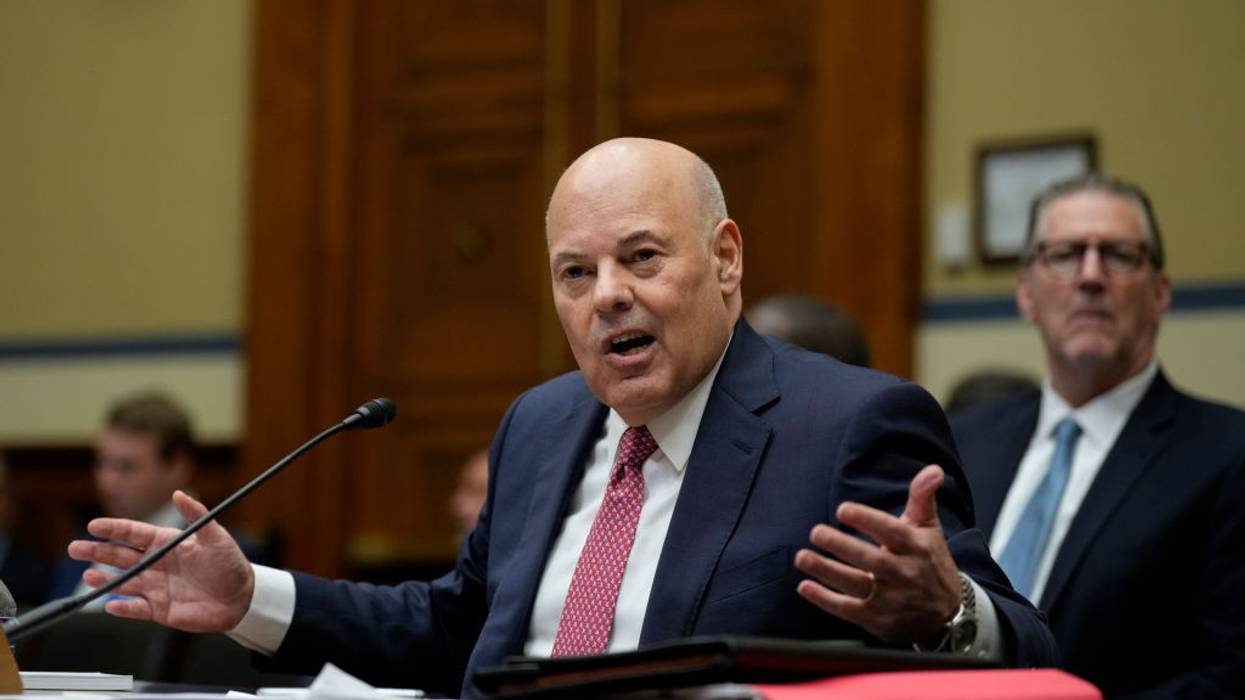
U.S. Postmaster General Louis DeJoy's Thursday announcement that the independent United States Postal Service is partnering with the Department of Government Efficiency on a cost-cutting crusade that includes a planned reduction of 10,000 workers stoked fears that one of America's most trusted and relied-upon federal agencies is on a path toward privatization.
In a
letter to congressional leaders, DeJoy said DOGE will help the USPS "in identifying and achieving further efficiencies." The postal chief listed "mismanagement" of the agency's retirement assets and workers' compensation program, "unfunded mandates imposed on us by legislation," and "burdensome regulatory requirements restricting normal business practice" as issues to be addressed.
Scoop: Postmaster General Louis DeJoy agreed last nigh to collaborate with DOGE "to assist us in identifying and achieving further efficiencies." Follows Monday meeting at USPS headquarters between DOGE & DeJoy. We've reported Trump considering privatizing USPS or merging with Commerce Dept.
[image or embed]
— Jacob Bogage ( @jacobbogage.bsky.social) March 13, 2025 at 10:59 AM
"The letter suggests alarming actions for DOGE to pursue that would easily lead to the privatization and politicization of the Postal Service," Democrats on the U.S. House Oversight Committee said in response to the announcement. "This includes DeJoy's call to gut or even terminate the Postal Regulatory Commission, the independent regulator of the Postal Service created by Congress and responsible for approving rate changes and ensuring appropriate service."
Brian Renfroe, president of the nearly 300,000-member National Association of Letter Carriers (NALC), said Thursday that while "policy changes are needed to improve the Postal Service's financial viability... misguided ideas like privatization" are not the answer.
"Commonsense solutions are what the Postal Service needs, not privatization efforts that will threaten 640,000 postal employees' jobs, 7.9 million jobs tied to our work, and the universal service every American relies on daily," Renfroe added.
DeJoy—who last month announced his intent to step down after more than four years in office—has led a dramatic restructuring of the USPS, a constitutionally sanctioned agency. His tenure has been marred by allegations of criminal election obstruction, conflicts of interest, and other corruption. Critics have also warned that DeJoy's Delivering for America, a 10-year austerity plan, put the agency on a fast track toward slower service, job cuts, and, ultimately, privatization.
U.S. President Donald Trump has acknowledged that his administration is revisiting plans to possibly privatize the Postal Service—a policy recommended by the Office of Management and Budget during his first term. Last month, The Washington Post reported that Trump planned to fire the entire Postal Board of Governors and bring the independent USPS under control of the Department of Commerce, a move experts argue would likely be illegal.
Elon Musk, the de facto head of DOGE, said earlier this month that the USPS and Amtrak, the national passenger rail service, should be privatized.
DOGE's short but staggering track record of eviscerating federal agencies by dubiously firing tens of thousands of workers—a policy a federal judge found illegal on Thursday—is deeply concerning to many defenders of the Postal Service.
"The only thing worse for the Postal Service than DeJoy's Delivering for America plan is turning the service over to Elon Musk and DOGE so they can undermine it, privatize it, and then profit off Americans' loss," Rep. Gerry Connolly (D-Va.), the ranking member on the House Oversight Committee, said Thursday.
"This capitulation will have catastrophic consequences for all Americans—especially those in rural and hard-to-reach areas—who rely on the Postal Service every day to deliver mail, medications, ballots, and more," the congressman added. "Reliable mail delivery can't just be reserved for MAGA supporters and Tesla owners."
Rep. Nikki Budzinski (D-Ill.) said on social media Thursday: "Louis DeJoy just admitted he agreed to hand over the Postal Service to Elon Musk. This is a blatant move toward privatization, and I will fight to protect our postal workers and ensure affordable service—especially for rural communities."
Rep. Norma Torres (D-Calif.) said the agreement "threatens millions who rely on USPS for medications, Social Security checks, and staying connected."
National days of action in defense of the Postal Service are planned for
March 20 by the American Postal Workers Union and March 23 by NALC.

"Any attack on the Postal Service would be part of the billionaire oligarch coup," said the president of the American Postal Workers Union.
President Donald Trump's reported plan to terminate every member of the U.S. Postal Service Board of Governors and bring the independent and highly popular USPS under his administration's control drew immediate outrage from the world's largest postal union, which said the floated takeover would be illegal and destructive to public mail operations.
"Any attack on the Postal Service would be part of the billionaire oligarch coup, directed not just at the postal workers our union represents, but the millions of Americans who rely on the critical public service our members provide every single day," said Mark Dimondstein, president of the American Postal Workers Union (APWU), which represents hundreds of thousands of current and retired postal workers.
The union leader's statement came after The Washington Post reported Thursday that Trump is preparing to "dissolve the leadership of the U.S. Postal Service and absorb the independent mail agency into his administration, potentially throwing the 250-year-old mail provider and trillions of dollars of e-commerce transactions into turmoil."
"Trump is expected to issue an executive order as soon as this week to fire the members of the Postal Service's governing board and place the agency under the control of the Commerce Department and Secretary Howard Lutnick," the Post reported, citing unnamed sources.
Lutnick, who was confirmed by the U.S. Senate earlier this week, is a billionaire with glaring conflicts of interest.
The Post noted that Trump has spoken publicly about the possibility of privatizing the USPS, which is currently led by Louis DeJoy. On Tuesday, DeJoy—who was initially nominated for the post by Trump and has worked to gut the Postal Service from within during his tenure—asked the USPS board to begin the process of finding his successor.
The new reporting prompted warnings that Trump, who lied relentlessly about mail-in voting in the run-up to and aftermath of the 2020 election, wants to disrupt ballot deliveries by bringing the USPS under his control.
"Trump's reported outrage that the Postal Service was able to successfully deliver Americans' mail-in ballots in 2020 is exceptionally alarming when considering the same man who helped incite an insurrection based on evidence-free election denialism now wants to be in control of millions of absentee ballots," said Tony Carrk, executive director of the watchdog group Accountable.US.
"President Trump wants to consolidate power further and control access to your mail, all while making his wealthy donors richer in the process," Carrk added. "All eyes should be on conservative senators who represent rural communities who will bear the brunt of postal privatization."
trump wants to be able to tell the USPS not to deliver ballots to blue states www.washingtonpost.com/business/202...
[image or embed]
— jamelle (@jamellebouie.net) February 20, 2025 at 9:47 PM
Rep. Gerry Connolly (D-Va.), the top Democrat on the House Oversight Committee, said in a statement Thursday that privatizing the USPS would be "an attack on Americans' access to critical information, benefits, and lifesaving medical care."
"It is clear that Trump and his cronies value lining their own pockets more than the lives and connection of the American public," said Connolly.
According to the Post, the USPS board was "planning to fight Trump's order" and held an "emergency meeting" Thursday at which the board "retained outside counsel and gave instructions to sue the White House if the president were to remove members of the board or attempt to alter the agency's independent status."
"Two of the group's GOP members—Derek Kan, a former Trump administration official, and Mike Duncan, a former chair of the Republican National Committee—were not in attendance," the Post reported.
Dimondstein voiced support for the postal board's plan to fight any Trump takeover attempt, saying the union backs all "efforts to defend our national treasure."
"If this reporting is true, it would be an outrageous, unlawful attack on a storied national treasure, enshrined in the Constitution and created by Congress to serve every American home and business equally," said Dimondstein. "The law created the postal board of Governors, and empowers it and it alone to hire and fire the postmaster general. Any effort by the administration to remove the board or fire postal executives is clearly illegal."
"The Postal Service is owned by the people, for the benefit of the people. Postal workers are dedicated to our mission to serve, no matter who sits in the White House or in Congress," the union leader added. "Postal workers and our unions will join with the public to fight for the vibrant, independent, and public Postal Service we all deserve."
"To ensure transparency on the authority you have granted Mr. Musk and the legal authority he has to direct DOGE, I request that you provide substantive documentation regarding his formal role."
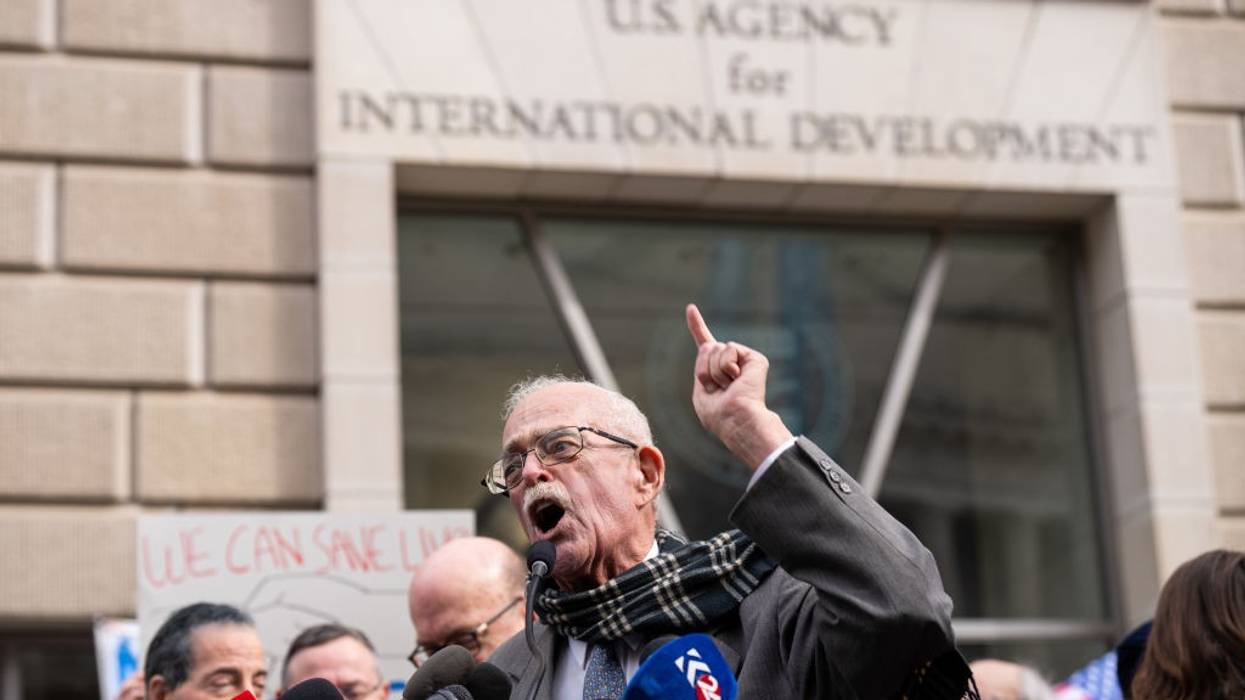
The top Democrat on the U.S. House Committee on Oversight and Government Reform sent a letter to President Donald Trump on Thursday demanding answers about billionaire Elon Musk's involvement in the so-called Department of Government Efficiency, which is leading the Republican administration's efforts to gut federal agencies.
"I write to express my concern regarding your direct contradiction of a sworn statement by a White House official, provided under penalty of perjury, regarding Elon Musk's role within your administration," Rep. Gerry Connolly (D-Va.) wrote to Trump. "As the American people can plainly see, Mr. Musk wields immense authority over the U.S. DOGE Service (USDS or DOGE) and the federal government generally, with the purported power to feed congressionally authorized and funded federal agencies "through the wood chipper[,]" yet parts of the White House appear intent on obscuring the facts of his role."
"To ensure transparency on the authority you have granted Mr. Musk and the legal authority he has to direct DOGE, I request that you provide substantive documentation regarding his formal role," the congressman continued, giving Trump two weeks to respond to questions about DOGE staff as well as Musk's role, decisions, directives, and authority to access Americans' sensitive data.
"At a press conference on the evening of February 19, 2025, you stated, 'I signed an order creating the Department of Government Efficiency and put a man named Elon Musk in charge.'"
Since announcing DOGE shortly after winning the November election, Trump has publicly presented Musk, the richest person on Earth, as its chair. Connolly wrote, "You have repeatedly portrayed Mr. Musk as the head of DOGE, including at an Oval Office press conference in which you referred to DOGE as Mr. Musk's 'team' in response to a question, and in which Musk repeatedly referred to DOGE's efforts as his efforts, saying, for example, that 'we post our actions to the DOGE handle on X and to the DOGE website.'"
However, Joshua Fisher, director of the Office of Administration, said in a Monday declaration to U.S. District Judge Tanya Chutkan—who is overseeing a case challenging DOGE's attacks on federal agencies—that Musk is not the administrator or an employee of the U.S. DOGE Service or its related temporary organization. Instead, he said, Musk "is an employee of the White House Office," specifically, "a senior adviser to the president" with "no actual or formal authority to make government decisions himself."
Connolly wrote to Trump that "in direct contradiction to Mr. Fisher's sworn statement, at a press conference on the evening of February 19, 2025, you stated, 'I signed an order creating the Department of Government Efficiency and put a man named Elon Musk in charge.' This contradiction raises significant concerns that either you are lying about Mr. Musk's role or Mr. Fisher perjured himself—a criminal offense that can lead to up to five years in prison."
"The Committee on Oversight and Government Reform is the principal oversight committee of the House of Representatives and has broad authority to investigate 'any matter' at 'any time' under House Rule X," he reminded the president. "It also has legislative jurisdiction over the federal civil service and the 'overall economy, efficiency, and management of government operations, and activities[.]'"
The letter followed a flood of criticism directed at Democrats in the wake of the November election for not effectively fighting for working people or standing up to the GOP and oligarchy. It also came after a closely watched contest between Connolly and Rep. Alexandria Ocasio-Cortez (D-N.Y.) to serve as the committee's ranking member.
"Sorry I couldn't pull it through everyone—we live to fight another day," Rep. Alexandria Ocasio-Cortez wrote on social media following the vote.
Update:
The House Democratic caucus on Tuesday chose Rep. Gerry Connolly over Rep. Alexandria Ocasio-Cortez for the ranking spot on the House Oversight Committee in the upcoming Congress.
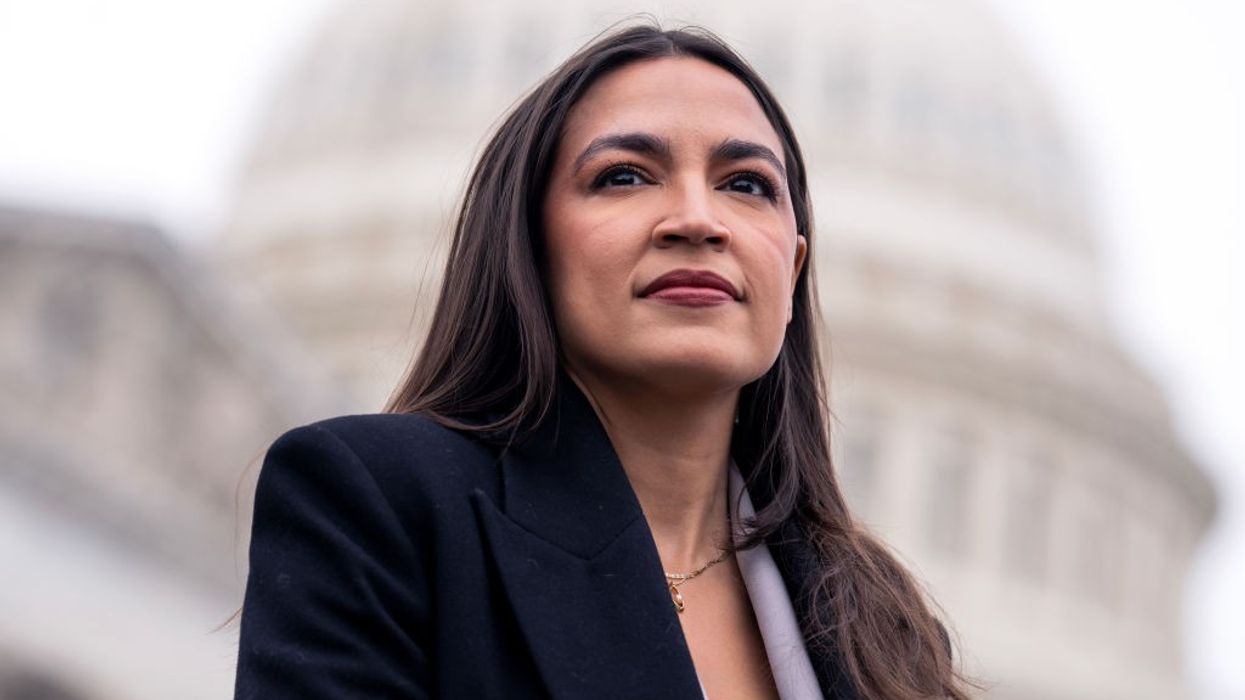
The result of the secret-ballot vote, according to Axios, was 84 for Ocasio-Cortez (D-N.Y.) and 131 for Connolly (D-Va.).
"Tried my best," the New York progressive wrote on social media following the vote. "Sorry I couldn't pull it through everyone—we live to fight another day."
In a statement, Connolly thanked his colleagues "for their support and the confidence they've placed in me to lead House Democrats on the Oversight Committee," which will be under GOP control through at least 2026.
"We know what the Republican playbook will be. We have seen it before," said Connolly. "They have demonstrated that they are willing to traffic in debunked conspiracy theories and enable the worst abuses of the Trump administration. This will be trench warfare. Now is not the time to be timid."
"I promise the American people that our committee Democrats will be a beacon of truth and prepared from Day One to counter Republican gaslighting," he added. "We will be disciplined. We will be laser-focused on getting results on the kitchen table issues that affect the American people the most. We will stand up for our democracy and for truth. And we will protect the tremendous and historic progress we have made as House Democrats."
Earlier:
Rep. Gerry Connolly narrowly bested Rep. Alexandria Ocasio-Cortez in a secret-ballot vote Monday for the ranking spot on the House Oversight Committee in the upcoming Congress—but the New York progressive still has a shot to secure the role in a full Democratic caucus vote on Tuesday.
Connolly's (D-Va.) bid for the top Democratic slot on the House Committee on Oversight and Accountability—which could play a central role in investigating the incoming Trump administration in the coming years—is backed by former House Speaker Nancy Pelosi (D-Calif.), who has frequently clashed with Ocasio-Cortez (D-N.Y.) and other progressives on policy.
The House Democratic Steering and Policy Committee voted 34-27 behind closed doors on Monday to recommend Connolly over Ocasio-Cortez for the oversight role. While full caucus votes "typically align with the steering panel's recommendations," Politico noted, "two Democratic allies of Ocasio-Cortez... predicted the full caucus, composed of younger members who might be more likely to favor the 35-year old liberal compared to the steering panel, could sway in favor of the progressive New Yorker."
"Members said Connolly attracted staunch support from centrist Democrats after spending the last several weeks campaigning with key members," Politico reported. "He moved to lock down critical bases of support like the centrist New Democrat Coalition."
Ocasio-Cortez, for her part, is backed by the roughly 100-member Congressional Progressive Caucus as well as the Congressional Hispanic Caucus. The New York progressive also secured the backing of a majority of members on the House Oversight Committee, which is set to be controlled by Republicans through at least 2026.
Rep. Ro Khanna (D-Calif.) wrote on social media late Monday that "many" in the House Democratic caucus, including himself, will back Ocasio-Cortez in Tuesday's vote.
"AOC is objectively a more skilled communicator and narrative shaper than just about anyone in her party, and certainly more than Connolly."
Following Monday's steering panel vote, Ocasio-Cortez told reporters that she is "locked in" and "working hard."
"We are still in this," she wrote on social media. "This is the difficult business of hope and defying expectation. We do not give up. We run through the tape."
In private, Ocasio-Cortez—who won her seat in Congress by toppling a high-ranking Democrat—has "signaled" to her colleagues that she "might no longer back congressional primary challenges" against them, according to Politico, which cited three unnamed people familiar with her remarks.
The race between Connolly and Ocasio-Cortez is widely seen as a proxy fight between the younger, more progressive faction of the Democratic Party and the old guard, which appears bent on maintaining control. In recent days, Pelosi has reportedly been "actively working to tank" Ocasio-Cortez's chances of winning the oversight spot by making calls in support of Connolly.
Slate's Alexander Sammon wrote in a column Tuesday that "it's a bad move" for Pelosi and other leading establishment Democrats to back Connolly over Ocasio-Cortez, "one of the best-known progressives in the country" and also "one of the best-known Democrats period."
"With Trump in office, the role of Oversight will be extremely important, especially for a party that is begging voters to believe that they are well positioned to tackle corruption," Sammon wrote. "AOC is objectively a more skilled communicator and narrative shaper than just about anyone in her party, and certainly more than Connolly. Her ability as an explainer is top-notch, and her penchant for conveying outrage and injustice is sorely lacking in the party's upper echelons."
"Pelosi's penchant for backroom sabotage was easy to cheer when she was pushing fellow octogenarian and likely loser Joe Biden out of the presidential race; it's harder to justify when an eminently qualified rising star—who, whether Pelosi likes it personally or not, is widely known to be a cornerstone of the party's future—pushes for a simple promotion," Sammon added.