SUBSCRIBE TO OUR FREE NEWSLETTER
Daily news & progressive opinion—funded by the people, not the corporations—delivered straight to your inbox.
5
#000000
#FFFFFF
To donate by check, phone, or other method, see our More Ways to Give page.
Daily news & progressive opinion—funded by the people, not the corporations—delivered straight to your inbox.
"Corporate polluters that created this problem must not be allowed to stop the world from solving it," argued one Greenpeace campaigner.
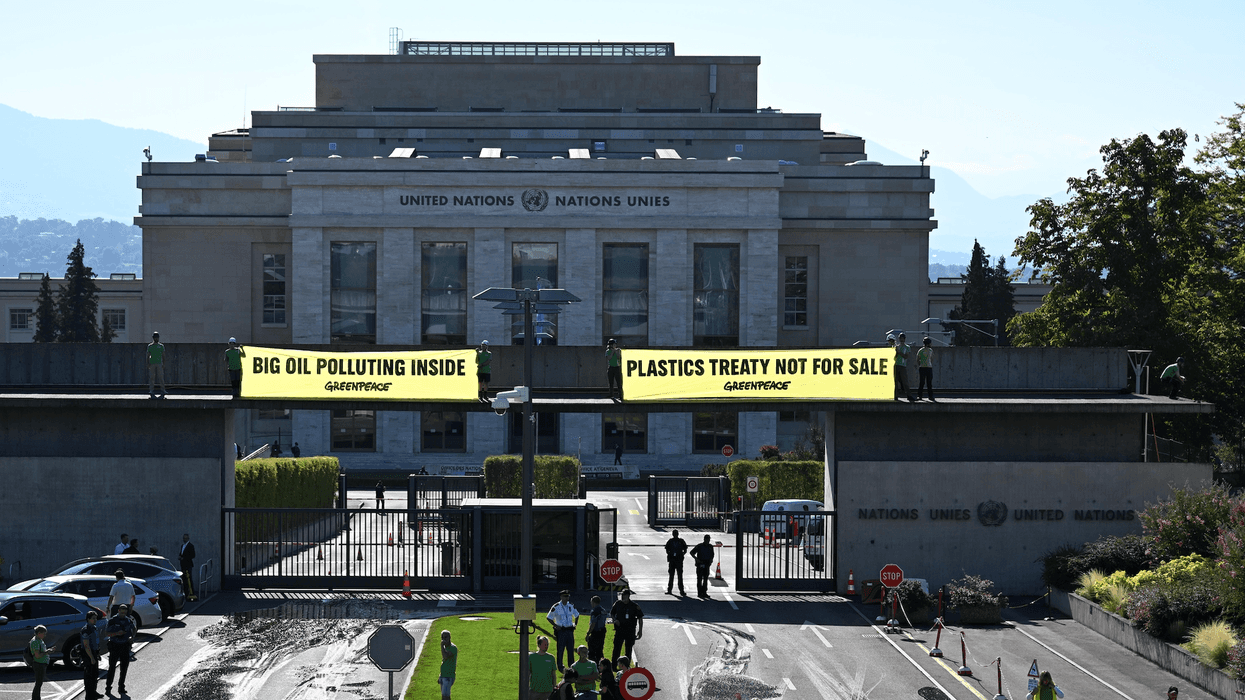
With representatives from 175 nations gathered in Geneva, Switzerland for the final round of talks on a global plastics treaty, Greenpeace campaigners on Thursday created a symbolic trail of black oil and hung massive banners over the entrance to the event venue demanding the expulsion of fossil fuel industry lobbyists from the summit.
Greenpeace said 22 activists from 10 European nations climbed to the roof of the Palais des Nations, where the United Nations conference is taking place, to unfurl banners reading "Big Oil Polluting Inside" and "Plastics Treaty Not for Sale."
The environmental advocacy group said that fossil fuel and chemical industry lobbyists outnumbered scientists 4-to-1 at the talks.
"Each round of negotiations brings more oil and gas lobbyists into the room," Graham Forbes, who is leading Greenpeace's delegation to the summit, said in a statement. "Fossil fuel and petrochemical giants are polluting the negotiations from the inside, and we're calling on the U.N. to kick them out."
"Governments must not let a handful of backwards-looking fossil fuel companies override the clear call from all of civil society—including Indigenous peoples, frontline communities, youth activists, and many responsible businesses—demanding a strong agreement that cuts plastic production," Forbes added.
The huge presence of these plastic-loving lobbyists threatens the Global Plastics Treaty.They don’t want real solutions, all they want is more profits.Tell the UN to kick them out of the plastics talks now👇act.gp/4licpMq
[image or embed]
— Greenpeace UK (@greenpeaceuk.bsky.social) August 7, 2025 at 8:55 AM
In 2022, participating nations agreed to draft a legally binding global treaty to reduce waste and toxic chemicals in some plastics contain; however, no such agreement has been reached.
"It is clear that the plastics treaty negotiators have a mountain to climb to reach an agreement by August 14th," Friends of the Earth International said Tuesday, referring to the summit's end date. "There remain substantive differences between the vast majority of states that want action and the few blockers looking to prolong the era of plastics."
There is strong opposition to curbing plastic production from the fossil fuel industry—99% of plastic is made from petrochemicals—and oil-producing countries including Russia, Saudi Arabia, and the United States.
Reuters reported Wednesday that the Trump administration sent letters to some countries participating in the Geneva talks urging them to reject "impractical global approaches such as plastic production targets or bans and restrictions on plastic additives or plastic products."
Oil producer pressure, Trump rollbacks threaten global treaty on plastics pollution. Plastics are derived from fossil fuels. www.reuters.com/sustainabili...
[image or embed]
— Antonia Juhasz (@antoniajuhasz.bsky.social) August 5, 2025 at 6:46 AM
Greenpeace noted that "the fossil fuel industry and its political allies are pushing hard to weaken the treaty's ambition."
According to the group:
If they succeed, plastic production could triple by 2050, fueling more environmental destruction, climate chaos, and harm to human health. A recent report from Greenpeace U.K. revealed that companies like Dow, ExxonMobil, BASF, Chevron Phillips, Shell, SABIC, and INEOS continue to ramp up plastic production. Since the global plastics treaty process began in November 2022, these seven companies have expanded plastic production capacity by 1.4 million tons. Over the same time period, they have also produced enough plastic to fill an estimated 6.3 million garbage trucks, or five-and-a-half trucks every minute. These companies also reaped enormous profits, with Dow alone earning an estimated US$5.1 billion from plastics, while sending at least 21 lobbyists into treaty negotiations.
A study published this week in the British medical journal The Lancet estimated that plastics are responsible for more than $1.5 trillion in "health-related economic losses" worldwide annually.
"These impacts fall disproportionately upon low-income and at-risk populations," the study's authors wrote. "The principal driver of this crisis is accelerating growth in plastic production—from 2 megatons (Mt) in 1950, to 475 Mt in 2022; that is projected to be 1,200 Mt by 2060."
Friends of the Earth International campaigner Sam Cossar-Gilbert noted that "coastlines across the Global South are drowning in plastic waste that isn't ours."
"Shipped in from wealthy nations under the guise of 'recycling,' the plastic waste trade forces marginalized communities to absorb the consequences of someone else's convenience," he added. "This is not just environmental degradation—it's environmental injustice. We refuse to accept false solutions that sacrifice frontline communities and the environment."
Forbes asserted that "this is a battle for our survival."
"Corporate polluters that created this problem must not be allowed to stop the world from solving it," he added. "Governments must show courage and deliver a strong treaty that puts people and planet first, not short-term corporate profits."
"It is high time for politicians to put a stop to this unjust and excessive pollution and ban private jets."
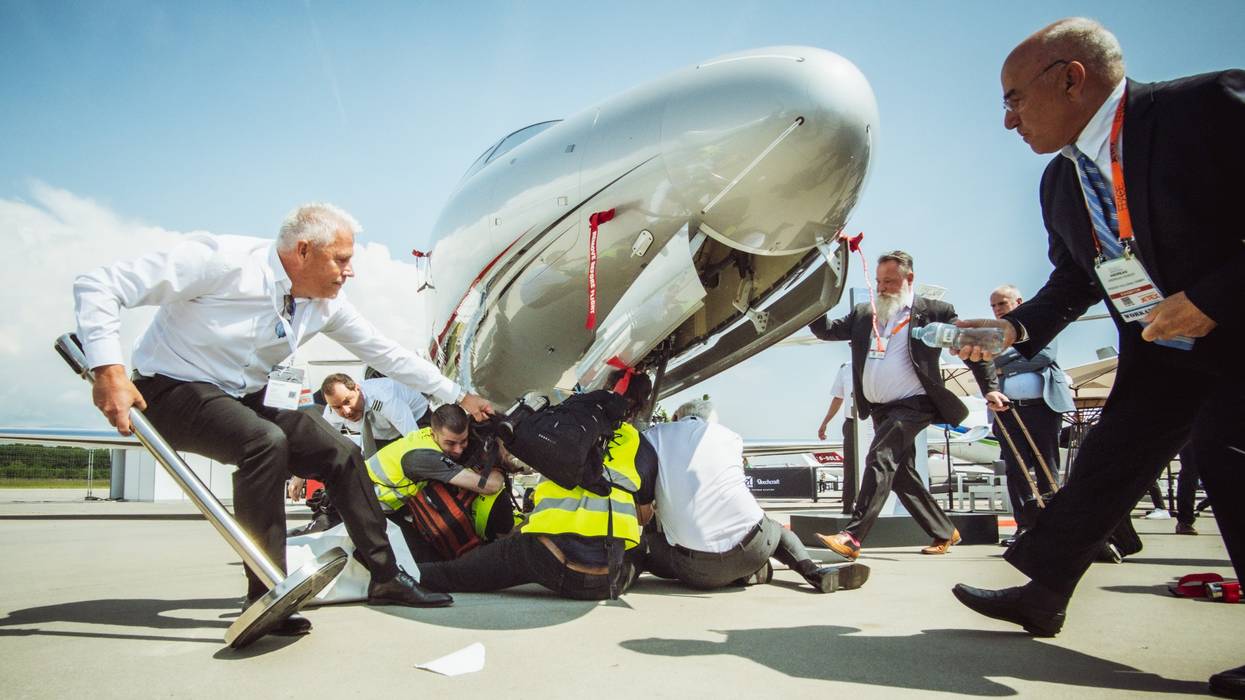
More than 100 climate activists and scientists targeted the biggest private jet sales fair in Europe on Tuesday, chaining themselves to the gangways of luxury planes and placing tobacco-style health warning labels on the aircraft to decry their contributions to planet-warming greenhouse gas emissions.
"Geneva is home to one of the airports with the most private jet traffic in Europe," said Joël Perret, a spokesperson for Extinction Rebellion Genève. "This is where change must begin: we need to drastically reduce aviation to halt climate catastrophe and the destruction of life. The first step is to ban private jets now!"
The campaigners from Greenpeace, Stay Grounded, Extinction Rebellion, Scientist Rebellion, and other climate groups used the European Business Aviation Convention and Exhibition (EBACE) in Geneva as an opportunity to call public attention to the "luxury emissions" of the world's super-rich, who contribute disproportionately to the climate crisis.
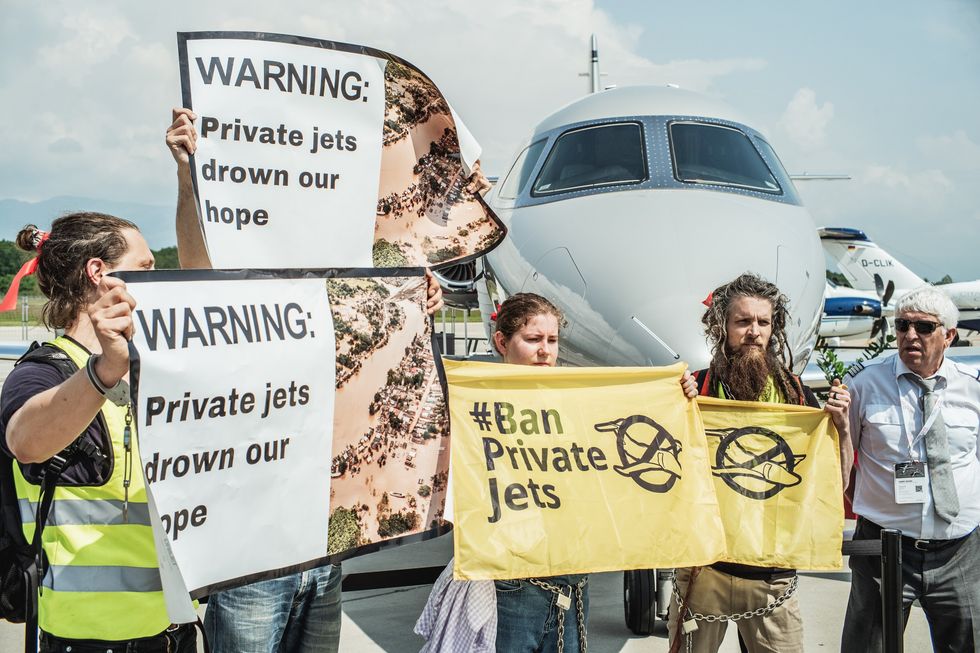
According to the United Kingdom's policy manager for transport and the environment, the average private jet unleashes two tonnes of carbon dioxide into the atmosphere per hour—a fifth of the average U.K. citizen's carbon footprint for an entire year.
Greenpeace notes that a private jet flight produces roughly 10 times more CO2 emissions than an ordinary commercial flight on a per-passenger basis.
"We're in a climate emergency," said Cordula Markert, a spokesperson for Scientist Rebellion Germany. "Therefore, it is no longer tolerable that the super-rich keep parading themselves in events such as EBACE and keep buying and flying in their private jets for their own benefit, while we know that this fuels the flames of climate breakdown, threatening all of us."
"They have to be stopped," Markert added, "and that's why scientists and activists from all over Europe joined together in Geneva, taking action against this madness."
The activists demanded a global ban on private jets—which they described as "luxury mega-polluters"—as sales of the aircraft continue to grow at a pace that climate campaigners say is unsustainable if the world is to adequately cut transportation emissions, a significant driver of global heating.
A joint report released earlier this month by the Institute for Policy Studies and Patriotic Millionaires found that the size of the global fleet of private jets has increased 133% in the last two decades, from 9,895 in 2000 to 23,133 in mid-2022."
"For over 20 years, Europe's super-rich have popped champagne behind closed doors at EBACE while shopping for the latest toxic private jets," Klara Maria Schenk, transport campaigner for Greenpeace’s Mobility for All campaign, said Tuesday. "Sales of private jets are skyrocketing, and with them the one percent's hugely unfair contribution to the climate crisis—while the most vulnerable people deal with the damage.
"It is high time for politicians to put a stop to this unjust and excessive pollution and ban private jets," said Schenk.
Mira Kapfinger, campaigner from Stay Grounded, added that while "many can't afford food or rent anymore, the super-rich wreck our planet, unless we put an end to it."
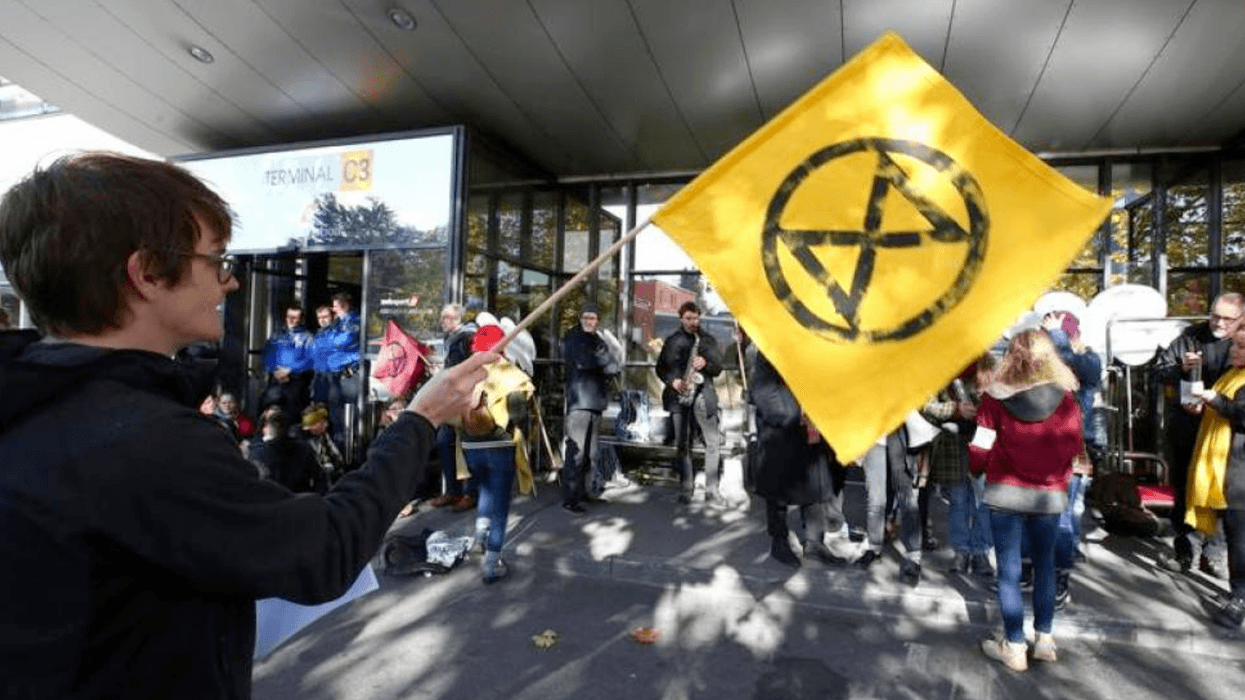
Targeting ultra-wealthy passengers and owners of private jets, campaigners with Extinction Rebellion in Geneva on Saturday shut down a terminal that caters to luxury jets at the main airport in Geneva, Switzerland.
"We want to denounce this completely absurd means of transport since a private jet emits twenty times more CO2 per passenger than a conventional airplane," Micael Metry, an Extinction Rebellion spokesperson, said in a statement.
In a statement of purpose posted to Facebook, the local chapter of the global movement said, "We have blocked the private-jet terminal to defend the principle of climate and social justice. This means of transport is completely absurd."
In a video posted to social media, the group explained the reasoning behind the action and declared: "For a social and ecological justice: Rebellion for life!"
As Reuters reports, "Geneva is a hub for the private jets of the rich and powerful who either live nearby or travel to the lakeside city for its private banks, auction houses, hospitals and United Nations offices."
According to Swiss Info:
For two and a half hours, some 30 activists sat in front of the entrance to the private jet terminal, partially blocking its entrance. Others were reportedly singing and holding signs with white clouds or flags with the symbol of the movement. The group's stated aim is to use nonviolent civil disobedience to compel government action to avoid ecological collapse.
One protester, a 27-year-old student who gave his name Nicolas, told Reuters: "Our politicians are only taking small measures, to satisfy citizens, while at the same time saying that we have to make efforts, that if everyone one makes efforts, we can fight against climate change."
The blockade was reportedly peaceful. Though no arrests were made law enforcement said they took down the identities of those who participated and would consider what legal action, if any, to take in the future.
More than 500 high-profile activists, Nobel Peace Prize winners, academics, artists, and human rights organizations released an open letter on Tuesday accusing Sweden and the United Kingdom of undermining the United Nations by continuing their "arbitrary detention" of WikiLeaks founder Julian Assange.
The letter was delivered to the Swedish and UK permanent representatives at Tuesday's convening of the 31st United Nations Human Rights Council meeting in Geneva. It was published in response to a ruling issued by the UN Working Group on Arbitrary Detention last month that Assange had been arbitrarily detained for more than three years and should be freed and compensated.
UK foreign secretary Philip Hammond dismissed those findings as "ridiculous" and "flawed," while a number of senior British attorneys argued that the UN report was "not binding on the UK courts," the Guardian reports.
Despite the ruling, Assange remains at the Ecuadorian embassy in London.
The letter, which was posted on the Democracy in Europe Movement 2025 (DiEM25) website, condemned the reactions of the UK and Swedish governments, charging that they "are setting a dangerous precedent that undermines the United Nations Human Rights system as a whole."
The signatories, who hail from 60 countries, include more than 100 human and legal rights organizations, four Nobel Peace Prize winners, activists such as Naomi Klein and Arundhati Roy, the cities of Madrid and Barcelona, 25 freedom of expression organizations, including Reporters Without Borders, the Electronic Frontier Foundation, and The Freedom of the Press Foundation, and former Greek finance minister Yanis Varoufakis, who last month launched DiEM25, a pan-European progressive movement.
"We urge Sweden and the United Kingdom to respect the binding nature of the human rights covenants on which the decision is based, including the International Covenant on Civil and Political Rights, as well as the independence, integrity, and authority of the Office of the High Commissioner on Human Rights and the Working Group on Arbitrary Detention," the letter states. "We, therefore, call on the governments of Sweden and the United Kingdom to comply without further delay with the Working Group's findings and 'ensure the right of free movement of Mr. Assange and accord him an enforceable right to compensation, in accordance with article 9(5) of the International Covenant on Civil and Political Rights.'"

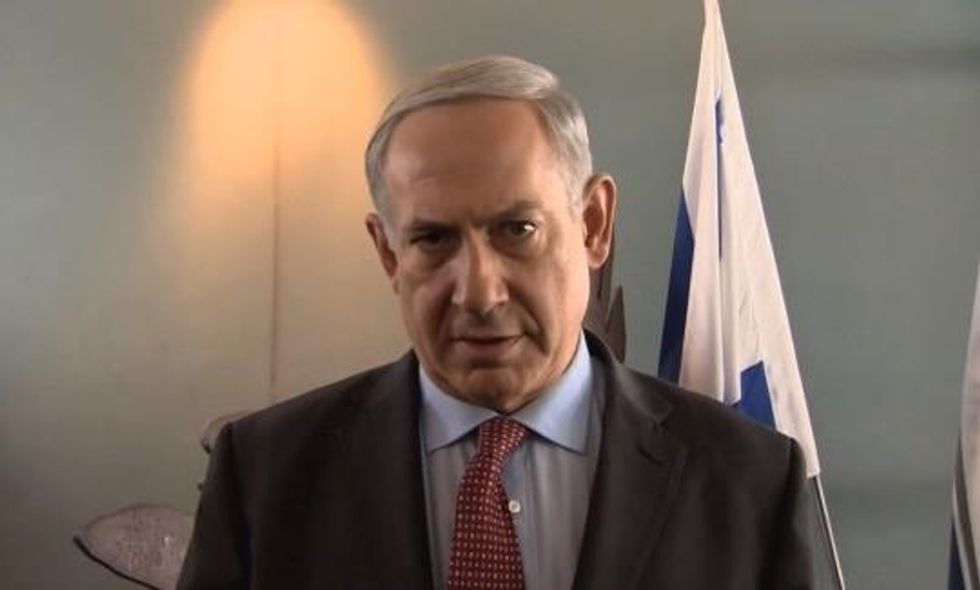
As international hopes rose around the possibility of successful talks on Iran's nuclear program in Geneva on Friday, Israel's Prime Minister Benjamin Netanyahu had a message for the world: No, no, no.
"Israel is not obliged by this agreement and Israel will do everything it needs to defend itself, to defend the security of its people," Netanyahu said in one of two videos released to reporters ahead of talks with U.S. Secretary of State John Kerry at Ben Gurion airport that took place Friday morning. Many interpreted the comments as the latest in a series of veiled threats about Israel's desire to strike militarily against Iran.
Watch:
PM Netanyahu's Statement Prior to Meeting with US Sec of State John Kerry - 8/11/2013Prime Minister Benjamin Netanyahu's statement prior to meeting with US Secretary of State John Kerry הצהרת ראש הממשלה בנימין ...
Though not perfect, numerous diplomatic experts and observers are calling the brewing deal a potential best hope for de-escalating the threat of a dangerous military confrontation in the region. Netanyahu, however, said his country would not be bound whatsoever by the agreement, which he called a "monumental," "grievous" and "historic" mistake.
"This is a very bad deal. Israel utterly rejects it," Netanyahu said.
Netanyahu was referring to information he had received coming out of the ongoing talks in Geneva between the P5+1 group of Britain, China, France, Russia, the United States and Germany with Iran over its nuclear program, although no official announcement of a deal has been made.
Though no official statements on the details have yet emerged, Iran's Foreign Minister Mohammad Javad Zarif has said that a joint statement on the framework of a nuclear deal could be issued as early as Friday. Other reporting suggests that though progress has been made, the high-level talks may continue into the weekend before a deal or framework is announced by the parties.
Netanyahu's comments represent the continued hostility of the Israeli government towards Iran's nuclear program. Though Iran has repeatedly claimed its nuclear program is for power generation and medical research purposes only, Israel refuses to acknowledge its own nuclear arsenal. Unlike Iran, Israel has never signed the Nuclear Non-Proliferation Treaty.
Following his meeting with Kerry, Netanyahu showed no signs of backing down from his hawkish stance, but criticism of his remarks were proliferating. As Ian Black, Middle East editor for the Guardian, reports:
Israel's ill-tempered opposition - even before anything has been formally agreed - looks set to further strain its already tense relations with Washington. "Netanyahu unwise to challenge US so openly/dismissively on possible Iran nuclear deal," tweeted Nicholas Burns, a former senior US diplomat. "Netanyahu's outburst was a serious tactical error." The Israeli prime minister has taken a hard line on this issue for years, so it is no surprise he is taking the news badly. It is still hard to imagine, however, that Israel would attack Iran - even if it has the military capability to do so alone - while a prolonged and internationally backed agreement is in place.
Kerry did not make a statement before he left Israel for Geneva, though the White House pushed back, at least mildly, against the Israeli Prime Minister by saying that any criticism of the deal is "premature," because no deal yet exists.
Upon his arrival in Geneva, Kerry told reporters that he was hopeful that a deal could be made. But, he added, "I don't think anybody should mistake that there are some important gaps that have to be closed."
Late in the day Friday, according to the Guardian's live reporting from Geneva, the closed-door talks were heading into their second hour.