

SUBSCRIBE TO OUR FREE NEWSLETTER
Daily news & progressive opinion—funded by the people, not the corporations—delivered straight to your inbox.
5
#000000
#FFFFFF
To donate by check, phone, or other method, see our More Ways to Give page.
Daily news & progressive opinion—funded by the people, not the corporations—delivered straight to your inbox.
A union member testified that she was "afraid" answering the question about the president's executive orders honestly would "hurt her application."
A court's decision to block the Trump administration from including a "loyalty question" on federal job applications was a win not only for the nonpartisan civil service, but also for the communities public employees serve, said one labor leader whose union was among the plaintiffs in the case against the Office of Personnel Management.
Patrick Moran, president of the American Federation of State, County, and Municipal Employees (AFSCME) union, said Friday that the loyalty questions the OPM placed on job applications for public servants were a "blatantly illegal attempt to hire partisan cronies who would endanger our communities by putting politics before people, rather than dedicated, qualified public service workers."
The question was added to applications in response to one of President Donald Trump's first executive orders of his second term, titled “Reforming the Federal Hiring Process and Restoring Merit to Government Service." The OPM was directed to develop a “Federal Hiring Plan that brings to the Federal workforce only highly skilled Americans dedicated to the furtherance of American ideals, values, and interests."
Several essay questions were added to job applications for the civil service as a result, including one that asked: "How would you help advance the president’s executive orders and policy priorities in this role? Identify one or two relevant executive orders or policy initiatives that are significant to you, and explain how you would help implement them if hired."
Over 70,000 job postings have included the question, and the plaintiffs in the case—including AFSCME, the American Federation of Government Employees (AFGE), and the National Association of Government Employees (NAGE), argued that its inclusion compelled applicants to make political statements and chilled the speech of those who may not agree with Trump's executive orders.
The US District Court for the District of Massachusetts found that continuing to include the question would cause "irreparable harm" to workers applying for government jobs.
Judge George A. O’Toole Jr. said the plaintiffs' arguments that the OPM had violated applicants' First Amendment rights and the Administrative Procedure Act were likely to succeed in court.
A sworn declaration from an AFGE member figured prominently in the case. The employee said she "was afraid" that answering the loyalty question with an honest response about her personal views on Trump's executive orders would "hurt her application."
O'Toole wrote that the question's plain language "calls for the applicant’s personal views on a political topic, and directly links that personal view to the duties of the desired civil service job."
Everett Kelley, AFGE national president, said that "requiring federal job applicants to answer politically motivated questions goes against the very nature of the nonpartisan civil service, and we are pleased the judge has put an immediate stop to the administration’s loyalty questions. Federal employees should be hired based solely on their ability to perform the job—not their allegiance to any particular administration."
O'Toole denied the unions' request for a preliminary injunction blocking the government from incorporating answers that applicants have already provided into hiring decisions.
Still, Skye Perryman, president and CEO of Democracy Forward, which represented the plaintiffs, said the ruling "protects the Constitution, the civil service, and the people who depend on a professional, nonpartisan federal workforce.”
“For more than a century, civil servants have been hired based on their merits, not based on allegiance to a partisan political agenda,” said Perryman. “Today’s decision—stopping the Trump-Vance administration’s required loyalty question for public servants—reaffirms the importance of a nonpartisan civilian workforce that serves the American people."

The organization has "provided affordable sexual and reproductive healthcare, including birth control, STI testing and treatment, cancer screenings, and wellness exams to millions of people through Title X."
Planned Parenthood Federation of America on Wednesday sued over the Trump administration's attempt to abuse a federal program "for an overtly political and ideological agenda that is at odds with Title X's statutory purpose of funding comprehensive family planning care for those who cannot afford it."
"Title X of the Public Health Service Act is the only domestic federal program devoted solely to family planning for uninsured, underinsured, and low-income people," notes the complaint, filed in federal court in Washington, DC by lawyers at PPFA, Democracy Forward, and Wilmer Cutler Pickering Hale and Dorr.
After the US Department of Health and Human Services' Office of Population Affairs in April announced changes to how it chooses Title X grantees for the 2027-32 cycle, the National Family Planning and Reproductive Health Association and the Family Health Council of Central Pennsylvania sued last month, backed by the ACLU.
The office then updated the policy earlier this month. However, as Wednesday's complaint explains, the updated version still says that "in evaluating and awarding Title X grants," the office "will consider the extent to which applicants 'advance' and 'align with' a series of political priorities."
PPFA's attorneys argued that the administration's approach is unlawful and puts the group's members "at a competitive disadvantage," which could ultimately impact people seeking care, from contraception to testing for sexually transmitted infections (STIs).
Democracy Forward president and CEO Skye Perryman—whose organization has repeatedly sued over Trump policies—said in a statement that "people should be able to receive the healthcare that is right for them, their lives, and their values, and that requires support for providing critically needed family planning services for people who cannot afford it."
Accusing the administration of "once again putting politics over people," she said that "the unlawful, ideologically driven changes to Title X threaten devastating consequences for lower income Americans nationwide who rely on the program for essential healthcare, including birth control, cancer screenings, and STI testing."
"Title X was created so a person's income would never determine whether they could access the medically appropriate family planning care that is right for them," Perryman emphasized. "We will aggressively pursue legal action on behalf of our clients until the administration stops undermining that promise and follows the law."
Highlighting the potential impact of the administration's policy for people throughout the United States, PPFA pointed out that from October 2024 through September 2025, its health centers provided over 1.3 million Title X visits across 33 states.
"Planned Parenthood health centers have provided affordable sexual and reproductive healthcare, including birth control, STI testing and treatment, cancer screenings, and wellness exams to millions of people through Title X," said PPFA president and CEO Alexis McGill Johnson. "We are suing the Trump administration because, yet again, it is trying to make it harder for people to get the vital care they need at Planned Parenthood."
The new lawsuit comes after Planned Parenthood and other reproductive health clinics regained access to Medicaid funding earlier this month, following the expiration of a provision in the One Big Beautiful Bill Act, which President Donald Trump signed last July.
The passage of that provision was a victory for forced pregnancy advocates, who have long targeted Planned Parenthood for providing abortion care. An analysis from the organization found that the "defunding" effort led to the closure of nearly 30 health centers, all of which were located in "contraceptive deserts" and two-thirds of which were in areas defined as rural, medically underserved, or experiencing health professional shortages.
The group also called the Medicaid provision a "backdoor abortion ban," noting that 64% of Planned Parenthood health center closures were in states where such care is legal, and the shuttered facilities had previously served over 10,000 abortion patients annually.
"By deliberately targeting Planned Parenthood, President Trump and his allies in Congress worsened a public health crisis, making it harder for people to get the essential and lifesaving care they needed at their trusted provider," McGill Johnson said in early July.
"Still, anti-abortion lawmakers are trying to make 'defund' permanent because Planned Parenthood health centers provide abortion care where it's legal," she stressed. "They are willing to sacrifice the lives and health of people across the country if it gets them closer to their goal of banning abortion everywhere and shutting down Planned Parenthood."
"We're in a fight for survival—not just for Planned Parenthood health centers, but for everyone to get high-quality, affordable healthcare from their trusted provider," she added. "And know this: Planned Parenthood will never stop fighting to ensure everyone can get the care they need."
“The federal government cannot build secret dossiers on people because they exercise their First Amendment right to peacefully observe, document, or criticize its actions," said the head of Democracy Forward.
A coalition of privacy and civil liberties advocates filed a federal lawsuit Friday accusing the Trump administration of secretly collecting and keeping personal information about people who monitor US Immigration and Customs Enforcement operations, arguing that the practice violates federal privacy law and threatens constitutionally protected speech and association.
The lawsuit—filed in the US District Court for the District of Columbia—was brought by individuals and advocacy groups represented by Democracy Forward.
The plaintiffs—the Electronic Privacy Information Center (EPIC) and legal observers Nicole Cleland, Jacquelyn Ivey, and Anna Walker—argued that the US Department of Homeland Security (DHS), US Immigration and Customs Enforcement (ICE), and other federal agencies created and maintained databases of people who observed, documented, or protested immigration enforcement activities without providing notification or safeguards, as required under the Privacy Act of 1974.
That law was passed after the exposure of illegal government surveillance, including longtime former Federal Bureau of Investigation Director J. Edgar Hoover's infamous COINTELPRO program, under which the FBI, in addition to conducting unlawful spying, funded and armed murderous far-right militants to terrorize anti-Vietnam War protesters, anti-nuclear weapons activists, civil rights leaders including Martin Luther King, Jr., and other leftists.
“The federal government cannot build secret dossiers on people because they exercise their First Amendment right to peacefully observe, document, or criticize its actions," Democracy Forward president and CEO Skye Perryman said in a statement announcing the lawsuit. "That is exactly the kind of government surveillance Congress sought to prevent when it enacted the Privacy Act after some of the darkest chapters in our nation’s history."
The lawsuit accuses the Trump administration of collecting the names, photographs, vehicle information and license plate numbers, social media accounts, and other identifying information about legal observers, volunteers, journalists, clergy, and community members engaged in First Amendment-protected activities during the government's deadly anti-immigrant crackdown.
"When the Department of Homeland Security dramatically ratcheted up its immigration enforcement, people across the country—of all ages and backgrounds—did what anyone is supposed to do when they disagree with government action: They exercised their First Amendment rights," the suit states. "They peacefully protested. And, as matters here, they observed and recorded how law enforcement agents acted in public."
DHS is using facial recognition technology, body cameras, license plates, mobile devices, and other surveillance tools to identify, track, and punish people who legally observe immigration enforcement in public. This is a clear violation of the Privacy Act. We’ll see them in court.
[image or embed]
— Democracy Forward (@democracyforward.org) July 24, 2026 at 10:36 AM
"In response, DHS decided to record the Americans who were peacefully observing its agents, adopting a secret Protester Surveillance Policy enabling its agents to first collect records on Americans engaging in First Amendment exercise and then maintain them in DHS systems, where they can be used to retaliate against those Americans," the complaint continues.
"Beginning sometime in 2025, DHS deployed a dragnet of drones, bodycams, face-scanning apps, license plate scanners, and camera phones to, as one memo instructed, 'capture all images, license plates, identifications, and general information on hotels, agitators, protestors, etc., so we can capture it all in one consolidated form,'" the document notes.
"DHS agents have not been shy about gathering this information or its purpose," the plaintiffs contended. "In Maine, DHS agents told multiple observers that they were being added to a database of 'domestic terrorists.' In Chicago, agents routinely used facial irecognition scans on members of the public."
"In Minneapolis, observers simply watching agents on public streets have been led by those agents to their own houses, despite never having interacted with an agent—a practice so common that it has been named 'being driven home by ICE,'" the suit says. "And across the country, DHS agents have approached observers and addressed them by their full names, even though those observers never identified themselves to the agents or showed them any form of identification."
"As a result of its Protester Surveillance Policy, DHS has recorded and retaliated against each individual plaintiff," the filing alleges. "It’s bad enough that DHS publicly collected information on Americans engaged in lawful First Amendment exercise. But worse, DHS also decided to maintain the information in one or more of its systems, enabling it to later retaliate against observers and protestors—including by canceling Trusted Traveler status," which includes Transportation Security Administration Pre-Check and Global Entry.
The plaintiffs are asking the court to declare the DHS surveillance policy unlawful, end it, and ban the agency from continuing to collect and keep records of individuals’ protected First Amendment activities.
“Now more than ever, those of us who have the privilege to speak out have a responsibility to defend the rights of everyone in our communities,” Walker said in a statement. “When people are punished for exercising their First Amendment rights, we begin losing the democratic principles that protect all of us. Every American should be alarmed by retaliatory action against one’s free speech."
Cleland said: “I believe government accountability starts with transparency. People should be free to peacefully observe and document what their government does in public without worrying they’ll be tracked or retaliated against. This case is about protecting that right for everyone.”
EPIC deputy director John Davisson warned, “When our government compiles secret dossiers on everyday people for exercising their constitutional rights, it sends a chilling message: If you speak up, watch your back."
"If every protest, every recording, every act of dissent opens us up to surveillance and retribution, privacy and free speech are at risk of collapse," he added. "But the laws of this nation don’t permit that, and we won’t either.”
With eligibility verification and fees, the rule was projected to force 2 million people to drop their insurance, said cities and advocacy groups that sued the administration.
Officials in several cities joined advocacy groups in celebrating a federal court ruling Friday that blocked the Trump administration's rule which, they argued in a lawsuit, illegally imposed new fees and created barriers "that would make it harder—and in some cases impossible—for people to get and keep affordable health insurance."
The cities of Columbus, Ohio; Baltimore; and Chicago were among the plaintiffs in a case filed last week in the US District Court of Maryland against Health and Human Services Secretary Robert F. Kennedy and other Trump officials, arguing that the so-called "Marketplace Integrity and Affordability" rule would destabilize the insurance market and penalize vulnerable families, "rather than promoting affordability."
The rule was introduced in May, months after Affordable Care Act subsidies that had made ACA insurance premiums more affordable for millions of people were allowed to expire by Republicans in Congress. More than 1 million fewer Americans signed up for coverage in ACA exchanges after the tax credits expired, and the Trump administration claimed that the new rule's provision of more "catastrophic" insurance plans would give more "choice" to people who couldn't afford plans that cover more healthcare needs.
The rule also required additional verification for low-income households before they enroll in ACA plans, with Centers for Medicare and Medicaid Services Administrator Mehmet Oz claiming the new requirement "strengthens eligibility checks, cracks down on abuse, and gives insurers more flexibility to offer affordable, consumer-focused coverage options."
“Cloaked in the pretense of government efficiency and fraud prevention, the 2026 rule creates numerous barriers to affordable insurance coverage."
The verification requirements and new fees could cause as many as 2 million people to drop their coverage, said Democracy Forward, which represented the plaintiffs, as well as raising annual costs by about $700 for families.
“Cloaked in the pretense of government efficiency and fraud prevention, the 2026 rule creates numerous barriers to affordable insurance coverage, negating the ACA’s goal of extending affordable health coverage to all Americans, and instead increasing the population of underinsured and uninsured Americans,” the plaintiffs said in the lawsuit.
In the ruling on Friday, US District Judge Brendan Hurson vacated several provisions of the rule, including ones that revoked guaranteed insurance coverage for people with past-due premiums; required eligibility verification for the special ACA enrollment period; and imposed a $5 premium penalty on people who automatically reenrolled in their plans.
Columbus City Attorney Zach Klein said the rule's provisions were among "the Trump-Vance administration’s illegal attempts to undermine the Affordable Care Act."
“This ruling is a significant win for millions of Americans, including thousands in Ohio, who would have been denied coverage or seen their out-of-pocket costs skyrocket due to this president and his administration," said Klein. "We will continue to fight to protect healthcare coverage for all Americans whenever it’s threatened.”
Richard Trent, executive director of Main Street Alliance, a small business advocacy group that also joined the lawsuit, said that "the Trump-Vance administration’s unlawful attempt to undermine the Affordable Care Act would have increased costs, created unnecessary barriers to coverage, and made it harder for entrepreneurs and workers to get the care they need."
"Small business owners cannot grow their businesses when healthcare becomes more expensive and less accessible," said Trent. "We are grateful that the court has protected these critical safeguards and reaffirmed that affordable healthcare remains essential to a strong economy and thriving Main Streets across the country."
Baltimore Mayor Brandon Scott also applauded the ruling, but emphasized that healthcare advocates' "work is not over."
As Common Dreams reported Friday, tied up in the Trump administration's push for more Americans to use high-deductible catastrophic insurance—which is likely to present families with high out-of-pocket costs—is a plan to push households into more medical debt by allowing them to take out loans directly from their health insurance companies.
“We will continue to fight back against any attempts by this administration to slash protections under the ACA," said Scott, "and will not stop fighting until every person in this nation has access to the affordable, quality healthcare they deserve.”
Acting Attorney General Todd Blanche has insisted that the plan to pay taxpayer funds to Trump allies is dead. But he hasn't said so under oath.
A federal judge may have dealt the final blow to President Donald Trump's $1.8 billion "weaponization fund" on Friday, indefinitely blocking it and ordering his administration to state unequivocally that it's no longer happening.
In the face of bipartisan backlash, acting Attorney General Todd Blanche had publicly backed off plans to use the money earlier this month, and a court temporarily blocked the transfer of the money to what opponents had dubbed a "slush fund" for Trump's supporters, including January 6 rioters who claim to be victims of government "weaponization" by the Biden administration.
But The Atlantic reported on Thursday that even as the US Department of Justice (DOJ) publicly swears that the payouts are dead, administration officials have been reassuring Trump's cronies behind the scenes that they'll get their checks and that the administration simply needs to wait for the legal blowback to die down or find an alternative way to award them the money, which was set to follow a DOJ-brokered settlement between Trump and his own Internal Revenue Service (IRS).
That may prove more difficult after Friday, however, when US District Judge Leonie M. Brinkema issued a preliminary injunction indefinitely extending her previous two-week pause on the fund.
She described the arrangement, to have taxpayer funds disbursed without court rulings to “an extremely small group” that many Americans feel engaged in “unacceptable” conduct, as "problematic."
The DOJ had attempted to have the case against the fund dismissed, arguing that it was now a moot point, since Blanche had publicly declared it dead. But Brinkema said, "The [government’s] mootness argument, in my view, doesn’t go anywhere.”
While the DOJ stated that the fund has “not been set up and is now not going forward," Brinkema noted that Blanche had declined to state that under oath, while Trump has publicly continued to champion the fund even as his administration has backed away from it.
During the hearing in the Eastern District of Virginia, Brinkema pressed DOJ lawyer Andrew Block on why, if the fund was truly defunct, the administration had not formally rescinded the order setting it up. He said he didn't know.
The judge gave Blanche, Associate Attorney General Stanley Woodward Jr., and Treasury Secretary Scott Bessent, whose department would have overseen the fund, one week to sign a “clear, unambiguous” declaration stating under penalty of perjury that the fund is dead, and wrote in the order that they must affirm that it "will not proceed in any manner, or under any name."
She said in order for the lawsuit to be thrown out, the government needed to put it in writing because "we don’t have the kind of absolute certainty that this fund wouldn’t rear its head."
CEO @SkyePerryman and Senior Counsel Pooja Boisture break down our major slush fund win from court. pic.twitter.com/ngneLRsl8R
— Democracy Forward (@DemocracyFwd) June 12, 2026
Outside the courtroom, Skye Perryman, the president and CEO of Democracy Forward—the watchdog group that sued the DOJ—celebrated that the court had "put the brakes on Donald Trump's slush fund."
The group is representing several plaintiffs who say they'd be harmed if the fund were to be enacted.
They include a former federal prosecutor fired after leading January 6 cases; the city of New Haven, Connecticut, which has been targeted by the administration over its sanctuary policies; the National Abortion Federation, which says the fund could reward anti-abortion activists convicted of clinic-related offenses; and the watchdog group Common Cause, which argues that the opaque scheme could embolden January 6 defendants.
"We were thrilled that the judge understood the significant harm that our clients face as a result of the fund, as well as the American people," said Democracy Forward senior counsel Pooja Boisture. "We were thrilled that she got it right. She understood that this was not a partisan issue."
It remains unclear whether the order would stop the administration from pursuing other methods for rewarding Trump's allies. Reuters reported on Friday that his legal allies have discussed dusting off a 1946 law called the Federal Tort Claims Act, which would allow individuals to file administrative claims and lawsuits that could be settled out of court with a lot of flexibility for the government.
“The Trump administration cannot be trusted with the public’s money,” said Omar Noureldin, Common Cause’s senior vice president for policy and litigation. "We’ve successfully locked the president’s personal slush fund for now, and we’ll keep the pressure on until it’s shut down for good.”
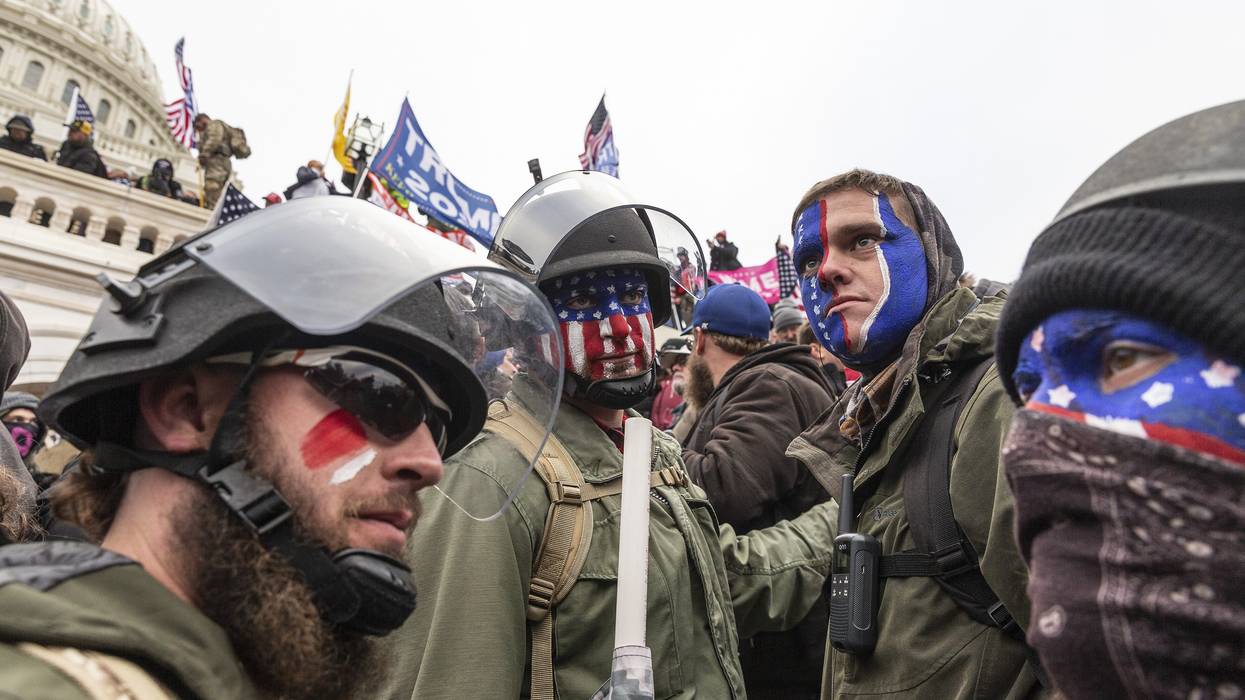
"If Trump and Republicans are truly abandoning this corrupt scheme, they should have zero problem banning it in law," said US Senate Minority Leader Chuck Schumer.
President Donald Trump is reportedly dropping his effort to get Congress to sign off on creating a $1.8 billion slush fund for political allies amid furious public backlash.
A source described as a senior Trump administration official told Axios on Monday that the fund is "dead for now" after two federal judges last week weighed in against it, with one blocking any funds from being dispersed.
One source told Axios that the fund—which was set up to pay out allies who were allegedly unfairly prosecuted during former President Joe Biden's tenure, including potentially hundreds of rioters who violently stormed the US Capitol on January 6, 2021—had "become a distraction" that was threatening the president's broader legislative agenda.
"The president believes government was weaponized against people—it wasn't just him," the source claimed. "But this isn't the time and vehicle for it."
According to NOTUS politics reporter Reese Gorman, House Speaker Mike Johnson (R-La.) "helped convince" Trump to drop the fund for now during a conversation on Monday.
"The fund received significant backlash from Hill Republicans," reported Gorman, "and a number of House Republicans were looking for ways to stop this fund from happening."
The decision to drop the fund came as Democratic lawmakers have been lining legislation and amendments to derail it.
Senate Minority Leader Chuck Schumer (D-NY) said on Monday that his caucus wasn't satisfied just with killing the current Trump slush fund, but wanted to bar him from trying to create another one in the future.
"If Trump and Republicans are truly abandoning this corrupt scheme, they should have zero problem banning it in law," Schumer wrote in a social media post. "This week, Senate Democrats will push legislation to ban this slush fund and ensure no president can ever do this again. Trump’s word is nowhere near enough."
Schumer's comments were echoed by Sen. Chris Coons (D-Del.), who also cast doubt on whether Trump had truly dropped his scheme.
"I don’t trust Trump’s word, and neither do the American people," wrote Coons. "I'm looking forward to working with my Senate Democratic colleagues to permanently ban this slush fund. If Republicans in Congress are as opposed to this fund as they claim, they should have no problem joining us."
The press office of California Gov. Gavin Newsom, a likely 2028 presidential candidate who last week proposed a 100% tax on any California residents who received money from the Trump fund, celebrated its apparent demise.
"Days after Gavin Newsom challenged Trump’s J6 criminal slush fund and proposed a 100% tax on profits, Axios reports Trump pulled the plug," the press office wrote. "Bullies fold when you hit back!"
Sens. Elisa Slotkin (D-Mich.), Adam Schiff (D-Calif.), and Mark Kelly (D-Ariz.) on Monday introduced a new bill called the "Drain the Slush Fund Act," which would bar taxpayer money from being paid to the "president, his associates, individuals convicted of crimes, or those involved in the January 6, 2021 insurrection."
In announcing the legislation, Slotkin said the fund was the latest example of Trump using the government "as a piggy bank for himself and his allies."
"This so-called... anti-weaponization fund is an unprecedented misuse of taxpayer money, and it must be stopped," said Slotkin. "Our bill does just that. Democrats, Republicans, and Independents are crying out for the president to focus on the economy and lowering their costs."
In the House of Representatives, Rep. Tom Suozzi (D-NY) teamed with Rep. Brian Fitzpatrick (R-Pa.) introduced similar legislation aimed at blocking the fund.
"Congress must call out what we know is morally wrong," Suozzi wrote in a social media post announcing the legislation. "The checks and balances of our democracy and the will of the American public hold us accountable to that standard."
Lisa Gilbert, co-president of Public Citizen, said that the reported decision to drop the fund was good news, but warned against overlooking other toxic policies being pushed by the president and his GOP allies in a new budget reconciliation package.
"As important as taking out this disgusting policy is," said Gilbert, "we must not let it be an excuse to green light the massive increases to [US Immigration and Customs Enforcement] funding embedded in the reconciliation bill."
Legal advocacy group Democracy Forward, which has filed lawsuits aimed at blocking the fund's implementation, said it would continue pressing its case until it was sure that the president's plan was truly dead.
"Until the administration fully abandons the scheme, it's beyond dispute that it will not recur, and our clients’ harm is remedied, we will be in court challenging it," said Skye Perryman, president and CEO of Democracy Forward. "We look forward to the government’s response to the courts and to our filings, and to prevailing on behalf of our clients."

"Taxpayer dollars should serve the American people, not finance political favors or reward blind, and sometimes violent, loyalty to a single politician," said the head of one advocacy group.
A federal judge in Virginia on Friday temporarily blocked the Trump administration from moving to create a so-called "Anti-Weaponization Fund" that would use nearly $1.8 billion in taxpayer money to reward supporters, including people convicted of seditious and violent felonies during the January 6 insurrection.
Judge Leonie M. Brinkema of the Federal District Court for the Eastern District of Virginia issued a 2-page order barring any action “pursuant to the creation or operation of the Anti-Weaponization Fund, which includes the transferring of money to the Fund; the consideration of any claims submitted to the Fund; and the disbursing of any funds from the Fund.”
Brinkema—a nominee of former President Bill Clinton—set a June 12 hearing date for arguments on whether she should extend the pause amid numerous legal challenges to what critics have called a "felon-to-felon slush fund," a reference to President Donald Trump's 34 felony convictions and the serious crimes, including violent assaults on police officers with dangerous weapons, committed by January 6 insurrectionists who were later pardoned by the president.
In January, Trump sued the Internal Revenue Service and Treasury Department for $10 billion over the leak of his tax returns by a former IRS contractor. Trump’s own Justice Department settled the case earlier this month by agreeing to create the roughly $1.776 billion settlement slush fund for people claiming they were unfairly targeted by the government.
January 6 insurrectionists are expected to be among the fund's beneficiaries. Trump was accused of rewarding political violence by granting clemency to roughly 1,500 Capitol attackers, dozens of whom have since been charged or convicted for serious crimes, including child sex crimes, rape, grand larceny, burglary, home invasion, gun violations, death threats against public officials, and fatal DUI incidents.
Brinkema's decision came less than 24 hours after plaintiffs in one of the legal challenges to the fund, who are represented by Democracy Forward, filed a motion for emergency relief. Plaintiffs' attorneys told Brinkema that they’re “already being irreparably harmed by the unconstitutional and unlawful creation of the Anti-Weaponization Fund," and that such harm "will be permanent if the administration takes action, including by irreversibly disbursing funds, before this court can act."
Democracy Forward president and CEO Skye Perryman said following Friday's ruling, "Today, a federal court recognized the urgent need to prevent taxpayer dollars from being distributed through a secretive and unprecedented political compensation scheme before the legality of that program can be fully reviewed by the court."
“This is a victory for transparency, the rule of law, and the American people," Perryman added. "No administration has the authority to spend public money through a political rewards program that Congress never authorized. We look forward to the next stages in this case.”
Case plaintiffs issued a statement following Brinkema's order:
We are pleased that the court granted our request to ensure the administration does not distribute taxpayer funds until our motion has been considered. The court acted quickly to stop this unlawful scheme before money could start flowing out the door. The Trump-Vance administration attempted to create a secretive, taxpayer-funded program that rewards political allies, operates without oversight, and evades the constitutional safeguards that protect our democracy. We are grateful that the court recognized the urgency of the situation and acted to preserve the status quo before further irreparable harm occurred.
Democratic lawmakers welcomed Brinkema's order, with Senate Majority Leader Chuck Schumer (D-NY) calling it "an important win."
"Of all Trump’s corrupt schemes, his insurrectionist slush fund is one of the most depraved," said Schumer, who acknowledged the battle over Trump's fund is far from over. "We’ll keep fighting in the courts and in Congress to make sure this $2 billion giveaway to cop beaters, criminals, and MAGA cronies never sees the light of day."
Congresswoman Pramila Jayapal (D-Wash.) posted on social media: "I’ve said from the start that this is an absolute waste of taxpayer dollars. This needs to be stopped permanently."
Stand Up America executive director Christina Harvey said in a statement that “today’s ruling is a critical reminder that no one is above the law, not even the president of the United States."
"Trump’s $1.8 billion slush fund for his friends and diehard loyalists—including those who tried to overthrow our democracy on January 6—is a blatant abuse of power, and the court rightly blocked it," Harvey added. "Taxpayer dollars should serve the American people, not finance political favors or reward blind, and sometimes violent, loyalty to a single politician."

"Without this decision, countless immigrants with valid claims would have been hurriedly deported to dangerous conditions, forsaking due process for efficiency," said an immigrant rights advocate who sued the federal government.
Immigrant rights advocates on Monday hailed a federal judge's ruling that blocked significant portions of President Donald Trump's proposed policy changes regarding the Board of Immigration Appeals, which had been scheduled to go into effect this week and would have "eviscerated noncitizens’ right to appeal decisions in their immigration cases," according to rights groups.
In the US District Court for the District of Columbia, Judge Randolph Moss issued a late-night order on Sunday calling Trump's rule titled “Appellate Procedures for the Board of Immigration Appeals,” which was proposed last month, “a fast-track mechanism for disposing of the vast majority” of immigration court appeals.
The proposed rule would have reduced the time immigrants have to file appeals from 30 days to just 10 days; required summary dismissal of appeals unless a majority of the Board of Immigration Appeals' (BIA) 15 permanent members voted to accept the case for review within 10 days; and permitted case dismissals before records were transmitted to the board.
Moss said the administration had violated the legal requirement for the government to notify the public of its proposed changes to a federal rule and provide an opportunity for public comment. The Trump administration could potentially try again to change the immigration appeals process.
Laura St. John, legal director for the Florence Immigrant and Refugee Rights Project, said the ruling "keeps in place a basic, yet critical, protection for immigrants facing removal: the ability to appeal their case."
"Allowing the Trump administration’s reckless proposal to block immigrants from a fair opportunity for review of bad decisions would have resulted in people being returned to danger and families unjustly separated, all to serve a racist mass deportation agenda."
"As the administration continues to try to deport as many people as they can quickly and often without a fair day in court, it is critical for everyone to have the opportunity to file an appeal," said St. John. "Without this decision, countless immigrants with valid claims would have been hurriedly deported to dangerous conditions, forsaking due process for efficiency.”
The Florence Immigrant and Refugee Rights Project is one of several groups that sued the administration over the proposed rule, with Democracy Forward, the American Immigration Council, and the National Immigrant Justice Center representing the plaintiffs.
St. John argued in court that it can take at least a week for advocacy groups to prepare materials and file an appeal to the BIA after it has determined a noncitizen can be deported. Forcing immigrants and their legal teams to file an appeal within 10 days would leave many without any "meaningful review" of their cases, St. John said.
While the Executive Office for Immigration Review claimed the new policy would swiftly reduce the backlog of cases before the BIA, Moss wrote in his opinion, the plaintiffs argued that the provisions would "operate in combination to deprive almost all affected parties of the administrative appellate review 'that they were previously entitled to.'"
Erez Reuveni, senior counsel at Democracy Forward, said the decision "makes it clear that the Trump-Vance administration cannot play games with the immigration appeals system to eliminate basic due process and fast-track deportations."
Reuveni is a former Department of Justice lawyer who revealed in a whistleblower complaint last year that DOJ staffers had been advised by the Trump administration to ignore court orders in order to swiftly carry out Trump's mass deportation agenda.
“Once again, no matter how hard this administration tries to hide its cruel and unlawful actions behind an ‘immigration policy,’ a federal court has made clear that the government must follow the law and cannot strip people of their basic rights," he said. "We will continue representing our plaintiffs in court to defend their rights and hold this administration accountable.”
The Department of Homeland Security has not regularly disclosed the number of people it is deporting under the Trump administration; internal Immigration and Customs Enforcement data showed last year that more than 10,000 people were being deported per month.
Moss' ruling came less than a month after US District Judge Sunshine Sykes in the Central District of California threw out a BIA decision that endorsed the administration's policy of denying bond hearings to immigrants with no criminal records who have been detained. A federal appeals court issued a temporary pause on that ruling last Friday after the White House appealed.
Mary Georgevich, a senior litigation attorney at the National Immigrant Justice Center, said Moss' ruling was "an important win in the face of an administration that is intent on dismantling our immigration system at any cost, including betraying our country’s shared values of the importance of due process and access to counsel."
"Allowing the Trump administration’s reckless proposal to block immigrants from a fair opportunity for review of bad decisions would have resulted in people being returned to danger and families unjustly separated," she said, "all to serve a racist mass deportation agenda."
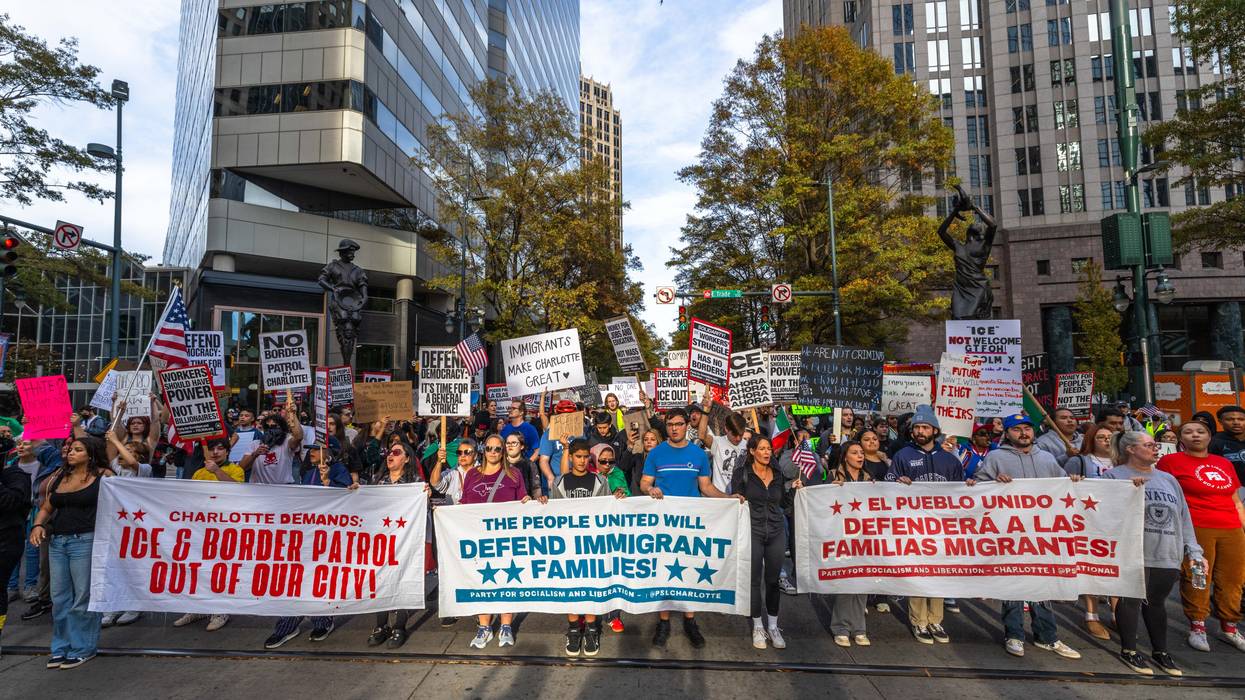
“I am a US citizen, but my papers did not protect me,” said one plaintiff. “I want to be involved in this case because I don’t want this to happen to anyone else."
A coalition of advocacy groups filed a lawsuit Tuesday "seeking to prevent a pattern of unlawful warrantless arrests in North Carolina that is harming communities" during the Trump administration's deadly crackdown on undocumented immigrants and their defenders.
Democracy Forward, the American Civil Liberties Union, the ACLU of North Carolina, and the Southern Coalition for Social Justice (SCSJ) sued the US Department of Homeland Security (DHS), Immigration and Customs Enforcement (ICE), and Customs and Border Protection (CBP) on behalf of five individuals, including four American citizens and one legal US resident from El Salvador.
“I am a US citizen, but my papers did not protect me,” 46-year-old plaintiff Willy Aceituno said in a statement. “I want to be involved in this case because I don’t want this to happen to anyone else. I want to help protect my Latino family, friends, and neighbors.”
Another plaintiff, 23-year-old North Carolina native Yoshi Cuenca Villamar, said: “I have a lot of fear that this will happen to me again. I was essentially kidnapped based only on the color of my skin. That really weighs on me."
“I think it is important to take action through this case so that the government starts doing their jobs correctly instead of stopping people solely because they look a certain way," Cuenca added.
Democracy Forward said in a statement announcing the lawsuit: "In mid-November, the Trump-Vance administration accelerated its immigration crackdown across North Carolina during Operation Charlotte’s Web. Heavily armed, masked DHS agents, including ICE and CBP officers, roamed Charlotte, Durham, Raleigh, and other communities, detaining and arresting people indiscriminately without warrants or legal justification."
"Each plaintiff was arrested by DHS agents without probable cause to believe that they are legally removable from the country and that they pose a flight risk—determinations required under federal law for warrantless arrests," Democracy Forward continued.
The plaintiffs “represent a class of individuals who have been or will be subjected to warrantless immigration arrests by DHS in North Carolina, including arrests made without probable cause based on flight risk or removability," the group added. "They ask the federal court for the Western District of North Carolina to declare DHS’ mass warrantless arrest policy unlawful and to issue a permanent injunction blocking these unlawful practices.”
ACLU-NC staff attorney Corina Scott said in a statement Tuesday: “Federal immigration agents have consistently ignored the law and trampled civil rights in North Carolina. This lawsuit seeks to stop this abuse of power and demand accountability going forward so that our communities do not continue to suffer violent and unlawful arrests.”
We just filed the first class action lawsuit challenging unlawful warrantless immigration arrests in North Carolina amid the federal government's crackdown. Join us in calling for an end to ICE & CBP terror! https://rebrand.ly/iceout
[image or embed]
— ACLU of North Carolina (@aclunc.bsky.social) February 24, 2026 at 2:40 PM
Democracy Forward president and CEO Skye Perryman said that “when armed, masked agents are breaking car windows, handcuffing people without probable cause, and dumping them on the side of the road, that is not law enforcement, it is lawlessness."
"Congress was explicit: Warrantless immigration arrests require individualized probable cause to be proven," she noted. "That standard is not optional based on the whims of whoever is in the White House. [DHS] is carrying out mass arrests that disregard the limits that Congress imposed and the Constitution requires. Federal agencies do not have the authority to sweep up people in America—whether they are US citizens, lawful residents, or anyone else—without legal justification."
"This case is about restoring basic guardrails on government power and ensuring that federal officers follow the law they are sworn to uphold," Perryman added.
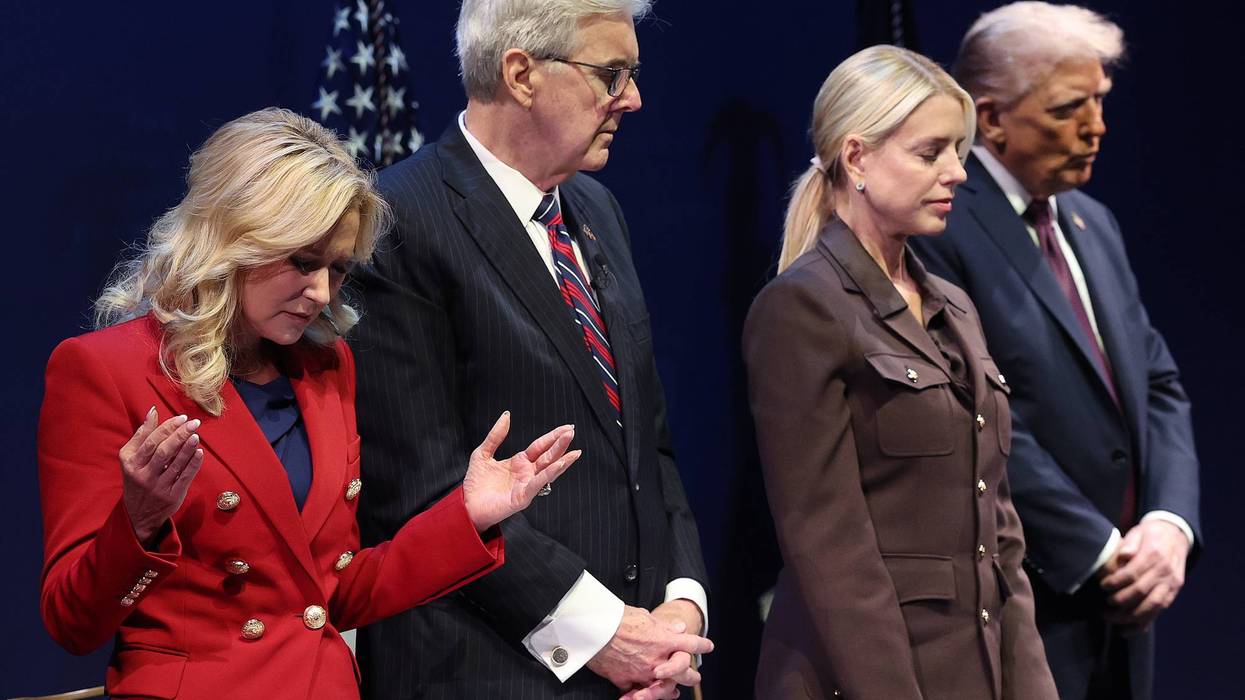
"The Religious Liberty Commission isn't about protecting religious liberty for all; it's about rejecting our nation's religious diversity and prioritizing one narrow set of conservative 'Judeo-Christian' beliefs," said one critic.
"Religious freedom for some is religious freedom for none."
That's what Rev. Paul Brandeis Raushenbush, president and CEO of Interfaith Alliance, said in a Monday statement as faith groups filed a federal lawsuit in the Southern District of New York over President Donald Trump's so-called Religious Liberty Commission.
Since Trump launched the commission last year, critics have warned that its true intent is to advance a Christian nationalist agenda. Brandeis Raushenbush, his alliance, Hindus for Human Rights, Muslims for Progressive Values, and the Sikh American Legal Defense and Education Fund renewed that argument in the complaint, which names Trump, US Attorney General Pam Bondi, the Department of Justice, the commission, and its leader, Mary Margaret Bush, as defendants.
"The government has no right to pick and choose which religious beliefs to promote, and which to marginalize," said Brandeis Raushenbush. "The Trump administration has failed to uphold our country's proud religious freedom tradition, and we will hold them accountable. Today's lawsuit is our recommitment to fight for religious liberty for all with every tool available to us."
The complaint argues that "the composition and operations of the commission violate the Federal Advisory Committee Act (FACA)," which Congress enacted in 1972 "to curb the executive branch's reliance on superfluous, secretive, and biased 'advisory committees.'" Under the law, "every advisory committee must meet public transparency requirements, be in the public interest, be fairly balanced among competing points of view, and be structured to avoid inappropriate influence by special interests."
"While this body is ostensibly designed to defend 'religious liberty for all Americans' and celebrate 'religious pluralism' it actually represents only a single 'Judeo-Christian' viewpoint," the complaint states. "It held its first three meetings at the Museum of the Bible and has closed its meetings with a Christian prayer 'in Jesus' name.'"
"Only one of its members is not Christian, and the Christian members do not represent the full diversity of the Christian faith," the filing continues. "The commission's meetings have repeatedly referenced the belief that the United States was founded as a 'Judeo-Christian nation' and the membership reflects that viewpoint. All members of the commission advocate for increased religiosity, and specifically their brand of 'Judeo-Christian' religiosity, in public life."
"The commission's members have promoted the primacy of a Judeo-Christian worldview in the public sphere, advocated for discrimination against minority groups under the guise of 'religious liberty,' and otherwise supported policies that threaten religious freedom for all those who do not conform to their particular worldview," the document details.
Ria Chakrabarty, senior policy director of Hindus for Human Rights, said Monday that "by stacking this Religious Liberty Commission with a narrow set of voices and hiding the commission's work from the public eye, the Trump administration is evading the transparency and balance that federal law requires."
"Hindus for Human Rights is proud to stand with our multifaith partners to defend a pluralistic democracy where Hindus, Muslims, Sikhs, Jews, Christians, Buddhists, and nonreligious people all belong as equals," she added.
A commission that claims “religious liberty” while excluding Muslims, Hindus, Buddhists, Sikhs—and nonreligious Americans—isn’t protecting freedom. It’s narrowing it.We’re challenging this commission in court. democracyforward.org/news/press-r...
[image or embed]
— Hindus For Human Rights (@hfhr.bsky.social) February 9, 2026 at 10:21 AM
Ani Zonneveld, president and founder of Muslims for Progressive Values, noted that "as a Muslim American organization, we have seen firsthand how elevating a singular religion above others, especially in a country as religiously diverse as the United States, leads to the oppression and possible persecution of minority faiths."
The plaintiffs are represented by Democracy Forward, which has filed over 150 lawsuits against the Trump administration since the president returned to power last year, and the decades-old Americans United for Separation of Church and State—whose president and CEO, Rachel Laser, stressed that "the Religious Liberty Commission isn't about protecting religious liberty for all; it's about rejecting our nation's religious diversity and prioritizing one narrow set of conservative 'Judeo-Christian' beliefs."
Blasting the commission's public meetings as "a vivid example of this favoritism," Laser added that its "true purpose and operations can't be squared with America's constitutional promise of church-state separation."
Specifically, Laser's group and other advocates of church-state separation have long pointed to the establishment clause of the First Amendment to the US Constitution, which bars government from making any "law respecting an establishment of religion."
"Since the nation's founding, the values of religious liberty and pluralism have been central to the American identity. These values are now under accelerated attack," declared Perryman, who's also on the Interfaith Alliance board. "The fatally flawed way this commission was assembled makes clear that the outcome isn't just un-American, it's against the law."