As Spying Renewal Stalls in Congress, Trump Pulls Plug on Pulte for DNI
"There is a path to reauthorizing FISA, but it will require enacting meaningful reforms," said House Democratic leaders.
After privacy advocates in Congress blocked proposed extensions of an expiring federal spying power on Thursday over a lack of reforms and concerns about newly appointed acting Director of National Intelligence Bill Pulte, President Donald Trump announced a different man as his official nominee for the post.
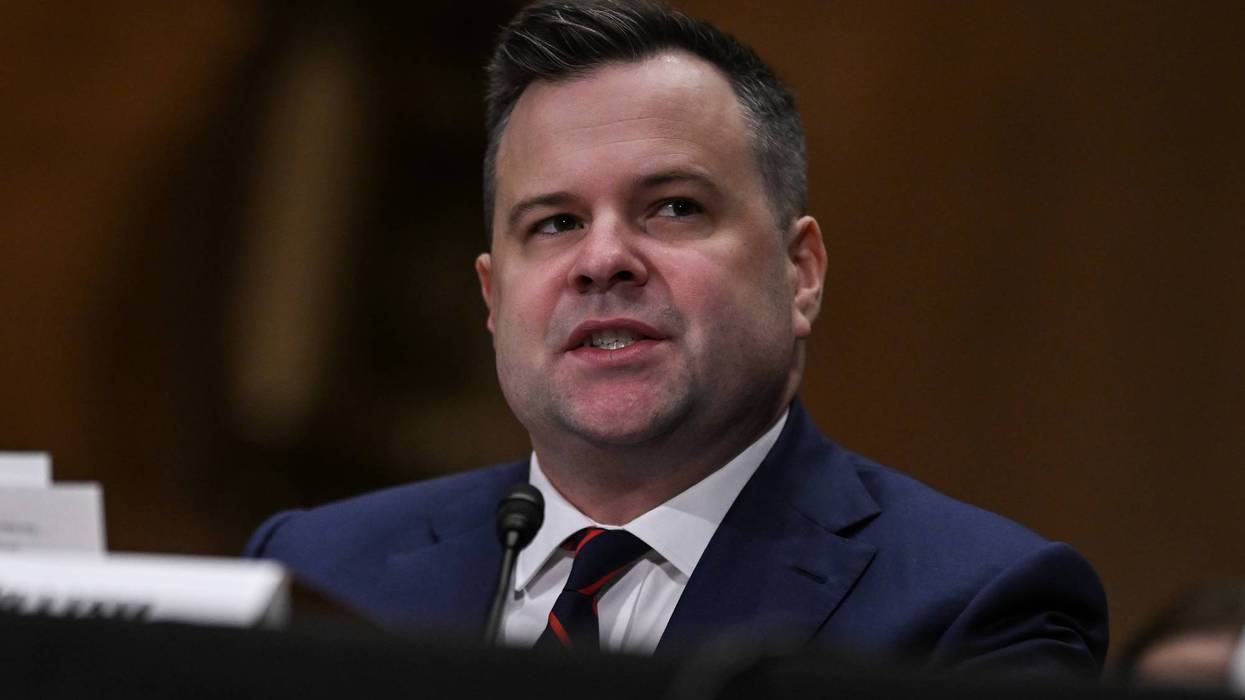
"I am pleased to announce the Nomination of very Highly Respected Jay Clayton, former Chairman of the Securities and Exchange Commission, the former Head of Sullivan & Cromwell, one of the most prominent and successful Law Firms anywhere in the World, and the current United States Attorney for the Southern District of New York, to be the next Director of National Intelligence and, importantly, to serve in my Cabinet," Trump wrote on Truth Social. "Few people anywhere in the Legal Community are respected at the level of Jay. I encourage the United States Senate to confirm Jay as soon as possible."
Trump's announcement came shortly after Senate Republicans' unsuccessful requests for unanimous consent to extend Section 702 of the Foreign Intelligence Surveillance Act (FISA)—which lets the US government spy on electronic communications of noncitizens located outside the country without a warrant—and a failed vote in the GOP-controlled House of Representatives.
"If Trump had announced this last night, or even this morning, it could've helped avoid a FISA/702 lapse," Punchbowl News reporter Andrew Desiderio said of Clayton's nomination. "Now the House is gone (and out next week) and the Senate is holding its final vote of the week right now—but most senators have already voted and dashed to the airport."
House Democratic leaders who opposed the extension pointed to Trump's appointment of Pulte following Tulsi Gabbard's recent announcement that she's resigning from the Office of the Director of National Intelligence (ODNI). As Federal Housing Finance Agency director, Pulte has sent criminal referrals to the US Department of Justice, alleging mortgage fraud by four of the president's political foes.
The Senate is due back on Monday, but Minority Leader Chuck Schumer (D-NY) told reporters after the Clayton announcement that it "doesn't matter what else they do, Pulte's got to be gone. He's still in that role."
Meanwhile, the top Democrats on the intelligence panels in both chambers of Congress, Vice Chair Mark Warner (Va.) and Ranking Member Jim Himes (Conn.), praised Clayton. Sean Vitka, executive director at Demand Progress—a leader in the massive coalition of civil society groups demanding FISA reforms—said that "no Democrat should find solace in the fact that Trump has once again named a partisan hatchet man to be the nation's top spy."
"Just as Trump asked Bill Pulte to investigate Letitia James and Adam Schiff, he also has asked Jay Clayton to investigate Democrats' ties to Jeffrey Epstein," Vitka noted. "The fact that Sen. Warner and Rep. Himes would gush so effusively over Clayton shows their clear desire to sabotage a deal on FISA privacy reforms and hand President Trump the unfettered surveillance powers that he is asking for."
"Both Pulte and Clayton have already shown that they will carry out Trump’s directive to weaponize the government against his political enemies," he added. "Putting either of them at ODNI at a time when Trump is asking for warrantless surveillance powers through FISA is too big of a risk."
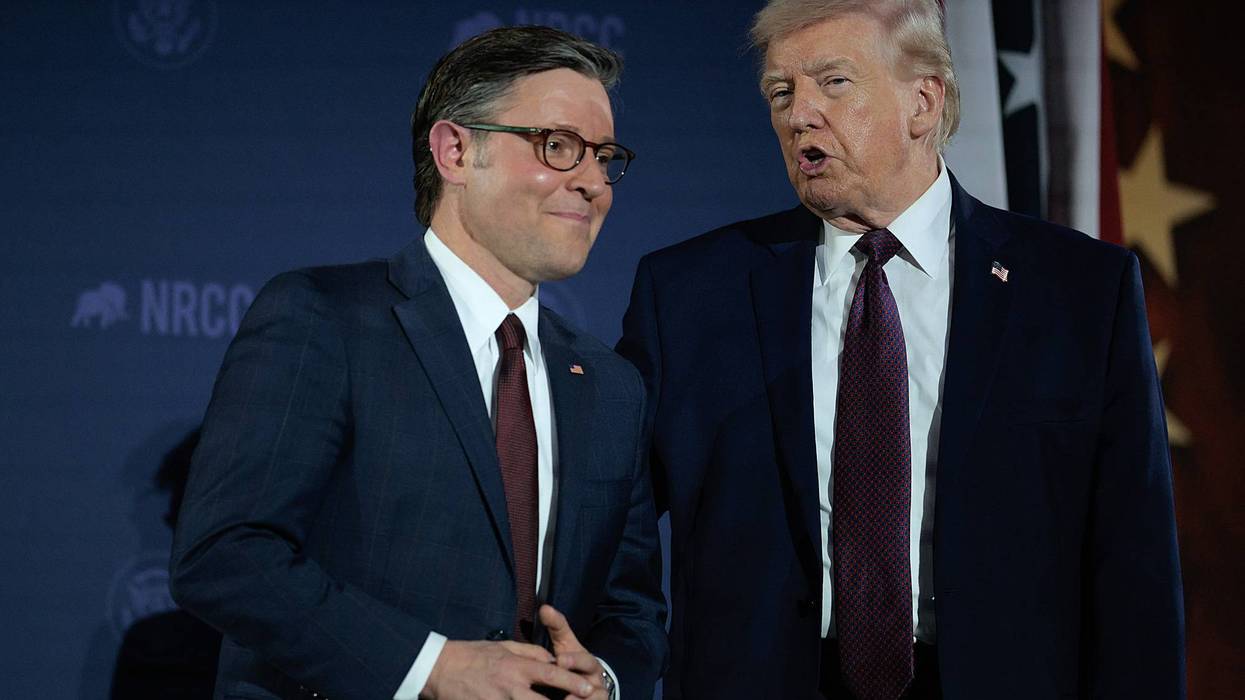
With both the House recess and Section 702's Friday expiration looming, Speaker Mike Johnson (R-La.) had tried to get two-thirds majority support for an extension on Thursday. He secured support from seven Democrats—Reps. Henry Cuellar (Texas), Don Davis (NC), Jared Golden (Maine), Vicente Gonzalez (Texas), Josh Gottheimer (NJ), Susie Lee (Nev.), and Marie Gluesenkamp Perez (Wash.)—but 19 Republicans joined the rest of the Democratic members present for the 198-218 vote.
"Section 702 is a critical foreign intelligence authority, but we cannot in good conscience vote for reauthorization without significant reforms to protect both national security and the constitutional privacy rights of Americans," said House Minority Leader Hakeem Jeffries (D-NY), Democratic Whip Katherine Clark (D-Mass.), Caucus Chair Pete Aguilar (D-Calif.), Judiciary Committee Ranking Member Jamie Raskin (D-Md.), and Himes.
"Bill Pulte has no relevant national security experience. Consequently, his appointment is in defiance of the law that requires the director of national intelligence to have 'extensive' national security experience. The apparent motivation for his elevation is the demonstrated willingness of Bill Pulte to search government databases for alleged dirt on President Trump's chosen political enemies," they continued. "There is a path to reauthorizing FISA, but it will require enacting meaningful reforms. We oppose this bill to kick the can further down the road."
Explaining her vote against "this sham extension of FISA that would allow continued spying on the American people," Rep. Pramila Jayapal (D-Wash.), a key progressive leader in the chamber, said that "a warrant requirement would pass today if Republican leadership put it up for a vote."
"However, Trump is doubling down on his appointment of Bill Pulte, closing any pathways for negotiation," she said before Clayton was announced. "I voted no today, and will continue to vote no until a warrant requirement is in place to protect our civil liberties."
Hajar Hammado, senior policy adviser at Demand Progress, said in a statement that "Speaker Johnson keeps trying and failing to jam through a no-reform FISA reauthorization, expecting different results—this time without even getting a simple majority of the House."
"If Johnson wants a FISA deal, all he has to do is allow amendment votes on privacy reforms," Hammado continued. "Adding warrant requirements to FISA is a path forward that has clear, bipartisan support. The only reason we're up against the deadline now is that congressional leaders and the White House keep ignoring this obvious reality and obstructing privacy reforms from getting a fair vote."
Elizabeth Goitein, co-director of the Brennan Center for Justice's Liberty and National Security Program, similarly said on social media that "Section 702 was in trouble well before Trump announced the appointment of Pulte as acting DNI (and by the way, Pulte could still be in that role through the midterm elections). The 702 renewal hit a wall because Republican leaders wouldn't allow votes on widely supported reforms."
After Johnson complained to reporters about the vote and said that "I pray that we do not have a serious calamity on our shores over the next few weeks," Jake Laperruque at the Center for Democracy & Technology said: "I'm sorry, you cannot demand the high ground claiming to be distraught about our national security when you are treating FISA as less important than blocking all reform votes. You sure as hell can't claim the high ground when treating it as less important than going on vacation."
While national security hawks have tried to use the deadline to force an extension, suggesting that a lapse would cause "a potential significant gap in foreign intelligence collection," privacy advocates such as Laperruque have emphasized that "the text of the law makes clear that this threat of collection suddenly going dark... is fearmongering and not a genuine possibility."
As Laperruque explained earlier this week: "So long as an approved FISA 702 certification is active, collection from communications providers based on directives stemming from that certification will continue. Because the FISA Court approved the most recent annual certifications this March, this lapse would not occur until 2027."
The House and Senate GOP's failures to extend Section 702 on Thursday came a day after Sen. John Cornyn (R-Texas) objected to a proposal from Sen. Ron Wyden (D-Ore.)—a leading privacy advocate—to pass by unanimous consent a nine-month renewal with warrant requirements. The Republican also opposed a five-week offer.
Calling out Cornyn's moves, Hammado said Wednesday that "surveillance hawks have spent all day screaming about how important it is to renew FISA, but then they just objected to a good faith deal that would reauthorize Section 702 with popular, bipartisan privacy reforms. The only thing stopping FISA from being renewed is congressional leadership's unexplained, persistent opposition to making the government get a warrant when it tries to access the private communications of Americans."
"Clear majorities in both parties, and of Americans in general, want a warrant requirement before renewing FISA," the Demand Progress campaigner added. "Why does congressional leadership prefer sunset over privacy?"
This article has been updated with additional comment from Sean Vitka of Demand Progress and Elizabeth Goitein of the Brennan Center for Justice.