
SUBSCRIBE TO OUR FREE NEWSLETTER
Daily news & progressive opinion—funded by the people, not the corporations—delivered straight to your inbox.
5
#000000
#FFFFFF
To donate by check, phone, or other method, see our More Ways to Give page.


Daily news & progressive opinion—funded by the people, not the corporations—delivered straight to your inbox.
Another critic said that "this is the latest proof that there is no limit to how low DeSantis will stoop to censor free speech and punish dissent."
Federal Communications Commission Chair Jessica Rosenworcel on Tuesday called out a Florida agency for threatening a Tampa NBC affiliate with prosecution for airing an advertisement in support of a state abortion rights proposal on the November ballot.
"The right of broadcasters to speak freely is rooted in the First Amendment," Rosenworcel said in a statement. "Threats against broadcast stations for airing content that conflicts with the government's views are dangerous and undermine the fundamental principle of free speech."
Floridians Protecting Freedom's ad is designed to build support for Amendment 4, which if approved by voters next month would alter the Florida Constitution to outlaw pre-viability prohibitions on abortion care, including Republican Gov. Ron DeSantis' six-week ban, which took effect earlier this year and has already been shown to harm patients.
The 30-second ad features a Tampa resident who was diagnosed with brain cancer while pregnant. Caroline, who already had one child at the time, says that "the doctors knew if I did not end my pregnancy, I would lose my baby, I would lose my life, and my daughter would lose her mom."
"Florida has now banned abortion even in cases like mine," explains Caroline, who received abortion care in 2020, before the U.S. Supreme Court reversed Roe v. Wade and enabled bans like the one signed by DeSantis. "Amendment 4 is gonna protect women like me. We have to vote yes."
Florida journalist Jason Garcia revealed Monday that last week, John Wilson, general counsel at the state Department of Health (DOH), wrote to WFLA-TV vice president and general manager Mark Higgins, claiming that the ad contains information that is "categorically false" and constitutes a "sanitary nuisance," which could lead to criminal proceedings if it is not removed.
As HuffPost reported Tuesday:
It's unclear if the agency only sent the letter to the NBC affiliate, or to others as well. Either way, a threat like this could have a chilling effect on publicly advocating for the pro-choice measure, just weeks away from when it will be in front of voters. Florida's Department of Health did not respond to HuffPost's request for comment.
The sanitary nuisance law is meant to curb conditions that can threaten or impair Floridians' health. It normally pertains to issues like overflowing septic tanks and problematic garbage disposals.
Attorneys for Floridians Protecting Freedom swiftly sent a letter to WFLA leaders, arguing that the DOH interjection "raises serious First Amendment concerns—indeed, it reflects an unconstitutional attempt to coerce the station into censoring protected speech," and "the advertisement is true."
The DOH letter "vaguely outlines the limited instances where abortions are allowed in Florida but fails to provide any evidence showing that Caroline's statements are false," the lawyers wrote. "Caroline was diagnosed with stage four brain cancer when she was 20 weeks pregnant; the diagnosis was terminal."
Florida's ban has limited exceptions for abortions after six weeks—before many people even know they are pregnant. In cases of rape and incest, patients can receive care up to 15 weeks, if they can manage the burdensome paperwork. Abortions to protect the health or life of a pregnant person require two physicians to assert in writing that such care is necessary.
"The only instances where the Agency for Health Care Administration has provided guidance that abortions are permitted after six-weeks' gestation are when there is an immediate threat to the pregnant person's life," the lawyers noted. "Caroline's diagnosis was terminal. Practically, that means that an abortion would not have saved her life, only extended it. Florida law would not allow an abortion in this instance."
The group of attorneys is far from alone in criticizing the Florida DOH's attempt to get the ad off the air. Aaron Terr, director of public advocacy at the Foundation for Individual Rights and Expression (FIRE), told Popular Information that the department's letter stretches "the meaning of sanitary nuisance beyond recognition."
"Terr told Popular Information that even if the ad was false and violated Florida's sanitary nuisance law, the enforcement of the law against a political ad would be unconstitutional," the outlet added. "Terr notes that the First Amendment contains 'no general exception for false speech or misinformation, and that's because of the danger of the government having a general power to dictate what is true or false, especially when it comes to political speech.'"
As Slate's Mark Joseph Stern reported Monday:
Rebecca Tushnet, a professor at Harvard Law School and a First Amendment specialist, told me that the DeSantis administration's threat is "about as blatant a violation of the First Amendment as you'll see."
Jennifer Safstrom, director of the First Amendment Clinic at Vanderbilt Law School, condemned the administration's letter as an unconstitutional "weaponization of state law to suppress speech" that's "designed to have a chilling effect on advocates during a time critical to voter outreach." Alexander Tsesis, a professor at the Florida State University College of Law, said it seemed "absurd to threaten prosecution," and pointed out that stations' own "editorial decisions" are protected by the First Amendment. Ciara Torres-Spelliscy, a professor at Stetson Law, called the incident yet another episode in DeSantis' "long recent history of violating the First Amendment with abandon."
Seth Stern, director of advocacy of Freedom of the Press Foundation, similarly said in a Wednesday statement that "this is the latest proof that there is no limit to how low DeSantis will stoop to censor free speech and punish dissent."
"It comes on the heels of his efforts to rewrite defamation law to make it easier for the rich and powerful to bankrupt their critics, his Stop WOKE Act stunt, and other similarly unconstitutional nonsense," Stern noted. "A governor who is confident in his policies and secure in his leadership would welcome debate and correct statements he believes are misleading rather than trying to weaponize trash disposal laws against the free press."
"But DeSantis is not that governor. His administration's conduct would be silly if it weren't such a transparent bully tactic," he added. "Floridians care about the First Amendment, which is why DeSantis' outrageous censorship campaigns keep failing. We hope the news outlets he targets will not only ignore him but loudly shame him."
The governor has come under fire for various actions throughout the fight for Amendment 4. As Garcia highlighted on social media, while targeting Caroline's ad, "the DeSantis administration is running taxpayer-funded television commercials attacking Amendment 4 on ESPN, CNN, Fox News, The Weather Channel, and more."
The ads are part of what the ACLU of Florida has called an "unconstitutional misinformation campaign," which also includes a government website. Additionally, as Common Dreams reported last month, multiple state residents have had law enforcement come to their homes to confirm that they signed the petition to get Amendment 4 on the ballot.
For one patient, doctors "had to wait for her creatinine to bump and her kidneys to be about to fail" before they could even offer her abortion care.
As new reporting on Amber Nicole Thurman's death highlights the dangers of Georgia Republicans' six-week abortion ban, a human rights group on Tuesday released a research brief about how a similar policy in a neighboring state "harms the health and safety of Florida patients while obstructing clinicians from providing basic reproductive and maternal medical care."
The Physicians for Human Rights (PHR) report, Delayed and Denied: How Florida's Abortion Ban Criminalizes Medical Care, focuses on the prohibition that was signed by Republican Gov. Ron DeSantis last year but didn't take effect until May, following a state Supreme Court ruling.
The PHR brief follows late May reporting on how wait times soared at abortion clinics in the states closest to Florida after its ban took effect and the Guttmacher Institute's findings from last week that the law led to a "substantial drop" in clinician-provided abortions across the state, in part because many people don't even know they are pregnant until after six weeks.
"Florida clinicians shared harrowing accounts of how routine medical care has been delayed, denied, and deviated from standards of care."
This summer, PHR interviewed 25 of Florida's reproductive healthcare providers about their experiences caring for pregnant patients under the six-week ban. Brief co-author Dr. Michele Heisler said in a Tuesday statement that "Florida clinicians shared harrowing accounts of how routine medical care has been delayed, denied, and deviated from standards of care."
"Not only abortion care but miscarriage and broader maternal healthcare have suffered gravely due to the state's ban," noted Heisler, PHR's medical director and a professor of internal medicine and public health at the University of Michigan.
"Our research brief sheds new light on the health and rights crisis fueled by Florida's abortion ban—on patients, providers, and the medical system as a whole," she said. "Under the state's abortion ban, Floridians have lost their reproductive autonomy."
One Florida doctor in private practice told PHR that "with the six-week ban, I would say it is more like the inability to really offer anything at all now. I mean, we see patients for their new obstetrician-gynecologist visits usually around eight weeks, and sometimes we see them earlier, if they are having bleeding or other issues where we end up scanning them earlier."
"But I do not think I have ever had a viable pregnancy that was less than six weeks that I could offer a termination," the OB-GYN said. "They are never less than six weeks, so it is essentially impossible. By the time we see them for their first visit, that option is already gone."
Florida's ban technically allows some abortions after six weeks—in cases of rape and incest, or to protect the health of the pregnant person—though medical professionals and reproductive rights advocates often point out that many patients are still denied legal care even with the limited "exceptions" in place.
Before the current law, Floridians were living under a 15-week ban, which took effect in the wake of the U.S. Supreme Court's right-wing supermajority reversing Roe v. Wade with its June 2022 Dobbs v. Jackson Women's Health Organization ruling.
One doctor who spoke with PHR recalled a story from that period: "I strongly remember a patient who had severe kidney disease and was admitted to the hospital and was teetering on the edge of that 15 weeks. I think she was 14 weeks or so, and she got admitted, and we were trying to figure out how best to help her. She was getting sicker and sicker."
"[We] had to bring it to the head people of the hospital and be like, 'What are we allowed to do?' And they were like, 'She is not sick enough yet.' And we had to wait for her to get sicker before we were even allowed to offer her termination. And she was past 15 weeks at that point," the OB-GYN explained.
"I think it took over two weeks for us to get an answer from the hospital administrators," the doctor added. "So that hit very strongly, because it was kind of insane that we had to wait for her to become sicker. We had to wait for her creatinine to bump and her kidneys to be about to fail before we were allowed to even offer her [termination]. Then we had to jump through so many hoops to be able to do it. It really changed everything that we did in our practice."
The report features several other stories of patient and provider frustrations and the dangers created by the six-week ban.
"The findings of PHR's research brief demonstrate the need to remove Florida's extreme abortion ban and restore access to comprehensive reproductive healthcare in the state," argued Payal Shah, brief co-author and the group's director of advocacy, legal, and research. "Both patients and providers are trapped in an unworkable legal landscape."
"Despite state health agency statements to the contrary, the state's abortion ban is an egregious intrusion on patient autonomy that is causing medical harm," Shah added. "The ban's criminal penalties and narrow, vague exceptions have compelled clinicians to deviate from established standards of care and medical ethics. These impacts constitute violations of Floridians' human rights."
Florida voters will soon have an opportunity to restore much broader access to abortion care. This November, they can vote "yes" on Amendment 4, a state constitutional amendment backed by Floridians Protecting Freedom that would enshrine the right to abortion before viability in Florida.
Former President Donald Trump, a Florida resident and the Republican nominee facing Democratic Vice President Kamala Harris in the battle for the White House, confirmed last month that he plans to vote "no" on the ballot measure. In response, Harris said that "I trust women to make their own healthcare decisions and believe the government should never come between a woman and her doctor... The choice in this election is clear."
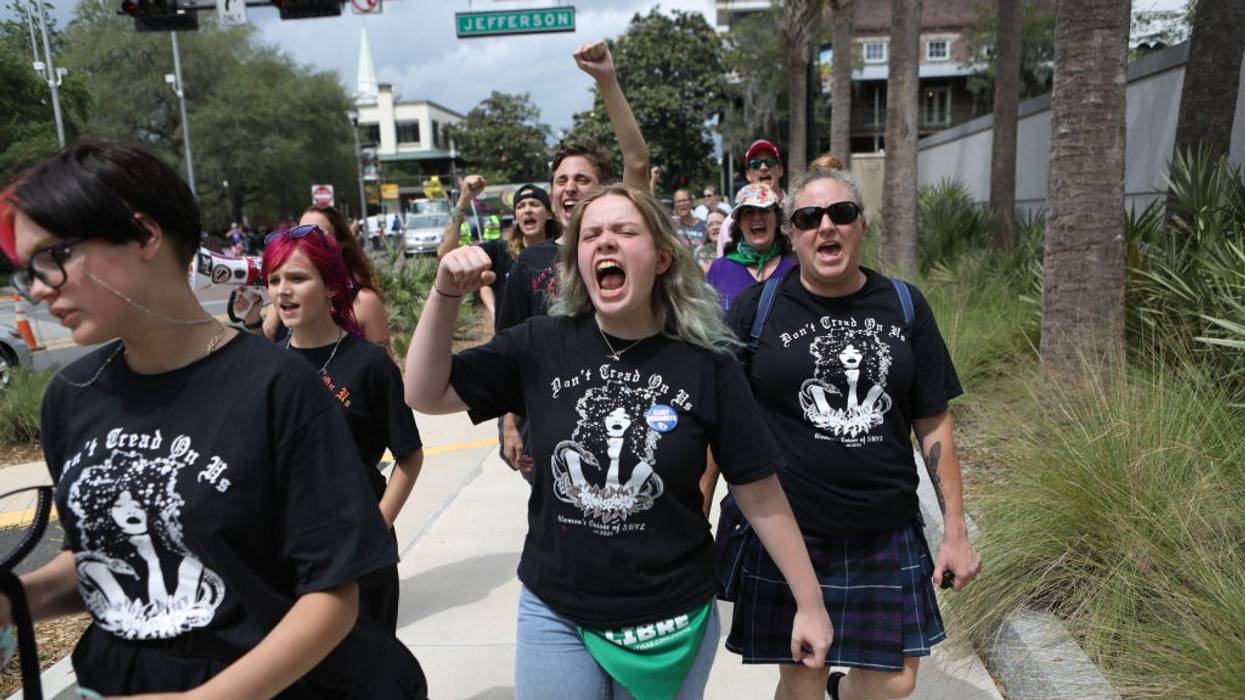
Floridians and reproductive rights advocates responded with alarm on Friday to Tampa Bay Times reporting that Florida law enforcement officers have been sent to the homes of multiple voters who signed a petition to get an abortion rights measure on the November ballot.
While Isaac Menasche told the newspaper that he isn't sure which agency the plainclothes officer who came to his home is with, fellow Lee County resident Becky Castellanos said Florida Department of Law Enforcement Officer Gary Negrinelli showed his badge and gave his card.
Both visits were about potential fraud related to the petition for Amendment 4, which would outlaw pre-viability abortion bans in Florida. Menasche was asked if he signed the petition, which he had. Negrinelli inquired about Castellanos' relative, who also signed the petition.
"This is pure voter intimidation, just like with the 'election police' in 2022. It's Gestapo tactics."
The officer inquiries appear "to be part of a broad—and unusual—effort by Gov. Ron DeSantis' administration to inspect thousands of already verified and validated petitions for Amendment 4 in the final two months before Election Day," the Times reported.
The Republican governor signed the state's six-week ban that would end if the ballot measure passes. He has also faced criticism for creating an Office of Election Crimes and Security, whose work has led to the arrest of Floridians who believed they were legally allowed to vote following the passage of a referendum that restored voting rights to many people with past felony convictions.
As the Times detailed Friday:
Since last week, DeSantis' secretary of state has ordered elections supervisors in at least four counties to send to Tallahassee at least 36,000 petition forms already deemed to have been signed by real people. Since the Times first reported on this effort, Alachua and Broward counties have confirmed they also received requests from the state.
One 16-year supervisor said the request was unprecedented. The state did not ask for rejected petitions, which have been the basis for past fraud cases.
While Department of State spokesperson Ryan Ash said the agency has "uncovered evidence of illegal conduct with fraudulent petitions" and "we have a duty to seek justice for Florida citizens who were victimized," a representative for the coalition behind Amendment 4 criticized the state effort.
"This is very clearly a fishing expedition," ACLU of Florida spokesperson Keisha Mulfort, whose group is part of Floridians Protecting Freedom, told the Times. "It is more important than ever for Floridians to reject these authoritarian tactics and vote yes on Amendment 4 in November."
Promoting the report on social media, the ACLU of Florida added, "This is what state-authorized election interference looks like."
Democrats in the state were similarly critical. Florida state Rep. Anna V. Eskamani (D-42) shared a social media post in which Menasche described feeling "shaken" and "troubled" by the encounter with the officer.
"This is unhinged and undemocratic behavior being pushed by DeSantis and his cronies in an effort to continue our state's near total abortion ban," said Eskamani. "It's clear voter intimidation and plain corruption—continue to call it out and fight back. Vote @yes4florida and spread the word."
Responding to Eskamani, Pamela Castellana, chair of the Brevard Democratic Executive Committee, said: "This literally took my breath away. This is pure voter intimidation, just like with the 'election police' in 2022. It's Gestapo tactics. If you live in Florida you know. If you don't—please help me get the word out. Stop authoritarianism."
Journalist Jessica Valenti argued Friday that Republicans "don't care that voters want abortion rights restored—and if they need to dismantle democracy to keep it banned, so be it."
"We've seen lots of Republican attacks on pro-choice ballot measures—but what makes this one especially insidious is that it's trying to gaslight Americans into thinking that voters don't really want abortion rights restored, but that the overwhelming support is fabricated," she added.
In addition to raising concerns about the fraud allegations, Amendment 4 supporters are outraged over the Florida Agency for Health Care Administration on Thursday launching a webpage claiming that the ballot measure "threatens women's safety."
Florida Senate Minority Leader Lauren Book (D-35) pledged that she is looking into "appropriate legal action," while Bacardi Jackson, executive director of the ACLU of Florida, said in a statement that "this kind of propaganda issued by the state, using taxpayer money and operating outside of the political process, sets a dangerous precedent."
"This is what we would expect to see from an authoritarian regime," added Jackson, "not in the so-called 'Free State of Florida.'"
"He will vote to uphold an abortion ban so extreme it applies before many women even know they are pregnant," said Democratic nominee Kamala Harris. "The choice in this election is clear."
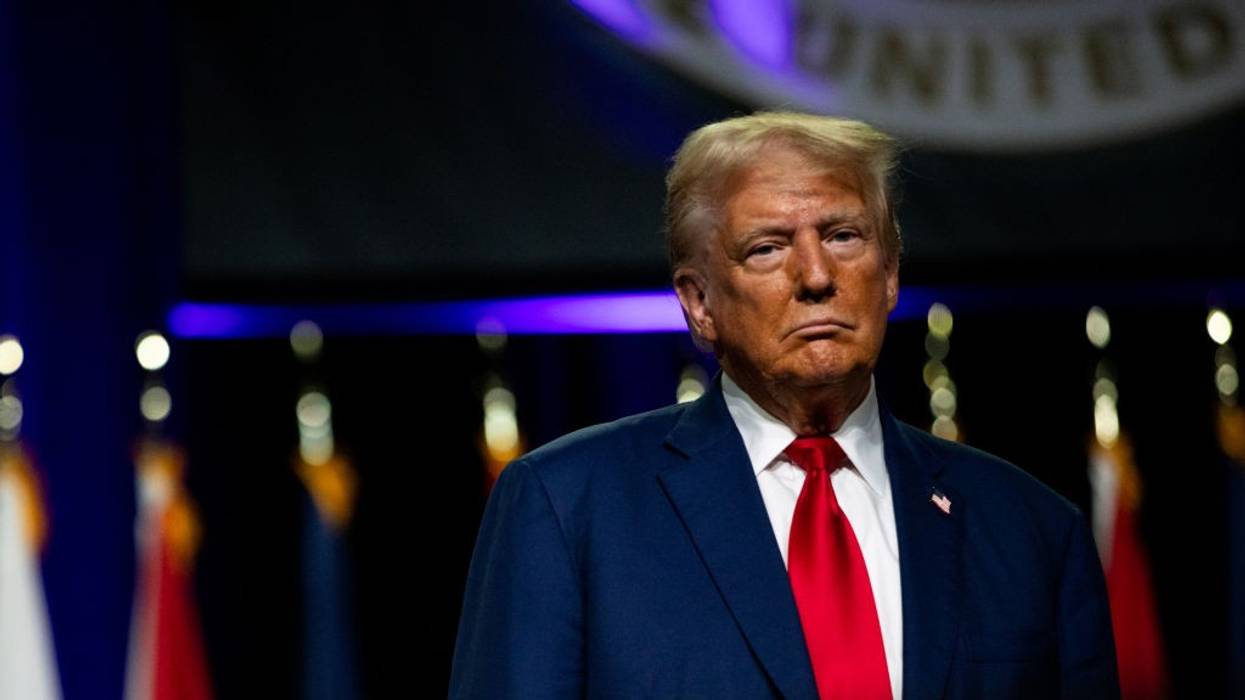
After deflecting reporters' questions earlier this month, former U.S. President Donald Trump, the Republican nominee, finally confirmed on Friday that he plans to vote against a Florida ballot measure that would end the state's strict abortion ban.
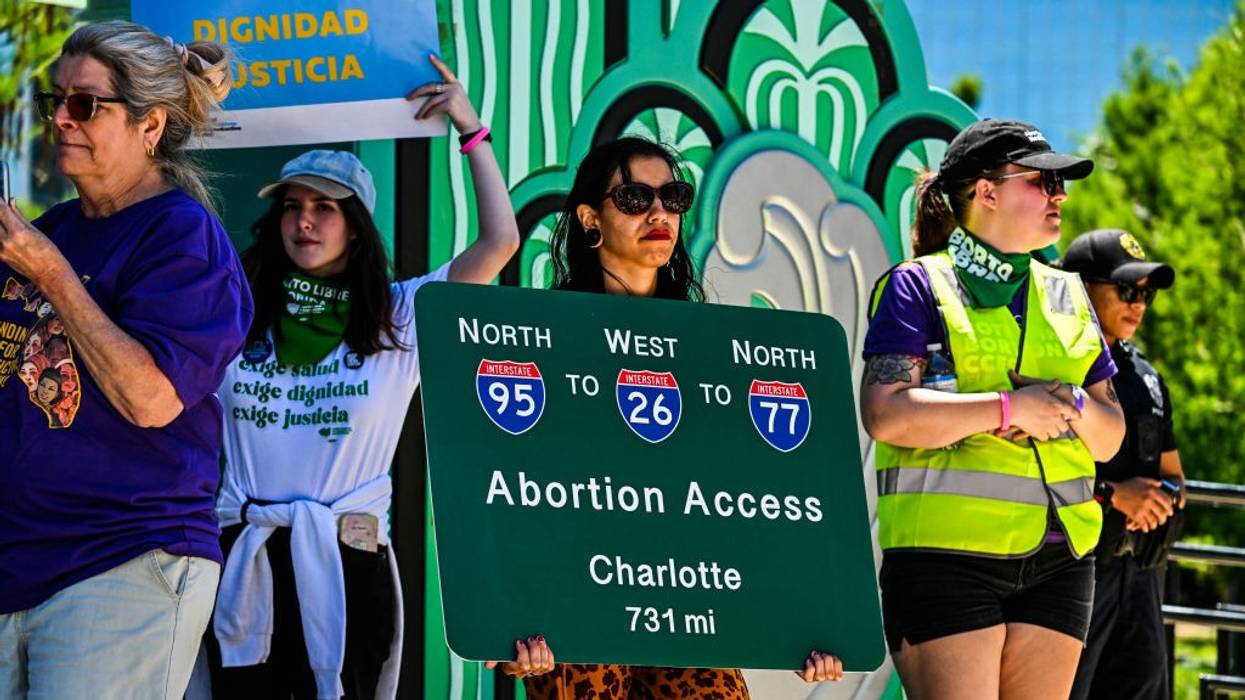
Amendment 4 would would outlaw pre-viability abortion bans in Florida, where Republican Gov. Ron DeSantis' six-week ban is currently in effect, forcing many patients to travel long distances to receive care in other states.
The Trump War Room account on the social media platform X, formerly Twitter, shared a video of Trump's new comments to Fox News and falsely claimed the proposed amendment would legalize abortions through the ninth month of pregnancy, echoing the GOP candidate's lies in the interview.
"You need more time than six weeks. I've disagreed with that right from the early primaries. When I heard about it, I disagreed with it," Trump told Fox News. "At the same time, the Democrats are radical because the nine months is just a ridiculous situation."
"You can do an abortion in the ninth month, and you know, some of the states, like Minnesota and other states, have it where you can actually execute the baby after birth, and all of that stuff is unacceptable," he added. "So I'll be voting no for that reason."
In response, Democratic strategist and consultant Sawyer Hackett said: "There it is. Trump supports states passing total abortion bans. No question he will sign a national abortion ban if it's put on his desk."
Laws like Florida's are effectively total bans on abortion because the window in which patients can receive care often passes before they even know they are pregnant. GOP efforts to enact such state policies have ramped up since the U.S. Supreme Court's right-wing supermajority—which includes three Trump appointees—reversed Roe v. Wade in 2022.
Trump's confirmation of how he plans to vote on Amendment 4 and dishonesty about abortion laws in Democrat-controlled states came a day after he told an NBC News reporter that "it has to be more time" than six weeks but refused to answer whether he would be voting "yes" or "no" on his state's ballot measure—and then bragged about his role in reversing Roe.
"Really cannot trust anything Trump says, but gotta love it when anti-abortion politicians (including Trump who created the pathway for Roe to be overturned!!) is now all squirmy when it comes to Florida's near-total abortion ban," Florida state Rep. Anna V. Eskamani (D-42) said about his remarks to NBC, urging Floridians to vote yes on Amendment 4.
Amendment 4 has been championed by Floridians Protecting Freedom, a coalition that includes the ACLU of Florida, Florida Rising, Women's Voices of Southwest Florida, Florida Women's Freedom Coalition, SEIU 1199 Florida, and Planned Parenthood organizations in the state.
Trump was previously asked about the ballot measure during an August 8 press conference from Mar-a-Lago, his residence in Palm Beach. At the time, he told reporters he would hold an event to reveal his position at a later date and claimed that abortion "seems to be much less of an issue."
The Democratic nominee, Vice President Kamala Harris, and her running mate, Minnesota Gov. Tim Walz, have worked to make reproductive freedom a key issue in this contest, and their campaign swiftly responded to Trump's Friday remarks.
" Donald Trump just made his position on abortion very clear: He will vote to uphold an abortion ban so extreme it applies before many women even know they are pregnant," Harris said. "Trump proudly brags about the role that he played in overturning Roe v. Wade and said there should be punishment for women who have an abortion. So, of course he thinks it's a 'beautiful thing' that women in Florida and across the country are being turned away from emergency rooms, face life-threatening situations, and are forced to travel hundreds of miles for the care they need."
"And, understand: He is not done," she warned. "As a part of Donald Trump's Project 2025 agenda, he and his allies would limit access to birth control, threaten access to fertility treatments, and ban abortion nationwide, with or without Congress."
Harris stressed that "I trust women to make their own healthcare decisions and believe the government should never come between a woman and her doctor. When I'm president and Congress passes a bill to restore reproductive freedom, I will proudly sign it into law. The choice in this election is clear."
"There is one person responsible for this nightmare: Donald Trump," said President Joe Biden. "This November, voters are going to teach him a valuable lesson: Don't mess with the women of America."
As former Republican U.S. President Donald Trump campaigns on his contribution to reversing
Roe v. Wade and endorses letting states track pregnancies and prosecute those who violate local restrictions on reproductive care, Florida's six-week abortion ban took effect on Wednesday.
Abortion rights have dominated this year's contest between Trump, a Florida resident, and Democratic President Joe Biden—who blamed the presumptive GOP candidate for the new ban, which prohibits care before many patients know they are pregnant.
"There is one person responsible for this nightmare: Donald Trump," Biden said in a campaign statement. "Trump brags about overturning Roe v. Wade, making extreme bans like Florida's possible, saying his plan is working 'brilliantly.' He thinks it's brilliant that more than 4 million women in Florida, and more than 1 in 3 women in America, can't get access to the care they need."
"Trump brags about overturning Roe v. Wade, making extreme bans like Florida's possible."
"Now, he wants to go even further, making it clear he would sign a national abortion ban if elected. Just yesterday, he once again endorsed punishing women for getting the care they need," Biden continued. "Trump is worried the voters will hold him accountable for the cruelty and chaos he created. He's right. Trump ripped away the rights and freedom of women in America. This November, voters are going to teach him a valuable lesson: Don't mess with the women of America."
Florida's six-week ban—signed last spring by a failed Trump primary challenger, Republican Gov. Ron DeSantis—was allowed to go into effect because of a state Supreme Court ruling last month. The same day, the high court approved a ballot initiative—known as Amendment 4—that would outlaw pre-viability abortion bans in Florida. The measure is expected to appear on the November ballot.
Dr. Chelsea Daniels of the Yes on 4 campaign, which is working the pass the ballot measure, said Wednesday that "the women of Florida are in trouble. Today, we awoke to a new world. A world where the state, and not individuals, is in control of our bodies, our lives, and our futures. A world where treatable complications in pregnancies will become life-threatening, not because we don't know how to treat them, but because we won't be allowed."
Daniels continued:
It should go without saying that doctors should not have to risk criminal prosecution to treat the patient in front of them.
But these bans have even more dangerous consequences for patients: a 10-year-old girl from Ohio who was raped had to travel to Indiana to get the abortion she needed, and in Texas, one woman who miscarried lost liters of blood and had to go on a breathing machine before doctors were legally able to intervene and help her. And in Louisiana, we've seen the OB-GYN shortage that anti-abortion bans have caused for the entire state.
"Don't believe the politicians who say there are meaningful exceptions in this law for rape and incest," the doctor added. "The so-called exceptions are a cruel deception designed to fail women and girls when they are most in need."
NBC News reported Tuesday that before Florida's new law took effect, abortion clinics in the state had full waiting rooms and "phones were ringing off the hook" as providers were "trying to see as many patients as possible" before Wednesday.
"Tomorrow is going to look very different," Kelly Flynn, CEO of A Woman's Choice of Jacksonville, told the outlet Tuesday. "A lot of patients will come in for the consult and be told that we can't see them."
Planned Parenthood of Southwest and Central Florida interim CEO Barbara Zdravecky similarly told the Orlando Sentinel that she expects the group's clinics will have to decline care.
"Planned Parenthood's motto has always been 'care no matter what.' And we don't turn patients away," she said. "So this is a very devastating and tragic situation for our staff, who have to say, 'We can't take care of you, we have to send you someplace else.'"
Zdravecky confirmed clinics will still provide follow-up exams to those who acquire abortion pills online, saying that "we want to be able to assist anyone with any type of care that we legally can do in order to make sure they have the care that they need to stay healthy."
The newspaper noted that "those who can find the funds will travel to other states. For most Floridians, and most of the southeast U.S., the closest state to get an abortion past six weeks will be North Carolina. The closest place to terminate a pregnancy past 12 weeks will be Virginia or Illinois."
"It is horrifying that extremist politicians have forced pregnant people and their healthcare providers into this nightmare. But it does not have to be this way."
Kara Gross, legislative director and senior policy counsel at the ACLU of Florida, said in a statement that "no one should be forced to travel thousands of miles across state lines in search of essential healthcare."
"It is horrifying that extremist politicians have forced pregnant people and their healthcare providers into this nightmare. But it does not have to be this way," Gross added. "Amendment 4, which limits government interference with abortion, will be on the ballot this November and we must all vote yes on 4 to ensure that the freedom to determine whether and when to grow our family remains with the people—not politicians."
Like the ACLU of Florida, Planned Parenthood is among the groups backing the ballot measure. So is Flynn, who founded the independent clinic in Jacksonville over two decades ago.
"I am optimistic that we will have the votes," she said. "In the meantime, we are really talking to patients and explaining to them how important this is to get out and vote."
"There is no medical reason for abortion bans and there is no medical reason for the government to be forcing their way into our exam rooms," said one doctor.
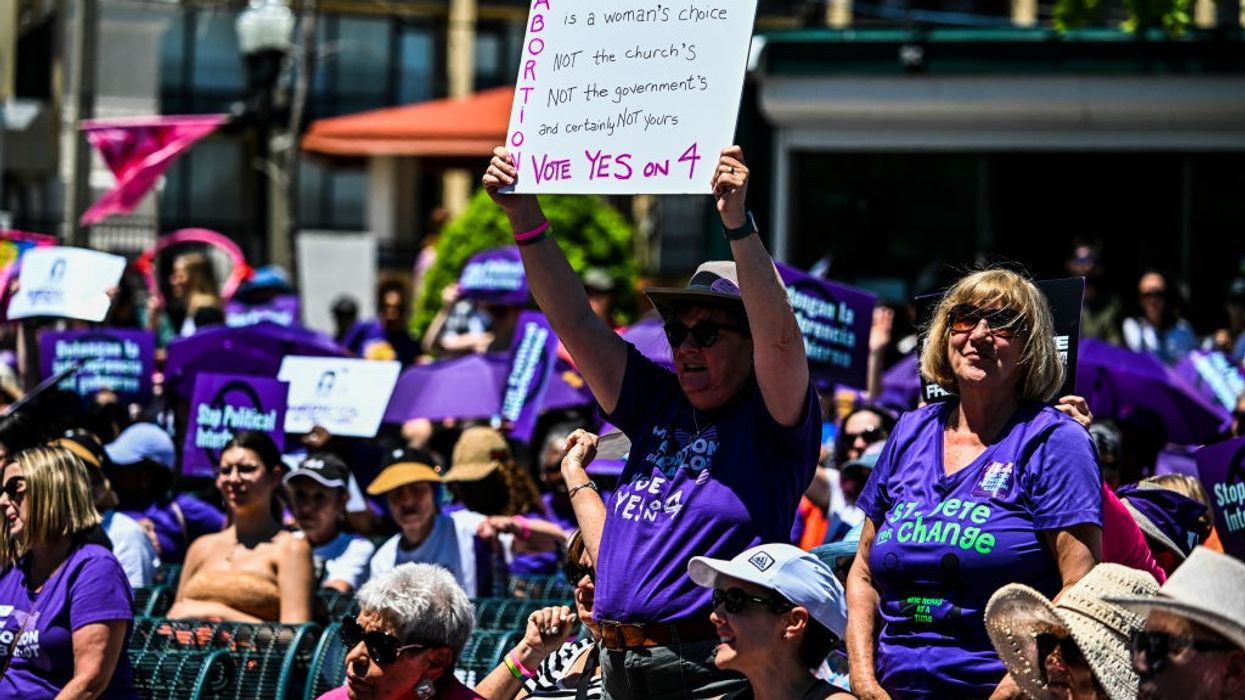
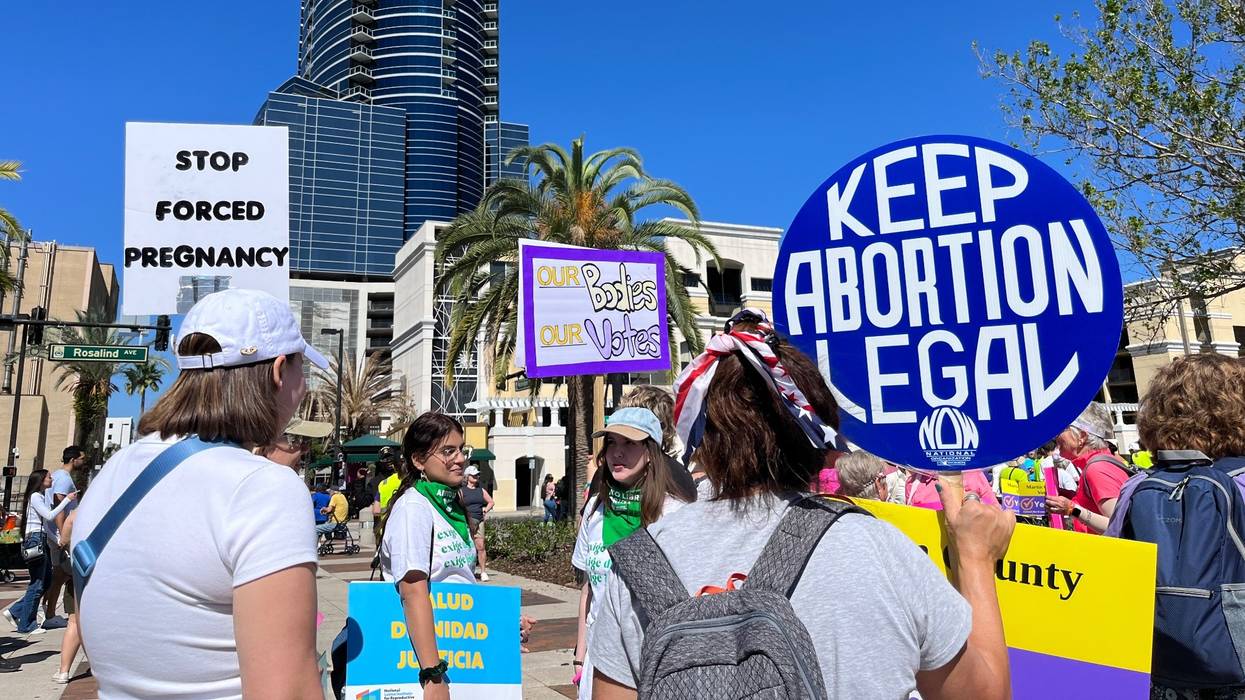
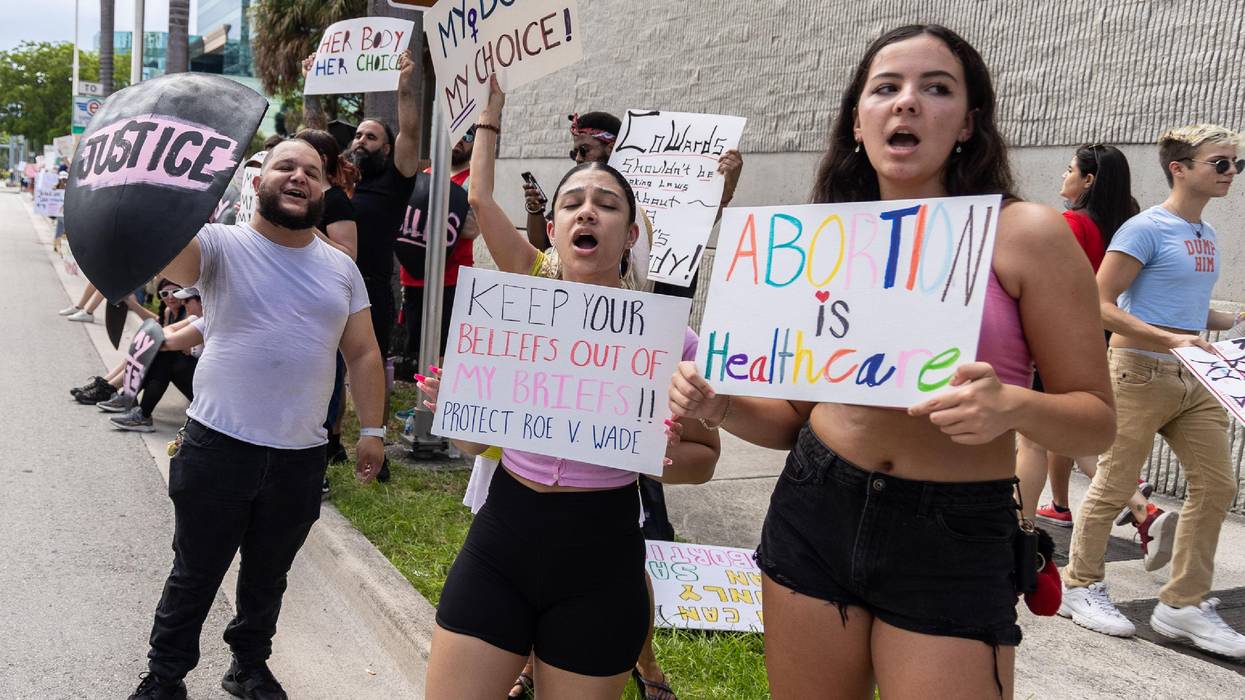
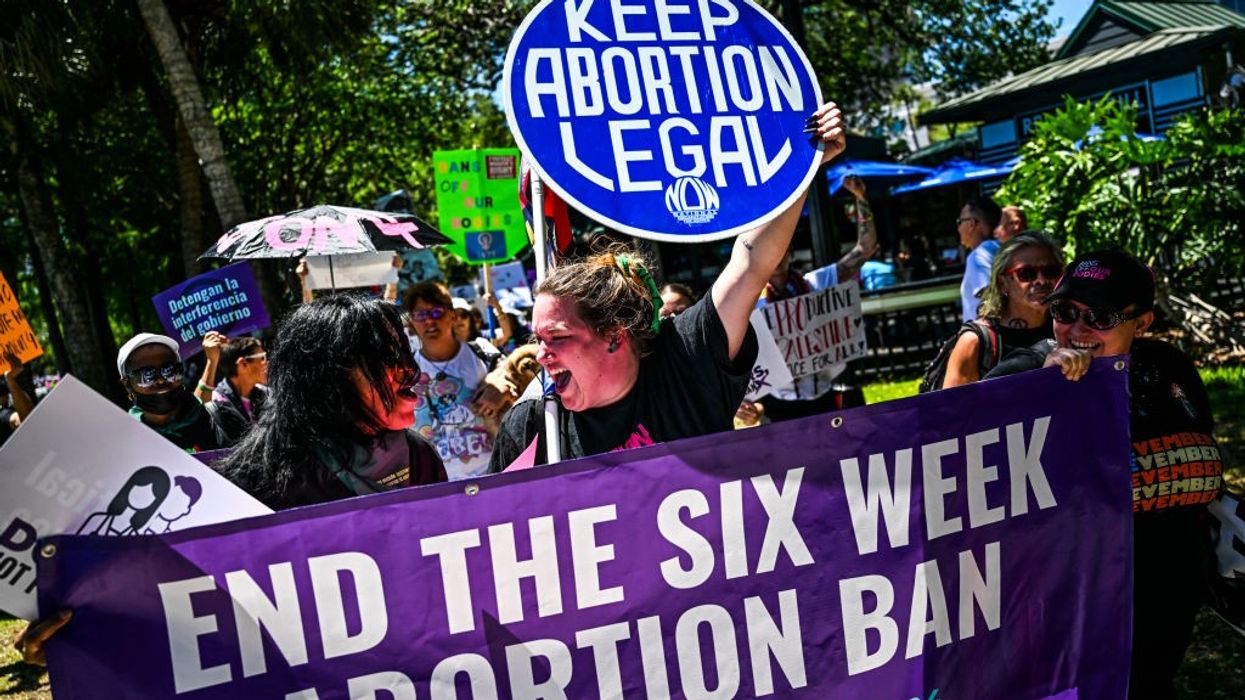
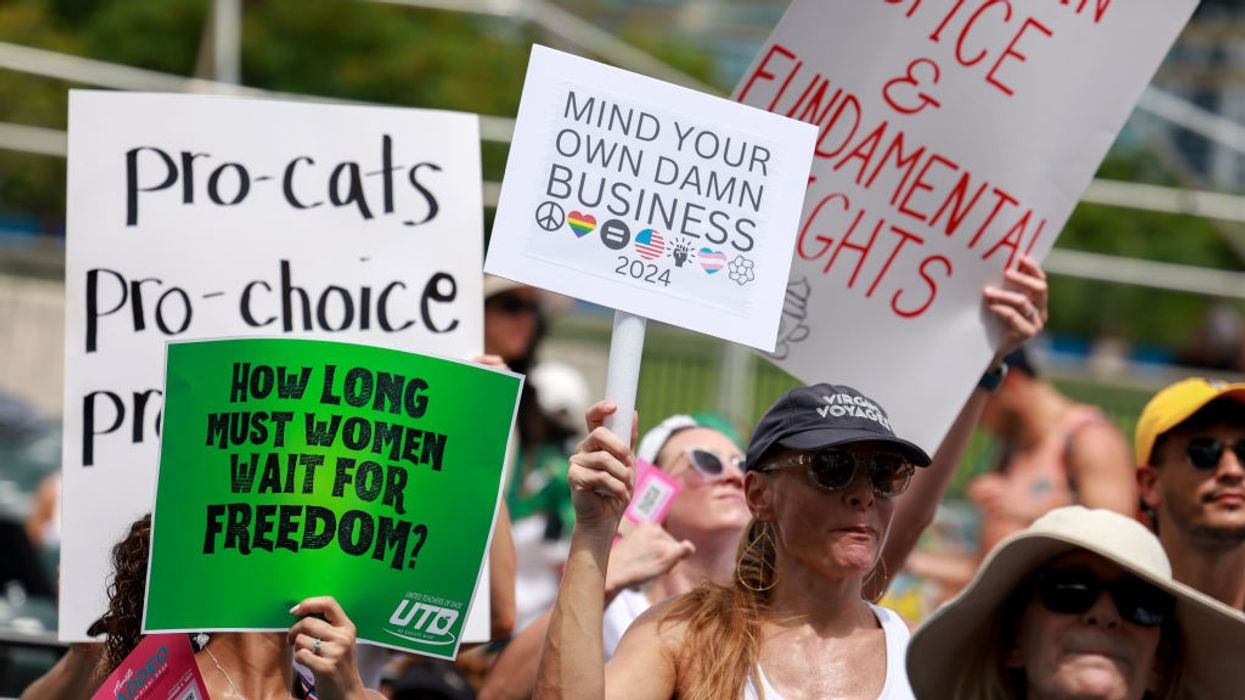
Supporters of a Florida ballot measure that would outlaw pre-viability abortion bans kicked off the "Yes on 4" campaign in Orlando on Saturday, after the state Supreme Court ruled earlier this month that the proposed amendment can be considered in November.
Abortion care patients, their partners, healthcare providers, and pro-choice politicians were among those who gathered in Lake Eola Park to express support for the proposed amendment to the Florida Constitution.
The Orlando Sentinel reported that Danielle Tallafuss spoke through tears about her decision to get an abortion in 2020 after a scan at around 20 weeks revealed a heart defect that would require multiple surgeries before age 2, if the child, whom she named Nathaniel, even lived that long.
"It was a decision we made out of love, compassion, and doing what was best not just for the son we already had at home, but for Nathaniel, who would have had to suffer through treatments that most adults wouldn't be able to handle before he could even take his first steps," Tallafuss said.
According to Reuters:
Derick Cook, a Florida resident, described how his wife finally got pregnant after multiple miscarriages. But a complication at 16 weeks meant her fetus would not survive and threatened her life. Florida had enacted a 15-week abortion limit a few weeks before.
"The doctor told us that because of the ban, there was nothing he could do to help," Cook said, even though the law allows abortions when the mother's life is at risk.
Cook's wife, Anya, delivered the fetus in a hair salon the next day and nearly died at the hospital from blood loss, he said.
On the same day that Florida's right-wing Supreme Court greenlighted the ballot measure earlier this month it also upheld the state's 15-week abortion ban—and effectively approved a more recent law banning most abortions after six weeks, before many people even know they are pregnant. The stricter policy is set to take effect May 1.
The court's early-April decision to let Floridians weigh in on abortion rights "underscores the crucial role of Florida's ballot initiative process, which provides voters an important opportunity to take the reins when politicians aren't representing our interests," Yes on 4 campaign director Lauren Brenzel said earlier this month.
"Polls have consistently shown well over 60% of Florida voters support limiting government intrusion in the personal healthcare decision of accessing abortion care," she pointed out. Notably, the measure needs that percent of support to pass.
"The fact is, we can never know what someone else is going through—we're not in their shoes. That's why we must vote 'yes' on this amendment: to keep government out of our exam rooms and make sure Florida families and the doctors who treat them can make the decisions that are right for them," she added.
As Dr. Marian Sampson, an OB-GYN with Planned Parenthood of Southwest and Central Florida, told the Sentinel, "Trust me when I say there is no medical reason for abortion bans and there is no medical reason for the government to be forcing their way into our exam rooms and standing between me and my patients."
Florida Gov. Ron DeSantis, a failed Republican presidential candidate, signed both the 15- and six-week bans. He was unable to run a primary campaign that could compete with former President Donald Trump, the presumptive GOP candidate to face President Joe Biden in November.
Trump kicked off this week by highlighting his role in reversing Roe v. Wade—appointing three right-wing U.S. Supreme Court justices willing to erase nearly half a century of abortion rights—and endorsing state-level ban efforts over a federal prohibition. He then said Friday that a nationwide policy is long longer needed "because we broke Roe v. Wade."
Biden, meanwhile, has faced some criticism for comments on abortion, but his reelection campaign has also emphasized his support for reproductive freedom, sometimes using statements from First Lady Jill Biden and Vice President Kamala Harris.
" Donald Trump is the architect of this healthcare crisis. And that is not a fact by the way that he hides. In fact, he brags about it," Harris said Friday. "Here's what a second Trump term looks like. More bans, more suffering, and less freedom. Just like he did in Arizona, he basically wants to take America back to the 1800s. But we are not going to let that happen."
"Floridians will have the opportunity to reclaim their bodily autonomy and freedom from government interference!" said Florida Planned Parenthood Action.
The right-wing Florida Supreme Court on Monday effectively greenlighted a six-week abortion ban—but the justices also determined that state voters can weigh in on a ballot measure that would enshrine the right to abortion care in November.
Early last year, the court agreed to hear a challenge to the state's 15-week abortion ban—filed by the ACLU, the Center for Reproductive Rights, Planned Parenthood Federation of America, and others on behalf of healthcare providers. Just a few months later, the Florida Legislature passed and Republican Gov. Ron DeSantis signed the six-week ban. Because of the court's ruling, the stricter ban is now set to take effect in a month.
In response to the court's decisions on Monday,
Slate's Mark Joseph Stern noted that "the justices came mighty close to abolishing constitutional protections for abortion AND barring the citizenry from enacting new ones in one fell swoop."
Reproductive rights advocates pointed to the court's approval of the ban as proof of the need for Floridians to turn out in November for the abortion rights ballot measure, which requires 60% voter support to pass. It states:
No law shall prohibit, penalize, delay, or restrict abortion before viability or when necessary to protect the patient's health, as determined by the patient's healthcare provider. This amendment does not change the Legislature's constitutional authority to require notification to a parent or guardian before a minor has an abortion.
"Today the Florida Supreme Court ruled that Amendment 4 meets the requirements for this year's ballot," the Floridians Protecting Freedom campaign, which
spearheaded the fight for the measure, said on social media. "Floridians WILL get a chance to vote to reject government interference with abortion."
The campaign—organized by the ACLU of Florida, Florida Rising, Women's Voices of Southwest Florida, Florida Women's Freedom Coalition, SEIU 1199 Florida, and Planned Parenthood organizations in the state—also promoted its Rally to End the Six-Week Abortion Ban in Orlando planned for April 13.
Florida Planned Parenthood Action also celebrated the ballot decision, saying, "Floridians will have the opportunity to reclaim their bodily autonomy and freedom from government interference!"
Kelly Hall, executive director of the Fairness Project, called the state court's Amendment 4 decision "fantastic news for the movement to defend and expand reproductive rights using ballot measures," which has become an increasingly popular strategy since the U.S. Supreme Court reversed Roe v. Wade in 2022.
"The dedication Floridians Protecting Freedom has shown to fight for abortion rights is remarkable and inspiring, and the Fairness Project congratulates them on this victory," she continued, noting the campaign has gathered over 1 million signatures. "These dual rulings demonstrate why the initiative process is so important."
"Without citizen-initiated ballot measures, the cruel ban affirmed by the Florida Supreme Court today would go into effect with no recourse," Hall added. "Thankfully, voters will have the opportunity to decide in November whether healthcare decisions should be made by doctors and patients, or by politicians and judges."
The Center for Reproductive Rights pointed out that "EVERY SINGLE TIME that states have put abortion directly on the ballot, voters have chosen to protect it, and now, Florida voters will have the chance to do the same."
"A HUGE CONGRATULATIONS to all the reproductive rights advocates in Florida and across the country on this major victory," the center added. "This ballot measure could fundamentally reshape abortion access across the U.S. South and now, the power to make that happen is in the people's hands."
Before DeSantis signed the 15-week ban in 2022—just a couple of months before the Roe reversal, which amplified the efforts of right-wing state policymakers to cut off access to abortion—Florida was long "an oasis of reproductive care in the South."
Reproductive Freedom for All president and CEO Mini Timmaraju stressed Monday that "even as extremists like DeSantis try to impose their backward agenda, the people won't stop fighting for their rights."
Pro-choice Democrats in the state also chimed in. Florida Rep. Anna Eskamani (D-42), said that "the stakes for reproductive rights in Florida are incredibly high. Onward to November for a state where reproductive freedom is a reality for all."
Debbie Mucarsel-Powell, a former Democratic congresswoman now challenging U.S. Sen. Rick Scott (R-Fla.), highlighted her opponent's support for the six-week ban, which she warned would devastate reproductive care in the state.
"We HAVE to vote this November. We have the chance to protect our rights, and we have to vote like it," she said.In addition to the abortion rights amendment, the state Supreme Court ruled Monday that voters can decide on a measure that would let adults legally buy and consume marijuana—which Smart & Safe Florida called a "big win for liberty and cannabis advocates."
Congressman Maxwell Alejandro Frost (D-Fla.) declared: "There you have it Florida! Abortion rights and adult-use marijuana are going to be on the ballot this November. There's so much at stake, we can't stay home."
Supporters of the Florida measure—similar to other initiatives across the country—say they are "confident that voters will approve our amendment."
As of Friday, Florida residents and groups fighting for a state constitutional amendment to limit government interference with abortion care have collected enough signatures to get the measure on the ballot this November.
The proposed amendment to the Florida Constitution states that "no law shall prohibit, penalize, delay, or restrict abortion before viability or when necessary to protect the patient's health, as determined by the patient's healthcare provider."
Floridians Protecting Freedom is the statewide campaign of residents, healthcare providers, and groups—including the ACLU of Florida, Florida Women's Freedom Coalition, and Planned Parenthood organizations in the state—working to get the measure on the ballot and approved by at least 60% of voters.
According to the Florida Division of Elections, the campaign has over 911,000 valid signatures, well beyond the 891,523 required.
"Once voters get a chance to weigh in, Florida will return to a time when patients and healthcare providers can decide together the best course of action."
"The fact that we only launched our campaign eight months ago and we've already reached our petition goal speaks to the unprecedented support and momentum there is to get politicians out of our private lives and healthcare decisions," said Floridians Protecting Freedom campaign director Lauren Brenzel in a statement.
"Most initiative campaigns never make it this far," Brenzel added. "The ones that do usually spend far more or take much longer to qualify, which is why we're so confident that voters will approve our amendment once they're given a chance to vote."
NBC News reported Friday that "at least 150,000 of the collected and validated signatures came from registered Republican voters, underscoring the broad support for abortion rights across political lines."
Collecting enough signatures isn't the only barrier to actually getting the proposed amendment on the ballot. The Florida Supreme Court on Wednesday scheduled oral arguments about whether to approve the measure's wording for February 7. Republican state Attorney General Ashley Moody and anti-choice groups have challenged the language.
All seven of the Florida Supreme Court's justices were appointed by Republican governors—five of them by Gov. Ron DeSantis. He is a longshot presidential candidate and among state GOP leaders who have ramped up efforts to end abortion access since the U.S. Supreme Court's Dobbs v. Jackson Women's Health Organization ruling in 2022.
Abortion is currently banned in Florida after 15 weeks, with limited exceptions. The Florida Supreme Court heard arguments for a challenge to that policy in September but has not yet issued a decision. If the justices uphold the law, a six-week ban signed by DeSantis last year is set to take effect.
With a right-wing U.S. Supreme Court and a divided Congress, Floridians Protecting Freedom is far from alone in turning to a ballot measure to restore and protect reproductive rights at the state level. There are similar initiatives in Arizona, Colorado, Maryland, Missouri, Montana, Nebraska, Nevada, New York, and South Dakota, along with a complicated battle in Arkansas.
Since Dobbs, voters have rejected statewide ballot measures aimed at restricting abortion care and supported initiatives to protect reproductive rights—including in November, when Ohio voters approved establishing a state constitutional right to "make and carry out one's own reproductive decisions," including abortion, contraception, fertility treatment, and miscarriage care.
The win in Ohio has made Florida Women's Freedom executive director Anna Hochkammer hopeful about her state. She told Politico this week that "what Ohio did was, it took a lot of people who were doubtful and... didn't really want to believe what the numbers were telling them and gave them permission to believe that this was possible."
"This is an actual grassroots movement in Florida," she stressed. "For a quarter of the money, and a little bit of common sense about what people on the ground want, you can get things done in Florida."
The signature tally has made Dr. Cecilia Grande, a Miami OB-GYN and member of the Committee to Protect Health Care Reproductive Freedom Taskforce, similarly optimistic. She said in a statement Friday that "this is such an important milestone in the effort to ensure doctors like myself can properly care for our pregnant patients facing a wide variety of issues and potential complications."
"Too often, access to abortion and other critical care is politicized at the expense of patients who just need timely and quality healthcare, not politicians trying to score political points," the doctor added. "Once voters get a chance to weigh in, Florida will return to a time when patients and healthcare providers can decide together the best course of action in each unique circumstance."
The voter turnout in Florida and beyond could be significant, given that 2024 is a presidential election year. While support for reproductive rights may help Democratic candidates, Politico noted this week that based on an analysis of five abortion-related measures that have appeared on the ballot since Dobbs, new "initiatives may not give Democrats the lift they are aiming for."
"Voters decisively upheld abortion rights in every single case," Politico explained of previous measures. "But those margins were largely driven by Republican voters who also voted for GOP candidates. And Democratic turnout didn't consistently increase in states with abortion referendums compared to those without."
Democratic President Joe Biden, who supports abortion rights, is seeking reelection and former U.S. President Donald Trump is the leading GOP candidate, despite his criminal cases and arguments that he is constitutionally disqualified from holding office again. The Washington Post reported Friday that top anti-choice advocates are now "plotting actions that they believe a Trump administration would take as early as next year to crack down on abortion."