

SUBSCRIBE TO OUR FREE NEWSLETTER
Daily news & progressive opinion—funded by the people, not the corporations—delivered straight to your inbox.
5
#000000
#FFFFFF
To donate by check, phone, or other method, see our More Ways to Give page.
Daily news & progressive opinion—funded by the people, not the corporations—delivered straight to your inbox.
Women don't want men making laws getting between us, our families, and our doctors.
It is clear that the Dobbs decision by the Supreme Court caught the Republicans completely off guard, even though they have been working to take away the rights of women since before they killed the Equal Rights Amendment.
The right must have thought that stealing the basic rights to bodily autonomy and to determining the size of one's own family would be upsetting at first, but then we would all get over it. The pundits always say that Americans have a short span of attention, especially when it comes to politics, so it appears that the forced birthers didn't have a clue about the buzz saw they were about to confront.
The discussion of abortion has shifted greatly from the pre- Dobbs days. It is standard now, unless you are a fan of Fox and its ilk, to hear abortion referred to as "abortion healthcare." In fact, the media now tells us that abortion is a part of the many procedures used by doctors and midwives to keep women healthy. Some of the heartbreaking cases of doctors being unable or unwilling to do their jobs have resulted in permanent damage to the women who were denied care—whether it is being unable to have more children because of the damage done to the reproductive organs, or people who have to go through unbearable suffering when they could be resting, recovering, and taking care of their lives.
It is hard to imagine that these mostly white, buttoned up men think that the women of 2023—who either lived the explosion of feminism or have raised daughters with the feminist awareness of the past 50 years—will be persuaded, bribed, or forced into accepting their intervention into the most basic aspects of our lives.
A woman described her torment waiting for her sepsis to become life threatening so she could be treated for a fetus that had no chance of survival. Another woman who was so thrilled to get pregnant, only to learn that her fetus was not viable and she had to stay pregnant for months until she birthed a child who would suffer for a few days before passing away. The real fanatics want to deny women with cancer the chance to live, since often the drugs will damage a fetus.
Unlike 50 years ago, when the abortionist was forced to work in a back alley or underground and most people were secret about having the procedure, dozens of brave women have opened up and discussed their worst moments in order to prevent others from having to face the same horrors. These stories are magnified many times over on social media.
In Ohio, the voters recalled the spectacle of the poor 10 year old, impregnated by rape, who had to travel out of state in the miserable no-exception land that Ohio has been. In Kentucky, Andrew Beshear was reelected to his seat as governor with the help of a brave young woman who addressed the Republican in the race directly, telling him about her experience as a victim of incest at age 12. The deplorable Glenn Youngkin thought he was real smart when he told Virginia voters that he had the solution for all this abortion talk: the 15-week ban with exceptions for rape and incest. We all agree on this, right? Not so fast.
The voting earlier this week showed us something very interesting: Women don't want men making laws getting between us, our families, and our doctors. The vast majority of this country does not want Republican men deciding that six weeks is the cutoff for treatment, or 12 weeks, or, Mr. Youngkin, 15 weeks. The numbers don't lie: Women and those who love them say NO. Taking away a human right that most of us felt was secure will not be compromised away.
After a long string of not-even-close defeats, the Republicans, who are loathe to compromise on anything, suddenly are talking about the need to come to "common ground." It is hard to imagine that these mostly white, buttoned up men think that the women of 2023—who either lived the explosion of feminism or have raised daughters with the feminist awareness of the past 50 years—will be persuaded, bribed, or forced into accepting their intervention into the most basic aspects of our lives. Fifty years ago, women were not all in the workforce. In 2023, those who are trying to force women to give birth also fight tooth and nail against expanded Medicare, family medical leave, and any other programs helping women and families.
The level of delusion is remarkable: In Ohio, the tremendous margin of passage for the constitutional amendment enshrining abortion, birth control, and other good things into the state constitution did not seem to percolate down to the state legislature. The day after the vote, these guys are already trying to find ways to circumvent the will of the people. As Rick Santorum brilliantly deduced from the referendum "pure democracies aren't how to run a country."
Millions of women came out for the Women's March after the disaster that was the 2016 election. We did not disappear. We were waiting for the right opportunity, and after Trump-appointed justices gave us the Dobbs decision, now is the time. Women are not going back to being chattels.
And Republicans think their problem is messaging!

"As more states have adopted legalization, public support for this policy has risen dramatically," said one campaigner. "Voters prefer legalization and regulation over the failed policy of marijuana prohibition."
A record 7 in 10 voting-age Americans think marijuana should be legal, according to Gallup polling published Wednesday, a day after voters in Ohio made it the 24th state to legalize adult recreational use of the plant.
After holding steady at 68% for three straight years, Gallup found that support for legalization rose to 70%, with 29% of respondents saying cannabis should not be legal and 1% undecided. That's a 12% increase in support from 2013 levels and a 36% rise from 2003. In 1969, when Gallup first asked Americans if marijuana should be legal, only 12% said "yes."
"There's no 'buyer's remorse' among the public when it comes to legalizing cannabis," Paul Armentano, deputy director at the National Organization for the Reform of Marijuana Laws (NORML), said in a statement. "As more states have adopted legalization, public support for this policy has risen dramatically. That's because these policies are largely working as intended and because voters prefer legalization and regulation over the failed policy of marijuana prohibition."
According to Gallup:
For the second straight year, majority support for legalization is found among all major subgroups, including by age, political party, and ideology. Self-identified conservatives were the last major subgroup to express majority support, reaching 51% in 2022. Republicans first gave marijuana majority-level backing in 2017.
As of today, support for legal marijuana use is highest among self-identified liberals (91%) and Democrats (87%) and lowest among conservatives (52%) and Republicans (55%). Support is inversely correlated with age, reaching 79% among 18- to 34-year-olds. However, even among the oldest age group, nearly two-thirds (64%) are in favor.
This widespread support for legal marijuana was evident on Tuesday as nearly 57% of voters in Ohio—a state that voted for former President Donald Trump in the last two elections and has a Republican governor—approved the legalization and regulation of marijuana for people age 21 and older, who are also allowed to grow up to six cannabis plants per person and 12 plants per residence. The measure imposes a 10% tax on cannabis sales.
"Marijuana is no longer a controversial issue," Tom Haren, spokesperson for the Coalition to Regulate Marijuana Like Alcohol, told Marijuana Moment. "Ohioans demonstrated this by passing State Issue 2 in a landslide."
Marijuana Policy Project interim executive director Matthew Schweich told MJBizDaily that the Ohio vote "shows that a cannabis legalization campaign can win anytime and anywhere."
"To achieve victory in a nonpresidential year in a red state shows just how strong public support for legalization has become," he added.
The rise in support for legal marijuana parallels "the rise in Americans' self-reported use of the drug," Gallup said, citing a July survey. "The percentage saying they personally smoke marijuana has risen 10 points to 17% since 2013, and the percentage who have ever tried it has increased 12 points to 50%."
Despite state-level gains—only 10 states have not legalized marijuana for recreational or medical use—cannabis remains strictly prohibited at the federal level, where the U.S. Drug Enforcement Administration (DEA) lists the plant as a Schedule I controlled substance.
Schedule I drugs, the DEA explains, have "no currently accepted medical use and a high potential for abuse," and in addition to cannabis include heroin, LSD, MDMA, and peyote. Far more dangerous substances than marijuana—including cocaine, methamphetamine, and fentanyl—are classified as Schedule II.
After granting a mass pardon last year to U.S. citizens and permanent residents convicted of simple federal marijuana possession, President Joe Biden ordered Attorney General Merrick Garland and Health and Human Services Secretary Xavier Becerra to initiate a review which resulted in an August recommendation by HHS to reclassify cannabis as Schedule III. Such a move would place the plant in the same category as codeine, ketamine, testosterone, and anabolic steroids.
"Just as it is intellectually dishonest to categorize cannabis in the same placement as heroin, it is equally disingenuous to treat cannabis in the same manner as anabolic steroids," Armentano said at the time. "The majority of Americans believe that cannabis ought to be legal and that its hazards to health are less significant than those associated with federally descheduled substances like alcohol and tobacco."
"Like those latter substances, we have long argued the cannabis plant should be removed from the Controlled Substances Act altogether," he added, "thereby proving state governments—rather than the federal government—the ability to regulate marijuana in the manner they see fit without violating federal law."
In the Democrat-controlled U.S. Senate, the bipartisan Secure and Fair Enforcement Regulation (SAFER) Banking Act—which would legally protect banks and credit unions that serve cannabis businesses—was approved by the Banking Committee in September.
Last week, a bipartisan group of U.S. House lawmakers reintroduced H.B. 6028, the States Reform Act, legislation led by Rep. Nancy Mace (R-S.C.) that would remove cannabis from the Controlled Substances Act, facilitate the expungement of certain marijuana-related offenses, and provide regulatory oversight for state-legal marijuana markets.
However, Republicans control the lower chamber, and new House Speaker Mike Johnson (R-La.) is a Christian fundamentalist who opposes marijuana on religious grounds. In recent years, Johnson has voted against legislation that would end federal prohibition, allow banks to work with state-legal cannabis businesses, and fund medical marijuana research.
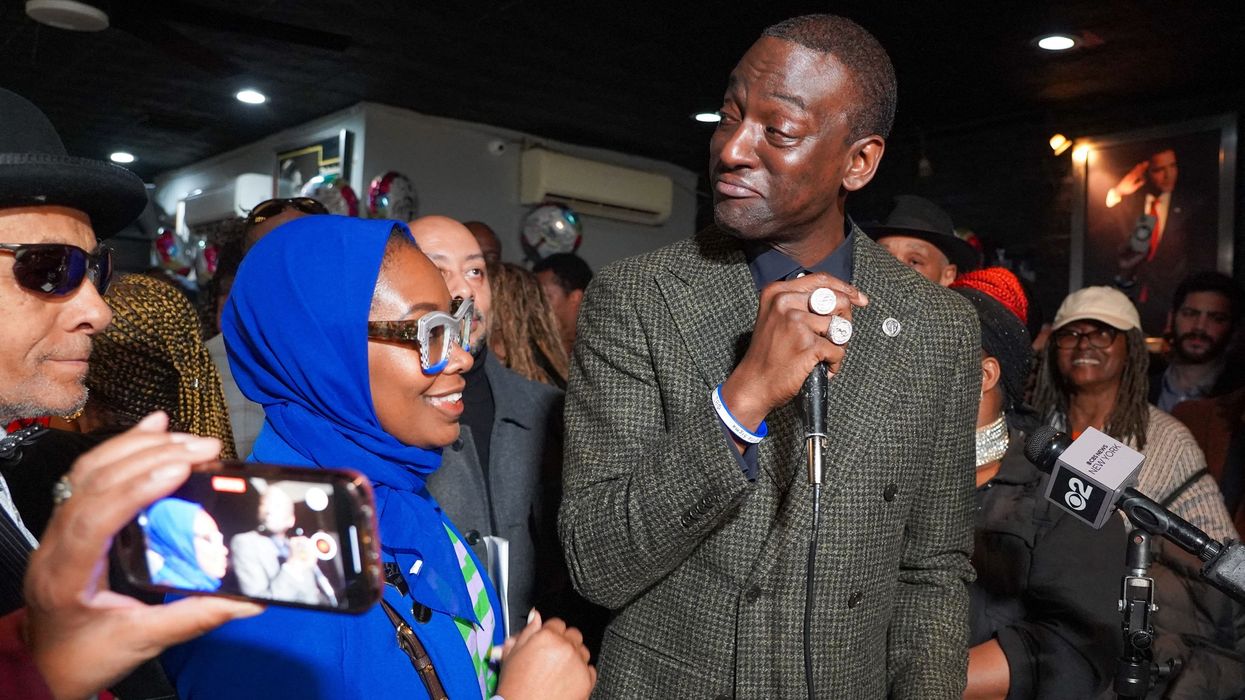
"Together, we will rewrite the next chapter of our story ensuring that no one is left behind," said Yusef Salaam.
More than three decades after Yusef Salaam and four other Black and Latino men were wrongfully convicted of brutally assaulting a woman in New York City's Central Park, Salaam will be joining the council of the largest city in the United States following his victory in Tuesday's election.
Salaam ran unopposed after winning his Democratic primary election in District 9 in June with more than 50% of the vote, his closest competitor trailing him by 25 points.
His progressive policy platform centered housing justice including eviction prevention; economic justice; "equitable public safety measures," including investments in community programs and alternatives to incarceration; and environmental justice.
Two decades after he and the rest of the "Central Park 5" were exonerated by DNA evidence, Salaam said before the election that his opportunity to join the New York City Council, representing parts of Harlem, "means that we can really become our ancestors' wildest dreams."
Janai Nelson, president and director-counsel of the NAACP Legal Defense Fund, called Salaam's ascension to the city council "the sweetest victory" for those who grew up in New York City when the public was wrongly led to believe that the then-15-year-old was guilty of rape and saw him sent to prison for seven years.
"It says so much about the indestructible human spirit and this righteous Black man," said Nelson.
Since his exoneration, Salaam has been a poet, public speaker, and activist, calling for "criminal justice reform, prison reform and the abolition of juvenile solitary confinement and capital punishment." He serves on the board of the Innocence Project and is a founder of Justice 4 the Wrongfully Incarcerated.
"Working-class voters, voters of color, and those who are disenchanted with the political process are central to our campaign," he wrote on his campaign website. "As a victim of a broken criminal justice system, I understand the challenges faced by those who are marginalized and neglected by the powers that be."
Former Republican President Donald Trump—whose daughter testified Wednesday in his civil fraud trial in Manhattan, one of several criminal and civil cases against him that are now proceeding in court—called for capital punishment for Salaam and the rest of the Central Park 5 in the 1990s, and refused to apologize for doing so nearly twenty years after their exoneration.
"Together, we will rewrite the next chapter of our story ensuring that no one is left behind," said Salaam at his victory party Tuesday evening. "We will rebuild our community with the principles of fairness, healing, and progress of the forefront of our efforts."
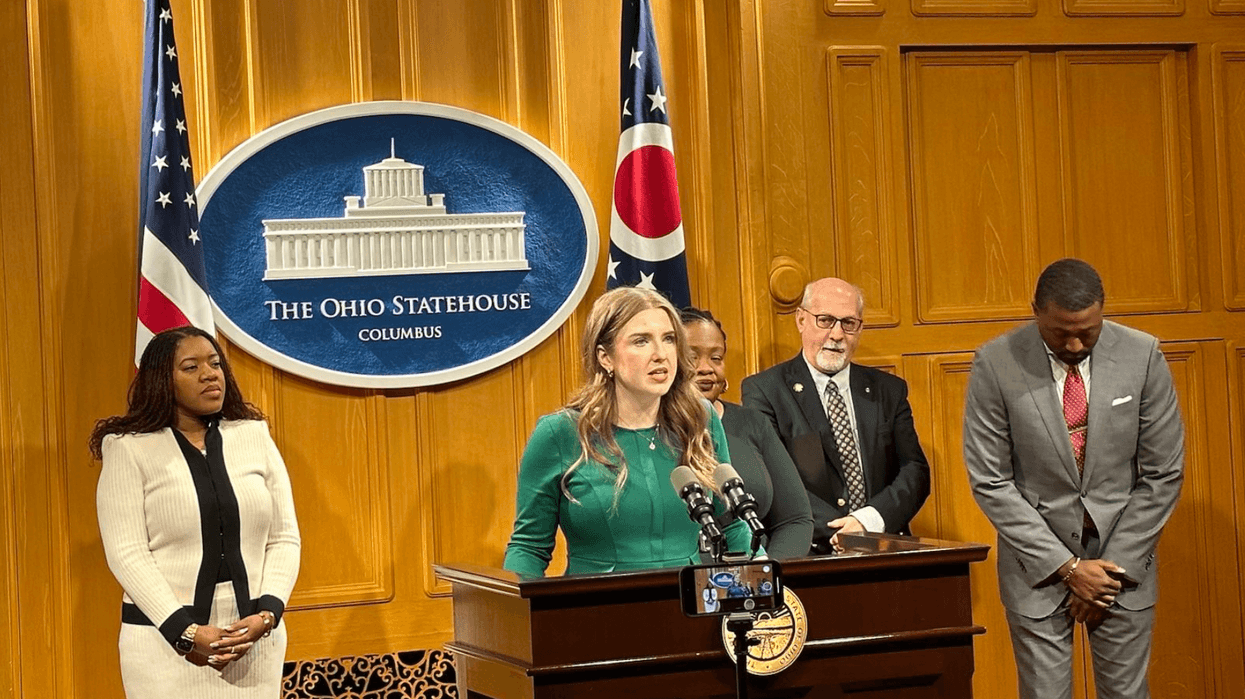
"Ohioans deserve assurances of what will happen to ballots cast by any voters you purged who show up to vote in the November 7th election," said state Rep. Bride Rose Sweeney.
With days to go until Ohio voters decide on a pivotal abortion rights referendum in the November 7 election, one state representative is leading the charge to ensure all eligible Ohioans are able to have their ballots counted despite Republican Secretary of State Frank LaRose's recent purge of 27,000 supposedly "inactive" voters."
Ohio state Rep. Bride Rose Sweeney (D-16) wrote to LaRose on Friday, warning that her office's preliminary analysis had shown "significant errors" were made, with some of the people removed from rolls having voted in recent elections.
Sweeney said her office believes "the purge was not uniform and nondiscriminatory as required by federal law" and called for its reversal.
"Ohioans deserve assurances of what will happen to ballots cast by any voters you purged who show up to vote in the November 7th election," she wrote.
Sweeney took note of the voter purge late last month and promptly demanded answers from LaRose, who, she pointed out, ordered thousands of voters to be removed from the rolls after voting in the general election had already started in September. The voting period began on September 22, when ballots were first sent out to overseas voters, and the purge was ordered for September 28.
Calling the order "stunning" and a "purge of choice" that should have taken place after the election, Sweeney called on LaRose to undo the damage. But after the secretary of state defended the purge, claiming it targeted only voters who had "moved or died" or had been unresponsive to attempts to contact them and accusing Democrats of "trying to help dead people vote," Sweeney doubled down on her demand for answers.
"Something's not adding up," she replied to LaRose on social media, noting that the purged voters were disproportionately under the age of 45, while that age group makes up less than 7% of deaths in Ohio each year.
Sweeney's finding that some of the purged residents are in fact active voters in Ohio "is reason enough to reverse the purge, take a more thorough look at the list, and only remove those who have truly become ineligible to vote in Ohio—and to do so only after the November 7 election," wrote the lawmaker.
She also called on LaRose to clarify whether voters who were wrongly purged will be able to have their votes counted in the election.
On Tuesday, the secretary of state's office said: "If the voter heads to the polls to vote, it reactivates their registration. They are not shut out of the process."
Noting that ballot reports from the August special election indicated that provisional ballots were not counted, Sweeney wrote, "Are you stating that these purged voters' provisional ballots will be counted?"
Next Tuesday, voters will be asked whether the Ohio Constitution should be amended to enshrine the right of Ohioans to make choices about their reproductive health, including whether to have an abortion. A six-week abortion ban is currently on hold in the state while the Ohio Supreme Court deliberates the law.
"No Ohioan should be denied their freedom to vote because of an error or—even worse—because of a hyperpartisan secretary of state," said Sweeney in a statement.
In her letter to LaRose, she noted that "there seems to be a misunderstanding of voting basics" in the secretary's office, which has made "several concerning misstatements about how voter registration and voter roll maintenance work" in recent days.
LaRose's office has claimed that voters who move are no longer legally permitted on voter rolls, which is "simply incorrect," Sweeney said, and that when voters move and register at a new address, their old registration is not canceled.
"In fact, county election officials do remove the former registration when adding a voter to their rolls as a matter of course," said Sweeney. "There simply are not large numbers of duplicate registrations on our rolls. It is a rare case where the former registration stays on the rolls. We look forward to seeing your data showing why each voter was purged."
On social media, Sweeney noted that she called for a third-party audit after the secretary of state's last "massive voter purge," and said expanding voting rights in Ohio and the U.S. would end such purges.
"Automatic voter registration would make our rolls more accurate," said Sweeney, "and basically render the purges moot."
Republicans "know they can't win a fair fight, so they're trying to rig the game," said former U.S. Labor Secretary Robert Reich.
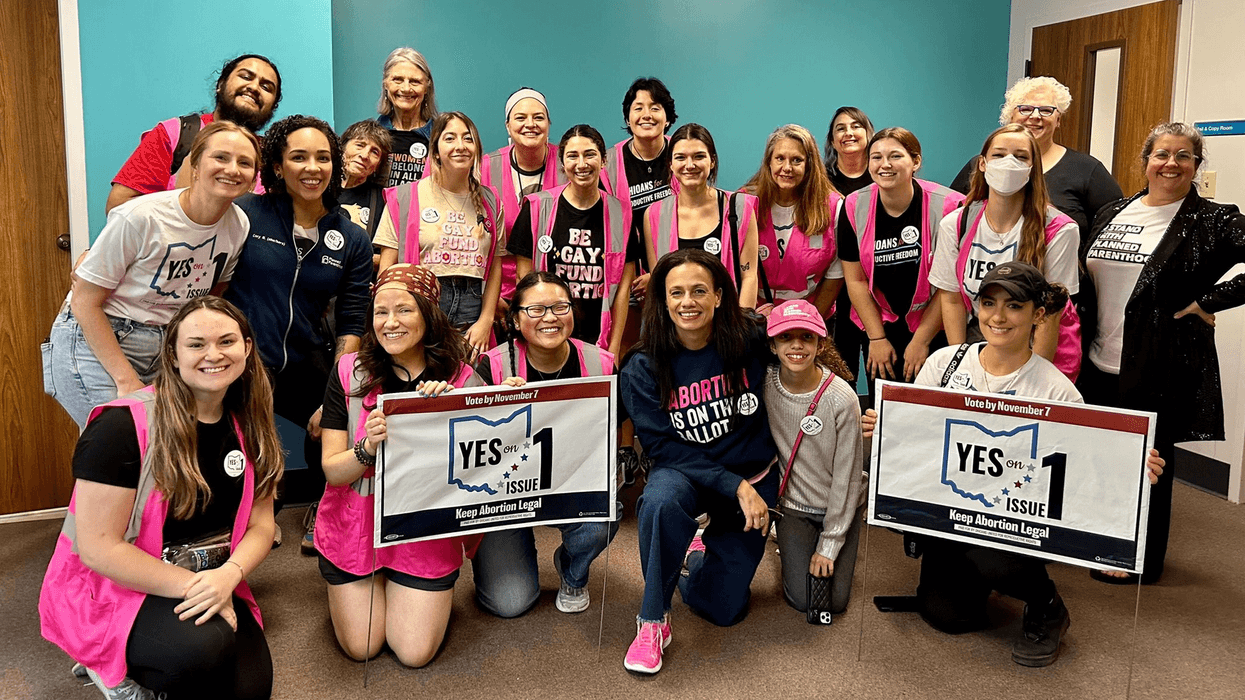
Reproductive rights advocates in Ohio and across the U.S. are intensifying efforts to ensure voters in the Midwestern state approve a ballot measure on November 7 that would enshrine the right to abortion care in the Ohio Constitution—making a final push with canvassing and phone banking campaigns as they combat misinformation from pro-forced pregnancy Republicans.
Issue 1 will ask voters whether the state constitution should be amended to affirm that Ohioans have the right to "carry out one's own reproductive decisions," including abortion.
Abortion care is currently legal in Ohio up to 22 weeks of pregnancy as the right-wing state Supreme Court deliberates over a six-week abortion ban that was passed by Republicans and then put on hold.
Advocates have warned that failing to amend the constitution will leave Ohioans without "the freedom to decide what it best for [their] own families," with Ohioans United for Reproductive Rights (OURR) featuring in one ad a woman who needed an abortion after getting pregnant in an abusive relationship.
The Ohio secretary of state's office reported earlier this week that more than 200,000 voters had cast their ballots early in person and about 110,000 people had sent in absentee ballots by October 24, representing an even higher early voter turnout than the state saw ahead of an August special election.
That election, which progressive news outlet Heartland Signal said was likely "supercharging pro-choice voters" as Ohioans flocked to the polls to vote early, asked voters whether the state should require a 60% threshold on referendums regarding amendments to the state constitution, rather than a simple majority. The initiative, backed by Republicans who oppose abortion rights, failed by a vote of 43% to 57%.
Led by Republican Secretary of State Frank LaRose, forced pregnancy advocates have managed to change the language of the question appearing on ballots in the November 7 general election, using the word "unborn child" instead of the originally proposed "fetus" and saying the amendment would, as the ACLU of Ohio explained in September, "'always allow' abortion care 'at any stage of pregnancy, regardless of viability,' if the treating physician finds it necessary to protect health."
"Not only is this phrasing confusing and inflammatory, but it also suggests that the physician could override the pregnant patient's wishes," said Sheila Smith, communications strategist at the ACLU of Ohio. "This is absolutely false."
The amendment would allow the state to ban abortion care after about 23 weeks of pregnancy unless it "is necessary to protect the pregnant patient's life or health," but that language does not appear in the certified language on Ohioans' ballots.
State Attorney General Dave Yost has also falsely claimed the proposed amendment would invalidate parental consent laws for minors seeking abortion care.
Republican leaders in the state "know they can't win a fair fight, so they're trying to rig the game," said former U.S. Labor Secretary Robert Reich.
A poll by the Institute for Civics and Public Policy at Ohio Northern University last week found that 52% of Ohio voters still support Issue 1 based on the certified language that will appear on ballots, while 68% supported the proposed amendment as advocates initially phrased it.
In addition to working to ensure voters know that Issue 1 will be appearing on ballots, groups including Innovation Ohio are working to educate Ohioans on the facts about the referendum and Republicans' false claims.
State Senate Minority Leader Nickie Antonio (D-23) told The Hill on Wednesday that the ballot initiative may represent "a real turning point in terms of whether or not young people especially even see Ohio as a state they want to live in," as states like California and New York work to make abortion more accessible.
"And I do believe that the outcome of this election and of this ballot measure is gonna send a message to young people on whether or not there's a future for them here in Ohio," said Antonio.
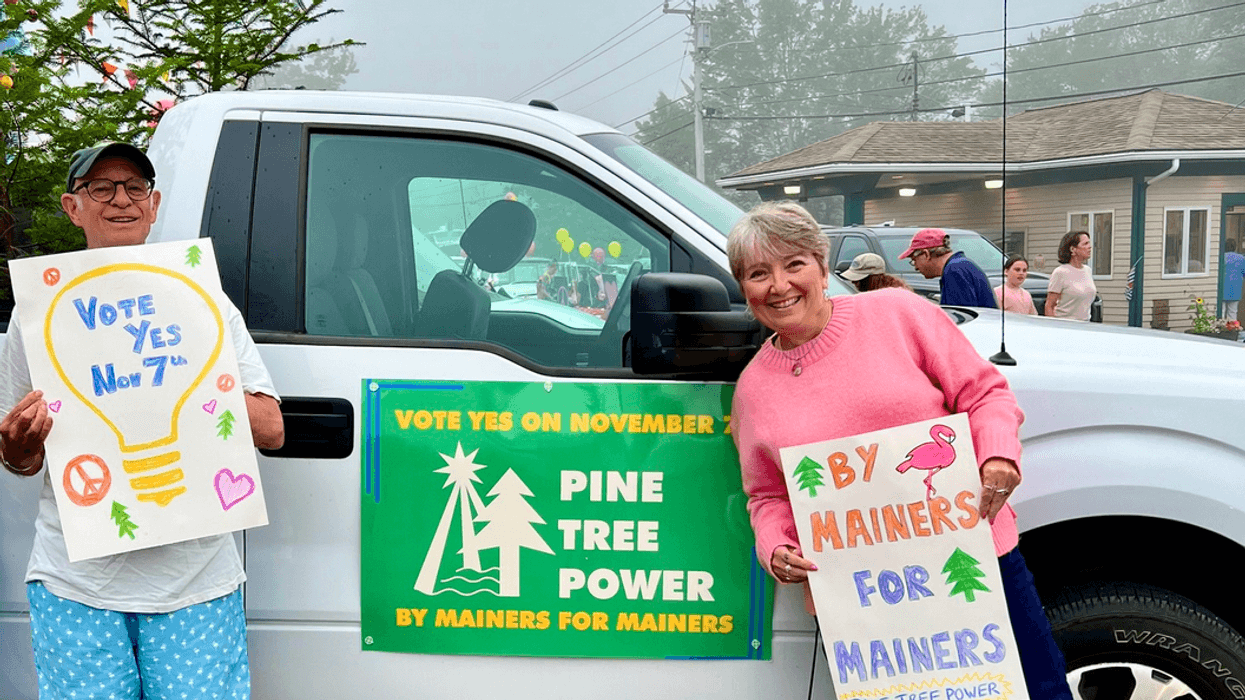
"Mainers have a rare chance to take control of an important part of their daily lives," said Sen. Bernie Sanders in his endorsement of Pine Tree Power. "Mainers can have cheaper, more reliable power—and help fight climate change at the same time."
As Election Day nears, climate and economic justice advocates in Maine and across the country are calling on voters in the New England state to approve an historic referendum that would initiate a public takeover of Maine's two for-profit utilities—a move which public power experts say could bring about a sea change in public utility ownership and lower rates for consumers while building resistance to fossil fuel infrastructure.
The "Yes on Question 3" campaign aims to create a new nonprofit company called Pine Tree Power, which would purchase Central Maine Power (CMP) and Versant. The two companies currently provide power to 96% of Maine customers. The new company would be run by a board of directors elected by Maine voters, which advocates say would make the utility far more accountable to consumers than the investor-owned utilities have been.
Proponents have pointed to local utility takeovers which have resulted in lower rates for consumers, such as the case of the Long Island Power Authority. The publicly owned authority reduced electricity rates by 20% for customers, according to the American Public Power Association (APPA).
The grassroots Pine Tree Power campaign notes that consumer-owned utilities (COUs) are not a radical new idea in Maine, as 10 COUs serve 98 towns across the state. When one of the COUs attempted to expand and provide more customers in Kennebunk with lower rates and more reliable service, CMP halted the effort, leading one resident to say they were being "held hostage by the country's worst power company."
"Whether we're new or lifelong Mainers, we know that our state is defined by folks who work hard for one another," reads Pine Tree Power's website. "Medical workers and mill workers, farmers and firefighters, loggers, and lobstermen, we all work together to power Maine. That's why we deserve a power company that works just as hard for us."
"But ever since our utilities were sold to the highest bidder, our communities have been falling victim to the tyranny of faraway corporations," it continues, noting that CMP's parent company is owned by a Spanish firm while the primary shareholder of Versant's parent company is the city of Calgary, Canada.
The U.S. Energy Information Administration says that average electricity prices across New England are some of the highest in the nation, rivaling only Alaska and Hawaii, with costs rising from 24.6 cents per kilowatt hour in June 2022 to 28.3 cents per kilowatt hour this past June. Meanwhile, Maine's electric utilities get low marks for reliability, with the state ranked 49th in the country according to a 2022 analysis by the Citizens Utility Board in Illinois.
Pine Tree Power says the new public utility would save ratepayers $9 billion over three decades—lowering rates by an average of $367 per household annually—while a 2020 study commissioned by the Maine Public Utilities Commission said rates would likely increase in the short term after the purchase of CMP and Versant, but come down over the long term due to tax savings.
As the APPA told the Rhode Island Current last month, 18 new local public power utilities have been formed in the U.S. over the past two decades, and "their rates are typically lower and their electric service is more reliable."
But companies like CMP and Versant, whose profits and rates have soared in recent years while service has declined, are able to pour their vast resources into their own campaigns "to discourage communities from looking at their options," Ursula Schryver of APPA told the Current. The utilities have raised more than $27 million to oppose the Yes on Question 3 initiative.
"They'll typically say it's going to be expensive, take years, and cost a lot of money," said Schryver, the group's vice president for strategic member engagement. "They're going to have PR campaigns [and] push legal challenges to drag it out and make it as expensive and as long and scary as possible."
Pine Tree Power noted on social media in July that the grassroots campaign has garnered small donations from more than 1,000 people, 90% of whom live in Maine.
In addition to spending tens of millions of dollars to defeat Pine Tree Power, the for-profit utilities are backing a separate referendum in November that, if passed, would stall the creation of the publicly owned company by requiring Mainers to vote on borrowing more than $1 billion in most cases.
Maine Affordable Energy, a group funded by CMP, claims the purchase of the two utilities would cost Mainers $13.5 billion, while utility lawyer Peter Murray estimated in the Portland Press Herald last month that the true acquisition price would likely be about half that amount, based on the investor-owned companies' Federal Energy Regulatory Commission filings.
One of the proposal's latest endorsements came from the Natural Resources Council of Maine (NRCM) on Wednesday, with the group writing in a position paper that in addition to saving Mainers money, the "transparency and local accountability" that a public utility would provide would be "crucial to an equitable, affordable clean energy transition."
"Sometimes it's only government that can get the job done," said NRCM. "Take for example Efficiency Maine Trust (EMT), an independent quasi-government agency formalized in 2009 for not dissimilar reasons to the Pine Tree Power proposal, to correct for the disincentive utilities have to invest in energy efficiency. EMT, now with an annual budget of $100 million, implements energy efficiency and alternative energy programs across Maine, invests in businesses and workforce capacity, and has become a widely trusted resource for information to inform personal and business investment decisions. Just imagine what EMT could accomplish if it were working with cooperative utilities."
The group added that low-cost financing available to COUs could help speed "an equitable clean energy transition" that includes "low- and moderate-income households and other underserved Mainers."
"Access to lower-cost financing can free up resources to build robust programs designed to overcome the social and financial barriers to energy efficiency upgrades, weatherization, heat pumps, zero-emission vehicles, solar, and battery storage, to ensure that vulnerable and marginalized people also enjoy the ways that clean energy makes our homes safer and more comfortable, affordable, and valuable," said NRCM.
The Pine Tree Power campaign has also been endorsed by 350.org, U.S. Sen. Bernie Sanders (I-Vt.), Sierra Club Maine, the Maine Organic Farmers and Gardeners Association (MOFGA), and the Maine State Nurses Association (MSNA).
MSNA argued in its endorsement that "access to clean, reliable energy is undeniably a public health concern," with power loss linked to higher mortality rates among elderly people, while MOFGA said "true sustainability will only be possible with a power company that puts the needs of our local communities above the profits of foreign CEOs."
"Power belongs in the hands of the people, not greedy corporations," said Sanders in July. "Mainers have a rare chance to take control of an important part of their daily lives. Instead of a private power system that last year sent $187 million in profits out of the country, Mainers can have cheaper, more reliable power—and help fight climate change at the same time."
While CMP has lobbied against renewable energy legislation, proponents of Pine Tree Power, including 350.org, say the publicly owned utility "is a direct way of targeting the fossil fuel industry."
"Returning power to the people and looking for big fights is where we can best show solutions and also resist the fossil fuel infrastructure," Candice Fortin, a campaigner with the group, told The Progressive in August.
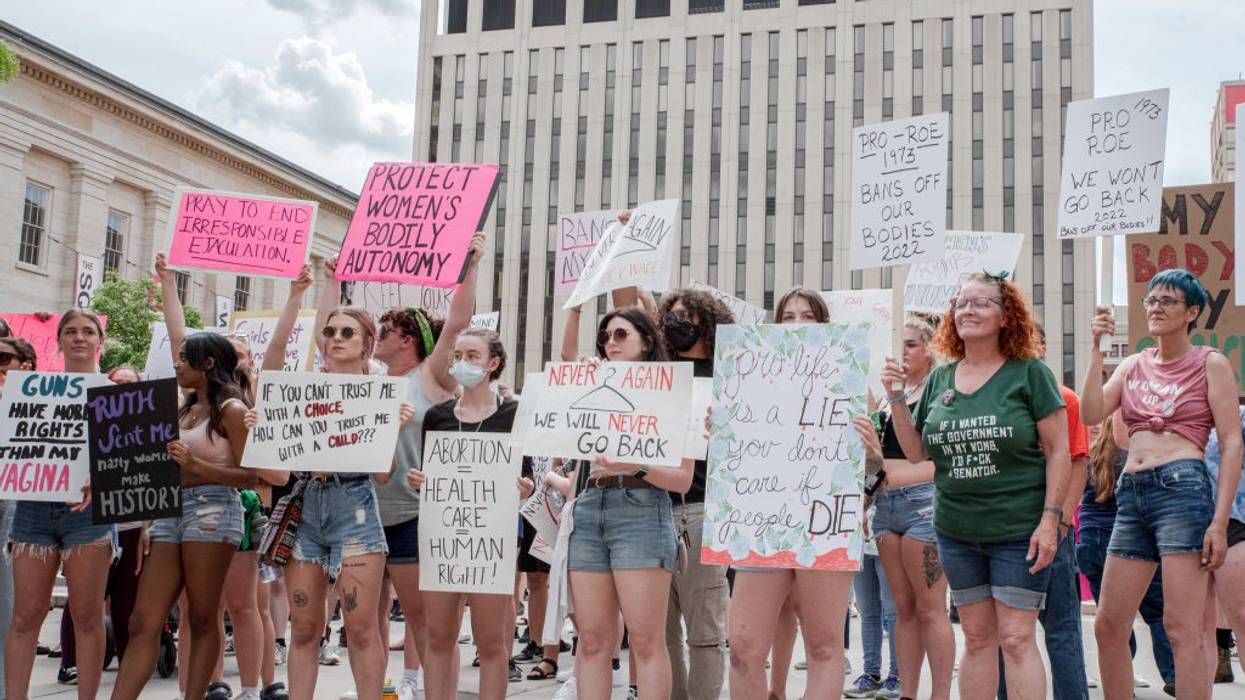
The Ohio Ballot Board has created "out of whole cloth a veil of deceit and bias in their desire to impose their views on Ohio voters," one dissenting judge wrote.
The Ohio Supreme Court sided with the state's GOP-led Ohio Ballot Board Tuesday night, ruling that the words "unborn child" could be used instead of "fetus" in the ballot summary of a referendum that would add reproductive rights to the state constitution.
The decision is the latest setback for the referendum after voters defeated a GOP-supported measure in August that would have required a 60% majority to pass constitutional amendments.
"This should have been simple, but the Ohio ballot board tried to mislead voters yet again," Ohioans United for Reproductive Rights spokesperson Lauren Blauvelt told The Guardian. "Issue 1 is clearly and concisely written to protect Ohioans' right to make our own personal healthcare decisions about contraception, pregnancy, and abortion, free from government interference. The actual amendment language communicates that right clearly and without distortion."
"Anti-abortion extremists will continue to lie and cheat in their attempt to defeat us in November—but Ohioans won’t be deceived."
The amendment, which Ohioans will vote on November 7, would guarantee that "every individual has a right to make and carry out one's own reproductive decisions, including but not limited to decisions on: 1. contraception; 2. fertility treatment; 3. continuing one's own pregnancy; 4. miscarriage care; and 5. abortion."
It allows for restrictions on abortion "after fetal viability"—the point at which a fetus could survive on its own, usually around 24 weeks.
However, it stipulates that "in no case may such an abortion be prohibited if in the professional judgment of the pregnant patient's treating physician it is necessary to protect the pregnant patient's life or health."
Ohioans United for Reproductive Rights wanted to share the actual amendment text on the ballot. However, in an August 24 meeting, the Ohio Ballot Board decided on its own language.
The board-proposed summary says the amendment would "prohibit the citizens of the State of Ohio from directly or indirectly burdening, penalizing, or prohibiting abortion before an unborn child is determined to be viable."
It also states that the amendment would "always allow an unborn child to be aborted at any stage of pregnancy, regardless of viability if, in the treating physician's determination, the abortion is necessary to protect the pregnant woman's life or health."
Notably, the board is headed by Ohio Secretary of State Frank LaRose, a Republican and abortion opponent who drafted the new language.
"The entire summary is propaganda," Blauvelt told The Associated Press when it was first passed.
In a statement, Ohioans United for Reproductive Health pointed out that the board's summary was actually longer than the amendment text.
The group and five other petitioners sued to block the language four days after the board's meeting, arguing that it aimed "improperly to mislead Ohioans and persuade them to oppose the Amendment."
However, the Ohio Supreme Court Tuesday ruled that the "unborn child" language could stay. It did order one change—to swap "citizens of the State of Ohio" for "the State of Ohio" when explaining who the amendment would restrict.
"We conclude that the term 'citizens of the State' is misleading in that it suggests to the average voter that the proposed amendment would restrict the actions of individual citizens instead of the government," the court ruled, as Cincinnati.com reported.
Not everyone on the court agreed, however. Three Republicans would have made no changes, while the three Democratic members would have tossed out the "unborn child" language as well.
Justice Jennifer Brunner said the board "obfuscated the actual language of the proposed state constitutional amendment by substituting their own language and creating out of whole cloth a veil of deceit and bias in their desire to impose their views on Ohio voters about what they think is the substance of the proposed amendment," as Cincinnati.com reported.
"It's unfortunate that advocacy seems to have infiltrated a process that is meant to be objective and neutral," Justice Michael Donnelly agreed, according to Cincinati.com.
The amendment is a crucial test for abortion rights in Ohio and beyond. Since the U.S. Supreme Court overturned Roe v. Wade, every state ballot initiative enshrining reproductive rights has passed, NBC News observed. Ohio has passed a "heartbeat bill" banning abortion after six weeks, but it is currently blocked by its supreme court. Ohio is also one of the only states in the Midwest region that still permits abortions, The Guardian pointed out.
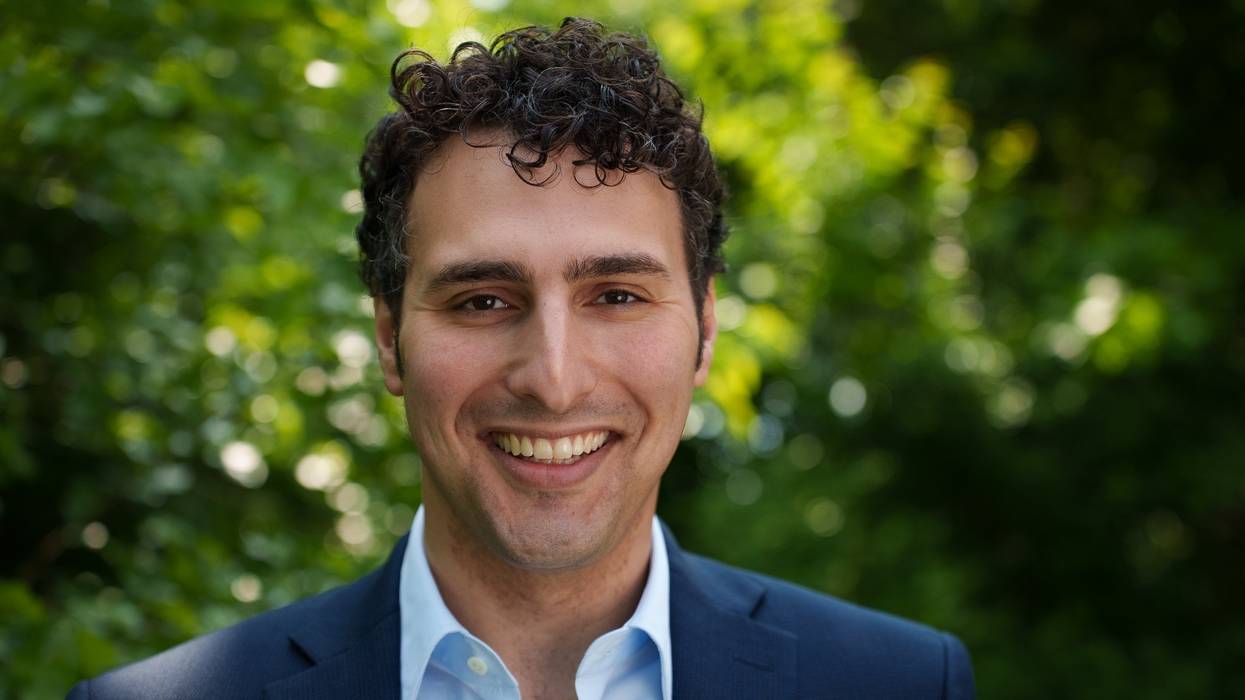
"As a community organizer, climate lawyer, and state legislator—Aaron has been a fierce champion for working people," said the New York Democrat. "I'm proud to support him."
Congresswoman Alexandria Ocasio-Cortez on Thursday joined the growing coalition of progressive lawmakers and groups backing J. Aaron Regunberg in the crowded Democratic primary contest for Rhode Island's 1st Congressional District.
Regunberg is among a several Democrats running in the September 5 primary for a November special election planned after Democratic Congressman David Cicilline left the U.S. House of Representatives seat in June to serve as president and CEO of the Rhode Island Foundation.
"As a community organizer, climate lawyer, and state legislator—Aaron has been a fierce champion for working people," Ocasio-Cortez (D-N.Y.) said in a statement. "He helped increase Rhode Island wages for the first time in 20 years and held Big Oil companies accountable for environmental crimes. Now, he's running for Congress to pass a $15 minimum wage and to fight for a Green New Deal. I'm proud to support him."
Regunberg is also aiming to establish Medicare for All, raise taxes on the rich, expand affordable housing, increase reproductive freedom, update labor laws to better serve workers, reform the U.S. Supreme Court, defend LGBTQ+ equality, and tackle gun violence and corporate monopolies, according to his campaign website.
"I'm really honored to have the endorsement of Rep. Ocasio-Cortez, someone who's taken on corporate special interests to fight for a fair economy and a government that works for all of us," Regunberg said. "I look forward to working with her in Congress to build coalitions that can deliver Medicare for All and bold climate action for our communities, and to stand up against Republican attacks on our democracy."
Regunberg has also won the support of U.S. Sen. Bernie Sanders (I-Vt.) and Democratic Reps. Greg Casar (Texas), Ro Khanna (Calif.), Delia Ramirez (Ill.), Jamie Raskin (Md.), and Jan Schakowsky (Ill.) along with several state senators and representatives, human rights attorney Steven Donziger, and climate activist Bill McKibben.
Sanders on Sunday headlined a rally for Regunberg in Providence. According to The Public's Radio, the senator told the crowd that "now is the time for a political revolution of working families coming together, telling the people on top this country belongs to all of us, elect Aaron and we're going to take a strong step forward in doing just that."
As Semafor reported:
As Sanders spoke to 1,000 people at the Columbus Theatre, a truck circled outside with an electronic billboard, paid for by a fringe candidate, attacking him for "NOT supporting a progressive woman" and "NOT supporting a person of color." Sanders and Regunberg spoke only after female, progressive allies talked about how the candidate helped pass an array of paid leave and wage bills, while convincing them to run for office.
"Why am I, a black Afro-Latina woman, supporting Aaron, over other people of color who are running?" said state Rep. Leonela Felix [D-61]. "The answer is very simple. More than identity politics, Rhode Island needs a champion who will fight to ensure that families not only survive, but that they thrive."
Organizations supporting Regunberg include the Center for Biological Diversity Action Fund, Climate Hawks Vote, Congressional Progressive Caucus PAC, Food & Water Action, Friends of the Earth Action, Moms Demand Action, Oil Change U.S., Our Revolution, and the Working Families Party (WFP).
"It's clear why our country's top progressive champions are coming out for Aaron," Georgia Hollister Isman, WFP's New England regional director, said Thursday. "He's the clear progressive choice, and they know he's the only candidate in this race who will always take on the corporate interests holding people back. These endorsements send a clear signal to anyone who wants a real shot at bringing affordable housing, healthcare, and childcare to Rhode Island—with fierce allies like Alexandria Ocasio-Cortez and Bernie Sanders, Aaron can deliver the types of big investments that actually improve people's lives."
The Boston Globe pointed out that "half an hour after the announcement of AOC's endorsement," the campaign of Gabe Amo—who left his job as deputy director of the White House Office of Intergovernmental Affairs and special assistant to President Joe Biden for this race—announced he has been endorsed by former Congressman Patrick J. Kennedy, who held the seat from 1995 to 2011.
Summarizing analysis from Providence College political science professor Adam S. Myers, the newspaper explained that while "the Kennedy endorsement of Amo reflects support among the Democratic establishment in Rhode Island," Ocasio-Cortez's endorsement "shows Regunberg has 'locked up' the support of national progressive groups and leaders who want to ensure the seat is filled by a progressive," though "support among local progressives is not unanimous."
The American Prospect noted in May that six members of the progressive Rhode Island Political Cooperative released a statement critical of Regunberg's candidacy and Democratic Socialists of America's Providence chapter issued a "no-endorsement" in the race.
"The Rhode Island Political Cooperative's attack on Regunberg is part of a rift within the state's left wing that's become more pronounced in recent years," the outlet explained, citing interviews with several Democratic activists. "The infighting has shades of a familiar dynamic dividing left-wing coalitions elsewhere, which most prominently came to the fore during the New York City mayoral election in 2021. The argument involves how much to emphasize working inside the political system versus organizing outside of it, and how adversarial the left should be against the Democratic Party."
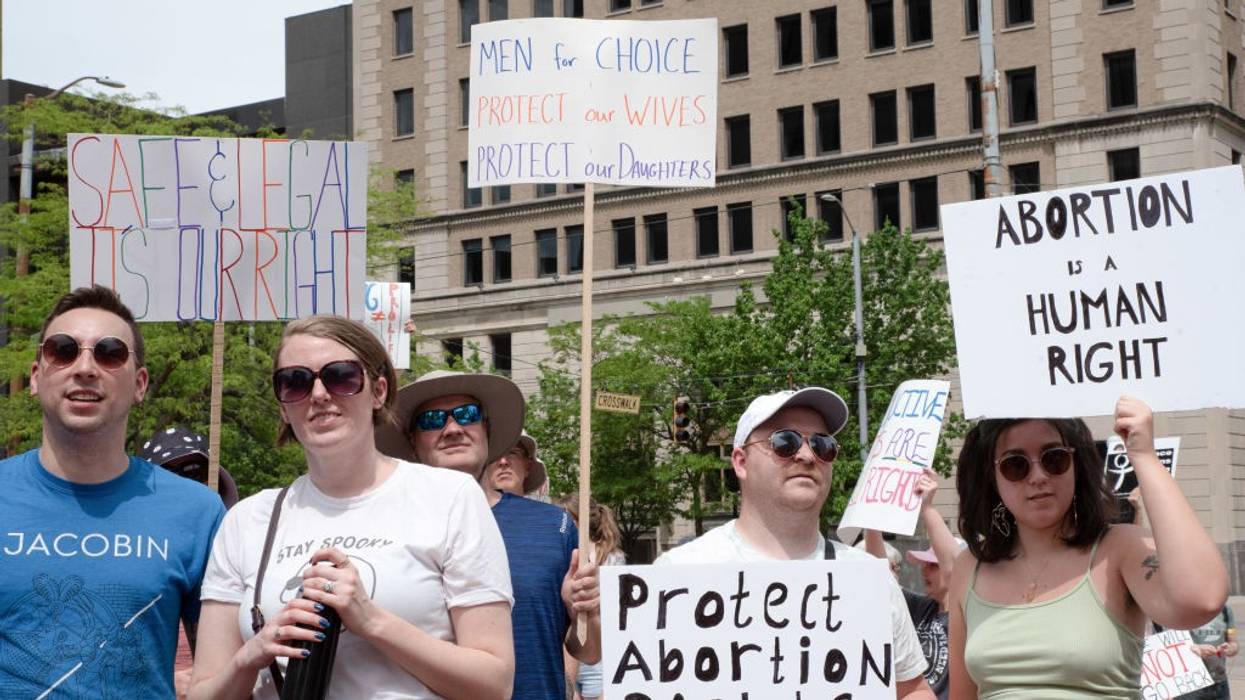
"The Ballot Board's members adopted politicized, distorted language for the amendment, exploiting their authority in a last-ditch effort to deceive and confuse Ohio voters ahead of the November vote," said one campaigner.
Ohioans United for Reproductive Rights on Monday sued the Ohio Ballot Board for its "irreparably flawed" summary of Issue 1, a citizen-initiated reproductive freedom amendment to the state constitution that voters are set to consider in November.
The proposed amendment states in part that "every individual has a right to make and carry out one's own reproductive decisions, including but not limited to decisions on contraception; fertility treatment; continuing one's own pregnancy; miscarriage care; and abortion."
The amendment adds that the state of Ohio "shall not, directly or indirectly, burden, penalize, prohibit, interfere with, or discriminate against either: an individual's voluntary exercise of this right or a person or entity that assists an individual exercising this right," but "abortion may be prohibited after fetal viability," unless a doctor determines it is necessary to protect the patient's life or heath.
The lawsuit alleges that "the prescribed ballot language—drafted and introduced by respondent Secretary of State Frank LaRose and approved by respondent the Ohio Ballot Board in a 3-to-2 vote—fails to comport with the Ballot Board's duty to provide ballot language that impartially, accurately, and completely describes the amendment's effects. Instead, it is a naked attempt to prejudice voters against the amendment."
"The summary that was adopted by the Ballot Board is intentionally misleading and fails to meet the standards required by Ohio law."
The complaint details four examples of "deceptive" language, accusing the board of "obscuring much of the amendment's scope" by only mentioning abortion and pushing "an objective falsehood" by saying that the amendment would restrict "the citizens of the state of Ohio"—rather than the state—from interfering with Ohioans' exercise of their right to make reproductive decisions.
"Compounding these shortcomings is the fact that the Ballot Board was asked to put the clear, simple 194-word text of the amendment itself on the ballot, so that voters could see exactly what they were being asked to approve," the suit notes. "But the Ballot Board refused, instead adopting a wholesale rewrite."
"Indeed, the adopted language is longer (by word count) than the amendment it purports to condense," the complaint continues. "All these new and extra words serve one purpose—to distort the actual text and meaning of the amendment."
The board's summary also changes the amendment's inclusive "pregnant patient" language to "pregnant woman" and uses "unborn child" rather than medically accurate terms such as "embryo" and "fetus."
Ohioans United for Reproductive Rights is asking the Ohio Supreme Court to direct the board to either use the full text of the amendment as the ballot language or reconvene "to prescribe lawful ballot language."
The coalition spokesperson's, Lauren Blauvelt, stressed in a statement Monday that "Issue 1 was clearly written to protect Ohioans' right to make our own personal healthcare decisions about contraception, pregnancy, and abortion, free from government interference."
"The summary that was adopted by the Ballot Board is intentionally misleading and fails to meet the standards required by Ohio law," Blauvelt said. "Ohio voters deserve to see the full amendment language for Issue 1, which they can find at ReadTheAmendment.com."
"The Ballot Board's members adopted politicized, distorted language for the amendment, exploiting their authority in a last-ditch effort to deceive and confuse Ohio voters ahead of the November vote on reproductive freedom," she added. "Voting yes on Issue 1 will put Ohioans back in charge of our personal decisions, and stop the government from dictating what's best for our families."
Outrage over the board's summary has been growing since it was announced last week. Molly Meegan, chief legal officer and general counsel of the American College of Obstetricians and Gynecologists, said Tuesday that "the summary is another attempt to remove decisions about reproductive healthcare from Ohio residents, replace them with the judgment of partisan forces that do not reflect the will of the voters, and impose bureaucrats' personal ideology on the voters of Ohio."
"The language used to discuss abortion has a profound impact on how people form their opinions about reproductive healthcare, and the emotionally charged language that will now be presented to voters is neither clinically nor legally sound," she explained. "Opponents of abortion access have historically and intentionally used emotionally coercive language, even creating their own biased terminology, in order to sway people away from understanding the reality of abortion care."
Meegan added that" we strongly oppose the efforts of biased policymakers to manipulate people at the ballot box, and we urge voters to see through these attempts to influence their decisions and to advance protections for all the people whose lives would be benefited" by the amendment's passage.
The board's contested summary comes after another bid by Ohio's Republicans to block the amendment. In an August 8 special election approved by the Ohio Supreme Court's right-wing majority, voters rejected a proposal that would have raised the threshold to amend the state constitution via referendum from a simple majority to 60%.
After the U.S. Supreme Court overturned a half-century of national abortion rights last year, there were six state ballot measures related to abortion. Voters in California, Michigan, and Vermont approved amendments to affirm reproductive rights while voters in Kansas, Kentucky, and Montana rejected proposals intended to restrict healthcare access.
Coalitions in Arizona and Nebraska have launched efforts to get pro-abortion rights measures on the ballot in 2024.
The news is "a potential game-changer for reproductive rights in Ohio," said one journalist, but the pro-choice movement must still clear another electoral hurdle in an August special election.
The pro-abortion rights movement in Ohio has gathered enough momentum to place a referendum on the ballot this coming November which could codify the right to abortion care in the state constitution—but advocates on Tuesday warned of a caveat which could make the amendment harder to pass unless rights advocates clear another hurdle next month.
Secretary of State Frank LaRose announced Tuesday that petitioners calling for the measure to be included on the ballot on November 7 collected more than 495,000 signatures in support of their effort, far surpassing the required 413,446 signatures.
The signatures were collected from abortion rights supporters in 55 counties, while only 44 counties are required by state law.
The campaign's success means that voters in November will be asked if a "fundamental right to reproductive freedom" with "reasonable limits" should be established in the Ohio Constitution; if passed, the amendment would permit abortion care in Ohio up to about 24 weeks of pregnancy.
"Today was an important victory for Ohio women," said Ohio Democratic Party Chairwoman Elizabeth Walters. "Out-of-touch politicians are relentlessly attacking women's fundamental rights, inserting themselves into women's personal, medical decisions and laying the groundwork for a total abortion ban in Ohio."
Daniel Nichanian, editor-in-chief and founder of Bolts magazine, called the news "a potential game-changer for reproductive rights in Ohio."
But Nichanian was among those who noted that rights advocates also need to win an electoral fight coming up on August 8, when a special election approved by the Ohio Supreme Court's right-wing majority is set to take place.
In that election, voters will be asked whether the threshold needed to amend the state constitution via referendum should be raised from a simple majority to 60%.
A poll taken by Baldwin Wallace University last year found that 59% of Ohioans supported the abortion rights amendment that residents are now set to vote on in November.
According to Heartland Signal, early voter turnout in the August 8 special election has increased fivefold over last year's August primary elections, with more than 116,000 people having cast their ballots in person and 38,000 having turned in absentee ballots.
Early voting in the state will continue until August 6 according to the secretary of state's website.
"Ohio Republicans' plan to limit abortion rights," the progressive outlet tweeted, "may actually be supercharging pro-choice voters."