

SUBSCRIBE TO OUR FREE NEWSLETTER
Daily news & progressive opinion—funded by the people, not the corporations—delivered straight to your inbox.
5
#000000
#FFFFFF
To donate by check, phone, or other method, see our More Ways to Give page.
Daily news & progressive opinion—funded by the people, not the corporations—delivered straight to your inbox.
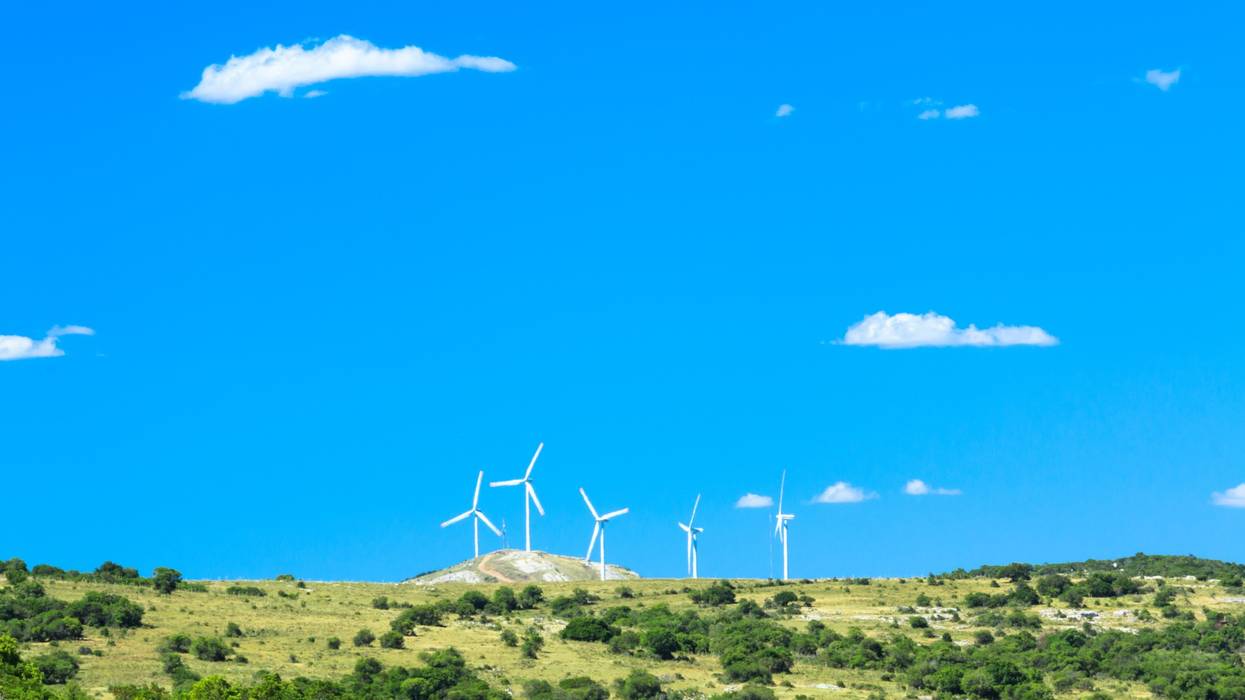
Uruguay highlights the importance of political will and bold action in achieving sustainability and shows that it can go hand in hand with both economic security for the many and social justice.
August 2 is Earth Overshoot Day, when the planet groans, burdened by the greed of richer, overconsuming countries and people. According to the Global Footprint Network’s analysis, today marks the point when humanity starts consuming resources beyond the level the planet can replenish in a year.
Overshoot Day has arrived earlier and earlier over the past 50 years. Those of us in wealthier countries must take this as a reminder of our collective responsibility to live lives of greater sufficiency, and to choose governments who will reign in the corporations trampling Earth’s fragile ecosystems and pushing the planet beyond its limits.
According to Global Footprint Network’s rankings, more than a quarter of countries in the world do not overshoot. However, the problem of reducing our ecological footprint is not that we do not have models of sustainable living—it is that most of these countries are characterized by poverty. The richer countries which have been burning fossil fuels to excess have not yet taken the challenging, yet completely doable steps, to live without them. Imagining new ways of living requires some sort of blueprint to guide us.
One country that offers some ideas for moving forward is Uruguay: a small nation of rolling hills whose experience shows that reducing consumption of the Earth’s resources does not mean a lower standard of living. While there is no “one size fits all” template for sustainability, Uruguay shows that a country’s leaders can be intentional in reducing its ecological footprint.
Looking at its recent past, Uruguay highlights the importance of political will and bold action in achieving sustainability and shows that it can go hand in hand with both economic security for the many and social justice. Uruguay has one of the lowest levels of income inequality in Latin America and an almost complete absence of extreme poverty. The government has invested heavily in education, healthcare, a minimum wage indexed to inflation, and a progressive tax system that redistributes wealth from the rich to the poor—all of which have helped to reduce poverty and inequality.
For Uruguay’s leaders, businesspeople, and workers, the green transition did not just represent a shift to renewables, it also signaled a shift in their own mindset.
This focus on social welfare has helped to create a more stable and resilient society, with its people less vulnerable to economic shocks and more likely to weather downturns. It’s no surprise that Uruguay is one of the happiest countries in Latin America, with a strong social safety net and a high standard of living.
Uruguay reduced its dependence on fossil fuels by creating a renewable energy sector that makes it a world leader on this front. In 2008, Uruguay embarked on a countrywide transition to renewable power that today has created one of the world’s greenest electricity grids, powered by 98% renewable energy, mostly hydropower and wind. This commitment to clean energy has created new jobs and economic opportunities, as Uruguay has become a leader in renewable energy technology and exports.
While Uruguay’s leaders have made some good choices over recent decades, not all of its government’s decisions are beyond reproach. Facing the worst water crisis in its history, drought compounded by mismanagement and uncontrolled growth of urban areas has reportedly resulted in the depletion of the main reserve that supplies the capital, Montevideo. Activists have also criticized the authorities for prioritizing water for transnationals and agribusiness at the expense of its own citizens, including plans for a Google data center that is projected to use millions of liters of water.
Also of deep concern are Uruguay’s plans to expand deepwater oil and gas exploration after recently discovering sizable new reserves off its shores. Uruguay now has its sights on expanding production and consumption via trade and is pushing for the destructive EU-Mercosur deal.
We are at a crossroads in human history. Those of us living in countries that had an overshoot day long before today can indeed live well without such extreme overconsumption. We can push our governments to follow the example of countries like Uruguay and implement policies that prioritize collective well-being.
For Uruguay’s leaders, businesspeople, and workers, the green transition did not just represent a shift to renewables, it also signaled a shift in their own mindset. Rather than contemplate the paralyzing crises of the future, they could approach them as everyday problems with people-centered solutions. Let’s use these positive examples to get rid of Overshoot Day completely.
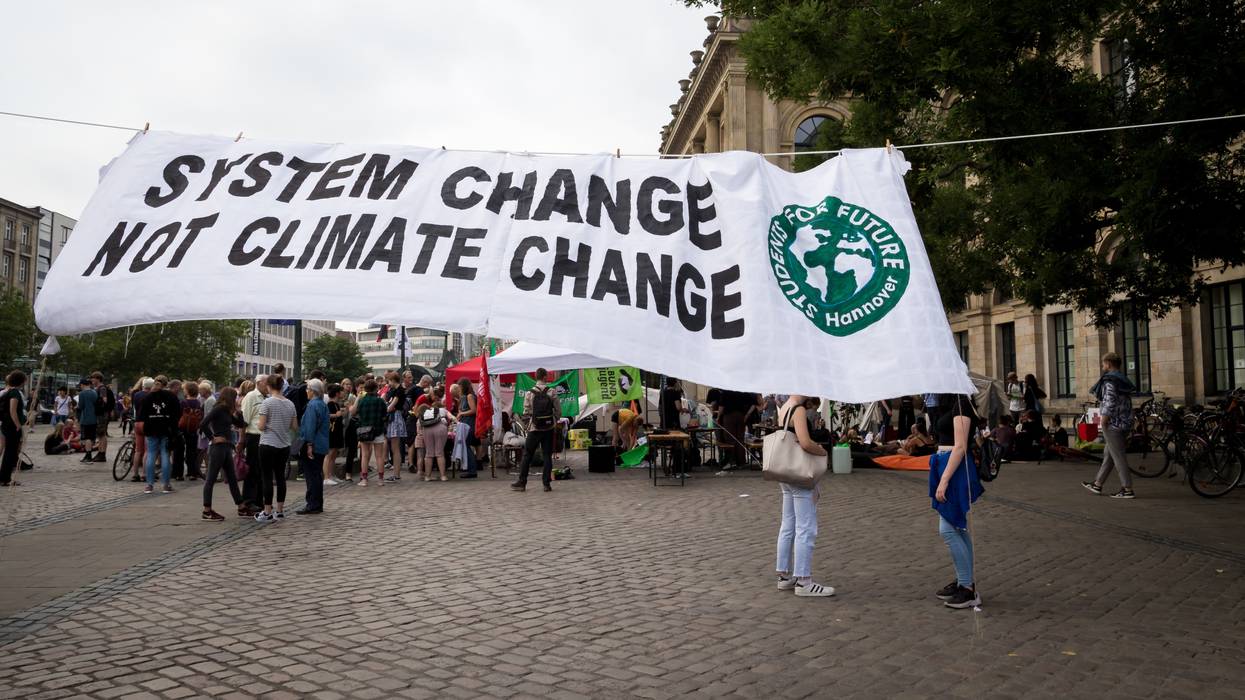
"We still have a chance to change the broken economic system that puts profit and overconsumption before people and nature," said Greenpeace International.
Campaigners and researchers who calculate "Earth Overshoot Day" each year called on policymakers to help "move the date" on Tuesday as they announced the planet has already reached the date when humanity has used more natural resources than the Earth can regenerate in a year.
August 2 marks 2023's Earth Overshoot Day—coming five days later than it did last year but months earlier than in 1971, when the day was first recorded by experts.
The date shows a clear trend towards overshoot days occurring closer to the beginning of the year, according to the Global Footprint Network (GFN).
The organization produces the estimate each year using data from the United Nations showing each country's ecological footprint and the Earth's ability to absorb waste and produce renewable resources, also known as its biocapacity,
Earth Overshoot Day is directly linked to the climate emergency and the effects of planetary heating, said GFN, as each country's ecological footprint includes its fossil fuel emissions.
"Persistent overshoot leads to ever more prominent symptoms including unusual heatwaves, forest fires, droughts, and floods with the risk of compromising food production," Steven Tebbe, CEO of the organization, told Euronews.
Slashing global emissions by 43% by the end of the decade would push back the date by 19 days each year between now and 2030, Euronews reported.
Cutting food waste in half would move the date back by 13 days, as would replacing 50% of all miles driven by cars with public transportation, biking, and walking.
With 70-80% of all people expected to live in urban areas by 2050, said GFN, "smart city planning and urban development strategies are instrumental to making sure there is enough biological regeneration to avoid excessive human demand that would erode it."
In one interactive feature called "Power of Possibility," the organization outlines dozens of specific solutions which could help humans conserve the world's resources each year, including:
"The broken economic system is designed for the elite, but it can be redesigned to put people and nature at the forefront," said Greenpeace International. "We have the power to change the system."
As of Thursday, August 13, humans have officially exhausted the planet's yearly supply of natural resources. For the rest of 2015, the earth will run an "ecological deficit"--accumulating carbon dioxide in the atmosphere and depleting the planet for future generations.
This is the disturbing estimate of the Global Footprint Network (GFN), which calculates the planet's "overshoot day" annually. The troubling milestone occurred less than eight months into 2015 and six days earlier than last year's, a symptom of what the organization warns is a "looming catastrophe."
"We have a metabolism problem," Mathis Wackernagel, president of GFN, told Common Dreams. "In the end, the biggest knowledge gap we have is whether physical reality matters or not. Most of our planning assumes resource reality is a minor issue."
"Earth Overshoot Day" is calculated by dividing the planet's biocapacity—defined by the group as "the ability of an ecosystem to regenerate biological resources and absorb wastes generated by humans"—by humanity's overall ecological footprint and multiplying this ratio by 365.
According to the group, in the 1970s, the earth passed a "critical threshold" where human consumption began outpacing the planet's ability to restore itself. Today, humanity's "demand for renewable ecological resources and the services they provide is now equivalent to that of more than 1.5 Earths."
"In planetary terms, the costs of our ecological overspending are becoming more evident by the day," GFN warned. "Climate change--a result of greenhouse gases being emitted faster than forests and oceans can absorb them--is the most obvious and arguably pressing result. But there are others--shrinking forests, species loss, fisheries collapse, higher commodity prices, and civil unrest, to name a few."
Others have pointed out that the world does not contribute to planetary depletion equally. For example, a report released earlier this year by Oil Change International finds that wealthy countries are driving the global expansion of coal extraction and power generation. Meanwhile, poor people and nations across the world are impacted the most by the ongoing effects of climate change. Social movements and countries from the Global South have argued that rich countries owe a "climate debt"--to be paid in the form of reparations.
It's time for humanity to get out a pen to make out its annual IOU to the Earth.
That's because Tuesday marks Earth Overshoot Day, the day humanity has used up the carbon-storing abilities and all the planet's natural resources that Earth can provide in the year.
Tracking this somber milestone is the nonprofit organization Global Footprint Network, which notes that "in the mid-1970s, we crossed a critical threshold: Human consumption began outstripping what the planet could reproduce." We would now need 1.5 Earths to meet our resource demands.
This "ecological debt" marker is a date the world has been reaching sooner each year for more than a decade, the organization states. Compared to this year's August milestone, Overshoot Day came in early October in 2000.
"It is both an ecological and an economic problem," stated Mathis Wackernagel, president of Global Footprint Network and the co-creator, along with William Rees, of the Footprint metric.
Humanity reaps the effects of this overshoot in rising CO2 emissions fueling climate change, as well as declines in biodiversity, deforestation and collapse of some ecosystems. Additionally, the resource debt "contributes to resource conflicts and wars, mass migrations, famine, disease and other human tragedies--and tends to have a disproportionate impact on the poor, who cannot buy their way out of the problem by getting resources from somewhere else," Global Footprint Network states.
Yet "even high-income countries that have had the financial advantage to shield themselves from the most direct impacts of resource dependence need to realize that a long-term solution requires addressing such dependencies before they turn into a significant economic stress," Wackernagel stated.
Reining in the problem means, foremost, awareness off the ecological limits we face, and using that awareness to find new ways to live--both individually and collectively--the group states.
To find out your individual footprint and see how you can reduce it, you can take this quiz.
To hear more about the measurement and the ecological debt, watch this video from the organization:
What is Ecological Overshoot? (Updated 2014)www.youtube.com