

SUBSCRIBE TO OUR FREE NEWSLETTER
Daily news & progressive opinion—funded by the people, not the corporations—delivered straight to your inbox.
5
#000000
#FFFFFF
To donate by check, phone, or other method, see our More Ways to Give page.
Daily news & progressive opinion—funded by the people, not the corporations—delivered straight to your inbox.
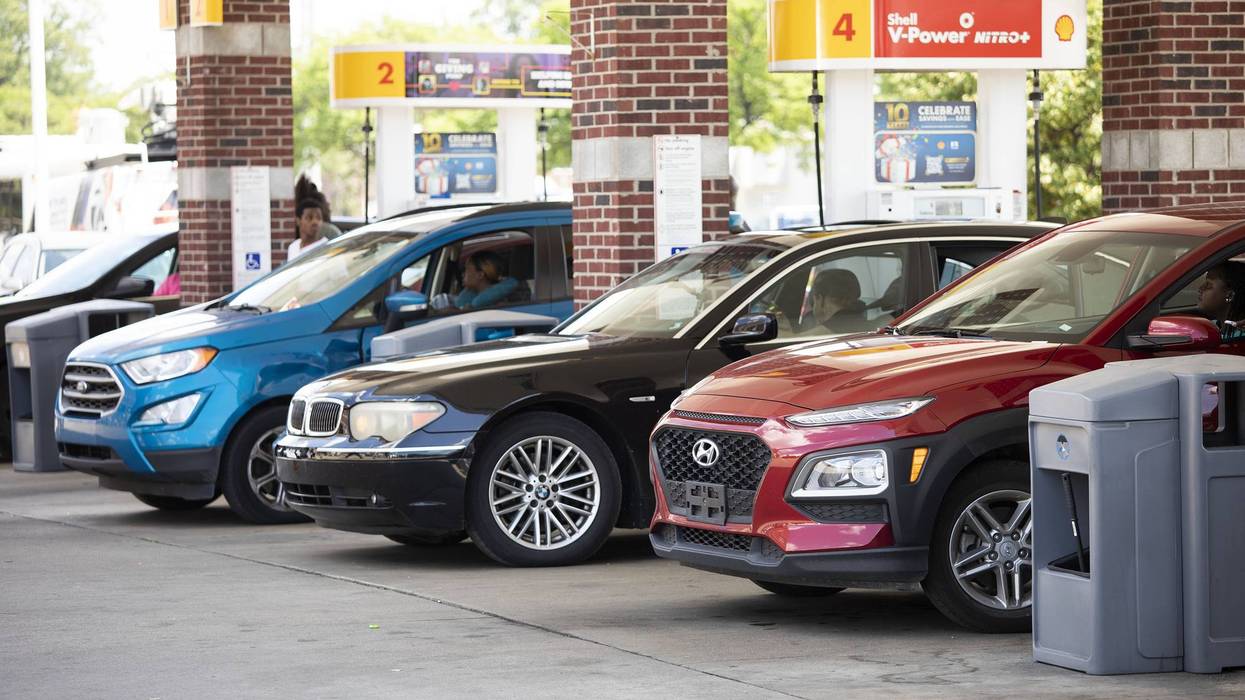
The case accuses "four of the largest energy companies in the world" of conspiring "to forestall meaningful competition from renewable energy and maintain their dominance in the energy market."
While several US states and municipalities have sued fossil fuel companies by citing consumer protection and public nuisance laws, Michigan on Friday launched an antitrust lawsuit against four industry giants and their trade association, accusing them of operating as a "cartel" to impede a transition to clean power and transportation.
Twenty months after state Attorney General Dana Nessel announced that she was seeking proposals from lawyers and firms "to pursue litigation related to the climate change impacts caused by the fossil fuel industry," the Democrat sued BP, Chevron, ExxonMobil, Shell, and the American Petroleum Institute (API) in the US District Court for the Western District of Michigan.
"Michigan is facing an energy affordability crisis as our home energy costs skyrocket, and consumers are left without affordable options for transportation. Whether you own a home, a small business, or run a large corporation, rising energy and transportation costs harm everyone," Nessel said in a statement.
"These out-of-control costs are not the result of natural economic inflation, but due to the greed of these corporations who prioritized their own profit and marketplace dominance over competition and consumer savings," she continued.
As the complaint says: "Defendants are four of the largest energy companies in the world and their industry's largest trade association. The fossil fuel defendants produce fossil fuels and have at times invested in clean energy products and related technologies, such as solar power and batteries, that could provide energy to power buildings, infrastructure, and cars as an alternative to fossil fuels."
"But for decades, defendants have conspired with each other to forestall meaningful competition from renewable energy and maintain their dominance in the energy market," the filing continues. "They have done so as a cartel, agreeing to reduce the production and distribution of electricity from renewable sources and to restrain the emergence of electric vehicles (EV) and renewable primary energy technologies in the United States."
"To achieve this end," the document details, "they have abandoned renewable energy projects, used patent litigation to hinder rivals, suppressed information concerning the hidden costs of fossil fuels and viability of alternatives, infiltrated and knowingly misdirected information-producing institutions, surveilled and intimidated watchdogs and public officials, and used trade associations to coordinate market-wide efforts to divert capital expenditures away from renewable energy—all to further one of the most successful antitrust conspiracies in United States history."
Lumping in this case with others previously filed against fossil fuel companies and API, Ryan Meyers, senior vice president and general counsel for the trade group, said in a statement to the Detroit News that "these baseless lawsuits are a coordinated campaign against an industry that powers everyday life, drives America's economy, and is actively reducing emissions."
While Shell declined to comment to Reuters, and BP and Exxon did not respond, a lawyer for Chevron, Theodore Boutrous Jr., similarly called the suit "baseless as demonstrated by multiple related court dismissals," and told the news agency that it "ignores the fact that Michigan is highly dependent on oil and gas to support the state's automakers and workers."
According to Nessel's complaint: "In the world that would have existed but for defendants' conspiracy, EVs would not be a fringe technology or a luxury alternative. They would be a common sight in every neighborhood—rolling off assembly lines in Flint, parked in driveways in Dearborn, charging outside grocery stores in Grand Rapids, and running quietly down Woodward Avenue."
"Reliable and fast chargers would be integrated into new development and ubiquitous at highway rest stops and converted gas stations," it states. "A family needing a car would have dozens of affordable electric options, and the renewable energy needed to power EVs efficiently would be supplied at scale—integrated into the grid or delivered through a dedicated 100% renewable network—spurred by public and private investment responding to competitive market signals."
"Michiganders would also have additional, renewable energy options for providing primary energy to their homes and businesses, such as solar, wind, hydropower, and geothermal; these options would improve reliability, reduce costs to Michiganders, and reduce reliance on natural gas, fuel oil, and propane," the document adds.
Tim Minotas, legislative and political director for Sierra Club Michigan, welcomed the filing. He said in a statement that "at a time when the federal government is rolling back critical environmental protections and families are facing an energy affordability crisis, we commend Attorney General Nessel for standing up for Michiganders and holding major fossil fuel companies accountable."
"In Michigan, these companies have used their outsized political influence to preserve the status quo and pave the way for a wave of energy-intensive data center projects across the state, even as renewable energy remains the cheapest source of new power and what Michiganders deserve," he noted. "For far too long, fossil fuel and utility companies have polluted Michigan's air, water, and land while driving up energy costs for families. This action sends a clear message: Michigan families and communities must come before corporate profits."
Richard Wiles, president of the Center for Climate Integrity, also celebrated the development: "Michigan's groundbreaking case reveals how the Big Oil cartel conspired to deny Americans cleaner and cheaper energy choices and make life less affordable by keeping consumers hooked on their dirty fossil fuel products. Eleven states and dozens of municipalities are now fighting to put Big Oil companies on trial for their climate lies and make them pay for the harm they've caused."
"Big Oil is desperate to keep the evidence of their climate lies from juries in cases like Michigan's, and that's why the fossil fuel industry is now lobbying Congress for a get-out-of-jail-free card," Wiles added, pointing to a push for a so-called liability shield. "Congress must protect the right of the people of Michigan and every state to hold Big Oil accountable for the harm their climate lies have caused."

"Our First Amendment rights should never be criminalized. Speaking up against genocide should be lifted up, not slammed with felony charges. Palestinians deserve safety and dignity," said Rep. Rashida Tlaib.
Advocates for student protesters and other critics of the U.S.-backed Israeli assault on the Gaza Strip celebrated on Monday after Michigan Attorney General Dana Nessel dropped all charges against seven people arrested last year at the University of Michigan amid allegations of bias that the Democrat rejected.
"When my office made the decision to issue charges of trespassing, and resisting and obstructing a police officer, in this matter, we did so based on the evidence and facts of the case. I stand by those charges and that determination," Nessel said in a statement. She then took aim at Ann Arbor District Judge Cedric Simpson.
"Despite months and months of court hearings, the court has yet to make a determination on whether probable cause was demonstrated that the defendants committed these crimes, and if so, to bind the case over to circuit court for trial, which is the primary obligation of the district court for any felony offense," she said. "During this time, the case has become a lightning rod of contention."
Nessel is Jewish, and on May 2, the Jewish Federation of Greater Ann Arbor submitted to the court a letter defending her against accusations of bias. The attorney general cited the letter in her new statement.
"Baseless and absurd allegations of bias have only furthered this divide," Nessel said. "The motion for recusal has been a diversionary tactic which has only served to further delay the proceedings. And now, we have learned that a public statement in support of my office from a local nonprofit has been directly communicated to the court. The impropriety of this action has led us to the difficult decision to drop these charges."
"These distractions and ongoing delays have created a circus-like atmosphere to these proceedings," she continued. "While I stand by my charging decisions, and believe, based on the evidence, a reasonable jury would find the defendants guilty of the crimes alleged, I no longer believe these cases to be a prudent use of my department's resources, and, as such, I have decided to dismiss the cases."
The defendants—Oliver Kozler, Samantha Lewis, Henry MacKeen-Shapiro, Michael Mueller, Asad Siddiqui, Avi Tachna-Fram, and Rhiannon Willow—had pleaded not guilty. The Detroit Free Press reported that one of Nessel's deputies, Robyn Liddell, made the motion to dismiss the case and the defendants "hugged each other, smiled, and posed for a photo with their attorneys in the courtroom."
According to the newspaper:
The courtroom was packed with spectators, many of them wearing keffiyehs. They burst into applause at the decision and began chants of "Free Palestine."
Amir Makled, who represented Lewis, said the charges never should have been brought.
"This was not about trespass, this was not about a felony conduct," Makled said. "This was the criminalization of free speech, and today, the state of Michigan agrees."
State Rep. Dylan Wegela (D-26) said on social media Monday: "This is great news. It takes courage to stand up for what is right. The charges should have never been pursued in the first place. I'm glad the students maintained their innocence and didn't accept a plea deal."
Congresswoman Rashida Tlaib (D-Mich.) similarly declared, "Good news for our university student communities!"
"Our First Amendment rights should never be criminalized," added Tlaib, the only Palestinian American in Congress. "Speaking up against genocide should be lifted up, not slammed with felony charges. Palestinians deserve safety and dignity."
Union organizer Anne Elias said that "this prosecution was wrong and I think public pressure on Dana Nessel worked. I feel such relief for our students and community members, as this was a complete surprise for them today."
"[Democrats] largely own this mess, and we must identify the political entanglements—[especially] with President Ono resigning," Elias added, referring to Santa Ono, who is on track to leave his post at the University of Michigan to lead the University of Florida.
In addition to coming under fire for this case, Nessel was criticized late last month for raids of pro-Palestine student organizers' homes that her office said were "not related to protest activity on the campus of the University of Michigan," but "in furtherance of our investigation into multijurisdictional acts of vandalism."
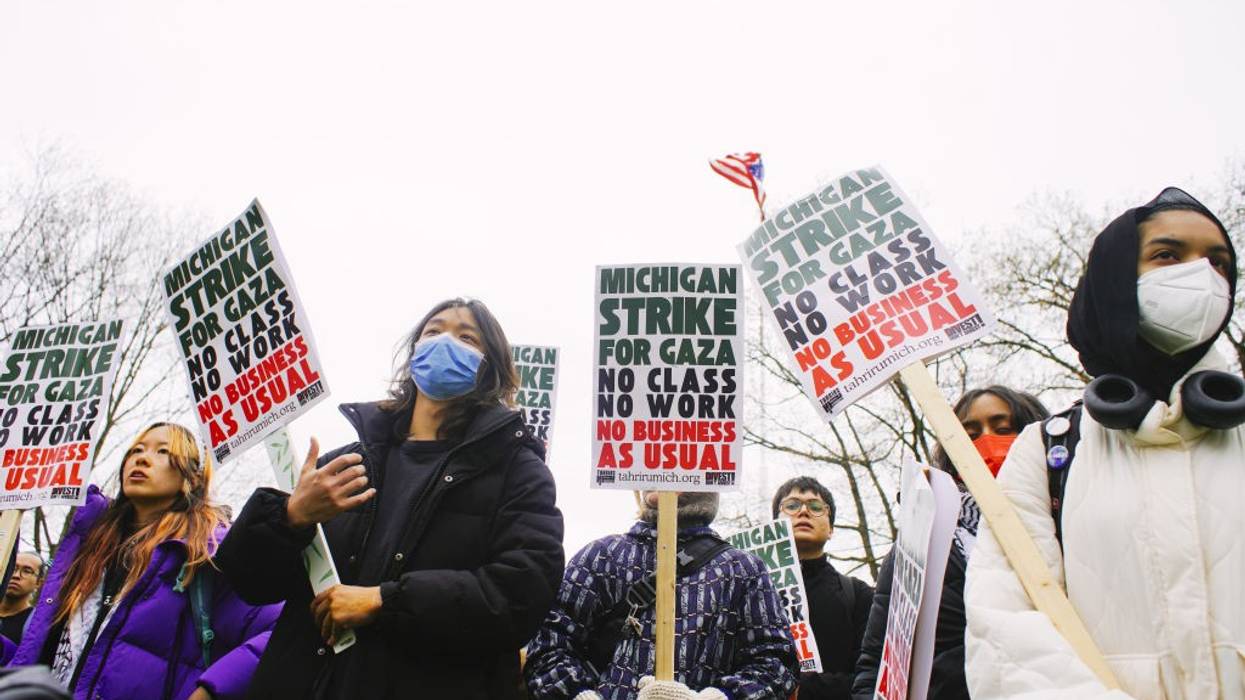
"We are totally convinced that, but for their viewpoints, these students would not have been targeted," said one attorney.
Federal and local law enforcement officers smashed their way into the Michigan homes of pro-Palestine student organizers on Wednesday in what the state attorney general's office said was a vandalism probe—but critics called an attack on dissent against Israel's genocidal assault on Gaza.
Backed by FBI agents, officers broke into homes in Ypsilanti, Canton, and Ann Arbor on Wednesday morning. Video uploaded to social media by Students Allied for Freedom and Equality, a Students for Justice in Palestine chapter, showed officers battering down the door to a Ypsilanti house before others rushed into the home barking commands with guns drawn and pointed at the residents.
"No search warrant was provided," someone says in the video as the invaders crashed through the homes' locked front door. People in the house said their phones and other electronic devices and possessions, including vehicles, were taken.
🚨BREAKING | Officials Confirms Raids in Multiple Cities; TAHRIR Coalition Says FBI Agents, Michigan State Police, and Local Officers Targeted Pro-Palestine Organizers
[image or embed]
— Drop Site (@dropsitenews.com) April 23, 2025 at 12:44 PM
MLive reported that people inside the home were handcuffed and moved to the porch outside before being released about 15 minutes later.
The pro-Palestine advocacy group TAHRIR Coalition rallied supporters to two of the homes. Video posted on YouTube shows members of a crowd that gathered outside the Ypsilanti house taunting the agents as they came in and out of the home.
According to Drop Site News, Ann Arbor police said that the investigation involves "reported crimes" committed in the city and other jurisdictions.
An FBI spokesperson confirmed bureau agents took part in the raids, which he described vaguely as "law enforcement activities."
Danny Wimmer, a spokesperson for Democratic Michigan Attorney General Dana Nessel, who is Jewish, told the Detroit Free Press that the raids "were not related to protest activity on the campus of the University of Michigan," but were "in furtherance of our investigation into multijurisdictional acts of vandalism."
"There is no immigration enforcement angle to the execution of these search warrants," Wimmer added.
However, Liz Jacob, an attorney with the Sugar Law Center in Detroit, noted that "everyone who was raided has taken part in protest and has some relationship to the University of Michigan."
"We are totally convinced that, but for their viewpoints, these students would not have been targeted," Jacob added.
Jacob said seven people were targeted in Wednesday's raids. No arrests were made. The attorney also noted that the warrants were signed by Judge Michelle Friedman Appel, whose jurisdiction includes Huntington Woods, where vandals painted graffiti and inflicted other damage at the home of University of Michigan Regent Jordan Acker while the Jewish man and his family slept inside last December.
Last month, vandals also damaged the Ann Arbor home of Provost Laurie McCauley.
The Graduate Employees' Organization, a union affiliated with the American Federation of Teachers, said one of its members was detained during Wednesday's raids.
"We strongly condemn the actions taken today and all past and present repression of political activism," the group said. "We urge University of Michigan administrators, the regents of the University of Michigan, and Michigan Attorney General Dana Nessel to end their campaign against students and stop putting graduate workers in harm's way."
Dawud Walid, the Michigan director of the Council on American-Islamic Relations (CAIR), said in a statement that "we call into question the aggressive nature of this morning's raids of activists' homes, which follows the recent misuse of prosecutorial power in Michigan and throughout our country against pro-Palestinian activists."
"In any other context, such minor infractions would be handled by local law enforcement or referred to local, elected prosecutors—not escalated to federal intervention," Walid added. "This disproportionate response further fuels the perception that Muslim and Arab students, and those who stand in solidarity with them, are being treated overly hostile by law enforcement compared to those who commit harm toward American Muslims."
According to CAIR:
This recent escalation comes on the heels of prior arrests and charges brought by the Michigan attorney general's office against University of Michigan student protesters for minor, nonviolent infractions—including misdemeanor trespassing—during peaceful demonstrations advocating for Palestinian human rights, an end to the genocide in Gaza, and for the University of Michigan to divest from companies complicit in the occupation and violence.
After Nessel announced criminal charges—some of them felonies—for 11 University of Michigan Palestine defenders last September, Rep. Rashida Tlaib (D-Mich.), the only Palestinian American member of Congress, said the attorney general was "going to set a precedent, and it's unfortunate that a Democrat made that move."
"We've had the right to dissent, the right to protest. We've done it for climate, the immigrant rights movement, for Black lives, and even around issues of injustice among water shutoffs," Tlaib said. "But it seems that the attorney general decided if the issue was Palestine, she was going to treat it differently, and that alone speaks volumes about possible biases within the agency she runs."
At the federal level, the Trump administration has been arresting and initiating deportation proceedings against international students who have taken part in pro-Palestine campus protests. Although the government admits the targeted individuals have committed no crimes, immigration law allows the removal of foreign nationals deemed detrimental to U.S. foreign policy objectives.
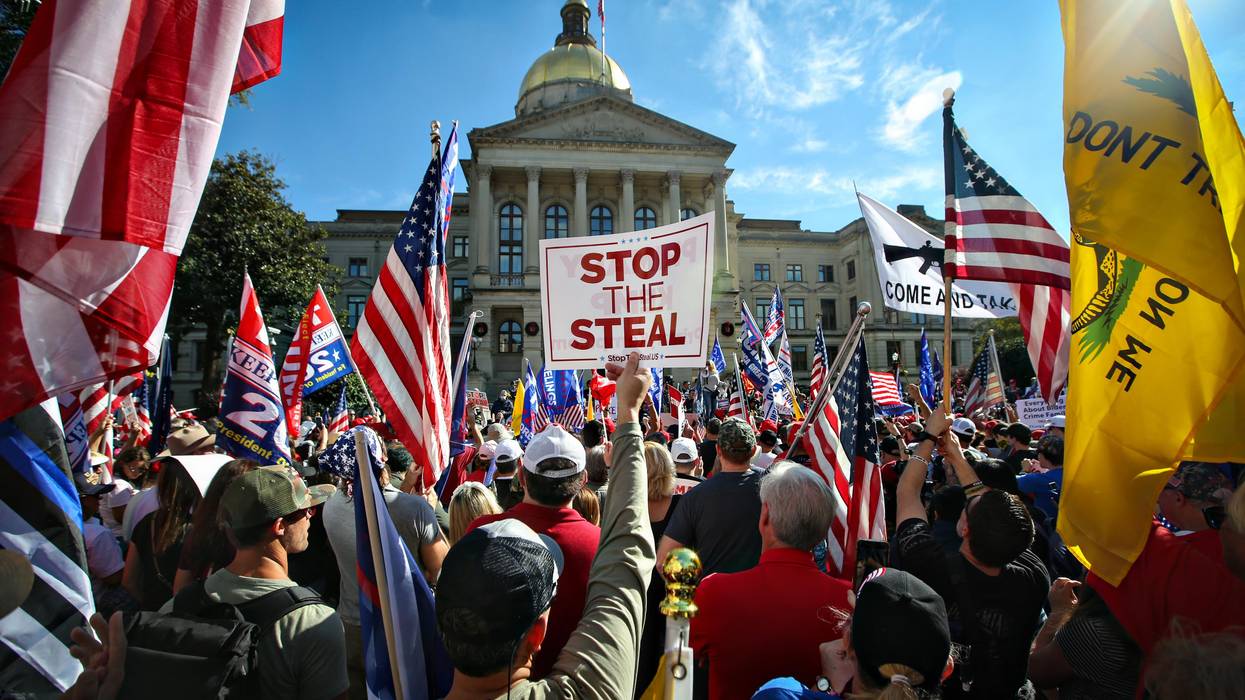
"The election deniers are back at it, laying the groundwork to run the Big Lie playbook once again," warned one swing-state campaigner.
At least 1 in 5 potential battleground state electors for former U.S. President Donald Trump are linked to the Republican nominee's attempt to subvert the 2020 election, according to an analysis published Monday.
Politico reported that "of the 93 Republicans designated as prospective presidential electors for Trump from the seven battleground states, eight are facing felony charges for signing false Electoral College certificates in 2020."
Five additional possible electors signed similar documents in 2020 but were not criminally charged, according to the reporting, while at least half a dozen others "played notable roles in challenging the results of the 2020 election or promoting election conspiracy theories."
"These people continued to peddle and push not misinformation, which is accidental, but disinformation, which is intentional."
With numerous Trump aides and GOP officials facing criminal charges for their alleged roles in the former president's bogus "Stop the Steal" scheme, experts say it is somewhat less likely that the Republican nominee or his allies would attempt another such plot. However, Trump and his boosters have recycled similar claims of election fraud in what critics say is a bid to spread misinformation and sow doubt about the outcome of Tuesday's contest if the 2020 loser is defeated by Democratic Vice President Kamala Harris.
"It does show a lack of regard for the criminal and ethical problems with doing this," Mary McCord, a Georgetown law professor and executive director of the Institute for Constitutional Advocacy and Protection, told Politico.
As Politico notes:
Six of the returning fake electors hail from Michigan. John Haggard, Hank Choate, Timothy King, Meshawn Maddock, Amy Facchinello, and Marian Sheridan were among the group of Michiganders who signed a document in 2020 purporting to be official electoral certificates claiming the state’s electoral votes went to Donald Trump, despite Biden winning Michigan by more than 150,000 votes. Michigan Attorney General Dana Nessel, a Democrat, brought felony charges against them, including forgery-related crimes punishable by up to 14 years. Those cases are ongoing and all have pleaded not guilty.
In the battleground state of Wisconsin—where President Joe Biden defeated Trump by less than 21,000 votes, or 0.63%, in 2020—"election deniers are back at it, laying the groundwork to run the Big Lie playbook once again through actions designed to attack the electoral process, sow seeds of chaos set to bloom post-election, and further undermine confidence in our democracy," warned Wisconsin Democracy Campaign executive director Nick Ramos in a Sunday opinion piece in the Cap Times.
"That is exactly what their antics wrought after the 2020 election—chaos resulting in the January 6 insurrection and years of baseless conspiracy theories that did not, and will not, succeed in changing a single election result but did succeed in undermining the confidence of millions of Americans in our democracy," he continued.
"The bullies are back again, continuing their strategy to interfere in Wisconsin's elections," Ramos added.
While some observers claim that would-be election subversives are likely to tread gingerly in light of the potential criminal consequences for alleged Big Lie conspirators, McCord said that "it would appear that the party leadership in the states where there are fraudulent electors serving as electors again are not taking seriously things like the criminal charges that have been brought against these fraudulent electors."
Amy Tarkanian, a former chair of the Nevada Republican Party, told Politico that "these people continued to peddle and push not misinformation, which is accidental, but disinformation, which is intentional."
"It's definitely disappointing," she lamented.
In Arizona—where former state GOP chief Kelli Ward and 11 other Republican officials have been criminally charged in connection with the alleged fake electors scheme—current Republican Party Chair Gina Swoboda has been pushing spurious election fraud claims. This, even as Loraine Pellegrino, a past president of a right-wing women's group who falsely attested that Trump won Arizona in 2020, earlier this year became the first person convicted in the state's fake electors case.
Democracy defenders have sounded the alarm on the potential for violence fueled by baseless claims of election fraud.
The Global Project Against Hate and Extremism said last week that it is "seeing the same warning signs of political violence based on election denialism combined with violent language across fringe platforms that we saw in the weeks before the 2020 election and before the January 6, 2021 insurrection at the Capitol."
According to a YouGov poll published Saturday, just over two-thirds of respondents—including more than 80% of surveyed Democrats and 55% of Republicans— believe it is either "somewhat" or "very likely" that Trump will refuse to concede if he loses to Harris.

Quite justified moral outrage shouldn’t obscure what this episode taught us about the professional quality exhibited by two of CNN's most prominent anchors.
CNN’s Jake Tapper and Dana Bash are taking well-deserved heat for making and repeating a demonstrably false accusation of antisemitism against Rep. Rashida Tlaib (D-MI). The story has been widely reported (see here and here, for example) and is also summarized below for anyone who might have missed it. The bottom line is that, in an interview, Tlaib objected to Michigan Attorney General Dana Nessel’s decision to prosecute pro-Palestinian student protestors. In response, Nessel falsely claimed that Tlaib “used her (Nessel’s) religion” to imply she was biased.
Tapper and Bash repeated the Attorney General’s false accusation and accused Tlaib of antisemitism, even after the reporter who spoke with Tlaib tried repeatedly to correct them. The CNN journalists finally walked their comments back, kinda-sorta, but not in a way that absolves them.
It’s ironic. Despite the mainstream media’s much-repeated concerns about “disinformation”—a concern CNN has often echoed—these two media stars participated in a disinformation campaign against the American people. But moral outrage, however justified, shouldn’t obscure something else this episode taught us about Tapper and Bash: they’re also very bad at their jobs.
Don’t take my word for it. Their chosen profession has ethics and standards, by which they must be judged harshly. The Code of Ethics of the Society of Professional Journalists (SPJ) states clearly that journalists must “verify information before releasing it,” which Tapper and Bash clearly did not do.
Despite the mainstream media’s much-repeated concerns about “disinformation”—a concern CNN has often echoed—these two media stars participated in a disinformation campaign against the American people.
The SPJ also advises that journalists “use original sources whenever possible.” But Tapper and Bash don’t even seem to have read the original interview with Tlaib, even though it was freely available online. By all appearances, they relied solely on the Attorney General’s angry tweet. That’s shockingly unprofessional.
Journalists are expected to “acknowledge mistakes and correct them promptly and prominently,” and must “explain corrections and clarifications carefully and clearly.”
“Promptly”? It took days to respond. “Carefully and clearly”? Tapper said that he “misspoke,” and Bash’s walk-back was even weaker. “Tlaib did not reference (the Attorney General’s) Jewish identity,” said Bash, and “her office says that is not what she meant.” But Bash repeated the false accusation when she added that Nessel (who is hardly an objective source) “says she still believes (Tlaib’s statement) is antisemitic.”
The Code of Ethics also states that journalists must “support the open and civil exchange of views,” adding, “even views they find repugnant.”
It would appear that Tapper and Bash have strong views on Israel-Palestine which differ from Rep. Tlaib’s. Nevertheless, they’re obliged to air differing views without slurs or accusations. They failed to do that.
“Journalists should examine the ways their values and experiences may shape their reporting,” says the SPJ’s code. “Ethical journalism means taking responsibility for one’s work and explaining one’s decisions to the public.”
The last sentence speaks for itself.
“Stop being fooled by misinformation,” one CNN headline reads. “Do this instead.”
I have grave misgivings about the way mainstream media, politicians, and national security institutions want to treat misinformation (getting the facts wrong) and disinformation (deliberate deception). But it’s always helpful to teach critical reading skills. Experts in that field have insights that might prove useful to Tapper and Bash.
The CNN article covered misinformation research by the American Psychological Association (APA), which writes that “psychological factors make people susceptible” to deception. The APA warns readers about “the emotional content of misinformation,” adding: “People are more likely to believe false statements that appeal to emotions such as fear and outrage.”
That appears to be the case with Tapper and Bash, who seem to have let their emotions and prejudices overwhelm their professional judgment.
The media and political elites in this country are interconnected. They collaborate, socialize, and reinforce each other’s biases. They form, not a “conspiracy” as such, but what Gore Vidal called “a conspiracy of shared values.”
The APA also says, “People are more likely to believe misinformation if it comes from in-group sources rather than out-group ones, or if they judge the source as credible.”
The media and political elites in this country are interconnected. They collaborate, socialize, and reinforce each other’s biases. They form, not a “conspiracy” as such, but what Gore Vidal called “a conspiracy of shared values.” They form a community, comprised of people who know one another and see the world in similar ways.
The Michigan Attorney General is a mainstream Democrat and therefore part of that community. Rashida Tlaib is an outsider: left-leaning, brash, and Palestinian—something Tapper couldn’t resist bringing up when he first made his accusation.
Michigan’s Attorney General was guilty of demagoguery. She overrode the judgment of the county prosecutor and chose to file charges against the students, repeating a pattern of selective prosecution seen all across the country. When challenged, she brought religion into the debate—fully aware that Muslim Americans face great bias in this country.
Two prominent media figures then embraced her lie, amplified it, and repeated it even after being challenged. When confronted, they “corrected” themselves without accepting responsibility or explaining their actions. In the meantime, their lie took on a life of its own, as every “Big Lie” does. It’s still being repeated as of this writing.
That’s disinformation, and it doesn’t happen in a vacuum. The disinformation campaign around Gaza, Palestine, Israel, and the protest movement has flooded this country with fake stories that range from beheaded babies to “billionaires” and “outside agitators” supplying campus demonstrators with tents and chains. You won’t hear politicians or media corporations weigh in on this disinformation campaign campaign, however, because it doesn’t come from political outsiders or overseas click farms.
It comes from them.
You can read more about it here and here, but here’s the gist (if you know the story you can skip to the next section): Rep. Rashida Tlaib (D-MI) criticized Michigan Attorney General Dana Nessel for overruling county authorities and pressing charges against pro-Palestinian demonstrators at the University of Michigan, a decision Tlaib called “biased.”
The write-up of the interview in the Detroit Metro Times originally included this sentence:
Tlaib also criticized Nessel, who is the first Jewish person elected Attorney General of Michigan, for what she believes is a biased approach to the protest.
“Rashida should not use my religion to imply I cannot perform my job fairly as Attorney General,” Nessel tweeted in response. “It’s anti-Semitic and wrong.”
Even a cursory glance at the article reveals nothing to suggest that Tlaib mentioned Nessel’s religion. And yet, after gratuitously mentioning Tlaib’s Palestinian background, Tapper asked Michigan Governor Gretchen Whitmer if Tlaib’s comment was antisemitic. He doubled down when Whitmer demurred:
“Congresswoman Tlaib is suggesting that she shouldn’t be prosecuting these individuals that Nessel says broke the law, and that she’s only doing it because she’s Jewish and the protesters are not. That’s quite an accusation. Do you think it’s true?”
Steve Neavling, the reporter who interviewed Tlaib, pushed back. “Fact-check,” he tweeted. “Tlaib did not say Nessel charged pro-Palestinian protesters because she’s Jewish.” He wrote a detailed fact-check. He also addressed Tapper directly on X. “You’re spreading lies,” said Neavling.
CNN’s Dana Bash repeated the lie after Neavling’s pushback, claiming on-air that Tlaib had said “the state’s Jewish attorney general was letting her religion influence her job.” That was false.

"At this point, there is virtually zero chance that CNN, Jake Tapper, and Dana Bash don't know that Rashida Tlaib never said what they are claiming," said one observer.
Calls grew on Monday for CNN and two of its top on-air personalities to apologize for claiming that U.S. Congresswoman Rashida Tlaib made an antisemitic remark during a recent interview after the journalist who interviewed the Michigan Democrat confirmed that the reporters were lying.
During the September 13 interview with Detroit Metro Times reporter Steve Neavling, Tlaib—the only Palestinian American member of Congress—condemned Democratic Michigan Attorney General Dana Nessel for setting a "dangerous precedent" by prosecuting University of Michigan students who peacefully protested against Israel's war on Gaza, for which the key U.S. ally is on trial for genocide at the International Court of Justice. Charges against the Michigan protesters include trespassing on their own campus and obstructing police.
"I'm the reporter who interviewed Rashida Tlaib. She never said Nessel did this because she's Jewish. Never. You're spreading lies."
"We've had the right to dissent, the right to protest," Tlaib said during the interview. "We've done it for climate, the immigrant rights movement, for Black lives, and even around issues of injustice among water shutoffs. But it seems that the attorney general decided if the issue was Palestine, she was going to treat it differently, and that alone speaks volumes about possible biases within the agency she runs."
Nessel, who is Jewish, accused Tlaib of antisemitism in a Friday social media post comparing the congresswoman's comments to a cartoon drawn by Detroit News automotive reporter Henry Payne and published in the right-wing National Review implying Tlaib is a member of Hezbollah, the Lebanese political and paramilitary group.
Enter Jake Tapper, CNN's lead Washington anchor, who critics have long accused of pro-Israel bias. On Monday, Tapper interviewed Michigan Gov. Gretchen Whitmer, asking the Democrat to respond to Tlaib's purported assertion that Nessel is only prosecuting Palestine protesters "because she's Jewish."
"I'm not going to get in the middle of this argument that they're having," Whitmer said. "I can just say this. We do want to make sure that students are safe on our campuses, and we recognize that every person has the right to make their statement about how they feel about an issue, a right to speak out, and I'm going to use every lever of mine to ensure that both are true."
During a live broadcast on Monday, CNN anchor Dana Bash lamented what she called the "sad reality" that "antisemitism is everywhere and it comes from both ends of the political spectrum."
"But politicians sometimes sidestep calling it out when it comes from a member of their own party," she added, referring to "a Democratic congresswoman's accusation that the state's Jewish attorney general was letting her religion influence her job."
There was no such "accusation."
Jonathan Greenblatt, CEO and national director of the Anti-Defamation League—which has come under fire for conflating legitimate criticism of Israel with hatred of Jews—slammed Whitmer,
posting Monday that "saying you want to 'make sure that students are safe on our campuses' is just words if you are not willing to use your bully pulpit to speak out unequivocally on antisemitism and support holding people accountable for violating the law when it affects Jews."
Whitmer then issued a new statement
saying: "The suggestion that Attorney General Nessel would make charging decisions based on her religion as opposed to the rule of law is antisemitic. We must all use our platforms and voices to call out hateful rhetoric and racist tropes."
Neavling accused Whitmer of "adding to the lie."
"I'm the reporter who interviewed Rashida Tlaib," he
said in response to a social media post by Tapper. "She never said Nessel did this because she's Jewish. Never. You're spreading lies."
On Monday,
Detroit Metro Times also published a fact-check by Neavling underscoring that Tlaib never said what Nessel, Tapper, and Bash claim.
"Tlaib never once mentioned Nessel's religion or Judaism. But Metro Times pointed out in the story that Nessel is Jewish, and that appears to be the spark that led to the false claims," Neavling wrote. "It should also be noted that the ACLU of Michigan criticized Nessel for charging peaceful protesters at the University of Michigan."
Margaret Zaknoen DeReus, executive director at the California-based Institute for Middle East Understanding, said Monday that "at this point, there is virtually zero chance that CNN, Jake Tapper, and Dana Bash don't know that Rashida Tlaib never said what they are claiming."
"Why are they doubling down instead of correcting themselves and apologizing?" she asked.
Isaac Bailey, a McClatchy columnist and professor of communications practices at Davidson College in North Carolina, asserted Tuesday that Bash and Tapper "owe Tlaib an apology."
Later on Monday, Tapper said during an interview with Nessel that he "misspoke yesterday" about Tlaib's comments.
Bash followed Tuesday by acknowledging that Tlaib "did not reference Nessel's Jewish identity," but added that Nessel believes the congresswoman's remarks were antisemitic.
Dawud Walid, executive director of the Michigan branch of the Council on American-Islamic Relations, said in a statement Tuesday that "CNN made a misstatement of fact that needs to be retracted if the network is to maintain its journalistic credibility."
"Congresswoman Tlaib should also be offered a public apology for falsely claiming she is antisemitic," Walid added.
As the Jewish Telegraphic Agency noted earlier this year, Bash and Tapper have "both infused their Jewish identity into their reporting."
Tlaib has faced repeated unfounded allegations of antisemitism from both Democrats and Republicans in Congress, especially for calling Israel's war on Gaza a "genocide"—an assessment with which many experts concur—and for using the phrase, "From the river to the sea."
The congresswoman has explained that, to her and to many Palestinians, the phrase—which is also a core component of the original platform of Israeli Prime Minister Benjamin Netanyahu's right-wing Likud party—"is an aspirational call for freedom, human rights, and peaceful coexistence, not death, destruction, or hate."
Last November, Tlaib's House colleagues voted 234-188, with 22 Democrats joining almost all Republicans present, in approving a resolution to censure the congresswoman over her defense of Palestine and criticism of Israel's annihilation of Gaza, which has now left more than 147,000 Palestinians dead, maimed, or missing.
On Tuesday, 21 House Democrats led by Reps. Debbie Wasserman Schultz (D-Fla.) and Haley Stevens (D-Mich.) published a statement contending that "casting doubt on Attorney General Nessel's impartiality or implying these cases are being handled unfairly due to her religious background is antisemitic, deeply disturbing, and unacceptable."
The dead in Gaza include at least 100 journalists, the vast majority of whom are Palestinian.
In May, the Paris-based press freedom group Reporters Without Borders (RSF) filed a third complaint at the International Criminal Court alleging "war crimes against journalists in Gaza."
RSF said it had "reasonable grounds for thinking that some of these journalists were deliberately killed and that the others were the victims of deliberate IDF attacks against civilians" and accused Israel of "an eradication of the Palestinian media."
There has been little reporting on the subject by the U.S. corporate media, even as American journalists are killed or wounded in what journalistic investigations have concluded are deliberate targetings by Israeli forces.
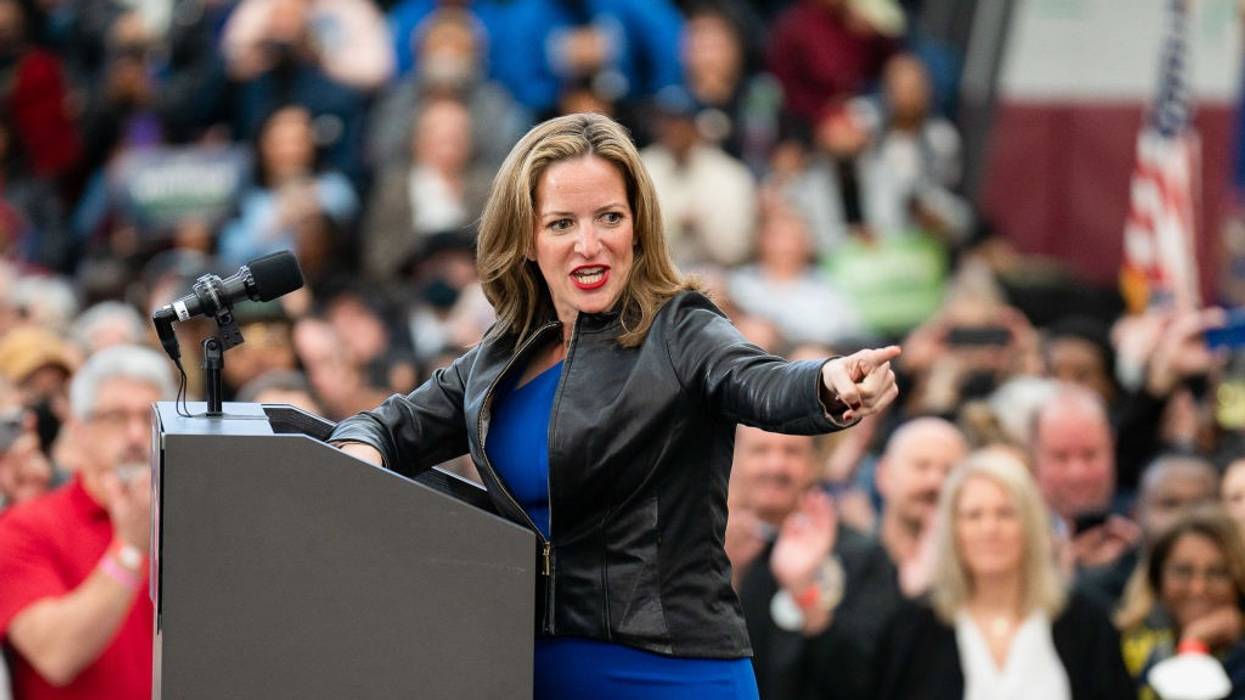
"Every citizen should know exactly how their personal information is being used by PACs, especially if an entity is claiming it will help people register to vote."
Michigan Secretary of State Jocelyn Benson is investigating a super political action committee created by billionaire Elon Musk that's been accused of "misleading voters" because of how it collects personal data of swing state residents online.
"Every citizen should know exactly how their personal information is being used by PACs, especially if an entity is claiming it will help people register to vote in Michigan or any other state," a spokesperson for the Democratic official told CNBC on Sunday.
"While the America PAC is a federal political action committee, the department is reviewing their activities to determine if there have been any violations of state law," the spokesperson added. "We will refer potential violations to the Michigan attorney general's office as appropriate."
Sharing the CNBC article on X—a social media platform formerly called Twitter, which Musk bought in 2022—Benson said that she and Democratic Attorney General Dana Nessel "take intentional efforts to mislead voters very seriously in our state."
Benson also thanked Michigan Senate Majority Whip Mallory McMorrow (D-8) "for bringing the website to our attention a few days ago."
CNBC political finance reporter Brian Schwartz on Friday had reported on the digital advertising and data collection activities of America PAC, which is working to elect former Republican President Donald Trump. The journalist detailed how people who enter ZIP codes for competitive areas are not sent to local voter registration pages, "they instead are directed to a highly detailed personal information form, prompted to enter their address, cell phone number, and age."
Schwartz's reporting sparked accusations that the super PAC's scheme "seems like election fraud" and calls for the U.S. Department of Justice to launch an investigation. As with the initial reporting, Schwartz noted Sunday that a spokesperson for the group declined to comment and Musk did not return emails seeking comment.
After the reporter revealed Michigan's probe on Sunday, he pointed out on X that America PAC "took down their homepage links to register to vote and request a ballot."
Ben Gardner, All Voting Is Local's Michigan senior campaign manager, welcomed his state's investigation into the super PAC.
"Good," Gardner said Sunday. "Michiganders should feel confident knowing that Michigan's secretary of state will stand up to those who attempt to mislead voters."

"Pursuing this litigation will allow us to recoup our costs and hold those responsible for jeopardizing Michigan's economic future and way of life accountable," said the state attorney general
Advocates of holding fossil fuel giants accountable for their significant contributions to the climate emergency welcomed Michigan Attorney General Dana Nessel's Thursday announcement that she intends to sue the polluting industry.
" Big Oil knew decades ago that their products would cause catastrophic climate change, but instead of doing the right thing they lied about it," declared Richard Wiles, president of the Center for Climate Integrity. "The people of Michigan deserve their day in court to make these companies pay for the massive harm they knowingly caused."
Dozens of municipalities and attorneys general for the District of Columbia and eight states—California, Connecticut, Delaware, Massachusetts, Minnesota, New Jersey, Rhode Island, and Vermont—have already filed climate liability suits against Big Oil in recent years.
"Our 'Pure Michigan' identity is under threat from the effects of climate change," said Nessel, whose state was praised last year for passing clean energy legislation. "Warmer temperatures are shrinking ski seasons in the UP and disrupting the wonderful blooms of Holland's Tulip Time Festival. Severe weather events are on the rise."
"These impacts threaten not only our way of life but also our economy and pose long-term risks to Michigan's thriving agribusiness," she continued. "The fossil fuel industry, despite knowing about these consequences, prioritized profits over people and the environment. Pursuing this litigation will allow us to recoup our costs and hold those responsible for jeopardizing Michigan's economic future and way of life accountable."
The Democratic attorney general's office explained that she is "seeking proposals from attorneys and law firms to serve as special assistant attorneys general to pursue litigation related to the climate change impacts caused by the fossil fuel industry on behalf of the state of Michigan."
The Detroit News noted that "Nessel took a similar tact in suing drugmakers for the opioid crisis, farming out much of the work to outside law firms in Michigan, Texas, and Florida."
According to the newspaper:
Nessel's office is working with other state departments to assess the costs associated with climate change, such as the cost of expanding storm water systems to handle flooding caused by stronger storms, responding to natural disasters, or supporting northern Michigan tourism economies dealing with dwindling ice and snow.
"This is going to be a massive discovery effort to find out exactly what our Michigan damages are now already and what can we expect to see in the future as a result of climate change," she said.
"I don't know that there's a bigger issue facing the state of Michigan than climate change," Nessel told the outlet. "We are talking about billions and billions of dollars in damages and we're already starting to see that on a day-to-day basis. We know this is only going to get worse."
The youth-led Sunrise Movement applauded Nessel's plans and asserted that U.S. President Joe Biden—who is seeking reelection in November—and the Department of Justice "must follow suit."
The group's call echoed similar demands that emerged last week in response to the U.S. Senate Budget Committee's hearing about a three-year investigation into "Big Oil's campaign of deception and distraction."

"Today is another day of Michigan values holding strong against lies about our elections," said one campaigner.
Government ethics advocates on Tuesday welcomed the indictment of former Michigan attorney general candidate Matt DePerno and ex-state Rep. Daire Rendon, Republicans who prosecutors say illegally tampered with voting equipment as part of former President Donald Trump's efforts to overturn the 2020 election.
DePerno—who was endorsed by Trump—was charged with four crimes, including undue possession of a voting machine and willfully damaging a voting machine, both felonies under Michigan law. Rendon was charged with conspiracy to commit undue possession of a voting machine and false pretenses.
According to court documents, DePerno, Rendon, and others allegedly gained unauthorized access to a ballot machine and convinced local clerks to hand over tabulators. The defendants printed fake ballots and ran tests on the equipment in a failed bid to substantiate Trump's "Big Lie" that the 2020 presidential election was rigged by Democrats. President Joe Biden won Michigan by more than 154,000 votes.
"Today is another day of Michigan values holding strong against lies about our elections," Quentin Turner, program director at Common Cause Michigan, said in a statement. "For years, Michiganders of all parties have continued to resoundingly reject lies and conspiracy theories about our election."
"Mr. DePerno, Ms. Rendon, and their team's alleged actions do not reflect the voices of millions who believe in fair, accessible elections and upholding the will of the people," Turner added. "We are convinced that the upcoming case against DePerno and Rendon will result in accountability and show, once again, that Michigan is a state that believes in protecting the rights of its citizens."
DePerno denied any wrongdoing and insisted that he has "uncovered significant security flaws" in Michigan's voting system, according to a statement from his attorney.
The defendants were arraigned via Zoom on Tuesday and released on $5,000 bonds. Neither responded to the charges against them.
"This process is ongoing and still not over," Muskegon County prosecutor DJ Hilson, the special prosecutor in the investigation, said in a statement. Hilson told MLive that "there is still more to come."
Michigan Attorney General Dana Nessel, a Democrat who last year requested the special prosecutor probe, responded to the charges against the pair by accusing them of causing "undeniable harm to our democracy."
"We hope for swift justice in the courts, and that the Michigan Attorney Grievance Commission takes a sincere and sober assessment of the actions of the attorneys involved in the campaign of circulating disinformation about our elections and any related criminal activities," she added.
The Michigan indictments came on the same day that Trump was hit with four federal charges in connection with Special Counsel Jack Smith's probe of the former president's efforts to overturn the 2020 presidential election, as well as his role in inciting the deadly January 6, 2021 attack on the U.S. Capitol.
Trump—who in recent months has also been indicted in a Miami federal court and on 34 counts in a New York state case involving alleged hush money payments—could also soon be facing charges stemming from Fulton County, Georgia District Attorney Fani Willis' investigation of efforts to overturn the state's 2020 election results.
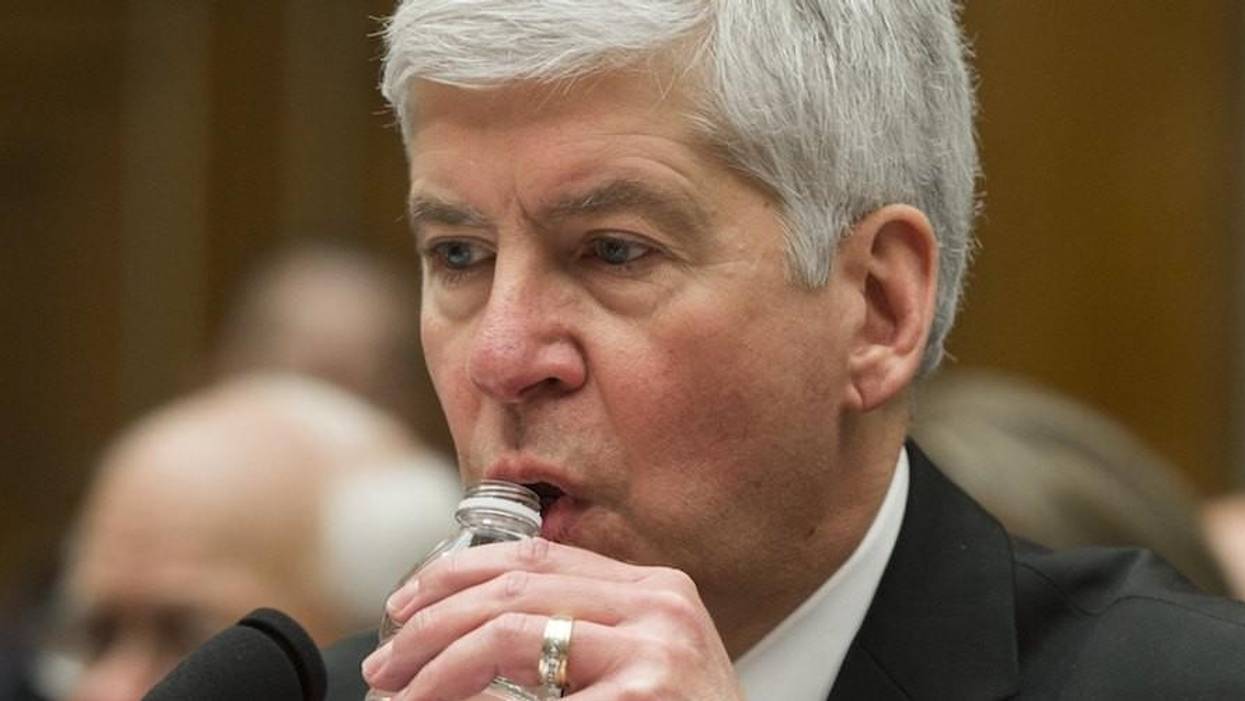
VICE on Thursday published an "astounding" and "important" exclusive report on how Rick Snyder, a Republican who served as Michigan's governor from 2011 to 2019, "knew about Flint's toxic water--and lied about it."
The report, based on a year-and-a-half investigation, comes almost six years after an emergency manager appointed by Snyder switched Flint's water supply from Detroit's system to the Flint River. Since that move on April 25, 2014, city residents have endured health consequences resulting from a deadly Legionella pneumophila bacterial outbreak and exposure to heavy metals and cancer-causing contaminants.
As Jordan Chariton and Jenn Dize reported Thursday:
Hundreds of confidential pages of documents obtained by VICE, along with emails and interviews, reveal a coordinated, five-year cover-up overseen by Snyder and his top officials to prevent news of Flint's deadly water from going public--while there was still time to save lives--and then limit the damage after the crisis made global headlines.
All told, the waterborne bacterial disease may have killed at least 115 people in 2014 and 2015, and potentially more whose pneumonia wasn't officially considered Legionnaires' disease, the illness caused by Legionella. In addition to the outbreak, Flint's water supply was contaminated with lead and other heavy metals, harmful bacteria, carcinogens, and other toxic components. This wreaked havoc on Flint residents, leaving them with a laundry list of illnesses, including kidney and liver problems, severe bone and muscle pain, gastrointestinal problems, loss of teeth, autoimmune diseases, neurological deficiencies, miscarriages, Parkinson's disease, severe fatigue, seizures, and volatile mood disorders.
Beyond this, the long-term effects of heavy-metal poisoning takes years to develop, meaning many ill residents' conditions are worsening as the years go on. Many have said they still rely on bottled water to avoid using the water that comes through their pipes and into their homes, schools, and businesses.
The report detailed actions of local and state officials both leading up to and during the public health crisis, which continues today. It is based on interviews and documents from a criminal investigation of Snyder's administration that was led by special prosecutor Todd Flood from 2016 until last year, when newly elected state Attorney General Dana Nessel fired Flood and others.
The prosecution team led by Flood charged 15 Flint and Michigan officials with various crimes; seven of those cases were resolved with plea agreements. In January 2019, Nessel appointed Fadwa Hammoud as the state's solicitor general and assigned her to take over the Flint criminal cases.
In June, the state's prosecution team dismissed all pending criminal charges against the eight remaining defendants and launched a new probe based on concerns about the initial one. That decision, as Common Dreams reported, "elicited fresh concerns and demands for justice."
VICE noted that with Flint about to enter its sixth year of the water crisis, "the clock for justice is also ticking." Unless the Republican-controlled state legislature intervenes, the statute of limitations for filing new felony misconduct-in-office charges will run out next week. Chariton highlighted that detail in a series of tweets about the reporting Thursday.
In August, a pair of state legislators from Flint proposed legislation to extend the statute of limitations from six years to 10. Karen Weaver, then-mayor of Flint, expressed support for the proposal, declaring at the time that "there is no time limit that can be put on the amount of suffering that we have faced, nor the amount of pain as a result of the loss of life."
Weaver told VICE that the governor's office repeatedly dangled "a pot of money for different things" and pressured her to publicly claim that the city's water was safe. The outlet reported that "after repeated attempts by the Snyder administration to get Mayor Weaver to cooperate proved unsuccessful, the promised funding suddenly became unavailable."
The outlet added:
Weaver was even pressed to say the water in Flint's schools was safe to drink, according to former city government officials familiar with the administration's overtures to Weaver. Weaver didn't, and soon after, the remaining free water-bottle stations Flint residents relied on were prematurely shut down.
When the stations were shuttered, Weaver attempted to reopen them by turning to the $48.8 million rainy-day fund that was allocated to Flint from the state's 2017-2018 budget. But when Weaver looked, the money was gone. The Snyder administration had been using these funds--meant to be under Flint's control--to pay for the water stations.
In addition to detailing interactions between Weaver and the Snyder administration from the mayor's perspective, the report highlighted a few findings from the Flint criminal investigation documents:
Snyder and his attorneys did not respond to VICE's requests for comment. Several other officials named in the exhaustive report also declined to respond or comment, with some of them citing the ongoing criminal investigation.
The reporting provoked a fresh wave of criticism directed at government officials involved in the crisis and was published as the international community contends with a global pandemic that has infected more than two million people since late last year.
Sharing Chariton and Dize's Flint piece on Twitter Thursday, VICE senior editor Maxwell Strachan wrote that "coronavirus is the biggest story in the country, and rightfully so. But today, this enormous, exclusive, and damning story should be a very, very close second."