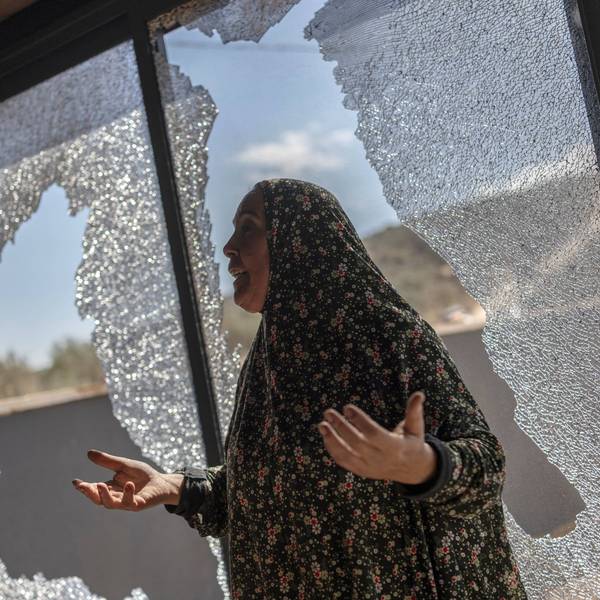
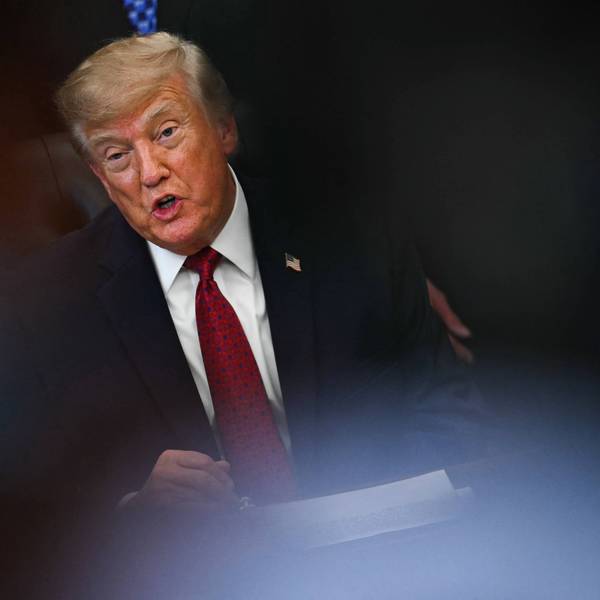

Protesters demand that the Biden administration take immediate action to reverse the actions taken by the Trump administration to deepen the economic war against Cuba.
US Citizens Must Stop the Madness Their Empire Imposes on Them and the World
Today, the United States has the opportunity to prove to itself and to the world that the mistakes committed by its government do not reflect the desires of the US people.
Since January 2026, when the intensification of US policies aimed at suffocating the Cuban people began, I have had the opportunity to travel to the island three times. Each time I return with my heart a little more broken, but also with a stronger conviction that we need to defend Cuba.
As a Mexican, I have received, on behalf of my compatriots, thousands of expressions of gratitude and hugs that the Cuban people send to the Mexican people. Every time I am there, I speak about the empathy and understanding we have toward Cuba, about the great efforts ordinary Mexicans make to bring a few kilos of rice to collection centers. And when I listen to Cubans, I learn a little more about the deep history that unites us.
But as a Mexican American and a binational activist, I also carry the weight of understanding the average US citizen. After many years of living in the United States, I continue to be surprised by how deeply the dream of democracy lives within people there, despite the fact that the country has been experiencing a deepening democratic crisis for years.
The deprivation imposed by Washington on the Cuban people for decades is now being reflected within the very core of the empire itself. It is suffered not only by migrants, Native Americans, Black communities, and the historically oppressed. Today, that same yoke has reached a white middle class that is beginning to feel the collapse of freedoms originally created for them.
Only the people of the United States—and no one else—can carry out the transformations their own country needs.
Fortunately, people in the United States can learn much here from Latin America—and Cuba in particular. They can learn from the region’s long history of struggle against Washington’s domination—and from the long construction of democratic processes from below that go far beyond just elections.
The resilience and social fabric the Cuban people have built are unique, just as unique as the oppression caused by the blockade the US government has maintained for all these decades. The United States needs public healthcare, free access to university education, and affordable housing. It needs to stop investing the billions it spends on war and instead invest that money in its own people. Cuba has done that.
The dream of democracy in any country is built beyond the ballot box alone, through projects that people themselves embrace and carry out. Today, the United States has the opportunity to prove to itself and to the world that the mistakes committed by its government do not reflect the desires of the US people. Today, as C. Wright Mills said 60 years ago, “Cuba’s voice must be heard in the United States, because the United States is too powerful and its responsibilities to the world and to itself are too great for its people not to hear the voices coming from the hungry world.”
The United States is preparing for another electoral cycle while its policies of war and interventionism throughout the Global South get reaffirmed.
At the same time, the island of 10 million inhabitants is preparing to continue resisting in the face of the possibility of an attack. In Cuba’s “Family Guide for Protection in Case of Military Aggression,” one can read recommendations for what to pack in a backpack: identification, a radio, candles, food, medicine, and toys to help distract children.
A recently published poll by the Center for Economic Policy Research (CEPR), a think tank based in Washington, DC, reveals that more than 60% of US citizens oppose a war with Cuba. At the same time, solidarity networks with Cuba in the United States—which have existed since the beginning of the blockade—are reactivating with renewed strength.
But can US citizens truly stop the madness their own empire imposes on them and on the rest of the world? Let us hope so, because only the people of the United States—and no one else—can carry out the transformations their own country needs. Only then will Cuba, the United States, Mexico, and the rest of the world be free.
We are at a crossroads
This country and this world are at a monumental crossroads. In a few short weeks, US voters will have an opportunity to beat back the forces of fascism and confront the billionaires who are rigging the economy, our media system, and our democracy, making it increasingly impossible for ordinary people to get by. We’re not just talking about the election. We’re talking about what must be done once these fascist elements are vanquished from power. We need a bolder set of solutions than what either major party has so far been willing to offer and a working-class movement ready to fight like hell for it. Trump didn't emerge from nowhere. The conditions that fueled MAGA authoritarianism were created by decades of radical neoliberal economic policies and a corrupt political system dominated by corporate interests. They slashed taxes on the super-rich, promising that the benefits would trickle down. They said giveaways to the corporate titans would make life more affordable for the rest of us. It was all bullshit. And when a bitter, betrayed populace searches for someone to blame, right-wing demagogues have little trouble finding scapegoats. People know when they're being lied to, but you won't hear any of this from the corporate media. Only independent journalism—powered and funded by people who believe in building a better world—can deliver truly trustworthy daily news. Our Fall Campaign is underway, and we need your help. To power our newsroom through the rest of the year, we need to raise $125,000 by midnight on October 31. So if you share our vision, please contribute whatever you can to sustain our work. |
Since January 2026, when the intensification of US policies aimed at suffocating the Cuban people began, I have had the opportunity to travel to the island three times. Each time I return with my heart a little more broken, but also with a stronger conviction that we need to defend Cuba.
As a Mexican, I have received, on behalf of my compatriots, thousands of expressions of gratitude and hugs that the Cuban people send to the Mexican people. Every time I am there, I speak about the empathy and understanding we have toward Cuba, about the great efforts ordinary Mexicans make to bring a few kilos of rice to collection centers. And when I listen to Cubans, I learn a little more about the deep history that unites us.
But as a Mexican American and a binational activist, I also carry the weight of understanding the average US citizen. After many years of living in the United States, I continue to be surprised by how deeply the dream of democracy lives within people there, despite the fact that the country has been experiencing a deepening democratic crisis for years.
The deprivation imposed by Washington on the Cuban people for decades is now being reflected within the very core of the empire itself. It is suffered not only by migrants, Native Americans, Black communities, and the historically oppressed. Today, that same yoke has reached a white middle class that is beginning to feel the collapse of freedoms originally created for them.
Only the people of the United States—and no one else—can carry out the transformations their own country needs.
Fortunately, people in the United States can learn much here from Latin America—and Cuba in particular. They can learn from the region’s long history of struggle against Washington’s domination—and from the long construction of democratic processes from below that go far beyond just elections.
The resilience and social fabric the Cuban people have built are unique, just as unique as the oppression caused by the blockade the US government has maintained for all these decades. The United States needs public healthcare, free access to university education, and affordable housing. It needs to stop investing the billions it spends on war and instead invest that money in its own people. Cuba has done that.
The dream of democracy in any country is built beyond the ballot box alone, through projects that people themselves embrace and carry out. Today, the United States has the opportunity to prove to itself and to the world that the mistakes committed by its government do not reflect the desires of the US people. Today, as C. Wright Mills said 60 years ago, “Cuba’s voice must be heard in the United States, because the United States is too powerful and its responsibilities to the world and to itself are too great for its people not to hear the voices coming from the hungry world.”
The United States is preparing for another electoral cycle while its policies of war and interventionism throughout the Global South get reaffirmed.
At the same time, the island of 10 million inhabitants is preparing to continue resisting in the face of the possibility of an attack. In Cuba’s “Family Guide for Protection in Case of Military Aggression,” one can read recommendations for what to pack in a backpack: identification, a radio, candles, food, medicine, and toys to help distract children.
A recently published poll by the Center for Economic Policy Research (CEPR), a think tank based in Washington, DC, reveals that more than 60% of US citizens oppose a war with Cuba. At the same time, solidarity networks with Cuba in the United States—which have existed since the beginning of the blockade—are reactivating with renewed strength.
But can US citizens truly stop the madness their own empire imposes on them and on the rest of the world? Let us hope so, because only the people of the United States—and no one else—can carry out the transformations their own country needs. Only then will Cuba, the United States, Mexico, and the rest of the world be free.
Since January 2026, when the intensification of US policies aimed at suffocating the Cuban people began, I have had the opportunity to travel to the island three times. Each time I return with my heart a little more broken, but also with a stronger conviction that we need to defend Cuba.
As a Mexican, I have received, on behalf of my compatriots, thousands of expressions of gratitude and hugs that the Cuban people send to the Mexican people. Every time I am there, I speak about the empathy and understanding we have toward Cuba, about the great efforts ordinary Mexicans make to bring a few kilos of rice to collection centers. And when I listen to Cubans, I learn a little more about the deep history that unites us.
But as a Mexican American and a binational activist, I also carry the weight of understanding the average US citizen. After many years of living in the United States, I continue to be surprised by how deeply the dream of democracy lives within people there, despite the fact that the country has been experiencing a deepening democratic crisis for years.
The deprivation imposed by Washington on the Cuban people for decades is now being reflected within the very core of the empire itself. It is suffered not only by migrants, Native Americans, Black communities, and the historically oppressed. Today, that same yoke has reached a white middle class that is beginning to feel the collapse of freedoms originally created for them.
Only the people of the United States—and no one else—can carry out the transformations their own country needs.
Fortunately, people in the United States can learn much here from Latin America—and Cuba in particular. They can learn from the region’s long history of struggle against Washington’s domination—and from the long construction of democratic processes from below that go far beyond just elections.
The resilience and social fabric the Cuban people have built are unique, just as unique as the oppression caused by the blockade the US government has maintained for all these decades. The United States needs public healthcare, free access to university education, and affordable housing. It needs to stop investing the billions it spends on war and instead invest that money in its own people. Cuba has done that.
The dream of democracy in any country is built beyond the ballot box alone, through projects that people themselves embrace and carry out. Today, the United States has the opportunity to prove to itself and to the world that the mistakes committed by its government do not reflect the desires of the US people. Today, as C. Wright Mills said 60 years ago, “Cuba’s voice must be heard in the United States, because the United States is too powerful and its responsibilities to the world and to itself are too great for its people not to hear the voices coming from the hungry world.”
The United States is preparing for another electoral cycle while its policies of war and interventionism throughout the Global South get reaffirmed.
At the same time, the island of 10 million inhabitants is preparing to continue resisting in the face of the possibility of an attack. In Cuba’s “Family Guide for Protection in Case of Military Aggression,” one can read recommendations for what to pack in a backpack: identification, a radio, candles, food, medicine, and toys to help distract children.
A recently published poll by the Center for Economic Policy Research (CEPR), a think tank based in Washington, DC, reveals that more than 60% of US citizens oppose a war with Cuba. At the same time, solidarity networks with Cuba in the United States—which have existed since the beginning of the blockade—are reactivating with renewed strength.
But can US citizens truly stop the madness their own empire imposes on them and on the rest of the world? Let us hope so, because only the people of the United States—and no one else—can carry out the transformations their own country needs. Only then will Cuba, the United States, Mexico, and the rest of the world be free.