SUBSCRIBE TO OUR FREE NEWSLETTER
Daily news & progressive opinion—funded by the people, not the corporations—delivered straight to your inbox.
5
#000000
#FFFFFF
To donate by check, phone, or other method, see our More Ways to Give page.
Daily news & progressive opinion—funded by the people, not the corporations—delivered straight to your inbox.
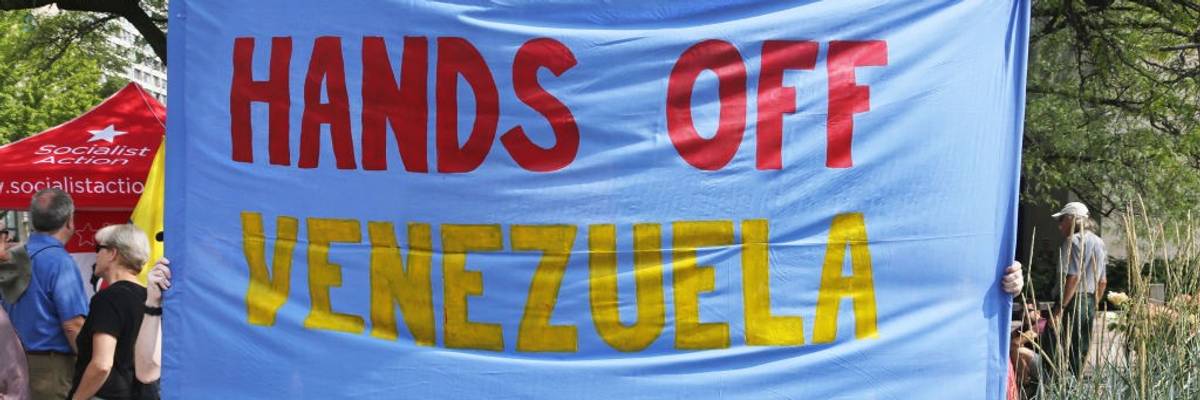
Canadians rally to demand an end to American attempts at a "regime change" in Venezuela and to denounce Canada's complicity to overthrow the government of Venezuela in Toronto, Canada, on September, 16 2017.
Critics of state violence become most dangerous when they directly jeopardize the state’s capacity to inflict violence. The most common and tangible way that happens is when soldiers refuse to kill.
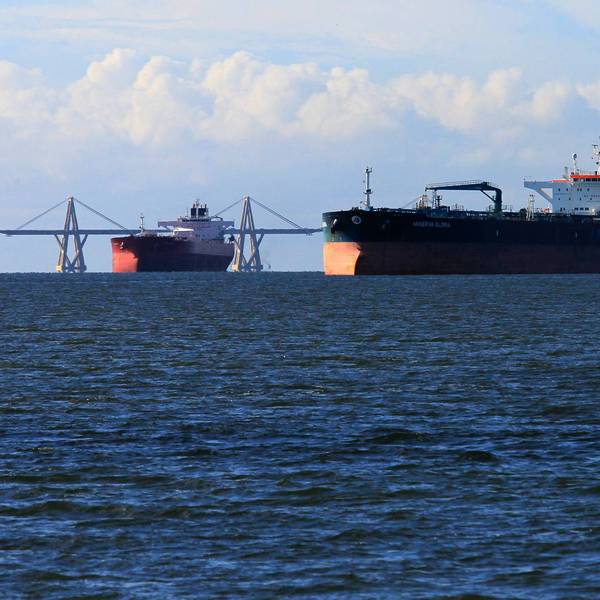
Few believe the justifications for the ongoing US murder campaign, and now military blockade, off the coast of Venezuela. Even US officials seem halfheartedly committed to their claims about stopping drugs. They now concede that the real goal is overthrowing the Venezuelan government and recovering “our oil,” which was mistakenly buried under Venezuelan soil.
If they succeed there, they will surely escalate violence against Cuba and perhaps other noncompliant governments. The larger goal, proclaims the US secretary of defense, is the “restoration of our power and prerogatives in this hemisphere.” That entails reasserting “US military dominance in the Western Hemisphere” and with it the “access to key terrain throughout the region”—that is, markets and resources like our oil. In the meantime, if blowing up boats can also divert attention from domestic scandals, that’s a bonus.
Though US actions are indisputably illegal under both international and domestic law, the administration is confident it will enjoy impunity. More assurance came on December 17 when the House of Representatives rejected a War Powers Resolution brought by Rep. Jim McGovern (D-Mass.).
To stop US aggression against Venezuela we must look beyond Congress and the courts to other possible sources of constraint. The strength of the Venezuelan military and its loyalty to Nicolás Maduro is one source. Resistance from powerful Latin American governments like Mexico, Brazil, and Colombia, along with China, may be another. But what can those of us in the United States do?
Pressure campaigns directed at members of Congress should not only repeat all the usual demands—war powers resolutions, bills to cut off funding, impeachment—but also focus on getting them to publicly amplify the message of the November 18 video.
In this country, only one thing so far seems to have threatened the administration’s confidence: the threat of disobedience within the military. On November 18 six members of Congress released a video calling on all military servicemembers to “refuse illegal orders.” Doing so is not just a right but a legal duty, they said: Soldiers “must refuse” such orders. As Rep. Mark Kelly (D-Ariz.) reiterated publicly, “You are not allowed to follow illegal orders.”
In response, President Donald Trump called publicly for the execution of those who made the video. That reaction was not just an outburst from a fascist blowhard. It reflected the realistic concern that faltering military loyalty could undermine the administration’s agenda in Venezuela and beyond, including here in the United States.
Critics of state violence become most dangerous when they directly jeopardize the state’s capacity to inflict violence. The most common and tangible way that happens is when soldiers refuse to kill.
Some of the 20th century’s leading voices for peace and justice have been tolerated by the state until they began encouraging disobedience to illegal and immoral orders. The government’s harshest reaction to longtime socialist and labor organizer Eugene Debs came in 1918 when he condemned World War I as an imperialist war for the rich, which the government plausibly interpreted as a call for soldiers to disobey orders (Debs said forthrightly that he was “obstructing the war”). Debs had been organizing workers and preaching socialism for the past quarter century, but his 10-year prison sentence in 1918 was by far the harshest punishment he received.
Martin Luther King Jr. also became his most dangerous when he threatened the Johnson administration’s ability to wage war against Vietnam. In 1967 he began calling the US “the greatest purveyor of violence in the world.” His analysis of the “triple evils” of capitalism, racism, and empire gained a mass audience at the very moment that the Vietnamese resistance—alongside growing disobedience by US soldiers—was imperiling the slaughter in Vietnam. King had been a public figure since the mid-1950s, but only in 1968 was he killed.
The martyred archbishop of San Salvador, Oscar Romero, was likewise killed at the very moment that he urged soldiers of the country’s US-backed military regime to disobey orders. Romero had been criticizing state violence since 1977, but only on March 23, 1980 did he make “a special appeal to the men of the army” to stop killing their own people. The following evening he was killed by a sniper while saying mass.
In all three cases—Debs, King, Romero—the critics were most intolerable to the state when they incited disobedience in the armed forces. Given the extent of mass mobilization and politicization at each of those moments, their incitements were particularly likely to impede military discipline.
We lack that level of mobilization in the US today, but Trump’s actions against Venezuela are drawing growing public attention and condemnation. US residents are also witnessing the administration’s escalating militarization inside their own country. In this context, high-profile calls to “refuse illegal orders” become very dangerous, particularly in relation to military personnel. Unlike US police, the armed forces have a substantial history of internal dissent and disobedience.
Soldier resistance may or may not be morally driven. The statement that soldiers and officers must refuse illegal orders also raises the prospect of prosecution. That is rare and especially hard to imagine at this moment, but not entirely implausible at a later date. And future defendants can’t necessarily assume a future president will pardon them.
The lawmakers who released the November 18 video may have stumbled onto a viable strategy for undermining Trump’s war plans. This is a real break from the Democrats’ normal fecklessness. It’s easy to see why Democratic leaders would be queasy about continuing this approach, since so many of former Presidents Barack Obama and Joe Biden’s foreign policies were also illegal. They don’t want to destroy the US government’s capacity to engage in illegal warfare.
But the November 18 video, and the willingness of Mark Kelly and others to stand behind it amid persecution, suggest an opening. Pressure campaigns directed at members of Congress should not only repeat all the usual demands—war powers resolutions, bills to cut off funding, impeachment—but also focus on getting them to publicly amplify the message of the November 18 video.
Organizing soldiers and countering military recruitment must be priorities for those interested in stopping future US violence. Those are long-term projects though. Right now, we should demand of our politicians (and celebrities, online influencers, whoever) that they amplify the message: Military personnel can and must refuse illegal and immoral orders.
Dear Common Dreams reader, It’s been nearly 30 years since I co-founded Common Dreams with my late wife, Lina Newhouser. We had the radical notion that journalism should serve the public good, not corporate profits. It was clear to us from the outset what it would take to build such a project. No paid advertisements. No corporate sponsors. No millionaire publisher telling us what to think or do. Many people said we wouldn't last a year, but we proved those doubters wrong. Together with a tremendous team of journalists and dedicated staff, we built an independent media outlet free from the constraints of profits and corporate control. Our mission has always been simple: To inform. To inspire. To ignite change for the common good. Building Common Dreams was not easy. Our survival was never guaranteed. When you take on the most powerful forces—Wall Street greed, fossil fuel industry destruction, Big Tech lobbyists, and uber-rich oligarchs who have spent billions upon billions rigging the economy and democracy in their favor—the only bulwark you have is supporters who believe in your work. But here’s the urgent message from me today. It's never been this bad out there. And it's never been this hard to keep us going. At the very moment Common Dreams is most needed, the threats we face are intensifying. We need your support now more than ever. We don't accept corporate advertising and never will. We don't have a paywall because we don't think people should be blocked from critical news based on their ability to pay. Everything we do is funded by the donations of readers like you. When everyone does the little they can afford, we are strong. But if that support retreats or dries up, so do we. Will you donate now to make sure Common Dreams not only survives but thrives? —Craig Brown, Co-founder |
Few believe the justifications for the ongoing US murder campaign, and now military blockade, off the coast of Venezuela. Even US officials seem halfheartedly committed to their claims about stopping drugs. They now concede that the real goal is overthrowing the Venezuelan government and recovering “our oil,” which was mistakenly buried under Venezuelan soil.
If they succeed there, they will surely escalate violence against Cuba and perhaps other noncompliant governments. The larger goal, proclaims the US secretary of defense, is the “restoration of our power and prerogatives in this hemisphere.” That entails reasserting “US military dominance in the Western Hemisphere” and with it the “access to key terrain throughout the region”—that is, markets and resources like our oil. In the meantime, if blowing up boats can also divert attention from domestic scandals, that’s a bonus.
Though US actions are indisputably illegal under both international and domestic law, the administration is confident it will enjoy impunity. More assurance came on December 17 when the House of Representatives rejected a War Powers Resolution brought by Rep. Jim McGovern (D-Mass.).
To stop US aggression against Venezuela we must look beyond Congress and the courts to other possible sources of constraint. The strength of the Venezuelan military and its loyalty to Nicolás Maduro is one source. Resistance from powerful Latin American governments like Mexico, Brazil, and Colombia, along with China, may be another. But what can those of us in the United States do?
Pressure campaigns directed at members of Congress should not only repeat all the usual demands—war powers resolutions, bills to cut off funding, impeachment—but also focus on getting them to publicly amplify the message of the November 18 video.
In this country, only one thing so far seems to have threatened the administration’s confidence: the threat of disobedience within the military. On November 18 six members of Congress released a video calling on all military servicemembers to “refuse illegal orders.” Doing so is not just a right but a legal duty, they said: Soldiers “must refuse” such orders. As Rep. Mark Kelly (D-Ariz.) reiterated publicly, “You are not allowed to follow illegal orders.”
In response, President Donald Trump called publicly for the execution of those who made the video. That reaction was not just an outburst from a fascist blowhard. It reflected the realistic concern that faltering military loyalty could undermine the administration’s agenda in Venezuela and beyond, including here in the United States.
Critics of state violence become most dangerous when they directly jeopardize the state’s capacity to inflict violence. The most common and tangible way that happens is when soldiers refuse to kill.
Some of the 20th century’s leading voices for peace and justice have been tolerated by the state until they began encouraging disobedience to illegal and immoral orders. The government’s harshest reaction to longtime socialist and labor organizer Eugene Debs came in 1918 when he condemned World War I as an imperialist war for the rich, which the government plausibly interpreted as a call for soldiers to disobey orders (Debs said forthrightly that he was “obstructing the war”). Debs had been organizing workers and preaching socialism for the past quarter century, but his 10-year prison sentence in 1918 was by far the harshest punishment he received.
Martin Luther King Jr. also became his most dangerous when he threatened the Johnson administration’s ability to wage war against Vietnam. In 1967 he began calling the US “the greatest purveyor of violence in the world.” His analysis of the “triple evils” of capitalism, racism, and empire gained a mass audience at the very moment that the Vietnamese resistance—alongside growing disobedience by US soldiers—was imperiling the slaughter in Vietnam. King had been a public figure since the mid-1950s, but only in 1968 was he killed.
The martyred archbishop of San Salvador, Oscar Romero, was likewise killed at the very moment that he urged soldiers of the country’s US-backed military regime to disobey orders. Romero had been criticizing state violence since 1977, but only on March 23, 1980 did he make “a special appeal to the men of the army” to stop killing their own people. The following evening he was killed by a sniper while saying mass.
In all three cases—Debs, King, Romero—the critics were most intolerable to the state when they incited disobedience in the armed forces. Given the extent of mass mobilization and politicization at each of those moments, their incitements were particularly likely to impede military discipline.
We lack that level of mobilization in the US today, but Trump’s actions against Venezuela are drawing growing public attention and condemnation. US residents are also witnessing the administration’s escalating militarization inside their own country. In this context, high-profile calls to “refuse illegal orders” become very dangerous, particularly in relation to military personnel. Unlike US police, the armed forces have a substantial history of internal dissent and disobedience.
Soldier resistance may or may not be morally driven. The statement that soldiers and officers must refuse illegal orders also raises the prospect of prosecution. That is rare and especially hard to imagine at this moment, but not entirely implausible at a later date. And future defendants can’t necessarily assume a future president will pardon them.
The lawmakers who released the November 18 video may have stumbled onto a viable strategy for undermining Trump’s war plans. This is a real break from the Democrats’ normal fecklessness. It’s easy to see why Democratic leaders would be queasy about continuing this approach, since so many of former Presidents Barack Obama and Joe Biden’s foreign policies were also illegal. They don’t want to destroy the US government’s capacity to engage in illegal warfare.
But the November 18 video, and the willingness of Mark Kelly and others to stand behind it amid persecution, suggest an opening. Pressure campaigns directed at members of Congress should not only repeat all the usual demands—war powers resolutions, bills to cut off funding, impeachment—but also focus on getting them to publicly amplify the message of the November 18 video.
Organizing soldiers and countering military recruitment must be priorities for those interested in stopping future US violence. Those are long-term projects though. Right now, we should demand of our politicians (and celebrities, online influencers, whoever) that they amplify the message: Military personnel can and must refuse illegal and immoral orders.
Few believe the justifications for the ongoing US murder campaign, and now military blockade, off the coast of Venezuela. Even US officials seem halfheartedly committed to their claims about stopping drugs. They now concede that the real goal is overthrowing the Venezuelan government and recovering “our oil,” which was mistakenly buried under Venezuelan soil.
If they succeed there, they will surely escalate violence against Cuba and perhaps other noncompliant governments. The larger goal, proclaims the US secretary of defense, is the “restoration of our power and prerogatives in this hemisphere.” That entails reasserting “US military dominance in the Western Hemisphere” and with it the “access to key terrain throughout the region”—that is, markets and resources like our oil. In the meantime, if blowing up boats can also divert attention from domestic scandals, that’s a bonus.
Though US actions are indisputably illegal under both international and domestic law, the administration is confident it will enjoy impunity. More assurance came on December 17 when the House of Representatives rejected a War Powers Resolution brought by Rep. Jim McGovern (D-Mass.).
To stop US aggression against Venezuela we must look beyond Congress and the courts to other possible sources of constraint. The strength of the Venezuelan military and its loyalty to Nicolás Maduro is one source. Resistance from powerful Latin American governments like Mexico, Brazil, and Colombia, along with China, may be another. But what can those of us in the United States do?
Pressure campaigns directed at members of Congress should not only repeat all the usual demands—war powers resolutions, bills to cut off funding, impeachment—but also focus on getting them to publicly amplify the message of the November 18 video.
In this country, only one thing so far seems to have threatened the administration’s confidence: the threat of disobedience within the military. On November 18 six members of Congress released a video calling on all military servicemembers to “refuse illegal orders.” Doing so is not just a right but a legal duty, they said: Soldiers “must refuse” such orders. As Rep. Mark Kelly (D-Ariz.) reiterated publicly, “You are not allowed to follow illegal orders.”
In response, President Donald Trump called publicly for the execution of those who made the video. That reaction was not just an outburst from a fascist blowhard. It reflected the realistic concern that faltering military loyalty could undermine the administration’s agenda in Venezuela and beyond, including here in the United States.
Critics of state violence become most dangerous when they directly jeopardize the state’s capacity to inflict violence. The most common and tangible way that happens is when soldiers refuse to kill.
Some of the 20th century’s leading voices for peace and justice have been tolerated by the state until they began encouraging disobedience to illegal and immoral orders. The government’s harshest reaction to longtime socialist and labor organizer Eugene Debs came in 1918 when he condemned World War I as an imperialist war for the rich, which the government plausibly interpreted as a call for soldiers to disobey orders (Debs said forthrightly that he was “obstructing the war”). Debs had been organizing workers and preaching socialism for the past quarter century, but his 10-year prison sentence in 1918 was by far the harshest punishment he received.
Martin Luther King Jr. also became his most dangerous when he threatened the Johnson administration’s ability to wage war against Vietnam. In 1967 he began calling the US “the greatest purveyor of violence in the world.” His analysis of the “triple evils” of capitalism, racism, and empire gained a mass audience at the very moment that the Vietnamese resistance—alongside growing disobedience by US soldiers—was imperiling the slaughter in Vietnam. King had been a public figure since the mid-1950s, but only in 1968 was he killed.
The martyred archbishop of San Salvador, Oscar Romero, was likewise killed at the very moment that he urged soldiers of the country’s US-backed military regime to disobey orders. Romero had been criticizing state violence since 1977, but only on March 23, 1980 did he make “a special appeal to the men of the army” to stop killing their own people. The following evening he was killed by a sniper while saying mass.
In all three cases—Debs, King, Romero—the critics were most intolerable to the state when they incited disobedience in the armed forces. Given the extent of mass mobilization and politicization at each of those moments, their incitements were particularly likely to impede military discipline.
We lack that level of mobilization in the US today, but Trump’s actions against Venezuela are drawing growing public attention and condemnation. US residents are also witnessing the administration’s escalating militarization inside their own country. In this context, high-profile calls to “refuse illegal orders” become very dangerous, particularly in relation to military personnel. Unlike US police, the armed forces have a substantial history of internal dissent and disobedience.
Soldier resistance may or may not be morally driven. The statement that soldiers and officers must refuse illegal orders also raises the prospect of prosecution. That is rare and especially hard to imagine at this moment, but not entirely implausible at a later date. And future defendants can’t necessarily assume a future president will pardon them.
The lawmakers who released the November 18 video may have stumbled onto a viable strategy for undermining Trump’s war plans. This is a real break from the Democrats’ normal fecklessness. It’s easy to see why Democratic leaders would be queasy about continuing this approach, since so many of former Presidents Barack Obama and Joe Biden’s foreign policies were also illegal. They don’t want to destroy the US government’s capacity to engage in illegal warfare.
But the November 18 video, and the willingness of Mark Kelly and others to stand behind it amid persecution, suggest an opening. Pressure campaigns directed at members of Congress should not only repeat all the usual demands—war powers resolutions, bills to cut off funding, impeachment—but also focus on getting them to publicly amplify the message of the November 18 video.
Organizing soldiers and countering military recruitment must be priorities for those interested in stopping future US violence. Those are long-term projects though. Right now, we should demand of our politicians (and celebrities, online influencers, whoever) that they amplify the message: Military personnel can and must refuse illegal and immoral orders.