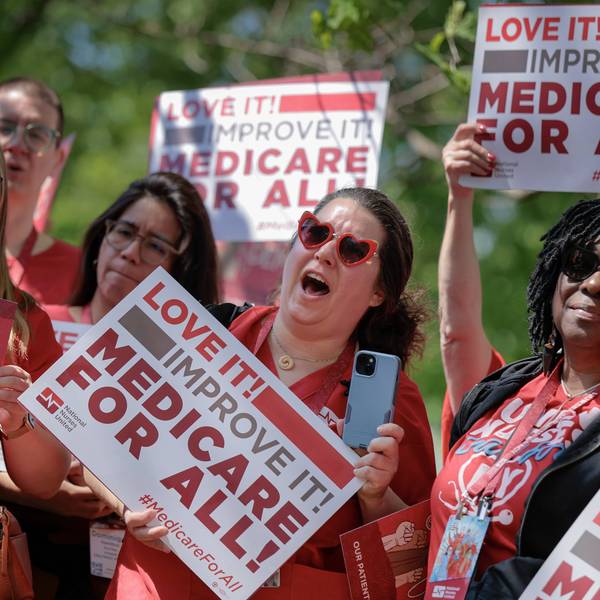
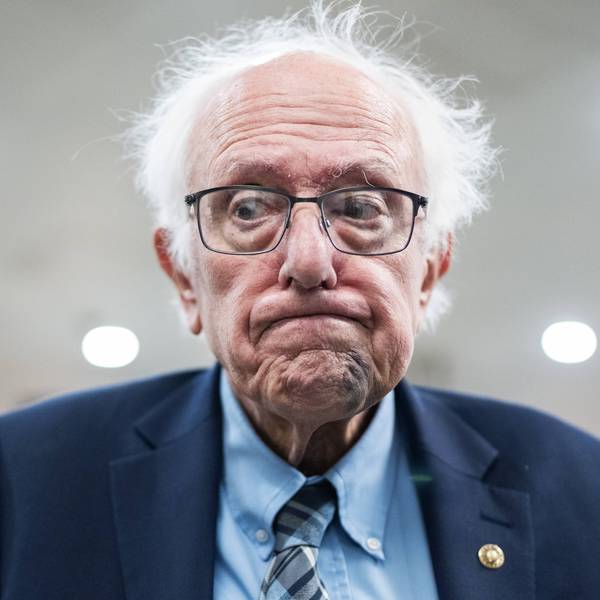
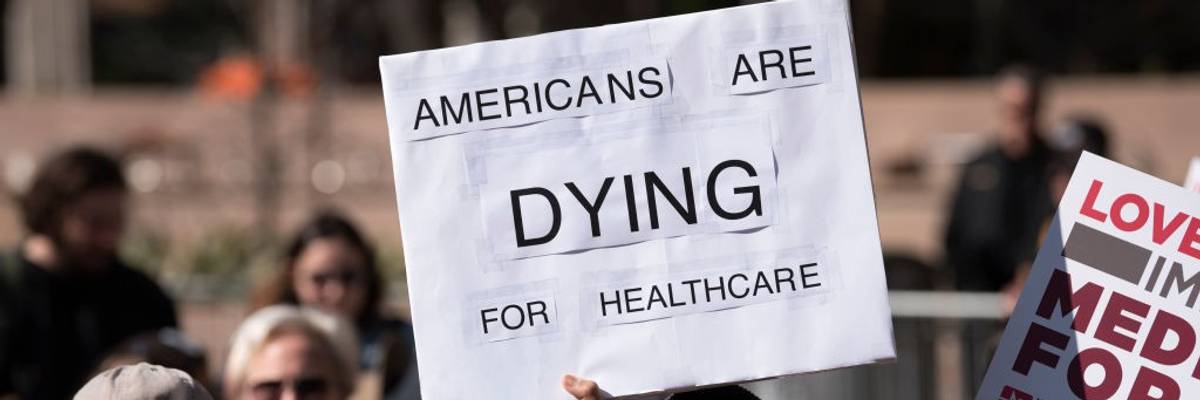
Participants gather for the Medicare for All Rally in Los Angeles California on February 4, 2017.
Our Healthcare System Is Failing; Medicare for All Is the Solution
When everybody has guaranteed access to high-quality care without financial barriers, physicians can focus solely on their patients’ needs and patients can trust that our recommendations are based on science.
The following remarks were delivered as testimony to the Congressional Progressive Caucus, Medicare for All Shadow Hearing on July 22, 2026.
Thank you for the opportunity to speak about our urgent need for Medicare for All. My name is Dr. Diljeet Singh, and as a practicing gynecologic oncologist, I do not exaggerate when I say our healthcare system is in dire straits. Every day in my clinic, I see patients struggling with the cost of healthcare: a woman on chemotherapy who cannot afford her anti-nausea prescription, or a patient forced to choose between an MRI copay and groceries for her family. If you walked through my clinic, you would know that this is no time to be tinkering with unproven reforms or complex regulations. It is long past time for Medicare for All.
I care for a part-time elementary school teacher whose health plan did not cover routine preventive care. Instead of getting regular Pap smears over the years, she arrived in my office with advanced cervical cancer. She underwent radical surgery followed by chemotherapy and radiation that fundamentally changed her body and her life—and she still has no guarantee of a cure.
Or consider another patient of mine who works two part-time jobs, with no health insurance. She ignored severe abdominal pain until it doubled her over. In the emergency room, she was told she had a potentially cancerous mass. She came to me for care, and thankfully, it turned out to be a non-cancerous ovarian cyst, cured by surgery. Yet, even in this best-case medical scenario, she still owes thousands of dollars. A treatable, curable medical problem absorbed her children’s college savings and her retirement money.
When the drive for profit outweighs patient health, professionals and patients alike are betrayed.
I am speaking to you today as president of Physicians for a National Health Program (PNHP), an organization of more than 25,000 health professionals nationwide. We are working to achieve universal single-payer healthcare—free from corporate middlemen, copays, deductibles, prior authorization, and the risk of medical debt. Similar countries around the world provide care to all while spending only half of what we spend—yet we die younger, face higher maternal mortality, and lose more newborns. We already spend enough money, but at least 35 cents of every healthcare dollar is wasted on insurance administration and corporate profit instead of patient care.
The root cause of this failure is the corporate takeover of healthcare, where financial interests take precedence over the sacred oath we swore as physicians—to prioritize our patients’ health and make evidence-based, patient-centered decisions free from third-party interference.
At PNHP, we conducted a two-year research project speaking with doctors about working in a profit-driven system where financial goals dictate clinical care. We found that doctors, like nurses, suffer from profound “moral injury”—the acute psychological harm caused by systemic barriers that prevent us from providing compassionate, evidence-based care. When the drive for profit outweighs patient health, professionals and patients alike are betrayed, driving clinicians out of medicine in increasing numbers.
Reversing this crisis requires recentering healthcare on patients and aligning with its true mission. The most commonsense solution is single-payer Medicare for All. When everybody has guaranteed access to high-quality care without financial barriers, physicians can focus solely on their patients’ needs and patients can trust that our recommendations are based on science and their healthcare needs—not corporate bottom lines.
Doctors, nurses, and patients understand that we need Medicare for All. Now we need Congress to understand the same thing—and to act with all of the urgency that this moment requires.
We are at a crossroads
This country and this world are at a monumental crossroads. In a few short weeks, US voters will have an opportunity to beat back the forces of fascism and confront the billionaires who are rigging the economy, our media system, and our democracy, making it increasingly impossible for ordinary people to get by. We’re not just talking about the election. We’re talking about what must be done once these fascist elements are vanquished from power. We need a bolder set of solutions than what either major party has so far been willing to offer and a working-class movement ready to fight like hell for it. Trump didn't emerge from nowhere. The conditions that fueled MAGA authoritarianism were created by decades of radical neoliberal economic policies and a corrupt political system dominated by corporate interests. They slashed taxes on the super-rich, promising that the benefits would trickle down. They said giveaways to the corporate titans would make life more affordable for the rest of us. It was all bullshit. And when a bitter, betrayed populace searches for someone to blame, right-wing demagogues have little trouble finding scapegoats. People know when they're being lied to, but you won't hear any of this from the corporate media. Only independent journalism—powered and funded by people who believe in building a better world—can deliver truly trustworthy daily news. Our Fall Campaign is underway, and we need your help. To power our newsroom through the rest of the year, we need to raise $125,000 by midnight on October 31. So if you share our vision, please contribute whatever you can to sustain our work. |
The following remarks were delivered as testimony to the Congressional Progressive Caucus, Medicare for All Shadow Hearing on July 22, 2026.
Thank you for the opportunity to speak about our urgent need for Medicare for All. My name is Dr. Diljeet Singh, and as a practicing gynecologic oncologist, I do not exaggerate when I say our healthcare system is in dire straits. Every day in my clinic, I see patients struggling with the cost of healthcare: a woman on chemotherapy who cannot afford her anti-nausea prescription, or a patient forced to choose between an MRI copay and groceries for her family. If you walked through my clinic, you would know that this is no time to be tinkering with unproven reforms or complex regulations. It is long past time for Medicare for All.
I care for a part-time elementary school teacher whose health plan did not cover routine preventive care. Instead of getting regular Pap smears over the years, she arrived in my office with advanced cervical cancer. She underwent radical surgery followed by chemotherapy and radiation that fundamentally changed her body and her life—and she still has no guarantee of a cure.
Or consider another patient of mine who works two part-time jobs, with no health insurance. She ignored severe abdominal pain until it doubled her over. In the emergency room, she was told she had a potentially cancerous mass. She came to me for care, and thankfully, it turned out to be a non-cancerous ovarian cyst, cured by surgery. Yet, even in this best-case medical scenario, she still owes thousands of dollars. A treatable, curable medical problem absorbed her children’s college savings and her retirement money.
When the drive for profit outweighs patient health, professionals and patients alike are betrayed.
I am speaking to you today as president of Physicians for a National Health Program (PNHP), an organization of more than 25,000 health professionals nationwide. We are working to achieve universal single-payer healthcare—free from corporate middlemen, copays, deductibles, prior authorization, and the risk of medical debt. Similar countries around the world provide care to all while spending only half of what we spend—yet we die younger, face higher maternal mortality, and lose more newborns. We already spend enough money, but at least 35 cents of every healthcare dollar is wasted on insurance administration and corporate profit instead of patient care.
The root cause of this failure is the corporate takeover of healthcare, where financial interests take precedence over the sacred oath we swore as physicians—to prioritize our patients’ health and make evidence-based, patient-centered decisions free from third-party interference.
At PNHP, we conducted a two-year research project speaking with doctors about working in a profit-driven system where financial goals dictate clinical care. We found that doctors, like nurses, suffer from profound “moral injury”—the acute psychological harm caused by systemic barriers that prevent us from providing compassionate, evidence-based care. When the drive for profit outweighs patient health, professionals and patients alike are betrayed, driving clinicians out of medicine in increasing numbers.
Reversing this crisis requires recentering healthcare on patients and aligning with its true mission. The most commonsense solution is single-payer Medicare for All. When everybody has guaranteed access to high-quality care without financial barriers, physicians can focus solely on their patients’ needs and patients can trust that our recommendations are based on science and their healthcare needs—not corporate bottom lines.
Doctors, nurses, and patients understand that we need Medicare for All. Now we need Congress to understand the same thing—and to act with all of the urgency that this moment requires.
- Trump Healthcare Payment Proposal Sparks Fresh Medicare for All Demands to Fix ‘Broken’ Healthcare System ›
- 'Now Is the Time to Organize,' Says Medicare for All Coalition ›
- Medicare for All Reintroduced to Save $650 Billion and 68,000 Lives Per Year ›
- A Public Option Won't Save Us. The Sick and Disabled Need Medicare-for-All ›
- Medicare for All, Says Sanders, Would Show American People 'Government Is Listening to Them' ›
- Medicare for All Backers Argue It's a Better Solution Than Whatever Trump Is Cooking Up ›
The following remarks were delivered as testimony to the Congressional Progressive Caucus, Medicare for All Shadow Hearing on July 22, 2026.
Thank you for the opportunity to speak about our urgent need for Medicare for All. My name is Dr. Diljeet Singh, and as a practicing gynecologic oncologist, I do not exaggerate when I say our healthcare system is in dire straits. Every day in my clinic, I see patients struggling with the cost of healthcare: a woman on chemotherapy who cannot afford her anti-nausea prescription, or a patient forced to choose between an MRI copay and groceries for her family. If you walked through my clinic, you would know that this is no time to be tinkering with unproven reforms or complex regulations. It is long past time for Medicare for All.
I care for a part-time elementary school teacher whose health plan did not cover routine preventive care. Instead of getting regular Pap smears over the years, she arrived in my office with advanced cervical cancer. She underwent radical surgery followed by chemotherapy and radiation that fundamentally changed her body and her life—and she still has no guarantee of a cure.
Or consider another patient of mine who works two part-time jobs, with no health insurance. She ignored severe abdominal pain until it doubled her over. In the emergency room, she was told she had a potentially cancerous mass. She came to me for care, and thankfully, it turned out to be a non-cancerous ovarian cyst, cured by surgery. Yet, even in this best-case medical scenario, she still owes thousands of dollars. A treatable, curable medical problem absorbed her children’s college savings and her retirement money.
When the drive for profit outweighs patient health, professionals and patients alike are betrayed.
I am speaking to you today as president of Physicians for a National Health Program (PNHP), an organization of more than 25,000 health professionals nationwide. We are working to achieve universal single-payer healthcare—free from corporate middlemen, copays, deductibles, prior authorization, and the risk of medical debt. Similar countries around the world provide care to all while spending only half of what we spend—yet we die younger, face higher maternal mortality, and lose more newborns. We already spend enough money, but at least 35 cents of every healthcare dollar is wasted on insurance administration and corporate profit instead of patient care.
The root cause of this failure is the corporate takeover of healthcare, where financial interests take precedence over the sacred oath we swore as physicians—to prioritize our patients’ health and make evidence-based, patient-centered decisions free from third-party interference.
At PNHP, we conducted a two-year research project speaking with doctors about working in a profit-driven system where financial goals dictate clinical care. We found that doctors, like nurses, suffer from profound “moral injury”—the acute psychological harm caused by systemic barriers that prevent us from providing compassionate, evidence-based care. When the drive for profit outweighs patient health, professionals and patients alike are betrayed, driving clinicians out of medicine in increasing numbers.
Reversing this crisis requires recentering healthcare on patients and aligning with its true mission. The most commonsense solution is single-payer Medicare for All. When everybody has guaranteed access to high-quality care without financial barriers, physicians can focus solely on their patients’ needs and patients can trust that our recommendations are based on science and their healthcare needs—not corporate bottom lines.
Doctors, nurses, and patients understand that we need Medicare for All. Now we need Congress to understand the same thing—and to act with all of the urgency that this moment requires.
- Trump Healthcare Payment Proposal Sparks Fresh Medicare for All Demands to Fix ‘Broken’ Healthcare System ›
- 'Now Is the Time to Organize,' Says Medicare for All Coalition ›
- Medicare for All Reintroduced to Save $650 Billion and 68,000 Lives Per Year ›
- A Public Option Won't Save Us. The Sick and Disabled Need Medicare-for-All ›
- Medicare for All, Says Sanders, Would Show American People 'Government Is Listening to Them' ›
- Medicare for All Backers Argue It's a Better Solution Than Whatever Trump Is Cooking Up ›