SUBSCRIBE TO OUR FREE NEWSLETTER
Daily news & progressive opinion—funded by the people, not the corporations—delivered straight to your inbox.
5
#000000
#FFFFFF
To donate by check, phone, or other method, see our More Ways to Give page.
Daily news & progressive opinion—funded by the people, not the corporations—delivered straight to your inbox.
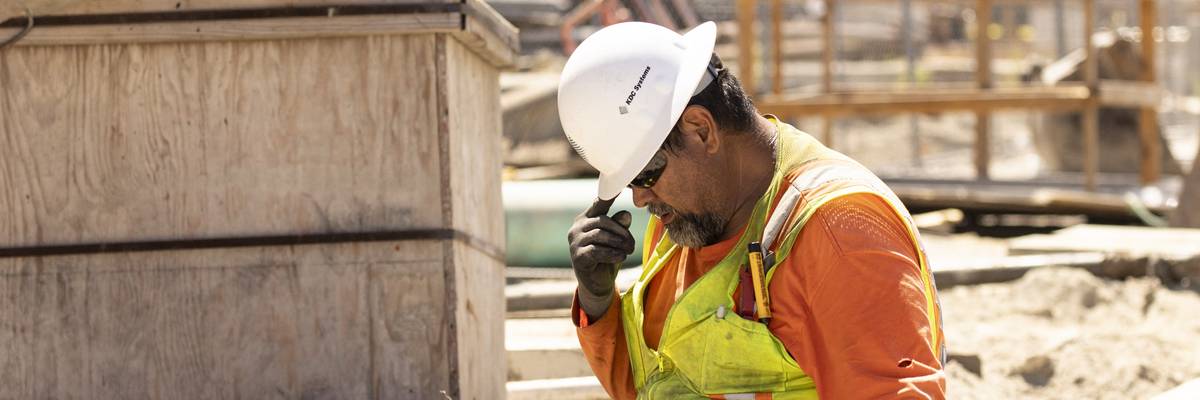
A worker adjusts his helmet on a construction site under the sun as southern California faces a heatwave, in Los Angeles, on July 3 2024.
We protect workers from ladder falls, electric shocks, even excessive noise, with clear and enforceable rules, yet there is still no federal standard requiring employers to provide the basics on dangerously hot days.
We are breaking past heat records, but they will not stand for long. Summer heat now arrives earlier, lasts longer, spikes higher, and lands in places that never planned for it.
For the tens of millions of Americans who work outdoors, and the millions more in warehouses, kitchens, and factories without air conditioning, there is still no federal standard requiring an employer to give a worker water, shade, rest, or training on a day when the heat can kill.
Between 1992 and 2019, more than 900 workers died from heat on the job, and every year tens of thousands more are sickened or injured—farmworkers collapsing in fields, roofers baking on exposed surfaces, laundry and dollar store workers laboring in buildings that trap heat like ovens. Those official numbers are undercounts, because heat deaths are chronically underreported.
Heat illness is not a scientific mystery. Heat stroke can kill in minutes, but staying safe is mostly about staying cool, hydrated, and getting help fast when confusion or dizziness sets in.
No one should be sent into a hotter, more volatile climate with nothing but the occasional popsicle and luck.
We protect workers from ladder falls, electric shocks, even excessive noise, with clear and enforceable rules. Yet there is still no federal standard requiring employers to provide the basics on dangerously hot days.
We came close. In 2024, the Occupational Safety and Health Administration (OSHA) proposed the first-ever national heat safety standard. In 2025, the agency heard weeks of testimony from workers, doctors, unions, and employers. Then the progress on a strong rule stalled.
Now, some in Congress want to bury it for good. The House Education and the Workforce Committee recently voted to advance the Heat Workforce Standards Act, which would bar the Labor Department from finalizing or enforcing the heat rule.
This isn't a pause. It's a lock on the door, designed to stop not just this administration but any future one from protecting workers from heat. The bill's sponsor called workplace heat a problem that doesn't need solving. Easy to say when you spend every day in air conditioning. Impossible to accept when your loved one doesn't come home.
The industry groups behind the bill insist protections cost too much, the argument once made against seatbelts, hard hats, and fire exits. The numbers say otherwise. OSHA estimates a single average case of heat exhaustion costs more than $79,000 in medical bills, lost time, and lost productivity. Water and rest breaks are cheap. Hospitalizations and funerals are not.
So if Washington won't act, who will?
Investors can. Companies that get ahead of this aren't only doing right by their workers; they're managing a financial risk that shows up in turnover, litigation, and lost output. The Natural Resources Defense Council and Trillium's new guide for investors gives shareholders the questions to ask in the boardroom, and boards tend to listen when the people who own the company start asking them.
States can, and are. Seven now have heat standards, and lawmakers in Pennsylvania and Virginia are working to join them. Every state that acts protects its own workers now and builds the case that no one's safety should depend on their zip code.
The people facing this risk grow our food, build our homes, deliver our packages, and cook our meals. Many of them will not ask for water or a break today—afraid of retaliation, afraid of losing a shift, afraid of losing a paycheck they cannot afford to lose. No one should have to weigh a livelihood against a life. And no one should be sent into a hotter, more volatile climate with nothing but the occasional popsicle and luck.
Employers who resist these rules imagine that breaks cost them too much. They have it backward. Heat is already hurting both workers' health and their bottom line. Protections like water and rest don't subtract from a workday, they only help workers do their job.
The toll from this summer is still being counted. Every party to this—Congress, employers, investors, states—can still decide how high it goes.
Dear Common Dreams reader, It’s been nearly 30 years since I co-founded Common Dreams with my late wife, Lina Newhouser. We had the radical notion that journalism should serve the public good, not corporate profits. It was clear to us from the outset what it would take to build such a project. No paid advertisements. No corporate sponsors. No millionaire publisher telling us what to think or do. Many people said we wouldn't last a year, but we proved those doubters wrong. Together with a tremendous team of journalists and dedicated staff, we built an independent media outlet free from the constraints of profits and corporate control. Our mission has always been simple: To inform. To inspire. To ignite change for the common good. Building Common Dreams was not easy. Our survival was never guaranteed. When you take on the most powerful forces—Wall Street greed, fossil fuel industry destruction, Big Tech lobbyists, and uber-rich oligarchs who have spent billions upon billions rigging the economy and democracy in their favor—the only bulwark you have is supporters who believe in your work. But here’s the urgent message from me today. It's never been this bad out there. And it's never been this hard to keep us going. At the very moment Common Dreams is most needed, the threats we face are intensifying. We need your support now more than ever. We don't accept corporate advertising and never will. We don't have a paywall because we don't think people should be blocked from critical news based on their ability to pay. Everything we do is funded by the donations of readers like you. When everyone does the little they can afford, we are strong. But if that support retreats or dries up, so do we. Will you donate now to make sure Common Dreams not only survives but thrives? —Craig Brown, Co-founder |
We are breaking past heat records, but they will not stand for long. Summer heat now arrives earlier, lasts longer, spikes higher, and lands in places that never planned for it.
For the tens of millions of Americans who work outdoors, and the millions more in warehouses, kitchens, and factories without air conditioning, there is still no federal standard requiring an employer to give a worker water, shade, rest, or training on a day when the heat can kill.
Between 1992 and 2019, more than 900 workers died from heat on the job, and every year tens of thousands more are sickened or injured—farmworkers collapsing in fields, roofers baking on exposed surfaces, laundry and dollar store workers laboring in buildings that trap heat like ovens. Those official numbers are undercounts, because heat deaths are chronically underreported.
Heat illness is not a scientific mystery. Heat stroke can kill in minutes, but staying safe is mostly about staying cool, hydrated, and getting help fast when confusion or dizziness sets in.
No one should be sent into a hotter, more volatile climate with nothing but the occasional popsicle and luck.
We protect workers from ladder falls, electric shocks, even excessive noise, with clear and enforceable rules. Yet there is still no federal standard requiring employers to provide the basics on dangerously hot days.
We came close. In 2024, the Occupational Safety and Health Administration (OSHA) proposed the first-ever national heat safety standard. In 2025, the agency heard weeks of testimony from workers, doctors, unions, and employers. Then the progress on a strong rule stalled.
Now, some in Congress want to bury it for good. The House Education and the Workforce Committee recently voted to advance the Heat Workforce Standards Act, which would bar the Labor Department from finalizing or enforcing the heat rule.
This isn't a pause. It's a lock on the door, designed to stop not just this administration but any future one from protecting workers from heat. The bill's sponsor called workplace heat a problem that doesn't need solving. Easy to say when you spend every day in air conditioning. Impossible to accept when your loved one doesn't come home.
The industry groups behind the bill insist protections cost too much, the argument once made against seatbelts, hard hats, and fire exits. The numbers say otherwise. OSHA estimates a single average case of heat exhaustion costs more than $79,000 in medical bills, lost time, and lost productivity. Water and rest breaks are cheap. Hospitalizations and funerals are not.
So if Washington won't act, who will?
Investors can. Companies that get ahead of this aren't only doing right by their workers; they're managing a financial risk that shows up in turnover, litigation, and lost output. The Natural Resources Defense Council and Trillium's new guide for investors gives shareholders the questions to ask in the boardroom, and boards tend to listen when the people who own the company start asking them.
States can, and are. Seven now have heat standards, and lawmakers in Pennsylvania and Virginia are working to join them. Every state that acts protects its own workers now and builds the case that no one's safety should depend on their zip code.
The people facing this risk grow our food, build our homes, deliver our packages, and cook our meals. Many of them will not ask for water or a break today—afraid of retaliation, afraid of losing a shift, afraid of losing a paycheck they cannot afford to lose. No one should have to weigh a livelihood against a life. And no one should be sent into a hotter, more volatile climate with nothing but the occasional popsicle and luck.
Employers who resist these rules imagine that breaks cost them too much. They have it backward. Heat is already hurting both workers' health and their bottom line. Protections like water and rest don't subtract from a workday, they only help workers do their job.
The toll from this summer is still being counted. Every party to this—Congress, employers, investors, states—can still decide how high it goes.
We are breaking past heat records, but they will not stand for long. Summer heat now arrives earlier, lasts longer, spikes higher, and lands in places that never planned for it.
For the tens of millions of Americans who work outdoors, and the millions more in warehouses, kitchens, and factories without air conditioning, there is still no federal standard requiring an employer to give a worker water, shade, rest, or training on a day when the heat can kill.
Between 1992 and 2019, more than 900 workers died from heat on the job, and every year tens of thousands more are sickened or injured—farmworkers collapsing in fields, roofers baking on exposed surfaces, laundry and dollar store workers laboring in buildings that trap heat like ovens. Those official numbers are undercounts, because heat deaths are chronically underreported.
Heat illness is not a scientific mystery. Heat stroke can kill in minutes, but staying safe is mostly about staying cool, hydrated, and getting help fast when confusion or dizziness sets in.
No one should be sent into a hotter, more volatile climate with nothing but the occasional popsicle and luck.
We protect workers from ladder falls, electric shocks, even excessive noise, with clear and enforceable rules. Yet there is still no federal standard requiring employers to provide the basics on dangerously hot days.
We came close. In 2024, the Occupational Safety and Health Administration (OSHA) proposed the first-ever national heat safety standard. In 2025, the agency heard weeks of testimony from workers, doctors, unions, and employers. Then the progress on a strong rule stalled.
Now, some in Congress want to bury it for good. The House Education and the Workforce Committee recently voted to advance the Heat Workforce Standards Act, which would bar the Labor Department from finalizing or enforcing the heat rule.
This isn't a pause. It's a lock on the door, designed to stop not just this administration but any future one from protecting workers from heat. The bill's sponsor called workplace heat a problem that doesn't need solving. Easy to say when you spend every day in air conditioning. Impossible to accept when your loved one doesn't come home.
The industry groups behind the bill insist protections cost too much, the argument once made against seatbelts, hard hats, and fire exits. The numbers say otherwise. OSHA estimates a single average case of heat exhaustion costs more than $79,000 in medical bills, lost time, and lost productivity. Water and rest breaks are cheap. Hospitalizations and funerals are not.
So if Washington won't act, who will?
Investors can. Companies that get ahead of this aren't only doing right by their workers; they're managing a financial risk that shows up in turnover, litigation, and lost output. The Natural Resources Defense Council and Trillium's new guide for investors gives shareholders the questions to ask in the boardroom, and boards tend to listen when the people who own the company start asking them.
States can, and are. Seven now have heat standards, and lawmakers in Pennsylvania and Virginia are working to join them. Every state that acts protects its own workers now and builds the case that no one's safety should depend on their zip code.
The people facing this risk grow our food, build our homes, deliver our packages, and cook our meals. Many of them will not ask for water or a break today—afraid of retaliation, afraid of losing a shift, afraid of losing a paycheck they cannot afford to lose. No one should have to weigh a livelihood against a life. And no one should be sent into a hotter, more volatile climate with nothing but the occasional popsicle and luck.
Employers who resist these rules imagine that breaks cost them too much. They have it backward. Heat is already hurting both workers' health and their bottom line. Protections like water and rest don't subtract from a workday, they only help workers do their job.
The toll from this summer is still being counted. Every party to this—Congress, employers, investors, states—can still decide how high it goes.