SUBSCRIBE TO OUR FREE NEWSLETTER
Daily news & progressive opinion—funded by the people, not the corporations—delivered straight to your inbox.
5
#000000
#FFFFFF
To donate by check, phone, or other method, see our More Ways to Give page.
Daily news & progressive opinion—funded by the people, not the corporations—delivered straight to your inbox.
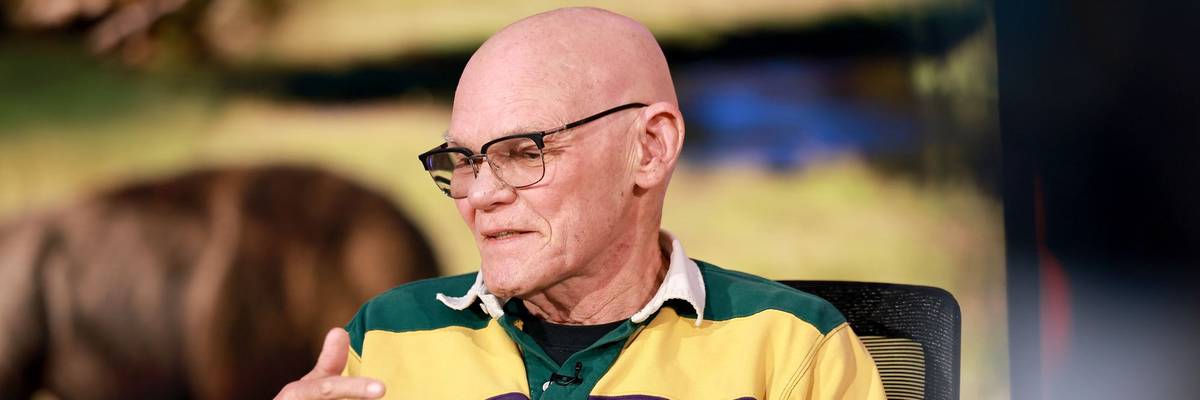
In the coming months, Hakeem Jeffries and others like Rahm Emanuel and James Carville may discover a growing canyon between their direction for the party and a Democratic base increasingly friendly to democratic socialism and impassioned for Medicare for All.
The energy and votes unleashed this year by the insurgent new left of the Democratic Party would surely be welcomed by the Dems’ leadership after a long hangover from 2024 and setbacks at the hands of President Donald Trump, right?
Not exactly. These developments are viewed as anything but good news by many members of the party elite. Hakeen Jeffries (NY), in line to become Speaker of the House if Democrats prevail November 3, refused to endorse Zohran Mamdani last year even after he won the Democratic Party nomination in New York City. In Michigan, Jeffries had endorsed Senate candidate Haley Stevens, a big recipient of American Israel Political Action Committee (Jeffries himself has been a beneficiary of AIPAC), over the staunchly progressive Abdul El-Sayed, who won the primary. These choices were consistent with Jeffries’ history of hostility to progressives in the Democratic Party.
Over the last year, primary victories by progressives have given Jeffries much more to worry about. While there has been a general growing upsurge in support for Democratic candidates, much of the drive has been fueled by the left wing of the party. The Democrats have witnessed something of a rebirth charged by youthful, notably progressive momentum . While Democrats including moderates have gained ground in both special elections and primaries, the electoral strength of left-wing candidates has become a growing trend. From the election of New York Mayor Zohran Mamdani in 2025 to primary and special-election victories won by avowedly left-of center candidates this year, there is now a significant activated progressive core within the Democratic Party.
But Carville is correct on one point: Jeffries will encounter resistance from new House members wary that he will deeply alienate the electorate with tepid reforms that fail to produce tangible improvements in voters’ lives.
A number of the candidates are closely affiliated with the Democratic Socialists of America (DSA), others are independent progressives, and a much larger number are firmly committed to fighting for a Medicare for All healthcare plan. This trend reflects a broader, momentous shift to the left within the Democratic base. Democratic socialists make up only a minority, but they have earned a recognized place in the party. Recent polls from CBS News and The New York Times found that roughly 58-66% of Democrats view socialism positively, with that number rising to 70% in a ABC News/Washington Post/Ipsos poll conducted this month. CBS News polling revealed about 60% of Democrats favor a mix of socialism and capitalism.
But evidence of this relatively recent turn in the outlook of the Democratic base is only perceived as deeply disturbing by Jeffries and others like former Chicago Mayor Rahm Emanuel and James Carville, an influential Democratic strategist. Fittingly, Jeffries’ statement on democratic socialism and presumably DSA in particular projected no welcoming for an energetic, youthful element of the party: “There will never be a moment where I bend the knee to hard-left democratic socialism.” In this comment, Jeffries deploys a trope that DSA-backed candidates are somehow “hard-left” extremists fixed on espousing far-out symbolic views rather than winning substantial reforms at every level of government. In fact, the DSA-affiliated candidates and officeholders are pursuing broadly-shared progressive aims like taxing billionaires, sharply raising the minimum wage, providing universal childcare, and legislating a Medicare for All healthcare system.
On Medicare for All, Jeffries’ evident lack of support places him far outside the Democratic mainstream. At a 78% level of support, the base of the Democratic Party ardently backs a Medicare for All system that would largely replace large insurance corporations with a government-administered system as in Canada. A national Data for Progress survey found 65% of all voters support a Medicare for All system, including 71% of independents, and 49% of Republicans.
For the next Congress, Jeffries will be swimming against the tide on Medicare for All, as it is all but certain to become a pressing issue in the face of rising public concern over healthcare, which is already one of voters’ top affordability concerns and will become more sharply climbing as employers are aggressively thrusting rising insurance premiums back onto workers. Further, major cuts in Medicaid are already creating enormous stress for those otherwise lacking conventional insurance, and these reductions will intensify in 2027 when they come fully into effect.
At the same time, Medicare for All is gaining credibility as an alternative to the status quo. An important Yale study calculates that Medicare for All would save the US $1 trillion per year. Further, Medicare for All would save an estimated 114, 000 lives annually as the 27 million currently uninsured finally gain timely access to care.
Former Chicago mayor and diplomat Emanuel, a potential 2028 presidential contender, is another leading force who characterizes DSA and progressives as extreme and fiercely opposes Medicare for All. He told MS NOW that he believes that DSA simply has no place in the Democratic Party.
Emanuel, like Jeffries and several other figures in the Democratic establishment, caricatures DSA based on the most fanciful elements of DSA’s official long-term “agenda.” But that agenda is almost uniformly ignored by DSA officeholders, candidates, and local chapters alike. Still, Emanuel spotlights.impossible-to-achieve points on the agenda (e.g., abolishing the police and prisons) while ignoring the actual work of DSA conducted by officeholders like Mamdani, Rep. Alexandra Ocasio-Cortez (D-NY), and many others, and DSA chapters across the nation working on the minimum wage, taxation of billionaires, and well-funded public services—an agenda far different from Emanuel’s fixation on the much-derided sweeping privatization of services and sell-off of resources while mayor of Chicago.
Emanuel, who dismissed DSA on MSNOW TV as "an Ivy League seminar,” in reality seems less troubled by DSA’s meaningless long-term “agenda” than the more concrete programs that a new band of left-wing members will bring to the next session. Emanuel, for example, is singularly focused on repudiating the idea of Medicare for All legislation, which will gain a substantial influx of support if progressive candidates prevail in the midterms.
But the most ferocious voice excoriating the Democrats’ Left has been Carville, the long-time Democratic strategist. Carville describes DSA and the progressives as “over-educated little white turds,” conveniently ignoring the high-profile people of color within the progressive coalition, including, for example, Latina primary winners for the House from New York and a new House member from New Jersey. Carville has been unwilling to acknowledge the prominence of people of color in the democratic socialist camp, like Mamdani; Ocasio-Cortez; recently-elected US Rep. Analilia Mejia of New Jersey; and House candidates Melat Kiros of Colorado, Claire Valdez and Darializa Avila Chevalier in New York City, and Donavan McKinney in Michigan, the last two defeating entrenched incumbents in their primaries.
Escalating his attempts to alienate Blacks from DSA and the left wing of the party, Carville lashed out at DSA, claiming, “They think that Lenin was a more glorious human being than Martin Luther King or Frederick Douglass. That's what they really think.” Of course, Carville somehow manages to overlook the fact that King himself considered himself a democratic socialist, as did other key Black giants like A. Phillip Randolph.
But nothing tops Carville’s comment earlier this month in which he actually expresses more fear of DSA and the left than having far-right Speaker Mike Johnson (R-La.) continuing in his post. The searing hostility of Carville toward the Democrats’ left was evident in The Bulwark Takes podcast: "I would be disappointed if it [the midterms] comes in at 225 House seats. And that would almost be—I would rather the Republicans keep the House by five than the Democrats win by five because if that happens, they're hostage to the DSA," Carville said. "Like Hakeem cannot move. There's no place for him to go." Whether meant even partly in jest, Carville displayed the venom gathering against the left electoral successes.
But Carville is correct on one point: Jeffries will encounter resistance from new House members wary that he will deeply alienate the electorate with tepid reforms that fail to produce tangible improvements in voters’ lives. Media accounts report that Jeffries has no visible challengers to becoming speaker, but he will surely face battles both with increasingly progressive Democrats in Congress and the party base to which they are giving a new voice. “He [Jeffries] needs all of our votes to be speaker,” Chris Rabb, the DSA-backed Democratic nominee in Pennsylvania’s third congressional district, pointedly told The New York Times.
Jeffries has cloaked his conventional centrist politics as simply representing a majority of Democratic voters, while feeling free to lash out at progressives critical of “corporate” members of Congress whose policies align closely with their donors in corporate America: “The extreme left is obsessed with talking trash about mainstream Democrats on Twitter, when the majority of the electorate constitute mainstream Democrats at the polls."
But in the coming months, Jeffries and others like Emanuel and Carville may discover a growing canyon between their direction for the party and a Democratic base increasingly friendly to democratic socialism and impassioned for Medicare for All. Some in the establishment set may be preparing themselves for a battle with the marginal “white turds,” but not a significantly shifting “mainstream” of the party seeking the fighting spirit and visionary reforms offered by the party’s left.
This country and this world are at a monumental crossroads. US voters have an opportunity to beat back the forces of fascism and confront the billionaires who are rigging the economy, our media system, and our democracy, making it increasingly impossible for ordinary people to get by. We’re not just talking about the election. We’re talking about what must be done once these fascist elements are vanquished from power. We need a bolder set of solutions than what either major party has so far been willing to offer and a working-class movement ready to fight like hell for it. Trump didn't emerge from nowhere. The conditions that fueled MAGA authoritarianism were created by decades of radical neoliberal economic policies and a corrupt political system dominated by corporate interests. They slashed taxes on the super-rich, promising that the benefits would trickle down. They said giveaways to the corporate titans would make life more affordable for the rest of us. It was all bullshit. And when a bitter, betrayed populace searches for someone to blame, right-wing demagogues have little trouble finding scapegoats. People know when they're being lied to, but you won't hear any of this from the corporate media. Only independent journalism—powered and funded by people who believe in building a better world—can deliver truly trustworthy daily news. If you share our vision, please contribute whatever you can to sustain our work. |
The energy and votes unleashed this year by the insurgent new left of the Democratic Party would surely be welcomed by the Dems’ leadership after a long hangover from 2024 and setbacks at the hands of President Donald Trump, right?
Not exactly. These developments are viewed as anything but good news by many members of the party elite. Hakeen Jeffries (NY), in line to become Speaker of the House if Democrats prevail November 3, refused to endorse Zohran Mamdani last year even after he won the Democratic Party nomination in New York City. In Michigan, Jeffries had endorsed Senate candidate Haley Stevens, a big recipient of American Israel Political Action Committee (Jeffries himself has been a beneficiary of AIPAC), over the staunchly progressive Abdul El-Sayed, who won the primary. These choices were consistent with Jeffries’ history of hostility to progressives in the Democratic Party.
Over the last year, primary victories by progressives have given Jeffries much more to worry about. While there has been a general growing upsurge in support for Democratic candidates, much of the drive has been fueled by the left wing of the party. The Democrats have witnessed something of a rebirth charged by youthful, notably progressive momentum . While Democrats including moderates have gained ground in both special elections and primaries, the electoral strength of left-wing candidates has become a growing trend. From the election of New York Mayor Zohran Mamdani in 2025 to primary and special-election victories won by avowedly left-of center candidates this year, there is now a significant activated progressive core within the Democratic Party.
But Carville is correct on one point: Jeffries will encounter resistance from new House members wary that he will deeply alienate the electorate with tepid reforms that fail to produce tangible improvements in voters’ lives.
A number of the candidates are closely affiliated with the Democratic Socialists of America (DSA), others are independent progressives, and a much larger number are firmly committed to fighting for a Medicare for All healthcare plan. This trend reflects a broader, momentous shift to the left within the Democratic base. Democratic socialists make up only a minority, but they have earned a recognized place in the party. Recent polls from CBS News and The New York Times found that roughly 58-66% of Democrats view socialism positively, with that number rising to 70% in a ABC News/Washington Post/Ipsos poll conducted this month. CBS News polling revealed about 60% of Democrats favor a mix of socialism and capitalism.
But evidence of this relatively recent turn in the outlook of the Democratic base is only perceived as deeply disturbing by Jeffries and others like former Chicago Mayor Rahm Emanuel and James Carville, an influential Democratic strategist. Fittingly, Jeffries’ statement on democratic socialism and presumably DSA in particular projected no welcoming for an energetic, youthful element of the party: “There will never be a moment where I bend the knee to hard-left democratic socialism.” In this comment, Jeffries deploys a trope that DSA-backed candidates are somehow “hard-left” extremists fixed on espousing far-out symbolic views rather than winning substantial reforms at every level of government. In fact, the DSA-affiliated candidates and officeholders are pursuing broadly-shared progressive aims like taxing billionaires, sharply raising the minimum wage, providing universal childcare, and legislating a Medicare for All healthcare system.
On Medicare for All, Jeffries’ evident lack of support places him far outside the Democratic mainstream. At a 78% level of support, the base of the Democratic Party ardently backs a Medicare for All system that would largely replace large insurance corporations with a government-administered system as in Canada. A national Data for Progress survey found 65% of all voters support a Medicare for All system, including 71% of independents, and 49% of Republicans.
For the next Congress, Jeffries will be swimming against the tide on Medicare for All, as it is all but certain to become a pressing issue in the face of rising public concern over healthcare, which is already one of voters’ top affordability concerns and will become more sharply climbing as employers are aggressively thrusting rising insurance premiums back onto workers. Further, major cuts in Medicaid are already creating enormous stress for those otherwise lacking conventional insurance, and these reductions will intensify in 2027 when they come fully into effect.
At the same time, Medicare for All is gaining credibility as an alternative to the status quo. An important Yale study calculates that Medicare for All would save the US $1 trillion per year. Further, Medicare for All would save an estimated 114, 000 lives annually as the 27 million currently uninsured finally gain timely access to care.
Former Chicago mayor and diplomat Emanuel, a potential 2028 presidential contender, is another leading force who characterizes DSA and progressives as extreme and fiercely opposes Medicare for All. He told MS NOW that he believes that DSA simply has no place in the Democratic Party.
Emanuel, like Jeffries and several other figures in the Democratic establishment, caricatures DSA based on the most fanciful elements of DSA’s official long-term “agenda.” But that agenda is almost uniformly ignored by DSA officeholders, candidates, and local chapters alike. Still, Emanuel spotlights.impossible-to-achieve points on the agenda (e.g., abolishing the police and prisons) while ignoring the actual work of DSA conducted by officeholders like Mamdani, Rep. Alexandra Ocasio-Cortez (D-NY), and many others, and DSA chapters across the nation working on the minimum wage, taxation of billionaires, and well-funded public services—an agenda far different from Emanuel’s fixation on the much-derided sweeping privatization of services and sell-off of resources while mayor of Chicago.
Emanuel, who dismissed DSA on MSNOW TV as "an Ivy League seminar,” in reality seems less troubled by DSA’s meaningless long-term “agenda” than the more concrete programs that a new band of left-wing members will bring to the next session. Emanuel, for example, is singularly focused on repudiating the idea of Medicare for All legislation, which will gain a substantial influx of support if progressive candidates prevail in the midterms.
But the most ferocious voice excoriating the Democrats’ Left has been Carville, the long-time Democratic strategist. Carville describes DSA and the progressives as “over-educated little white turds,” conveniently ignoring the high-profile people of color within the progressive coalition, including, for example, Latina primary winners for the House from New York and a new House member from New Jersey. Carville has been unwilling to acknowledge the prominence of people of color in the democratic socialist camp, like Mamdani; Ocasio-Cortez; recently-elected US Rep. Analilia Mejia of New Jersey; and House candidates Melat Kiros of Colorado, Claire Valdez and Darializa Avila Chevalier in New York City, and Donavan McKinney in Michigan, the last two defeating entrenched incumbents in their primaries.
Escalating his attempts to alienate Blacks from DSA and the left wing of the party, Carville lashed out at DSA, claiming, “They think that Lenin was a more glorious human being than Martin Luther King or Frederick Douglass. That's what they really think.” Of course, Carville somehow manages to overlook the fact that King himself considered himself a democratic socialist, as did other key Black giants like A. Phillip Randolph.
But nothing tops Carville’s comment earlier this month in which he actually expresses more fear of DSA and the left than having far-right Speaker Mike Johnson (R-La.) continuing in his post. The searing hostility of Carville toward the Democrats’ left was evident in The Bulwark Takes podcast: "I would be disappointed if it [the midterms] comes in at 225 House seats. And that would almost be—I would rather the Republicans keep the House by five than the Democrats win by five because if that happens, they're hostage to the DSA," Carville said. "Like Hakeem cannot move. There's no place for him to go." Whether meant even partly in jest, Carville displayed the venom gathering against the left electoral successes.
But Carville is correct on one point: Jeffries will encounter resistance from new House members wary that he will deeply alienate the electorate with tepid reforms that fail to produce tangible improvements in voters’ lives. Media accounts report that Jeffries has no visible challengers to becoming speaker, but he will surely face battles both with increasingly progressive Democrats in Congress and the party base to which they are giving a new voice. “He [Jeffries] needs all of our votes to be speaker,” Chris Rabb, the DSA-backed Democratic nominee in Pennsylvania’s third congressional district, pointedly told The New York Times.
Jeffries has cloaked his conventional centrist politics as simply representing a majority of Democratic voters, while feeling free to lash out at progressives critical of “corporate” members of Congress whose policies align closely with their donors in corporate America: “The extreme left is obsessed with talking trash about mainstream Democrats on Twitter, when the majority of the electorate constitute mainstream Democrats at the polls."
But in the coming months, Jeffries and others like Emanuel and Carville may discover a growing canyon between their direction for the party and a Democratic base increasingly friendly to democratic socialism and impassioned for Medicare for All. Some in the establishment set may be preparing themselves for a battle with the marginal “white turds,” but not a significantly shifting “mainstream” of the party seeking the fighting spirit and visionary reforms offered by the party’s left.