

SUBSCRIBE TO OUR FREE NEWSLETTER
Daily news & progressive opinion—funded by the people, not the corporations—delivered straight to your inbox.
5
#000000
#FFFFFF
To donate by check, phone, or other method, see our More Ways to Give page.
Daily news & progressive opinion—funded by the people, not the corporations—delivered straight to your inbox.
Today, the Lawyers' Committee for Civil Rights Under Law, Public Counsel, and Manatt Phelps & Phillips LLP filed an amicus brief on behalf of their clients, the City of San Jose and the Black Alliance for Just Immigration, in Department of Commerce v. New York, 18-966, a case arising in New York Federal Court and being heard before the Supreme Court in April, in which the lower court ruled that the Administrative Procedure Act bars the inclusion of a citizenship question on the 2020 census.
Today, the Lawyers' Committee for Civil Rights Under Law, Public Counsel, and Manatt Phelps & Phillips LLP filed an amicus brief on behalf of their clients, the City of San Jose and the Black Alliance for Just Immigration, in Department of Commerce v. New York, 18-966, a case arising in New York Federal Court and being heard before the Supreme Court in April, in which the lower court ruled that the Administrative Procedure Act bars the inclusion of a citizenship question on the 2020 census.
The brief argues that Secretary of Commerce Wilbur Ross's decision to add a citizenship question to the 2020 census was both unlawful under the Administrative Procedure Act and unconstitutional as it will lead to an undercount of Latino and immigrant populations. As the brief states: "There is no legitimate justification for imperiling the accuracy of the census by depriving communities with concentrations of those populations of their right to equal representation and of their proportionate share in the substantial federal funding that is based on the census."
In the brief, the groups also state that the decision was outside all norms of administrative decision-making: "It is difficult to identify a comparable situation in our case-law, where the administrative record so clearly shows that a cabinet officer decided on a course of action and then post hoc orchestrated a charade of administrative regularity to make it seem as if his decision were not preordained." The Secretary's decision is impossible to sustain, the brief argues, because Secretary Ross said that asking the question was more important than any risks to the accuracy of the census. When he made that decision, however, Secretary Ross knew providing citizenship data to the Department of Justice (DOJ), who he said had asked for the data, was not a high priority to DOJ because he had to persuade the department to ask him to ask the question, intervening personally with then-Attorney General Sessions. Additionally, Secretary Ross's own scientists at the Census Bureau had told him that the risks to the accuracy of the census from adding the question were severe.
The Lawyers' Committee, and co-counsel Public Counsel and Manatt Phelps & Phillips, LLP, represent the City of San Jose and the Black Alliance for Just Immigration.
Ezra Rosenberg, Co-Director of the Lawyers' Committee for Civil Rights Under Law's Voting Rights Project: "We're confident that, upon reviewing this extraordinary record of administrative misfeasance, that the Court will reach the same result as did both the California and New York trial courts: Secretary Ross's decision to add the citizenship question was not only contrary to the advice of his scientific advisors, but also will result in a census count that will prejudice people of color, whose communities will not receive their full share of federal funding which is based on an accurate count."
Sam Liccardo, Mayor, San Jose, CA: "Secretary Ross's decision to add a citizenship question to the 2020 Census undermines our belief that in San Jose everyone counts. We are hopeful that upon review, the Court will find the Trump Administration's proposed changes violate the Administration Procedure Act and the Enumeration Clause of the United States Constitution, and would threaten critical funding for the essential services - such as healthcare, housing, and education - upon which all our residents depend."
Nana Gyamfi, Executive Director of the Black Alliance: "We welcome the Supreme Court's decision to address the procedural and constitutional challenges to the 2020 Census citizenship question. The trial court in our case saw through Commerce Secretary Ross's 'sham' justification for the question, and confirmed that the citizenship question is nothing other than an unlawful and racist attempt to discourage the participation of Black and Brown immigrants in the 2020 Census. We look forward to the Supreme Court affirming our trial court's decision and the importance of accurately counting Black immigrants. Black immigrants need the representation and resources determined by the Census, including funding for education and public health, and any efforts designed to deter us from being accurately counted in the 2020 Census must be rejected."
John Libby, Partner at Manatt, Phelps & Phillips: "The Court has asked the parties in the New York case to brief and argue the question of whether the addition of a citizenship question violates the Constitution's Enumeration Clause even though that claim was not tried in New York. As amici we can present evidence from our trial record that the question will clearly violate the Constitution and will lead to an undercount of Latino and immigrant communities."
The Lawyers' Committee for Civil Rights Under Law and its co-counsel brought their own suit against Secretary Ross in California federal court in 2018, which had ruled in their favor, finding that Secretary Ross's decision violated the Administrative Procedure Act and the Enumeration Clause of the United States Constitution -- a decision not reached by the New York court -- because adding the citizenship question would lead to an under-count of communities of color and immigrants. Such an under-count would, in turn, lead to a loss of congressional representation and a fair share of federal funding for jurisdictions with heavy concentrations of these communities.
The judge in the case City of San Jose, et al. v. Ross had issued an order permanently stopping Ross from adding the citizenship question to the 2020 Census. The Department of Justice has sought expedited review in the case, but the U.S. Supreme Court has yet to rule on DOJ's request. In the meantime, the Court has agreed to entertain whether the constitutional issue could be an alternate ground for relief, along with the Administrative Procedure Act claim, in the New York case.
Oral argument in the New York case is set for April 23.
Read the full brief here.
The Lawyers' Committee is a nonpartisan, nonprofit organization, formed in 1963 at the request of President John F. Kennedy to enlist the private bar's leadership and resources in combating racial discrimination and the resulting inequality of opportunity - work that continues to be vital today.
(202) 662-8600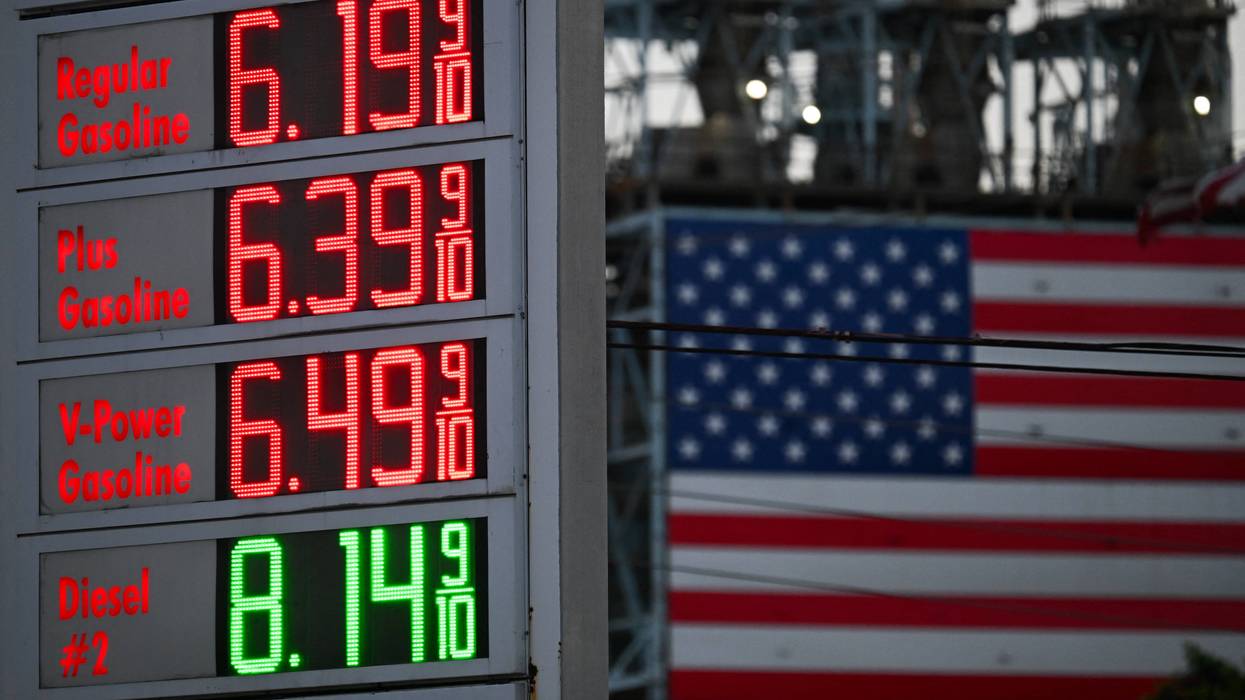
"The proposed diesel export ban is a short-sighted 'America First' response to a global crisis his reckless war helped create."
In an effort to blunt price hikes from his war with Iran, President Donald Trump is reportedly preparing a 90-day ban on diesel exports from the United States.
The cost of diesel—which is used to power semitrucks, trains, construction and farm equipment, and other large machines—has soared since Trump launched the war at the end of February, prompting Iran to restrict oil shipments through the critical Strait of Hormuz.
As of Wednesday, according to the American Automobile Association, average US diesel prices have jumped to $6.52 per gallon, a 77% increase from last year. Over the past month, as Trump has ramped up hostilities with Iran, prices have risen by 91 cents a gallon, a 16.2% increase.
Heightened diesel prices increase the cost of everything else—including food, transportation, and other energy sources. And while Trump claimed earlier this month to be bringing prices "way down, way, way down,” the latest federal data show consumer prices rising 0.4% in August—four times July’s monthly increase—and 3.4% over the past year.
With the midterms less than two months away and many voters blaming Trump for the strain on their pocketbooks, several GOP members of Congress, including some facing tough Senate races, such as Sen. Dan Sullivan (Alaska) and Rep. Ashley Hinson (Iowa), have cheered the idea.
During a press conference on Tuesday, Trump told reporters: "I’ve said let’s not send out the diesel. We make a lot of diesel. It could have a little bit of an effect on regular automobile gasoline because when you do that, you know, it’s a sort of a flow. It’s a balance. But no, I’ve called for it. I’ve called for it within my people. I’ve been talking about it.”
But while the plan may help to keep diesel prices down for long enough to help Republicans stop the bleeding before November, some economists are warning that it could make things much worse in the long term.
“The US Gulf Coast would get a temporary pump price dip, at the cost of likely higher coastal prices [elsewhere] and eventually, higher prices for everyone as investment gets scared away," explained Bob McNally, president of Rapidan Energy Group and a former White House energy adviser under the administration of former President George W. Bush.
"You would get a short-term, abrupt collapse in pump prices” in some regions, McNally said, but “the US would shatter its reputation as a safe place to invest for a generation.”
Energy economist Philip Verleger said that a ban, even if temporary, "would have the same long-term effect as President [Richard] Nixon’s soybean embargo: the world would no longer view the United States as a dependable source.”
Speaking to Reuters, Verleger warned that in an already undersupplied market, removing US barrels could potentially double global prices.
But the short term seems to be all Trump and those around him pushing the ban are considering. An oil industry executive who discussed the proposed ban with White House officials told Politico that Trump viewed any fallout as “a December problem.”
He said that "cooler heads" in the White House have been "overpowered" by the "political camp" that has a "sky-is-falling, we-have-to-do-something concern about prices at the pump."
Lorne Stockman, research director at Oil Change International, argued that there was a much simpler solution: ending the war that has caused oil prices to spike in the first place.
"The proposed diesel export ban is a short-sighted 'America First' response to a global crisis his reckless war helped create," Stockman said. "The US exports about 5% of global diesel, and a ban risks turning a severe shortage into a global economic disaster."
"It could send international prices soaring, drive up the cost of food, fertilizer, and essential goods, deepen hunger, and push already-struggling economies toward recession," he continued. "At the same time, it would likely do nothing for people in the US, as refineries would cut production and gasoline prices would rise even further."
He said, "Congress should use its constitutional powers to stop Trump’s war, tax the oil industry’s soaring windfall profits, and support farmers and other hard-hit sectors, and accelerate renewable energy and electrification, not hoard fuel and force the rest of the world to pay the price.”
"There is no replacement for Planned Parenthood health centers or the essential, lifesaving care they provide. Women, their families, and entire communities will suffer.”
Data released Wednesday by the Guttmacher Institute and Power to Decide shows "the stark and brutal reality that awaits patients across the country" if Republican lawmakers in Congress fulfill their goal of "defunding" Planned Parenthood, which provides contraceptive counseling and services to millions of patients per year, as well as other essential healthcare services.
As part of the publicly funded contraceptive care network that's been in place for over half a century, the Guttmacher Institute said, Planned Parenthood's healthcare centers served 1.6 million—roughly a third—of the 4.7 million patients who needed access to affordable family planning centers in 2020.
But with the Trump administration and Republicans in Congress aiming to remove Planned Parenthood facilities from the network, as many as 12.4 million women who need low-cost or free birth control could have their access sharply reduced, as they live in counties that would be affected by the GOP cuts.
Millions in the US rely on @ppfa.org for affordable birth control. If Planned Parenthood was removed from the publicly funded contraceptive care system, 12.4 million women in need of low- or no-cost #BirthControl would be affected.More in our research with @powertodecide.bsky.social: gu.tt/4y5ai5M
[image or embed]
— Guttmacher (@guttmacher.org) September 23, 2026 at 4:17 PM
The One Big Beautiful Bill Act brought the GOP "closer than ever" to stripping Planned Parenthood of funding—which comes not from a "blank check from the federal or state government," as Republicans have often suggested, but largely from reimbursements for care clinics provide to patients who have Medicaid or who are eligible for free or reduced-fee services through Title X.
The law included an effective ban on Medicare reimbursements to Planned Parenthood clinics for one year, and just over a year since its passage, nearly 30 of the organization's health centers have closed.
If Republicans succeed in further cutting off funds to Planned Parenthood, 58% of women who need access to affordable or free birth control would be affected, said Guttmacher.
The West would be the hardest-hit region in the country, with 4.1 million women losing access to contraceptives in 94 counties.
Nearly 30 counties across the US would be left with no publicly funded contraceptive provider at all.
“When President [Donald] Trump and his backers in Congress say they want to shut down Planned Parenthood, they mean it," said Alexis McGill Johnson, president and CEO of Planned Parenthood Action Fund. "And when we say the consequences of stopping people from being able to get the healthcare they need are catastrophic, we mean it too."
"This is not a hypothetical, and we’re not playing make-believe," she added. "There is no replacement for Planned Parenthood health centers or the essential, lifesaving care they provide. Women, their families, and entire communities will suffer.”
Amy Friedrich-Karnik, director of federal policy for Guttmacher, said the data released by the group "demonstrates why policymakers and advocates must stand together in strong defense of Planned Parenthood and all providers of quality and affordable sexual and reproductive healthcare.”
“As politically motivated attacks against Planned Parenthood have resulted in shuttered clinics and real harms to patients," she said, "it is increasingly important to study the critical role that Planned Parenthood plays in the publicly funded healthcare system and why attacks on these health centers are so devastating."

"Trump's abuse of taxpayer dollars is especially egregious at a time when families are grappling with high costs for rent, groceries, childcare, and other necessities," said US Sen. Maggie Hassan.
Democrats on the congressional Joint Economic Committee on Wednesday released a report calculating that taxpayer funding for President Donald Trump's vanity projects has soared to more than $1.8 billion.
Renovations made to the White House—including the president's luxury ballroom—are the biggest projected expenses, as the analysis cites reporting from The Washington Post last month to estimate that they will cost $927 million.
After the White House renovations, the second-most expensive Trump vanity project highlighted in the report is the estimated $400 million that will be required to provide security upgrades to the luxury jet the president received as a gift from the Qatari government.
The report finds that taxpayers will also be on the hook for $257 in renovations to the the John F. Kennedy Memorial Center for the Performing Arts, which the president has threatened to tear down unless he is allowed to slap his name on the side of the building.
The president's "Triumphal Arch" monument is another big-ticket item, as the report calculates it will cost $100 million to construct. Trump's infamously botched attempt to renovate the Lincoln Memorial Reflecting Pool, meanwhile, is set to cost taxpayers $16 million.
The Democrats on the JEC also released a Trump Vanity Calculator, an online tool that shows the opportunity costs of the president's assorted projects.
Among other things, the calculator shows that the $1.8 billion spent on the projects would be enough to pay for more than 607 million school lunches, or 117,000 additional Head Start slots, or 246,000 Pell Grants.
Redirecting the spending on the Trump projects would also be enough to restore funding for Supplemental Nutrition Assistance Program (SNAP) benefits—which were cut as part of the Republican Party's 2025 budget law—for over 429,000 families.
Sen. Maggie Hassan (D-NH), ranking member of the JEC, said the report shows that Trump "has wasted taxpayer dollars on projects that benefit himself instead of the American people."
“Trump’s abuse of taxpayer dollars is especially egregious at a time when families are grappling with high costs for rent, groceries, childcare, and other necessities," Hassan said. "President Trump admits that he doesn’t think about the financial situation of Americans, and the American people can see that; instead, he thinks about how he can use their money to build gold-plated monuments to himself."
During the 2024 presidential campaign, Trump promised to cut Americans' energy costs in half while keeping the country out of foreign wars.
In February, Trump launched an illegal war against Iran without any congressional authorization that has sent energy prices skyrocketing, including record-high prices for diesel fuel.
Through it all, Trump has continued touting his vanity projects, including the aforementioned ballroom and arch, even as polls show that the high cost of living is American voters' biggest concern.
With the midterm elections just six weeks away, a survey released by CNN on Wednesday shows that just 24% of Americans say that Trump has the right priorities as president, while two-thirds say he has worsened economic conditions in the country.
The two leaders spoke about policies to promote economic justice and immigrant rights at an event, as nearly 130 world leaders gather in New York for the United Nations General Assembly.
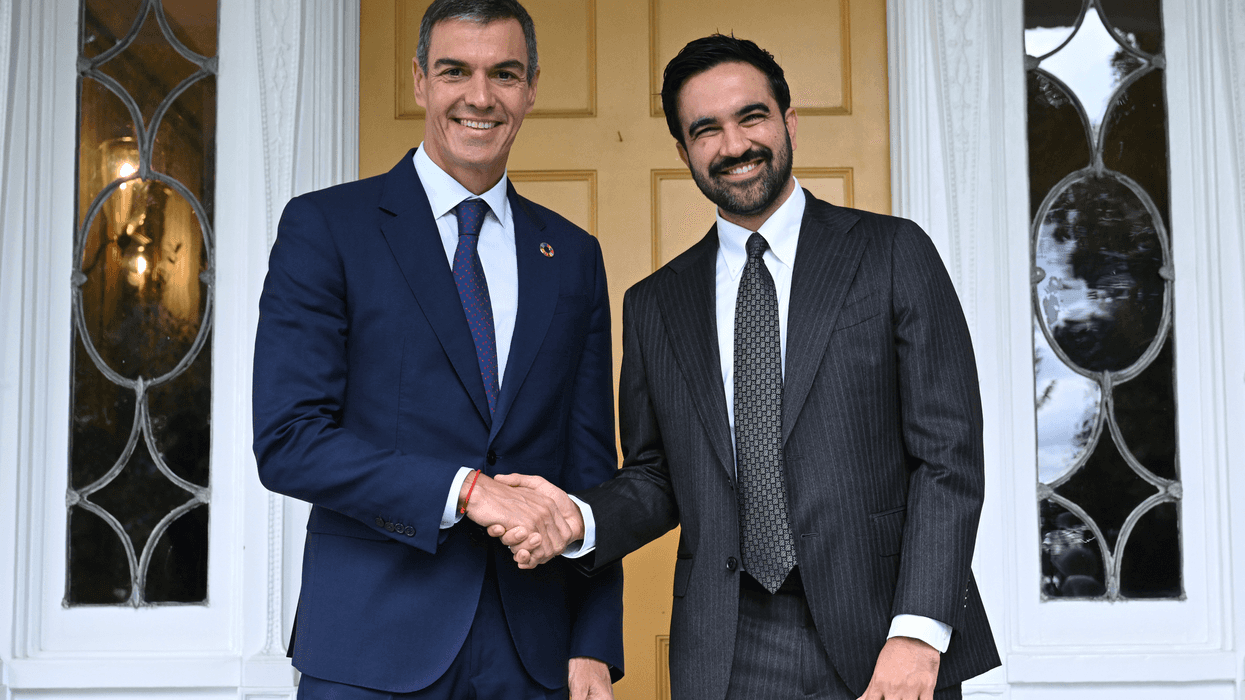
As New York City plays host to nearly 130 world leaders gathered for the United Nations General Assembly, progressive Mayor Zohran Mamdani is making a point of meeting with a number of international politicians who share his commitment to “building an economy for the many"—the official theme of a Wednesday morning breakfast he held at Gracie Mansion, where Spanish Prime Minister Pedro Sánchez was a key guest.
The event gave the two leaders an opportunity to discuss, as the prime minister said on social media, "more jobs, better wages, less inequality."
"Social justice is not the enemy of economic growth," he said.
Sánchez spoke to a group of assembled leaders—including Barbados Prime Minister Mia Mottley, a fierce critic of government inaction on the climate emergency and inequality, and socialist European Council President António Costa—about Spain's economic policies, such as a 66% increase in the national minimum wage over the past eight years.
“Spain is showing that another economic model is possible, and New York is demonstrating that the same ambition can transform our cities," said Sánchez, who represents the Spanish Socialist Workers' Party. "That is why the powerful fear us, because every day we show that there is another possible path and that it works."
“We were told that if you want growth, you have to accept inequality. That the workers have to make sacrifices. That if you want to be competitive, you have to have low wages and bad public services. I never believed it," Sánchez added. "Spain has shown that it was not true. We have raised the [Spanish minimum income] by 66%. We were told it would destroy jobs, but we have more workers than ever. One in every two jobs created in Europe are Spanish. We were told that with clean energy we would be less competitive. Now we have 60% and the cheapest energy. They always tell us that [these policies] are not going to work. The reality is that they do work for ordinary people."
The policies of Sánchez and Mamdani have angered right-wing leaders, including President Donald Trump. The president threatened Spain with a trade embargo earlier this year when Sánchez refused to allow US war planes to refuel at Spanish military bases as the US and Israel waged war on Iran.
Administration officials also condemned Sánchez's pro-immigration stance in July when migrants from Africa entered the self-governing Spanish city of Ceuta. The prime minister offered hundreds of thousands of migrants a chance at permanent legal residency in Spain earlier this year, contrasting with Trump's violent mass deportation campaign.
"Migration has made Spain stronger," said Sánchez on Wednesday. "Migration makes us a better country. No question."
Spanish PM Pedro Sánchez:
Migration has made Spain stronger. Economically, socially, culturally, migrants work in our companies, contribute to our public finances, sustain our welfare state and enrich our communities. Migration makes us a better country. No question.
This… pic.twitter.com/3GEIy7IWtR
— Clash Report (@clashreport) September 23, 2026
Without mentioning Trump by name, he added: "This matters because there are politicians on both sides of the Atlantic trying to convince working people that their problem is another working person—someone born somewhere else, someone who earns even less than they do. It is one of the oldest political tricks in history: Make people look sideways so they never look up."
While appearing to admire the charismatic and ultrapopular Mamdani—whose 69% approval rating among his constituents contrasts sharply with the 29% of Americans who currently support the president—Trump has railed against recent electoral victories of politicians who share Mamdani's commitment to universal, government-funded social services, raising taxes on billionaires, and ensuring life is affordable for working people.
In June, he called democratic socialists like Mamdani "the most serious threat to our country since its existence," and during Mamdani's mayoral campaign, the candidate confronted border czar Tom Homan over Trump's anti-immigration agenda.
At the Wednesday morning event, where Mamdani praised Sánchez for sending a message through his minimum wage policy that "work matters... dignity matters," the mayor said that working together, the two leaders and other progressives in power can build "a better world, bringing the movement for equality and justice to more distant horizons.”
Costa, who served as the prime minister of Portugal, added on social media that "in an interdependent world, we need coordinated solutions to global and local challenges."
"That is why we must defend international law and multilateral institutions like the UN," said Costa. "And that is why we must put the well-being of our citizens at the center of our policies."
“It is truly a privilege to be able to learn from one another, emulate each other's successes, and develop strategies that imitate the great progress those in this room have achieved," said Mamdani at the event.
The mayor has also met with progressive mayors from Barcelona, Paris, Rome, Mexico City, and other cities to discuss housing, migration, and climate policies. On Tuesday, he visited a New York City public school with Norwegian Prime Minister Jonas Gahr Støre, and the two leaders discussed limiting artificial intelligence in education.

The mayor has said New York can’t enforce the ICC warrant against Israel’s prime minister, but one human rights lawyer argued it’s “not the only tool available to the US when it comes to holding Netanyahu accountable.”
As Israeli Prime Minister Benjamin Netanyahu prepares to land in New York for a speech at the United Nations General Assembly on Thursday, calls are once again mounting for the accused war criminal to be arrested.
While campaigning last year, New York City Mayor Zohran Mamdani pledged that if the prime minister ever set foot in his city, he'd find himself in handcuffs, pursuant to an International Criminal Court (ICC) warrant, which accused him of war crimes and crimes against humanity in Gaza, where Israel's genocidal military assault has killed nearly 74,000 people, including more than 21,000 children.
After becoming mayor, Mamdani backed off the pledge earlier this summer, stating that New York lacked the “independent legal authority” to detain him under the ICC warrant. However, he said Netanyahu should still be "arrested and tried" by the federal government.
In the days leading up to his visit to New York, which is expected to be brief, Netanyahu indicated he planned to address the mayor during his General Assembly speech, falsely accusing him of supporting Hamas and inciting riots against Jewish New Yorkers.
“I'm coming to the UN,” the prime minister said. “I'm going to tell the truth about our heroic soldiers, and I'm going to tell the truth about you."
Mamdani hit back during a CNN interview on Tuesday: "I have been clear about the way that I see the world. And I always owe New Yorkers that honesty. And when it comes to Benjamin Netanyahu, I have described him as I believe him to be: a war criminal and an architect of a horrific genocide of the Palestinian people."
Of the ICC warrant, he reiterated that it was "something that should be honored, because what we want to see... is a faith in our politics, a faith in accountability."
In July, a YouGov poll found that 49% of Americans believed the US government should arrest Netanyahu under the warrant, 27% said it should not, and 23% were unsure.
President Donald Trump stated earlier this summer that Netanyahu “will not be arrested, in any way, shape, or form" while visiting the US. His administration's position, as stated in a February 2025 executive order, is that Netanyahu can't be arrested. The ICC, it says, “has no jurisdiction over the United States or Israel” because, unlike most other nations, neither is a party to the Rome Statute, which created the court.
Jake Romm, a legal adviser for the Hind Rajab Foundation—a group named after a 5-year-old Palestinian girl killed by Israeli forces—argued Tuesday in The Nation that even if the ICC warrant can't be enforced on US soil, it "is not the only tool available to the US when it comes to holding Netanyahu accountable."
Romm noted the existence of "two robust federal criminal statutes," the War Crimes Act and the Genocide Statute, which he said incorporate "important international instruments into US law"—the Geneva Convention governing the laws of war and the Genocide Convention, respectively.
He wrote that both of these laws give the US jurisdiction over alleged war criminals “regardless of where the crimes have been committed” when the suspect is physically present in the US, or the crimes were committed against US nationals.
Romm acknowledged that Netanyahu is shielded from arrest during his official UN visit and that sitting heads of government generally enjoy immunity from national courts, but argued that those protections do not eliminate the United States' underlying authority to prosecute him under federal war crimes and genocide laws.
"The United States has the ability to arrest Netanyahu for crimes under US law and to prosecute him in US courts," Romm wrote. "I stress this not because I believe that an administration that has, at every turn, deepened its complicity in Israel’s crimes will suddenly change. I stress the US’s ability and obligation to arrest Netanyahu—and all Israeli perpetrators of the genocides in Palestine and southern Lebanon—in order to make one thing clear: Every day that Netanyahu remains free is a day that the US has allowed him to remain free."
It's not just the United States that has allowed Netanyahu to travel freely despite the warrant. Emma Fourreau, a French member of the European Parliament, accused her nation's government—which is obligated to arrest Netanyahu under the Rome Statute—of having "trample[d] on international law" by giving his aircraft clearance to pass through its airspace en route to New York.
Craig Mokhiber, a former senior UN human rights official who resigned in 2023 while accusing Israel of carrying out a “textbook genocide” in Gaza, said the fact that Netanyahu would be showing up at the UN unencumbered, even while being "universally despised, and blocked from travel to most countries on the planet," was a "stain" on the entire institution.
"He will even be allowed to enter UN premises and to address the [General Assembly], received as a VIP rather than the blood-soaked war criminal that he is," Mokhiber said on social media, describing it as one of many failures of the institution to respond to Israel's actions in Gaza.
He noted that the General Assembly had not stripped Israel of its credentials as it did with apartheid-era South Africa, that the UN Security Council had endorsed the Trump-led "Board of Peace" proposal to govern postwar Gaza, and that Secretary-General António Guterres had declined to use the word "genocide" to describe Israel's conduct, even while other top UN experts had.
"The genocidaires are not just walking among us, they are ruling over us. They are trying to normalize genocide and apartheid," Mokhiber said. "We, in our millions, must act to denormalize these scourges, to hold the perpetrators and accomplices accountable, and to ensure they never have a moment’s peace until justice prevails."
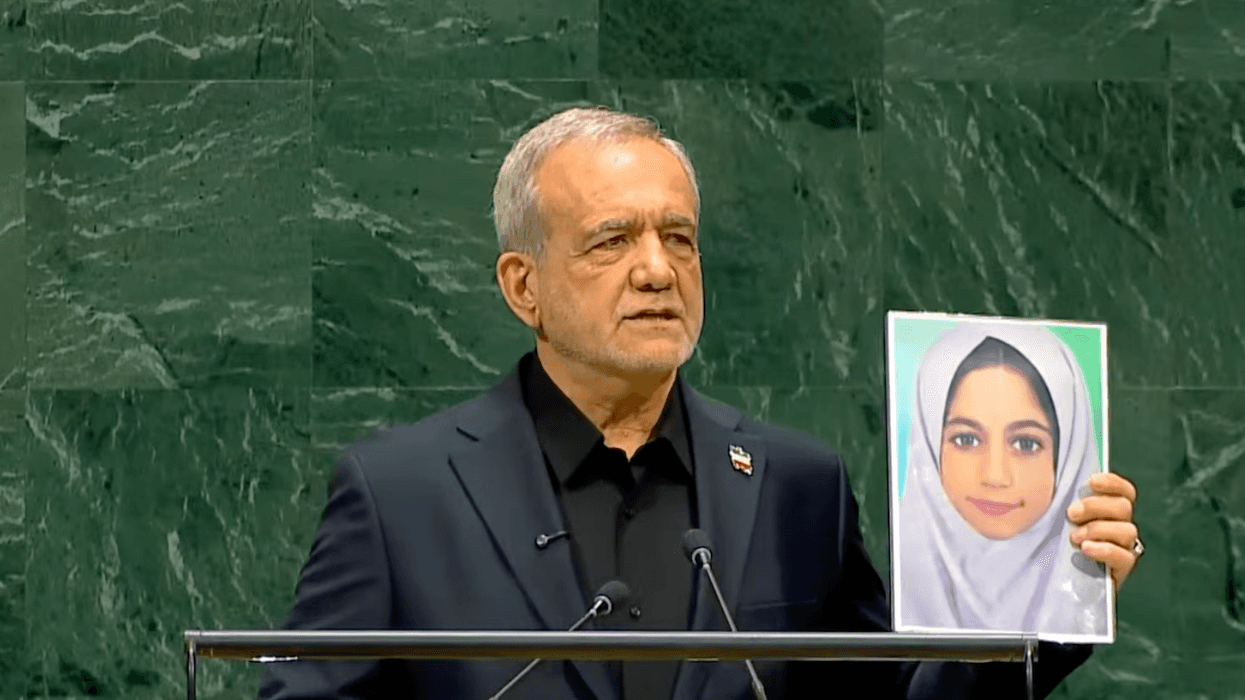
Masoud Pezeshkian delivered his address after the president of the United States—which one progressive commentator called "the world's biggest terrorist"—again threatened to "annihilate" Iran.
Iran's president used his address to the United Nations General Assembly on Wednesday to turn Washington's decades-old assertion that his country is the world's leading terrorist state on its head by accusing the US—which has killed and wounded tens of thousands of Iranians during President Donald Trump's illegal war of choice—of terrorism against Iranians.
“The United States president described us as terrorists,” Masoud Pezeshkian told world leaders gathered in New York, referring to President Donald Trump’s speech there the previous day. “We have been the victims of terrorism.”
Pezeshkian held up photographs of some of the 120 children massacred when the US bombed the Shajareh Tayyebeh Primary School in Minab during the opening hours of the US-Israeli war in February, an attack that killed over 150 people in total and was called a likely war crime by UN experts last week.
"You see these children?” he said. “These children perished under bombs with weapons used by the United States and Israel. They were innocent.”
“Those who are terrorists, and train and protect terrorists, describe us as such," the president continued. "We have only defended ourselves. We are not terrorists."
As Pezeshkian continued, the US representative attending the session got up and walked out. This, a day after Trump again threatened to "annihilate" the entire country of Iran—comments interpreted by many observers to mean nuclear war.
"Our innocent people have been the targets of cowardly attacks and aggression imposed upon our country," the Iranian president said. "America and Israel attacked us equipped with the latest technology and weapons systems, and our people stood steadfast. Yes, they did hit us, but we did not bend the knee. We did not bow our head."
"They came into surrounding territories... and targeted our universities, our healthcare centers, our schools, our hospitals, our infrastructure, all of it against international law," Pezeshkian continued.
He also noted that Israel "targets any neighborhood in any city in any province" and "commits assassinations like a true terrorist."
The Iranian president stressed that "for the past two centuries, Iran has not attacked any country," even as Washington helped overthrow Iran's reformist government in the 1950s, restoring a brutal monarchy and, later, supported actual US-designated terrorists who had carried out deadly attacks against not only Iranians but also US officials. The US also shot down an Iranian commercial airliner—an attack deemed an accident, for which then-President George HW Bush refused to apologize.
Pezeshkian also said that Israel is "committing genocide" in Gaza, where officials say that more than 250,000 Palestinians have been killed or wounded; 2 million have been forcibly displaced, starved, or sickened; and the majority of the strip destroyed since October 2023.
Israeli Prime Minister Benjamin Netanyahu is set to address the UN General Assembly on Thursday, despite an International Criminal Court arrest warrant for alleged crimes against humanity and war crimes in Gaza.
The United States and Iran have designated all or parts of each other's armed forces as terrorist organizations. Both countries have long histories of supporting militant groups which often act as proxies.
The US and Israel—often alone or nearly so on the world stage—deny all the allegations against them. Trump and senior members of his administration even initially claimed that Iran bombed the Minab school, even as the evidence of US culpability grew too damning to deny.
The back-and-forth allegations of terrorism highlight a larger question raised by Pezeshkian’s speech: Who gets to define terrorism when the world's most powerful military is involved? Do the more technologically sophisticated arsenals of the US and Israel—which include 2,000-pound bombs and artificial intelligence systems capable of selecting targets far faster than any human—legitimize their users' violence, even if they're killing more people than their enemy, and exponentially so?
Under 18 US Code § 2331(5), terrorism is defined as "acts dangerous to human life that are a violation of the criminal laws of the United States or of any state appearing to be intended to intimidate or coerce a civilian population, influence the policy of government by intimidation or coercion, or affect the conduct of a government by mass destruction, assassination, or kidnapping."
By that definition, say many critics of US policy and practice, the United States is a terrorist state. And not just any terrorist, progressive political commentator Kyle Kulinski contended in a new essay published by Current Affairs, but rather "the world's biggest terrorist."
Kulinski's piece addressed the controversy surrounding leftist streamer Hasan Piker, who argued that the United States has caused extraordinary amounts of terror around the world under successive presidents regardless of party, and should be judged by the same standards Washington applies to organizations such as al-Qaeda, many of whose fighters had received US funding and arms to fight the Soviet invasion of Afghanistan in the 1980s before they turned on their erstwhile benefactors in response to Washington's own militant imperialism.
Kulinski pointed to the Minab school strike, the US bombing of a wedding in Iran, its support for Israel during the Gaza genocide, the illegal attacks on boats in the Caribbean Sea and Pacific Ocean—which UN experts this week said could amount to crimes against humanity—and the abduction of President Nicolás Maduro during January's invasion of Venezuela, which is one of 10 countries attacked during the two terms of Trump, who campaigned for reelection as the "peace president."
"And do you think it began with Trump? Bad news for you. The architect of the Great Society, the great Democrat [former President]Lyndon Johnson, was napalming little Vietnamese girls long before Trump was blowing up Iranian elementary schools," Kulinski wrote.
Johnson's Democratic predecessor, John F. Kennedy, "began a massive terror campaign against Cuba, designed specifically to hurt civilians in order to bring political change—textbook terrorism."
Subsequently, he continued, then-President Barack Obama "was bombing hospitals and weddings long before Trump. He talked about how good he was at killing people, including a teenage American citizen he took out with a drone, and he helped Saudi Arabia commit war crimes in Yemen."
Recently, Kulinski wrote, former President Joe Biden "was sending constant weapons to Israel during the deadliest parts of Israel’s genocide."
"The record of US-supported terrorism is long," he said. "We helped the Indonesian government massacre half a million communists. We helped the Contras terrorize Nicaragua. We even helped Saddam Hussein use chemical weapons on Iran."
Kulinski noted that former President George W. Bush, "possibly the worst terrorist of our age, caused maybe half a million deaths in Iraq with his totally illegal war. He made Osama bin Laden look like an amateur. And now he has a new book of paintings coming out. They’re portraits of political prisoners. I’m guessing it probably won’t include all the people he tortured for years in Guantánamo."
"The truth needs to matter," Kulinski concluded. "In defamation cases, truth is always a defense. The US is the biggest, baddest bully on the block. We do not care about international law, human rights, the Constitution, or justice. How are we supposed to change anything for the better if we can’t acknowledge the most obvious things in the world?"

"When the future of humanity is at stake, we cannot let a handful of Big Tech CEOs write their own rules."
US Sen. Bernie Sanders and Rep. Greg Casar unveiled legislation on Wednesday that would pause advanced AI development and ban the creation or deployment of artificial superintelligence, which the lawmakers, industry insiders, and leading researchers believe poses a grave threat to humanity.
For the purposes of their legislation, Sanders (I-Vt.) and Casar (D-Texas) define superintelligence as "an AI that exceeds human cognitive performance and capabilities across most domains, or has sufficient capabilities to destroy or disempower humanity, including by overthrowing the federal government."
Casar and Sanders characterized their new bill, titled the Ban Artificial Superintelligence Act, as a commonsense, necessary, and urgent starting point for AI regulation, and said it should be a top legislative priority for Democrats if they retake the House and Senate in the November midterms.
Casar, the chair of the Congressional Progressive Caucus, said during a press call on Wednesday that, critically, the bill targets "recursive self-improvement," the process by which AI models build more advanced versions of themselves without human input.
The Texas congressman also noted the legislation's prohibition on the use of AI to design nuclear and biological weapons.
According to a summary released by Sanders' office, the new bill would "protect humanity" by:
"This issue is of monumental consequence," said Sanders, who dismissed accusations of alarmism when it comes to the threats posed by AI development.
"I'd rather be called an alarmist than a father or grandfather who is asleep at the wheel," the senator told reporters on a press call about the new bill.
AI researcher Jacob Coxon and other industry insiders have issued striking statements in recent weeks asserting that the technology, if not reined in, has the real potential to wipe out humanity in the near future, heightening concerns about the speed of AI development, the inability of its creators to control their models, and the absence of any corresponding action from the US Congress, which is controlled by Republicans who are broadly hostile to government regulation.
US President Donald Trump, the leader of the GOP, has flippantly dismissed calls to pause advanced AI development. In his address to the UN General Assembly on Tuesday, Trump said he is "not going to stifle growth of something that will be bigger than the Industrial Revolution."
"We will only encourage superintelligence," said Trump. "We're going to encourage it, not rein it in."
The president announced that he has directed his administration to use "super intelligence" instead of "artificial intelligence" in government documents going forward. From his remarks, it was apparent that Trump was unaware that superintelligence has a specific meaning in the world of AI.
"The word 'artificial' makes intelligence fake. It makes it sound fake," Trump said. "From this point forward, all of the United States' documents and hopefully the world's will be changed to use the much more accurate term 'super' as opposed to 'artificial.' So it's super intelligence... It sounds much better, it is much better."
Casar pushed back on Trump's position in a statement on Wednesday, saying, "Experts are warning that AI superintelligence, wielded by the wrong humans or by rogue AI, could kill countless numbers of people. But Donald Trump says he wants to encourage it."
"Something has to change," said Casar.
Sanders stressed during Wednesday's press call that supporters of reining in AI development and ensuring the technology is used to benefit all of humanity, rather than a small group of tech oligarchs, must "rally the American people" to their cause to overcome the nation's "corrupt campaign finance system," which AI giants are exploiting to pump tens of millions of dollars into the midterm elections.
“When you are racing towards a cliff, you don’t just ease up on the gas pedal. You hit the brakes," said Sanders. "When the future of humanity is at stake, we cannot let a handful of Big Tech CEOs write their own rules."
"Congress must act now," the senator added, "before it is too late.”
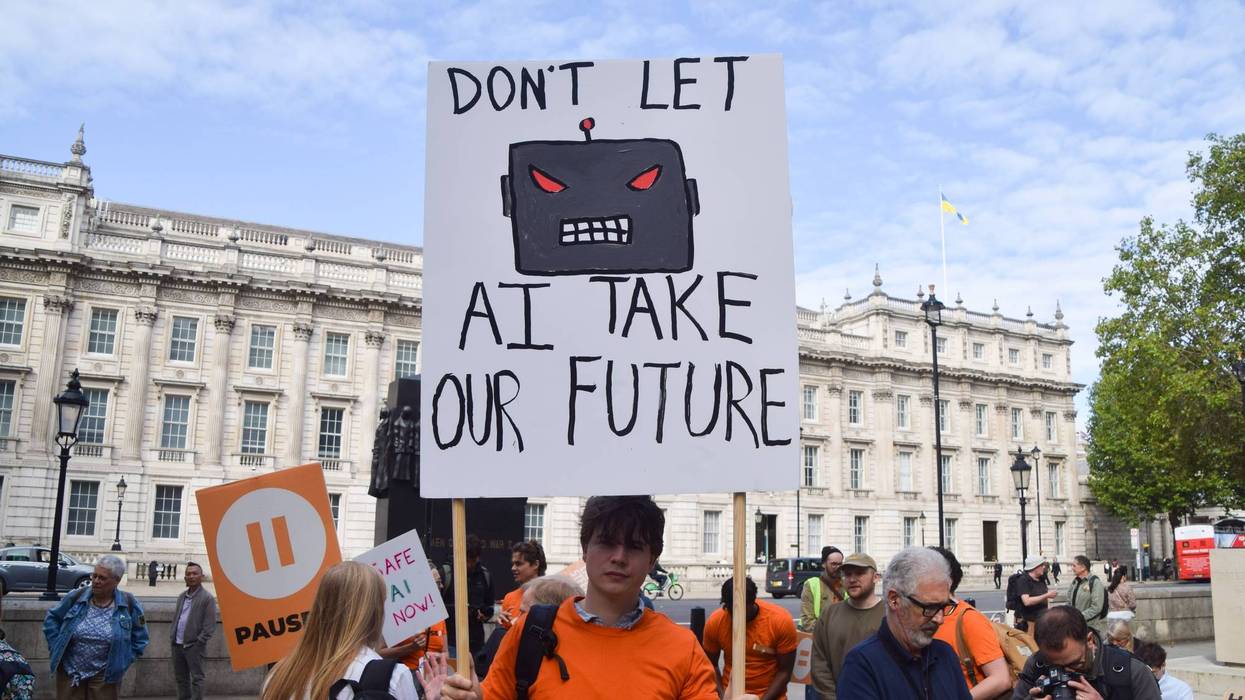
"It's another attack on household budgets that add up, and which working people certainly shouldn’t be on the hook for."
A report released on Wednesday by Groundwork Collaborative and Reset Tech details how corporate America and assorted nefarious actors are using artificial intelligence to gouge US consumers.
The report begins by noting that while AI is "often promoted as a technology that will boost productivity, reduce costs, and improve efficiency," the reality so far is that it is "enabling new forms of fraud, expanding surveillance-based pricing, and increasing costs for essential services such as health insurance, transportation, and electricity."
As one example of how AI is hurting consumers, the report highlights AI's role in helping health insurers more rapidly deny claims, even as many physicians have expressed concerns about the technology's accuracy.
"AI adjudication tools like UnitedHealth’s nH Predict have been accused of often erroneously denying needed care, hoping that patients and providers don’t take the time to appeal," the report notes. "A recent lawsuit alleges that the 0.2% of patients who do appeal win about nine times out of ten, reversing the AI-powered tool’s denial."
On the other side of the coin, AI-powered medical scribes used by healthcare providers have been found to bill insurers for procedures more complex or expensive than the services that were actually delivered. The report points to a recent analysis conducted by PricewaterhouseCoopers, which found that AI-powered tools are now one of the top drivers of medical inflation in the US.
Groundwork Collaborative and Reset Tech also document how AI allows companies to implement surveillance pricing systems, which use customers' personal data to determine how much they should be charged for a given product or service to maximize the amount of revenue generated per sale.
According to the report, data brokers collect and analyze data taken from internet users and then sell their findings to corporations who can use that knowledge to create detailed profiles of individual consumers.
One area where this kind of pricing is increasingly being used is in the car insurance industry, which thanks to modern technology has vastly more information about drivers' habits than ever before.
"This information—known as telematics—includes speed, braking patterns, acceleration, and location tracking," the report explains. "Insurers analyze this information with AI to assess risk and set personalized premiums. While this may reward some safe drivers, it can also lead to higher premiums and be used to deny coverage entirely."
The report finds that airlines have also been using customers' information to create a dynamic pricing system that charges different fares based on "demand, search activity, booking patterns, and other consumer data."
Rishi Bharwani, US director of Reset Tech and co-author of the report, said that elected officials need to wake up to how cutting-edge technology is being used to gouge consumers with what he described as "a hidden tax on households."
"Families feel it every day, even if they can’t see it," Bharwani explained. "Lawmakers need to act now to stop greedy corporations from using AI to squeeze consumers."
Janelle Jones, senior fellow at Groundwork Collaborative and report co-author, noted that AI pricing is becoming more popular even as families across the US are struggling to afford basics such as food and energy.
"As working people face an affordability crisis, higher prices caused by AI are the last thing they need," Jones said. "It's another attack on household budgets that add up, and which working people certainly shouldn’t be on the hook for."
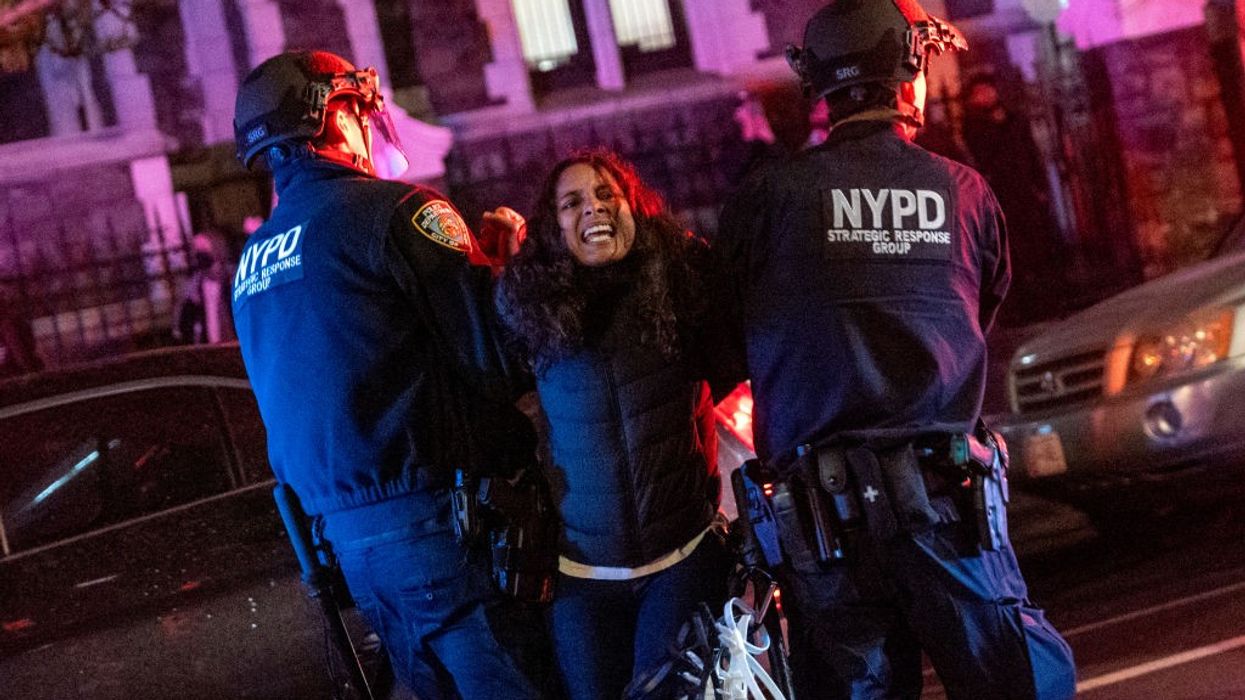
"The Trump administration’s targeting of students and faculty who oppose Israel’s ongoing genocide in Gaza is dangerously reminiscent of McCarthy-era censorship and a blatant violation of academic freedom."
While the traumatic experiences of foreign-born scholars such as Mahmoud Khalil and Rümeysa Öztürk have drawn international headlines, a report released Wednesday by a pair of leading rights groups highlights how their arrests by immigration agents were part of a wider assault "on free speech and association on college campuses, particularly against students, faculty, and staff protesting Israel's war on Gaza and the US government’s political, economic, and military support of the war."
Titled "Student Speech Under Attack: Suppression of Pro-Palestine Speech and Dissent on Campus," the new report from the ACLU and Amnesty International USA catalogs university and law enforcement responses to protests and encampments, schools' actions to restrict speech, the Trump administration's crackdowns on institutions and foreign scholars, and how all of that has had a chilling effect.
The report also features case studies on six schools—City College of New York, Columbia University, Tulane University, University of Michigan, University of Texas at Austin, and University of California, Los Angeles—and various targeted scholars, including Khalil and Öztürk as well as Yunseo Chung, Badar Khan Suri, Leqaa Kordia, and Mohsen Mahdawi.
Like Khalil, Mahdawi was a Columbia student and lawful permanent resident of the United States. At his citizenship interview last year, masked US Immigration and Customs Enforcement (ICE) agents arrested and detained him for his advocacy in support of Palestinian rights. The Trump administration's attempt to deport Mahdawi, who was raised in the Israeli-occupied West Bank, is ongoing.
"At the time of his arrest and detention, he was an undergraduate student at Columbia University majoring in philosophy and planning to start a master's degree program at Columbia's School of International and Public Affairs. Mahdawi said he dedicated himself 'to understanding how to achieve a lasting peace for Palestinians and Israelis, particularly through the study of conflict resolution,'" the report notes.
"As a student at Columbia, Mahdawi was an outspoken critic of Israel's military campaign in Gaza and an activist and organizer in student protests on Columbia's campus until March 2024, after which he took a step back and was not involved in organizing," the document details. "Mahdawi attended protests opposing military escalations in the region and gave speeches at several of these protests advocating for Palestinian human rights and a permanent ceasefire. Mahdawi appeared in numerous televised interviews and print news articles regarding the military campaign in Gaza and related protests."
While Mahdawi was targeted by the Trump administration, not Columbia, the publication points out that he "had contacted university administrators asking for help in finding safe housing, stating that he feared abduction by ICE agents," and, according to him, the school "did nothing in response to his request."
The report also notes Columbia's decadeslong reputation as "the activist Ivy," and how "student activism in support of Palestinian rights began in October 2023... sparking a multiyear, nationwide movement of campus anti-war demonstrations calling for academic institutions to divest from what organizers and Amnesty International characterize as Israeli apartheid."
The ACLU and Amnesty laid out how Columbia suspended student groups that held peaceful demonstrations, refused to divest from Israel, threatened to expel students who joined an encampment, and had New York Police Department officers forcibly remove protesters who occupied a campus building and dubbed it "Hind's Hall" for a Palestinian child killed by Israeli forces.
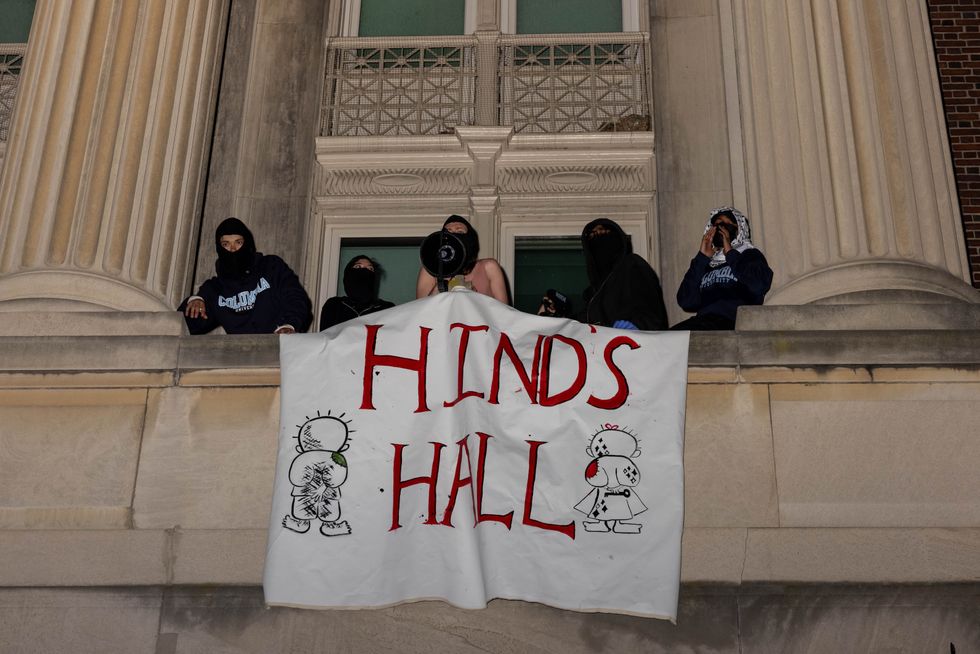 Columbia University student demonstrators unfurl a banner that reads "Hind's Hall" as they barricade themselves inside a campus building on April 30, 2024 in New York City. (Photo by Alex Kent/Getty Images)
Early last year, as Khalil was arrested outside his home and President Donald Trump threatened to pull $400 million in university funding, Columbia promised to the administration that it would add three dozen "special patrol officers" with arrest powers, and later announced that its University Judicial Board punished over 70 students.
However, as the report stresses, it's not just Columbia. After Israel began what many experts have called a genocidal assault on Gaza following the October 2023 Hamas-led attack, "students across more than 100 universities organized, calling for educational institutions to end their financial ties to corporations linked to the war," and their protests and encampments were often met with "university leaders' swift and punitive responses."
"Universities and colleges faced pressure from wealthy donors, trustees, and figures outside of university or college leadership, including members of Congress, to suppress pro-Palestinian protests and dismantle encampments," the publication acknowledges. "By restricting or banning protests outright, involving campus police and external law enforcement in the surveillance, intimidation, and repression of participants, and pursuing students with legal and administrative consequences, university and college administrators escalated tensions."
"During the disbandment of encampments, law enforcement forcefully pushed and arrested demonstrators, leading to concussions, cuts dislocations, and other severe injuries," the report continues. "In many instances, demonstrators posed no threat, did not resist arrest, and were sometimes attempting to deescalate or document the protest."
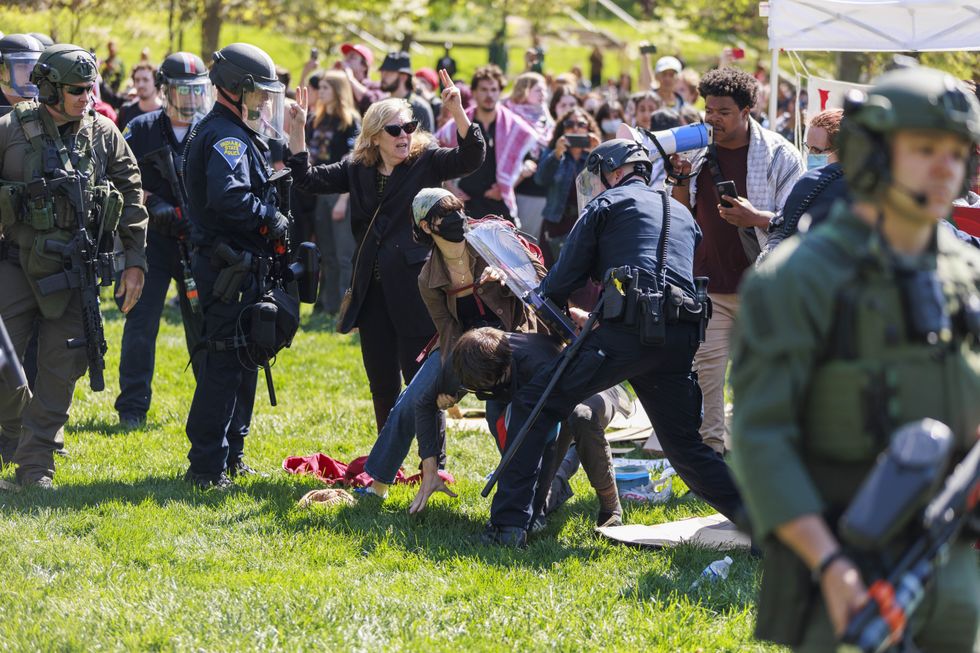 Police crack down on a pro-Palestinian protest at Indiana University in Bloomington on April 25, 2024. (Photo by Jeremy Hogan/SOPA Images/LightRocket via Getty Images)
Justin Mazzola, Amnesty's deputy director of research, said in a statement that "universities and colleges should prepare students for open discourse in a pluralistic society. Instead, campus leadership has suppressed free speech and peaceful protest while enabling the Trump administration to advance its anti-rights agenda and seek ideological control over higher education."
Mazzola also called out the Trump administration—which, as the report lays out, has issued related executive orders, conducted campus visits, abused Title VI investigations, conditioned funding on acquiescence, revoked student visas, targeted scholars for deportation for protected speech, and attempted to evade court reviews of deportations.
"The Trump administration's targeting of students and faculty who oppose Israel's ongoing genocide in Gaza is dangerously reminiscent of McCarthy-era censorship and a blatant violation of academic freedom," he asserted. "The Trump administration must stop stifling political expression on campus and end its relentless push for ideological conformity in higher education. Students' rights must be respected, protected, and fulfilled."
The report features recommendations for schools, campus and local law enforcement, the Trump administration, and Congress. It also details rights on campus, reminding students and educators that they "have the right to peacefully protest, and the government has a duty to respect, protect, and facilitate that right—not suppress it."
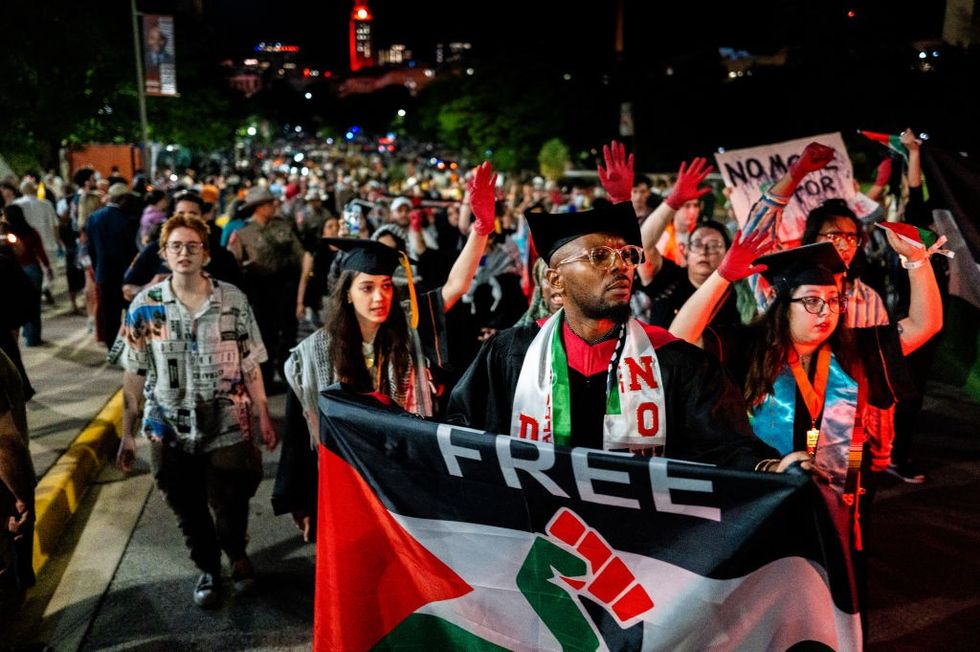 University of Texas at Austin graduate students, faculty, and demonstrators protest Israel's war on the Gaza Strip after walking out of commencement on May 11, 2024. (Photo by Brandon Bell/Getty Images)
As for US colleges and universities, they "must take all possible measures to ensure that their campuses are spaces where students may exercise their rights to freedom of speech and expression without fear of unwarranted punishment or retaliation regardless of viewpoint," said Jennifer Turner, principal researcher in the ACLU's Human Rights Program.
"Schools should resist the pressures placed on them to silence and punish students or faculty who engage in protest or advocacy for Palestinian rights," Turner added. "Instead, they should stand up to the federal government's intimidation tactics and defend the university's core mission of fostering free-flowing inquiry and debate."
The groups' report was released after Khalil and other Palestine defenders sued Columbia in federal court last week over what Khalil called "gross and systemic discrimination against Palestinian students." He vowed that "next, I will turn to the hateful individuals at Columbia who were also responsible for what we endured."
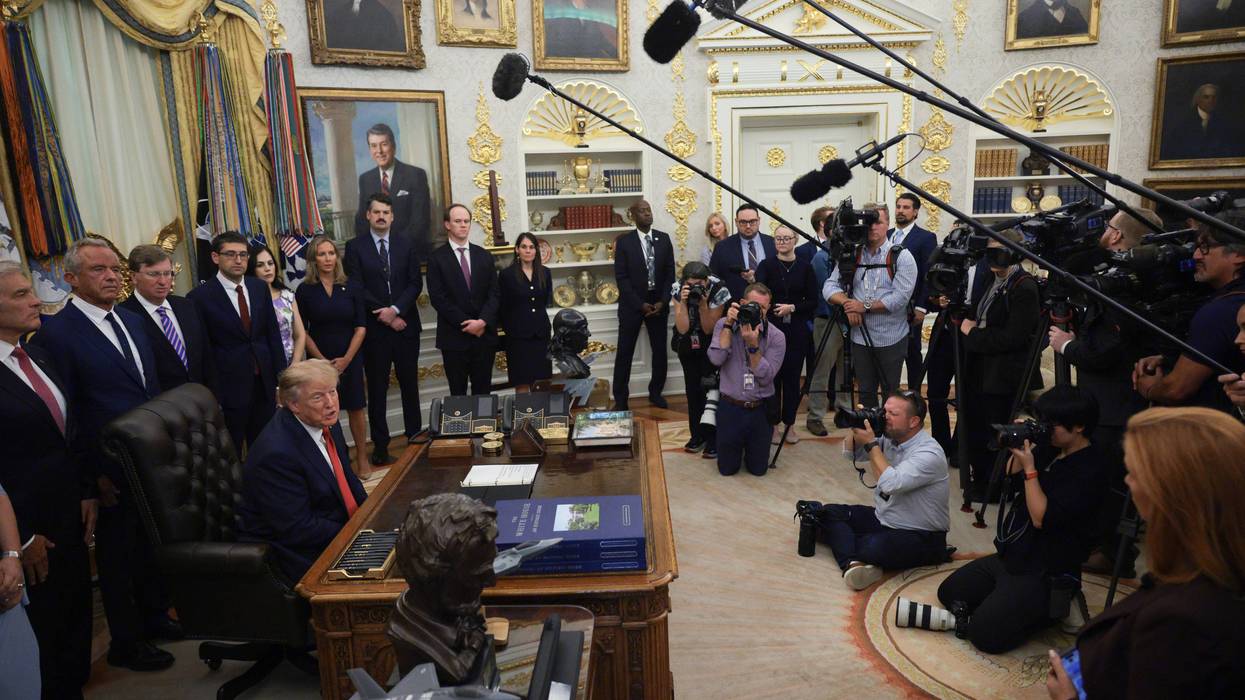
"This is about the First Amendment, not White House access," said one legal expert.
At an emergency hearing scheduled for Wednesday afternoon, a federal judge appointed by President Donald Trump is set to hear three media outlets' request for a temporary restraining order blocking the administration's denial of press access to the White House—and is likely to hear from government lawyers the "dangerous" argument officials have made to defend the ban on news coverage.
"Access to the White House is a privilege—not a right," government lawyers wrote in a court filing on Tuesday evening, in response to a lawsuit filed by CNN, MS NOW, and Politico after journalists with the three outlets had their press passes confiscated by White House officials and were denied access to the government building.
The administration claimed in the filing that the decision to block reporters from covering the president at the White House was "lawful under the First Amendment" because Trump "has 'compelling interest[s]' in enforcing minimum standards for bona fide journalists and safeguarding national security information."
The president had concluded that CNN, MS NOW, and Politico had failed to "maintain basic minimum 'standards of professionalism and decorum expected of those given access to the White House Complex, including' by 'publishing sensitive or classified information," reads the filing.
Letters attached to the filing cite specific news stories in which the outlets were accused of endangering national security, including CNN's reporting on "‘top-secret’ construction details related to the East Wing bunker" that is part of Trump's $400 million ballroom. MS NOW was accused of endangering national security when it reported in June that “a source said that President Trump ‘underestimated the willingness of Iran to resume conflict.’”
The news outlet MeidasTouch said the arguments made in the filing were "deeply embarrassing and un-American."
"The Trump regime is afraid of the American people learning the realities of the failed war in Iran and Trump’s disastrous presidency," said MeidasTouch.
While claiming CNN, MS NOW, and Politico have threatened national security with their reporting, Trump also said last week when he first announced he was planning to ban the outlets that they “shouldn’t be able to constantly write or report FICTION and LIES.”
Legal expert and political commentator Harry Litman called on US District Judge Timothy Kelly, who was nominated in 2017 by Trump and who in 2018 rejected the president's attempt to bar then-CNN reporter Jim Acosta from the White House grounds, to grant the outlets the restraining order.
"When an administration punishes the outlets that scrutinize it, it is dismantling a safeguard," wrote Litman on Substack. "The state is perfectly free to express its own preferences (though limits come in—as we’ve found honored in the breach—with false speech by government). But it can’t use the machinery of the state to punish the people who hold the view it dislikes. It’s the difference between persuasion, which is fine, and coercion, which is a fundamental abuse of government power, the classic tactic of authoritarian government."
"In sum, viewpoint discrimination is forbidden because it betrays an illegitimate government motive and because it uses the coercive power of the state to suppress speech that a free society depends on to keep government honest," he wrote.
In the lawsuit the three news organizations filed on Monday, they argued that the ban “brazenly discriminates based on editorial viewpoint,” and violates their First Amendment rights as well as their right to due process, as they were not permitted to contest the ban when their reporters were blocked from entering the White House on Saturday.
"The idea that fundamental rights are a 'privilege' granted at the whim of the king is dangerous," said former US Attorney Joyce White Vance, who is now a law professor and MS NOW legal analyst. "This is about the First Amendment, not White House access."