May, 19 2009, 11:37am EDT

For Immediate Release
Contact:
Rachel Myers, ACLU National, (212) 549-2689 or 2666; media@aclu.org
Hedy Weinberg, ACLU of TN, (615) 320-7142 or 480-5572
ACLU Sues To Stop Tennessee Schools From Censoring Gay Educational Web Sites
Filtering Software Allows Anti-Gay Sites
NASHVILLE, Tenn.
The
American Civil Liberties Union and the ACLU of Tennessee sued two
Tennessee school districts in federal court today, charging the schools
are unconstitutionally blocking students from accessing online
information about lesbian, gay, bisexual and transgender issues.
Metropolitan Nashville Public Schools, Knox County Schools and as many
as 105 other school districts in Tennessee use Internet filtering
software to block Web sites containing pro-LGBT speech, but not Web
sites touting so-called "reparative therapy" and "ex-gay" ministries.
The "LGBT" filter is not used to block sites containing pornography,
which are filtered under a different category, but it does block the
sites of many well-known LGBT organizations including Parents,
Families, And Friends of Lesbians and Gays (PFLAG), the Gay Lesbian
Straight Education Network (GLSEN) and Human Rights Campaign (HRC).
"Allowing access to Web sites that
present one side of an issue while blocking sites that present the
other side is illegal viewpoint discrimination," said Catherine Crump,
a staff attorney with the ACLU First Amendment Working Group and lead
attorney on the case. "This discriminatory censorship does nothing to
make students safe from material that may actually be harmful, but only
hurts them by making it impossible to access important educational
material."
The school districts block the
Internet filtering category designated "LGBT," which includes sites
that "provide information regarding, support, promote, or cater to
one's sexual orientation or gender identity." They do not, however,
block sites that condemn homosexuality or promote "reparative therapy,"
a practice purporting to "cure" LGBT people that is denounced as
dangerous and harmful to young people by such groups as the American
Psychological Association and the American Medical Association.
The ACLU filed the case in the U.S.
District Court for the Middle District of Tennessee against
Metropolitan Nashville Public Schools and Knox County Schools on behalf
of two high school students in Nashville, one student in Knoxville and
a high school librarian in Knoxville who is also the advisor of the
school's Gay-Straight Alliance (GSA).
"Students need to be able to access
information about their legal rights or what to do if they're being
harassed at school," said Keila Franks, a 17-year-old student at
Hume-Fogg High School in Nashville and a plaintiff on the case. "It's
completely unfair for schools to keep students in the dark about such
important issues and treat Web sites that just offer information like
they're something dirty."
The lawsuit charges that blocking
LGBT sites violates students' First Amendment rights by only allowing
access to sites that present an anti-gay point of view on the rights of
LGBT persons on issues such as anti-gay harassment, marriage,
employment discrimination and the military's "don't ask, don't tell"
policy while blocking access to sites that support LGBT rights.
Further, the filtering hinders the ability of GSAs and their members to
facilitate club activities and keeps students from accessing important
information about scholarships for LGBT students or doing research for
school-related assignments.
The ACLU first learned about the
discriminatory filtering from Andrew Emitt, a Knoxville high school
student who discovered the problem while trying to search for LGBT
scholarships. Internet filtering software is mandated in public schools
by Tennessee law, which requires schools to implement software to
restrict information that is obscene or harmful to minors. However, the
"LGBT" filter category does not include material which is sexually
gratuitous and already included in the "pornography" filtering
category.
"While schools may have an interest
in using filters to block material that could be harmful to minors,
blocking access to information about LGBT issues while allowing
anti-gay information is unlawful and potentially dangerous," said
Tricia Herzfeld, a staff attorney with the ACLU of Tennessee. "There is
no place for this kind of unconstitutional censorship in our public
schools."
In addition to Crump and Herzfeld,
attorneys on the case are Chris Hansen of the ACLU First Amendment
Working Group and Christine Sun of the ACLU LGBT Project.
The plaintiffs are Nashville
students Keila Franks and Emily Logan, Knoxville student Bryanna
Shelton, and Karyn Storts-Brinks, a Knoxville high school librarian and
faculty sponsor for her school's GSA.
More information about the case,
including the ACLU's complaint and a video featuring one of the student
plaintiffs, is available online at: www.aclu.org/lgbt/youth/39346res20090413.html

The American Civil Liberties Union was founded in 1920 and is our nation's guardian of liberty. The ACLU works in the courts, legislatures and communities to defend and preserve the individual rights and liberties guaranteed to all people in this country by the Constitution and laws of the United States.
(212) 549-2666LATEST NEWS
As Wage Growth Slows and Unemployment Rises, Trump Tax Cuts Deliver Big for Mega-Rich Retail CEOs
"At the same time prices have soared for consumers and retail workers remain stuck in low-wage jobs, big-store CEOs and shareholders have reaped higher profits and lower taxes."
Dec 19, 2025
As workers face slowing wage growth, a worsening cost-of-living crisis, and rising unemployment, the chief executives of top corporate retailers in the United States are reaping huge gains from the tax cuts that US President Donald Trump and congressional Republicans extended over the summer.
An analysis released Friday by the progressive advocacy group Americans for Tax Fairness (ATF) estimates that the CEOs of Amazon, Best Buy, Costco, Home Depot, Lowe's, Target, TJX, and Walmart have collectively saved close to $35 million on their individual tax returns in the seven years the Trump tax cuts have been in effect.
Thanks to the Trump-GOP tax law, which took effect in 2018, the companies examined in the analysis paid a tax rate of just 17.5% between 2018 and 2024—roughly half what they paid prior to the law's enactment.
"While at the same time prices have soared for consumers and retail workers remain stuck in low-wage jobs, big-store CEOs and shareholders have reaped higher profits and lower taxes," David Kass, ATF’s executive director, said in a statement. "If we want a system that alleviates economic stress on average Americans instead of exacerbating it during the holiday season, we need to raise taxes on corporations and the rich, invest in workers and families with expanded public services."
Workers at the major retailers haven't fared nearly as well. ATF noted that "the average worker at the eight stores was paid less than $32,000 in 2024."
"Amazon—the world’s largest retailer—refuses to even sit down with its employees who have formed a labor union for better pay, benefits, and working conditions," the group observed. "If Lowe’s had used the nearly $50 billion it spent on stock buybacks over the seven-year period to instead raise employee wages, its workers would have each been paid almost $200,000 more."
Across the US economy, workers are seeing wage growth stagnate amid elevated and still-rising prices, which are forcing many to skip meals and ration their medications to make ends meet.
The Labor Department said earlier this week that wage growth decelerated to 3.5% year over year—the slowest pace since before the Covid-19 pandemic. Unemployment, meanwhile, rose in November to the highest level in four years.
The ATF analysis came days after Trump delivered a lie-filled primetime speech defending his handling of the US economy as his approval ratings tanked, with American voters across party lines increasingly furious over the high costs of housing, groceries, healthcare, and other necessities.
During the speech, Trump vowed that Americans would soon "see the results of the largest tax cuts in American history."
But the richest people in the country are set to reap disproportionate benefits from the tax cuts. As Bloomberg reported earlier this week, "Many filers—particularly those who could most use the financial boost—may soon be disappointed."
"Wealthy taxpayers in high-tax states like California, New York, and New Jersey are the biggest winners," the outlet noted.
Keep ReadingShow Less
Dems Call to Investigate Commerce Secretary Boosting AI Data Centers That 'Enrich His Entire Family'
"Never in modern US history has the office intersected so broadly and deeply with the financial interests of the commerce secretary’s own family," according to the New York Times.
Dec 19, 2025
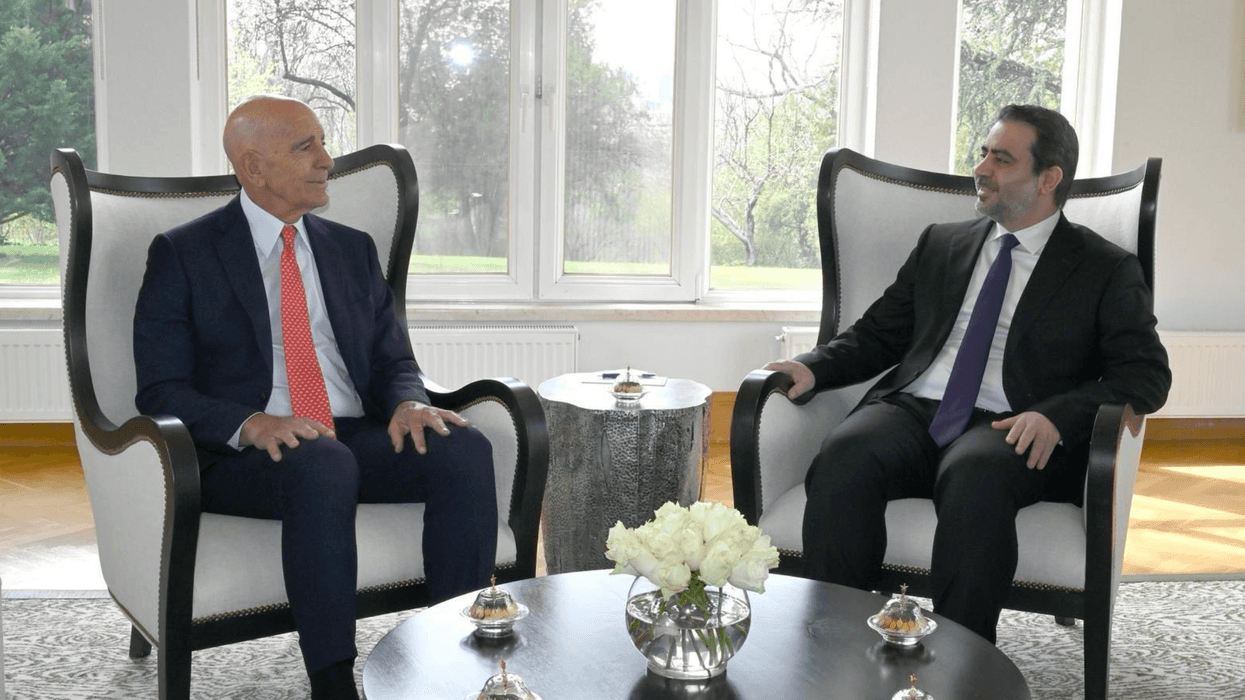
A group of Democratic lawmakers has called for the Commerce Department to investigate whether its billionaire secretary, Howard Lutnick, is improperly boosting artificial intelligence data centers that "stand to enrich his entire family."
The group of 25 House and Senate Democrats, led by Sen. Elizabeth Warren (D-Mass.) and Rep. Madeleine Dean (D-Pa.), sent a letter on Thursday urging the department's acting inspector general, Duane Townsend, to review whether Lutnick violated any part of the ethics agreement he signed following his nomination.
That agreement required him to divest his stake in the financial services firm Cantor Fitzgerald, which he had owned and led for decades. Cantor owns the Newmark Group, a real estate broker that facilitates leases for AI data centers.
Lutnick stepped down from his position as CEO in February, handing his financial stake in the company to his adult sons, Brandon and Kyle.
Though the transfer of his stake was supposed to happen in May, records show he did not do so until October, after receiving an ethics waiver from the Trump administration that allowed him to continue working on matters that could affect the company.
The lawmakers described some of these potential conflicts in the letter, many of which were revealed by a New York Times investigation last month:
Multiple press reports indicate that, in his capacity as head of the Commerce Department, Secretary Lutnick has helped boost AI data centers in ways that will likely enrich his own family. He has made public appearances promoting data center projects—including at least one that his family's company has worked on.
Furthermore, Secretary Lutnick has reportedly pressured foreign governments to invest in the US data center industry. For example, as part of a recent AI chips export deal with the United Arab Emirates (UAE), Secretary Lutnick reportedly pushed the UAE to "build data centers in America,” in exchange for the United States loosening export control restrictions on certain advanced chips. The Trump administration ultimately approved this deal, under which the Lutnick-backed Newmark Group is primed to profit from that Emirati investment.
Similarly, as part of another trade deal, Secretary Lutnick reportedly pushed South Korea to invest hundreds of billions of dollars in the United States. One startup vying for some of South Korea's investment has paid the Lutnick family's companies millions in fees to help it secure financing and land for its new data center.
Though businesspeople have often occupied the role of Commerce Secretary, the Times reported last month that "never in modern US history has the office intersected so broadly and deeply with the financial interests of the commerce secretary’s own family, according to interviews with ethics lawyers and historians."
According to the company's most recent quarterly earnings report, Newmark has completed more than $25 billion in data center deals over the past 12 months, resulting in its most lucrative year in the firm's history.
Citing evidence that the construction of AI data centers considerably spikes energy costs for consumers, the lawmakers said, "There is substantial public interest in ensuring that Secretary Lutnick is not violating federal ethics law to propel data centers that will be profitable for his family while making life more expensive for working Americans."
Keep ReadingShow Less
Tanking Economy and Higher Prices Put Trump on ‘Naughty List’ This Holiday Season, Group Says
"Families are heading into the holidays facing snowballing costs on everything from toys and groceries to health care and utilities, yet Trump continues to call affordability a hoax."
Dec 19, 2025
President Donald Trump delivered a speech on Wednesday in which he tried to convince US voters that the economy under his watch was the envy of the world.
However, newly released data shows that Americans are not buying it.
The latest data from the University of Michigan's Surveys of Consumers showed consumer sentiment of current economic conditions dropped yet again in December to a rating of 50.4, which represents a 33% drop from the 74.0 consumer sentiment rating one year ago.
The Groundwork Collaborative released a report on Friday that slammed the president's economic stewardship and said that "it is no surprise that a record number of Americans put Trump’s economic performance on the naughty list this holiday season."
The group then explained why Americans have good reason to be pessimistic.
One of the most glaring problems with Trump's economy at the moment, the group contended, is the labor market, which has reported net negative job growth over the last two months.
What's more, Groundwork Collaborative noted that "the number of people working part time for economic reasons rose to 5.5 million in November, an increase of about 909,000 since September, as Americans are unable to find full-time employment."
The group also hit Trump for his tariffs on imported goods, which have already cost the average American family an estimated $1,200 so far and are projected to cost them $2,100 next year, assuming the tariffs remain at their current levels.
Alex Jacquez, chief of policy and advocacy at Groundwork Collaborative, said that current economic conditions were the opposite of what Trump promised during the 2024 presidential campaign, when he vowed to lower prices starting on his first day in office.
"Families are heading into the holidays facing snowballing costs on everything from toys and groceries to health care and utilities, yet Trump continues to call affordability a hoax," said Jacquez. "As working families yearn for the ghost of economies past, let’s hope the Scrooge in the White House makes a resolution to stop gaslighting Americans and get serious about bringing costs down in the new year."
Groundwork Collaborative's analysis came one day after the Center on Budget and Policy Priorities (CBPP) released a report on Thursday that outlined how Trump and his Republican allies have worked to make life less affordable for US voters over the last year.
Beyond the aforementioned tariffs cited by Groundwork Collaborative, CBPP cited the major cuts that Trump and the GOP made to Medicaid and the Supplemental Nutritional Assistance Program (SNAP) in the One Big Beautiful Bill Act that they passed into law earlier this year.
CBPP also flagged Trump and the GOP's cuts to renewable energy projects that the group argued are raising the cost of electricity at a time when electric grids are coming under heavy strain from the energy demands of artificial intelligence data centers. Making this crisis potentially even worse, the think tank noted that Trump has proposed entirely eliminating the Low Income Home Energy Assistance Program (LIHEAP).
Taken together, CBPP suggested that GOP policies have been taking a hatchet to the budgets of US households in the bottom half of the income distribution scale.
"Households with incomes in the bottom half of the distribution... spend almost 90% of their incomes on basic items: utilities, groceries, health care, transportation, and shelter," wrote CBPP. "And to help afford those basics, many need assistance, such as Medicaid, SNAP, or LIHEAP, that the Administration has put on the chopping block."
Keep ReadingShow Less
Most Popular