

SUBSCRIBE TO OUR FREE NEWSLETTER
Daily news & progressive opinion—funded by the people, not the corporations—delivered straight to your inbox.
5
#000000
#FFFFFF
To donate by check, phone, or other method, see our More Ways to Give page.
Daily news & progressive opinion—funded by the people, not the corporations—delivered straight to your inbox.

Keri Powell, Earthjustice, (845) 265-2445
Staten Island residents are going to court to force the cleanup
of an abandoned toxic waste dump in the Great Kills section of the
borough.
The public interest law firm Earthjustice filed a lawsuit
today in federal district court in Manhattan on behalf of the Northern
Great Kills Civic Association. The association represents residents
living near the 272-acre Brookfield landfill.
Between 1974 and 1980, tens of thousands of gallons of toxic
industrial waste were dumped illegally at the landfill, intended only
for municipal solid waste. It was one of five city landfills involved
in a 1982 federal investigation into illegal dumping which sent a city
Department of Sanitation official and a hauling operator to prison.
"Those convicted of dumping this toxic waste have long ago served
their time. But 30 years later, their poisonous legacy remains," said
Earthjustice attorney Keri Powell. "We're filing this lawsuit to make
sure this mess is cleaned up and the residents of Great Kills can
reclaim their community from contamination."
Staten Island Borough President James P. Molinaro, who has long
called for the landfill's cleanup, expressed support for the litigation.
"You might remember 'Johnny Cash,' the Department of Sanitation
official? He's the one who went to jail for allowing trucks to dump up
to 50,000 gallons a day of toxic waste in return for cash bribes," said
Borough President James Molinaro. "Well, Johnny Cash has been out of
prison for years now. Unfortunately, the mess he made here in Staten
Island still hasn't been cleaned up."
State Senator Andrew Lanza, Assemblyman Michael Cusick, Assemblyman
Louis R. Tobacco, Councilman Vincent M. Ignizio, and Councilman Michael
McMahon have also pressed for action at the Brookfield site and have
spoken up in favor of the residents' lawsuit.
In 1990, the city announced it had set aside $600 million for the
cleanup of the five city landfills involved in the 1982 scandal. While
cleanup has concluded at the Pelham Bay landfill in the Bronx, the
Edgemere landfill in Queens, and the Fountain Avenue and Pennsylvania
Avenue landfills in Brooklyn, work still has yet to begin on the
Brookfield site in Staten Island.
"We have been patient, cooperating in good faith with agency
officials who have offered us nothing but empty promises," said John
Felicetti, co-chair of the Citizens Advisory Committee for the
Brookfield Remediation. "At first there was money but no cleanup plan.
Now we have a plan, but no money. While the city and state agencies
bicker about who should foot the cleanup bill, our community is
suffering."
At the time the scandal was uncovered, it was compared to the
infamous incident at Love Canal which gave rise to the nation's
environmental health movement.
"We've watched as landfills in the Bronx, Brooklyn and Queens have
been cleaned up. Decades have gone by and we're still waiting for our
community to be taken care of," said Geri Kelsch, president of the
Northern Great Kills Civic Association. "I was still a child when this
illegal dumping was uncovered. Now I have children of my own. We're
fighting so a third generation of Staten Islanders won't have to live
with poison in their backyard."
Though far smaller than the borough's infamous Fresh Kills landfill,
the Brookfield site poses nearly as great a threat to the environment
as its 3,000-acre counterpart, because of the toxic combination of
cyanide, lead, arsenic, and other contaminants leaking from the
landfill.
The federal investigation found that somewhere between 10,000
gallons a week to 50,000 gallons a day of hazardous waste were dumped
illegally at the site during its last six years of operation. The oil,
sludge, metal plating, lacquers and solvents, which came from
manufacturers throughout the region, remain buried on the site and feed
the 95,000 gallons of contaminated water which leak from the site each
day into groundwater and the Richmond Creek.
There are nearly 10,000 people living within a quarter-mile of the
landfill. In addition, four schools and one church -- the Tanglewood
Nursery School, P.S. 37, P.S. 32, St. Patrick's School, and St.
Patrick's church -- are within a quarter mile of the landfill.
A copy of the lawsuit filed today can be found at: https://www.earthjustice.org/library/legal_docs/brookfield-initial-complaint-original-signed.pdf
Earthjustice is a non-profit public interest law firm dedicated to protecting the magnificent places, natural resources, and wildlife of this earth, and to defending the right of all people to a healthy environment. We bring about far-reaching change by enforcing and strengthening environmental laws on behalf of hundreds of organizations, coalitions and communities.
800-584-6460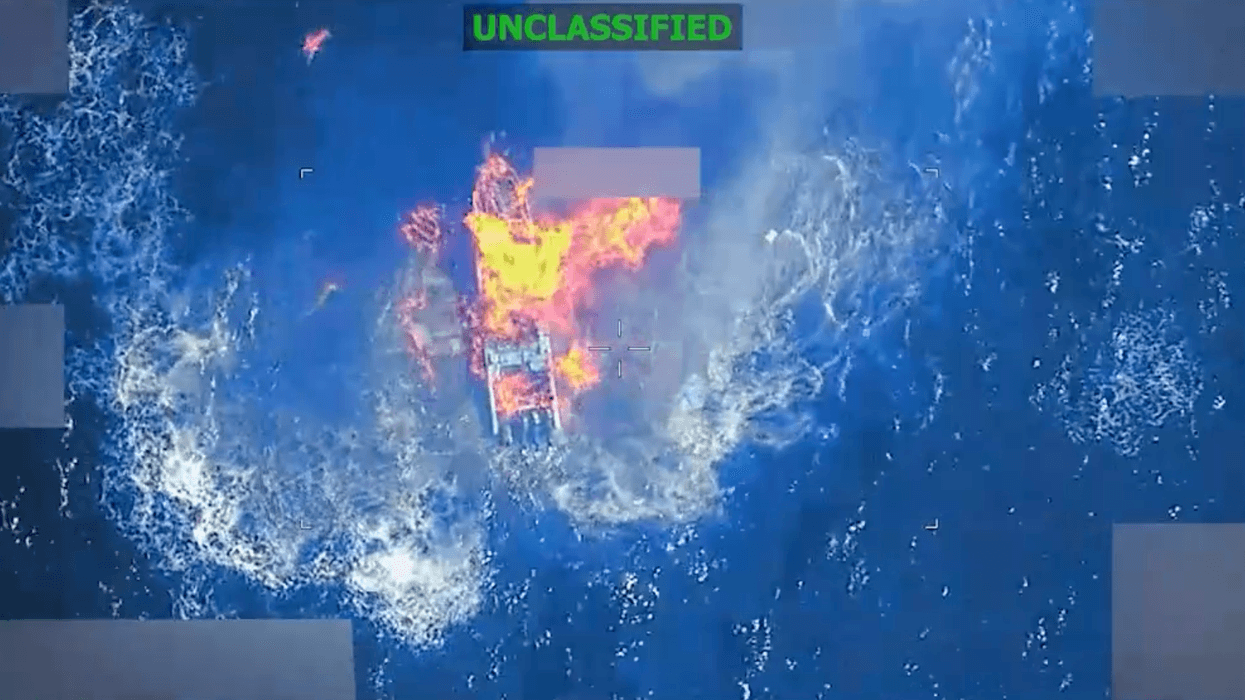
One legal expert said the grim milestone raises the question of whether the US is committing a "crime against humanity."
The US military on Friday bombed another boat it claimed was smuggling drugs in the eastern Pacific Ocean, killing three more people in what experts say is an illegal campaign whose death toll has now topped 200.
US Southern Command said in a statement that "Joint Task Force Southern Spear," the nine-month campaign ordered by President Donald Trump, "conducted a lethal kinetic strike on a vessel operated by Designated Terrorist Organizations."
"Intelligence confirmed the vessel was transiting along known narco-trafficking routes in the Eastern Pacific and was engaged in narco-trafficking operations," SOUTHCOM added, providing no evidence to support its claim. "Three male narco-terrorists were killed during this action. No US military forces were harmed. SOUTHCOM is unwavering in its commitment to applying total systemic friction on the cartels."
Friday's strike brought the number of people killed during Southern Spear to 202 in at least 60 strikes in the Caribbean Sea and Pacific Ocean.
The Trump administration has tried to justify the strikes by claiming that the US is in an “armed conflict” with drug cartels. Many legal experts disagree.
Former longtime Human Rights Watch executive director Kenneth Roth wrote on X: "Now more than 200 Trump summary executions—blatant murders."
"Legal experts agree: The Trump-ordered strikes on suspected drug boats are illegal extrajudicial killings because the military is not permitted to deliberately target civilians—even suspected criminals—who do not pose an imminent threat of violence," Roth said in a separate post.
Just Security editor-in-chief and New York University School of Law professor Ryan Goodman said that the "overwhelming consensus of experts, myself included, assess these to be murder because no armed conflict" is occurring, adding that they would be a "war crime if it were armed conflict."
Goodman said that, with 200 people killed, the strikes raise the question of whether the US is committing a "crime against humanity."
The boat strikes were fraught from the start. In the first known attack, US forces killed nine people in an initial strike and then two men clinging to the boat’s wreckage in a follow-up bombing.
The bombings have drawn widespread condemnation, including from Colombian President Gustavo Petro, who accused the US of "murder," and Venezuelan President Nicolás Maduro, who was abducted during a US invasion in January and imprisoned in the United States on dubious narco-terrorism charges.
Regional leaders and relatives of survivors say that at least some of the victims of the US bombings were fishermen with no ties to narco-trafficking. In January, relatives of two Trinidadian fishers killed in the strikes filed a federal wrongful death lawsuit in Massachusetts.
The bombings have terrorized fishing communities along the Caribbean and Pacific coasts to the point where many people have given up the only means they had of supporting their families.
Congressional war powers resolutions aimed at reining in Trump’s ability to extrajudicially execute alleged drug traffickers in or near Venezuela failed to pass the Senate last October and the House in December.
“Not only are these killings illegal, they are immoral. People of good conscience cannot allow this to continue, yet Congress has so far failed to halt, or even slow down, this lethal and unlawful campaign," Amnesty International USA national director for government relations Amanda Klasing said in a statement Wednesday.
"Lawmakers must do everything in their power to halt this campaign and hold everyone responsible accountable for their role in these extrajudicial killings,” she added.

“It was a jungle,” one soldier said. “After the ceasefire, the order was: If someone crosses the line, you shoot them.”
Israel Defense Forces soldiers interviewed for an article published Friday by The Associated Press described ongoing indiscriminate killing of Palestinians—including civilians—despite a purported ceasefire.
One IDF combat soldier told the AP that he saw his teammates "yelling in celebration" and "congratulating one another" after blowing up a vehicle driving near the ever-expanding so-called "yellow line" dividing the Gaza Strip into Israeli and Palestinian-controlled zones. The strike killed everyone inside the vehicle.
“It was a jungle,” the soldier said. “After the ceasefire, the order was: If someone crosses the line, you shoot them.”
The problem is, the yellow line is often unclear, invisible, and often shifts. It cuts through farmland, roads, neighborhoods, and areas where Palestinians live and work.
Nadav Weiman, an IDF veteran who is now the executive director of the veterans' whistleblower group Breaking the Silence, told the AP that the military's permissive shoot-to-kill policy has "created a reality where countless civilians have and are being killed for crossing invisible lines."
One IDF soldier interviewed by the AP said “there was a general feeling that human lives are not valuable." The soldier said his commanding officer told him it would be "too much work" to clearly mark the yellow line, and that Palestinians were supposed to somehow know where it was.
According to the AP, one soldier said that "sometimes snipers fired warning shots at people close to the line... but commanders told troops to do more to protect themselves. The soldier understood that to mean firing more lethal shots."
"Soldiers shooting or ordering drone strikes don’t always know who’s crossing the line," the AP reported, citing interviewed troops. "Although soldiers must provide coordinates and get approval from superiors before striking, it’s hard to give exact information as people are moving," and soldiers reported colleagues "calling in coordinates based on a hunch or the last place they saw someone."
IDF troops interviewed by the AP also described "a sense of confusion" and "a lack of clarity on rules of engagement around the yellow line." Some commanders "paid lip service" to the ceasefire agreement that's been in effect since last October, but in practice ignored it.
According to Gaza's Government Media Office, Israel has violated the ceasefire more than 3,005 times, resulting in more than 900 Palestinians killed and nearly 2,800 others injured, despite the truce.
“To call it a ceasefire is a joke,” one IDF soldier told the AP.
Israel claims that the entire length of the yellow line is now clearly marked. However, as Common Dreams reported this week, the IDF has incrementally shifted the boundary deeper into Gaza, where Israel now controls more than 60% of the coastal strip. This has left Palestinians sometimes waking up to learn they're in "open-fire zones" where they are subjected to being shot on sight.
Since the October 7, 2023 Hamas-led attack on Israel, Israeli forces have killed or wounded more than 250,000 Palestinians in Gaza, including thousands of people who are missing and presumed dead and buried beneath rubble. Israeli troops have previously described indiscriminate killing of Palestinian civilians, including children and aid-seekers.
While such killings have become less frequent since the ceasefire, some IDF soldiers dismiss the word as practically meaningless.
“We need to stop using this term,” one soldier told the AP, referring to the word ceasefire. “It’s not serving people that want to stop the war.”
“The conditions here in this ICE tent camp in a desert are inhumane and cruel," said one Cameroonian plaintiff in the suit. "No human being should ever have to go through this."
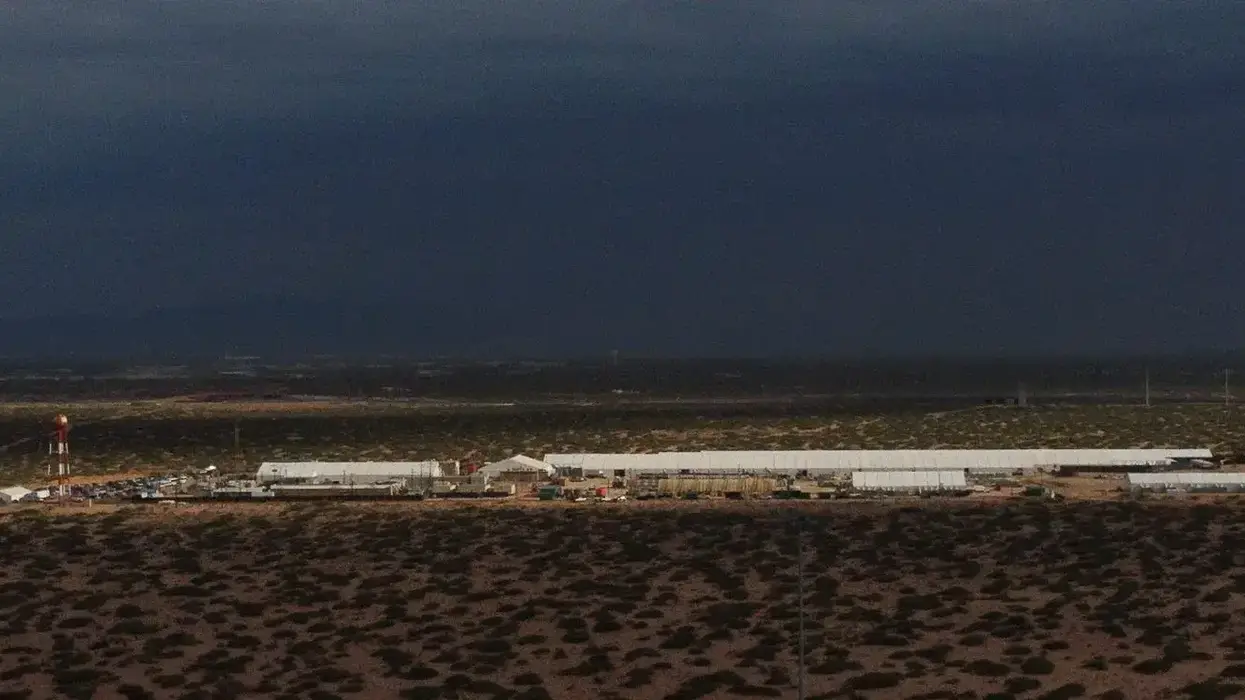
A group of legal advocacy groups on Friday sued US Immigration and Customs Enforcement and other federal agencies and officials over "inhumane" conditions at the country's largest concentration camp for immigrants detained during the Trump administration's mass deportation campaign.
The American Civil Liberties Union, ACLU of Texas, Texas Civil Rights Project, Human Rights Watch, and the law firm Farella Braun + Martel LLP filed suit against ICE, the Department of Homeland Security, Department of Defense, and associated officials, in the US District Court for the Western District of Texas in El Paso.
The lawsuit was filed on behalf of four people seeking to represent a class action for all others held at Camp East Montana, a 60-acre facility located in the Chihuahuan Desert on the grounds of Fort Bliss, an Army base and the site of one of the concentration camps where Japanese Americans and Japanese nationals were imprisoned during World War II. Approximately 2,500 immigrants are being detained there.
Citing “a Civil Rights catastrophe,” a group of legal and civil rights organizations in Texas sued the US Immigration and Customs Enforcement (ICE) on Friday over conditions at Camp East Montana in El Paso, the country’s largest immigration detention facility.More: substack.com/@shero/note/...
[image or embed]
— Amee Vanderpool (@girlsreallyrule.bsky.social) May 30, 2026 at 10:03 AM
The lawsuit documents accounts of what the ACLU called "horrific rights violations" at the facility, including:
“These conditions are longstanding, pervasive, and well-documented, and defendants’ continued inaction in the face of known risks shows their deliberate indifference—not mere negligence—to detainees’ constitutional rights,” the lawsuit states.
At least three detainees have died at Camp East Montana, including Geraldo Lunas Campos, a 55-year-old Cuban who, according to witnesses, died after being handcuffed and placed in a chokehold by guards. The El Paso County Medical Examiner's Office ruled Lunas Campos' death a homicide by asphyxia.
Detained immigrants have reported beatings and sexual abuse, medical neglect, hunger and insufficient food, and denial of access to attorneys at the facility.
“The conditions here in this ICE tent camp in a desert are inhumane and cruel. No human being should ever have to go through this," case plaintiff Gerald Akari Angye said in a statement Friday.
I have already experienced torture in my home country of Cameroon and I never thought I would experience such severely violent treatment by guards here in the United States of America," he continued. "I have been beaten here and even today, I still have a brace on my hands and wrist. I am in pain and I am scared to be here."
"No one deserves such cruel treatment," Akari Angye added. "We are all humans and deserve to be treated like it.”
Kyle Virgien, senior staff attorney at the ACLU’s National Prison Project, called Camp East Montana "nothing short of a civil rights catastrophe."
“Since the day it opened, the facility has repeatedly made headlines for horrific rights violations and even the deaths of three detained people, yet ICE has still evaded accountability for its conduct," Virgien added. "We’re suing to ensure that no other human being has to endure the inhumane treatment that the Trump administration has inflicted on our clients.”
Another case plaintiff, named in the suit as Navdeep, said, "It feels like we are just political pawns taken from our jobs and families and forced into a temporary tent that is not designed for human life."
“We could die here, and it feels like no one here would care," they continued. "With everything happening behind closed doors, I worry the people running this place might cover up the truth about a death or the other injustices that happen here."
"It’s important for people to know the truth of what is happening here," Navdeep added. "Being part of this lawsuit is important to me because many people are vulnerable or they become weak because of the conditions here. Even though we come from many different places, we are all human. I want to be a voice for everyone here.”
After receiving "numerous credible reports of torture, killing, and inhumane treatment" of detainees, 35 Democratic Texas state lawmakers earlier this year demand a probe into alleged abuses at Camp East Montana.
Democratic members of US Congress have also sounded the alarm over conditions at Camp East Montana. Rep. Veronica Escobar (D-Texas) has also called out profiteering by the private contractors running the camp.
Amentum Services Inc. took over operations from Acquisition Logistics LLC earlier this year. The latter was never registered to operate in Texas and the former "has a history of health, safety, and other violations of federal law," according to the consumer advocacy watchdog Public Citizen.
The Trump administration is currently moving forward with a plan to convert industrial warehouses into more ICE concentration camps. The agency has already purchased or contracted for at least 11 warehouses in eight states as part of the $38 billion plan.
While some critics take exception to the concentration camp description, the ICE facilities fit the dictionary definition of the term. The US has a long history of operating concentration camps, with imprisoned peoples ranging from Indigenous tribes during the Trail of Tears and Long Walk to escaped and freed slaves—officially called "contraband" in the Civil War—to Filipinos, Okinawans, and Vietnamese during three different 20th century wars, to Japanese Americans and Japanese nationals during World War II.
“Germany’s concentration camps didn’t start as instruments of mass murder, and neither have ours; both started as facilities for people the government’s leader said were a problem," talk show host and author Thom Hartmann wrote earlier this year for Common Dreams. "And that’s exactly what ICE is building now. History isn’t whispering its warning: It’s shouting.”