SUBSCRIBE TO OUR FREE NEWSLETTER
Daily news & progressive opinion—funded by the people, not the corporations—delivered straight to your inbox.
5
#000000
#FFFFFF
To donate by check, phone, or other method, see our More Ways to Give page.
Daily news & progressive opinion—funded by the people, not the corporations—delivered straight to your inbox.
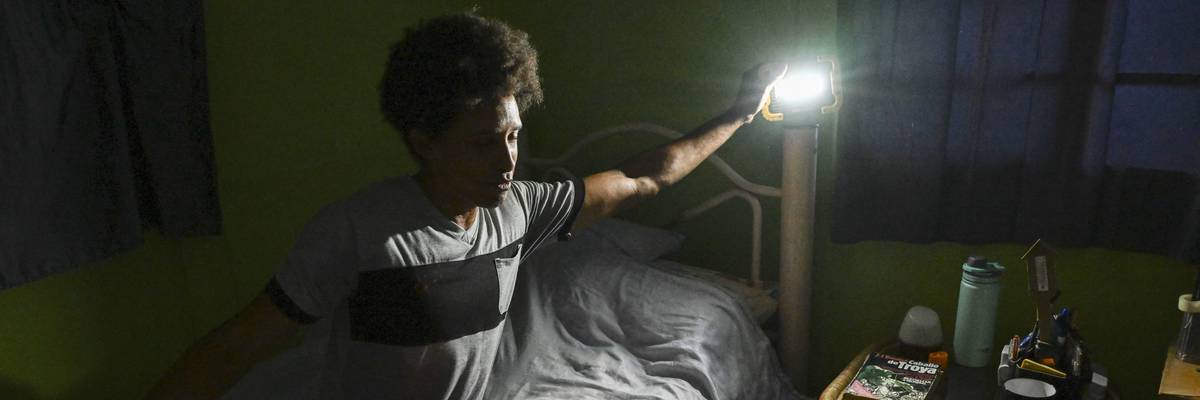
Alfredo Rodriguez, an industrial designer and professor, studies during a power cut in Punta Brava, Havana, Cuba on May 11, 2026.
"We will continue to denounce, in the firmest and most energetic way possible, the genocidal siege that seeks to strangle our people," said President Miguel Díaz-Canel.
Cuba's president said Monday night that the Trump administration should be "criminally prosecuted" for its continued economic war on the island nation, saying the oil blockade that began more than three months ago as well as new sanctions are part of a "collective punishment" policy that amounts to an "act of genocide."
President Miguel Díaz-Canel suggested that the White House was aware that its latest round of sanctions against Cuban officials was unnecessary, noting that "there isn’t even any evidence to present"—but said the new measures announced by the State Department on Monday were a way of furthering "anti-Cuban rhetoric of hate... to justify the escalation of its total economic war."
"Under the leadership of our party, state, government, and its military institutions, no one has any assets or property to protect under US jurisdiction. The US government knows this full well," said Díaz-Canel. "That’s why we will continue to denounce, in the firmest and most energetic way possible, the genocidal siege that seeks to strangle our people."
Díaz-Canel spoke out after the administration said it was imposing sanctions on the Cuban intelligence agency and nine Cuban officials, including the country's ministers for communications, energy, and justice, and three military generals. Several officials in the Communist Party of Cuba were also sanctioned.
US Secretary of State Marco Rubio, who is the son of Cuban immigrants and has long pushed for regime change in the communist country, released a statement saying those targeted by the sanctions "are responsible for or have been involved in repressing the Cuban people."
"These sanctions advance the Trump administration’s comprehensive campaign to address the pressing national security threats posed by Cuba’s communist regime," said Rubio.
The sanctions were announced a day after a White House official claimed to Axios that Cuban officials are "discussing plans" for drone attacks on the US; the outlet acknowledged several paragraphs into its article on the alleged threat that Cuba is believed to be strategizing for a defensive attack as the US ramps up hostilities, rather than an unprovoked strike.
Díaz-Canel emphasized that the White House's sanctions are only the latest action taken against Cuba following the "immoral, illegal, and criminal" executive order President Donald Trump signed in January, which threatened countries with tariffs if they provided fuel to Cuba—resulting in a severe energy shortage on the island, frequent rolling blackouts, and a crisis in the country's healthcare system, with hospitals struggling to offer basic services. Farmers have said the shortage has left them unable to efficiently provide food to communities.
“We have absolutely no fuel and absolutely no diesel,” Energy Minister Vicente de la O Levy said last week.
Díaz-Canel said the US has pushed the blockade that has been in place for decades "to levels never seen before, penalizing companies that want to invest in Cuba or simply provide us with basic goods like food, medicines, hygiene products, or others."
"The collective punishment to which the Cuban people are being subjected is an act of genocide that must be condemned by international organizations and criminally prosecuted against its promoters," said the president.
He also expressed gratitude to the governments of Mexico and Uruguay, which sent a shipment of aid to Cuba on Monday.
"This donation, which arrives in very difficult days for Cuba due to the direct and multidimensional impact of the United States blockade on the daily life of our people, is a living testament to the historic solidarity between our peoples and to the principles of humanism, cooperation, and integration that must unite the region," said Díaz-Canel.
The Trump administration's invasion of Venezuela, abduction of President Nicolás Maduro, and takeover of its oil reserves in January cut Cuba off from its top energy supplier.
The US is reportedly now considering an indictment former Cuban President Raúl Castro for shooting down planes that belonged to a US group and violated Cuban airspace in 1996. Trump—who has attacked not only Venezuela but also Iran—has repeatedly mused about the possibility of invading Cuba.
Dear Common Dreams reader, It’s been nearly 30 years since I co-founded Common Dreams with my late wife, Lina Newhouser. We had the radical notion that journalism should serve the public good, not corporate profits. It was clear to us from the outset what it would take to build such a project. No paid advertisements. No corporate sponsors. No millionaire publisher telling us what to think or do. Many people said we wouldn't last a year, but we proved those doubters wrong. Together with a tremendous team of journalists and dedicated staff, we built an independent media outlet free from the constraints of profits and corporate control. Our mission has always been simple: To inform. To inspire. To ignite change for the common good. Building Common Dreams was not easy. Our survival was never guaranteed. When you take on the most powerful forces—Wall Street greed, fossil fuel industry destruction, Big Tech lobbyists, and uber-rich oligarchs who have spent billions upon billions rigging the economy and democracy in their favor—the only bulwark you have is supporters who believe in your work. But here’s the urgent message from me today. It's never been this bad out there. And it's never been this hard to keep us going. At the very moment Common Dreams is most needed, the threats we face are intensifying. We need your support now more than ever. We don't accept corporate advertising and never will. We don't have a paywall because we don't think people should be blocked from critical news based on their ability to pay. Everything we do is funded by the donations of readers like you. When everyone does the little they can afford, we are strong. But if that support retreats or dries up, so do we. Will you donate now to make sure Common Dreams not only survives but thrives? —Craig Brown, Co-founder |
Cuba's president said Monday night that the Trump administration should be "criminally prosecuted" for its continued economic war on the island nation, saying the oil blockade that began more than three months ago as well as new sanctions are part of a "collective punishment" policy that amounts to an "act of genocide."
President Miguel Díaz-Canel suggested that the White House was aware that its latest round of sanctions against Cuban officials was unnecessary, noting that "there isn’t even any evidence to present"—but said the new measures announced by the State Department on Monday were a way of furthering "anti-Cuban rhetoric of hate... to justify the escalation of its total economic war."
"Under the leadership of our party, state, government, and its military institutions, no one has any assets or property to protect under US jurisdiction. The US government knows this full well," said Díaz-Canel. "That’s why we will continue to denounce, in the firmest and most energetic way possible, the genocidal siege that seeks to strangle our people."
Díaz-Canel spoke out after the administration said it was imposing sanctions on the Cuban intelligence agency and nine Cuban officials, including the country's ministers for communications, energy, and justice, and three military generals. Several officials in the Communist Party of Cuba were also sanctioned.
US Secretary of State Marco Rubio, who is the son of Cuban immigrants and has long pushed for regime change in the communist country, released a statement saying those targeted by the sanctions "are responsible for or have been involved in repressing the Cuban people."
"These sanctions advance the Trump administration’s comprehensive campaign to address the pressing national security threats posed by Cuba’s communist regime," said Rubio.
The sanctions were announced a day after a White House official claimed to Axios that Cuban officials are "discussing plans" for drone attacks on the US; the outlet acknowledged several paragraphs into its article on the alleged threat that Cuba is believed to be strategizing for a defensive attack as the US ramps up hostilities, rather than an unprovoked strike.
Díaz-Canel emphasized that the White House's sanctions are only the latest action taken against Cuba following the "immoral, illegal, and criminal" executive order President Donald Trump signed in January, which threatened countries with tariffs if they provided fuel to Cuba—resulting in a severe energy shortage on the island, frequent rolling blackouts, and a crisis in the country's healthcare system, with hospitals struggling to offer basic services. Farmers have said the shortage has left them unable to efficiently provide food to communities.
“We have absolutely no fuel and absolutely no diesel,” Energy Minister Vicente de la O Levy said last week.
Díaz-Canel said the US has pushed the blockade that has been in place for decades "to levels never seen before, penalizing companies that want to invest in Cuba or simply provide us with basic goods like food, medicines, hygiene products, or others."
"The collective punishment to which the Cuban people are being subjected is an act of genocide that must be condemned by international organizations and criminally prosecuted against its promoters," said the president.
He also expressed gratitude to the governments of Mexico and Uruguay, which sent a shipment of aid to Cuba on Monday.
"This donation, which arrives in very difficult days for Cuba due to the direct and multidimensional impact of the United States blockade on the daily life of our people, is a living testament to the historic solidarity between our peoples and to the principles of humanism, cooperation, and integration that must unite the region," said Díaz-Canel.
The Trump administration's invasion of Venezuela, abduction of President Nicolás Maduro, and takeover of its oil reserves in January cut Cuba off from its top energy supplier.
The US is reportedly now considering an indictment former Cuban President Raúl Castro for shooting down planes that belonged to a US group and violated Cuban airspace in 1996. Trump—who has attacked not only Venezuela but also Iran—has repeatedly mused about the possibility of invading Cuba.
Cuba's president said Monday night that the Trump administration should be "criminally prosecuted" for its continued economic war on the island nation, saying the oil blockade that began more than three months ago as well as new sanctions are part of a "collective punishment" policy that amounts to an "act of genocide."
President Miguel Díaz-Canel suggested that the White House was aware that its latest round of sanctions against Cuban officials was unnecessary, noting that "there isn’t even any evidence to present"—but said the new measures announced by the State Department on Monday were a way of furthering "anti-Cuban rhetoric of hate... to justify the escalation of its total economic war."
"Under the leadership of our party, state, government, and its military institutions, no one has any assets or property to protect under US jurisdiction. The US government knows this full well," said Díaz-Canel. "That’s why we will continue to denounce, in the firmest and most energetic way possible, the genocidal siege that seeks to strangle our people."
Díaz-Canel spoke out after the administration said it was imposing sanctions on the Cuban intelligence agency and nine Cuban officials, including the country's ministers for communications, energy, and justice, and three military generals. Several officials in the Communist Party of Cuba were also sanctioned.
US Secretary of State Marco Rubio, who is the son of Cuban immigrants and has long pushed for regime change in the communist country, released a statement saying those targeted by the sanctions "are responsible for or have been involved in repressing the Cuban people."
"These sanctions advance the Trump administration’s comprehensive campaign to address the pressing national security threats posed by Cuba’s communist regime," said Rubio.
The sanctions were announced a day after a White House official claimed to Axios that Cuban officials are "discussing plans" for drone attacks on the US; the outlet acknowledged several paragraphs into its article on the alleged threat that Cuba is believed to be strategizing for a defensive attack as the US ramps up hostilities, rather than an unprovoked strike.
Díaz-Canel emphasized that the White House's sanctions are only the latest action taken against Cuba following the "immoral, illegal, and criminal" executive order President Donald Trump signed in January, which threatened countries with tariffs if they provided fuel to Cuba—resulting in a severe energy shortage on the island, frequent rolling blackouts, and a crisis in the country's healthcare system, with hospitals struggling to offer basic services. Farmers have said the shortage has left them unable to efficiently provide food to communities.
“We have absolutely no fuel and absolutely no diesel,” Energy Minister Vicente de la O Levy said last week.
Díaz-Canel said the US has pushed the blockade that has been in place for decades "to levels never seen before, penalizing companies that want to invest in Cuba or simply provide us with basic goods like food, medicines, hygiene products, or others."
"The collective punishment to which the Cuban people are being subjected is an act of genocide that must be condemned by international organizations and criminally prosecuted against its promoters," said the president.
He also expressed gratitude to the governments of Mexico and Uruguay, which sent a shipment of aid to Cuba on Monday.
"This donation, which arrives in very difficult days for Cuba due to the direct and multidimensional impact of the United States blockade on the daily life of our people, is a living testament to the historic solidarity between our peoples and to the principles of humanism, cooperation, and integration that must unite the region," said Díaz-Canel.
The Trump administration's invasion of Venezuela, abduction of President Nicolás Maduro, and takeover of its oil reserves in January cut Cuba off from its top energy supplier.
The US is reportedly now considering an indictment former Cuban President Raúl Castro for shooting down planes that belonged to a US group and violated Cuban airspace in 1996. Trump—who has attacked not only Venezuela but also Iran—has repeatedly mused about the possibility of invading Cuba.