SUBSCRIBE TO OUR FREE NEWSLETTER
Daily news & progressive opinion—funded by the people, not the corporations—delivered straight to your inbox.
5
#000000
#FFFFFF
To donate by check, phone, or other method, see our More Ways to Give page.
Daily news & progressive opinion—funded by the people, not the corporations—delivered straight to your inbox.
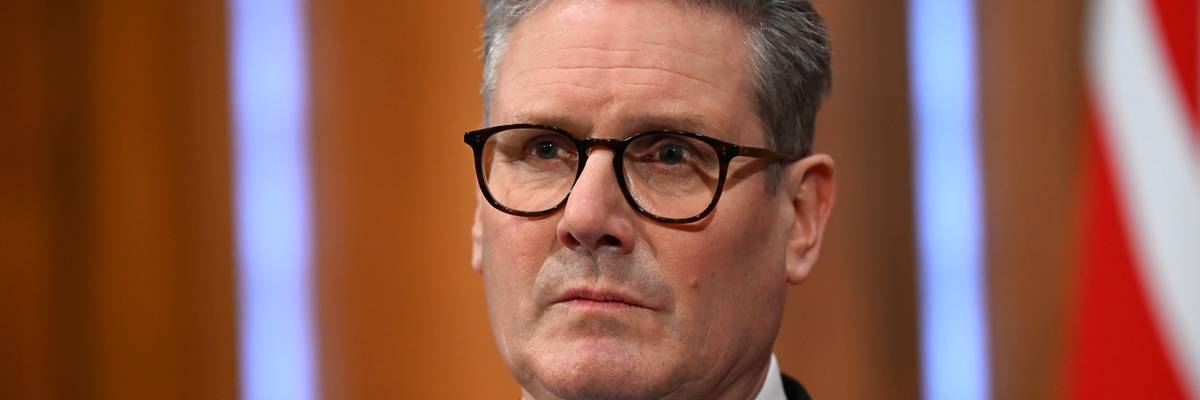
Prime Minister Keir Starmer delivers a statement on defense spending on February 25, 2025 in London, England.
"It is a day of shame for Britain," said Global Justice Now.
Ahead of his first meeting at the White House since U.S. President Donald Trump began a second term in office, British Prime Minister Keir Starmer on Tuesday announced that the U.K. government would significantly boost military spending—and pay for the increase by cutting foreign aid—following repeated demands from Trump that European countries pay more for the defense of the continent.
The announcement, said human rights group Global Justice Now, represented "politics at its most base," with Starmer apparently bowing to pressure from the U.S. president—a move that is likely to lead to increased suffering in the Global South as developing countries are projected to lose millions of dollars in assistance.
"To appease Trump, he will cut aid to its lowest level in a generation, forcing the poorest to pay so he can push taxpayer money into the coffers of arms corporations," said Nick Dearden, director of the group.
In order to increase military spending, he pointed out, the Labour government could introduce policies such as a wealth tax—supported by nearly two-thirds of Britons—or "scrapping white elephants like Trident," the U.K. nuclear program.
"Instead, Starmer has taken it from the mouths of the hungriest people in the world," said Dearden. "It is a day of shame for Britain."
Under the new spending plan, Starmer said military spending will be increased to 2.5% of economic output by 2027, rising to 3% by the next government's term, which would begin in 2034 at the latest.
The country will spend £13.4 billion ($17 billion) more per year on defense between now and 2027, while overseas development aid spending will be reduced to 0.3% of gross domestic product (GDP), down from 0.5%.
In 2023, the U.K. spent £15.34 billion ($19.4 billion) on foreign aid.
"It will damage efforts to tackle global health needs and pandemics. It will add to economic instability internationally. The impacts will have direct consequences for children and families in the U.K. as well as around the world."
Starmer said he was not "happy to make" the decision, but stressed that "the defense and security of the British people must always come first."
But in addition to being "a betrayal of the world's most vulnerable children," said Moazzam Malik, CEO of Save the Children, the aid cuts will also harm "the U.K.'s national interest."
"By jeopardizing the U.K.'s partnership with countries across the world and international organizations, it signals a withdrawal from efforts to tackle climate change, global poverty and inequality, and conflict and humanitarian needs," said Malik. "It will damage efforts to tackle global health needs and pandemics. It will add to economic instability internationally. The impacts will have direct consequences for children and families in the U.K. as well as around the world."
"This decision comes at a time when global solidarity has never been more important," Malik added. "Other countries will watch the U.K.'s decision and are likely to follow suit in reducing commitments to international collaboration. It will undermine aspirations to build a 'rules-based order' that is so essential for the U.K.'s long-term security and prosperity. It will make the world a more dangerous place for children now and in the future."
Trump has frequently, falsely claimed that the U.S. has provided the majority of international support to Ukraine as it faces Russia's war on the Eastern European country. European countries have provided more than €132 billion ($138 billion) to Ukraine since January 2022 while the U.S. has provided just over €114 billion ($119 billion).
Malik noted that Starmer pledged to "stand with Ukraine" earlier this week.
"Now he's serving notice on the support needed by the country's children, who have been forced from their homes, seen their schools bombed and lived in fear for three years," he said. "Through U.K. aid, we all help protect children facing the worst the world has to offer. We have every reason to be proud of it and the government should fearlessly protect it."
Since Trump took office again, his billionaire backer, tech mogul Elon Musk, has used his Department of Government Efficiency to make massive cuts to federal agencies, effectively dismantling the U.S. Agency for International Development.
Romilly Greenhill, chief executive of Bond, a network of international aid groups in the U.K., called the Labour government's announcement "a shortsighted and appalling move by both the prime minister and Treasury," noting that former Conservative Prime Minister Boris Johnson already cut foreign aid down from 0.7% of the GDP.
"Slashing the already diminished U.K. aid budget to fund an uplift in defense is a reckless decision that will have devastating consequences for millions of marginalized people worldwide," said Greenhill. "Following in the U.S.'s footsteps will not only undermine the U.K.'s global commitments and credibility, but also weaken our own national security interests. Instead of stepping up, the U.K. is turning its back on communities facing poverty, conflict, and insecurity, further damaging its credibility on the global stage."
Former U.K. International Development Secretary Clare Short told LabourList that cutting foreign aid to fund the military could irrevocably damage Starmer's center-left party.
"I am afraid that, in many respects, this is simply not a Labour government," said Short. "The coalition of voters that have supported Labour since its foundation, low-income people, the morally concerned middle class, internationalists and supporters of the United Nations and international law, will splinter and the traditional Labour Party will be destroyed."
Dear Common Dreams reader, It’s been nearly 30 years since I co-founded Common Dreams with my late wife, Lina Newhouser. We had the radical notion that journalism should serve the public good, not corporate profits. It was clear to us from the outset what it would take to build such a project. No paid advertisements. No corporate sponsors. No millionaire publisher telling us what to think or do. Many people said we wouldn't last a year, but we proved those doubters wrong. Together with a tremendous team of journalists and dedicated staff, we built an independent media outlet free from the constraints of profits and corporate control. Our mission has always been simple: To inform. To inspire. To ignite change for the common good. Building Common Dreams was not easy. Our survival was never guaranteed. When you take on the most powerful forces—Wall Street greed, fossil fuel industry destruction, Big Tech lobbyists, and uber-rich oligarchs who have spent billions upon billions rigging the economy and democracy in their favor—the only bulwark you have is supporters who believe in your work. But here’s the urgent message from me today. It's never been this bad out there. And it's never been this hard to keep us going. At the very moment Common Dreams is most needed, the threats we face are intensifying. We need your support now more than ever. We don't accept corporate advertising and never will. We don't have a paywall because we don't think people should be blocked from critical news based on their ability to pay. Everything we do is funded by the donations of readers like you. When everyone does the little they can afford, we are strong. But if that support retreats or dries up, so do we. Will you donate now to make sure Common Dreams not only survives but thrives? —Craig Brown, Co-founder |
Ahead of his first meeting at the White House since U.S. President Donald Trump began a second term in office, British Prime Minister Keir Starmer on Tuesday announced that the U.K. government would significantly boost military spending—and pay for the increase by cutting foreign aid—following repeated demands from Trump that European countries pay more for the defense of the continent.
The announcement, said human rights group Global Justice Now, represented "politics at its most base," with Starmer apparently bowing to pressure from the U.S. president—a move that is likely to lead to increased suffering in the Global South as developing countries are projected to lose millions of dollars in assistance.
"To appease Trump, he will cut aid to its lowest level in a generation, forcing the poorest to pay so he can push taxpayer money into the coffers of arms corporations," said Nick Dearden, director of the group.
In order to increase military spending, he pointed out, the Labour government could introduce policies such as a wealth tax—supported by nearly two-thirds of Britons—or "scrapping white elephants like Trident," the U.K. nuclear program.
"Instead, Starmer has taken it from the mouths of the hungriest people in the world," said Dearden. "It is a day of shame for Britain."
Under the new spending plan, Starmer said military spending will be increased to 2.5% of economic output by 2027, rising to 3% by the next government's term, which would begin in 2034 at the latest.
The country will spend £13.4 billion ($17 billion) more per year on defense between now and 2027, while overseas development aid spending will be reduced to 0.3% of gross domestic product (GDP), down from 0.5%.
In 2023, the U.K. spent £15.34 billion ($19.4 billion) on foreign aid.
"It will damage efforts to tackle global health needs and pandemics. It will add to economic instability internationally. The impacts will have direct consequences for children and families in the U.K. as well as around the world."
Starmer said he was not "happy to make" the decision, but stressed that "the defense and security of the British people must always come first."
But in addition to being "a betrayal of the world's most vulnerable children," said Moazzam Malik, CEO of Save the Children, the aid cuts will also harm "the U.K.'s national interest."
"By jeopardizing the U.K.'s partnership with countries across the world and international organizations, it signals a withdrawal from efforts to tackle climate change, global poverty and inequality, and conflict and humanitarian needs," said Malik. "It will damage efforts to tackle global health needs and pandemics. It will add to economic instability internationally. The impacts will have direct consequences for children and families in the U.K. as well as around the world."
"This decision comes at a time when global solidarity has never been more important," Malik added. "Other countries will watch the U.K.'s decision and are likely to follow suit in reducing commitments to international collaboration. It will undermine aspirations to build a 'rules-based order' that is so essential for the U.K.'s long-term security and prosperity. It will make the world a more dangerous place for children now and in the future."
Trump has frequently, falsely claimed that the U.S. has provided the majority of international support to Ukraine as it faces Russia's war on the Eastern European country. European countries have provided more than €132 billion ($138 billion) to Ukraine since January 2022 while the U.S. has provided just over €114 billion ($119 billion).
Malik noted that Starmer pledged to "stand with Ukraine" earlier this week.
"Now he's serving notice on the support needed by the country's children, who have been forced from their homes, seen their schools bombed and lived in fear for three years," he said. "Through U.K. aid, we all help protect children facing the worst the world has to offer. We have every reason to be proud of it and the government should fearlessly protect it."
Since Trump took office again, his billionaire backer, tech mogul Elon Musk, has used his Department of Government Efficiency to make massive cuts to federal agencies, effectively dismantling the U.S. Agency for International Development.
Romilly Greenhill, chief executive of Bond, a network of international aid groups in the U.K., called the Labour government's announcement "a shortsighted and appalling move by both the prime minister and Treasury," noting that former Conservative Prime Minister Boris Johnson already cut foreign aid down from 0.7% of the GDP.
"Slashing the already diminished U.K. aid budget to fund an uplift in defense is a reckless decision that will have devastating consequences for millions of marginalized people worldwide," said Greenhill. "Following in the U.S.'s footsteps will not only undermine the U.K.'s global commitments and credibility, but also weaken our own national security interests. Instead of stepping up, the U.K. is turning its back on communities facing poverty, conflict, and insecurity, further damaging its credibility on the global stage."
Former U.K. International Development Secretary Clare Short told LabourList that cutting foreign aid to fund the military could irrevocably damage Starmer's center-left party.
"I am afraid that, in many respects, this is simply not a Labour government," said Short. "The coalition of voters that have supported Labour since its foundation, low-income people, the morally concerned middle class, internationalists and supporters of the United Nations and international law, will splinter and the traditional Labour Party will be destroyed."
Ahead of his first meeting at the White House since U.S. President Donald Trump began a second term in office, British Prime Minister Keir Starmer on Tuesday announced that the U.K. government would significantly boost military spending—and pay for the increase by cutting foreign aid—following repeated demands from Trump that European countries pay more for the defense of the continent.
The announcement, said human rights group Global Justice Now, represented "politics at its most base," with Starmer apparently bowing to pressure from the U.S. president—a move that is likely to lead to increased suffering in the Global South as developing countries are projected to lose millions of dollars in assistance.
"To appease Trump, he will cut aid to its lowest level in a generation, forcing the poorest to pay so he can push taxpayer money into the coffers of arms corporations," said Nick Dearden, director of the group.
In order to increase military spending, he pointed out, the Labour government could introduce policies such as a wealth tax—supported by nearly two-thirds of Britons—or "scrapping white elephants like Trident," the U.K. nuclear program.
"Instead, Starmer has taken it from the mouths of the hungriest people in the world," said Dearden. "It is a day of shame for Britain."
Under the new spending plan, Starmer said military spending will be increased to 2.5% of economic output by 2027, rising to 3% by the next government's term, which would begin in 2034 at the latest.
The country will spend £13.4 billion ($17 billion) more per year on defense between now and 2027, while overseas development aid spending will be reduced to 0.3% of gross domestic product (GDP), down from 0.5%.
In 2023, the U.K. spent £15.34 billion ($19.4 billion) on foreign aid.
"It will damage efforts to tackle global health needs and pandemics. It will add to economic instability internationally. The impacts will have direct consequences for children and families in the U.K. as well as around the world."
Starmer said he was not "happy to make" the decision, but stressed that "the defense and security of the British people must always come first."
But in addition to being "a betrayal of the world's most vulnerable children," said Moazzam Malik, CEO of Save the Children, the aid cuts will also harm "the U.K.'s national interest."
"By jeopardizing the U.K.'s partnership with countries across the world and international organizations, it signals a withdrawal from efforts to tackle climate change, global poverty and inequality, and conflict and humanitarian needs," said Malik. "It will damage efforts to tackle global health needs and pandemics. It will add to economic instability internationally. The impacts will have direct consequences for children and families in the U.K. as well as around the world."
"This decision comes at a time when global solidarity has never been more important," Malik added. "Other countries will watch the U.K.'s decision and are likely to follow suit in reducing commitments to international collaboration. It will undermine aspirations to build a 'rules-based order' that is so essential for the U.K.'s long-term security and prosperity. It will make the world a more dangerous place for children now and in the future."
Trump has frequently, falsely claimed that the U.S. has provided the majority of international support to Ukraine as it faces Russia's war on the Eastern European country. European countries have provided more than €132 billion ($138 billion) to Ukraine since January 2022 while the U.S. has provided just over €114 billion ($119 billion).
Malik noted that Starmer pledged to "stand with Ukraine" earlier this week.
"Now he's serving notice on the support needed by the country's children, who have been forced from their homes, seen their schools bombed and lived in fear for three years," he said. "Through U.K. aid, we all help protect children facing the worst the world has to offer. We have every reason to be proud of it and the government should fearlessly protect it."
Since Trump took office again, his billionaire backer, tech mogul Elon Musk, has used his Department of Government Efficiency to make massive cuts to federal agencies, effectively dismantling the U.S. Agency for International Development.
Romilly Greenhill, chief executive of Bond, a network of international aid groups in the U.K., called the Labour government's announcement "a shortsighted and appalling move by both the prime minister and Treasury," noting that former Conservative Prime Minister Boris Johnson already cut foreign aid down from 0.7% of the GDP.
"Slashing the already diminished U.K. aid budget to fund an uplift in defense is a reckless decision that will have devastating consequences for millions of marginalized people worldwide," said Greenhill. "Following in the U.S.'s footsteps will not only undermine the U.K.'s global commitments and credibility, but also weaken our own national security interests. Instead of stepping up, the U.K. is turning its back on communities facing poverty, conflict, and insecurity, further damaging its credibility on the global stage."
Former U.K. International Development Secretary Clare Short told LabourList that cutting foreign aid to fund the military could irrevocably damage Starmer's center-left party.
"I am afraid that, in many respects, this is simply not a Labour government," said Short. "The coalition of voters that have supported Labour since its foundation, low-income people, the morally concerned middle class, internationalists and supporters of the United Nations and international law, will splinter and the traditional Labour Party will be destroyed."