

SUBSCRIBE TO OUR FREE NEWSLETTER
Daily news & progressive opinion—funded by the people, not the corporations—delivered straight to your inbox.
5
#000000
#FFFFFF
To donate by check, phone, or other method, see our More Ways to Give page.
Daily news & progressive opinion—funded by the people, not the corporations—delivered straight to your inbox.
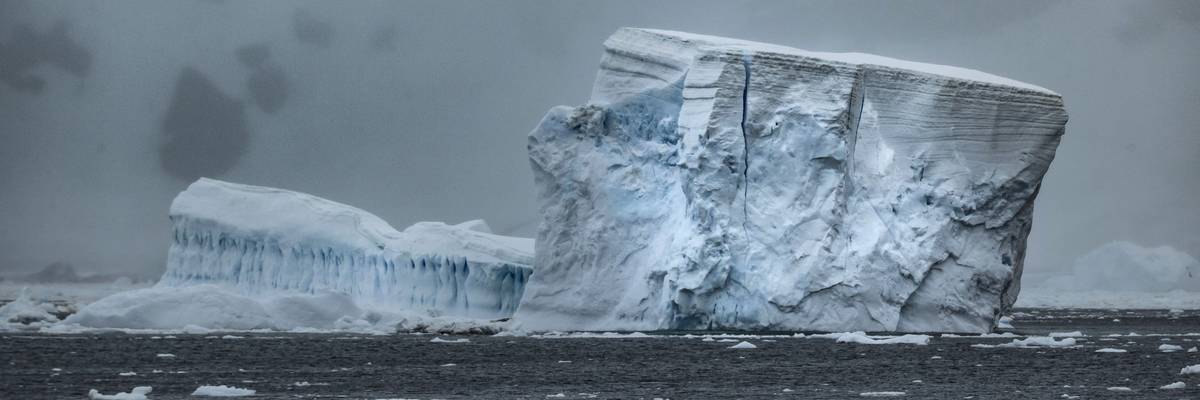
The glaciers are seen as the floes melt due to global climate change in Antarctica on February 07, 2022. Turkish scientists, within the scope of the 6th National Antarctic Science Expedition, monitored the global climate change and followed the glaciers that provide the heat balance of the world and decrease every year.
"This of course reflects Trump administration policy, which counters any focus on climate at international meetings," said a US researcher and former diplomat.
The Trump administration is under fire over its efforts to have any mention of the climate crisis removed from a scientific report, published this week, aimed at informing nations that are party to a global treaty designed to protect the Antarctic.
Details of the "diplomatic tensions" surrounding the report, which took place during a meeting in May with delegates from around the world focused on the Antarctic Treaty, were detailed by Australian Broadcasting Corporation (ABC) correspondent Jano Gibson.
According to Gibson:
The report reveals that France took issue with the US's suggestion not to use broad terms such as "climate change" and instead refer to "specific" environmental changes.
"France … expressed it had strong concern about the gradual disappearance of references to climate change in the work of the Committee [for Environmental Protection]," the report states.
"France emphasized that climate change was a reality affecting all countries, regardless of borders.
Claire Christian, executive director of the Antarctic and Southern Ocean Coalition, told ABC that there's zero controversy within the scientific community that a changing climate due to global warming is having deep impacts on the Antarctic region.
"The evidence is clear: the Antarctic region is undergoing rapid climate change, and this is already having significant effects on planetary systems," Christian said. "If we don't reduce our carbon emissions rapidly, these effects will only become more severe and unpredictable."
While a France warned that "refusing to even name climate change" would set "a dangerous precedent," Evan Bloom, a former US diplomat and Antarctic researcher involved in international negotiations on the topic said the position taken by the US at the Antarctic Treaty Consultative Meeting was very much in keeping with the behavior and policies of President Donald Trump.
The US position, said Bloom, "shows how out of step the US is with most of the rest of the world on climate change. Yet, this of course reflects Trump administration policy, which counters any focus on climate at international meetings."
Dear Common Dreams reader, It’s been nearly 30 years since I co-founded Common Dreams with my late wife, Lina Newhouser. We had the radical notion that journalism should serve the public good, not corporate profits. It was clear to us from the outset what it would take to build such a project. No paid advertisements. No corporate sponsors. No millionaire publisher telling us what to think or do. Many people said we wouldn't last a year, but we proved those doubters wrong. Together with a tremendous team of journalists and dedicated staff, we built an independent media outlet free from the constraints of profits and corporate control. Our mission has always been simple: To inform. To inspire. To ignite change for the common good. Building Common Dreams was not easy. Our survival was never guaranteed. When you take on the most powerful forces—Wall Street greed, fossil fuel industry destruction, Big Tech lobbyists, and uber-rich oligarchs who have spent billions upon billions rigging the economy and democracy in their favor—the only bulwark you have is supporters who believe in your work. But here’s the urgent message from me today. It's never been this bad out there. And it's never been this hard to keep us going. At the very moment Common Dreams is most needed, the threats we face are intensifying. We need your support now more than ever. We don't accept corporate advertising and never will. We don't have a paywall because we don't think people should be blocked from critical news based on their ability to pay. Everything we do is funded by the donations of readers like you. When everyone does the little they can afford, we are strong. But if that support retreats or dries up, so do we. Will you donate now to make sure Common Dreams not only survives but thrives? —Craig Brown, Co-founder |
The Trump administration is under fire over its efforts to have any mention of the climate crisis removed from a scientific report, published this week, aimed at informing nations that are party to a global treaty designed to protect the Antarctic.
Details of the "diplomatic tensions" surrounding the report, which took place during a meeting in May with delegates from around the world focused on the Antarctic Treaty, were detailed by Australian Broadcasting Corporation (ABC) correspondent Jano Gibson.
According to Gibson:
The report reveals that France took issue with the US's suggestion not to use broad terms such as "climate change" and instead refer to "specific" environmental changes.
"France … expressed it had strong concern about the gradual disappearance of references to climate change in the work of the Committee [for Environmental Protection]," the report states.
"France emphasized that climate change was a reality affecting all countries, regardless of borders.
Claire Christian, executive director of the Antarctic and Southern Ocean Coalition, told ABC that there's zero controversy within the scientific community that a changing climate due to global warming is having deep impacts on the Antarctic region.
"The evidence is clear: the Antarctic region is undergoing rapid climate change, and this is already having significant effects on planetary systems," Christian said. "If we don't reduce our carbon emissions rapidly, these effects will only become more severe and unpredictable."
While a France warned that "refusing to even name climate change" would set "a dangerous precedent," Evan Bloom, a former US diplomat and Antarctic researcher involved in international negotiations on the topic said the position taken by the US at the Antarctic Treaty Consultative Meeting was very much in keeping with the behavior and policies of President Donald Trump.
The US position, said Bloom, "shows how out of step the US is with most of the rest of the world on climate change. Yet, this of course reflects Trump administration policy, which counters any focus on climate at international meetings."
The Trump administration is under fire over its efforts to have any mention of the climate crisis removed from a scientific report, published this week, aimed at informing nations that are party to a global treaty designed to protect the Antarctic.
Details of the "diplomatic tensions" surrounding the report, which took place during a meeting in May with delegates from around the world focused on the Antarctic Treaty, were detailed by Australian Broadcasting Corporation (ABC) correspondent Jano Gibson.
According to Gibson:
The report reveals that France took issue with the US's suggestion not to use broad terms such as "climate change" and instead refer to "specific" environmental changes.
"France … expressed it had strong concern about the gradual disappearance of references to climate change in the work of the Committee [for Environmental Protection]," the report states.
"France emphasized that climate change was a reality affecting all countries, regardless of borders.
Claire Christian, executive director of the Antarctic and Southern Ocean Coalition, told ABC that there's zero controversy within the scientific community that a changing climate due to global warming is having deep impacts on the Antarctic region.
"The evidence is clear: the Antarctic region is undergoing rapid climate change, and this is already having significant effects on planetary systems," Christian said. "If we don't reduce our carbon emissions rapidly, these effects will only become more severe and unpredictable."
While a France warned that "refusing to even name climate change" would set "a dangerous precedent," Evan Bloom, a former US diplomat and Antarctic researcher involved in international negotiations on the topic said the position taken by the US at the Antarctic Treaty Consultative Meeting was very much in keeping with the behavior and policies of President Donald Trump.
The US position, said Bloom, "shows how out of step the US is with most of the rest of the world on climate change. Yet, this of course reflects Trump administration policy, which counters any focus on climate at international meetings."

