SUBSCRIBE TO OUR FREE NEWSLETTER
Daily news & progressive opinion—funded by the people, not the corporations—delivered straight to your inbox.
5
#000000
#FFFFFF
To donate by check, phone, or other method, see our More Ways to Give page.
Daily news & progressive opinion—funded by the people, not the corporations—delivered straight to your inbox.
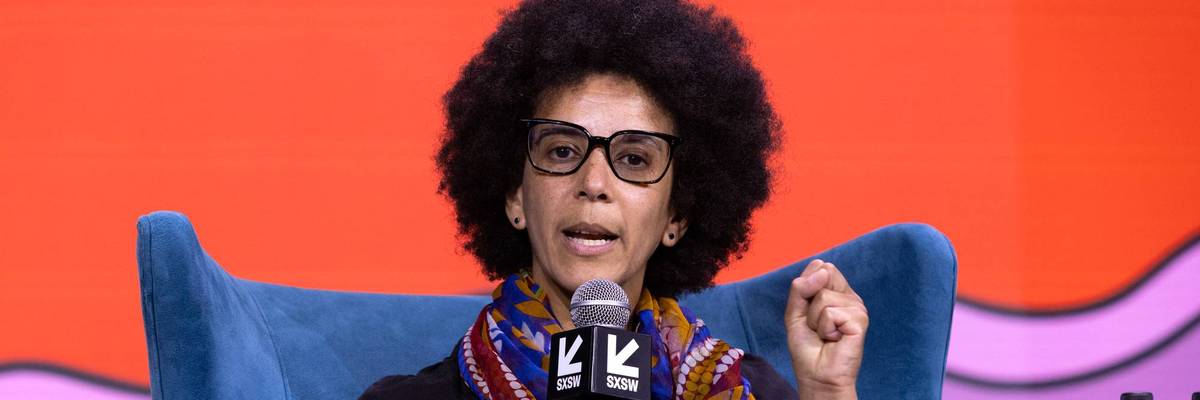
Timnit Gebru, a winner of the Right Livelihood Award, speaks at the SXSW Conference & Festivals held at the JW Marriott on March 15, 2026 in Austin, Texas.
The winners are "rewriting the rules that autocrats, patriarchs, and Silicon Valley’s most powerful men assumed were theirs to write alone.”
The winners of the annual Right Livelihood Award, announced on Wednesday, are two women and two women-led groups who "refused to wait for permission," said the executive director of the award committee.
“A system built to serve the few was never going to hold," said Ole von Uexkull, who added that the winners of the 2026 award are "rewriting the rules that autocrats, patriarchs, and Silicon Valley’s most powerful men assumed were theirs to write alone.”
The honorees include Jalila Haider, a Pakistani human rights lawyer who was the first female attorney from her Hazara community; Timnit Gebru, an American artificial intelligence researcher who has challenged the consolidation of power in Big Tech and exposed the potential harms of AI; the Rural Women's Assembly in South Africa, a movement of 78,000 small-scale farmers "united to defend land, seed, and bodily autonomy against corporate agribusiness and patriarchal dispossession"; and the Georgian Young Lawyers' Association (GYLA), the country's first human rights organization in Georgia, which has played a crucial role in its democratization.
The winners of the award, said Right Livelihood in a video about the 2026 laureates, "are making justice the center of the narrative."
Haider has combined legal work with on-the-ground activism, leading a seven-day hunger strike in 2018 against the targeted killing of Hazaras, a Shia Muslim minority, by the Pakistani army. The strike forced the army chief to negotiate directly with Hazara women, "resulting in a sustained decrease in attacks against the community."
Her law firm has also helped more than 600 political activists regain their freedom.
"Despite detention, cyberharassment, and death threats, she continues working toward a world where, in her words, 'no human being is illegal,'" said Right Livelihood.
Gebru was fired from Google after authoring an academic paper that warned of the risks posed by large language models; she had been co-leading the company's Ethics AI team. Now the founder and executive director of the Distributed Artificial Intelligence Research Institute (DAIR), the organization's distributed model "brings together researchers and collaborators across countries and continents, defying the centralized and corporate-driven concepts that mainstream AI entails."
"What keeps me going is belief in human agency," said Gebru in Right Livelihood's video.
The Rural Women's Assembly has "built one of the region’s largest autonomous platforms for rural women" with a volunteer structure, establishing 24 seed multiplication sites and "defending traditional seed systems from commercialization.
Its seed sovereignty efforts have challenged corporate control over South Africa's food systems and strengthened "communities’ resilience to climate shocks," according to Right Livelihood.
"We have the power, and we have the imagination that it will take to construct this new world, because another world is needed, and it's urgent," said the group's regional coordinator, Mercia Andrews.
GYLA is the first Right Livelihood winner from Georgia since the award was established in 1980. The group provides grassroots legal aid and has secured landmark legal victories, including ones that have protected rights for people with disabilities and guaranteed free education for every child in Georgia.
The group has opted to remain in the country with a scaled-down team, despite Georgia's repressive "foreign agents" law.
"With courage and determination, the organization presses on for a better future for all Georgians," said Right Livelihood.
The awards, which include support for the winners' work, are set to be presented on December 1 in Stockholm.
Dear Common Dreams reader, It’s been nearly 30 years since I co-founded Common Dreams with my late wife, Lina Newhouser. We had the radical notion that journalism should serve the public good, not corporate profits. It was clear to us from the outset what it would take to build such a project. No paid advertisements. No corporate sponsors. No millionaire publisher telling us what to think or do. Many people said we wouldn't last a year, but we proved those doubters wrong. Together with a tremendous team of journalists and dedicated staff, we built an independent media outlet free from the constraints of profits and corporate control. Our mission has always been simple: To inform. To inspire. To ignite change for the common good. Building Common Dreams was not easy. Our survival was never guaranteed. When you take on the most powerful forces—Wall Street greed, fossil fuel industry destruction, Big Tech lobbyists, and uber-rich oligarchs who have spent billions upon billions rigging the economy and democracy in their favor—the only bulwark you have is supporters who believe in your work. But here’s the urgent message from me today. It's never been this bad out there. And it's never been this hard to keep us going. At the very moment Common Dreams is most needed, the threats we face are intensifying. We need your support now more than ever. We don't accept corporate advertising and never will. We don't have a paywall because we don't think people should be blocked from critical news based on their ability to pay. Everything we do is funded by the donations of readers like you. When everyone does the little they can afford, we are strong. But if that support retreats or dries up, so do we. Will you donate now to make sure Common Dreams not only survives but thrives? —Craig Brown, Co-founder |
The winners of the annual Right Livelihood Award, announced on Wednesday, are two women and two women-led groups who "refused to wait for permission," said the executive director of the award committee.
“A system built to serve the few was never going to hold," said Ole von Uexkull, who added that the winners of the 2026 award are "rewriting the rules that autocrats, patriarchs, and Silicon Valley’s most powerful men assumed were theirs to write alone.”
The honorees include Jalila Haider, a Pakistani human rights lawyer who was the first female attorney from her Hazara community; Timnit Gebru, an American artificial intelligence researcher who has challenged the consolidation of power in Big Tech and exposed the potential harms of AI; the Rural Women's Assembly in South Africa, a movement of 78,000 small-scale farmers "united to defend land, seed, and bodily autonomy against corporate agribusiness and patriarchal dispossession"; and the Georgian Young Lawyers' Association (GYLA), the country's first human rights organization in Georgia, which has played a crucial role in its democratization.
The winners of the award, said Right Livelihood in a video about the 2026 laureates, "are making justice the center of the narrative."
Haider has combined legal work with on-the-ground activism, leading a seven-day hunger strike in 2018 against the targeted killing of Hazaras, a Shia Muslim minority, by the Pakistani army. The strike forced the army chief to negotiate directly with Hazara women, "resulting in a sustained decrease in attacks against the community."
Her law firm has also helped more than 600 political activists regain their freedom.
"Despite detention, cyberharassment, and death threats, she continues working toward a world where, in her words, 'no human being is illegal,'" said Right Livelihood.
Gebru was fired from Google after authoring an academic paper that warned of the risks posed by large language models; she had been co-leading the company's Ethics AI team. Now the founder and executive director of the Distributed Artificial Intelligence Research Institute (DAIR), the organization's distributed model "brings together researchers and collaborators across countries and continents, defying the centralized and corporate-driven concepts that mainstream AI entails."
"What keeps me going is belief in human agency," said Gebru in Right Livelihood's video.
The Rural Women's Assembly has "built one of the region’s largest autonomous platforms for rural women" with a volunteer structure, establishing 24 seed multiplication sites and "defending traditional seed systems from commercialization.
Its seed sovereignty efforts have challenged corporate control over South Africa's food systems and strengthened "communities’ resilience to climate shocks," according to Right Livelihood.
"We have the power, and we have the imagination that it will take to construct this new world, because another world is needed, and it's urgent," said the group's regional coordinator, Mercia Andrews.
GYLA is the first Right Livelihood winner from Georgia since the award was established in 1980. The group provides grassroots legal aid and has secured landmark legal victories, including ones that have protected rights for people with disabilities and guaranteed free education for every child in Georgia.
The group has opted to remain in the country with a scaled-down team, despite Georgia's repressive "foreign agents" law.
"With courage and determination, the organization presses on for a better future for all Georgians," said Right Livelihood.
The awards, which include support for the winners' work, are set to be presented on December 1 in Stockholm.
The winners of the annual Right Livelihood Award, announced on Wednesday, are two women and two women-led groups who "refused to wait for permission," said the executive director of the award committee.
“A system built to serve the few was never going to hold," said Ole von Uexkull, who added that the winners of the 2026 award are "rewriting the rules that autocrats, patriarchs, and Silicon Valley’s most powerful men assumed were theirs to write alone.”
The honorees include Jalila Haider, a Pakistani human rights lawyer who was the first female attorney from her Hazara community; Timnit Gebru, an American artificial intelligence researcher who has challenged the consolidation of power in Big Tech and exposed the potential harms of AI; the Rural Women's Assembly in South Africa, a movement of 78,000 small-scale farmers "united to defend land, seed, and bodily autonomy against corporate agribusiness and patriarchal dispossession"; and the Georgian Young Lawyers' Association (GYLA), the country's first human rights organization in Georgia, which has played a crucial role in its democratization.
The winners of the award, said Right Livelihood in a video about the 2026 laureates, "are making justice the center of the narrative."
Haider has combined legal work with on-the-ground activism, leading a seven-day hunger strike in 2018 against the targeted killing of Hazaras, a Shia Muslim minority, by the Pakistani army. The strike forced the army chief to negotiate directly with Hazara women, "resulting in a sustained decrease in attacks against the community."
Her law firm has also helped more than 600 political activists regain their freedom.
"Despite detention, cyberharassment, and death threats, she continues working toward a world where, in her words, 'no human being is illegal,'" said Right Livelihood.
Gebru was fired from Google after authoring an academic paper that warned of the risks posed by large language models; she had been co-leading the company's Ethics AI team. Now the founder and executive director of the Distributed Artificial Intelligence Research Institute (DAIR), the organization's distributed model "brings together researchers and collaborators across countries and continents, defying the centralized and corporate-driven concepts that mainstream AI entails."
"What keeps me going is belief in human agency," said Gebru in Right Livelihood's video.
The Rural Women's Assembly has "built one of the region’s largest autonomous platforms for rural women" with a volunteer structure, establishing 24 seed multiplication sites and "defending traditional seed systems from commercialization.
Its seed sovereignty efforts have challenged corporate control over South Africa's food systems and strengthened "communities’ resilience to climate shocks," according to Right Livelihood.
"We have the power, and we have the imagination that it will take to construct this new world, because another world is needed, and it's urgent," said the group's regional coordinator, Mercia Andrews.
GYLA is the first Right Livelihood winner from Georgia since the award was established in 1980. The group provides grassroots legal aid and has secured landmark legal victories, including ones that have protected rights for people with disabilities and guaranteed free education for every child in Georgia.
The group has opted to remain in the country with a scaled-down team, despite Georgia's repressive "foreign agents" law.
"With courage and determination, the organization presses on for a better future for all Georgians," said Right Livelihood.
The awards, which include support for the winners' work, are set to be presented on December 1 in Stockholm.