SUBSCRIBE TO OUR FREE NEWSLETTER
Daily news & progressive opinion—funded by the people, not the corporations—delivered straight to your inbox.
5
#000000
#FFFFFF
To donate by check, phone, or other method, see our More Ways to Give page.


Daily news & progressive opinion—funded by the people, not the corporations—delivered straight to your inbox.
Jackson was ahead of his time in seeing not only problems in agriculture but what he called the problem of agriculture, the millennia of soil erosion and soil degradation caused by plowing and planting annual grains such as wheat.
Wes Jackson’s career demonstrates that sometimes the race goes not to the swift but to the unconventional, that the battle can be won not only by the strong but by the stubborn. Straight-A students don’t always lead the way.
Jackson, one of the last half-century’s most innovative thinkers about regenerative agriculture, has won a MacArthur Fellowship, the so-called “genius grant.” He also received the Right Livelihood Award, often called the “alternative Nobel Prize,” in addition to dozens of other awards from various philanthropic, academic, and agricultural organizations. Life Magazine tagged him one of the “100 Important Americans of the 20th Century.”
But mention any of those accolades to Jackson—who was one of the first people to use the term “sustainable agriculture” in print—and he likely will tell the story of almost getting a D in a botany course and describe himself as a misfit.
Jackson’s education started in a two-room school near his family’s farm in North Topeka, Kansas, where classes met for only eight months because students were needed for planting and harvest. He was an uneven student whose classroom performance varied depending on the quality of the teacher and his interests at the moment. He went to nearby Kansas Wesleyan University in Salina, focusing as much on football and track as on academics. “I wasn’t what you would call a top student,” Jackson said. “I had a lot of Cs and Bs, an A here and there, but also my share of Ds.”
Jackson said the central question on his mind is much the same as when he was creating that Survival Studies curriculum nearly six decades ago—how is our species going to make the transition from a high-energy, high-technology world of 8 billion people to a smaller population that doesn’t draw down the ecological capital of Earth?
One of those D grades came in botany. “I went to the prof and explained that I couldn’t have a D in my major field, which was biology,” Jackson said. The response: “Well, you got one.” Then the professor said he would give Jackson six weeks to study for a makeup exam, and if Jackson got an A on that he would receive a C in the course. Jackson made the grade, and later that professor wrote him a glowing recommendation for the MA program in botany at the University of Kansas, which he completed in 1960. After that, Jackson was back in the classroom, teaching first in a Kansas high school and then at KWU, before heading to North Carolina State University for the PhD program in genetics.
“I guess you could say I was sort of in business for myself, and so I wasn’t worrying about grades,” Jackson said. “I either did it or didn’t, according to what was satisfying.”
I was teaching at the University of Texas at Austin when I first heard those stories, and I recounted them to many students, especially those who seemed too concerned about being a “good student” as the path to a “successful career.” Jackson’s story illustrates that we don’t always have to do as we are told.
I used another Jackson story to make the point that striving for the highest status job isn’t the only path to fulfillment. After earning that PhD in genetics in 1967, Jackson had a lot of options, including an offer from the University of Tennessee for a tenure-track teaching job that would have allowed him to continue the genetics research that he loved, at a time when the federal government was throwing lots of grant money at scientists. Instead, he returned to KWU to teach the same biology classes he had been teaching before the doctoral program. Why did he turn down a job at a Research 1 university to return to a small liberal arts college in a rural area?
“I suppose I’m something of a homing pigeon,” Jackson said. “I wanted back to that prairie landscape. And there was family back there, too.” But when pressed, Jackson acknowledged that he still isn’t sure why he made that choice. “I don’t know why I did what I did,” he said. “People would ask me why I turned down that job and I couldn’t give them any decent sort of answer.”
While teaching at KWU that second time, when the environmental movement was taking off, Jackson said students started pressing him to make biology courses more “relevant.” His response was to design a “Survival Studies” program that took seriously the deepening ecological crises, and he also began work on one of the emerging discipline’s first collections of readings, Man and the Environment. By the time that curriculum was in place, Jackson had been hired by California State University, Sacramento to create and run one of the first environmental studies programs in the country. But after a few years, the restless Jackson was back in Kansas on leave, dreaming of starting an alternative school that would combine book learning with hands-on work on the land. He gave up the security of his California job and, with his then-wife, Dana, created that school, The Land Institute, which is celebrating its 50th anniversary this year.
Back to my students. After telling Jackson’s story, I asked them whether he had been foolish to walk away from the more prestigious job. There’s no right answer, of course. I just wanted my high-achieving students—the ones who had been earning good grades and building stellar resumes since grade school—to realize they had options, that success can come in many forms down many roads.
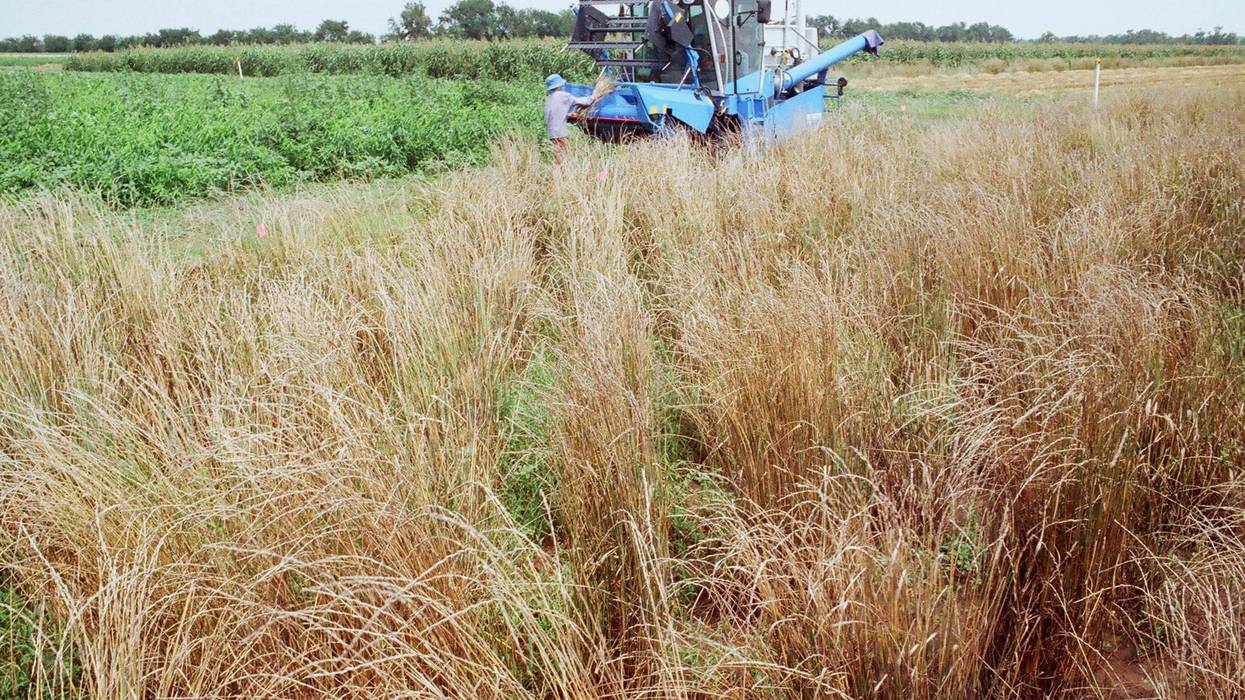
Back to Jackson, who is a curious mix of humility and self-confidence. He accumulated all those accolades because he never let his critics slow him down. Jackson was ahead of his time in seeing not only problems in agriculture but what he called the problem of agriculture, the millennia of soil erosion and soil degradation caused by plowing and planting annual grains such as wheat.
For decades, Jackson said agronomists politely told him that his plan to breed perennial grains was interesting but unworkable. Today, plant breeders at The Land Institute and around the world are working on what Jackson calls “Natural Systems Agriculture,” growing perennial grains in mixtures. There’s a long way to go before those crops can feed the world, but there are perennial grains in commercial production (especially perennial rice in China) and more in development (such as varieties of wheat).
He called me one morning to describe in detail a spider web between two trees that he had been studying and then asked me a rhetorical question that goes to the core of our ecological crises: “Why is this not enough?”
Jackson jokes that he enjoys people “praising me,” but his humility is real. I worked with him on books that were published in 2021 (my summary of his key ideas, The Restless and Relentless Mind of Wes Jackson: Searching for Sustainability, and his book of stories, Hogs Are Up: Stories of the Land, with Digressions) and 2022 (the co-authored An Inconvenient Apocalypse: Environmental Collapse, Climate Crisis, and the Fate of Humanity). I have no specialized training in the areas we wrote about, but Jackson never discounted my contributions. He enjoyed being challenged and always took my ideas seriously. In fact, he attributes his success to his argumentative friends and colleagues.
There’s a story about his debt to comrades that Jackson loves to tell. One day his brother Elmer noted that Jackson was always quoting others in his writing and asked, “Don’t you have a mind of your own?” Jackson readily conceded that he did not. “I don’t know what I think until I talk to my friends,” Jackson said, emphasizing how much he has benefited from the insights of others. That’s the way it should be, Jackson said, because no one has a mind of their own, as we all puzzle through life’s challenges together.
Jackson was the only one of six siblings who earned advanced degrees, and his connection to his family is another source of the humility that keeps his hard-charging intellect grounded.
For example, when he received his MA from the University of Kansas, his parents made the 30-mile drive from North Topeka to Lawrence for the ceremony, but Jackson said that they left once he crossed the stage and didn’t hang around for the graduation reception. Why? “I didn’t ask them,” Jackson said. “I just assumed they had chores that needed to get done.” Jackson said they were proud of his accomplishments but didn’t consider those more important than his siblings’ work in farming, nursing, and business.
Another example: When Jackson was building the house and structures that became The Land Institute, he was surprised one day to see Elmer pull up with a tractor. “Elmer simply said, ‘You’re going to need this’ and told me that I owed him $800,” said Jackson, who paid off the debt as he had the money. That was typical, not only of Jackson’s family but of many rural people who had lived through the Great Depression, which Jackson said is part of why he stayed close to home, both geographically and culturally.
Jackson, the youngest in the family, is the only sibling still living. This year he will turn 90, and he and his wife, Joan, still live in that house Jackson built from scratch—no blueprints and a limited budget—with the help of family and friends in the early 1970s. After doing his best to ignore the aging process, Jackson finally has slowed down. In 2016 he stepped down as president and in 2024 he retired completely from The Land Institute, which had evolved from an alternative school to a full-fledged research institution, a hub for the worldwide work on perennial grains. But Jackson said the central question on his mind is much the same as when he was creating that Survival Studies curriculum nearly six decades ago—how is our species going to make the transition from a high-energy, high-technology world of 8 billion people to a smaller population that doesn’t draw down the ecological capital of Earth?
Can we manage such a down powering? Jackson is not naïve about our chances but wants to help a younger generation continue the work on his property, on The Land. He doesn’t have a specific program for them to follow but hopes they will be open to unpredictable possibilities, most of which he thinks won’t come by sticking to typical career paths.
Jackson said his own idiosyncratic choices simply may be the result of being a misfit. “I have never really fit anywhere,” he said. “I don't fit in genetics anymore. I didn’t fit in the nonprofit world. I certainly wouldn’t fit in any university. And I don’t think I would fit as a farmer.”
Jackson may be a misfit in human enterprises, but he continues to feel at home on his 30 acres of Kansas prairie, where even a short walk reignites his sense of wonder. He called me one morning to describe in detail a spider web between two trees that he had been studying and then asked me a rhetorical question that goes to the core of our ecological crises: “Why is this not enough?” Why are people not satisfied, he asked, with all the beauty, creativity, and complexity of the ecosystems around us?
If that were to be enough for more people, Jackson mused, the human species just might have a chance.
“Prairie Prophecy,” a documentary about Jackson’s work, will air on public television stations around the United States in spring 2026. For more information, visit https://www.prairieprophecy.com/. For extended audio conversations with Jackson, listen to “Podcast from the Prairie” at https://podcastfromtheprairie.com/.
The four individuals and non-governmental organization who were selected Thursday as the 2020 Right Livelihood Laureates are "united in their fight for equality, democracy, justice, and freedom," said the Swedish Right Livelihood Foundation in a statement.
As it has annually since 1980, the foundation selected the winners of the award that's often called the "Alternative Nobel Peace Prize" based on their dedication to defending the rights of vulnerable people against the abuses of powerful systems and regimes.
This year, the laureates are Nasrin Sotoudeh, an imprisoned Iranian human rights lawyer; Bryan Stevenson, an American civil rights lawyer; Lottie Cunningham Wren, an indigenous rights advocate and lawyer in Nicaragua; and Ales Bialiatski, a Belarusian pro-democracy activist as well as Viasna, the human rights center he established in 1996.
"Defying unjust legal systems and dictatorial political regimes, they successfully strengthen human rights, empower civil societies and denounce institutional abuses," said Ole von Uexkull, executive director of the Right Livelihood Foundation. "This year's selection of recipients highlights the increasing threats to democracy globally."
Each laureate will receive one million Swedish krona and will be presented with the award in a virtual ceremony on Dec. 3.
Nasrin Sotoudeh

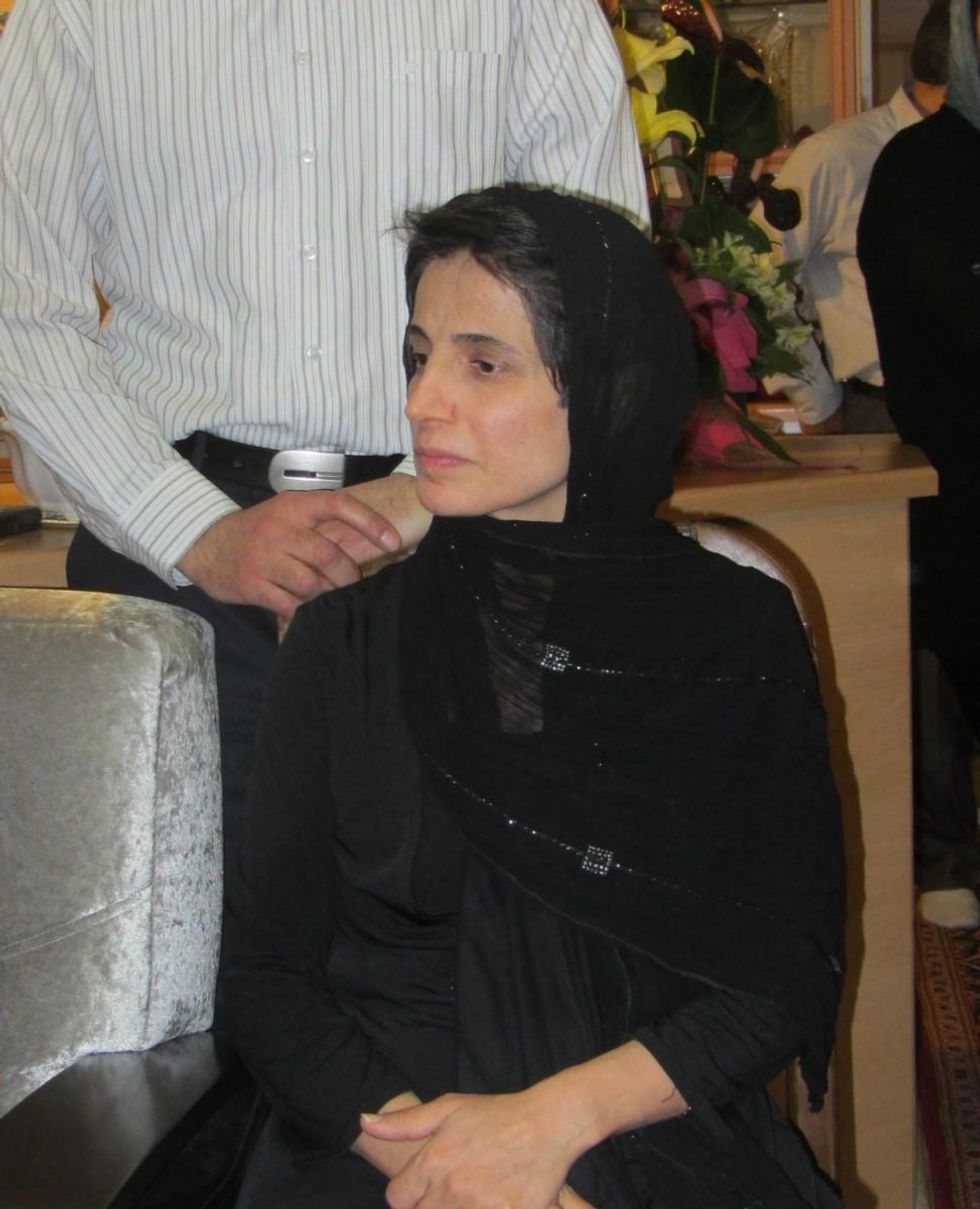
Sotoudeh was honored for her "fearless activism, at great personal risk, to promote political freedoms and human rights in Iran," the foundation said.
She is currently serving a 38-year prison sentence which began in 2019 after being convicted of "made-up charges including stoking 'corruption and prostitution'," the foundation wrote.
Sotoudeh's sentence also included 148 lashes and came after she defended women who removed their hijabs in public. For more than a decade, Sotoudeh has defended activists arrested during the 2009 anti-government protests in Iran, high-profile human rights advocates, and has campaigned against the death penalty.
Sotoudeh's husband, Reza Khandan, thanked the foundation on her behalf Thursday.
"The Iranian government thinks they can ruin our family by imposing heavier attacks on us," Khandan said. "They have targeted the pressures towards our whole family in the hope that they can achieve their goals. I am so worried about Nasrin's condition that I am beginning to think of the worst-case scenario, which I never thought of before. It would be impossible to tolerate these pressures without local and international support. The speed and strength of this support seem to outweigh the government's pressures."
Bryan Stevenson

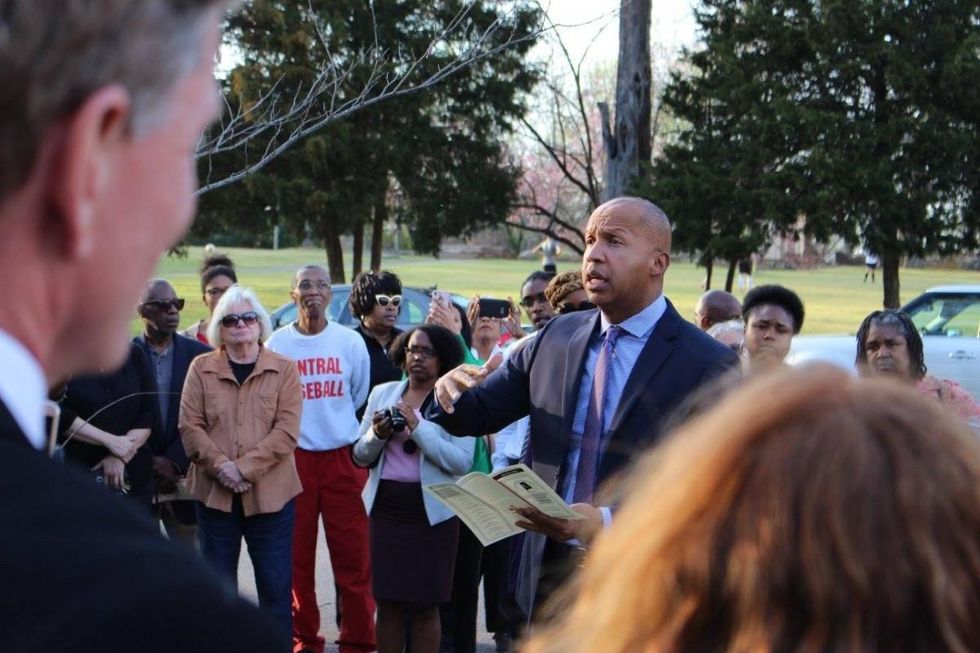
Stevenson was awarded the Right Livelihood Award amid a nationwide uprising in the U.S. against racial injustice, which he has fought against in the criminal justice system for decades. He founded the Equal Justice Initiative (EJI) in 1989; the group has since represented hundreds of people in the criminal justice system each year and has secured release or reversed sentences for 140 wrongfully convicted people on death row.
Stevenson opened the National Memorial for Peace and Justice in 2018 in Montgomery, Alabama--the nation's first museum and memorial dedicated to the legacy of enslaved Black people and victims of lynching, segregation, and Jim Crow laws.
"By advocating for a society-wide process to face the legacy of slavery and white supremacy in the US, Stevenson is paving the way for the structural changes needed for societal healing from the country's long and violent history of racial injustice," the foundation said.
Stevenson said in a statement that his selection for the Right Livelihood Award is "very affirming and very encouraging, and it comes at a moment when there's a lot of uncertainty, a lot of anxiety about our efforts to achieve justice in America."
"We are in the midst of pushing racial justice projects that cause our nation to deal more honestly with the history of racial injustice and racial inequality, so this support will help us advance that work," he said.
Lottie Cunningham Wren

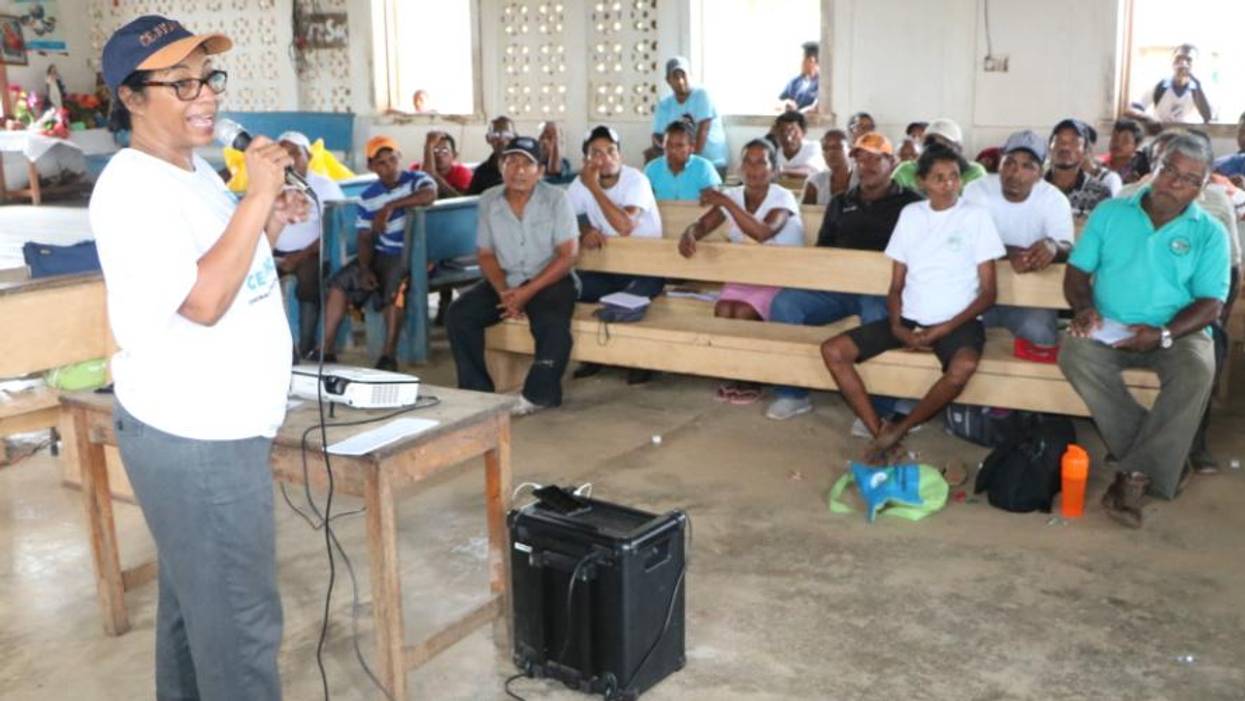
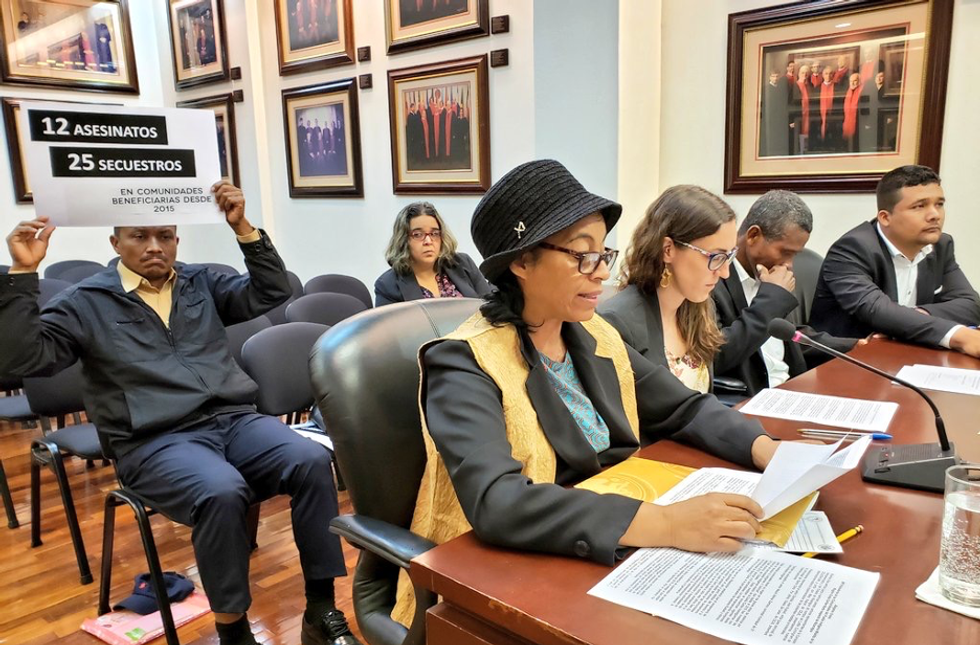
Cunningham "has secured indigenous land rights in Nicaragua, pioneering legal strategies that have been successfully used by indigenous communities around the world to demarcate their lands."
As an advocate for her own Miskito Indigenous group, Cunningham has established programs to reduce domestic violence, pushing to create space for women in decision-making bodies, and educated young people about formally fighting for their human rights. Cunningham helped mobilize community members against a Chinese-financed canal project which would have cut through Indigenous lands, leading to forced displacement and the destruction of ecosystems.
"I am truly humbled to accept this award in the name of indigenous people on the Caribbean Coast of Nicaragua, especially those who have given their lives defending the territory and our Mother Earth," said Cunningham. "It will help make our struggles visible in a crucial time when people are facing a humanitarian emergency and Nicaragua is in one of the deepest human rights crises of its history."
Ales Bialiatski and Viasna

Bialiatski founded human rights center Viasna in 1996 to support political prisoners, as part of "an almost 30-year campaign for democracy and freedom," the foundation said. The group is now the leading NGO in Belarus that documents human rights abuses and monitors elections.
Bialiatski's selection as a Right Livelihood laureate comes weeks after President Alexander Lukashenko, who has ruled the country as an authoritarian since 1994, claimed victory in an election widely denounced as fraudulent. In the election's aftermath, Viasna and Bialiatski have played a leading role in defending the right to assembly and advocating for those arrested at protests, where hundreds of thousands have gathered.
Bialiatski has frequently been targeted by the government and has "spent several years in prison on trumped-up charges," the foundation wrote. He has also campaigned for the abolishment of the death penalty.
"I fully realize that it is a historical combination of circumstances, namely the tragic and wonderful struggle of my people for justice, their sacrifices and selflessness, that have led to the fact that human rights work in Belarus this year has become more necessary and relevant than ever," said Bialiatski. "This award is a sign of moral support for all Belarusians who are striving for democratic change. I hope that the international attention that the prize attracts will help make the work of the Human Rights Center 'Viasna' in Belarus more meaningful and less dangerous."
Von Uexkull expressed hope that "all of us in favor of democracy around the world stand up and support each other."
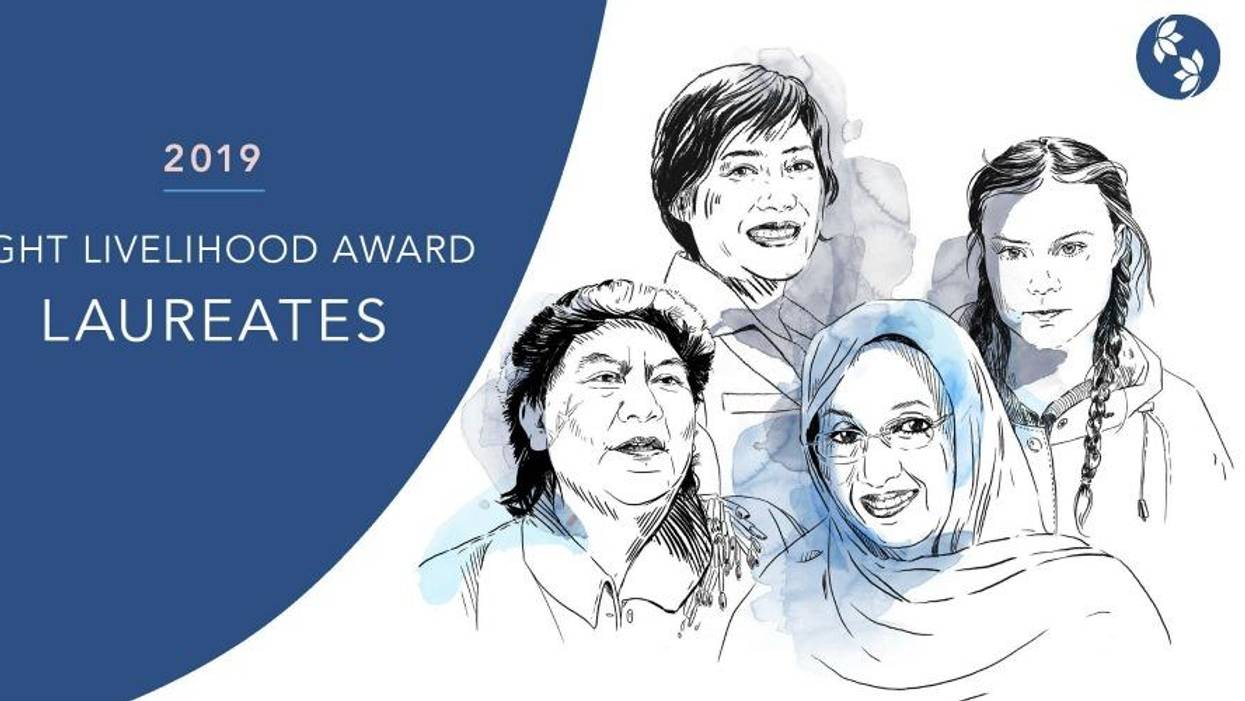
Four campaigners from across the globe were awarded the 2019 Right Livelihood Award on Wednesday for their tireless efforts in fighting for non-violence, women's rights, climate action, and environmental protection.
Aminatou Haidar of Western Sahara, Guo Jianmei of China, Greta Thunberg of Sweden, and Davi Kopenawa and the Hutukara Yanomami Association of Brazil were announced as the winners of what is often called the "alternative Nobel Peace Prize" at a press conference given by the Right Livelihood Foundation in Stockholm.
The four award winners were honored for their work as "practical visionaries whose leadership has empowered millions of people to defend their inalienable rights and to strive for a liveable future for all on planet Earth."
The foundation highlighted the campaigners' work in a video posted to YouTube:
The four were each awarded 1 million Swedish krona ($102,000).
Haidar was honored for leading the non-violent resistance to Morocco's decades-long occupation of Western Sahara.
For her efforts on behalf of the Sahrawi people, the foundation said, "she was arrested and tortured. But she will not be silenced."
"This is a recognition of my non-violent struggle and the just cause of the Sahrawi people," Haidar said in response to the award. "Despite military occupation and violations of fundamental human rights, they continue their peaceful struggle. The Sahrawis deserve to be supported by all so that, one day, they will achieve independence and freedom."
Chinese lawyer and women's rights defender Guo Jianmei was honored with the Right Livelihood Award for "her pioneering and persistent work in securing women's rights in China."
Guo defends disadvantaged women in cases involving domestic violence, gender discrimination, and sexual harassment and has offered free legal counseling to more than 120,00 women over the past two decades.
"This award recognizes and acknowledges the efforts of my team and me to uphold women's rights and promote democracy and the rule of law in China, under difficult circumstances for the past 25 years," Guo said. "Currently, pro bono legal work in China is facing enormous challenges. To stand firm, we will need more passion, courage, perseverance, and commitment. This award serves as an encouragement and motivation."
The foundation awarded indigenous leader Davi Kopenawa of the Yanomami tribe of Brazil for his "courageous determination to protect the forests and biodiversity of the Amazon, and the lands and culture of its indigenous peoples." His foundation, the Hutukara Yanomami Association, was also honored.
Kopenawa and the association "protect Yanomami lands in the Amazon from exploitation, which threaten both biodiversity and the very existence of indigenous tribes."
As Brazilian President Jair Bolsonaro has urged loggers and ranchers to destroy nearly five million acres of the Amazon Rainforest in recent months, the Right Livelihood Award "comes just at the right time," Kopenawa said.
"The award gives me the strength to continue the fight to defend the soul of the Amazon forest," he added. "We, the peoples of the planet, need to preserve our cultural heritage as Omame [the Creator] taught--to live well caring for our land so that future generations continue to use it."
Greta Thunberg, the 16-year-old climate action leader whose one-person climate strike evolved into weekly demonstrations drawing thousands all over the world and eventually the Global Climate Strike which drew four million people last week, was also honored in Stockholm.
Thunberg spoke at the U.N. Climate Action Summit on Monday, condemning world leaders whose inaction has forced her and thousands of other young people to walk out of their classrooms and demand an end to climate-warming fossil fuel extraction.
Thunberg said she was "deeply grateful" for the honor and pointed to climate campaigners from all over the world who participated in the Global Climate Strike, saying the award belonged to all in the climate action movement.
"Whenever I receive an award, it is not me who is the winner," said Thunberg. "I am part of a global movement of school children, youth and adults of all ages who have decided to act in defense of our living planet. I share this award with them. The Right Livelihood Award is a huge recognition for Fridays For Future and the climate strike movement."