
A person prepares an injection of fentanyl on Tuesday, May 3, 2022 in Vancouver, British Columbia.
Drug Policy and Rights Groups Decry Senate Passage of HALT Fentanyl Act
"The flawed legislation passed in the Senate today threatens to repeat the same mistakes that were made with the so-called ‘war on drugs,'" wrote one leader at a civil rights group.
The U.S. Senate on Friday passed a bill that would make permanent harsh criminal penalties for fentanyl-related drugs—but critics warn that the Halt All Lethal Trafficking of Fentanyl Act takes the wrong approach to drug prevention by prioritizing criminalization.
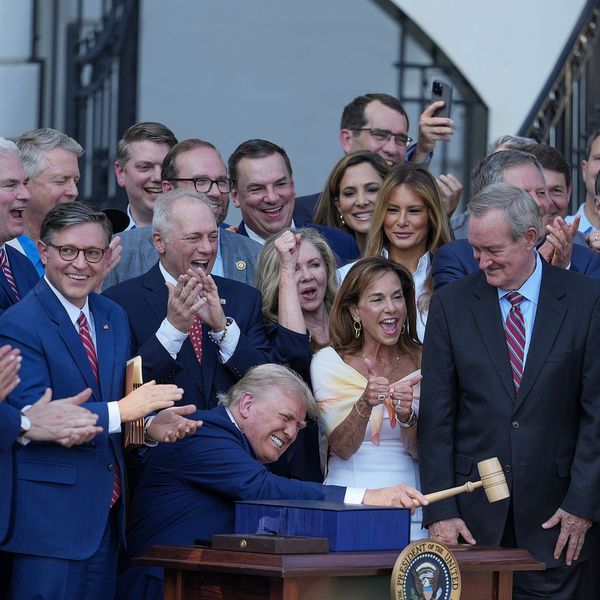
The bill passed by a vote of 84-16, with all the no votes coming from members of the Democratic caucus. The legislation now goes back to the House of Representatives for a procedural vote where it's expected to pass again and then go on to U.S. President Donald Trump, who is expected to sign it into law, according to the group the Drug Policy Alliance, which fights for equitable and nonpunitive drug policy.
The legislation would automatically and permanently put fentanyl-related substances in Schedule I under the Controlled Substances Act, the U.S. Drug Enforcement Agency's list of most dangerous drugs. The bill is expected to increase the number of criminal convictions for fentanyl-related substances, according to the Congressional Budget Office (CBO).
The HALT Fentanyl Act cements policy changes first enacted by the first Trump administration, which temporarily classified fentanyl-related substances as Schedule I drugs in 2018.
Drug policy and rights groups argue the passage of the bill doubles down on "failed, punitive" drug policy.
"Overdose deaths are declining not because of harsh sentencing laws, but because we are finally investing in what works—harm reduction, expanded treatment, and proven public health strategies," said Amy Fettig, acting co-executive director of the group Fair and Just Prosecution, in a statement on Friday.
"The HALT Fentanyl Act threatens this progress by doubling down on ineffective and extreme sentences and fueling unjust prosecutions that disproportionately target communities of color. We have decades of evidence showing that harsh sentencing laws don't stop drug use or save lives," Fettig continued. "Why are we repeating the same mistakes?"
The U.S. Centers for Disease Control and Prevention (CDC) released data in February predicting a nearly 24% decline in drug overdose deaths in the United States for the 12 months ending in September 2024, compared to the previous year.
The CDC credits multiple factors for the drop, including "widespread, data-driven distribution of naloxone," "better access to evidence-based treatment for substance use disorders," and "shifts in the illegal drug supply."
Jesselyn McCurdy, executive vice president for government affairs at the Leadership Conference on Civil and Human Rights, made similar comments to Fettig, writing: "The flawed legislation passed in the Senate today threatens to repeat the same mistakes that were made with the so-called 'war on drugs'... This legislation will not deter crime, protect public safety, or decrease drug use or trafficking."
Maritza Perez Medina, director of federal affairs at the Drug Policy Alliance, said in a Friday statement, "Our elected leaders must invest more in these lifesaving health approaches, yet Congress is doing the opposite."
An Urgent Message From Our Co-Founder
Dear Common Dreams reader, It’s been nearly 30 years since I co-founded Common Dreams with my late wife, Lina Newhouser. We had the radical notion that journalism should serve the public good, not corporate profits. It was clear to us from the outset what it would take to build such a project. No paid advertisements. No corporate sponsors. No millionaire publisher telling us what to think or do. Many people said we wouldn't last a year, but we proved those doubters wrong. Together with a tremendous team of journalists and dedicated staff, we built an independent media outlet free from the constraints of profits and corporate control. Our mission has always been simple: To inform. To inspire. To ignite change for the common good. Building Common Dreams was not easy. Our survival was never guaranteed. When you take on the most powerful forces—Wall Street greed, fossil fuel industry destruction, Big Tech lobbyists, and uber-rich oligarchs who have spent billions upon billions rigging the economy and democracy in their favor—the only bulwark you have is supporters who believe in your work. But here’s the urgent message from me today. It's never been this bad out there. And it's never been this hard to keep us going. At the very moment Common Dreams is most needed, the threats we face are intensifying. We need your support now more than ever. We don't accept corporate advertising and never will. We don't have a paywall because we don't think people should be blocked from critical news based on their ability to pay. Everything we do is funded by the donations of readers like you. When everyone does the little they can afford, we are strong. But if that support retreats or dries up, so do we. Will you donate now to make sure Common Dreams not only survives but thrives? —Craig Brown, Co-founder |
The U.S. Senate on Friday passed a bill that would make permanent harsh criminal penalties for fentanyl-related drugs—but critics warn that the Halt All Lethal Trafficking of Fentanyl Act takes the wrong approach to drug prevention by prioritizing criminalization.
The bill passed by a vote of 84-16, with all the no votes coming from members of the Democratic caucus. The legislation now goes back to the House of Representatives for a procedural vote where it's expected to pass again and then go on to U.S. President Donald Trump, who is expected to sign it into law, according to the group the Drug Policy Alliance, which fights for equitable and nonpunitive drug policy.
The legislation would automatically and permanently put fentanyl-related substances in Schedule I under the Controlled Substances Act, the U.S. Drug Enforcement Agency's list of most dangerous drugs. The bill is expected to increase the number of criminal convictions for fentanyl-related substances, according to the Congressional Budget Office (CBO).
The HALT Fentanyl Act cements policy changes first enacted by the first Trump administration, which temporarily classified fentanyl-related substances as Schedule I drugs in 2018.
Drug policy and rights groups argue the passage of the bill doubles down on "failed, punitive" drug policy.
"Overdose deaths are declining not because of harsh sentencing laws, but because we are finally investing in what works—harm reduction, expanded treatment, and proven public health strategies," said Amy Fettig, acting co-executive director of the group Fair and Just Prosecution, in a statement on Friday.
"The HALT Fentanyl Act threatens this progress by doubling down on ineffective and extreme sentences and fueling unjust prosecutions that disproportionately target communities of color. We have decades of evidence showing that harsh sentencing laws don't stop drug use or save lives," Fettig continued. "Why are we repeating the same mistakes?"
The U.S. Centers for Disease Control and Prevention (CDC) released data in February predicting a nearly 24% decline in drug overdose deaths in the United States for the 12 months ending in September 2024, compared to the previous year.
The CDC credits multiple factors for the drop, including "widespread, data-driven distribution of naloxone," "better access to evidence-based treatment for substance use disorders," and "shifts in the illegal drug supply."
Jesselyn McCurdy, executive vice president for government affairs at the Leadership Conference on Civil and Human Rights, made similar comments to Fettig, writing: "The flawed legislation passed in the Senate today threatens to repeat the same mistakes that were made with the so-called 'war on drugs'... This legislation will not deter crime, protect public safety, or decrease drug use or trafficking."
Maritza Perez Medina, director of federal affairs at the Drug Policy Alliance, said in a Friday statement, "Our elected leaders must invest more in these lifesaving health approaches, yet Congress is doing the opposite."
The U.S. Senate on Friday passed a bill that would make permanent harsh criminal penalties for fentanyl-related drugs—but critics warn that the Halt All Lethal Trafficking of Fentanyl Act takes the wrong approach to drug prevention by prioritizing criminalization.
The bill passed by a vote of 84-16, with all the no votes coming from members of the Democratic caucus. The legislation now goes back to the House of Representatives for a procedural vote where it's expected to pass again and then go on to U.S. President Donald Trump, who is expected to sign it into law, according to the group the Drug Policy Alliance, which fights for equitable and nonpunitive drug policy.
The legislation would automatically and permanently put fentanyl-related substances in Schedule I under the Controlled Substances Act, the U.S. Drug Enforcement Agency's list of most dangerous drugs. The bill is expected to increase the number of criminal convictions for fentanyl-related substances, according to the Congressional Budget Office (CBO).
The HALT Fentanyl Act cements policy changes first enacted by the first Trump administration, which temporarily classified fentanyl-related substances as Schedule I drugs in 2018.
Drug policy and rights groups argue the passage of the bill doubles down on "failed, punitive" drug policy.
"Overdose deaths are declining not because of harsh sentencing laws, but because we are finally investing in what works—harm reduction, expanded treatment, and proven public health strategies," said Amy Fettig, acting co-executive director of the group Fair and Just Prosecution, in a statement on Friday.
"The HALT Fentanyl Act threatens this progress by doubling down on ineffective and extreme sentences and fueling unjust prosecutions that disproportionately target communities of color. We have decades of evidence showing that harsh sentencing laws don't stop drug use or save lives," Fettig continued. "Why are we repeating the same mistakes?"
The U.S. Centers for Disease Control and Prevention (CDC) released data in February predicting a nearly 24% decline in drug overdose deaths in the United States for the 12 months ending in September 2024, compared to the previous year.
The CDC credits multiple factors for the drop, including "widespread, data-driven distribution of naloxone," "better access to evidence-based treatment for substance use disorders," and "shifts in the illegal drug supply."
Jesselyn McCurdy, executive vice president for government affairs at the Leadership Conference on Civil and Human Rights, made similar comments to Fettig, writing: "The flawed legislation passed in the Senate today threatens to repeat the same mistakes that were made with the so-called 'war on drugs'... This legislation will not deter crime, protect public safety, or decrease drug use or trafficking."
Maritza Perez Medina, director of federal affairs at the Drug Policy Alliance, said in a Friday statement, "Our elected leaders must invest more in these lifesaving health approaches, yet Congress is doing the opposite."