SUBSCRIBE TO OUR FREE NEWSLETTER
Daily news & progressive opinion—funded by the people, not the corporations—delivered straight to your inbox.
5
#000000
#FFFFFF
To donate by check, phone, or other method, see our More Ways to Give page.
Daily news & progressive opinion—funded by the people, not the corporations—delivered straight to your inbox.
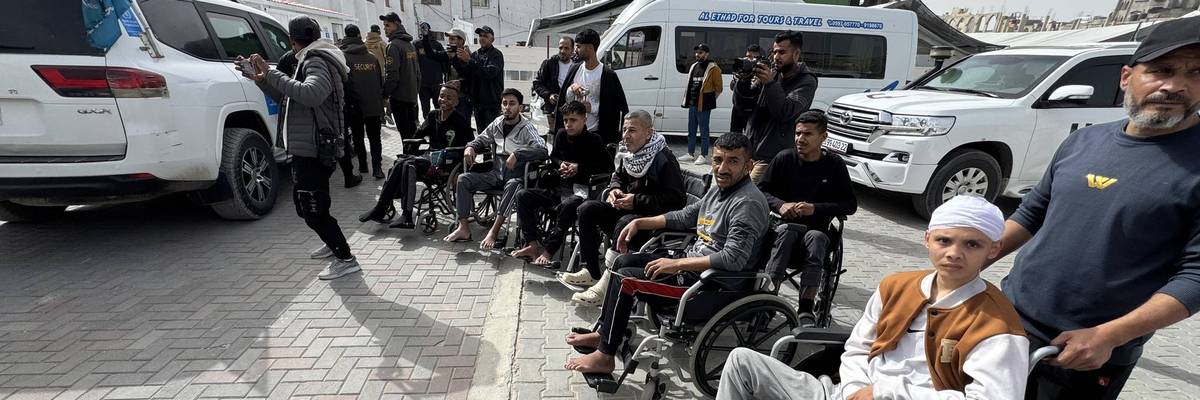
Patients in wheelchairs wait to be transferred to Egypt for treatment on February 2, 2026 in Khan Younis, Gaza after the Rafah border crossing reopened.
“We know that patients have died basically waiting for evacuation," a WHO spokesperson said, "and that’s something which is horrible when you know just a few miles or kilometers outside that border help is available."
With only five Palestinians in need of medical evacuation from Gaza permitted to leave through the Rafah crossing after it reopened on Monday, health authorities in the exclave warned that the restrictions Israel is continuing to impose at the crossing could ultimately kill thousands of Palestinians who have been waiting for years for treatment as Israeli attacks have decimated Gaza's health system.
Zaher al-Wahidi, a spokesperson for the Gaza Health Ministry, told Al Jazeera Tuesday that although the crossing has reopened—a step that has been hailed as progress under the "ceasefire" agreement reached in October—the intense screening process Palestinians are subjected to by Israeli authorities at the entry point is "too complex."
About 20,000 patients in Gaza are awaiting medical evacuation, including about 440 people whose cases are critical and need immediate treatment.
Egyptian officials had said before the crossing reopened that 50 people were expected to cross from Gaza into Egypt per day, but al-Wahidi said that if the rate of crossing on Monday continues, "we would need years to evacuate all of these patients, by which time all of them could lose their lives while waiting for an opportunity to leave."
Al Jazeera reported that people hoping to leave Gaza must register their names with Egyptian authorities, who send the names to Israel's Shin Bet for approval. Palestinians then enter a checkpoint run by the Palestinian Authority and European Union representatives before Israeli officers use facial recognition software to identify those who are leaving.
Reporting for the outlet, Nour Odeh said the crossing process has been "humiliating" for Palestinians and exemplifies the "absolute control" Israel demands over the lives of people in Gaza.
"There were strip searches and interrogations, but now there are even more extreme elements. We’re hearing about people being blindfolded, having their hands tied, and being interrogated," said Odeh. "When we talk about security screening, and a person needing urgent medical care, that person is basically being denied medical attention."
Ambulances waited for hours on Monday on the Egyptian side of the border, ready to take patients to 150 hospitals across Egypt that have agreed to treat patients from Gaza, before five people were finally able to cross after sunset.
The process, said al-Wahidi, "will not allow us to evacuate patients and provide medical services to them to give them a chance at life."
About 30,000 Palestinians have also requested to return to Gaza, having fled the exclave after Israel began bombarding civilian infrastructure and imposing a total blockade on humanitarian aid in October 2023—retaliating against Gaza's population of more than 2 million people, about half of whom are children, for a Hamas-led attack on southern Israel.
But only about a dozen people were permitted to reenter Gaza on Monday, falling far short of the daily target of 50.
The Associated Press reported that Palestinians arrived at the border crossing with luggage that they were told they could not bring into Gaza.
“They didn’t let us cross with anything,” Rotana Al-Regeb told the AP after returning to Khan Younis. “They emptied everything before letting us through. We were only allowed to take the clothes on our backs and one bag per person.”
Another woman told Tareq Abu Azzoum of Al Jazeera that she was "blindfolded and interrogated by the Israeli military on her way back to Gaza," and other said "they were intercepted by Israeli-backed militias" who demanded information about armed groups in Gaza.
For people who have waited months or years to return to Gaza, Abu Azzoum said, "the Rafah crossing has been a humiliating process instead of a day marking a beautiful reunion with family."
Palestinian political analyst Muhammad Shehada of the European Council on Foreign Relations said the process "means in practice that Israel has made the Rafah border crossing a one-way ticket. If you decide to go to Gaza, they tell you, 'Okay, you will be caged there permanently. Forget about being able to leave ever again.' If you decide to leave you will have to settle with the concept of being banished and exiled again, permanently, because the queue is so formidably long."
Palestinian analyst @muhammadshehad2 explains the restrictions that Israel has imposed at Rafah Crossing are so harsh that it would take approximately 10 years for all 150,000 Palestinians in Egypt to return to Gaza, and similarly long for the tens of thousands of patients and… https://t.co/FBy1TCAW3L pic.twitter.com/WwBA7rs4xC
— Drop Site (@DropSiteNews) February 2, 2026
On Tuesday, a World Health Organization (WHO) team arrived at a Palestinian Red Crescent hospital in Khan Younis to take about 16 patients with chronic conditions or injuries sustained in Israeli attacks to the Rafah crossing. The Red Crescent had previously been told 45 people would be able to cross on Tuesday.
Al Jazeera reported that health authorities in Gaza are being forced to choose which sick and wounded patients will be permitted to get treatment first.
“We know that patients have died basically waiting for evacuation," WHO spokesperson Christian Lindmeier said, "and that’s something which is horrible when you know just a few miles or kilometers outside that border help is available."
Dear Common Dreams reader, It’s been nearly 30 years since I co-founded Common Dreams with my late wife, Lina Newhouser. We had the radical notion that journalism should serve the public good, not corporate profits. It was clear to us from the outset what it would take to build such a project. No paid advertisements. No corporate sponsors. No millionaire publisher telling us what to think or do. Many people said we wouldn't last a year, but we proved those doubters wrong. Together with a tremendous team of journalists and dedicated staff, we built an independent media outlet free from the constraints of profits and corporate control. Our mission has always been simple: To inform. To inspire. To ignite change for the common good. Building Common Dreams was not easy. Our survival was never guaranteed. When you take on the most powerful forces—Wall Street greed, fossil fuel industry destruction, Big Tech lobbyists, and uber-rich oligarchs who have spent billions upon billions rigging the economy and democracy in their favor—the only bulwark you have is supporters who believe in your work. But here’s the urgent message from me today. It's never been this bad out there. And it's never been this hard to keep us going. At the very moment Common Dreams is most needed, the threats we face are intensifying. We need your support now more than ever. We don't accept corporate advertising and never will. We don't have a paywall because we don't think people should be blocked from critical news based on their ability to pay. Everything we do is funded by the donations of readers like you. When everyone does the little they can afford, we are strong. But if that support retreats or dries up, so do we. Will you donate now to make sure Common Dreams not only survives but thrives? —Craig Brown, Co-founder |
With only five Palestinians in need of medical evacuation from Gaza permitted to leave through the Rafah crossing after it reopened on Monday, health authorities in the exclave warned that the restrictions Israel is continuing to impose at the crossing could ultimately kill thousands of Palestinians who have been waiting for years for treatment as Israeli attacks have decimated Gaza's health system.
Zaher al-Wahidi, a spokesperson for the Gaza Health Ministry, told Al Jazeera Tuesday that although the crossing has reopened—a step that has been hailed as progress under the "ceasefire" agreement reached in October—the intense screening process Palestinians are subjected to by Israeli authorities at the entry point is "too complex."
About 20,000 patients in Gaza are awaiting medical evacuation, including about 440 people whose cases are critical and need immediate treatment.
Egyptian officials had said before the crossing reopened that 50 people were expected to cross from Gaza into Egypt per day, but al-Wahidi said that if the rate of crossing on Monday continues, "we would need years to evacuate all of these patients, by which time all of them could lose their lives while waiting for an opportunity to leave."
Al Jazeera reported that people hoping to leave Gaza must register their names with Egyptian authorities, who send the names to Israel's Shin Bet for approval. Palestinians then enter a checkpoint run by the Palestinian Authority and European Union representatives before Israeli officers use facial recognition software to identify those who are leaving.
Reporting for the outlet, Nour Odeh said the crossing process has been "humiliating" for Palestinians and exemplifies the "absolute control" Israel demands over the lives of people in Gaza.
"There were strip searches and interrogations, but now there are even more extreme elements. We’re hearing about people being blindfolded, having their hands tied, and being interrogated," said Odeh. "When we talk about security screening, and a person needing urgent medical care, that person is basically being denied medical attention."
Ambulances waited for hours on Monday on the Egyptian side of the border, ready to take patients to 150 hospitals across Egypt that have agreed to treat patients from Gaza, before five people were finally able to cross after sunset.
The process, said al-Wahidi, "will not allow us to evacuate patients and provide medical services to them to give them a chance at life."
About 30,000 Palestinians have also requested to return to Gaza, having fled the exclave after Israel began bombarding civilian infrastructure and imposing a total blockade on humanitarian aid in October 2023—retaliating against Gaza's population of more than 2 million people, about half of whom are children, for a Hamas-led attack on southern Israel.
But only about a dozen people were permitted to reenter Gaza on Monday, falling far short of the daily target of 50.
The Associated Press reported that Palestinians arrived at the border crossing with luggage that they were told they could not bring into Gaza.
“They didn’t let us cross with anything,” Rotana Al-Regeb told the AP after returning to Khan Younis. “They emptied everything before letting us through. We were only allowed to take the clothes on our backs and one bag per person.”
Another woman told Tareq Abu Azzoum of Al Jazeera that she was "blindfolded and interrogated by the Israeli military on her way back to Gaza," and other said "they were intercepted by Israeli-backed militias" who demanded information about armed groups in Gaza.
For people who have waited months or years to return to Gaza, Abu Azzoum said, "the Rafah crossing has been a humiliating process instead of a day marking a beautiful reunion with family."
Palestinian political analyst Muhammad Shehada of the European Council on Foreign Relations said the process "means in practice that Israel has made the Rafah border crossing a one-way ticket. If you decide to go to Gaza, they tell you, 'Okay, you will be caged there permanently. Forget about being able to leave ever again.' If you decide to leave you will have to settle with the concept of being banished and exiled again, permanently, because the queue is so formidably long."
Palestinian analyst @muhammadshehad2 explains the restrictions that Israel has imposed at Rafah Crossing are so harsh that it would take approximately 10 years for all 150,000 Palestinians in Egypt to return to Gaza, and similarly long for the tens of thousands of patients and… https://t.co/FBy1TCAW3L pic.twitter.com/WwBA7rs4xC
— Drop Site (@DropSiteNews) February 2, 2026
On Tuesday, a World Health Organization (WHO) team arrived at a Palestinian Red Crescent hospital in Khan Younis to take about 16 patients with chronic conditions or injuries sustained in Israeli attacks to the Rafah crossing. The Red Crescent had previously been told 45 people would be able to cross on Tuesday.
Al Jazeera reported that health authorities in Gaza are being forced to choose which sick and wounded patients will be permitted to get treatment first.
“We know that patients have died basically waiting for evacuation," WHO spokesperson Christian Lindmeier said, "and that’s something which is horrible when you know just a few miles or kilometers outside that border help is available."
With only five Palestinians in need of medical evacuation from Gaza permitted to leave through the Rafah crossing after it reopened on Monday, health authorities in the exclave warned that the restrictions Israel is continuing to impose at the crossing could ultimately kill thousands of Palestinians who have been waiting for years for treatment as Israeli attacks have decimated Gaza's health system.
Zaher al-Wahidi, a spokesperson for the Gaza Health Ministry, told Al Jazeera Tuesday that although the crossing has reopened—a step that has been hailed as progress under the "ceasefire" agreement reached in October—the intense screening process Palestinians are subjected to by Israeli authorities at the entry point is "too complex."
About 20,000 patients in Gaza are awaiting medical evacuation, including about 440 people whose cases are critical and need immediate treatment.
Egyptian officials had said before the crossing reopened that 50 people were expected to cross from Gaza into Egypt per day, but al-Wahidi said that if the rate of crossing on Monday continues, "we would need years to evacuate all of these patients, by which time all of them could lose their lives while waiting for an opportunity to leave."
Al Jazeera reported that people hoping to leave Gaza must register their names with Egyptian authorities, who send the names to Israel's Shin Bet for approval. Palestinians then enter a checkpoint run by the Palestinian Authority and European Union representatives before Israeli officers use facial recognition software to identify those who are leaving.
Reporting for the outlet, Nour Odeh said the crossing process has been "humiliating" for Palestinians and exemplifies the "absolute control" Israel demands over the lives of people in Gaza.
"There were strip searches and interrogations, but now there are even more extreme elements. We’re hearing about people being blindfolded, having their hands tied, and being interrogated," said Odeh. "When we talk about security screening, and a person needing urgent medical care, that person is basically being denied medical attention."
Ambulances waited for hours on Monday on the Egyptian side of the border, ready to take patients to 150 hospitals across Egypt that have agreed to treat patients from Gaza, before five people were finally able to cross after sunset.
The process, said al-Wahidi, "will not allow us to evacuate patients and provide medical services to them to give them a chance at life."
About 30,000 Palestinians have also requested to return to Gaza, having fled the exclave after Israel began bombarding civilian infrastructure and imposing a total blockade on humanitarian aid in October 2023—retaliating against Gaza's population of more than 2 million people, about half of whom are children, for a Hamas-led attack on southern Israel.
But only about a dozen people were permitted to reenter Gaza on Monday, falling far short of the daily target of 50.
The Associated Press reported that Palestinians arrived at the border crossing with luggage that they were told they could not bring into Gaza.
“They didn’t let us cross with anything,” Rotana Al-Regeb told the AP after returning to Khan Younis. “They emptied everything before letting us through. We were only allowed to take the clothes on our backs and one bag per person.”
Another woman told Tareq Abu Azzoum of Al Jazeera that she was "blindfolded and interrogated by the Israeli military on her way back to Gaza," and other said "they were intercepted by Israeli-backed militias" who demanded information about armed groups in Gaza.
For people who have waited months or years to return to Gaza, Abu Azzoum said, "the Rafah crossing has been a humiliating process instead of a day marking a beautiful reunion with family."
Palestinian political analyst Muhammad Shehada of the European Council on Foreign Relations said the process "means in practice that Israel has made the Rafah border crossing a one-way ticket. If you decide to go to Gaza, they tell you, 'Okay, you will be caged there permanently. Forget about being able to leave ever again.' If you decide to leave you will have to settle with the concept of being banished and exiled again, permanently, because the queue is so formidably long."
Palestinian analyst @muhammadshehad2 explains the restrictions that Israel has imposed at Rafah Crossing are so harsh that it would take approximately 10 years for all 150,000 Palestinians in Egypt to return to Gaza, and similarly long for the tens of thousands of patients and… https://t.co/FBy1TCAW3L pic.twitter.com/WwBA7rs4xC
— Drop Site (@DropSiteNews) February 2, 2026
On Tuesday, a World Health Organization (WHO) team arrived at a Palestinian Red Crescent hospital in Khan Younis to take about 16 patients with chronic conditions or injuries sustained in Israeli attacks to the Rafah crossing. The Red Crescent had previously been told 45 people would be able to cross on Tuesday.
Al Jazeera reported that health authorities in Gaza are being forced to choose which sick and wounded patients will be permitted to get treatment first.
“We know that patients have died basically waiting for evacuation," WHO spokesperson Christian Lindmeier said, "and that’s something which is horrible when you know just a few miles or kilometers outside that border help is available."