SUBSCRIBE TO OUR FREE NEWSLETTER
Daily news & progressive opinion—funded by the people, not the corporations—delivered straight to your inbox.
5
#000000
#FFFFFF
To donate by check, phone, or other method, see our More Ways to Give page.
Daily news & progressive opinion—funded by the people, not the corporations—delivered straight to your inbox.

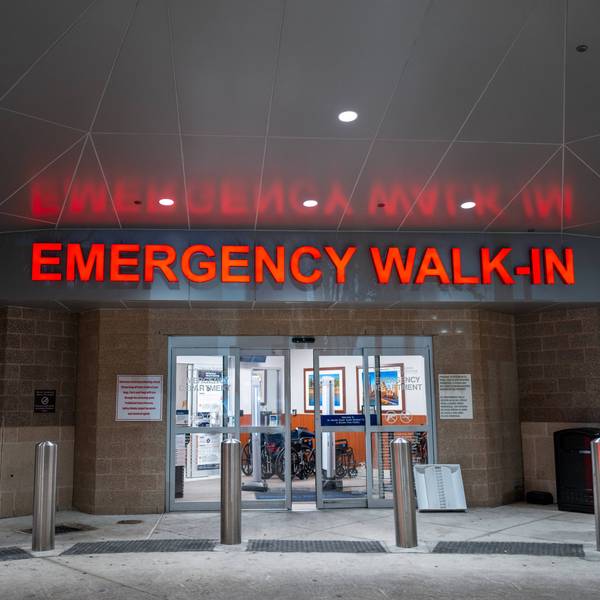
Analysts project that 43 million Americans could lose their insurance when the unemployment rate hits 20%. According to the Department of Labor, the current unemployment rate is 14.7%. (Photo: Elvert Barnes/Flickr/cc)
Medicare for All advocates on Sunday pointed to the latest study on the looming health insurance crisis already becoming apparent amid the coronavirus pandemic, which has led to job losses for more than 33 million people in the past two months.
Because health insurance is tied to employment for about half the country--160 million people--as many as 43 million are expected to lose their health insurance due to the pandemic, according to a new report by the Robert Wood Johnson Foundation (RWJF) and the Urban Institute.
Analysts project that 43 million Americans could lose their insurance when the unemployment rate hits 20%. According to the Department of Labor, the current unemployment rate is 14.7%. Some economists estimate that between 19% and 23.6% of Americans are actually out of a job, including those who lost their jobs in the last two weeks and those who have not filed jobless claims.
The pandemic "exposes a lot of the inadequacies in our system," RWJF senior policy analyst Katherine Hempstead told The Guardian, adding that healthcare is "tied to employment for no real reason."
On social media, Indiana congressional candidate Veronikka Ziol argued that there is a reason the U.S. system links people's ability to seek medical care to their ability to hold a job which offers health benefits--"It's to hold a bargaining chip over the working-class's head."
"Do what we want for the pittance we're paying, or you're going to lose your healthcare," Ziol wrote.
"This is why we need Medicare for All," she added.
Last month, the Economic Policy Institute estimated that 12.7 million people had already lost their employer-based health insurance.
Of the Americans who lose insurance due to layoffs or furloughs, RWJF and the Urban Institute said, an estimated seven million will remain uninsured--unable to access healthcare through Medicaid or COBRA, the law which allows Americans to pay for the health insurance they had through their previous employer--which can cost hundreds of dollars per month for individual coverage.
With millions expected to join the more than 27 million Americans who were uninsured before the pandemic, the RWJF and the Urban Institute raised concerns that many will avoid medical attention if they begin showing symptoms of the coronavirus, raising the risk of spreading the illness in their communities and making it more difficult for the country as a whole to combat the pandemic.
"The American healthcare financing system was not built to withstand the combined impact of a pandemic and a recession," Dr. Adam Gaffney, the president of Physicians for a National Health Program, told The Guardian. "It's inevitable that people will die because they can't get the care they need, because of the looming recession."
This country and this world are at a monumental crossroads. US voters have an opportunity to beat back the forces of fascism and confront the billionaires who are rigging the economy, our media system, and our democracy, making it increasingly impossible for ordinary people to get by. We’re not just talking about the election. We’re talking about what must be done once these fascist elements are vanquished from power. We need a bolder set of solutions than what either major party has so far been willing to offer and a working-class movement ready to fight like hell for it. Trump didn't emerge from nowhere. The conditions that fueled MAGA authoritarianism were created by decades of radical neoliberal economic policies and a corrupt political system dominated by corporate interests. They slashed taxes on the super-rich, promising that the benefits would trickle down. They said giveaways to the corporate titans would make life more affordable for the rest of us. It was all bullshit. And when a bitter, betrayed populace searches for someone to blame, right-wing demagogues have little trouble finding scapegoats. People know when they're being lied to, but you won't hear any of this from the corporate media. Only independent journalism—powered and funded by people who believe in building a better world—can deliver truly trustworthy daily news. If you share our vision, please contribute whatever you can to sustain our work. |
Medicare for All advocates on Sunday pointed to the latest study on the looming health insurance crisis already becoming apparent amid the coronavirus pandemic, which has led to job losses for more than 33 million people in the past two months.
Because health insurance is tied to employment for about half the country--160 million people--as many as 43 million are expected to lose their health insurance due to the pandemic, according to a new report by the Robert Wood Johnson Foundation (RWJF) and the Urban Institute.
Analysts project that 43 million Americans could lose their insurance when the unemployment rate hits 20%. According to the Department of Labor, the current unemployment rate is 14.7%. Some economists estimate that between 19% and 23.6% of Americans are actually out of a job, including those who lost their jobs in the last two weeks and those who have not filed jobless claims.
The pandemic "exposes a lot of the inadequacies in our system," RWJF senior policy analyst Katherine Hempstead told The Guardian, adding that healthcare is "tied to employment for no real reason."
On social media, Indiana congressional candidate Veronikka Ziol argued that there is a reason the U.S. system links people's ability to seek medical care to their ability to hold a job which offers health benefits--"It's to hold a bargaining chip over the working-class's head."
"Do what we want for the pittance we're paying, or you're going to lose your healthcare," Ziol wrote.
"This is why we need Medicare for All," she added.
Last month, the Economic Policy Institute estimated that 12.7 million people had already lost their employer-based health insurance.
Of the Americans who lose insurance due to layoffs or furloughs, RWJF and the Urban Institute said, an estimated seven million will remain uninsured--unable to access healthcare through Medicaid or COBRA, the law which allows Americans to pay for the health insurance they had through their previous employer--which can cost hundreds of dollars per month for individual coverage.
With millions expected to join the more than 27 million Americans who were uninsured before the pandemic, the RWJF and the Urban Institute raised concerns that many will avoid medical attention if they begin showing symptoms of the coronavirus, raising the risk of spreading the illness in their communities and making it more difficult for the country as a whole to combat the pandemic.
"The American healthcare financing system was not built to withstand the combined impact of a pandemic and a recession," Dr. Adam Gaffney, the president of Physicians for a National Health Program, told The Guardian. "It's inevitable that people will die because they can't get the care they need, because of the looming recession."