SUBSCRIBE TO OUR FREE NEWSLETTER
Daily news & progressive opinion—funded by the people, not the corporations—delivered straight to your inbox.
5
#000000
#FFFFFF
To donate by check, phone, or other method, see our More Ways to Give page.
Daily news & progressive opinion—funded by the people, not the corporations—delivered straight to your inbox.
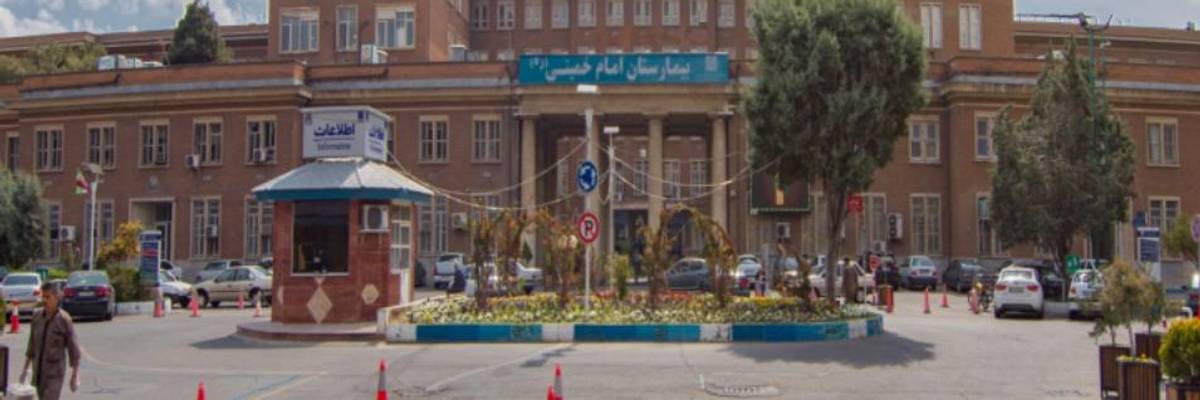
Medical staff at the Imam Khomeini Hospital Complex's Cancer Institute are struggling to provide care for patients because of U.S. sanctions, according to FRANCE 24. (Photo: Imam Khomeini Hospital Complex)
The economic sanctions that the Trump administration has imposed on Iran since ditching the 2015 nuclear deal are adversely affecting patients at the Middle Eastern country's top cancer hospital, healthcare providers told FRANCE 24 in a report published Wednesday.
Medical staff at the Cancer Institute in the Imam Khomeini Hospital Complex "are struggling to provide healthcare amid shortages and spiraling drug prices" tied to U.S. President Donald Trump's so-called "maximum pressure" campaign against Iran, according to FRANCE 24.
"We are facing some problems during operations," said one surgeon at the hospital in Tehran, the Iranian capital. "I don't know really if the target of the sanctions are the politicians or our patients. We are dealing with cancer here and cancer doesn't stop, so we cannot stop."
Watch:
"We don't have enough of some types of drugs and we have to import them. It becomes very expensive for our patients. They have to pay in dollars or euros," said Wida Shehri, head nurse at the Cancer Institute's chemotherapy unit.
The FRANCE 24 article, which came ahead of Iran's general elections scheduled for Friday, highlighted a Human Rights Watch report from October 2019. As HRW explained:
Though the U.S. government has built exemptions for humanitarian imports into its sanction regime, broad U.S. sanctions against Iranian banks, coupled with aggressive rhetoric from U.S. officials, have drastically constrained Iran's ability to finance such humanitarian imports. The consequences of redoubled U.S. sanctions, whether intentional or not, pose a serious threat to Iranians' right to health and access to essential medicines--and has almost certainly contributed to documented shortages--ranging from a lack of critical drugs for epilepsy patients to limited chemotherapy medications for Iranians with cancer.
FRANCE 24 noted that "while Iran produces 95 percent of its drugs, the country has to import ingredients that are difficult to access under the sanctions." Mahmoud Zadeh, the hospital's director of oncology, said that "exporters want to sell us the drugs."
"The problem is payment," said Zadeh. "We don't have ways to transfer money between bank accounts. I think around 50 percent of our patients have been affected by the sanctions."
The Trump administration imposed more sanctions on Iran last month, after the country retaliated for the U.S. assassination of Iranian Maj. Gen. Qasem Soleimani by firing ballistic missiles at Iraqi military bases that host coalition forces, including Americans. Although the missile attack did not result in any loss of life, dozens of U.S. service members have since been diagnosed with traumatic brain injuries.
Trump has stood by his decision to assassinate Soleimani, whom the president called "the Iranian regime's most ruthless butcher" during his State of the Union address on Feb. 4. Trump also said that "because of our powerful sanctions, the Iranian economy is doing very, very poorly. We can help them make a very good and short-time recovery. It can all go very quickly, but perhaps they are too proud or too foolish to ask for that help. We are here. Let's see which road they choose. It is totally up to them."
While the Trump administration has made no indications that a meeting with Iranian leadership is on the horizon, U.S. Sen. Chris Murphy (D-Conn.) confirmed Tuesday in a Medium post that he personally met with Iranian Foreign Minister Mohammad Javad Zarif Saturday on the sidelines of the Munich Security Conference in Germany.
That meeting drew criticism from Trump and other Republicans, who accused Murphy of violating the Logan Act, which prohibits private U.S. citizens from conducting unauthorized negotiations with foreign governments. The Hill noted that "legal scholars generally agree the Logan Act does not apply to members of Congress, and there is lengthy precedent of lawmakers meeting with foreign government officials."
Murphy wrote on Medium that "I have no delusions about Iran--they are our adversary, responsible for the killing of thousands of Americans and unacceptable levels of support for terrorist organizations throughout the Middle East. But I think it's dangerous to not talk to your enemies." He added: "I'm not the president or the secretary of state--I'm just a rank and file U.S. senator. I cannot conduct diplomacy on behalf of the whole of the U.S. government, and I don't pretend to be in a position to do so. But if Trump isn't going to talk to Iran, then someone should."
The Connecticut Democrat was one of 55 senators who voted last week to approve a War Powers Resolution that aimed to block Trump from launching a military action against Iran without approval from Congress. Although the resolution is expected to pass the Democrat-controlled House, neither the recent Senate vote nor a House vote on a similar measure last month secured the two-thirds supermajority needed to override a presidential veto.
Dear Common Dreams reader, It’s been nearly 30 years since I co-founded Common Dreams with my late wife, Lina Newhouser. We had the radical notion that journalism should serve the public good, not corporate profits. It was clear to us from the outset what it would take to build such a project. No paid advertisements. No corporate sponsors. No millionaire publisher telling us what to think or do. Many people said we wouldn't last a year, but we proved those doubters wrong. Together with a tremendous team of journalists and dedicated staff, we built an independent media outlet free from the constraints of profits and corporate control. Our mission has always been simple: To inform. To inspire. To ignite change for the common good. Building Common Dreams was not easy. Our survival was never guaranteed. When you take on the most powerful forces—Wall Street greed, fossil fuel industry destruction, Big Tech lobbyists, and uber-rich oligarchs who have spent billions upon billions rigging the economy and democracy in their favor—the only bulwark you have is supporters who believe in your work. But here’s the urgent message from me today. It's never been this bad out there. And it's never been this hard to keep us going. At the very moment Common Dreams is most needed, the threats we face are intensifying. We need your support now more than ever. We don't accept corporate advertising and never will. We don't have a paywall because we don't think people should be blocked from critical news based on their ability to pay. Everything we do is funded by the donations of readers like you. When everyone does the little they can afford, we are strong. But if that support retreats or dries up, so do we. Will you donate now to make sure Common Dreams not only survives but thrives? —Craig Brown, Co-founder |
The economic sanctions that the Trump administration has imposed on Iran since ditching the 2015 nuclear deal are adversely affecting patients at the Middle Eastern country's top cancer hospital, healthcare providers told FRANCE 24 in a report published Wednesday.
Medical staff at the Cancer Institute in the Imam Khomeini Hospital Complex "are struggling to provide healthcare amid shortages and spiraling drug prices" tied to U.S. President Donald Trump's so-called "maximum pressure" campaign against Iran, according to FRANCE 24.
"We are facing some problems during operations," said one surgeon at the hospital in Tehran, the Iranian capital. "I don't know really if the target of the sanctions are the politicians or our patients. We are dealing with cancer here and cancer doesn't stop, so we cannot stop."
Watch:
"We don't have enough of some types of drugs and we have to import them. It becomes very expensive for our patients. They have to pay in dollars or euros," said Wida Shehri, head nurse at the Cancer Institute's chemotherapy unit.
The FRANCE 24 article, which came ahead of Iran's general elections scheduled for Friday, highlighted a Human Rights Watch report from October 2019. As HRW explained:
Though the U.S. government has built exemptions for humanitarian imports into its sanction regime, broad U.S. sanctions against Iranian banks, coupled with aggressive rhetoric from U.S. officials, have drastically constrained Iran's ability to finance such humanitarian imports. The consequences of redoubled U.S. sanctions, whether intentional or not, pose a serious threat to Iranians' right to health and access to essential medicines--and has almost certainly contributed to documented shortages--ranging from a lack of critical drugs for epilepsy patients to limited chemotherapy medications for Iranians with cancer.
FRANCE 24 noted that "while Iran produces 95 percent of its drugs, the country has to import ingredients that are difficult to access under the sanctions." Mahmoud Zadeh, the hospital's director of oncology, said that "exporters want to sell us the drugs."
"The problem is payment," said Zadeh. "We don't have ways to transfer money between bank accounts. I think around 50 percent of our patients have been affected by the sanctions."
The Trump administration imposed more sanctions on Iran last month, after the country retaliated for the U.S. assassination of Iranian Maj. Gen. Qasem Soleimani by firing ballistic missiles at Iraqi military bases that host coalition forces, including Americans. Although the missile attack did not result in any loss of life, dozens of U.S. service members have since been diagnosed with traumatic brain injuries.
Trump has stood by his decision to assassinate Soleimani, whom the president called "the Iranian regime's most ruthless butcher" during his State of the Union address on Feb. 4. Trump also said that "because of our powerful sanctions, the Iranian economy is doing very, very poorly. We can help them make a very good and short-time recovery. It can all go very quickly, but perhaps they are too proud or too foolish to ask for that help. We are here. Let's see which road they choose. It is totally up to them."
While the Trump administration has made no indications that a meeting with Iranian leadership is on the horizon, U.S. Sen. Chris Murphy (D-Conn.) confirmed Tuesday in a Medium post that he personally met with Iranian Foreign Minister Mohammad Javad Zarif Saturday on the sidelines of the Munich Security Conference in Germany.
That meeting drew criticism from Trump and other Republicans, who accused Murphy of violating the Logan Act, which prohibits private U.S. citizens from conducting unauthorized negotiations with foreign governments. The Hill noted that "legal scholars generally agree the Logan Act does not apply to members of Congress, and there is lengthy precedent of lawmakers meeting with foreign government officials."
Murphy wrote on Medium that "I have no delusions about Iran--they are our adversary, responsible for the killing of thousands of Americans and unacceptable levels of support for terrorist organizations throughout the Middle East. But I think it's dangerous to not talk to your enemies." He added: "I'm not the president or the secretary of state--I'm just a rank and file U.S. senator. I cannot conduct diplomacy on behalf of the whole of the U.S. government, and I don't pretend to be in a position to do so. But if Trump isn't going to talk to Iran, then someone should."
The Connecticut Democrat was one of 55 senators who voted last week to approve a War Powers Resolution that aimed to block Trump from launching a military action against Iran without approval from Congress. Although the resolution is expected to pass the Democrat-controlled House, neither the recent Senate vote nor a House vote on a similar measure last month secured the two-thirds supermajority needed to override a presidential veto.
The economic sanctions that the Trump administration has imposed on Iran since ditching the 2015 nuclear deal are adversely affecting patients at the Middle Eastern country's top cancer hospital, healthcare providers told FRANCE 24 in a report published Wednesday.
Medical staff at the Cancer Institute in the Imam Khomeini Hospital Complex "are struggling to provide healthcare amid shortages and spiraling drug prices" tied to U.S. President Donald Trump's so-called "maximum pressure" campaign against Iran, according to FRANCE 24.
"We are facing some problems during operations," said one surgeon at the hospital in Tehran, the Iranian capital. "I don't know really if the target of the sanctions are the politicians or our patients. We are dealing with cancer here and cancer doesn't stop, so we cannot stop."
Watch:
"We don't have enough of some types of drugs and we have to import them. It becomes very expensive for our patients. They have to pay in dollars or euros," said Wida Shehri, head nurse at the Cancer Institute's chemotherapy unit.
The FRANCE 24 article, which came ahead of Iran's general elections scheduled for Friday, highlighted a Human Rights Watch report from October 2019. As HRW explained:
Though the U.S. government has built exemptions for humanitarian imports into its sanction regime, broad U.S. sanctions against Iranian banks, coupled with aggressive rhetoric from U.S. officials, have drastically constrained Iran's ability to finance such humanitarian imports. The consequences of redoubled U.S. sanctions, whether intentional or not, pose a serious threat to Iranians' right to health and access to essential medicines--and has almost certainly contributed to documented shortages--ranging from a lack of critical drugs for epilepsy patients to limited chemotherapy medications for Iranians with cancer.
FRANCE 24 noted that "while Iran produces 95 percent of its drugs, the country has to import ingredients that are difficult to access under the sanctions." Mahmoud Zadeh, the hospital's director of oncology, said that "exporters want to sell us the drugs."
"The problem is payment," said Zadeh. "We don't have ways to transfer money between bank accounts. I think around 50 percent of our patients have been affected by the sanctions."
The Trump administration imposed more sanctions on Iran last month, after the country retaliated for the U.S. assassination of Iranian Maj. Gen. Qasem Soleimani by firing ballistic missiles at Iraqi military bases that host coalition forces, including Americans. Although the missile attack did not result in any loss of life, dozens of U.S. service members have since been diagnosed with traumatic brain injuries.
Trump has stood by his decision to assassinate Soleimani, whom the president called "the Iranian regime's most ruthless butcher" during his State of the Union address on Feb. 4. Trump also said that "because of our powerful sanctions, the Iranian economy is doing very, very poorly. We can help them make a very good and short-time recovery. It can all go very quickly, but perhaps they are too proud or too foolish to ask for that help. We are here. Let's see which road they choose. It is totally up to them."
While the Trump administration has made no indications that a meeting with Iranian leadership is on the horizon, U.S. Sen. Chris Murphy (D-Conn.) confirmed Tuesday in a Medium post that he personally met with Iranian Foreign Minister Mohammad Javad Zarif Saturday on the sidelines of the Munich Security Conference in Germany.
That meeting drew criticism from Trump and other Republicans, who accused Murphy of violating the Logan Act, which prohibits private U.S. citizens from conducting unauthorized negotiations with foreign governments. The Hill noted that "legal scholars generally agree the Logan Act does not apply to members of Congress, and there is lengthy precedent of lawmakers meeting with foreign government officials."
Murphy wrote on Medium that "I have no delusions about Iran--they are our adversary, responsible for the killing of thousands of Americans and unacceptable levels of support for terrorist organizations throughout the Middle East. But I think it's dangerous to not talk to your enemies." He added: "I'm not the president or the secretary of state--I'm just a rank and file U.S. senator. I cannot conduct diplomacy on behalf of the whole of the U.S. government, and I don't pretend to be in a position to do so. But if Trump isn't going to talk to Iran, then someone should."
The Connecticut Democrat was one of 55 senators who voted last week to approve a War Powers Resolution that aimed to block Trump from launching a military action against Iran without approval from Congress. Although the resolution is expected to pass the Democrat-controlled House, neither the recent Senate vote nor a House vote on a similar measure last month secured the two-thirds supermajority needed to override a presidential veto.