

SUBSCRIBE TO OUR FREE NEWSLETTER
Daily news & progressive opinion—funded by the people, not the corporations—delivered straight to your inbox.
5
#000000
#FFFFFF
To donate by check, phone, or other method, see our More Ways to Give page.
Daily news & progressive opinion—funded by the people, not the corporations—delivered straight to your inbox.
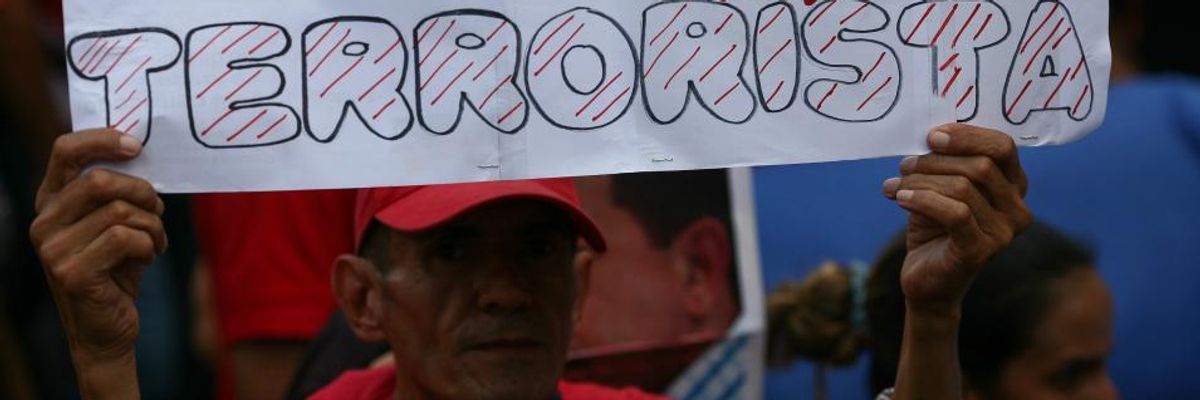
"Trump Terrorist" is written on the poster of a demonstrator at a rally against the new U.S. sanctions in Caracas, Venezuela on August 7, 2019. (Photo: Boris Vergara/Picture Alliance via Getty Images)
The United Nations' high commissioner for human rights on Thursday condemned the Trump administration's embargo against Venezuela and warned the far-reaching sanctions could deny food, medicine, and other necessities to millions of people.
"I am deeply worried about the potentially severe impact on the human rights of the people of Venezuela of the new set of unilateral sanctions imposed by the U.S. this week," U.N. human rights chief Michelle Bachelet said in a statement.
"I am deeply worried about the potentially severe impact on the human rights of the people of Venezuela of the new set of unilateral sanctions imposed by the U.S. this week."
--Michelle Bachelet, U.N. high commissioner for human rights
"I fear that they will have far-reaching implications on the rights to health and to food in particular," Bachelet said, noting the sanctions will likely "exacerbate the crisis for millions of ordinary Venezuelans."
As Common Dreams reported Tuesday, U.S. President Donald Trump signed an executive order freezing all assets of Venezuelan officials and barring any transactions with them.
Critics decried the Trump administration's embargo as part of a broad "economic terrorism" campaign aimed at ousting elected Venezuelan President Nicolas Maduro.
Far-reaching U.S. sanctions have already had a devastating impact on the Venezuelan people and economy. According to a study published by the Center for Economic and Policy Research (CEPR) in April, Trump's sanctions against Venezuela killed over 40,000 people between 2017 and 2018.
Economist Mark Weisbrot, a co-author of the study, called the sanctions illegal and said they "are depriving Venezuelans of lifesaving medicines, medical equipment, food, and other essential imports."
Bachelet said the Trump administration's embargo will only intensify that deprivation.
"There is a significant body of evidence showing that wide-ranging unilateral sanctions can end up denying people's fundamental human rights," said Bachelet, "including their economic rights as well as the rights to food and health."
The U.N. rights chief's statement came after U.S. national security adviser John Bolton touted the embargo as a way to remove Maduro and dismissed calls for diplomatic talks.
"The time for dialogue is over. Now is the time for action," Bolton said during a summit in Peru, just weeks after the U.S.-backed effort to overthrow Maduro by force failed.
Jorge Arreaza, Venezuela's foreign minister, denounced the Trump administration's embargo as "new and serious aggression" designed to inflict "severe wounds on Venezuelan society."
This country and this world are at a monumental crossroads. US voters have an opportunity to beat back the forces of fascism and confront the billionaires who are rigging the economy, our media system, and our democracy, making it increasingly impossible for ordinary people to get by. We’re not just talking about the election. We’re talking about what must be done once these fascist elements are vanquished from power. We need a bolder set of solutions than what either major party has so far been willing to offer and a working-class movement ready to fight like hell for it. Trump didn't emerge from nowhere. The conditions that fueled MAGA authoritarianism were created by decades of radical neoliberal economic policies and a corrupt political system dominated by corporate interests. They slashed taxes on the super-rich, promising that the benefits would trickle down. They said giveaways to the corporate titans would make life more affordable for the rest of us. It was all bullshit. And when a bitter, betrayed populace searches for someone to blame, right-wing demagogues have little trouble finding scapegoats. People know when they're being lied to, but you won't hear any of this from the corporate media. Only independent journalism—powered and funded by people who believe in building a better world—can deliver truly trustworthy daily news. If you share our vision, please contribute whatever you can to sustain our work. |
The United Nations' high commissioner for human rights on Thursday condemned the Trump administration's embargo against Venezuela and warned the far-reaching sanctions could deny food, medicine, and other necessities to millions of people.
"I am deeply worried about the potentially severe impact on the human rights of the people of Venezuela of the new set of unilateral sanctions imposed by the U.S. this week," U.N. human rights chief Michelle Bachelet said in a statement.
"I am deeply worried about the potentially severe impact on the human rights of the people of Venezuela of the new set of unilateral sanctions imposed by the U.S. this week."
--Michelle Bachelet, U.N. high commissioner for human rights
"I fear that they will have far-reaching implications on the rights to health and to food in particular," Bachelet said, noting the sanctions will likely "exacerbate the crisis for millions of ordinary Venezuelans."
As Common Dreams reported Tuesday, U.S. President Donald Trump signed an executive order freezing all assets of Venezuelan officials and barring any transactions with them.
Critics decried the Trump administration's embargo as part of a broad "economic terrorism" campaign aimed at ousting elected Venezuelan President Nicolas Maduro.
Far-reaching U.S. sanctions have already had a devastating impact on the Venezuelan people and economy. According to a study published by the Center for Economic and Policy Research (CEPR) in April, Trump's sanctions against Venezuela killed over 40,000 people between 2017 and 2018.
Economist Mark Weisbrot, a co-author of the study, called the sanctions illegal and said they "are depriving Venezuelans of lifesaving medicines, medical equipment, food, and other essential imports."
Bachelet said the Trump administration's embargo will only intensify that deprivation.
"There is a significant body of evidence showing that wide-ranging unilateral sanctions can end up denying people's fundamental human rights," said Bachelet, "including their economic rights as well as the rights to food and health."
The U.N. rights chief's statement came after U.S. national security adviser John Bolton touted the embargo as a way to remove Maduro and dismissed calls for diplomatic talks.
"The time for dialogue is over. Now is the time for action," Bolton said during a summit in Peru, just weeks after the U.S.-backed effort to overthrow Maduro by force failed.
Jorge Arreaza, Venezuela's foreign minister, denounced the Trump administration's embargo as "new and serious aggression" designed to inflict "severe wounds on Venezuelan society."

