November, 05 2015, 09:45am EDT
For Immediate Release
Contact:
Email:,info(at)fwwatch(dot)org,Seth Gladstone -,sgladstone@fwwatch.org
TPP Text Reveals Broad New Powers to Attack Food Safety, Food Labeling Laws
Food safety and labeling provisions worse than anticipated, mirror industry demands
WASHINGTON
Today, the Obama administration released the long-secret text of the proposed Trans-Pacific Partnership (TPP) trade deal that would weaken consumer protections, undermine U.S. food safety standards and prevent commonsense food labeling. The language included in the TPP is more aggressive than previous trade deals and provides broad new powers for other countries and foreign corporations to challenge U.S. food safety and food labeling measures.
"The TPP is a giveaway to big agribusiness and food companies that want to use trade deals to attack sensible food safety rules, weaken the inspection of imported food and block efforts to strengthen U.S. food safety standards," said Wenonah Hauter, Food & Water Watch executive director. "The food and agribusiness industries inserted language into the text of the TPP that will undermine U.S. food safety oversight and expose consumers to risky imported foods."
The TPP includes a new provision designed to second-guess the government inspectors who monitor food imports. The so-called Rapid Response Mechanism allows companies to challenge border inspection procedures that companies claim cause unnecessary delay -- like holding suspect shipments while awaiting laboratory test results -- and demand that a TPP panel of experts review and provide guidance on the inspection. This would create a chilling-effect on rigorous border inspection that would be especially dangerous for problems that are not obvious, like chemical or drug residues that would only appear after more thorough examination and testing.
"The TPP will increase the volume of imported and potentially risky foods coming into the United States, but tie the hands of the border inspectors who are the last line of defense between the shipper and the supermarket," said Hauter. "The TPP gives companies new powers to second guess inspectors and push uninspected food onto the market."
The TPP food safety rules also include a host of deregulatory catch phrases and code words that are considerably stronger than the food safety rules in prior trade deals like the World Trade Organization. The food and agribusiness industry demanded -- and received -- stronger sanitary and phytosanitary (SPS ) disciplines that make it harder to defend domestic food safety standards from international trade disputes. It also directs the United States to expand the current policy of recognizing foreign food safety systems that are not as strong as ours.
"American consumers are pushing to block the use of artificial and potentially risky processes and ingredients, like antibiotics and GMOs, but the TPP could trump these democratic efforts to improve our food supply," said Hauter.
The biotechnology industry received the biggest benefit from the TPP. This is the first trade agreement to provide specific biotechnology protections, according to the U.S. Trade Representative and U.S. Department of Agriculture. The posted SPS chapter does not include the Annexes where these provisions would be located. Agribusiness and biotech seed companies can now more easily use trade rules to challenge countries that ban GMO imports, test for GMO contamination, do not promptly approve new GMO crops or even require GMO labeling.
"The TPP gives the food industry a powerful new weapon to wield against the nationwide movement to label GMO foods," said Hauter. "The language in the TPP is more powerful and expansive than other trade deals that have already been used to weaken or eliminate dolphin safe tuna and country of origin labels."
"The TPP food safety and labeling provisions are worse than expected and bad news for American consumers and farmers," said Hauter. "Congress must reject this raw deal that handcuffs food safety inspectors and exposes everyone to a rising tide of unsafe imported food."
Food & Water Watch mobilizes regular people to build political power to move bold and uncompromised solutions to the most pressing food, water, and climate problems of our time. We work to protect people's health, communities, and democracy from the growing destructive power of the most powerful economic interests.
(202) 683-2500LATEST NEWS
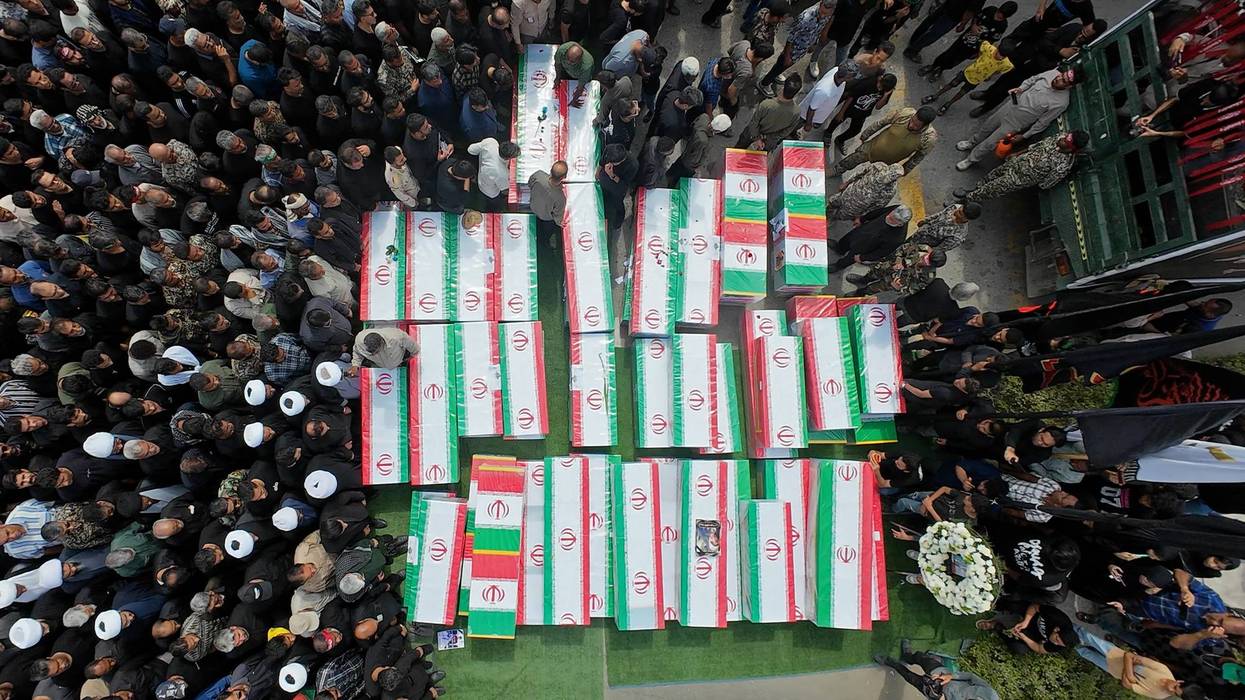
'Mistakes Are Made': Trump Rejects Accountability for US Massacre at Iran Girls' School
"War is nasty," the president said when asked about the February cruise missile strike that killed 156 students and staff in Minab, continuing the centuries-old presidential tradition of dismissing American atrocities.
Jun 18, 2026
President Donald Trump on Wednesday joined a long line of US leaders to brush off atrocities committed by American forces when he dodged questions about responsibility for the February cruise missile strike on an Iranian girls school that massacred students and staff.
On February 28—the first day of the illegal US-Israeli war of choice on Iran—a US strike on the Shajareh Tayyebeh girls’ elementary school in Minab killed 156 people, at least 120 of them children, and wounded 95 others.
Satellite imagery analyses confirmed eyewitness accounts that the attack was a “triple-tap” airstrike, in which an initial bombing was followed up with two additional strikes meant to kill survivors and rescue workers.
Asked by a journalist at the G7 meeting in France if anyone would be held accountable for the bombing, Trump replied, "It's such a strange question to be asked at this date, because you're talking about a long time ago."
"Nobody did that on purpose," Trump said of the school strike. "Mistakes are made. War is nasty. But I know it's under investigation."
"I would ask Pete Hegseth," the president added, referring to his defense secretary, who said at the war's start that US forces would not be bound by “stupid rules of engagement” and would instead prioritize “lethality.”
Fragments of a Tomahawk cruise missile found at the school and marked with the names of US weapons companies, a Pentagon contract number, and “Made in USA” added to the body of evidence pointing to the United States as the perpetrator of what numerous experts called a likely war crime.
Trump first claimed that Iran bombed the school, and when it was revealed that a Tomahawk missile was used in the strike, he risibly asserted that Tehran had such highly restricted US missiles in its arsenal. The US has not sold weaponry to the Iranian government since the 1970s, with the extraordinary exception of during the Iran-Contra Affair, in which the Reagan administration secretly sold arms to Iran in the 1980s to fund anti-communist Contra terrorists in Nicaragua.
A preliminary Pentagon probe indicated US responsibility for the Minab massacre—and that the building was struck intentionally, raising questions about the possible use of artificial intelligence for targeting purposes. The US military has confirmed use of AI in the Iran War, which is being carried out in partnership with Israeli forces that have used artificial intelligence extensively in their genocidal assault on the Gaza Strip. More than 250,000 Palestinians have been killed or wounded—most of them civilians—since the Hamas-led attack of October 7, 2023.
Numerous investigative journalism outlets and rights groups—including Bellingcat, The New York Times, Sky News, NPR, The Associated Press, the BBC, Reuters, Al Jazeera, CNN, and Amnesty International—also investigated the attack and concluded the US was responsible.
Trump administration officials and Republican US lawmakers dismissed or stonewalled efforts by journalists, activists, and Democratic legislators to seek accountability for one of the deadliest US civilian massacres in modern times.
The Minab strike ranks up with the bombing of a Baghdad bomb shelter during the 1991 Gulf War—which killed more than 400 people, mostly women, children, and elders—and the March 2017 slaughter of at least 105 people in an apartment building in Mosul, Iraq during Trump’s first-term “war of annihilation” against the so-called Islamic State.
The school massacre also drew comparisons with the 1968 wholesale slaughter of 504 unarmed villagers, mostly women and children—at least some of them raped before being killed—by US troops at My Lai in Vietnam.
Trump joins a long line of US leaders who have ducked accountability for—or worse, tried to justify—atrocities committed on their watch.
Faced with what was then commonly called the "Indian problem," a young Virginia governor named Thomas Jefferson justified what he called "their extermination, or their removal," because "the same world would scarcely do for them and us.”
During the Civil War, Gen. William Tecumseh Sherman, commander of an indiscriminate scorched-earth campaign during his March to the Sea, wrote that "war is cruelty, and you cannot refine it."
President Theodore Roosevelt attempted to defend US troops accused of mass murder and torture—including what's now known as waterboarding—during the Philippines War by shaming critics who condemned those crimes but turned blind eyes to the lynching of Black Americans in the South.
After ordering the only nuclear war in human history against a defeated enemy making efforts to surrender, President Harry S. Truman said of his Japanese victims, "The only language they seem to understand is the one we have been using to bombard them."
After US forces killed hundreds of thousands of Vietnamese, Cambodian, and Laotian civilians in the 1960s and 1970s, US Army Chief of Staff Gen. William Westmoreland attempted to rationalize the slaughter by explaining: "The Oriental doesn't put the same high price on life as does the Westerner... Life is cheap in the Orient."
As US-driven United Nations sanctions reportedly killed hundreds of thousands of Iraqi children in the 1990s, Madeleine Albright, President Bill Clinton's secretary of state, opined that "we think the price is worth it."
During President George W. Bush's invasion of Iraq, US Central Command chief Gen. Tommy Franks said, "We don't do body counts" when asked about the staggering number of civilian casualties, while Vice President Dick Cheney dismissed waterboarding as a mere "dunk in the water" amid a worldwide torture scandal.
When President Barack Obama's drone war killed an American teenager in Yemen, administration spokesperson Robert Gibbs deflected blame by arguing that the child should have had "a far more responsible father.”
As Trump loosened rules of engagement meant to protect civilians during his first-term campaign to "bomb the shit out of" Islamic State militants in Iraq and Syria and "take out their families," his defense secretary, James "Mad Dog" Mattis, announced that the US was shifting from a policy of “attrition” to one of “annihilation."
“Civilian casualties are a fact of life in this sort of situation,” he said.
Keep ReadingShow Less
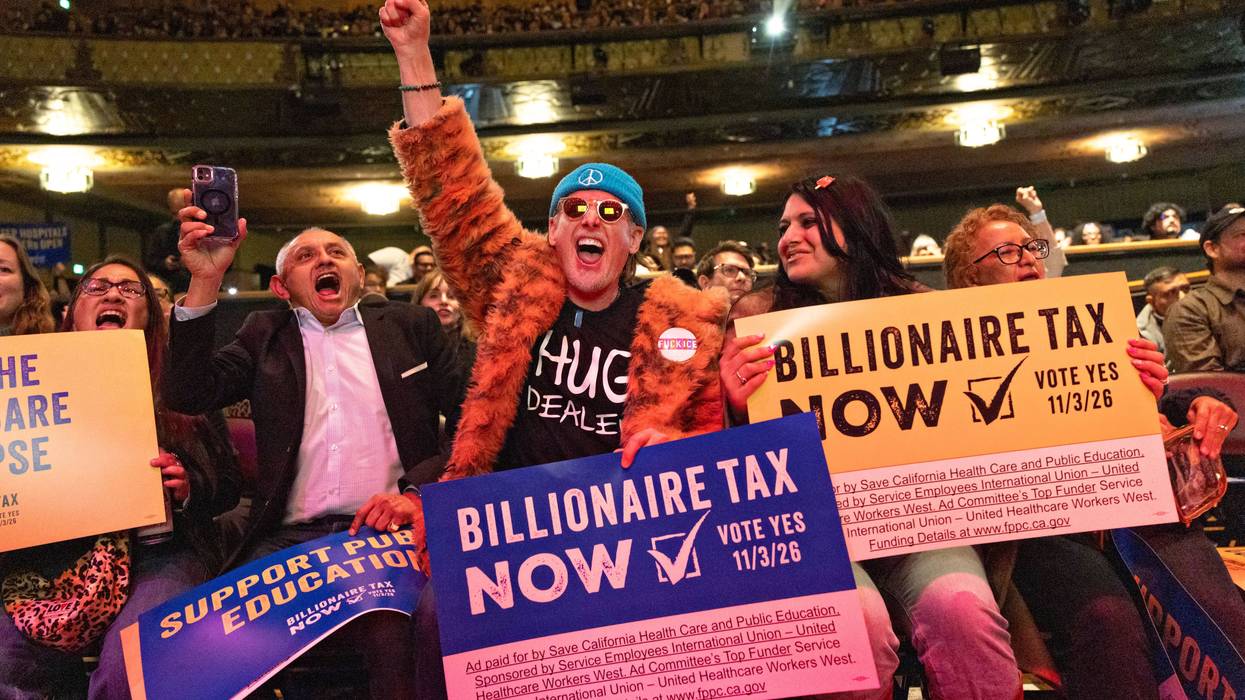
'Unlikely Bedfellows': Left-Leaning Groups Join Newsom-Backed Effort to Sink California Billionaire Tax
“This is not going to be, ‘Billionaires killed this wealth tax’ if it appears on the November ballot,” said Newsom's chief of staff. “It’s going to be Planned Parenthood, doctors, teachers, and labor killed it.”
Jun 17, 2026
It comes as no shock that Silicon Valley oligarchs and other plutocrats are trying to keep a proposed billionaire tax backed by California governor and presumptive Democratic presidential aspirant Gavin Newsom off November's ballot. But the participation of progressive groups as "unlikely bedfellows" in the effort to kill the wealth tax has surprised many observers.
Introduced by the Service Employees International Union-United Healthcare Workers West (SEIU-UHW), the California Billionaire Tax would impose a one-time 5% levy on people worth $1 billion or more, to be paid in annual installments of 1% over five years. Proponents say the tax would raise roughly $100 billion in revenue.
The proposal requires the state to spend 90% of revenue from the tax on healthcare and the rest on food assistance and public education. Opponents counter it could drive wealthy residents and investment from California.
Supporters of the billionaire tax have submitted more than 1.5 million signatures, far more than the roughly 875,000 valid signatures required to qualify for November's ballot. The signatures are still being verified, and the office of California Secretary of State Shirley Weber has until June 25, 2026 to determine whether the initiative qualifies.
The measure is backed by numerous progressive groups including the Teamsters union, California Democratic Socialists of America (DSA), and Our Revolution, as well as individual progressives like Sen. Bernie Sanders (I-Vt.), Rep. Ro Khanna (D-Calif.), and Democratic congressional candidate Connie Chan, who is running to replace retiring longtime San Francisco congresswoman Nancy Pelosi.
However, opponents are trying to stop the proposal from qualifying for the ballot, while preparing for a fight in the likely event that it does.
Newsom, the California Democratic Party, and a growing list of groups—including the California Teachers Association (CTA), Planned Parenthood Affiliates of California (PPAC), and the State Building and Construction Trades Council of California—are publicly opposing the tax and are urging SEIU-UHW to pull the proposal before June 25.
Republicans, the California Chamber of Commerce, and other capitalist interests oppose the billionaire tax, as do both candidates for California governor, Democrat Xavier Becerra and Republican Steve Hilton, and Chan's opponent in the San Francisco congressional race, state Sen. Scott Wiener (D-11).
Newsom said that the proposed tax "makes no sense" and would be "really damaging to the state."
CTA argues that the tax is a one-time revenue source, while California schools and healthcare programs need permanent, recurring funding. To that end, the union is backing a separate ballot measure—the Children's Education and Health Care Protection Act—which would permanently extend Proposition 55, California's existing high-income-earner tax, set to expire in 2030.
Jodi Hicks, PPAC's president, recently said that the California Billionaire Tax's "uncertain impacts on the state budget and lack of specificity on healthcare allocations will do more harm than good in the long term."
PPAC and aligned groups including California Medical Association and California Primary Care Association also support extending Prop 55.
Meanwhile, tech billionaires and Silicon Valley executives—including Google co-founder Sergey Brin, former Google CEO Eric Schmidt, PayPal and Palantir co-founder Peter Thiel, and Ripple co-founder Chris Larsen—have raised tens of millions of dollars for Building a Better California, a political action committee dedicated to defeating the proposed tax at the ballot box.
Building a Better California is also backing separate initiatives designed to weaken or nullify the billionaire tax, including a ban on retroactive wealth taxation, restrictions on how any new tax revenue can be allocated, and the imposition of new auditing requirements.
Newsom and his allies have a useful weapon to deflect claims that he's helping billionaires who are trying to defeat the proposed tax.
“This is not going to be, ‘Billionaires killed this wealth tax’ if it appears on the November ballot,” Nathan Barankin, Newsom’s chief of staff, told The New York Times Wednesday. “It’s going to be Planned Parenthood, doctors, teachers, and labor killed it.”
SEIU-UHW accused opponents of the proposed tax of “carrying water for a few of the world’s most controversial billionaires."
“Their complicity with billionaires at the expense of patient interests is no surprise,” SEIU-UHW chief of staff Suzanne Jimenez told the Times.
Keep ReadingShow Less
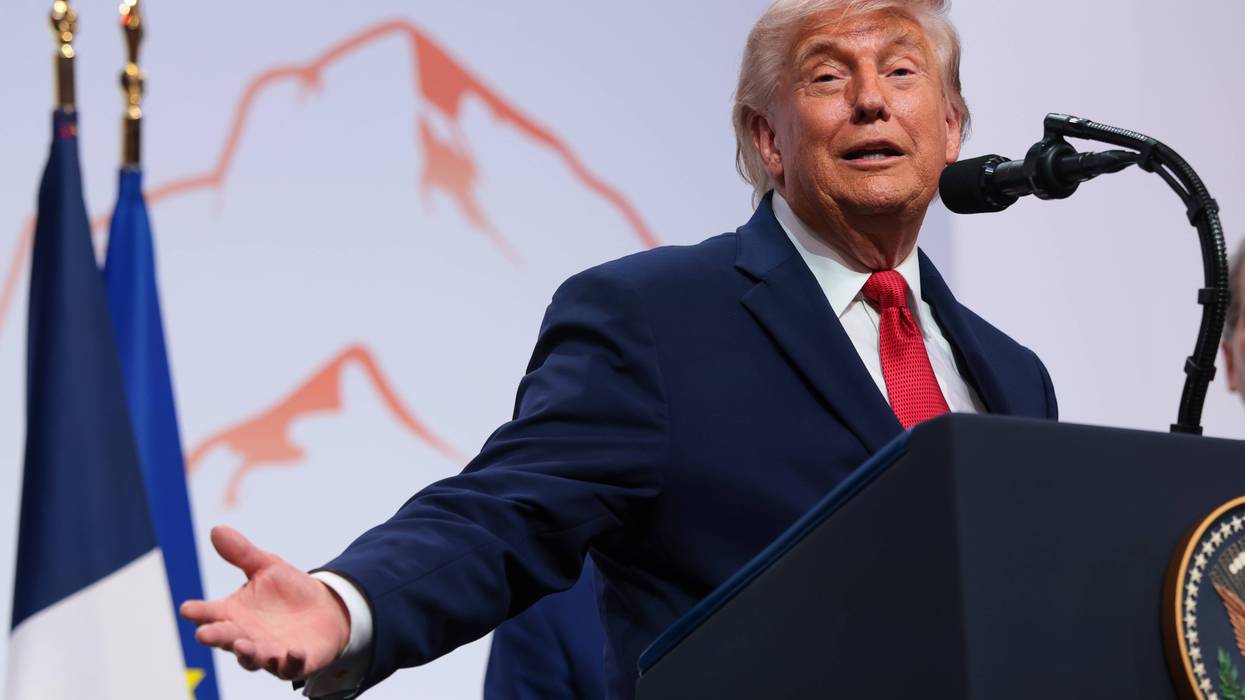
As Full MOU Text Revealed, Trump Justifies Ending War That Critics Said He Never Should Have Started
"Trump appears to return to the non-zero enrichment position," said one foreign policy analyst. "He should never have abandoned it."
Jun 17, 2026
Foreign policy analysts and peace advocates expressed relief Wednesday that the end of the unprovoked US-Israeli war on Iran could be in sight, as the US government released the text of the memorandum of understanding reached this week by the Trump administration and Iranian negotiators.
But observers noted that the text of the agreement and President Donald Trump's remarks at the Group of Seven meeting in France appeared to acknowledge how needless the war was—after 3,400 Iranians and thousands more people across the Middle East were killed by US and Israeli troops.
The memorandum of understanding (MOU) declares the "immediate and permanent termination of military operations on all fronts, including in Lebanon," where Israeli forces have killed more than 3,600 people since early March, allows a 60-day window to negotiate the final terms of the deal, and holds that Iran will "maintain the current status quo of its nuclear program," which Iranian officials have consistently said is not for military purposes.
"The United States of America will not impose any new sanctions and will not deploy additional forces in the region," says the MOU.
At the National Iranian American Council, policy director Ryan Costello rejected the commentary of some Trump opponents in Washington, DC who portrayed the deal as a surrender by the US, with some Democratic lawmakers scoffing at the deal's inclusion of a $300 billion reconstruction fund for Iran—where US and Israeli attacks have destroyed or damaged "100,000 housing units along with schools, hospitals, bridges, and other vital infrastructure."
"The core terms of the agreement are either mutually beneficial or have significant upside, even the ones being decried, denounced, and misportrayed," wrote Costello. "Time will tell if this memorandum can survive the caustic politics in Washington and Tehran that have accompanied any lessening of tensions between the US and Iran, and ultimately deliver relief that is sorely needed... Yet, what has been started is not a threat to American security, it is a threat to the Washington mindset that any US-Iran outcome is ultimately zero-sum and that Iran’s gain is an American loss. The US will benefit if our nation moves off the path of war with Iran. That will be accomplished by the memorandum and the steps that it entails."
In remarks to the press at the G7 summit, Trump addressed questions about how the MOU will stop Iran from developing a nuclear weapon—the key objective of the war, White House officials have repeatedly said. He issued a threat to "bomb them" if Iran does not refrain from developing a nuclear weapon, before indicating he had arrived at a viewpoint long pushed by opponents of the war and foreign policy experts.
"It is a little hard though, when you say that somebody wants it, other people have it, other adjoining states have it, and you're not letting them have it for purposes of electricity and things like that," the president said, referring to Iran's nuclear program.
Trump added that neighboring countries also have ballistic missiles, which Iran has long maintained it should be permitted to have as part of its national security arsenal.
"Today in things it would’ve been great to figure out before you started a war over them," said Matt Duss, executive vice president at the Center for International Policy.
Danny Citrinowicz, a Middle East policy expert, said: "It may have taken a long, costly, and complicated conflict, but the United States appears to have arrived at a conclusion that should have been evident from the start: Iran's missile program is not negotiable because it sits at the very core of the regime's security doctrine."
"Reasonable people can ask whether such a prolonged conflict was necessary to reach this conclusion," he said. "Yet it is better to recognize strategic realities late than never at all. Before events spiraled completely out of control, the US administration stepped back from maximalist objectives and returned to a more measured and realistic approach."
The president suggested that the planned official signing of the deal, scheduled for Friday, could still potentially fall through, and threatened to resume bombing if Iranian officials did not "behave."
He added that he will take credit for the agreement if it holds, and will blame Vice President JD Vance "if it doesn't."
Below is the text of the MOU:
The United States of America and the Islamic Republic of Iran have jointly agreed in good faith on [ __ date] on the following:
1 — The United States of America and the Islamic Republic of Iran and their allies in the current war are signing this MOU to declare the immediate and permanent termination of military operations on all fronts, including in Lebanon, and undertake from now on not to initiate any war or any military operation against each other, and to refrain from the threat or use of force against each other, and ensuring the territorial integrity and sovereignty of Lebanon. The final deal will confirm the permanent termination of the war on all fronts, including in Lebanon and other provisions of this paragraph.
2 — The United States of America and the Islamic Republic of Iran undertake to respect each other’s sovereignty and territorial integrity and to refrain from interfering in each other’s internal affairs.
3 — The United States of America and the Islamic Republic of Iran commit to negotiating and achieving the final deal in maximum 60 days, extendable with mutual consent.
4 — Immediately upon the signing of this MOU, the United States of America will begin the removal of its naval blockade and any disturbances or impediments against the Islamic Republic of Iran, and will fully end the naval blockade within 30 days. During this period, the traffic of vessels will be in proportion to the numbers of pre-war traffic being restored by the Islamic Republic of Iran. The United States of America further undertakes to remove its forces from the proximity of the Islamic Republic of Iran within 30 days after the final deal.
5 — Upon the signing of this MOU, the Islamic Republic of Iran will make arrangements using its best efforts for the safe passage of commercial vessels with no charge, for 60 days only, from the Persian Gulf to the Sea of Oman and vice versa. The traffic of commercial vessels will immediately start, and considering the need for removing the technical and military obstacles, and demining by the Islamic Republic of Iran will be instated within 30 days. The Islamic Republic of Iran will conduct dialog with the Sultanate of Oman to define the future administration and maritime services in the Strait of Hormuz in discussion with other Persian Gulf littoral states in line with the applicable international law and the sovereign rights of coastal states of the Strait of Hormuz.
6 — The United States of America undertakes with regional partners to develop a definitive, mutually agreed plan with at least USD 300 billion for the reconstruction and economic development of the Islamic Republic of Iran. The mechanism for the implementation of this plan will be finalized as part of a final deal within 60 days. All required licenses, waivers and permissions needed for the relevant financial transactions will be granted by the United States of America.
7 — The United States of America undertakes to terminate all types of sanctions against the Islamic Republic of Iran, including the United Nations Security Council resolutions, IAEA Board of Governors resolutions, and all unilateral US sanctions, primary and secondary, in an agreed upon schedule as part of the final deal. The Islamic Republic of Iran and the United States of America acknowledge the critical importance of the sanctions termination issue above mentioned, and expressed their intentions to immediately address these issues in the negotiations in order to achieve mutual agreement on them.
8 — The Islamic Republic of Iran reaffirms that it shall not procure or develop nuclear weapons. The United States of America and the Islamic Republic of Iran have agreed to resolve the disposition of stockpiled enriched material pursuant to a mechanism that will be mutually agreed upon in accordance with the schedule mentioned in paragraph seven, with the minimum methodology to be down blended on site under the supervision of the IAEA. The two parties also agreed to discuss the issue of enrichment and other mutually agreed matters related to the Islamic Republic of Iran’s nuclear needs, based on a satisfactory framework being agreed upon in the final deal. The final deal will confirm the provisions of this paragraph. The United States of America and the Islamic Republic of Iran acknowledge the critical importance of the nuclear issues above mentioned. They express their intention to immediately address these issues in the negotiations in order to achieve mutual agreement on them.
9 — Pending the final deal, the United States of America and the Islamic Republic of Iran agree to maintain the status quo. The Islamic Republic of Iran will maintain the current status quo of its nuclear program, and the United States of America will not impose any new sanctions and will not deploy additional forces in the region.
10 — The United States of America undertakes that immediately upon the signing of this MOU and until the termination of sanctions, US Department of Treasury will issue waivers for the export of Iranian crude oil, petroleum products and derivatives, and all associated services, including banking transactions, insurances, transportation, etc.
11 — The United States of America undertakes to make fully available for use the frozen or restricted funds and assets of the Islamic Republic of Iran upon the implementation of this MOU. The United States of America and the Islamic Republic of Iran will mutually agree on the procedures related to the release of these funds during negotiations. Such funds, whether retained in the original account or transferred, shall be made fully usable for payment to any ultimate beneficiary designated by the Central Bank of the Islamic Republic of Iran. The United States of America undertakes to issue all necessary licenses and authorizations accordingly.
12 — The United States of America and the Islamic Republic of Iran agree that an executive mechanism will be established to monitor the successful implementation of this MOU and the future compliance of the final deal.
13 — After signing this MOU, and subject to the beginning of the implementation of paragraphs 1, 4, 5, 10 and 11 of this MOU, and the continuing implementation of these measures, the United States of America and the Islamic Republic of Iran will start negotiations regarding the final deal exclusively on the other paragraphs.
14 — The final deal will be endorsed by a binding UNSC resolution.
Keep ReadingShow Less
Most Popular