SUBSCRIBE TO OUR FREE NEWSLETTER
Daily news & progressive opinion—funded by the people, not the corporations—delivered straight to your inbox.
5
#000000
#FFFFFF
To donate by check, phone, or other method, see our More Ways to Give page.


Daily news & progressive opinion—funded by the people, not the corporations—delivered straight to your inbox.

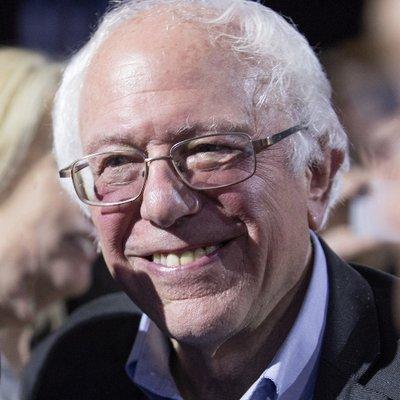
Sen. Bernie Sanders (I-Vt.) voted "nay" today as the Senate advanced a proposed 12-nation Pacific Rim trade deal. In a floor speech before the 65-33 roll call vote, Sanders detailed four key reasons why the proposal would be bad for American workers and consumers.
The Trans-Pacific Partnership would follow in the footsteps of other disastrous trade pacts. The North American Free Trade Agreement, Permanent Normal Trade Relations with China and other trade deals are a major reason why some 60,000 American factories closed since 2001 as manufacturers shifted jobs to low-wage nations overseas and 4.7 million American jobs disappeared. "Why would we approve another trade deal like those that have failed so miserably," he asked.
The Pacific Rim agreement is backed by multi-national corporations, Wall Street and the pharmaceutical industry - all of which have shown contempt for American working families. Virtually every major trade union and leading environmental and religious groups are opposed. "Who should the American people trust, greedy corporations or those leading the fight for jobs, the environment and moral values?" Sanders asked.
The pact includes a provision which would let corporations take countries to court with claims that environmental, public health and other laws might impact their expected future profits. Under existing trade agreements, for example, the tobacco giant Philip Morris is suing Australia and Uruguay over labeling requirements for cigarettes. The Swedish energy company Vattenfall launched a $5-billion case over Germany's decision to phase out nuclear power. "Why would we pass legislation that would undermine democracy and allow corporations to challenge laws designed to protect the public?" Sanders asked.
Because of the political clout of the U.S. pharmaceutical industry, Americans already pay the highest prices in the world for prescription drugs. Doctors Without Borders has voiced alarm that the proposed agreement would pad profits on pharmaceutical sales in the United States while making life-saving generic drug treatments unaffordable to millions of people around the world.
"Trade agreements should not just work for corporate America, Wall Street and the pharmaceutical industry. They have got to benefit the working families of our country," Sanders said. "We must defeat fast track and develop a new policy on trade."
“It again raises urgent questions: Is this president fit to lead and make consequential decisions that impact countless lives?” said the National Iranian-American Council.
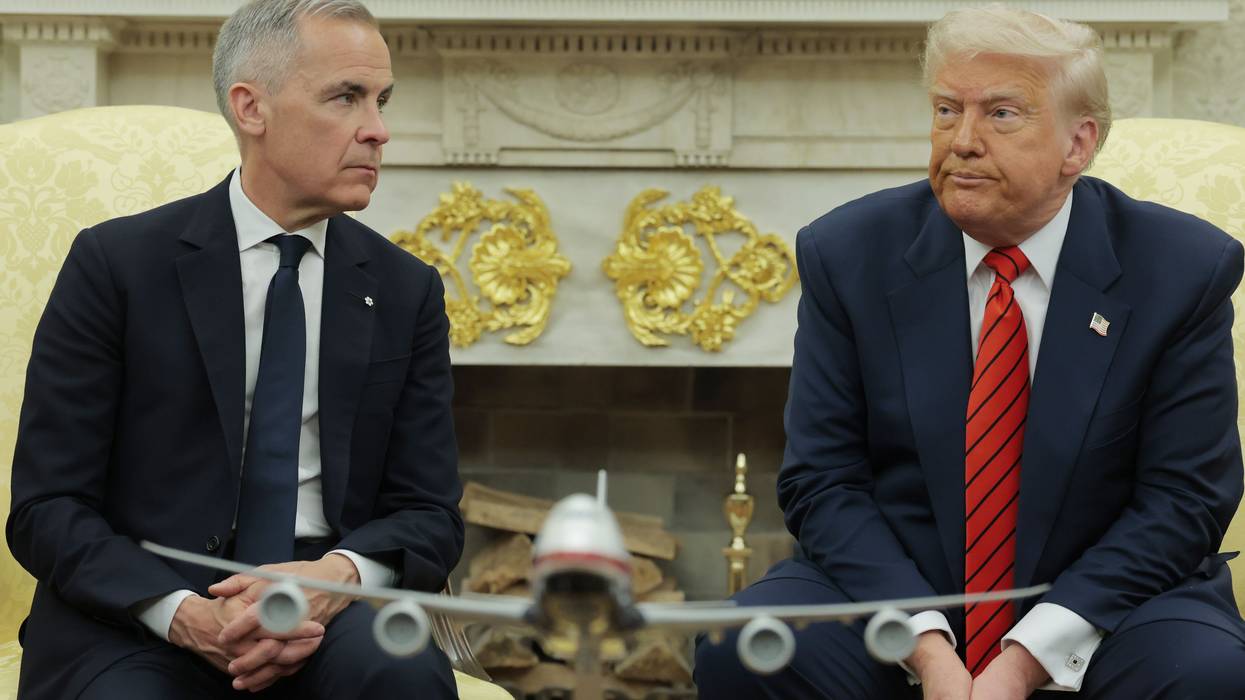
As he struggles to force Iran’s capitulation, US President Donald Trump issued what seemed to be yet another threat to commit an act of mass destruction against the country through nuclear warfare.
When negotiations have faltered in recent weeks, Trump has on multiple occasions defaulted to genocidal threats—including that the “whole civilization” of Iran would “die,” and that the whole country would be “blown up"—which have only seemed to anger and galvanize his Iranian adversaries rather than make them quake with fear.
While the Trump administration has continued to insist that the ceasefire with Iran was still in effect, the two countries have exchanged significant fire this week.
On Thursday, the US launched what it said were "self-defense" strikes on military facilities it claimed were responsible for attempting to attack three US Navy ships in the Strait of Hormuz. Iran called the attacks a violation of the ceasefire and said its attacks on US ships were in response to American bombings of Iranian oil tankers the previous day.
Trump told reporters on Thursday that if the ceasefire were truly over, everyone would know. "If there's no ceasefire, you're just going to have to look at one big glow coming out of Iran," he said. "They'd better sign the agreement fast… If they don’t sign, they’re going to have a lot of pain.”
To many observers, this sounded like a threat from Trump to carry out a nuclear holocaust, though it could also be a redux of Trump's threats to attack civilian energy infrastructure, which would still be a war crime.
Kelley Beaucar Vlahos, the editor-in-chief of Responsible Statecraft, noted that if it were indeed a nuclear threat, it would be "ironic since the war today supposedly is to prevent Iran from getting... a nuclear weapon."
The National Iranian-American Council (NIAC) said that “threatening to make Iran glow—with nuclear weapons or otherwise—is an almost unthinkable threat to commit a mass war crime against 92 million people. It must never be normalized.”
“It again raises urgent questions: Is this president fit to lead and make consequential decisions that impact countless lives?” the group said. “Would the chain of command refuse unlawful orders to make Iran ‘glow,’ killing millions of people?”
Trump's pledge to wipe out Iranian civilization last month drew widespread condemnation and led dozens of Democratic members of Congress to call for his Cabinet to remove him from office using the powers of the 25th Amendment.
“Our leaders need to interrogate these questions seriously, and not write them off as the ramblings of a madman,” NIAC said. “Trump is the president, and may seek to act on these horrible, contemptible threats. This war needs to end, and so [does] Trump’s horrific threatening of war crimes.”
"People have made it clear that they are desperate for an alternative to this failing Labour government," said Zoë Garbett, the victorious Green Party Hackney mayoral candidate.
The UK's Labour Party got a political thrashing from both the progressive left and the reactionary far right in local elections on Thursday, with BBC reporting that the center-left party of Prime Minister Keir Starmer has lost at least 490 council seats so far.
The biggest winner from Labour's collapse was the far-right Reform Party, led by Nigel Farage, which has gained over 650 seats as of this writing.
However, the triumph of Reform was not the only notable development, as the left-wing Green Party, with a focus on uplifting the working class by challenging corporate power, gained at least 96 seats.The centrist Liberal Democrats, meanwhile, also took a bite out of Labour's share of the vote by securing 36 seats and possibly more.
Green Party leader Zach Polanski said the elections marked a turning point in UK politics as both Labour and the Conservative Party, traditionally the two largest parties in the country, collectively lost more than 700 seats.
"This is an historic victory," Polanski said in the wake of the results. "It's the first time the Green Party has ever won a directly elected mayor. Two-party politics is not just dying, it is dead, and it is buried."
Polanski suggested that the real coming fight for the future of the country would be between his party and Reform, which has positioned itself as anti-immigration and anti-European Union.
In a social media post, Polanski boasted his party had "gained seats across the country and an increase in our vote share almost everywhere we've stood."
"All over the UK people are voting to end Rip Off Britain," Polanski added.
Zoë Garbett, the Green Party candidate who won the mayoral race in the longtime Labour stronghold of Hackney, told The Guardian that her victory shows "people have made it clear that they are desperate for an alternative to this failing Labour government."
"It’s not old politics... versus new parties," Garbett said. "This is about a system of fear versus a movement of hope."
Writing in The Times, UK political analyst John Curtice said the evidence was clear the Greens had helped inflict severe damage on Labour, even though Reform was the chief beneficiary of Labour's collapse.
"Both Reform and the Greens have been able to inflict significant damage on Labour," wrote Curtice. "It appears that around half of Labour’s losses have been to Reform. This reflects the fact that, at 26 per cent, Reform’s average share of the vote in the BBC’s sample is well above the 16% recorded by the Greens. Nevertheless, Labour’s vote has tended to suffer more when the Greens have recorded a strong vote than when Reform have done."
"Get ready for even higher prices for chicken, turkey, and pork," said one antitrust attorney.
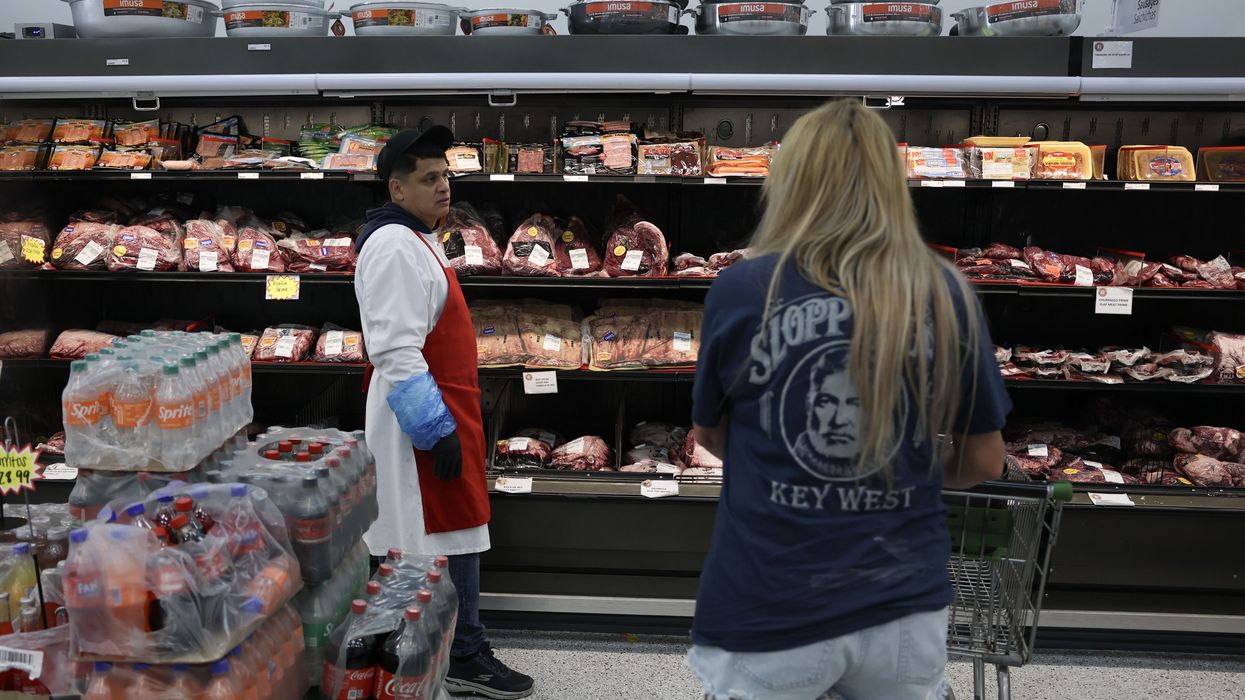
US President Donald Trump's Justice Department moved Thursday to settle a Biden-era antitrust lawsuit against the analytics firm Agri Stats, proposing an agreement that critics say would effectively give the stamp of federal approval to meat industry price-fixing schemes.
The Justice Department—now headed by Acting Attorney General Todd Blanche, formerly Trump's personal lawyer—hailed the proposed settlement as a "historic" win over a company whose "business model directly raised the price of chicken, turkey, and pork in local grocery stores across our nation." But critics said the agreement, which must undergo review by a federal judge, would do nothing substantial to rein in price-fixing in the meat industry.
Lee Hepner, senior legal counsel for the American Economic Liberties Project, said the deal "stinks of rotting meat," noting that the settlement was proposed just days before the case was set to go to trial.
"No way does it address the harms," Hepner said of the 79-page settlement. "Agri Stats spent decades hiking prices on over 90% of processed meat in the country. Now they're being told to exercise some discretion going forward."
"It's a gut punch to those who worked on this case for four years thinking it might actually deter these price fixing services from cropping up in every other industry," Hepner added.
The Biden administration brought the antitrust lawsuit against Agri Stats in September 2023, accusing the company and its subsidiary EMI of "collecting, integrating, and distributing competitively sensitive information related to price, cost, and output among competing meat processors."
"While distributing troves of competitively sensitive information among participating processors, Agri Stats withholds its reports from meat purchasers, workers and American consumers, resulting in an information asymmetry that further exacerbates the competitive harm of Agri Stats’ information exchanges," the Biden DOJ said.
"This settlement legalizes meat price-fixing—it just says you have to bring the giant retailers and distributors in on the game."
The Trump Justice Department's settlement would require Agri Stats to "make the vast majority of information" it distributes "available to all interested domestic purchasers on reasonable and non-discriminatory terms," along with several other conditions.
But the settlement states that EMI is not otherwise "prohibited... from continuing to provide EMI Price Reports in substantially the same manner as it did as of April 24, 2026."
Agri Stats noted in a statement Thursday that it "denied all allegations" of illegal conduct and "has admitted no wrongdoing" as part of the settlement. Agri Stats' lead counsel in the case called the deal "a win" for both the company and consumers—a claim that antitrust advocates rejected, calling the agreement blatantly one-sided in the corporation's favor.
"This settlement legalizes meat price-fixing—it just says you have to bring the giant retailers and distributors in on the game," wrote Basel Musharbash, managing attorney at Antimonopoly Counsel. "Get ready for even higher prices for chicken, turkey, and pork."
The proposed Agri Stats settlement is the latest favorable deal that Trump's Justice Department—which is in the grip of lobbyists with ties to the president—has cut with a major corporation accused of illegal price-fixing.
Last November, as Common Dreams reported, the Justice Department agreed to settle a Biden-era lawsuit filed against the real estate software company RealPage, which was accused of an "unlawful scheme to decrease competition among landlords in apartment pricing and to monopolize the market for commercial revenue management software."
RealPage welcomed the settlement, noting that the agreement included "no financial penalties, damages, or findings or admissions of wrongdoing."